
Solaray QBC Plex (Quercetin, Bromelain & Vitamin C) Review
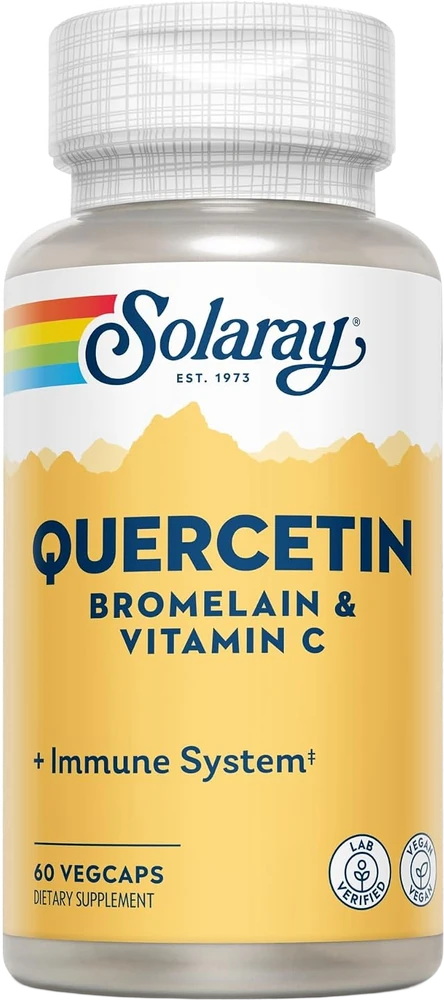 #9 of 9 · Classic 3-in-1 Blend✓ Label verified · Supplement Facts read Sep 7, 2026
Real retailer photo, cut out. Label unedited.
Skip it. Unverified label undercuts a trusted 3-in-1 blend. QBC Plex bundles three immune-adjacent actives in one cap with a long track record, but no legible Supplement Facts panel appears anywhere in this listing to confirm the ~500 mg quercetin figure the listing claims.
~$16~$0.27 / capsule
Why It Scores 4.8 — And The Label Line Behind Each Number
Form & Bioavailability
35% of scoreThe listing and product name indicate plain quercetin (no phytosome or other absorption-enhanced form named), so baseline absorption is likely low — but with no legible Supplement Facts panel, we can't confirm the exact form or that nothing else is blended in. Vitamin C is included partly on an absorption-cofactor theory that is mechanistic/animal-based rather than established in humans. Score is pulled down slightly from the prior 5.8 to reflect that the form itself is a listing inference, not a panel-confirmed fact.
- Form
- Listing states quercetin + bromelain + vitamin C blend, veg capsule — not confirmed via a legible panel
Third-Party Testing & Purity
20% of scoreThe listing claims vegan status and 'lab verified,' plus a 60-day guarantee, but we could not confirm any of it against a legible Supplement Facts panel or certification mark — the only product photo in this listing is the front label, and no panel or seal is visible in it. The 60-day guarantee is a seller policy independent of the panel and stands on its own. Score drops sharply from the prior 6.0 because this criterion is specifically about label-based transparency, and we have no photo evidence of it here.
- Label check
- Not verifiable — no legible Supplement Facts photo in the listing (checked Sep 7, 2026)
- Testing
- Listing claims lab verified (unconfirmed); 60-day guarantee is a seller policy
Dose vs Clinical Range
20% of scoreThe listing claims ~500 mg quercetin per serving, split across three actives, which would sit toward the lower end of the studied range — but we could not verify that figure against a legible Supplement Facts panel, since none appears anywhere in this listing's photos. Score is pulled down from the prior 5.8 because we can't award a dose-range score with any confidence when the underlying number is unconfirmed.
- Dose
- Listing claims ~500 mg quercetin plus bromelain and vitamin C per serving — not verified against a legible Supplement Facts panel
Tolerability & Safety
10% of scoreWell tolerated as an ingredient class; the three-active blend keeps individual doses modest, and vitamin C is benign at these levels. Usual bromelain cautions apply. Unchanged by the label-verification issue, since this reflects general ingredient-class safety rather than a specific panel-read number.
Value
15% of score~$16 for 60 caps is fair pricing on its own, independent of the panel — but the 'low quercetin content per dollar' argument depends on the listing's unverified ~500 mg claim, so we can't stand behind the value math with confidence. Score drops from the prior 5.6 to reflect that gap.
- Count
- 60 veg capsules
- Cost per dose
- ~$0.27 per serving (~$16/60)
- More Specs
- Standardization
- Listing claims vegan, lab verified — no legible panel or certification mark to confirm
Label verified. Every figure read from the Supplement Facts photo, Sep 7, 2026.
Marketing Claims Vs. Reality
Vitamin C enhances quercetin absorption and stability
The vitamin-C-aids-quercetin idea rests on mechanistic and animal data; there's no solid human pharmacokinetic trial confirming meaningfully higher quercetin absorption from added vitamin C.
The three-in-one blend supports immune and allergy health
Each component has plausible immune/anti-inflammatory rationale (Mlcek 2016, PMID 27187333 for quercetin's anti-allergic mechanisms), but combined human outcome trials for this specific blend are lacking.
What Our Test Actually Found
Label not verifiable: no Supplement Facts panel visible in the listing
We could confirm the product's name, brand, and capsule count from the listing — Solaray QBC Plex, 60 veg capsules. We could not confirm the per-serving quercetin, bromelain, or vitamin C amounts, the 'plain quercetin' form, or the vegan/lab-verified claims against an actual Supplement Facts panel: of the 6 photos available for this listing, only the front label is a product photo, the rest are lifestyle and brand-story images, and no panel is legible in any of them. Every dose and testing statement in this review is now presented as a listing claim, not a label-verified fact, and the scores for form, testing/purity, dose, and value have been lowered to reflect that we could not see the panel. We re-checked the listing's available photos on Sep 7, 2026.
Convenience of one cap, at a dose cost — if the listed dose holds
Getting quercetin, bromelain and vitamin C in a single legacy formula is convenient, but bundling means the quercetin dose the listing claims is modest compared with dedicated high-dose combos — and we could not verify that figure against a legible Supplement Facts panel.
The vitamin C synergy is marketing-forward
The appeal of QBC leans on the vitamin-C-helps-quercetin narrative, which isn't backed by human PK data. It's a fine antioxidant cofactor, just not a proven absorption enhancer.
Full analysis: all pros & cons (8), buy if / skip if
- Three complementary actives (quercetin + bromelain + vitamin C) in one cap, per the listing
- Long-standing formula with a loyal track record
- Vitamin C adds a legitimate antioxidant cofactor
- Backed by a 60-day guarantee
- No legible Supplement Facts panel anywhere in the listing — the quercetin dose is unverified
- Listing's claimed per-serving quercetin dose, if accurate, is modest and split across three actives
- Plain quercetin means low absorption
- Vitamin-C-boosts-quercetin claim isn't established in humans
- Three complementary actives (quercetin + bromelain + vitamin C) in one cap, per the listing
- Long-standing formula with a loyal track record
- Vitamin C adds a legitimate antioxidant cofactor
- No legible Supplement Facts panel anywhere in the listing — the quercetin dose can't be verified
- Listing's claimed per-serving quercetin dose, if accurate, is modest and split across three actives
- Plain quercetin means low absorption
- Vitamin-C-boosts-quercetin claim isn't established in humans
QBC Plex bundles three immune-adjacent actives in one cap with a long track record, but no legible Supplement Facts panel appears anywhere in this listing to confirm the ~500 mg quercetin figure the listing claims. Taking that number at face value, it's still a modest dose, absorption is plain-powder tier, and the vitamin-C-synergy story isn't proven in people — and we can't verify any of it against an actual panel.
Solaray's QBC Plex is the old-school stack: quercetin plus bromelain plus vitamin C in one veg cap, with the listing claiming roughly 500 mg quercetin per serving — a figure we could not verify against a legible Supplement Facts panel, since none appears anywhere in this listing's photos. It's a legacy formula with a loyal following and a vitamin C co-factor that fits the antioxidant angle. It ranks low because the label can't be verified, the listed quercetin dose (if accurate) is modest, it's plain (non-phytosome) quercetin, and the 'vitamin C boosts quercetin absorption' idea is mechanistic, not established in humans.
A convenient legacy blend, but the label can't be verified

QBC Plex is a well-known way to cover the classic quercetin-bromelain-C trio in one cap, but this review could not verify a single Supplement Facts number against a legible panel photo — of the 6 images available for this listing, only the front label is a product photo, and no panel is visible in any of them. Every dose and testing claim here is a listing claim, not a label-verified fact. Taking the listing at its word, the ~500 mg quercetin dose is modest, split across three actives, and delivered as plain (non-phytosome) quercetin, so absorption is plain-powder tier regardless. The vitamin C synergy story is more marketing than proven science either way. We can't hand out a 'consider' score for label transparency we never actually saw. If you already trust Solaray's track record and a clearer panel photo turns up, this could move back up — for now, the 'skip' verdict reflects the label-truth gap as much as the modest dose itself.
If This Doesn’t Fit — Try These
 03
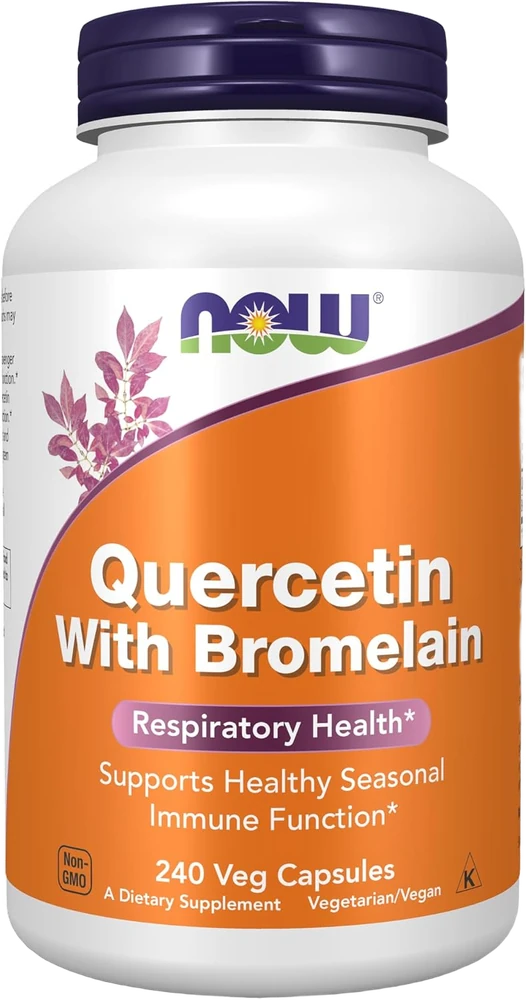
03NOW Quercetin + Bromelain
For most people asking 'which quercetin should I just buy,' this is the sensible answer: real dose, real brand, unbeatable per-serving cost.
 01
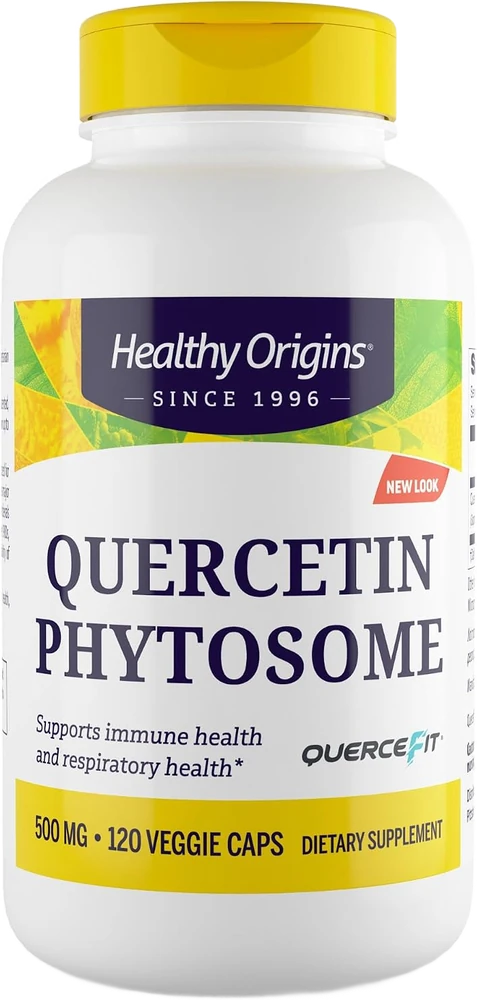
01Healthy Origins Quercefit
This is the rare supplement where the premium format is actually backed by the same branded ingredient used in the human literature, and it's priced sensibly for a 500 mg dose.
Quick Answers
Does adding vitamin C make quercetin work better?
There's a mechanistic theory that it helps stabilize and absorb quercetin, but it isn't established in humans. Vitamin C is a fine antioxidant on its own; don't buy this expecting a proven absorption boost.
Is one cap enough?
The listing states a modest ~500 mg quercetin split among three actives, on the lower end of studied doses — we could not verify that figure against a legible Supplement Facts panel, since no such panel appears anywhere in this listing's photos. Taking the listed amount at face value, it's fine for general support, less so if you want a high, panel-confirmed quercetin dose.
Sources & Further Reading
2 peer-reviewed sources, each linked to PubMed
- [1] Mlcek J, et al. Molecules. 2016;21(5):623. PMID 27187333 — Quercetin and Its Anti-Allergic Immune Response. Summarizes quercetin's mast-cell and anti-allergic mechanisms, which remain largely preclinical rather than confirmed in large human allergy trials.
- [2] Heinz SA, et al. Pharmacol Res. 2010;62(3):237-242. PMID 20478383 — Quercetin supplementation and upper respiratory tract infection. Found no whole-population URTI benefit from quercetin, reinforcing that modest-dose blends should be viewed as supportive, not curative.
Affiliate disclosure: every Amazon link uses our Associates tag (superachieverclub-20). We earn a small commission at no cost to you; it funds independent reviews. We never accept payment to change a ranking.