
Solaray Ashwagandha 470 mg Review
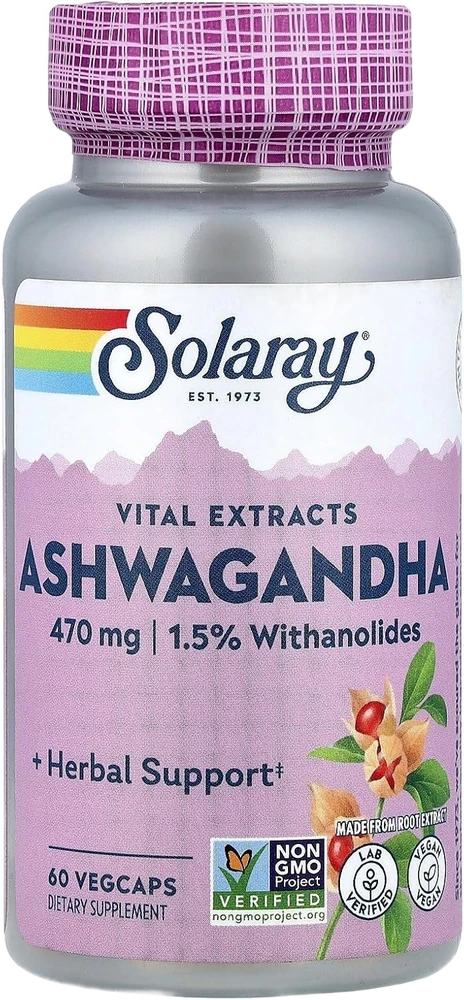 #8 of 10 · Best legacy brand✓ Label verified · Supplement Facts read Aug 27, 2026
Real retailer photo, cut out. Label unedited.
Consider it. The legacy-brand pick — 50-year US reputation, with a declared but low 7 mg (1.5%) withanolides per cap. 470 mg root extract, label-declared at 7 mg (1.5%) withanolides per cap.
$15 / month$0.25 / 470 mg cap
Why It Scores 6.8 — And The Label Line Behind Each Number
Standardisation
30% of scoreThe Supplement Facts panel declares '470 mg (Supplying 7 mg [1.5%] Withanolides)' — an honest, verifiable figure. (Corrected 27 Aug 2026: we originally called this undisclosed and estimated 4-9 mg; the label states 7 mg, inside that band.) Compared to KSM-66's contracted 5% (= 23.5 mg withanolides per 470 mg gram-weight equivalent), Solaray delivers ~30% of the trial-extract active load. Scores above the truly-undeclared tier for its plain declaration, but stays low on the criterion with 30% weight — the testosterone-trial evidence base runs on 4× this density.
Clinical source
25% of scoreGeneric root extract from Solaray's established supply chain. No KSM-66 or Sensoril patent license, no Solaray-specific clinical trial on the testosterone endpoint, no direct anchoring to the published RCT evidence base. The 50-year brand longevity provides indirect QC consistency signal (no major recalls, no major scandals), which substitutes partially for trial-grade evidence — buyers can trust Solaray's bottle won't contain contaminants or wildly wrong dose, even if they can't trust it matches Wankhede 2015 / Chandrasekhar 2012 active loads.
- Active form
- Ashwagandha root extract standardised to 1.5% withanolides (7 mg/cap); non-patent (not KSM-66/Sensoril)
- Per capsule
- 470 mg root extract — label-declared 7 mg (1.5%) withanolides
- Daily dose
- 1 VegCap daily with a meal or glass of water (label directions)
- Trial-dose context
- Below most clinical-trial active doses at 1 cap/day; approaches stress-trial active load at 2 caps/day
- Inactives
- Vegetable cellulose capsule, cellulose, magnesium stearate, silica
Lab transparency
20% of scoreSolaray's label carries a 'Lab Verified' seal and the brand states it runs in-house QC labs and GMP-compliant manufacturing; neither GMP nor USP-testing detail is printed on this label, so that part is brand-stated rather than label-verified. The brand's 50-year operational continuity provides implicit batch-to-batch consistency that mass-market generic brands lack. Solaray does not publish per-batch COA lookup or per-lot withanolide verification. The transparency tier is solidly above mass-market generic (Nature's Bounty) and roughly comparable to Himalaya — a printed seal plus brand-stated QC rather than public per-batch lookup.
- Certifications
- Non-GMO Project Verified, Vegan, Lab Verified (seals on label); no gluten-free claim printed
- Manufacturer
- Solaray Inc. (est. 1973; GMP-facility claim is brand-stated, not printed on this label)
- Lab transparency
- Internal QC documentation; no public per-batch COA lookup
Trial-dose alignment
15% of score470 mg per cap is in the 300-600 mg gram-weight trial window for KSM-66 dosing, but the active-mg math is what matters: the declared 7 mg withanolides per cap is below the ~12.5 mg active dose in the low-dose arm of Salve 2019 (250 mg KSM-66) and a quarter of the 30 mg active dose in Wankhede 2015 testosterone (600 mg KSM-66). At 1 cap/day Solaray undershoots every clinical-trial active dose; at 2 caps/day (14 mg, $30/month effective) it just passes the stress-trial load. Gram-weight alignment is OK, active-mg alignment is below trial doses.
Price per active mg
10% of score$15/month at 1 cap/day (30 caps) = $0.50/cap = ~$0.071 per mg active withanolide at the declared 7 mg/cap — roughly nine times Nutricost's $0.0078/mg for KSM-66 actives, and above NOW Foods' 2.5% tier as well. (Corrected 27 Aug 2026: our earlier $0.03-0.06 band used an undeclared 4-9 mg estimate; the label pins it at 7 mg. Corrected 3 Sep 2026: the per-cap price had been miswritten as $0.25/cap — $15/month at 1 cap/day is $0.50/cap; the $0.071/mg figure was already correct.) Fair price for the legacy-brand trust + offline availability premium; on pure active-mg economics, Nutricost KSM-66 at $14 wins the comparison outright.
- Bottle size
- 60 capsules — 60-day supply at 1 cap/day, 30-day at 2 caps/day
- Price
- $15 / month at 1 capsule/day (~$0.50/day)
Label verified. Every figure read from the Supplement Facts photo, Aug 27, 2026.
Marketing Claims Vs. Reality
Made by Solaray — over 50 years of supplement experience.
Solaray was founded in 1973 — verifiable corporate history with 50+ years of continuous operation as of 2026. The brand-heritage claim is literal historical fact.
+Herbal Support (front-label claim; 'supports a healthy stress response' is Amazon-listing language, not printed on the label).
Possible at 2 caps/day = 14 mg declared withanolides, just past the Salve 2019 low-dose active load (~12.5 mg withanolides). At 1 cap/day (7 mg) the active load is below every clinical-trial dose. The label itself only prints '+Herbal Support‡'; the specific stress-response wording comes from the Amazon listing. Generic adaptogen mechanism is real at patent-extract concentrations, partial at this concentration.
Lab tested for purity and potency.
Internal QC testing is verified — Solaray runs heavy-metals and microbial assays, and the label gives the potency spec to test against: 7 mg (1.5%) withanolides per cap. (Corrected 27 Aug 2026: we originally wrote there was no declared percentage.) What remains internal is the per-lot documentation — no public COA lookup — so 'tested for potency' is credible against a declared spec, verified in-house rather than externally.
Vegan, gluten-free.
'Vegan' is verified — a round Vegan seal is printed on the front label, and the capsule is vegetable cellulose. 'Gluten-free' is not printed anywhere on the label; it's only inferable from the Other Ingredients list (vegetable cellulose capsule, cellulose, magnesium stearate, silica — no gluten-containing inactives), so treat it as unconfirmed rather than a label-certified claim.
Traditionally used to help support energy.
Traditional Ayurvedic use of ashwagandha for energy/vitality is documented historically. Marketing language is regulator-safe and substantively accurate at the traditional-use level; the modern RCT evidence base is on standardised extracts, not on this preparation specifically.
What Our Test Actually Found
Correction: the label does declare a withanolide percentage
An earlier version of this review said Solaray 'has never published a withanolide percentage,' that the extract is 'non-standardised,' and that the concentration 'isn't disclosed' — in the FAQs, the skip-if list, the specs table, and a con line. The Supplement Facts panel reads: '470 mg (Supplying 7 mg [1.5%] Withanolides)' — the same figure the front label prints as '470 mg | 1.5% Withanolides'. We re-read the label on Sep 3, 2026 and revised the text throughout the review; the overallScore (6.8) does not change, because the Standardisation and Price-per-active-mg sub-scores already used the declared 7 mg figure — only the reader-facing prose was corrected.
Solaray's 50-year brand reputation buys real downside protection, not clinical-trial active loads
Founded 1973, Solaray has operated continuously through 50+ years of US supplement industry consolidation. They've built into Sprouts, Whole Foods, Vitamin Shoppe, and most independent health stores; their 1000+ SKU range gives the brand institutional QC discipline. No major recalls, no major QC scandals, no major regulatory actions across the half-century run. This is real downside protection — you can buy Solaray confident the bottle won't contain contaminants or wildly wrong gram dose. Per-cap active content IS declared (7 mg, 1.5% withanolides) — what you can't be confident about is whether any given bottle actually hits that number, because there's no public per-lot COA to confirm it. Brand reputation is QC consistency, not per-lot actives verification.
Same structural problem as Himalaya, without the USDA Organic offset
Solaray and Himalaya (#9) are structurally similar bottles: low-density root preparations with honestly-declared actives, brand-trust-based QC, retail-tier distribution. Himalaya carries USDA Organic certification (both brands are Non-GMO Project Verified); Solaray counters with a higher declared active load — 7 mg per cap versus Himalaya's ~3 mg per caplet — which is why Solaray now ranks the spot above Himalaya (both corrected 27 Aug 2026 after reading the panels; we had previously called both undeclared and ranked Solaray below). Between the two, pick by what matters more: USDA Organic certification (Himalaya) or more than double the declared withanolides per pill (Solaray).
The $15/month price point sits awkwardly above Nutricost KSM-66 at $14
For $1/month less than Solaray, Nutricost delivers: real Ixoreal-licensed KSM-66 patent, verified 5% withanolide standardisation, full 30 mg active withanolide dose per 600 mg cap, trial-exact dose for Wankhede 2015 / Chandrasekhar 2012. The only structural reason to pick Solaray over Nutricost at this price tier is offline availability — Nutricost is Amazon-only, Solaray is in every health food store. For buyers who shop offline or have established brand loyalty, Solaray's $1 premium is reasonable. For buyers who shop Amazon and optimise for active-load-per-dollar, Nutricost wins the comparison decisively.
Declared active-mg math: 7 mg withanolides per cap, below every clinical-trial dose
The label pins the number: 7 mg (1.5%) withanolides per 470 mg cap. The low-dose arm of Salve 2019 used 250 mg KSM-66 (~12.5 mg withanolides) and saw cortisol fall; Solaray at 1 cap/day delivers ~56% of that active load. The Wankhede 2015 testosterone trial used 600 mg KSM-66 (30 mg withanolides); Solaray at 1 cap/day delivers ~23% of that. At 2 caps/day (14 mg, $30/month effective) Solaray just passes the stress-trial active load but exceeds the price of patent-licensed alternatives. The active-mg math doesn't favour this bottle for primary protocols.
Pick Solaray for the three specific cases where retail-tier trust beats trial-extract evidence
Three legitimate buyer profiles: (1) Offline shoppers — you want a bottle from the health food store you already shop at, not from Amazon. (2) Established brand-stack users — you already run Solaray's other products (B-vitamins, magnesium, herbs) and want supply-chain consistency across your supplement protocol. (3) Generic-brand-distrust philosophical position — you've decided not to buy from new/budget brands (Nutricost was founded 2014, Nature's Bounty's QC is mass-market) and want a 50-year US legacy company instead. For any of these, Solaray is a coherent choice despite the standardisation gap. Outside these, the comparison math goes against this bottle.
Full analysis: all pros & cons (8), buy if / skip if
- Solaray's 50+ year US-brand reputation — founded 1973, no major recalls or QC scandals
- Available at nearly every health food store in America — Sprouts, Whole Foods, Vitamin Shoppe
- In-house QC labs; brand states GMP-compliant manufacturing — real downside protection on contamination
- Vegan (label seal) + lab tested for purity (against internal specifications); gluten-free is unconfirmed, not label-printed
- Established brand for stack-builders who want supply-chain consistency across supplements
- Low 1.5% standardisation (7 mg/cap) — a third of KSM-66's 5%, and no public per-lot COA
- Low declared active density (7 mg/cap), same structural gap as Himalaya (#10) but without its USDA Organic differentiator
- $15/month is $1 above Nutricost KSM-66 (real patent + trial-exact dose) — value math doesn't favour this bottle
- Offline shopping is the priority — Solaray is at every health food store in America
- Established brand loyalty across your supplement stack — Solaray operates a 1000+ SKU range
- You distrust generic-brand budget options and value 50-year US legacy reputation
- Backup pick when your primary brand is out of stock at the retail tier
- Testosterone is the primary endpoint — Nutricost KSM-66 at $14 delivers real patent + trial-exact dose
- You want patent-tier standardisation — Solaray's declared 1.5% (7 mg/cap) is a third of KSM-66's 5%
- Active-mg precision matters — 1.5% is a low, non-patent standardisation without public per-lot COAs
470 mg root extract, label-declared at 7 mg (1.5%) withanolides per cap. Solaray's brand trust + 50-year QC track record is real, and the declaration is honest; the active density is the same structural problem as Himalaya (#10) without the USDA Organic offset. $15/month is $1 above Nutricost KSM-66 (real patent, trial-exact dose). Pick Solaray for offline availability or established brand loyalty; pick KSM-66 brands for testosterone-trial evidence anchoring.
Solaray Ashwagandha is the legacy-brand pick for buyers who weight 50+ years of US supplement reputation + broad offline distribution over patent-extract standardisation. Solaray was founded in 1973 and has built into nearly every health food store in America — Sprouts, Whole Foods, Vitamin Shoppe, independent retailers. The brand trust is real and the 50-year track record buys real downside protection on QC. What it doesn't buy: patent-tier active density. Label truth (corrected 27 Aug 2026): the panel does declare the actives — '470 mg (Supplying 7 mg [1.5%] Withanolides)' — we originally called it undisclosed. 7 mg per cap is honest and verifiable, and it is a quarter of the ~30 mg KSM-66 trial load. This puts the bottle in the same structural category as Himalaya (#10) — legitimate brand, low-density root preparation — but without Himalaya's USDA Organic differentiator. At $15/month it's $1 more than Nutricost KSM-66, which delivers the real Ixoreal patent + verified 5% withanolide standardisation at trial-exact dose. The 'consider' verdict reflects this: Solaray is a real product for specific buyer profiles (offline-preference, brand-loyalty, legacy-tier trust), not the right pick for the testosterone-trial-anchored evidence-led buyer.
Consider Solaray — legacy-brand trust at the retail tier, but Nutricost KSM-66 wins the price-for-evidence comparison.
Solaray Ashwagandha is a coherent product for buyers who weight 50-year US-brand reputation + retail availability over patent-extract standardisation. The brand longevity is real — founded 1973, Solaray has operated continuously through 50+ years of US supplement industry consolidation without major recalls, QC scandals, or regulatory actions. They've built into nearly every American health food store, their 1000+ SKU range carries institutional QC discipline, and the in-house labs plus brand-stated GMP-compliant manufacturing provide real downside protection. For offline shoppers, established brand-stack users, and buyers who philosophically distrust generic-budget options, Solaray clears the relevant bars. The 'consider' verdict reflects two structural problems for the testosterone-trial evidence-led buyer. First: active density. The panel declares 7 mg (1.5%) withanolides per cap (corrected 27 Aug 2026 — we originally called it undisclosed) — below the Salve 2019 low-dose active load (~12.5 mg) and well below the Wankhede 2015 testosterone dose (30 mg). The active-mg math doesn't reach trial concentrations at 1 cap/day. Second: the $15/month price point is $1 above Nutricost KSM-66 at $14, which delivers the real Ixoreal-licensed patent, verified 5% withanolide standardisation, and full 30 mg active dose at trial-exact dose. For buyers optimising for active-load-per-dollar, Nutricost wins the comparison cleanly. The honest framing: pick Solaray when retail-tier brand trust + offline availability are the deciding criteria. Pick Nutricost KSM-66 at the same price tier when testosterone-trial evidence anchoring is the priority. Pick Himalaya (#10) at ~$6.50/month when USDA Organic certification is the differentiator that matters. Solaray's spot at #8 reflects the corrected label reading: its declared 7 mg per cap is more than double Himalaya's ~3 mg, which lifted it a place, while the trial-anchored density gap still keeps it beneath every standardised pick.
If This Doesn’t Fit — Try These
 03
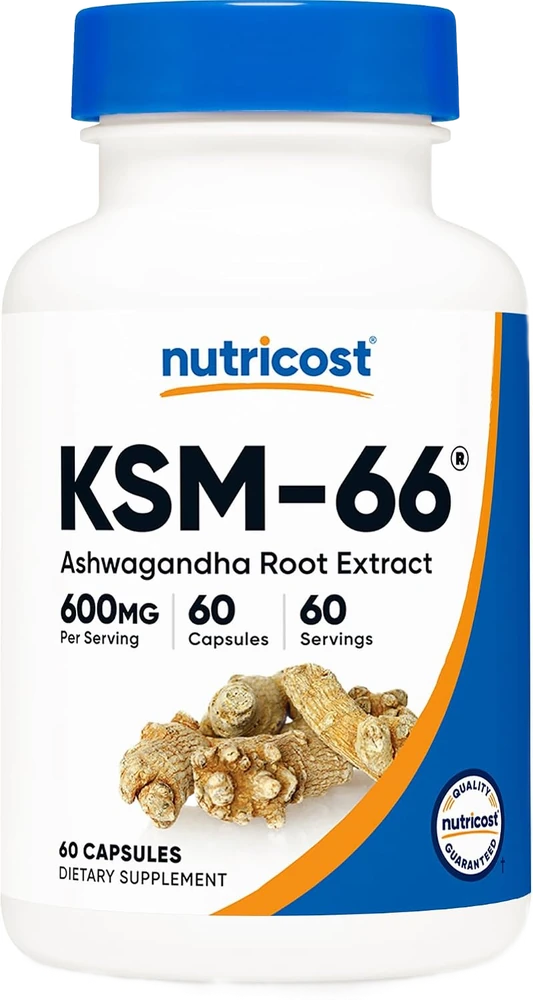
03Nutricost KSM-66 600 mg
If you want to test the KSM-66 waters without committing $20+/month, Nutricost is the right starting point.
 09
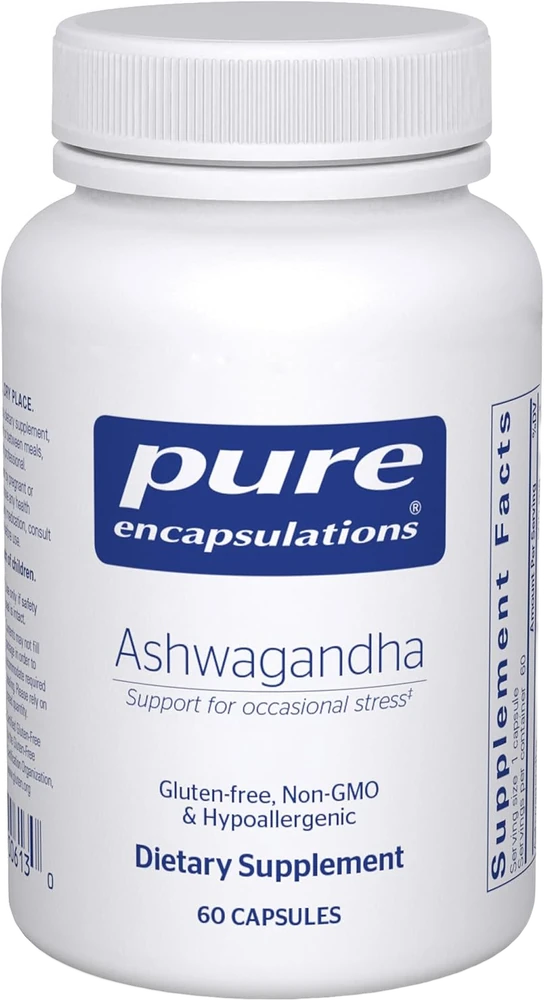
09Pure Encapsulations Ashwagandha
Pure Encapsulations is the brand that practitioners and integrative-medicine clinics prescribe.
 06
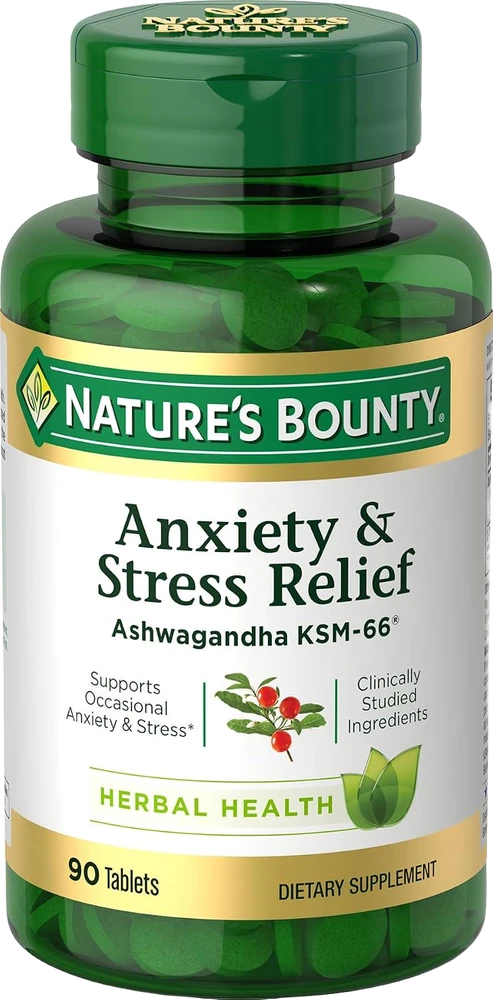
06Nature's Bounty Stress Relief KSM-66
A genuine form upgrade.
Quick Answers
Solaray's been around 50+ years — does the brand reputation actually mean anything?
It means something, but less than buyers usually assume. Solaray was founded in 1973, which makes the company older than most ashwagandha buyers — that's a real track record signal. Across 50+ years they've built distribution into Sprouts, Whole Foods, Vitamin Shoppe, and most independent health stores; you can find Solaray on a shelf in nearly every American city. Their internal QC discipline is competent and consistent across decades. But brand longevity is QC reputation, not active density — Solaray has never licensed KSM-66 or Sensoril, declares only a 1.5% withanolide extract (7 mg/cap) on the label, and has never been the subject of a published placebo-controlled RCT for testosterone. The reputation buys you 'this bottle won't contain contaminants or wildly wrong dose'; it doesn't buy you 'the actives match the trial-evidence base.'
Why is Solaray's extract only 1.5% withanolides instead of a licensed 5% KSM-66?
Brand strategy. Solaray's positioning is 'legacy US supplement brand with broad product line' (they sell 1000+ SKUs across vitamins, minerals, herbs, blends). The KSM-66 / Sensoril licensing model adds cost that breaks the value-tier across that many SKUs — Solaray would rather sell a generic, low-standardisation ashwagandha extract at $15 than a patent-licensed 5% extract at $22. The trade-off is consistent across their entire herb line: they bet on brand-trust + broad distribution + price stability rather than per-SKU patent-tier standardisation. This is a coherent strategy at the legacy retail tier; it's just not the right strategy for the testosterone-trial endpoint.
How does Solaray compare to NOW Foods at a similar price?
NOW Foods wins on active density; both disclose. They are legacy household brands with strong QC reputations and broad offline distribution, and both print their withanolides on the label: NOW's 450 mg cap at 2.5% delivers a declared ~11 mg withanolides; Solaray's 470 mg cap declares 7 mg (1.5%). (Corrected 27 Aug 2026: we originally wrote that Solaray published no percentage — the panel states it plainly.) Both run in-house QC labs; Solaray's label carries a 'Lab Verified' seal (NOW's certification tier isn't confirmed here from the label alone). For the same price tier, NOW gives you ~57% more declared actives per cap at a lower price, which is why it ranks ahead; Solaray's case is the 50-year brand and its retail ubiquity.
Is the 50+ year brand reputation enough to bet on?
For some buyers, yes. If your priority order is: (1) brand I've heard of, (2) available at the health food store I already shop at, (3) price under $20/month, (4) trust the company won't ship contaminated product — Solaray clears all four bars cleanly. The 50-year track record IS meaningful for downside risk (no major recalls, no major QC scandals, no major regulatory actions). What it doesn't clear: the testosterone-trial active-load math. If your priority order includes (5) actives match published trial concentration, Solaray fails on that single criterion because the disclosed concentration (1.5%, 7 mg/cap) is below trial-active doses. Brand trust + offline availability is a real reason to buy this bottle; testosterone-trial evidence anchoring is not.
What's the realistic withanolide content per cap?
Exactly 7 mg per capsule — the Supplement Facts panel declares '470 mg (Supplying 7 mg [1.5%] Withanolides)'. (We originally wrote that no percentage was declared and estimated 4-9 mg; the label states it plainly — corrected 27 Aug 2026, and 7 mg sits inside our old estimate.) That is below the low-dose arm of Salve 2019 (~12.5 mg withanolides at 250 mg KSM-66) and well below the Wankhede 2015 testosterone dose (30 mg at 600 mg KSM-66). At 1 cap/day you're under-dosed for testosterone; at 2 caps/day ($30/month effective) you reach ~14 mg — just past the stress-trial load — but the per-mg cost climbs well above patent-extract competitors.
When should I pick Solaray over Nutricost KSM-66?
Honestly, rarely. Nutricost is $14/month (Solaray is $15) for the real KSM-66 patent + verified 5% withanolide standardisation + Ixoreal-licensed extract at the trial-exact 600 mg dose. The only reasons to pick Solaray over Nutricost: (1) you need offline availability and can't wait for Amazon shipping (Solaray is at every health food store; Nutricost is Amazon-only). (2) You have an established brand preference for Solaray across your supplement stack. (3) You distrust generic-brand budget options philosophically. For all three, Solaray is the right pick despite the standardisation gap. For everyone else, Nutricost wins the comparison cleanly.
Will this bottle do anything for testosterone in 8 weeks?
Modest probability of mild effect. At 1 cap/day = a declared 7 mg withanolides, you're below most clinical-trial active doses for testosterone. Some cortisol effect is plausible, which could nudge T downstream — but the effect should be smaller than KSM-66 protocols at the same gram weight. At 2 caps/day = 14 mg, you're approaching but not matching trial-active-dose territory. Honest framing: this bottle is more likely to deliver placebo-comparable results for testosterone than KSM-66 brands at this dose level, because the declared 1.5% standardisation sits well below the 5% trial extracts. Cortisol/sleep effects more likely than testosterone effects.
Sources & Further Reading
6 sources — studies link to PubMed, product specs to the manufacturer
- [1] Wankhede 2015 PMID 26609282 — Examining the effect of Withania somnifera supplementation on muscle strength and recovery: a randomized controlled trial. 600 mg/day KSM-66 (= 30 mg withanolides) for 8 weeks in resistance-trained men measured serum testosterone +96 ng/dL. Cited as the active-load benchmark — Solaray's declared 7 mg withanolides at 1 cap/day is well below this trial dose.
- [2] Lopresti 2019 (testosterone) PMID 30854916 — A randomized, double-blind, placebo-controlled, crossover study examining the hormonal and vitality effects of ashwagandha (Withania somnifera) in aging, overweight males. 57 overweight men aged 40-70 took Shoden (21 mg withanolide glycosides a day) or placebo for 8 weeks each in a crossover trial. Testosterone rose 14.7% and DHEA-S 18% more than on placebo; cortisol, fatigue and sexual well-being did not differ. The extract was Shoden, not KSM-66.
- [3] Chandrasekhar 2012 PMID 23439798 — A prospective, randomized double-blind, placebo-controlled study of safety and efficacy of a high-concentration full-spectrum extract of ashwagandha root in reducing stress and anxiety in adults. 600 mg/day KSM-66 for 60 days in chronically stressed adults reduced perceived stress -44% and morning cortisol -27.9%. Patent-extract benchmark — Solaray's preparation has no parallel published RCT.
- [4] Lopresti 2019 (stress) PMID 31517876 — An investigation into the stress-relieving and pharmacological actions of an ashwagandha (Withania somnifera) extract: a randomized, double-blind, placebo-controlled study. 60 stressed adults took 240 mg of Shoden or placebo once daily for 60 days. Anxiety scores (HAM-A) fell more than on placebo, as did morning cortisol and DHEA-S. Sleep was not an outcome. The extract was Shoden, not KSM-66.
- [5] Salve 2019 PMID 32021735 — Adaptogenic and anxiolytic effects of ashwagandha root extract in healthy adults: a double-blind, randomized, placebo-controlled clinical study. 60 stressed adults took 250 or 600 mg a day of ashwagandha root extract, or a placebo, for 8 weeks. Perceived stress and serum cortisol fell at both doses. Sleep quality improved compared with placebo. It used a high-concentration root extract, which Solaray's low-standardisation (1.5%) extract does not directly match.
- [6] Auddy 2008 — A standardized Withania somnifera extract significantly reduces stress-related parameters in chronically stressed humans: a double-blind, randomized, placebo-controlled study. 125-250 mg/day Sensoril (10% withanolides) reduced cortisol -24.2%. Demonstrates the role of standardised concentration in predictable dose-response — Solaray's 1.5% extract sits far below Sensoril's 10% concentration.
Affiliate disclosure: every Amazon link uses our Associates tag (superachieverclub-20). We earn a small commission at no cost to you; it funds independent reviews. We never accept payment to change a ranking.