
Saw Palmetto for Men Gummies (DHT Blocker, Raspberry) Review
 #8 of 9 · Best for Adherence, Worst for Potency✓ Label verified · Supplement Facts read Sep 7, 2026
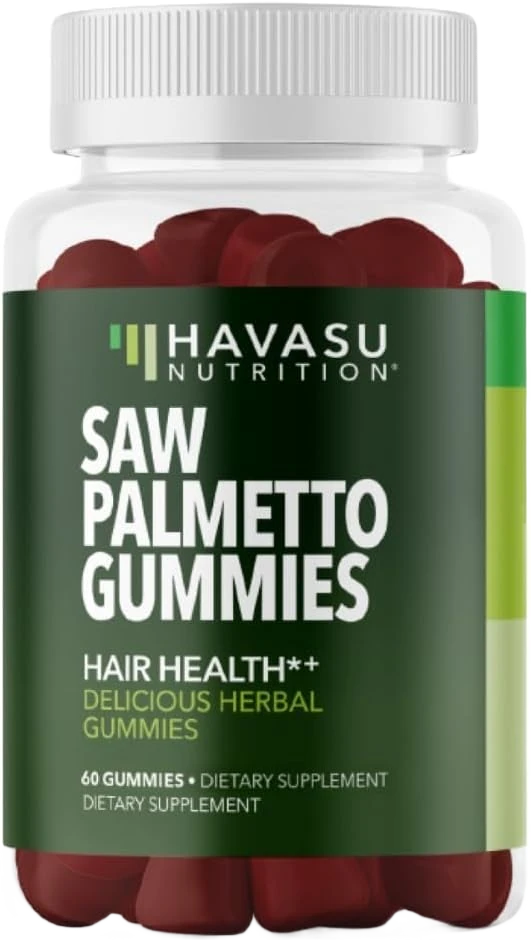
Real retailer photo, cut out. Label unedited.
Skip it. Great if the alternative is taking nothing. A tasty raspberry gummy maximizes adherence but minimizes potency: the label shows just 75 mg of unstandardized saw palmetto extract per serving, diluted by sugar and pectin, with no liposterolic standardization.
approx $16-20approx $0.60/serving
Why It Scores 4.8 — And The Label Line Behind Each Number
Standardization & Form
30% of scoreGummy format dilutes the active with sugar and pectin and provides no liposterolic standardization - the least trial-relevant form on the entire list.
- Form
- Gummy (raspberry)
- Standardization
- None - unstandardized, diluted by sugar/pectin
Dose vs Clinical Range
25% of scoreThe label discloses only 75 mg of unstandardized saw palmetto extract per serving - about a quarter of the 320 mg standardized extract dose used in the trials, and further diluted in practice by the gummy matrix.
- Dose
- 75 mg Saw Palmetto Berry Extract per serving (2 gummies); DV not established
Third-Party Testing & Purity
20% of scoreVegan and Non-GMO, but no prominently published independent COA verifying the saw palmetto content of the gummy.
- Testing
- Vegan, Non-GMO (no published independent COA)
Tolerability & Safety
15% of scoreExtremely easy to take and gentle on the stomach; the main downside is added sugar, not tolerability.
Value / Cost per Dose
10% of score60 gummies (one month) for ~$16-20 is pricey per month for a low-potency, unstandardized form, but the adherence benefit has real-world worth for pill-averse users.
- Count
- 60 gummies (1-month supply)
- Cost per dose
- ~$0.53-0.67/day
Label verified. Every figure read from the Supplement Facts photo, Sep 7, 2026.
Marketing Claims Vs. Reality
Improves adherence for people who dislike pills
A palatable raspberry chewable removes the pill barrier; for pill-averse users, a gummy they consistently take is a genuine real-world advantage over an unused softgel.
Delivers a clinically relevant saw palmetto dose
The label discloses only 75 mg of unstandardized saw palmetto extract per serving, about a quarter of the 320 mg standardized liposterolic extract used in the trials, and further diluted in a sugar/pectin gummy matrix.
Acts as a DHT blocker for hair
Saw palmetto's DHT effect is weak and hair evidence is preliminary (Prager 2002; Rossi 2012); a low-potency gummy is the least likely form to produce it.
What Our Test Actually Found
Correction: label lists 75 mg saw palmetto extract per serving, not a ~500 mg equivalent
An earlier version of this review said this gummy delivered an unstandardized ~500 mg saw palmetto equivalent per serving. The Supplement Facts panel reads 75 mg Saw Palmetto Berry Extract per 2-gummy serving, with daily value not established. We re-read the label on Sep 7, 2026 and corrected the dose throughout the review, including the Dose vs Clinical Range score and the overall score.
Adherence is the only axis it wins
Compliance is a real determinant of whether any supplement helps, and gummies win compliance decisively. If the honest alternative for a given person is taking nothing, this is a defensible choice - but that is a narrow use case.
Sugar and pectin are working against potency
Every gummy trades active-ingredient room for palatability. Combined with no standardization, that puts this product furthest from the clinically studied extract. On potency and evidence-match it is last, and deservedly so.
Full analysis: all pros & cons (6), buy if / skip if
- Best adherence - a chewable pill-averse users will actually take
- Pleasant raspberry flavor, no swallowing required
- Vegan and Non-GMO
- Gentle on the stomach
- Unstandardized and diluted by sugar/pectin - lowest potency here
- Highest cost per day for the least trial-relevant form; adds sugar
- Best adherence - a chewable pill-averse users will actually take
- Pleasant raspberry flavor, no swallowing required
- Vegan and Non-GMO
- Unstandardized and diluted by sugar/pectin - lowest potency here
- Highest cost per day for the least trial-relevant form; adds sugar
A tasty raspberry gummy maximizes adherence but minimizes potency: the label shows just 75 mg of unstandardized saw palmetto extract per serving, diluted by sugar and pectin, with no liposterolic standardization. Skip it unless you genuinely will not take capsules - in which case a gummy you finish beats a softgel you abandon. Otherwise, a standardized 320 mg extract is far more trial-relevant.
The one thing gummies do better than any softgel is get taken. If you will not swallow a pill, a pleasant raspberry chewable that you actually finish beats a perfect capsule you abandon. That is the entire case for this product. Everything else works against it: the label discloses just 75 mg of unstandardized saw palmetto extract per serving, the active is diluted by sugar and pectin, and there is no liposterolic standardization anywhere near the trials. Best for adherence, worst for potency - the badge says it all.
An adherence tool, not a clinical dose

This gummy earns exactly one thing: people take it. For someone who will not swallow capsules, a raspberry chewable they finish beats a standardized softgel they abandon, and that is a legitimate niche. But by every measure that matters for saw palmetto - standardization, potency, evidence-match - it is last. If you can take a capsule at all, buy a standardized 320 mg extract instead and get closer to what was actually studied.
If This Doesn’t Fit — Try These
 02
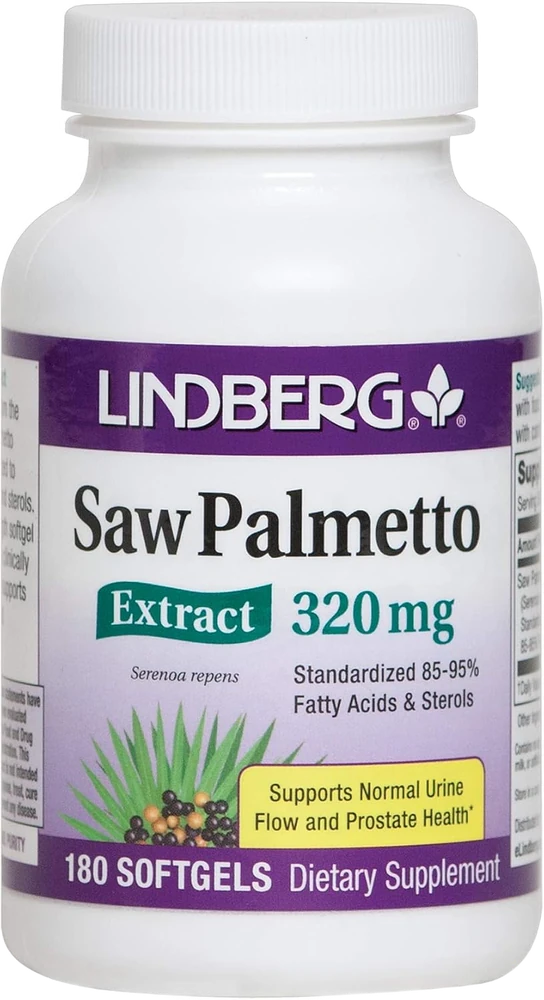
02Lindberg 320 mg
This is the value champion of the list: it matches the trials on both standardization and dose, then undercuts almost everything on price with a six-month bottle.
 07
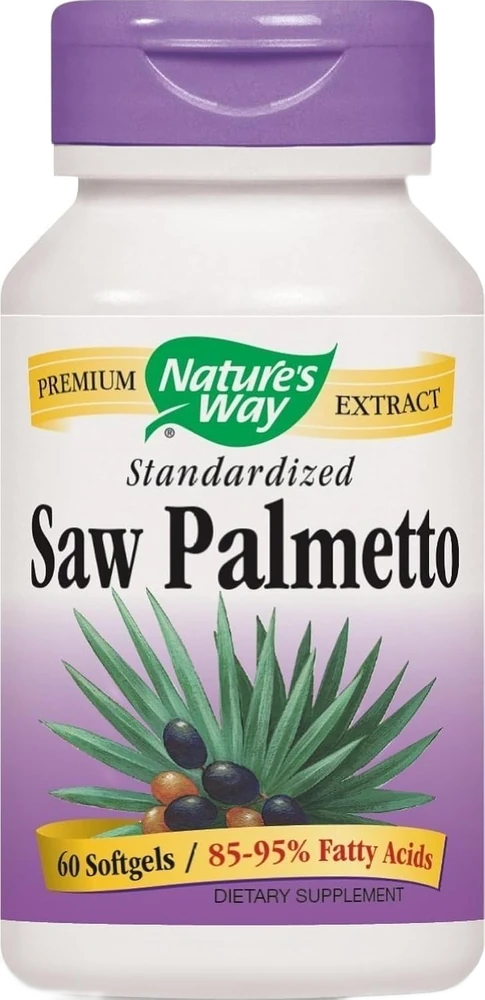
07Nature's Way 160 mg
The extract quality is genuinely good and the Non-GMO Project verification is a real plus, but the half-dose serving is a serious handicap on the axis that matters most.
Quick Answers
Are saw palmetto gummies worth it?
Only if you genuinely will not take capsules. Gummies win on adherence but lose badly on potency and standardization. If you can swallow a softgel, a standardized 320 mg extract is a much better choice.
Will a gummy block DHT and regrow hair?
There is no good evidence for that. Saw palmetto's DHT effect is weak even at full standardized doses, and a low-potency, unstandardized gummy is the least likely form to produce any hair benefit.
Sources & Further Reading
2 peer-reviewed sources, each linked to PubMed
- [1] Barry MJ, Meleth S, Lee JY, et al. Effect of increasing doses of saw palmetto extract on lower urinary tract symptoms: a randomized trial. JAMA. 2011;306(12):1344-1351. PMID 21954478 — Effect of increasing doses of saw palmetto extract on lower urinary tract symptoms: a randomized trial. Even at up to 960 mg/day of standardized extract, the CAMUS trial found no symptom benefit - underscoring how far a low-potency gummy sits from the studied intervention.
- [2] Prager N, Bickett K, French N, Marcovici G. A randomized, double-blind, placebo-controlled trial to determine the effectiveness of botanically derived inhibitors of 5-alpha-reductase in the treatment of androgenetic alopecia. J Altern Complement Med. 2002;8(2):143-152. PMID 12006122 — A randomized, double-blind, placebo-controlled trial to determine the effectiveness of botanically derived inhibitors of 5-alpha-reductase in the treatment of androgenetic alopecia. Small preliminary trial of a saw palmetto formula for hair loss; effects were modest and the evidence base for hair growth remains weak.
Affiliate disclosure: every Amazon link uses our Associates tag (superachieverclub-20). We earn a small commission at no cost to you; it funds independent reviews. We never accept payment to change a ranking.