
Qunol Mega Ubiquinol CoQ10 100 mg Review
 #2 of 11 · Best water-soluble ubiquinol✓ Label verified · Supplement Facts read Sep 7, 2026
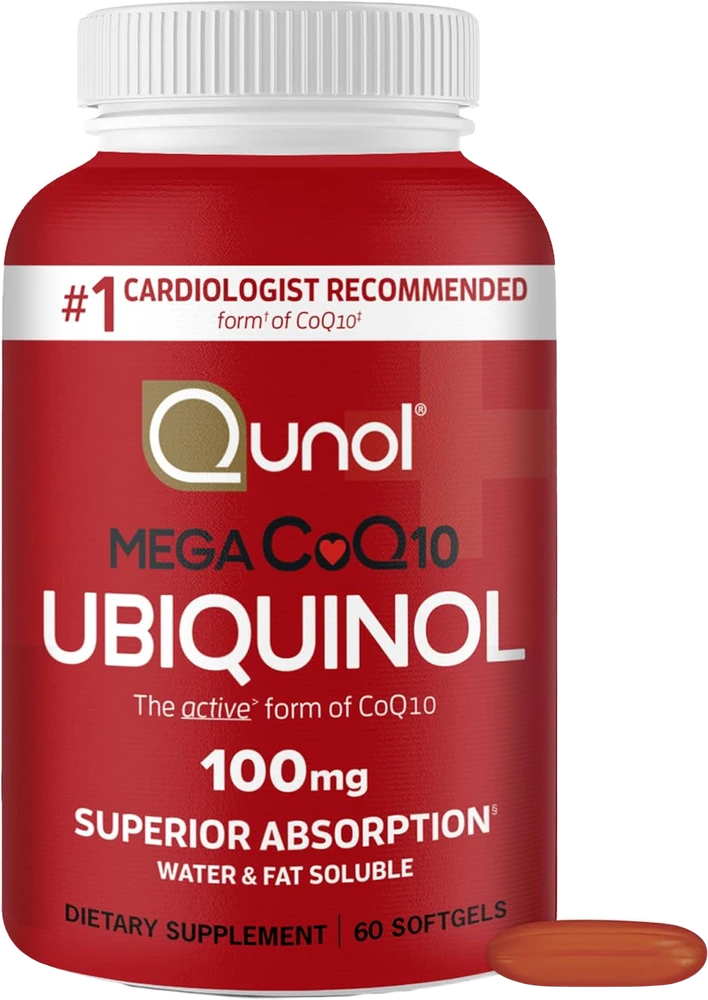
Real retailer photo, cut out. Label unedited.
Buy it. Kaneka ubiquinol in a water-and-fat-soluble base, at a fair price, from the pharmacy shelf. Kaneka ubiquinol, named on the panel, at a clean 100 mg per softgel in a base that disperses in water and fat, from the brand most pharmacies stock.
$21.88 / 60 softgels (Amazon US, Oct 11, 2026)$0.36 / 100 mg Kaneka ubiquinol softgel
Why It Scores 9.0 — And The Label Line Behind Each Number
Form (ubiquinol vs ubiquinone)
30% of scoreKaneka-sourced ubiquinol — the reduced, pre-activated form with 2-4× better bioavailability versus ubiquinone in adults over 40 and statin users (Zhang 2018, Hosoe 2007). The ubiquinol ingredient is the Kaneka fermentation-derived material that anchors the academic ubiquinol literature. Maximum form score for the exact population Qunol targets — the over-40, statin, and fertility-protocol buyer where the endogenous conversion bottleneck makes ubiquinol the correct form. (For healthy under-40 buyers, the form advantage shrinks and cheaper ubiquinone is the rational call.)
- Active form
- Ubiquinol (reduced form of CoQ10), sourced from Kaneka
- Per softgel
- 100 mg ubiquinol
Dose accuracy at 100-200 mg
25% of scoreA clean 100 mg of ubiquinol per softgel with nothing else dosed alongside it. One softgel a day covers the over-40 baseline, two a day the 200 mg used in the statin trials (Banach 2015). Same dose design as Healthy Origins and NOW, which score 9.0 here as well. The softgel base disperses in water and fat, which helps when a dose is taken without a fatty meal; against other oil-based ubiquinol softgels that edge is small.
- Daily dose
- 1 softgel over-40 maintenance · 2 softgels statin support · 2-6 softgels supervised fertility protocol
Testing + Kaneka chain-of-custody
20% of scoreThe Supplement Facts panel names Kaneka Ubiquinol as the source of the 100 mg, which is the part of the chain a buyer can check. The brand states cGMP manufacturing. It loses 1.5 points because the brand publishes no certificate of analysis by batch and the bottle carries no third-party certification beyond a gluten-free seal. Level with Healthy Origins, whose documentation is the same.
- Certifications
- Gluten Free seal on the label. No third-party certification on the bottle
- Lab transparency
- Kaneka Ubiquinol named on the panel. Other ingredients listed: MCT (palm oil), polysorbate 80, gelatin, glycerin, sorbitol, water, annatto. No public per-batch COA
Cost per active mg
15% of score$21.88 for 60 softgels on Amazon US on Oct 11, 2026: $0.36 per 100 mg softgel. On our scale for the Kaneka ubiquinols, $0.36 to $0.40 per softgel scores 9.0; the other four cost $0.45 to $0.55 on the same day and score 7.5 to 8.0. Qunol's own shop sells larger bottles at $0.31 to $0.33 per softgel. The Amazon offer came from a marketplace seller, so check the price on the day. An earlier version of this review scored cost at 7.0 on a price of about $37 for 60 softgels; that figure belongs to the 120-count bottle.
- Price
- $21.88 for 60 softgels on Amazon US (Oct 11, 2026, marketplace seller): $0.36 per 100 mg softgel. qunol.com: $32.99 for 100, $36.99 for 120
Real-world response
10% of scoreForm and dose match the groups where the evidence concentrates: statin users (the Banach 2015 meta-analysis found less muscle pain at 100-200 mg a day) and adults over 40 with declining CoQ10. The softgel base that disperses in water and fat lowers the take-it-with-fat burden, and pharmacy availability makes re-orders easy. Level with Healthy Origins; healthy buyers under 40 will notice less whatever the brand.
- Formulation
- Softgel base that disperses in water and in fat (label: 'Water & Fat Soluble')
- Target buyer
- Over-40, statin users, fertility protocols — the exception-to-ubiquinone demographic
- More Specs
- Bottle size
- 60 softgels — 2-month supply at 1/day (also sold in 100 / 120 / 240 ct)
- Key positioning
- #1 Cardiologist Recommended Form of CoQ10 (per IQVIA ProVoice survey)
- Manufacturer
- Qunol (Quten Research Institute) — mass-market brand sold by the large US pharmacy chains
Label verified. Every figure read from the Supplement Facts photo, Sep 7, 2026.
Marketing Claims Vs. Reality
Ubiquinol is the active form of CoQ10, and the body's ability to convert CoQ10 to ubiquinol diminishes with age.
Accurate and well-established. Ubiquinol (reduced) is the form that does the electron-shuttle work in mitochondria; ubiquinone (oxidised) requires endogenous conversion. Conversion efficiency declines with age and is impaired by statins, which is why ubiquinol shows 2-4× higher plasma CoQ10 than ubiquinone in adults over 40 (Zhang 2018, PMID 30302465; Hosoe 2007). This is the single most important and most honest claim Qunol makes — and the entire rationale for choosing this bottle over cheaper ubiquinone.
Patented formulation is 100% water and fat soluble for superior absorption versus regular CoQ10.
Real and the brand's genuine differentiator. CoQ10 is a waxy molecule that dissolves poorly in fat and not in water; Qunol's solubility-engineered base disperses it in both, which improves absorption over bare powder-in-capsule CoQ10 and reduces the with-fat dependency. The 'superior absorption' framing is fair against unformulated CoQ10. The implicit framing that it's dramatically better than all other ubiquinol is overstated — well-formulated ubiquinol softgels (e.g. Jarrow's MCT carrier) already pre-dissolve the ubiquinol and capture most of the same gain.
#1 Cardiologist Recommended Form of CoQ10.
An accurate report of a real IQVIA ProVoice survey result — not fabricated. But it measures brand recommendation share and familiarity among surveyed cardiologists (driven heavily by Qunol's retail and marketing dominance), not clinical superiority of the formulation on a hard endpoint versus other ubiquinols. A legitimate trust and availability signal; not proof the molecule inside outperforms the identical Kaneka ubiquinol in a cheaper bottle.
Beneficial for statin users — statins lower CoQ10 levels, and supplementation helps replenish them.
Mechanistically and clinically sound. Statins inhibit HMG-CoA reductase, the shared first step of both cholesterol and CoQ10 synthesis, depleting endogenous CoQ10 over months of use. The Banach 2015 meta-analysis (PMID 25440725, 12 RCTs) found CoQ10 supplementation significantly reduced statin-induced muscle pain, weakness, cramps, and tiredness versus placebo. The statin-support positioning is one of the best-supported claims on the label.
Helps maintain healthy blood pressure levels already within a normal range.
Supported in direction but carefully hedged (the 'within a normal range' structure-function qualifier is the regulatory tell). The Rosenfeldt 2007 meta-analysis (PMID 17287847) found CoQ10 can modestly lower systolic and diastolic blood pressure. Real effect, but the magnitude is modest and the claim is deliberately soft — CoQ10 is a supportive adjunct, not an antihypertensive, and anyone on BP medication should monitor for additive effects.
What Our Test Actually Found
The form is the whole point — and it's the right form for exactly who Qunol targets
Strip away the branding and what justifies this bottle is the ubiquinol form. CoQ10 supplements come in two flavours: ubiquinone (oxidised, cheap, dominant on the shelf) and ubiquinol (reduced, pre-activated, premium). Your body interconverts them, but the conversion enzyme slows with age and is suppressed by statins — so for the over-40, statin-using, and chronic-condition populations, ubiquinol delivers 2-4× the plasma CoQ10 of ubiquinone at the same dose (Zhang 2018, Hosoe 2007). Qunol's entire marketing — and our recommendation — is aimed squarely at that demographic. The corollary matters just as much: if you're a healthy under-40 buyer, your conversion machinery is fine, ubiquinone reaches the same endpoint, and paying the ubiquinol premium is largely wasted. Qunol is a niche winner, not a universal default — the niche being people for whom the active form genuinely earns its keep.
The water-soluble base is a real advantage — but mostly over cheap dry ubiquinone, not over good softgels
Qunol's patented water-and-fat-soluble formulation is its honest differentiator. CoQ10 is a waxy molecule that doesn't dissolve in water and barely in fat, which is why unformulated CoQ10 powder in a capsule absorbs erratically and demands a fatty meal. Qunol solubilises the ubiquinol so it disperses in both phases, smoothing absorption and softening the take-it-with-fat rule. Against a bare ubiquinone capsule, this is a meaningful edge. Against other well-formulated ubiquinol softgels — Jarrow's MCT carrier oil, Healthy Origins' oil-suspended Kaneka — the gap narrows sharply, because those already pre-dissolve the ubiquinol in lipid. So the solubility story is genuine but context-dependent: a strong reason to pick Qunol over generic dry CoQ10, a marginal one over a good Kaneka softgel competitor.
The fertility angle is legitimate but must stay in its lane — supervised adjunct, not a cure
The reason CoQ10 keeps appearing in fertility conversations is sound cell biology: eggs and sperm are extraordinarily energy-hungry and depend on mitochondrial ATP, which CoQ10 is essential for, and gamete quality declines with age in parallel with CoQ10. Small randomised trials and reviews have studied CoQ10 (commonly 200-600 mg/day) as an adjunct in women with diminished ovarian reserve undergoing IVF and in men for sperm count and motility, with encouraging but not definitive results. Ubiquinol is the logical form for the over-35 fertility demographic — same conversion-efficiency argument. But this belongs in a supervised protocol: CoQ10 supports the machinery, it does not treat the underlying cause of infertility, and anyone pursuing this should be doing so with a reproductive endocrinologist, not self-prescribing off a marketing claim. We rate the mechanism plausible and the evidence promising-but-immature — worth discussing with a doctor, not a guaranteed fix.
The price is in line with the other Kaneka ubiquinols
On Oct 11, 2026 the 60-softgel bottle cost $21.88 on Amazon US, $0.36 per softgel, from a marketplace seller. Qunol's own shop sells 100 softgels for $32.99 and 120 for $36.99, which is $0.31 to $0.33 each. The other Kaneka ubiquinols we rank were $27 to $33 for 60 softgels on Amazon that day. An earlier version of this review called Qunol the most expensive way to buy Kaneka ubiquinol. That was our error: it set the 60-count bottle against the price of the 120-count. So the choice between Qunol, Jarrow and Healthy Origins is not about price. Qunol has the base that disperses in water and fat and is sold by the large pharmacy chains; Jarrow has the best documentation. The molecule is the same Kaneka ubiquinol in all three.
The '#1 Cardiologist Recommended' badge is real survey data — read it as trust, not as proof
The badge is footnoted to the IQVIA ProVoice survey, a recurring market-research instrument that asks clinicians which brands they recommend. It's an accurate report of a real result, not a fabricated claim. What it actually measures is brand recommendation share among surveyed cardiologists — a figure powered largely by Qunol's retail ubiquity and ad spend — not a head-to-head clinical trial showing Qunol's formulation beats other ubiquinols on a hard outcome. It tells you cardiologists know and recommend the Qunol brand frequently, which is a legitimate trust and familiarity signal (and helpful if a clinician has name-checked it). It does not tell you the ubiquinol inside is clinically superior to the identical Kaneka ubiquinol in a cheaper bottle. Useful context; not evidence of molecular superiority.
Full analysis: all pros & cons (8), buy if / skip if
- Kaneka-sourced ubiquinol — the active, reduced form that's genuinely right for over-40 and statin buyers
- Patented water-and-fat-soluble base — a real absorption edge over bare powder-in-capsule CoQ10
- Sold by the large US pharmacy chains and warehouse clubs, so it is easy to restock
- '#1 Cardiologist Recommended' (IQVIA ProVoice) brand trust + clean 100 mg/softgel that scales across protocols
- Strongest, most honest claim on the label — ubiquinol's age/statin conversion-efficiency case is solid
- No certificate of analysis published by batch, and no third-party certification on the bottle
- If you're 40-and-under and not on a statin, you likely don't need ubiquinol at all — cheaper ubiquinone reaches the same endpoint
- Contains polysorbate 80 and sorbitol in the softgel base, and palm-derived MCT oil
- You're over 40 or on a statin and want the active, reduced ubiquinol form rather than ubiquinone
- You're running a supervised fertility protocol (egg or sperm quality) and want ubiquinol for the over-35 demographic
- You value buying CoQ10 off a pharmacy shelf today — Qunol is at CVS, Walgreens, Walmart, Costco
- The water+fat-soluble formulation and the cardiologist-recommended brand trust matter to you
- You're under 40, healthy, and not on a statin — buy Doctor's Best (#6) ubiquinone, which costs less per softgel
- You want a published certificate of analysis or a certifier listing — Qunol publishes neither for this bottle
- You avoid polysorbate 80 or sorbitol — both are in this softgel base
Kaneka ubiquinol, named on the panel, at a clean 100 mg per softgel in a base that disperses in water and fat, from the brand most pharmacies stock. The right pick for the over-40 buyer, the statin user, or a supervised fertility protocol, where the active form earns its place. At $0.36 per softgel on Amazon (Oct 11, 2026) it costs about the same as the other Kaneka ubiquinols. What it lacks is a published batch certificate of analysis.
Qunol Mega Ubiquinol CoQ10 is the bottle to buy if you specifically need the active, reduced form of CoQ10 — you're over 40, on a statin, or running a fertility protocol where the conversion-efficiency math makes ubiquinol the right call over the cheaper ubiquinone that suits younger buyers. It ships Kaneka-sourced ubiquinol (the fermentation-derived raw material behind the academic literature) at a clean 100 mg per softgel, in a softgel base that disperses in water and in fat. The panel names Kaneka Ubiquinol, which we read off the label. On Oct 11, 2026 the 60-softgel bottle cost $21.88 on Amazon US, $0.36 per softgel, which is in line with the other Kaneka ubiquinols we rank. The brand publishes no batch certificate of analysis, and the '#1 Cardiologist Recommended' line reports a survey of which brand doctors name, not a clinical comparison. Qunol is sold by the large US pharmacy chains, and for the over-40-and-statin buyer the form is right. Here's the full breakdown.
Kaneka ubiquinol from the pharmacy shelf, at a fair price.

Qunol Mega Ubiquinol CoQ10 is what we recommend to the specific buyer who genuinely needs the active form: you're over 40, you're on a statin, or you're running a supervised fertility protocol where the over-35 conversion-efficiency math makes ubiquinol the right call over the cheaper ubiquinone that suits younger people. The form is the strongest, most honest part of the package — Kaneka-sourced ubiquinol delivers 2-4× the plasma CoQ10 of ubiquinone in exactly that population (Zhang 2018, Hosoe 2007), and Qunol puts it in a softgel base that disperses in water and fat, a real absorption advantage over bare powder-in-capsule CoQ10. Add the '#1 Cardiologist Recommended' line and wide pharmacy distribution, and for the over-40-and-statin demographic this is an easy, low-friction buy. Two caveats. First, documentation: the panel names Kaneka Ubiquinol, but Qunol publishes no certificate of analysis by batch, and Jarrow QH-Absorb (#1) is better documented for the same molecule. Second, the form only matters for the right person: if you're a healthy under-40 buyer not on a statin, your body converts ubiquinone perfectly well, and Doctor's Best ubiquinone (#6) reaches the same endpoint for less per softgel. On price there is no caveat any more: at $0.36 per softgel on Amazon (Oct 11, 2026) Qunol costs about what the other Kaneka ubiquinols cost. An earlier version of this page said otherwise because it used the price of the 120-count bottle. So: buy Qunol if you want the active form with the convenience of grabbing it off any pharmacy shelf and the solubility story appeals; buy Jarrow if documentation matters most to you; and buy ubiquinone if you're young, healthy, and statin-free. On fertility specifically — a real and growing reason people seek out ubiquinol — the mechanism is sound and the early evidence is encouraging, but treat CoQ10 as a doctor-supervised adjunct, never a standalone treatment. Qunol earns the 9.0.
If This Doesn’t Fit — Try These
 01
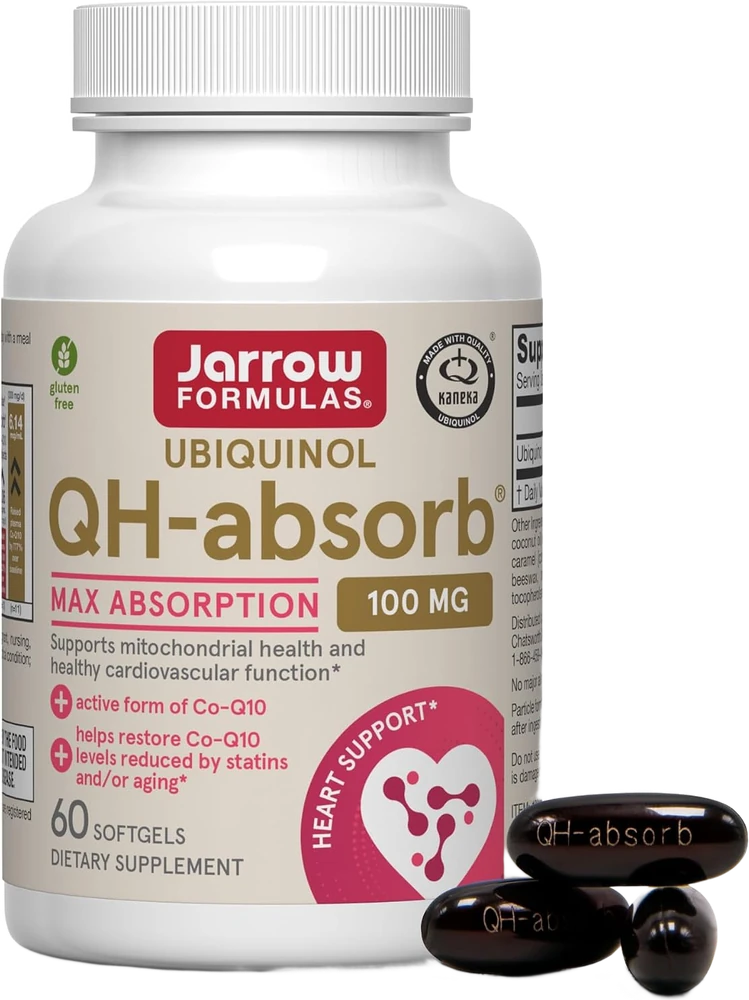
Jarrow Ubiquinol QH-Absorb
The brand-name Kaneka option.
 06
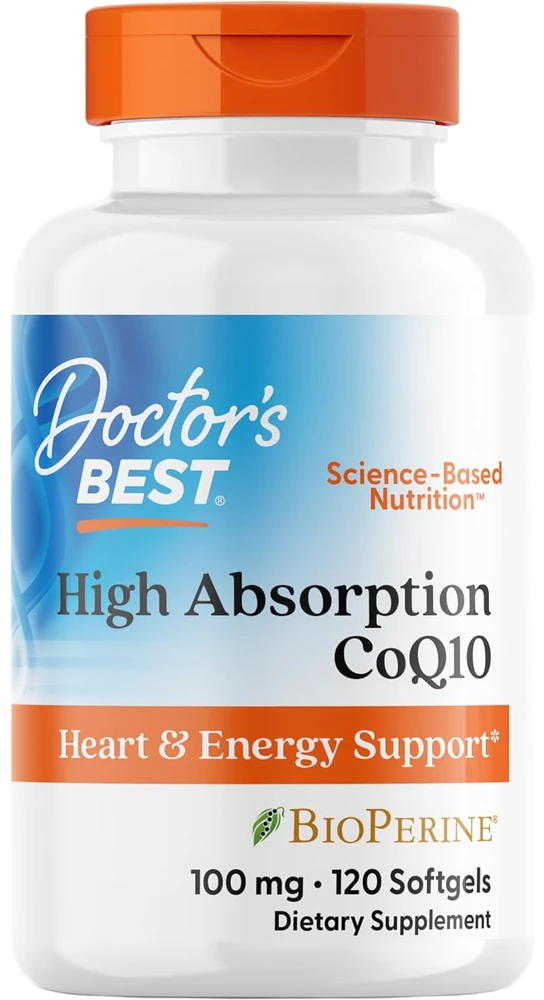
Doctor's Best High Absorption CoQ10
The right call for under-40 buyers whose conversion enzyme works and for first-time experimenters who want to test CoQ10 without paying ubiquinol prices.
 03
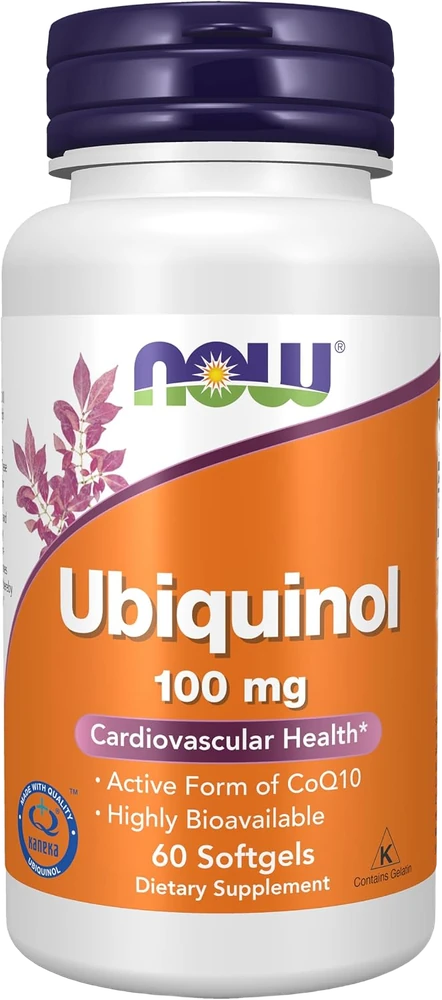
NOW Ubiquinol
If you want to walk into a Sprouts or Vitamin Shoppe and grab a bottle of Kaneka ubiquinol you trust, NOW Foods is the answer.
Quick Answers
Ubiquinol vs ubiquinone — which form is Qunol, and does the difference actually matter for me?
Qunol Mega Ubiquinol is ubiquinol — the reduced, pre-activated form of CoQ10, sourced from Kaneka (the Japanese fermentation-derived raw material used across the academic literature). Whether the form matters depends almost entirely on your age and statin status. CoQ10 exists in two interconvertible forms: ubiquinone (oxidised) and ubiquinol (reduced). Your body converts between them, but the conversion enzyme efficiency declines with age and is further impaired by statins. Under ~40 and healthy: your conversion machinery is robust, so cheaper ubiquinone (Doctor's Best, #6) reaches the same bioactive endpoint — paying the ubiquinol premium is mostly wasted money. Over 40, on a statin, or managing a chronic condition: the conversion bottleneck is real, and ubiquinol delivers 2-4× higher plasma CoQ10 at equivalent oral doses (Zhang 2018, PMID 30302465; Hosoe 2007). That over-40-and-statin population is exactly who Qunol's marketing — and our recommendation — targets. If you're 28 and just want general antioxidant support, save your money and buy ubiquinone.
Can CoQ10 / ubiquinol really help with fertility — egg and sperm quality?
There is a genuine, mechanistically plausible evidence base here, but it must be read responsibly and discussed with your doctor or fertility specialist before you act on it. The rationale: eggs and sperm are among the most energy-demanding cells in the body, and both depend on mitochondrial ATP — which CoQ10 is essential for. Egg quality and ovarian response decline with maternal age, paralleling the age-related CoQ10 decline, and several small randomised trials and reviews have examined CoQ10 (often 200-600 mg/day) as an adjunct in women with diminished ovarian reserve undergoing IVF, and in men for sperm count and motility (e.g. Xu 2018; reviews summarised in the assisted-reproduction literature). The signals are encouraging but the trials are small, heterogeneous, and not definitive — CoQ10 is a supportive adjunct, not a fertility treatment, and it does not replace medical evaluation of the underlying cause. Ubiquinol (Qunol's form) is the logical choice over ubiquinone for the over-35 fertility demographic for the same conversion-efficiency reason. Bottom line: reasonable to discuss with your reproductive endocrinologist as part of a supervised protocol; not something to self-prescribe as a cure.
What does Qunol's 'water and fat soluble' claim actually mean — is it real?
It's real and it's Qunol's genuine differentiator, though the magnitude is easy to oversell. CoQ10 (in both forms) is a fat-soluble, waxy molecule that dissolves poorly even in fat and not at all in water — which is why plain CoQ10 powder in a capsule has notoriously erratic absorption and why every CoQ10 should be taken with a fatty meal. Qunol's patented formulation solubilises the ubiquinol so it disperses in both water and fat, which is the mechanism behind its 'superior absorption' positioning. The honest read: this is a real solubility-engineering advantage over a bare powder-in-capsule ubiquinone, and it reduces (but does not eliminate) the take-it-with-fat dependency. But every quality ubiquinol softgel — Jarrow's MCT carrier, Healthy Origins, Kaneka-licensed bottles generally — already pre-dissolves the ubiquinol in carrier oil, so they capture most of the same benefit. Qunol's solubility tech is a meaningful edge over cheap dry ubiquinone, a marginal one over other well-formulated ubiquinol softgels.
What does Qunol Mega Ubiquinol cost compared with other Kaneka ubiquinols?
About the same, and on the day we checked a little less. On Oct 11, 2026 the 60-softgel bottle was $21.88 on Amazon US, $0.36 per 100 mg softgel, sold by a marketplace seller. Qunol's own shop sells the 100-count for $32.99 ($0.33 per softgel) and the 120-count for $36.99 ($0.31). The other Kaneka ubiquinols on our list were $27 to $33 for 60 softgels on Amazon that day. An earlier version of this review said Qunol was the most expensive Kaneka ubiquinol. That was wrong: it compared the 60-count bottle with the price of the 120-count. Prices move, so check the listing before you order.
What is the '#1 Cardiologist Recommended' claim based on, and should I trust it?
The claim is footnoted to the IQVIA ProVoice survey — a recurring market-research survey that asks healthcare professionals which brands they recommend. It is an accurate report of a real survey result, not a fabrication. But understand what it does and doesn't mean: it reflects brand familiarity and recommendation share among surveyed cardiologists (driven heavily by Qunol's enormous retail presence and marketing), not a head-to-head clinical trial proving Qunol's formulation outperforms other ubiquinols on a hard endpoint. It tells you cardiologists recognise and recommend the Qunol brand often; it does not tell you the molecule inside is superior to the identical Kaneka ubiquinol in a cheaper bottle. Useful as a trust/availability signal, not as proof of clinical superiority.
How should I dose Qunol ubiquinol, and how long until I notice anything?
Dosing by protocol: General longevity / over-40 maintenance — 1 softgel/day (100 mg) with a meal; the 60-count bottle is a 2-month supply. Statin user with muscle soreness or fatigue — 2 softgels/day (200 mg) with meals, matching the Banach 2015 meta-analysis range. Fertility adjunct (under medical supervision) — protocols in the literature typically run 200-600 mg/day, i.e. 2-6 softgels split with meals; do this only with your doctor's guidance. Despite the water-soluble formulation, still take it with food containing some fat for best results. Timeline: CoQ10 is not a stimulant — expect to feel nothing in week 1. Serum CoQ10 measurably rises on bloodwork by weeks 2-4 (Hosoe 2007 PK curve). Statin users with prior myalgia often notice reduced soreness in weeks 2-4. Energy/fatigue improvements in deficient populations show up over weeks 4-8. Fertility endpoints (egg/sperm quality) operate on the multi-month cycle of gametogenesis and are assessed by your clinician, not by feel.
Is Qunol safe to take with statins or blood-pressure medication?
CoQ10 has an excellent safety profile and ubiquinol is specifically intended for statin users — statins deplete endogenous CoQ10 by blocking the shared HMG-CoA reductase pathway, and supplementation replenishes it (the rationale behind the Banach 2015 statin-myopathy meta-analysis). Most people tolerate it with no side effects; mild GI upset is the most commonly reported. Two genuine cautions, both worth a quick word with your prescriber: (1) CoQ10 can modestly lower blood pressure (Rosenfeldt 2007 meta), so if you're on antihypertensives, monitor for additive effects. (2) CoQ10 is structurally vitamin-K-like and may slightly reduce the effect of warfarin — if you're on warfarin or another anticoagulant, do not start CoQ10 without telling the doctor managing your INR. None of this is a reason to avoid ubiquinol; it's a reason to coordinate, especially since the over-40/statin/cardiac population Qunol targets is the most likely to be on these medications.
Sources & Further Reading
6 peer-reviewed sources, each linked to PubMed
- [1] Hosoe 2007 (Kaneka ubiquinol pharmacokinetics) PMID 16919858 — Study on safety and bioavailability of ubiquinol (Kaneka QH) after single and 4-week multiple oral administration to healthy volunteers. Pharmacokinetic study of Kaneka ubiquinol in healthy adults — established the dose-response curve, the safety profile up to 300 mg/day for 4 weeks, and the bioavailability advantage of the reduced form. The reference safety + PK paper for the exact Kaneka-grade ubiquinol Qunol ships.
- [2] Zhang 2018 (ubiquinol vs ubiquinone) PMID 30302465 — Ubiquinol is superior to ubiquinone to enhance Coenzyme Q10 status in older men. Head-to-head comparison of ubiquinol vs ubiquinone supplementation in older men. Ubiquinol produced significantly higher plasma CoQ10 at equivalent oral doses — the 2-4× bioavailability advantage of the reduced form in adults over 40 that is the entire reason to choose Qunol's ubiquinol over cheaper ubiquinone.
- [3] Banach 2015 (statin myopathy meta) PMID 25440725 — Effects of coenzyme Q10 on statin-induced myopathy: a meta-analysis of randomized controlled trials. Meta-analysis of 12 RCTs (n=575) on CoQ10 in statin users with myopathy. Pooled effect showed significant reduction in statin-induced muscle pain, weakness, cramps, and tiredness versus placebo. The evidence behind Qunol's statin-support positioning and the 200 mg/day (2-softgel) statin protocol.
- [4] Rosenfeldt 2007 (blood pressure meta) PMID 17287847 — Coenzyme Q10 in the treatment of hypertension: a meta-analysis of the clinical trials. Meta-analysis of 12 clinical trials found CoQ10 supplementation produced modest reductions in systolic and diastolic blood pressure. Supports Qunol's hedged 'healthy blood pressure within a normal range' claim — a real but modest effect, supportive rather than a substitute for antihypertensive therapy.
- [5] Xu 2018 (CoQ10 and ovarian response) PMID 29587861 — Pretreatment with coenzyme Q10 improves ovarian response and embryo quality in low-prognosis young women with decreased ovarian reserve: a randomized controlled trial. RCT in young women with diminished ovarian reserve undergoing IVF — CoQ10 pretreatment improved ovarian response and embryo quality versus control. Representative of the encouraging-but-not-definitive fertility evidence: a basis for discussing CoQ10 as a supervised adjunct with a fertility specialist, not for self-prescribing as a treatment.
- [6] Hernández-Camacho 2018 (aging review) PMID 29459830 — Coenzyme Q10 supplementation in aging and disease. Comprehensive review of CoQ10 in aging, cardiovascular disease, neurodegeneration, and statin complications. Establishes the age-related decline curve (~50% drop in heart and skeletal muscle by age 60) and the rationale for ubiquinol supplementation in adults over 40 — the demographic Qunol's active-form positioning targets.
Affiliate disclosure: every Amazon link uses our Associates tag (superachieverclub-20). We earn a small commission at no cost to you; it funds independent reviews. We never accept payment to change a ranking.