
Organic India Ashwagandha Gummies Review
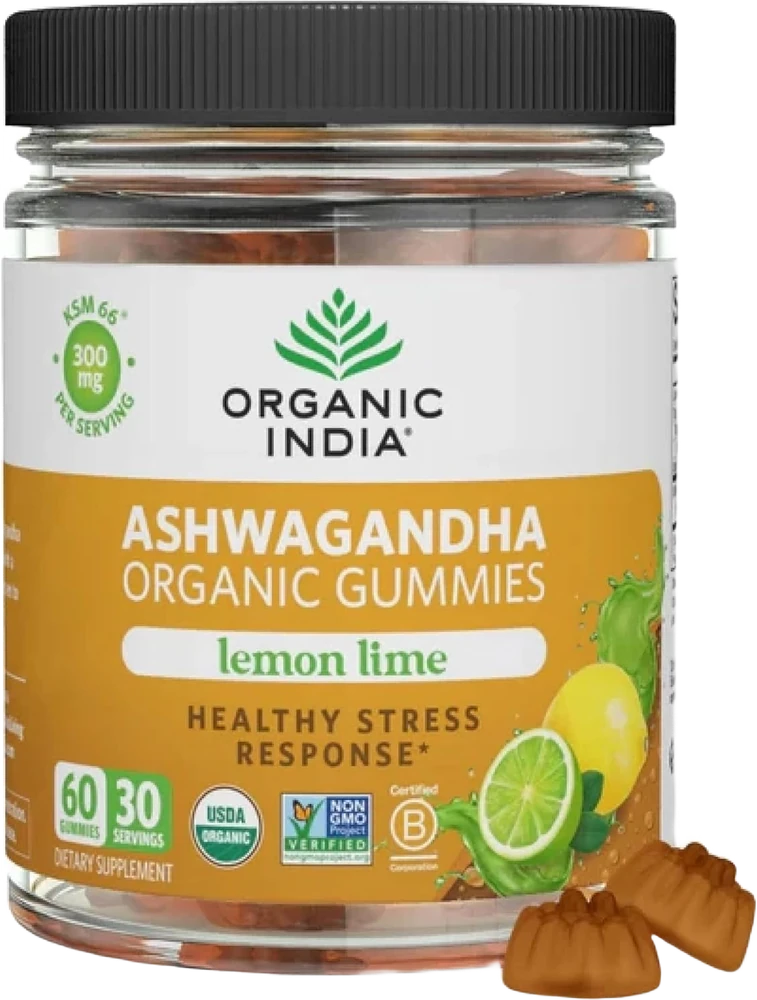 #5 of 7 · Best organic✓ Label verified · Supplement Facts read Aug 27, 2026
Real retailer photo, cut out. Label unedited.
Consider it. Legitimately-dosed organic KSM-66 — the cleanest fit if organic is a hard requirement, a premium you don't need if it isn't. Real KSM-66 at the studied 300 mg/serving, USDA-organic, vegan, non-GMO, with slightly lower sugar (~3 g) than the berry gummies.
$20 / 60 gummies (30 servings)$0.67 / 2-gummy serving (300 mg KSM-66)
Why It Scores 7.9 — And The Label Line Behind Each Number
Extract form & standardisation
30% of scoreReal KSM-66 — Ixoreal's patented full-spectrum root extract standardised to 5% withanolides, the exact material behind the cortisol, sleep, and testosterone trials (Chandrasekhar 2012, Wankhede 2015, Langade 2019). This is the single most important thing a gummy can get right, and Organic India gets it right: a named, standardised, trial-validated extract rather than an unnamed 'ashwagandha root extract' with no withanolide marker. Scores at the top of the gummy field on this axis, tied with the other KSM-66 picks (Goli, Nature Made, Nature's Bounty) — the organic certification is a bonus on top of, not a substitute for, the standardisation. Not a perfect 10 only because it's the same standard KSM-66 as the cheaper picks, with no concentration edge or higher-withanolide Sensoril alternative.
- Active form
- KSM-66 ashwagandha root extract (Withania somnifera, standardised to 5% withanolides)
- Daily dose
- 2 gummies/day; split AM/PM or both with food (300 mg = floor of the 300-600 mg range)
- Trial-dose context
- 300 mg = bottom of the studied range; trials' higher arms used 600 mg/day
- Flavor
- Lemon-lime
Dose vs clinical range
25% of score300 mg KSM-66 per 2-gummy serving (150 mg/gummy) — a legitimate, studied dose, but the FLOOR of the 300-600 mg evidence range. Chandrasekhar 2012 used 300 mg ×2/day (600 mg) for the headline cortisol drop; Salve 2019 showed 600 mg outperforming 250 mg. One serving a day is a real starter dose; the trials' higher-effect arms used double this. To reach 600 mg you'd take two servings (~6 g sugar) or switch to a capsule. Scores mid-range: a real dose, honestly the minimum. Identical positioning to every other mainstream gummy on the list — they all cluster at this 300 mg floor, which is exactly why dose doesn't separate the field and the other criteria do.
Label cleanliness & testing
20% of scoreThe standout axis for this pick. USDA-organic certification from a dedicated organic-herbal brand — not a mass-market label that added 'organic' to one SKU, but a company whose entire catalogue is built on certified-organic Ayurvedic sourcing. Vegan, non-GMO, with a clean ingredient panel and ~3 g sugar (modestly under the 4 g berry gummies). The organic certification requires audited, controlled sourcing as a baseline, which is part of what justifies the price. Scores at the top of the gummy field here — the certification stack is the most rigorous on the list. Held just below a perfect score because the public-facing third-party testing documentation (per-batch COA lookup) isn't as prominent as the organic credential itself.
- Diet / label
- Vegan, non-GMO, USDA-organic line; pectin-based (gelatin-free)
- Manufacturer
- Organic India — dedicated certified-organic herbal-supplement brand
Format & adherence
15% of scoreA gummy is the highest-adherence format there is, and adherence is what makes a chronic-dosing adaptogen actually work — the cortisol and sleep effects build over 4-8 weeks of DAILY use, so a tasty gummy you'll take beats a capsule you forget. Pleasant lemon-lime flavor (a change from the ubiquitous mixed-berry), vegan pectin base, easy 2-gummy serving. The ~3 g sugar is the format's built-in tax but it's slightly lower here than most. Scores well on adherence; not higher because the format itself caps the practical dose (you won't chew 4 gummies for 600 mg) and carries sugar a capsule never would — the universal gummy tradeoff.
Value per serving
10% of scoreThe weakest axis, by design. At ~$20 / 60 gummies = $0.67 per 2-gummy serving, this is among the priciest mainstream KSM-66 gummies — roughly 35-55% above Nature's Bounty ($0.43/serving) and Nature Made ($0.50) for the IDENTICAL 300 mg of the IDENTICAL KSM-66 extract. Per active mg, you're paying a clear premium, and the premium buys the organic certification rather than more or better actives. Scores below the field on pure value. The redeeming nuance: if you'd pay extra for USDA-organic anyway (as organic-first shoppers do for food), the premium is rational spend, not waste — it's just genuinely a premium, and the score reflects the raw cost-per-mg honestly.
- Per serving
- 300 mg KSM-66 (2 gummies, 150 mg each) — so one gummy is half a dose
- Bottle size
- 60 gummies — 30 servings (30-day supply at 1 serving/day)
- Price
- $20 / 60 gummies (~$0.67 per 2-gummy serving)
- More Specs
- Sugar
- ~3 g per 2-gummy serving — modestly lower than the 4 g berry gummies
Label verified. Every figure read from the Supplement Facts photo, Aug 27, 2026.
Marketing Claims Vs. Reality
Certified organic ashwagandha.
Accurate. Organic India is a dedicated USDA-organic herbal brand and this gummy sits in its certified-organic line. The organic credential is the product's central, legitimate differentiator — verifiable from the certification and the brand's catalogue-wide organic positioning.
Made with clinically studied KSM-66 ashwagandha.
Accurate. KSM-66 is the patented root extract (5% withanolides) used across the major cortisol, sleep, and testosterone RCTs (Chandrasekhar 2012, Wankhede 2015, Langade 2019). The 300 mg per 2-gummy serving is a real, studied dose of the studied material.
Helps the body manage stress and supports calm.
Defensible at the dose, with a caveat. 300 mg/day KSM-66 is a legitimate starter dose, but it's the FLOOR of the 300-600 mg range — the trials' larger stress/cortisol effects came from 600 mg/day (Chandrasekhar, Salve). A real effect is plausible over 4-8 weeks of daily use; the strongest published effects used roughly double this serving.
Modestly lower sugar than the mainstream berry gummies (a SAC comparison — not a claim printed on the label).
True but small. At ~3 g/serving it's modestly under the ~4 g in the mainstream berry gummies — a real if minor edge. It is NOT a low- or zero-sugar product; strict sugar-counters should compare against Goli Zero Sugar (0 g via allulose) rather than read this as 'low sugar.'
Vegan and non-GMO.
Verifiable from the pectin base and the brand's non-GMO/organic certifications. Standard format claims, accurately made; orthogonal to the dose and efficacy questions.
What Our Test Actually Found
Correction: the bottle is a 30-day supply, and the sugar total is ~90 g, not ~99 g over 60 days
An earlier version of this review said the sugar 'adds up to ~1.3 g shy of 100 g over a 60-day bottle.' The Supplement Facts panel reads Serving Size 2 Gummies, Servings Per Container 30 — a 30-day supply at one serving a day, matching this review's own spec row. At 3 g of sugar per serving, that's 30 x 3 g = about 90 g of sugar per bottle, not a 60-day/~99 g total. We re-read the label on Sep 3, 2026 and corrected the FAQ answer (text only — no score changed, since this arithmetic slip never fed the Dose or Label-cleanliness scores).
The organic certification is the entire premium — and that's the honest pitch
Strip everything else away and this is a 'pay for the certification' decision. The active (KSM-66, 5% withanolides), the dose (300 mg/serving), and the format (vegan pectin gummy) are the same as the cheaper KSM-66 gummies on the list. What's different is the USDA-organic credential and a brand whose whole identity is organic Ayurvedic herbals. So the value question is clean: do you pay extra for organic sourcing on the things you ingest? If yes — as organic-first shoppers do for food — this is the rational pick and the cleanest fit on the list. If no, the premium buys you nothing the $0.43-0.50/serving gummies don't already deliver. We rank it #5 and call it 'best organic' precisely because that's the one axis where it leads, and we don't pretend the premium buys better pharmacology.
Same 300 mg KSM-66, 35-55% more expensive than the cheaper picks
The price gap is the headline tradeoff. Organic India runs ~$0.67 per 2-gummy serving; Nature's Bounty is ~$0.43 and Nature Made ~$0.50 — all three at the identical 300 mg of the identical KSM-66 extract. That's roughly a 35-55% premium per serving for the same studied dose. Over a year of daily use the difference is real money (~$45-90 vs the cheapest KSM-66 gummy). The premium is justified ONLY by the organic certification and brand ethos — there is no dose, potency, or extract-quality advantage to point to. For the value-driven buyer, Nature's Bounty (review #4 on the list) delivers the same actives for the lowest cost per mg in the category, and we say so plainly.
300 mg is a legitimate dose, but it's the floor — and you can't easily go higher in gummy form
The dose is real and studied, but it sits at the bottom of the 300-600 mg evidence range. Chandrasekhar 2012's headline 27.9% cortisol reduction came from 300 mg TWICE a day (600 mg total); Salve 2019 showed the 600 mg arm outperforming 250 mg. One serving of this gummy is a fair starter dose that should move perceived stress and sleep over 4-8 weeks of daily use — but if you want the trials' higher-effect dose, you'd take two servings (doubling sugar to ~6 g) or switch formats. This is the universal gummy ceiling, not an Organic India flaw; it's why every high-dose-protocol reader on the list is told to buy a capsule instead.
Slightly lower sugar and a lemon-lime flavor are small, genuine differentiators
Two minor pluses keep this above a generic equal-dose gummy. First, ~3 g sugar per serving vs the ~4 g in the mainstream berry gummies — a real if small edge for someone trimming (not eliminating) sugar. Second, lemon-lime instead of the category-standard mixed-berry, which is a genuine palate change for anyone tired of berry gummies. Neither is a reason to pay the organic premium on its own, but both sweeten the deal for the shopper who's buying it for the organic credential anyway. For zero sugar, Goli Zero Sugar (#3) is the right pick; for a few grams less than the berry default, this delivers.
Narrower retail availability than Goli or Nature's Bounty
A practical, non-pharmacological knock: Organic India's retail footprint is thinner than the mass-market brands. Goli and Nature's Bounty are stocked in nearly every US pharmacy and grocery; Organic India skews toward natural-foods retailers and online (the Amazon deep-link is the reliable route, tag superachieverclub-20). For a chronic-dosing supplement where running out breaks the daily habit that makes it work, easy reordering matters. It's a minor point for anyone who buys online by default, but worth flagging for the reader who restocks offline — the cheaper mainstream picks are easier to grab on a normal shopping trip.
Full analysis: all pros & cons (8), buy if / skip if
- Real KSM-66 standardised root extract (5% withanolides) — the exact form the cortisol/sleep trials used
- USDA-organic from a dedicated organic-herbal brand — the cleanest organic fit on the gummy list
- Slightly lower sugar (~3 g/serving) than the 4 g mainstream berry gummies, with a lemon-lime change of palate
- Vegan, non-GMO, pectin-based — a clean label that backs the organic positioning
- Highest-adherence format: a gummy you'll take daily is what makes a chronic adaptogen actually work
- The organic label is the whole premium — same 300 mg KSM-66 costs 35-55% less from Nature's Bounty ($0.43) or Nature Made ($0.50)
- 300 mg is the FLOOR of the 300-600 mg evidence range; reaching 600 mg means 2 servings (~6 g sugar) or a capsule
- Narrower retail availability than Goli or Nature's Bounty — easiest to reorder online
- Organic is a hard requirement — you want USDA-organic for everything you ingest, and a dedicated herbal brand behind it
- Adherence is your real obstacle — a clean, lemon-lime gummy you'll actually take daily beats a capsule you forget
- You want a touch less sugar — ~3 g/serving vs the 4 g in the mainstream berry gummies
- First-time user who values organic sourcing and wants a legitimately-dosed KSM-66 starter at 300 mg/day
- Organic isn't a requirement — Nature's Bounty ($0.43/serving) and Nature Made ($0.50) deliver the same 300 mg KSM-66 for less
- You want zero sugar — Goli Zero Sugar keeps the same 300 mg KSM-66 at 0 g via allulose
- You're running a 600 mg+ protocol — buy a KSM-66 capsule; you'd need 2 servings (~6 g sugar) to get there in gummies
Real KSM-66 at the studied 300 mg/serving, USDA-organic, vegan, non-GMO, with slightly lower sugar (~3 g) than the berry gummies. The whole premium is the organic label: at $0.67/serving it's 35-55% pricier than Nature's Bounty ($0.43) and Nature Made ($0.50) for the SAME 300 mg of the SAME extract. The dose is the floor of the 300-600 mg range, and availability is narrower than the mainstream picks. Buy it if you want a certified-organic gummy you'll take daily; skip it for the cheaper equal-dose KSM-66 gummies, for zero-sugar (Goli Zero Sugar), or for high-dose protocols (buy a capsule).
Organic India Ashwagandha Gummies are the certified-organic pick on the ashwagandha-gummy shelf — and the cleanest fit on the list for one specific shopper: the person who treats USDA-organic as non-negotiable for everything they put in their body. The active is real KSM-66, the patented root extract standardised to 5% withanolides that the cortisol, sleep, and stress trials actually used (Chandrasekhar 2012, Salve 2019, Langade 2019), dosed at 300 mg per 2-gummy serving. The sugar runs ~3 g — modestly lower than the 4 g in the mainstream berry gummies — in a vegan, non-GMO, lemon-lime format from a brand whose entire identity is organic Ayurvedic herbals. The honest catch is that the organic certification IS the premium. At ~$20 a bottle ($0.67/serving), this costs roughly 35-55% more than the cheaper KSM-66 gummies (Nature's Bounty at $0.43/serving, Nature Made at $0.50) — and all three deliver the identical 300 mg of the same KSM-66 extract. You're paying for the label and the brand ethos, not for a higher dose or a better active. On top of that, 300 mg is the FLOOR of the 300-600 mg evidence range, and Organic India's retail footprint is narrower than Goli's or Nature's Bounty's. None of that makes it a bad gummy — it's a legitimately-dosed, clean, well-made product. It just makes it a niche one: a clear 'buy' if organic is a hard requirement, and a 'why pay more?' for everyone else. Hence the 'consider' verdict.
Consider Organic India if organic is a hard requirement — it's the cleanest fit on the list, but the certification is the entire premium.

Organic India Ashwagandha Gummies do exactly one thing better than every other gummy on the list, and they do it well: certified-organic positioning from a dedicated organic-herbal brand. The active is real KSM-66 (5% withanolides, the trial-validated patent), the dose is a legitimate 300 mg per serving, the sugar is a touch lower than the berry gummies at ~3 g, and the lemon-lime, vegan, non-GMO format is clean and easy to take daily. For the organic-first shopper who treats USDA-organic as non-negotiable for everything they ingest, this is the obvious pick — the cleanest fit on the entire ashwagandha-gummy shelf, and a clear 'buy' for that reader. The 'consider' verdict reflects who it ISN'T for. The organic certification is the whole premium: at ~$0.67 per serving it costs 35-55% more than Nature's Bounty ($0.43) or Nature Made ($0.50), and all three deliver the IDENTICAL 300 mg of the IDENTICAL KSM-66 extract. You're paying for the label and the brand ethos, not for a higher dose or a better active — which is rational spend if you'd pay extra for organic anyway, and pure overhead if you wouldn't. On top of that, 300 mg is the floor of the 300-600 mg evidence range (the trials' larger effects used 600 mg/day), reaching that higher dose in gummy form means two servings and ~6 g of sugar, and Organic India's retail footprint is narrower than the mass-market brands. So the decision is clean. Buy this if you want a certified-organic, legitimately-dosed KSM-66 gummy you'll take every day — it earns 'best organic' honestly. Skip it if organic isn't a hard requirement (Nature's Bounty gives you the same dose for the lowest cost per mg in the category), if you want zero sugar (Goli Zero Sugar keeps the 300 mg KSM-66 at 0 g via allulose), or if you're running a 600 mg+ protocol (buy a KSM-66 capsule — cleaner, cheaper per mg, and no sugar). It's a solid, honest product priced for a specific buyer; for that buyer it's a 'consider' leaning 'buy', and for everyone else the same actives sit cheaper one or two picks away.
If This Doesn’t Fit — Try These
 04
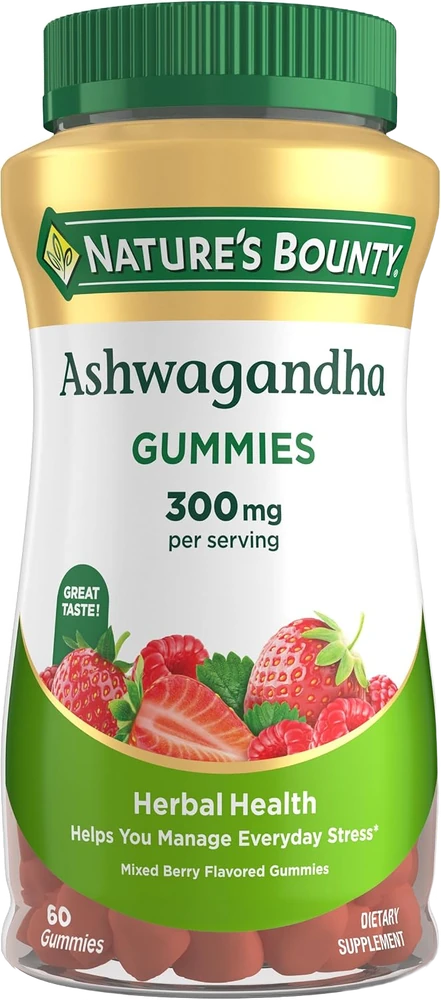
Nature's Bounty Ashwagandha Gummies
When you want a real KSM-66 gummy and the lowest price, this is it.
 03
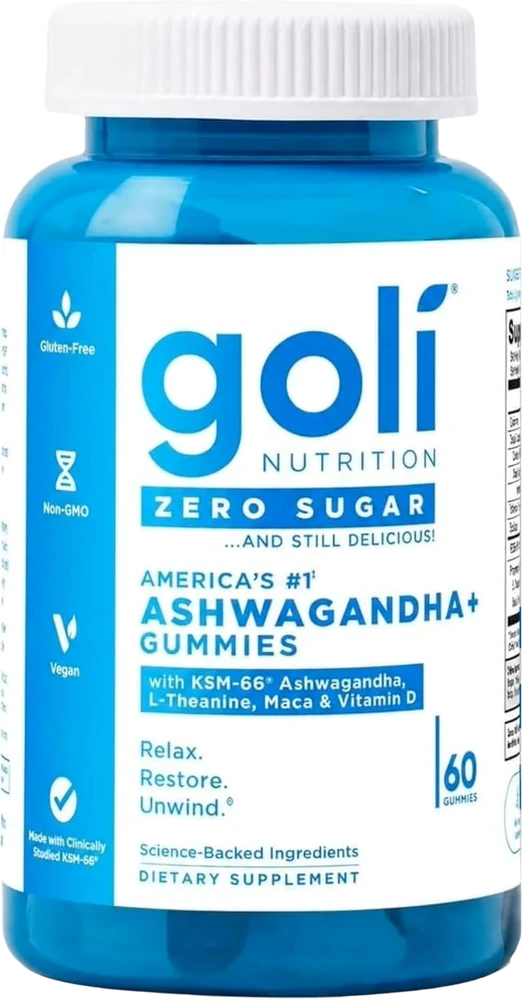
Goli Zero Sugar Gummies
The pick the moment sugar is a dealbreaker.
 01
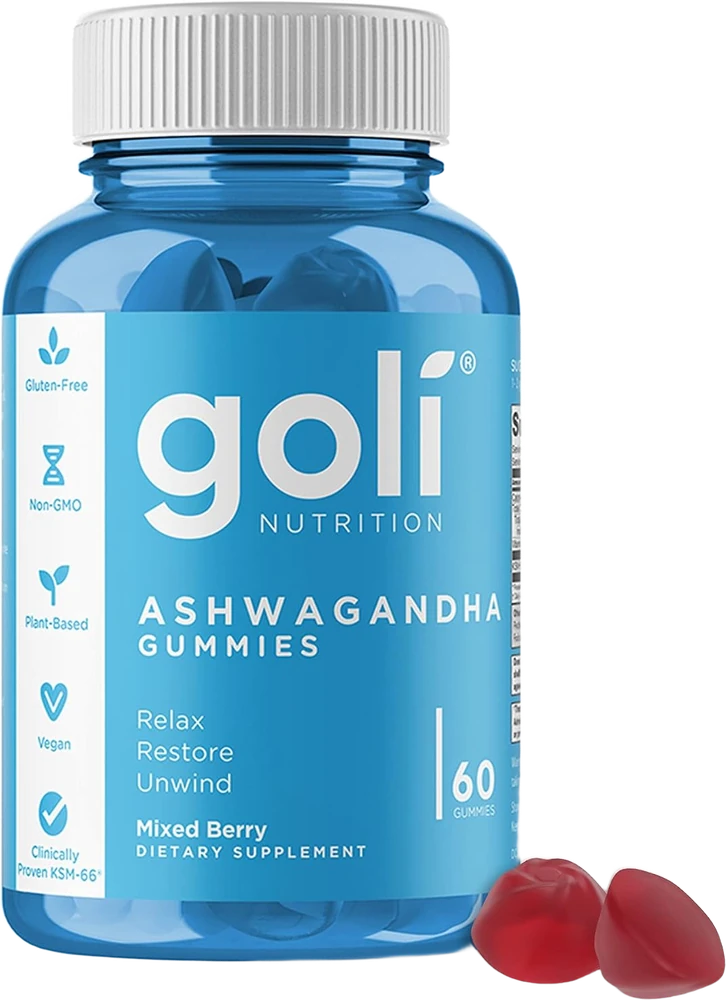
Goli Ashwagandha Gummies
The default pick for the person a gummy is actually built for: someone who has tried capsules and didn't stick with them.
Quick Answers
Is Organic India's gummy actually organic, or is that just marketing?
It's a genuine USDA-organic positioning from a brand built around it — Organic India is a dedicated herbal-supplement company whose entire identity is certified-organic Ayurvedic products, not a mass-market label that bolted 'organic' onto one SKU. That's the real reason to pick this gummy: if you want your supplements to carry the same organic standard you apply to food, this is the cleanest fit on the ashwagandha-gummy list. What 'organic' does NOT change is the pharmacology — the active is the same KSM-66 root extract (standardised to 5% withanolides) used in the cheaper picks, at the same 300 mg per 2-gummy serving. So you're paying a premium for the certification and the brand ethos, not for a higher dose or a more potent extract.
It's $20 a bottle — why is it more expensive than Nature's Bounty or Nature Made at the same dose?
Because you're paying for the organic certification and the dedicated-herbal-brand positioning, not for more ashwagandha. All three deliver the identical 300 mg of KSM-66 per serving. Nature's Bounty is ~$13 ($0.43/serving), Nature Made is ~$15 ($0.50/serving), and Organic India is ~$20 ($0.67/serving). That's roughly a 35-55% premium over the cheaper KSM-66 gummies for the same studied dose of the same patented extract. The premium buys you the USDA-organic label and a brand whose whole catalogue is organic herbals — which is worth it if organic sourcing is a hard requirement for you, and pure overhead if it isn't. Honest framing: this is a 'pay for the certification' decision, not a 'pay for better actives' decision.
Is 300 mg of KSM-66 enough to do anything?
It's a legitimate, clinically-studied dose — but it's the floor of the evidence range, not the optimum. Chandrasekhar 2012 used 300 mg KSM-66 TWICE a day (600 mg total) for the headline 27.9% cortisol reduction; Salve 2019 showed 250 mg already beat placebo on stress, with the 600 mg arm doing more. Organic India's 300 mg per 2-gummy serving lands at the bottom of that 300-600 mg window. So one serving a day is a real starter dose that will plausibly move your perceived stress and sleep over 4-8 weeks of daily use — but if you want the higher-effect dose the trials' upper arms used, you'd take two servings (which doubles the sugar to ~6 g) or switch to a capsule. For a first-time or general-stress user, 300 mg/day is a fair place to start.
How much sugar is in it, and is ~3 g a meaningful advantage?
About 3 g of sugar per 2-gummy serving — modestly lower than the ~4 g in the mainstream berry gummies (Goli, Nature's Bounty), so a small but real edge if you're watching grams. In absolute terms it's minor: ~3 g is under a teaspoon, roughly one bite of fruit, but it's daily, so it adds up to about 90 g of sugar over the 30-day bottle (30 servings) if you take a serving every day. If sugar is something you'd rather trim but not eliminate, the ~3 g here is a genuine if small plus over the 4 g picks. If you want ZERO sugar, this isn't the answer — Goli Zero Sugar (#3 on the list) keeps the same 300 mg KSM-66 and swaps in allulose for 0 g, and that's the better buy for keto, diabetic, or strict sugar-counting shoppers.
Gummy vs capsule — should I buy this or a KSM-66 capsule instead?
Same question that governs every gummy on this list: will you actually take it every day? Ashwagandha is a chronic-dosing adaptogen — the cortisol, stress, and sleep effects build over 4-8 weeks of daily use, so a gummy you'll take beats a capsule you forget. If adherence is your real obstacle and you want an organic, lemon-lime gummy you'll enjoy taking, this delivers a real 300 mg KSM-66 dose. But capsules win on the raw numbers: a single KSM-66 capsule gives you 300-600 mg with zero sugar at a lower cost per active mg. So buy this gummy if (a) you want organic AND (b) adherence is the thing a tasty format actually fixes for you. If you want 600 mg+, are managing sugar tightly, or already take supplements reliably, a KSM-66 capsule is the more efficient tool.
Who is this gummy genuinely the right pick for?
One reader specifically: the organic-first shopper who wants a legitimately-dosed ashwagandha gummy and treats USDA-organic as non-negotiable for everything they ingest. For that person, Organic India is the cleanest fit on the entire list — certified-organic KSM-66 at the studied 300 mg dose, slightly lower sugar than the berry gummies, vegan and non-GMO, from an herbal brand that actually knows the ingredient. It's also a fine first-time pick for someone testing the stress/sleep effect who happens to value organic sourcing. Who it's NOT the best pick for: anyone for whom 'organic' isn't a hard requirement (the cheaper KSM-66 gummies deliver the same dose), high-dose protocol users (buy a capsule), strict no-sugar shoppers (Goli Zero Sugar), and pure value buyers (Nature's Bounty at $0.43/serving). The 'consider' verdict reflects exactly this: excellent for its niche, beaten on price and dose for everyone outside it.
Is it third-party tested and safe to take daily?
Organic India runs USDA-organic certified, non-GMO manufacturing and is an established herbal-supplement brand with a clean reputation — the certification stack itself requires audited, controlled sourcing, which is part of what you pay the premium for. Ashwagandha has a strong safety record at these doses in healthy adults; the trials reported good tolerability over 8-12 weeks. The standard caveats apply to ashwagandha as an ingredient, not to this product specifically: it's not recommended in pregnancy or breastfeeding, it can interact with thyroid medication and sedatives, it's mildly immunostimulating (a caution for autoimmune conditions like Hashimoto's, RA, or lupus), and there are rare case reports of liver injury — so don't megadose and stop if you notice symptoms. Talk to a physician if you have a thyroid or autoimmune condition, take sedatives, or are pregnant or breastfeeding.
Sources & Further Reading
5 sources — studies link to PubMed, product specs to the manufacturer
- [1] Chandrasekhar 2012 PMID 23439798 — A prospective, randomized double-blind, placebo-controlled study of safety and efficacy of a high-concentration full-spectrum extract of ashwagandha root in reducing stress and anxiety in adults. The headline trial. 300 mg KSM-66 twice daily (600 mg/day) for 60 days reduced serum cortisol 27.9% and lowered stress-scale scores vs placebo in chronically stressed adults. Establishes that Organic India's 300 mg/serving is the bottom of the studied range — the trials' larger effect used double this dose.
- [2] Salve 2019 PMID 32021735 — Adaptogenic and anxiolytic effects of ashwagandha root extract in healthy adults: A double-blind, randomized, placebo-controlled clinical study. 60 stressed adults took 250 or 600 mg a day of ashwagandha root extract, or a placebo, for 8 weeks. Perceived stress and serum cortisol fell at both doses. Sleep quality improved compared with placebo. Both doses worked, so 250-300 mg a day is a real dose. The abstract does not say whether 600 mg worked better. This gummy's 300 mg is a starter dose.
- [3] Lopresti 2019 PMID 31517876 — An investigation into the stress-relieving and pharmacological actions of an ashwagandha (Withania somnifera) extract: A randomized, double-blind, placebo-controlled study. 60 stressed adults took 240 mg of Shoden or placebo once daily for 60 days. Anxiety scores (HAM-A) fell more than on placebo, as did morning cortisol and DHEA-S. Sleep was not an outcome.
- [4] Langade 2019 PMID 31728244 — Efficacy and safety of ashwagandha (Withania somnifera) root extract in insomnia and anxiety: A double-blind, randomized, placebo-controlled study. 300 mg KSM-66 twice daily improved sleep onset latency, sleep quality, and sleep efficiency vs placebo over 10 weeks in adults with insomnia — the basis for taking an evening serving before bed, and a reason high-dose sleep users should prefer a capsule over two sugar-bearing gummy servings.
- [5] Auddy 2008 — A standardized Withania somnifera extract significantly reduces stress-related parameters in chronically stressed humans: A double-blind, randomized, placebo-controlled study. The foundational Sensoril trial: a standardised root-and-leaf extract at 125-500 mg/day reduced cortisol, C-reactive protein, and stress scores dose-dependently — establishing standardisation (the marker this gummy gets right via KSM-66) as the variable that drives the effect, not gram weight or format.
Affiliate disclosure: every Amazon link uses our Associates tag (superachieverclub-20). We earn a small commission at no cost to you; it funds independent reviews. We never accept payment to change a ranking.