
One A Day Men's Health Formula Review
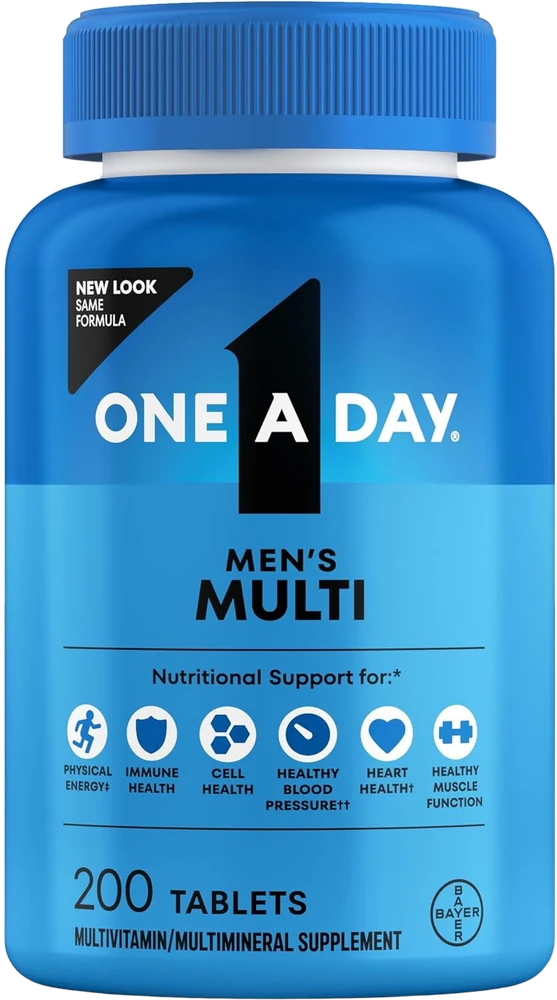 #10 of 12 · Best cost-per-day✓ Label verified · Supplement Facts read Sep 7, 2026
Real retailer photo, cut out. Label unedited.
Consider it. The men's cost-per-day winner — iron-free done cheap, basic forms, no seal. About 200 once-daily tablets for a verified ~$15 (~$0.08/day) — the cheapest men's-specific multivitamin we rank, iron-free as a men's formula should be, with heart-health framing that's nutrient support rather than cardioprotection (the big trial was null on hearts — Sesso 2012).
$15 / 200 tablets (200 days) — verified Walmart buybox price~$0.08 / day (1 tablet)
Why It Scores 7.0 — And The Label Line Behind Each Number
Nutrient forms & bioavailability
30% of scoreFloor-tier forms, scored as such: folic acid (the conversion-dependent synthetic — Pietrzik 2010) rather than methylfolate, conventional vitamin and mineral forms throughout, nothing chelated, nothing methylated. Coverage of the basics (A, B-complex, C, D, E, K, zinc) is real; the kind is the cheapest that legally carries the claims. Identical economics to its women's sibling, never upgraded.
Men-specific fit (iron-free + men's extras)
25% of scoreThe formula's genuine strength: IRON-FREE — the single most important men's formulation rule, respected at the budget tier — with the label angled at men's actual leading concerns (heart, blood pressure, energy) via nutrient adequacy. No prostate botanicals or athletic extras, which at this price is honest restraint rather than a gap. Outscores Centrum Men on this axis for exactly one reason: Centrum includes iron and this doesn't.
- Iron
- None — iron-free (the correct men's default)
Third-party testing
20% of scoreNo USP/NSF or any independent certification stated on the listing — Bayer's pharmaceutical-scale brand QC is the only assurance. That's a real manufacturing floor but not verification, and it's the axis where the budget tier's other star (Kirkland, USP-sealed at ~$0.03/day) decisively beats it. Recorded at face value, no drama.
- Label focus
- Heart health · healthy blood pressure · physical energy (nutrient-support framing)
- Testing
- No third-party USP/NSF certification stated
Sensible dosing (no megadose)
15% of scoreThe axis drugstore one-a-days reliably get right: nutrients pegged around 100% DV, no megadosed fat-solubles, no water-soluble theatre (compare Opti-Men's deliberately oversized doses), one small tablet sustaining the habit indefinitely. Gap-insurance dosing done properly.
- Dose
- 1 tablet/day
Value per day
10% of scoreThe best on the men's list: a verified ~$15 (Walmart buybox for this exact 200-ct SKU; Amazon bot-blocked our check) across ~200 days = ~$0.08/day, with six-plus months per purchase. Only generic Kirkland (~$0.03/day) is cheaper, and it buys no men's tuning. For men's-specific pennies-per-day, this is the market's endpoint.
- Count
- 200 tablets · ~200-day supply (the 60-ct ASIN is dead stock; this is the live SKU)
- Price
- ~$15 / 200 tablets = ~$0.08/day (verified Walmart buybox for this SKU, 2026-06; Amazon price may vary — check listing)
- More Specs
- Coverage
- Vitamins A, B6, C, D, E, K + riboflavin, thiamin, niacin + zinc
- Folate form
- Folic acid (NOT methylfolate)
- Free of
- Gluten, wheat, dairy, artificial colors, artificial sweeteners
Label verified. Every figure read from the Supplement Facts photo, Sep 7, 2026.
Marketing Claims Vs. Reality
Supports heart health and healthy blood pressure.
Legitimate only as nutrient-adequacy support: the formula supplies micronutrients involved in normal cardiovascular function, and those gaps are common (Reider 2020). As protection, the claim fails the direct test: PHS II — 14,641 men, 11+ years — found NO reduction in cardiovascular events, MI, stroke, or CV death from a daily multivitamin (Sesso 2012). Support ≠ protection, and we hold the label to that line.
Supports physical energy with B-vitamins.
Accurate in the metabolic sense — B-vitamins are cofactors in energy metabolism, and correcting a real deficiency can remove a drag over weeks. Misleading if read as a felt, stimulant-like effect: an adequately nourished man should expect to feel nothing day-to-day from any multivitamin. Nutrient support, honestly framed; not an energy product.
Iron-free, formulated for men.
Confirmed per the listing — no iron, which is the correct men's default (men accumulate rather than lose iron) and this formula's clearest cohort advantage over Centrum Men, whose listed ingredients include ferrous fumarate.
Free of gluten, wheat, dairy, artificial colors and artificial sweeteners.
Stated on the listing and consistent with the panel. Worth noting against its women's sibling: the men's formula claims freedom from artificial COLORS outright (the women's 100-ct is mid-transition on FD&C dyes), so the cleaner-label claim stands here.
What Our Test Actually Found
Eight cents a day, and the one men's rule that matters is respected
The whole value case in two facts: a verified ~$15 for ~200 days of a men's-specific formula, and zero iron. The second fact is the one that earns it a slot above Centrum Men despite Centrum's broader panel — men have no monthly iron loss and no efficient excretion route, so the correct daily iron dose for an unscreened man is none, and this formula delivers exactly that. The drugstore tier rarely gets a formulation decision this right at this price. Cheap, iron-free, one tablet: as floor-tier men's multivitamins go, the skeleton is sound.
The heart-health line is the label's biggest stretch — we hold it to the trial
Bayer leads the label with heart health and healthy blood pressure, and this is where the honest reviewer earns their keep: the definitive trial of multivitamins and men's hearts already ran. PHS II randomized 14,641 male physicians for over eleven years and found no reduction in major cardiovascular events, heart attacks, strokes, or cardiovascular death (Sesso 2012). What the label line legitimately means is that the formula supplies nutrients involved in normal cardiovascular function — gap-filling, nothing more. If your goal is an actually healthier heart, the budget for this bottle is better understood as insurance while you spend your real effort on exercise, sodium, sleep and your physician.
Forms are the floor — and the $0.41/day question
Folic acid instead of methylfolate (the conversion-dependent synthetic versus the active form — Pietrzik 2010), conventional everything else, no chelates. That's what eight cents buys, and it's the entire quality gap between this and NOW ADAM, which delivers methylcobalamin, chelated minerals and men's botanicals in easy softgels at ~$0.49/day (folic acid, like this one). The decision is genuinely budget-shaped: if $0.41/day more is trivial to you, ADAM is simply a better men's multivitamin; if you're optimizing pennies or buying for a household, this formula's basics-at-scale logic is coherent. We score forms at the floor either way — the label is what it is.
Our sourcing trail, printed: dead 60-count, Walmart-verified price, one non-Amazon image
Three transparency notes most reviews would bury. First, the classic 60-count One A Day Men's ASIN is dead stock on Amazon ('Currently unavailable,' no restock) — so we rank the live 200-count SKU instead. Second, Amazon bot-blocked our direct price verification for it, so the ~$15 figure is the verified Walmart buybox for the identical 200-count product, cross-checked against the Google-indexed Amazon title; Amazon's live number may drift from it. Third, for the same reason, our product image for this pick sources from Walmart's CDN — the one non-Amazon image in this cluster. None of this changes the formula; all of it is exactly the kind of provenance a trust-first ranking owes you.
Hold the frame: gap-insurance at the men's floor tier
The honest expectations are identical at eight cents and at a dollar-plus: a daily multivitamin fills real, common dietary gaps (Reider 2020) and that is the entire purchase rationale. The best evidence for the category happens to be in exactly this product's demographic — PHS II's 14,641 men — and it showed a modest 8% reduction in total cancer incidence over 11+ years, no cardiovascular benefit, and (in the later COSMOS trials) a genuine memory benefit in adults over 60 (Gaziano 2012; Sesso 2012; Baker 2022). Buy this bottle as the cheapest iron-free way for a man to carry that insurance, and expect precisely that much from it.
Full analysis: all pros & cons (8), buy if / skip if
- Verified ~$0.08/day across a 200-tablet bottle — the cheapest men's-specific multivitamin we rank
- Iron-free — the correct men's formulation default, respected at the floor tier
- Sensible ~100% DV dosing with no megadose theatre, in one small daily tablet
- Free of gluten, wheat, dairy, artificial colors and artificial sweeteners
- 200-day bottle: over six months of habit per purchase, from a pharmaceutical-scale manufacturer
- Folic acid and conventional drugstore forms throughout — nothing methylated, nothing chelated
- No third-party USP/NSF certification stated — brand QC only (USP-sealed Kirkland beats it on verification)
- Heart-health label framing outruns the evidence — the definitive men's trial found no cardiovascular benefit (Sesso 2012)
- You want the cheapest men's-specific multivitamin sold — a verified ~$0.08/day across 200 days
- You want iron-free (the correct men's default) without paying premium-tier money for it
- One small tablet and a bottle that lasts over six months fit how you actually live
- You convert folic acid fine and don't need third-party verification to trust a Bayer label
- You want chelated minerals — NOW ADAM has them for ~$0.49/day (its folate is folic acid too); for methylfolate, Thorne
- You want independent label verification — Kirkland is USP-sealed at ~$0.03/day (generic, not men's)
- You're expecting felt energy or heart protection — no multivitamin delivers either (Sesso 2012)
About 200 once-daily tablets for a verified ~$15 (~$0.08/day) — the cheapest men's-specific multivitamin we rank, iron-free as a men's formula should be, with heart-health framing that's nutrient support rather than cardioprotection (the big trial was null on hearts — Sesso 2012). The floor-tier caps are all present: folic acid, conventional forms, no third-party verification. For the man who wants a men's label at the absolute minimum spend, it's the rational drugstore buy; USP-sealed Kirkland wins if verified label accuracy beats men's tuning, and ADAM is the mineral-forms upgrade at ~$0.49/day.
One A Day Men's Health Formula is the men's cohort's pure value play: roughly two hundred days of an iron-free men's one-a-day for about fifteen verified dollars — ~$0.08/day, the lowest cost of any men's-specific formula we rank. Bayer's pitch leads with men's headline concerns (heart health, healthy blood pressure, physical energy), and the formula behind it is the standard drugstore sweep: vitamins A, B6, C, D, E and K, riboflavin, thiamin, niacin and zinc at sensible ~100% DV levels. Crucially, it gets the cohort's most important formulation question right: no iron — the correct men's default that the bigger-name Centrum Men gets wrong. The floor-tier honesty cuts the other way too: folic acid rather than methylfolate, conventional forms throughout, and no third-party USP/NSF seal — the exact trade-offs that cap every drugstore multivitamin in our ranking. Two sourcing notes we print rather than bury: this is the 200-count SKU (the classic 60-count is dead stock on Amazon), and its verified price is the Walmart buybox for the identical product, because Amazon bot-blocked our price check at fact-check time. A 'consider' for the man optimizing pennies-per-day with the iron rule respected. Here's the full breakdown.
The rational floor-tier men's buy — consider it for pennies-per-day, upgrade for forms.

One A Day Men's Health Formula wins its niche cleanly: no other men's-specific multivitamin delivers an iron-free formula, sane ~100% DV dosing, and a 200-day bottle for a verified ~$0.08/day. The men's cohort's most important formulation rule — no iron — is respected, the dosing restraint is genuine, and Bayer's manufacturing is a real floor even without a seal. For the man whose requirement is 'a men's label, the basics covered, minimum possible spend,' this is the honest endpoint of that search, and our 'consider' is meant straightforwardly. The caps are equally clean, and they draw the upgrade map. Forms: folic acid and conventional everything — NOW ADAM improves the B12 and minerals (still folic acid) with men's botanicals at ~$0.49/day, and Thorne perfects it, methylfolate included, at ~$1.07. Verification: nothing third-party here — Kirkland carries the budget tier's only USP seal at ~$0.03/day if verified label accuracy matters more to you than a men's label. And expectations: the heart-health framing on the box is nutrient support, full stop — the definitive trial in 14,641 men found no cardiovascular protection from a daily multivitamin (Sesso 2012), a modest long-run cancer signal (Gaziano 2012), and a later-life memory benefit in the COSMOS work (Baker 2022). Buy it as the cheapest correct men's insurance on the shelf — never as cardiology.
If This Doesn’t Fit — Try These
 06
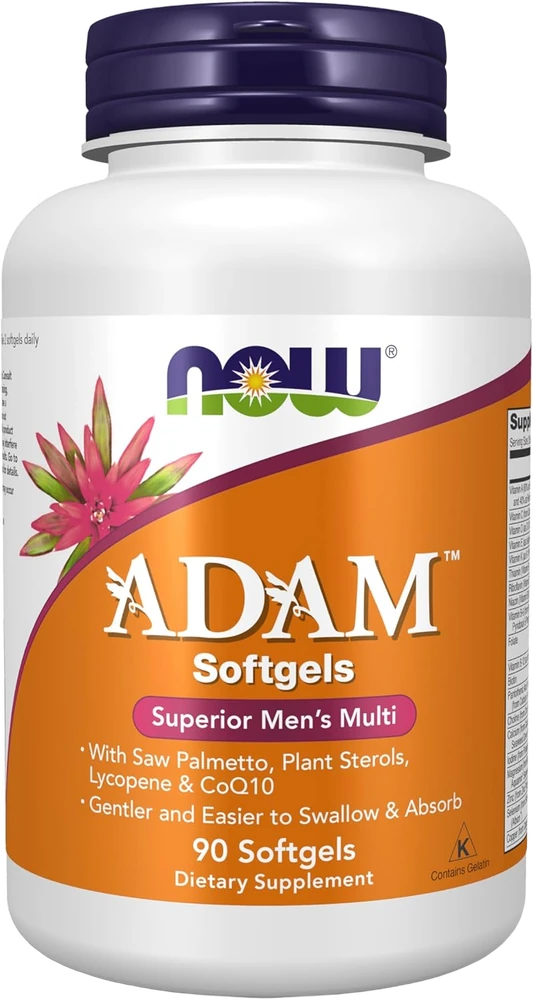
NOW ADAM Men's Multi
ADAM is good value, with two concessions stated plainly.
 07
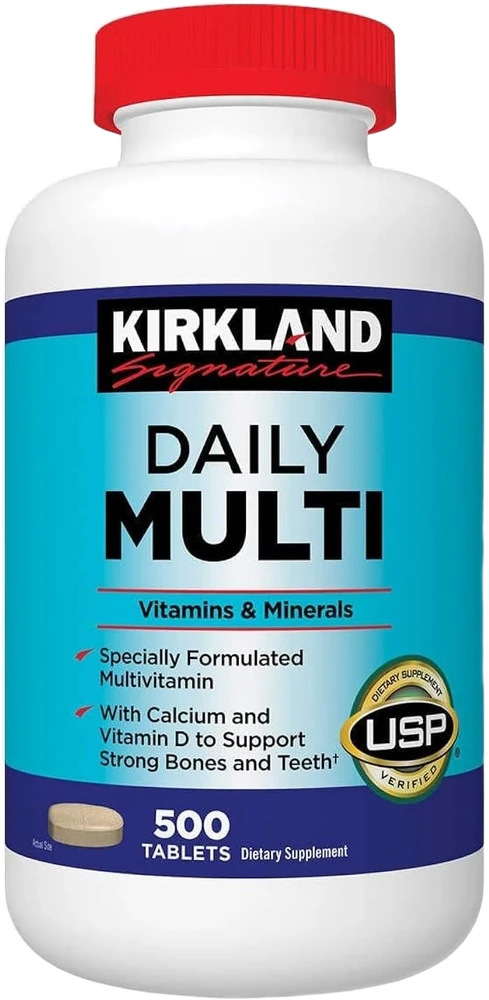
Kirkland Signature Daily Multi
Kirkland is on this men's page because verified-quality-per-dollar is a legitimate way to buy gap-insurance, and nothing on earth beats a USP-sealed tablet at three cents.
 01
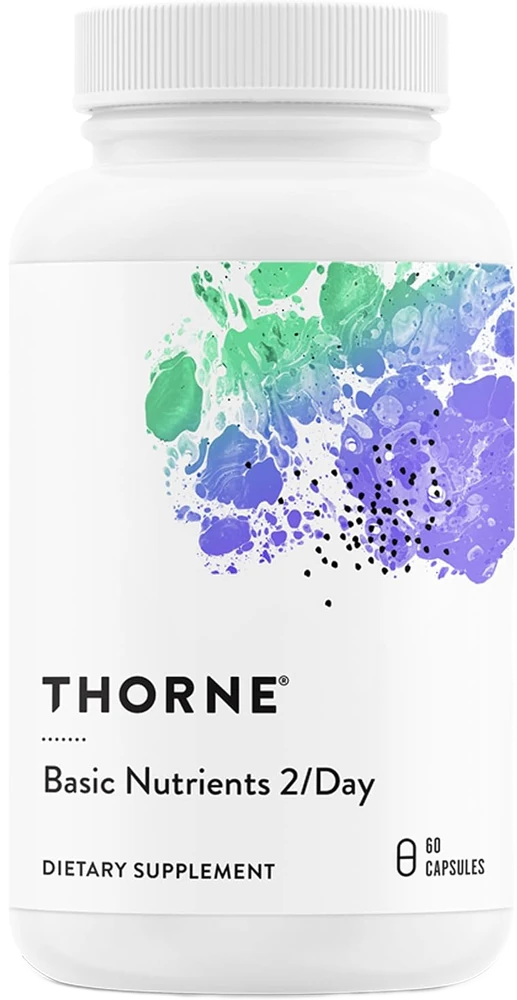
Thorne Basic Nutrients 2/Day
Thorne wins the men's cohort the same way it wins our core ranking — by being the best-built multivitamin on the market — and the cohort logic only strengthens the case, because its deliberate iron-free design is exactly the default a man should be buying.
Quick Answers
Does One A Day Men's actually support heart health and healthy blood pressure?
Read that label line the way the evidence forces us to: as nutrient-adequacy support, not cardiac protection. The formula supplies B-vitamins, vitamin D and other micronutrients involved in normal cardiovascular function — filling gaps that are genuinely common in US diets (Reider 2020). But the definitive test of whether a daily multivitamin protects men's hearts has been run: the Physicians' Health Study II followed 14,641 men for over eleven years and found NO reduction in heart attacks, strokes, or cardiovascular death (Sesso 2012). If blood pressure is your actual concern, the levers that work are medication where indicated, sodium, weight, exercise and sleep — not any multivitamin, this one included. Buy it as cheap insurance; never as heart protection.
Why is it iron-free, and is that right for me?
Iron-free is the correct men's default, and it's a genuine point in this formula's favor. Men don't lose iron the way menstruating women do, and the body has no efficient way to excrete a surplus — so a daily iron top-up a man doesn't need slowly accumulates over years. That's why nearly every serious men's multivitamin deliberately omits iron, and why Centrum Men, which includes ferrous fumarate, loses the cohort argument to this product despite broader coverage. The exception that proves the rule: if you're a frequent blood donor or have a diagnosed deficiency, supplement iron specifically, with testing and your clinician — not via a multivitamin.
Is ~$0.08/day too cheap to be any good?
Cheap and honest can coexist — you just need to know what the eight cents buys. It buys real coverage of the basics (vitamins A, B6, C, D, E, K, riboflavin, thiamin, niacin, zinc) at sensible ~100% DV doses, iron-free, from a competent pharmaceutical manufacturer (Bayer), across a 200-day bottle. What it doesn't buy: methylfolate (you get folic acid — the conversion-dependent synthetic, per Pietrzik 2010), chelated minerals, or any third-party USP/NSF verification of label accuracy. The interesting comparison is Kirkland at ~$0.03/day, which DOES carry a USP seal but isn't a men's formula. Verified label accuracy per dollar: Kirkland. Iron-free men's label at a verified bargain: this. Both are rational floor-tier buys.
Why the 200-count bottle, and why does your review cite a Walmart price?
Transparency on both. The classic 60-count One A Day Men's listing is dead stock on Amazon ('Currently unavailable' with no restock date), so we sourced and verified the 200-count SKU instead — same Men's Health Formula, more than six months per bottle. Amazon's own page for it was bot-blocking our price verification at fact-check, so the ~$15 figure (≈$0.08/day) is the verified Walmart buybox price for the identical 200-count product, cross-checked against the Google-indexed Amazon title. Amazon's live price may differ slightly — check the listing — but the value tier is unambiguous either way. We'd rather show you exactly where a number comes from than pretend precision we don't have.
What's actually in it for 'physical energy' — will I feel it?
The energy line on the label refers to B-vitamins' role in normal energy metabolism — converting food to usable fuel — not to a stimulant effect, and you should expect to feel nothing day-to-day. If you're genuinely low on B12 or vitamin D, correcting that over weeks can remove a real drag (worth a blood test if you're chronically flat). Otherwise a multivitamin is silent insurance: the largest trials show a modest 8% cancer-incidence reduction over a decade-plus and an older-age memory benefit (Gaziano 2012; Baker 2022) — nothing you can feel in week one, and no cardiovascular or longevity effect at all (Sesso 2012). Anyone promising felt energy from a multivitamin is selling you the placebo, not the pill.
Sources & Further Reading
4 peer-reviewed sources, each linked to PubMed
- [1] Sesso 2012 (PHS II — cardiovascular) PMID 23117775 — Multivitamins in the prevention of cardiovascular disease in men: the Physicians' Health Study II randomized controlled trial. 14,641 men, median 11.2 years: NO reduction in major cardiovascular events, MI, stroke, or CV death from a daily multivitamin. The direct, in-cohort null result we hold this product's heart-health label framing against.
- [2] Gaziano 2012 (PHS II — cancer) PMID 23162860 — Multivitamins in the prevention of cancer in men: the Physicians' Health Study II randomized controlled trial. Same all-male cohort: a modest but significant 8% reduction in total cancer incidence. The honest ceiling of what a cheap daily men's multivitamin can plausibly deliver long-run.
- [3] Pietrzik 2010 PMID 20608755 — Folic acid and L-5-methyltetrahydrofolate: comparison of clinical pharmacokinetics and pharmacodynamics. Methylfolate (L-5-MTHF) is the active, circulating folate; folic acid requires enzymatic conversion many people perform inefficiently. The basis for scoring this formula's folic acid at the floor of our forms axis.
- [4] Reider 2020 (NHANES — nutrient gaps) PMID 32531972 — Inadequacy of Immune Health Nutrients: Intakes in US Adults, the 2005-2016 NHANES. 26,282 US adults: widespread micronutrient inadequacy (95% below requirement for vitamin D, 84% for vitamin E). The gaps an eight-cent daily tablet fills are real and common — the entire honest case for the floor tier.
Affiliate disclosure: every Amazon link uses our Associates tag (superachieverclub-20). We earn a small commission at no cost to you; it funds independent reviews. We never accept payment to change a ranking.