
Om Mushroom Superfood Lion's Mane Capsules Review
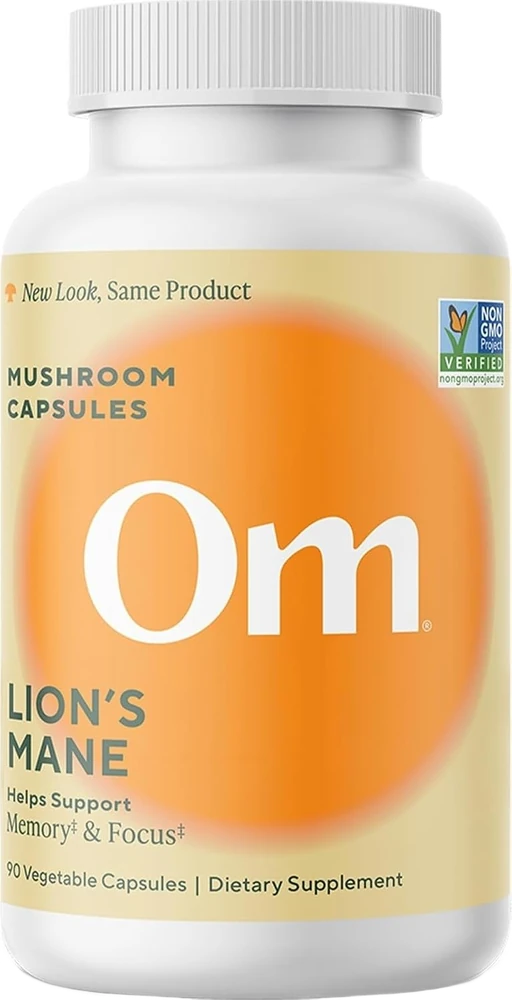 #10 of 10 · Whole-food style✓ Label verified · Supplement Facts read Aug 27, 2026
Real retailer photo, cut out. Label unedited.
Consider it. Certified-organic whole-food style — but 'cultured on oats' means a big chunk of the milligrams is substrate. Om is a credible certified-organic brand executing a whole-food/biomass philosophy cleanly — mycelial biomass + fruit body cultured ON OATS, with the highest milligram count among the budget picks (2000 mg/3 caps).
$19.99$0.67 / 3-capsule serving
Why It Scores 5.4 — And The Label Line Behind Each Number
Form honesty (fruiting body vs mycelium-on-grain)
40% of scoreMycelial biomass + fruit body cultured ON OATS — the clearest mycelium-on-grain case on the list, and the criterion that decides the ranking. The mushroom is grown on an oat substrate and the whole mass is milled together, so a meaningful fraction is oat starch, not mushroom. It does include some fruit body alongside the mycelial biomass (a hair above a pure-mycelium product), but the label does not disclose the exact fruit-body/mycelium/oat split — the panel's 2 g total carbohydrate / 1 g dietary fiber line is the clearest hint that a meaningful share of that mass is grain, not mushroom. The weakest form among the budget picks.
- Active form
- Certified-organic Lion's Mane (Hericium erinaceus) — mycelial biomass + fruit body cultured ON OATS
- Substrate
- Cultured on oats — the oat is milled in, diluting actual mushroom actives
- Inactives
- Vegetarian capsule; organic oat substrate component (milled in)
Verified beta-glucans (not 'polysaccharides')
25% of scoreNo leading verified beta-glucan %, and an oat-cultured biomass product structurally can't deliver a high one — beta-glucans concentrate in the fruiting body, while oat starch dilutes the mass and muddies any polysaccharide figure. Om is certified-organic and the label claims third-party lab testing, but on the bioactive metric that defines the category it's well below the fruiting-body leaders (Real Mushrooms #1, FreshCap #2), which publish beta-glucans because their form is dense in them and grain-free.
- Beta-glucans
- Not foregrounded; oat-cultured biomass structurally carries less and any polysaccharide figure is muddied by oat starch
Extraction + dose
15% of scoreNot an extract at all — the whole oat-cultured mass is milled together, so the 2000 mg per 3-cap serving is the highest milligram count among the budget picks, but a meaningful fraction of it is oat substrate rather than mushroom. There's no concentration step to offset that dilution, so the big milligram number is partly a packaging story: a smaller dose of fruiting-body extract delivers more actual mushroom active.
- Per serving
- 2000 mg (3 caps) — highest milligram count among the budget picks, but partly oat substrate
Third-party testing + transparency
12% of scoreCorrected score: the listing's icons read 'In-house mycologists' (the cultivation team, not a tester) and separately '3rd party lab tested' — the product's real claim is third-party testing, not the in-house testing an earlier version of this review credited it for. But no COA or certificate is linked on the listing, so that third-party claim is a brand statement, not a verifiable credential — per house rule, a lab-testing icon is a signal, not proof. USDA Organic and Non-GMO Project Verified are genuine, checkable certifications, and Om is open that the product is cultured on oats. Score reflects real, checkable certifications plus an unverified (uncorroborated) testing claim, still missing the one potency metric that matters most: a verified beta-glucan number.
- Testing
- Certified-organic; listing claims third-party lab tested (no COA published on the listing to verify it)
- Certifications
- USDA Organic, Non-GMO Project Verified, vegan — no gluten-free claim on the label (the product is cultured on whole oats)
- Manufacturer
- Om Mushrooms / Om Mushroom Superfood (Carlsbad, CA · US-grown, in-house cultivation)
- Lab transparency
- Solid organic certification; listing claims third-party lab testing but publishes no COA; no leading verified beta-glucan number
Value / cost-per-serving
8% of score~$0.67 per 2000 mg (3-cap) serving looks reasonable on headline mass, but the value math collapses once you weight for the oats: a big fraction of that 2000 mg is substrate, not mushroom active, so the cost per milligram of actual beta-glucan is poor. NOW Foods (#5) delivers genuine fruiting-body powder for less, and the fruiting-body extracts deliver more active per dollar. Mediocre value once you correct for substrate dilution.
- Bottle size
- 90 capsules — 30-day supply at 3 caps/day
- Price
- ~$20 / 90-cap bottle = ~$0.67 per 2000 mg serving (much of that mass is oats)
Label verified. Every figure read from the Supplement Facts photo, Aug 27, 2026.
Marketing Claims Vs. Reality
2000 mg of Lion's Mane per serving.
The 2000 mg is real total mass, but it's mycelial biomass + fruit body cultured on oats — so a meaningful fraction is oat substrate, not mushroom actives. The number is technically accurate and the highest among the budget picks, but it overstates actual mushroom content: a smaller fruiting-body-extract dose delivers more real active. The most important caveat on this bottle.
Whole-food mushroom nutrition.
'Whole-food' is a sincere brand philosophy — you're getting the full matrix of mycelium, fruit body, and the oat growth substrate — and Om executes it cleanly. But it's a softer description of the oat dilution: the substrate adds mass without adding the actives the research points to. Real as a philosophy; not a potency advantage over fruiting-body extract.
Supports focus, memory, and cognitive health.
The cognition direction is supported by the trials (Mori 2009, PMID 18844328; Saitsu 2019, PMID 31413233) — but those used fruiting body at gram-level doses, and Om's oat-cultured biomass dilutes the actives the trials measured. The evidence base is also early (PMID 40959699). Real direction, weakened by the oat-substrate form and preliminary evidence.
Certified organic and third-party lab tested.
The organic certification is a genuine, checkable strength — Om carries the USDA Organic seal. The lab-testing claim is disclosed via a listing icon ('3rd party lab tested'), distinct from the separate 'in-house mycologists' icon, which refers to who cultivates the mushrooms, not who tests them — but no COA or certificate is linked on the listing, so treat it as a brand claim, not a verified credential. The brand is transparent that the product is cultured on oats. Partially verifiable; these still aren't the claims that decide the ranking. The form (oat-cultured biomass) and the milligram framing are.
Grown with care in the USA.
Consistent with Om's documented US cultivation and organic standards. A legitimate, verifiable brand point — and for the buyer who values certified-organic US whole-food production, a real reason to consider it despite the form trade-off.
What Our Test Actually Found
Correction: the label claims third-party lab testing, not in-house testing — and makes no gluten-free claim
An earlier version of this review said Om's product was 'in-house lab tested' and listed 'gluten-free' among its certifications. The Supplement Facts panel and the icons printed beside it actually read '3rd party lab tested' as a separate claim from 'In-house mycologists' (which describes who cultivates the mushrooms, not who tests them) — and no gluten-free claim appears anywhere across the listing's 8 gallery images, which is notable since the product is cultured on whole oats (Avena sativa). We re-read the label on Sep 3, 2026 and revised the wording throughout (Testing, Lab transparency, and Certifications specs; the FAQ; pros; the verdict), corrected the 'Certifications' list to drop gluten-free, and lowered the 'Third-party testing + transparency' score from 7.5 to 7.0 to reflect that the third-party claim is an unverified listing icon rather than a credential backed by a published COA. Overall score moved from 5.5 to 5.4; verdict stays 'consider.'
'Cultured on oats' is the textbook mycelium-on-grain issue — stated openly
This is the finding that decides the bottle. The cheap industry method is to grow mushroom mycelium on a grain substrate — here, oats — then harvest and grind the whole mass, mushroom plus leftover oat, without separating the substrate. The oat is starch: it dilutes the actual mushroom actives and pads the milligram count. To Om's credit, it states 'cultured on oats' openly rather than hiding it — but openness doesn't change the chemistry. The studied compounds (hericenones, beta-glucans) are concentrated in the fruiting body, and oat-grown mycelial biomass carries far less per gram. This is the clearest mycelium-on-grain case on the list.
The high milligram count is mostly a packaging story
Om's 2000 mg per serving is the biggest number among the budget picks, and it's the kind of figure that wins on a shelf. But a big fraction of that mass is oat substrate, not mushroom — so 'more milligrams' here doesn't mean 'more active.' This is the exact inversion the category warns about: a smaller dose of fruiting-body extract (Real Mushrooms #1, FreshCap #2) delivers more actual beta-glucan than Om's larger oat-cultured dose. Don't buy on the milligram number; buy on the form and the verified actives.
'Whole-food' is sincere — but it's not a potency advantage for Lion's Mane
Om genuinely believes in the whole-food/full-biomass approach, and it's a credible certified-organic brand executing it honestly — this isn't a scam. But the philosophy and the potency reality diverge for Lion's Mane: the actives the research points to are concentrated in the fruiting body, and the oat substrate adds mass without adding those actives. So 'whole-food' is real as a values choice and Om does it cleanly, but on a per-mg-of-active basis it's a weaker product than a fruiting-body extract. It's a different product category, not a better one.
Even the budget fruiting-body pick beats it on value
The most useful comparison is NOW Foods (#5), which sits at a similar everyday price. NOW ships genuine organic fruiting-body POWDER — the studied form, no oat substrate diluting the mass. So for comparable money, NOW gives you more actual mushroom active than Om's oat-cultured biomass. Om edges Host Defense (#8) on price but loses to NOW on form-for-the-money, and loses to the fruiting-body extracts (#1, #2) on verified potency. If you're shopping the budget tier and want real mushroom, the comparison points away from Om.
Buy it as an organic whole-food values pick, not a potency pick
The honest way to place Om: if you specifically prefer the certified-organic, US-grown, whole-food/biomass philosophy and you understand the milligram count includes oats, it's a clean, credible buy — Om executes its approach with real transparency. If instead you want actual Lion's Mane potency per dollar, the answer is the fruiting-body tier, where a smaller dose delivers more active. Both can be valid; they answer different questions. Om optimizes for organic whole-food philosophy; the leaders optimize for verified fruiting-body potency. Know which one you're buying — and don't be swayed by the big milligram number.
Full analysis: all pros & cons (8), buy if / skip if
- Certified-organic, US-grown — a clean, credible brand; the listing also claims third-party lab testing, though no COA is published to verify it
- Transparent that the product is cultured on oats (states the form openly, doesn't hide it)
- Whole-food/full-biomass philosophy executed honestly for buyers who specifically want it
- Includes some fruit body alongside the mycelial biomass (a hair above a pure-mycelium product)
- Cultured ON OATS — the clearest mycelium-on-grain case on the list; oat substrate dilutes the actives
- The high 2000 mg count is partly oat substrate, not mushroom active — milligrams mislead here
- No leading verified beta-glucan % — oat-cultured biomass structurally carries less
- Poor value once corrected for substrate — NOW (#5) and the fruiting-body extracts (#1, #2) all deliver more active per dollar
- You specifically prefer the certified-organic whole-food / full-biomass philosophy
- You understand the 2000 mg includes oat substrate, not all mushroom active
- You value a clean, organic brand that claims third-party lab testing (though no COA is published to verify it) and executes its approach honestly
- You're not optimizing for maximum beta-glucan potency per dollar
- You want actual Lion's Mane potency per dollar — a smaller fruiting-body dose delivers more active
- You take the fruiting-body-vs-mycelium-on-grain issue seriously — go Real Mushrooms (#1) / FreshCap (#2)
- You're tempted by the high milligram count — most of the extra mass is oats, not mushroom
Om is a credible certified-organic brand executing a whole-food/biomass philosophy cleanly — mycelial biomass + fruit body cultured ON OATS, with the highest milligram count among the budget picks (2000 mg/3 caps). The catch that decides the ranking: the oat substrate dilutes the actual mushroom actives, so a big chunk of that milligram number is oats, not mushroom — the clearest mycelium-on-grain case on the list. Consider it if you specifically prefer the organic whole-food approach. For real potency per dollar, a smaller fruiting-body-extract dose (#1, #2) or NOW's fruiting-body powder (#5) all win.
Om Mushroom Superfood Lion's Mane is the whole-food-style pick — a certified-organic supplement that combines mycelial biomass and fruit body cultured ON OATS, with the highest total milligram count among the budget picks (2000 mg per 3-cap serving). Om is a clean, credible brand and it executes its whole-food philosophy honestly. But that philosophy is exactly what decides the ranking, because it's the textbook mycelium-on-grain case stated openly: the mushroom is grown on an oat substrate, and the whole mass — mushroom plus leftover oat — is milled together. That oat is mostly starch, so a meaningful fraction of the 2000 mg is substrate, not mushroom actives. The studied compounds (hericenones, beta-glucans) are concentrated in the fruiting body, and oat-grown mycelial biomass carries far less per gram. So the big milligram number is partly a packaging story — bigger mass, diluted potency. A smaller dose of fruiting-body extract (Real Mushrooms #1, FreshCap #2) delivers more actual mushroom active, and even NOW Foods' fruiting-body powder (#5) is a smarter value. We checked the form, the 'cultured on oats' framing, and the brand claims against the web-verified evidence, and here's the full breakdown.
Honest organic whole-food style — but 'cultured on oats' dilutes the very actives the research is about.

Om Mushroom Superfood Lion's Mane earns a 'consider' verdict that's about brand sincerity rather than potency. Om is a clean, credible, certified-organic brand, the listing claims third-party lab testing (though no COA is published to verify it), and it executes its whole-food/full-biomass philosophy transparently — it even states 'cultured on oats' openly rather than hiding the form. For a buyer who specifically prefers the organic whole-food approach and understands what they're getting, that's a legitimate, honest purchase. But the ranking is decided by the form, and Om's is the weakest among the budget picks: it's the textbook mycelium-on-grain case, with mycelial biomass and fruit body cultured on an oat substrate that's milled in. The oat is mostly starch, so a meaningful fraction of the headline 2000 mg is substrate, not mushroom — which makes the highest-milligram-count framing misleading: the label doesn't disclose the exact fruit-body/mycelium/oat split, but the panel's 2 g carbohydrate / 1 g fiber line is the clearest hint that a meaningful share of that mass is grain. A smaller dose of fruiting-body extract delivers more actual active than Om's bigger oat-cultured dose. If you want real Lion's Mane potency per dollar, this is the wrong pick: NOW Foods (#5) gives you genuine fruiting-body powder for comparable money, and Real Mushrooms (#1) or FreshCap (#2) give you verified beta-glucans in a grain-free extract. Buy Om if the organic whole-food philosophy is the point and you're not chasing the milligram number; buy a fruiting-body pick if potency is what you actually want.
If This Doesn’t Fit — Try These
 06
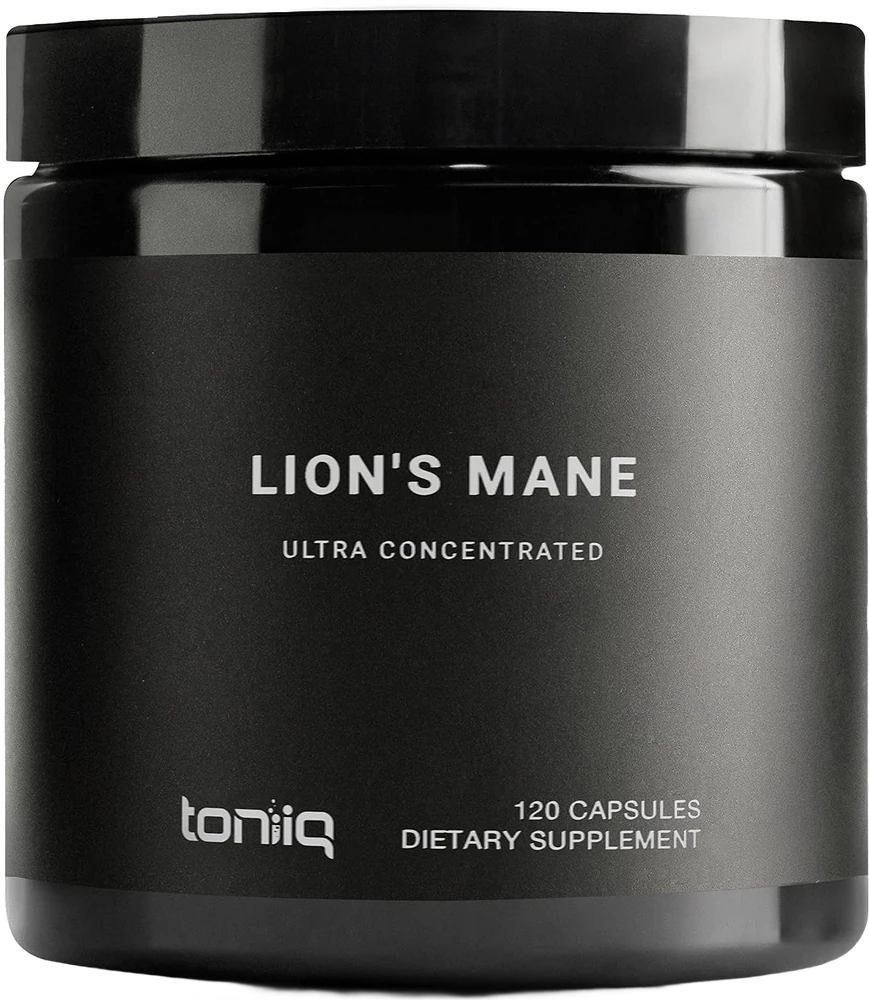
06Toniiq 10:1
Toniiq is the high-potency value play, but it's where the list crosses from 'pure' into 'blend.' Label re-read 27 Aug 2026: the old '30% polysaccharides' criticism no longer matches the bottle — the panel now declares 360 mg (20%) of real β-glucans per serving with a matching COA tile, and its score rose from 6.8 to 7.0.
 01
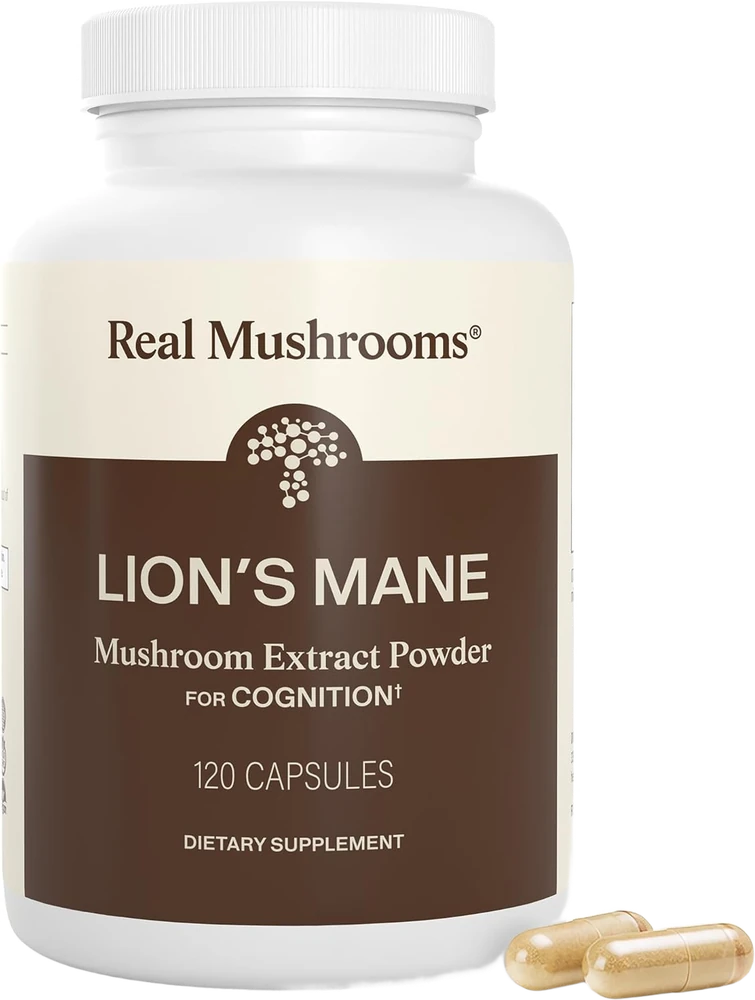
01Real Mushrooms
If you want one Lion's Mane that does the single most important thing right, Real Mushrooms is the pick and the benchmark the rest of this list is measured against.
 02
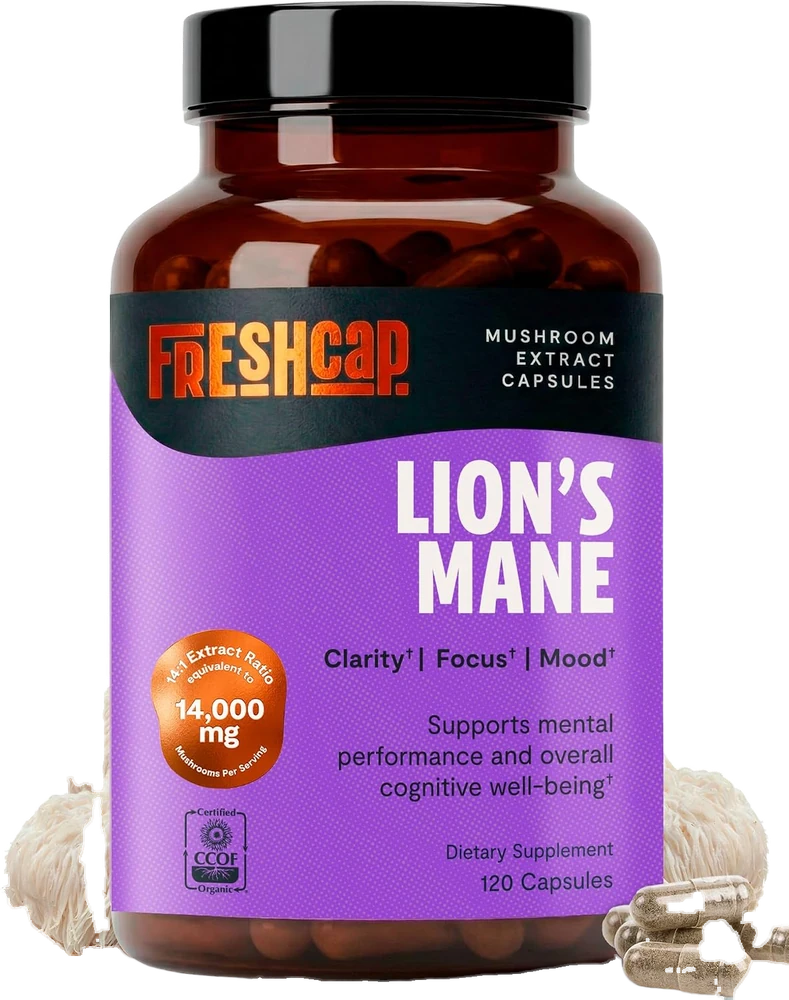
02FreshCap
FreshCap is the value-meets-potency pick and a genuine rival to #1.
Quick Answers
Om has the highest milligrams (2000 mg) — isn't more better?
Not when a lot of that mass is oats. Om's 3-capsule serving is 2000 mg, the biggest number among the budget picks — but it's mycelial biomass + fruit body cultured ON OATS, meaning the mushroom is grown on an oat substrate and the whole mass (mushroom + leftover oat) is milled together. That oat is mostly starch, so a meaningful fraction of the 2000 mg is substrate, not mushroom actives. The studied compounds (hericenones, beta-glucans) are concentrated in the fruiting body; oat-grown mycelial biomass carries far less per gram. So the high milligram count is partly a packaging story — bigger number, diluted potency. A smaller dose of fruiting-body extract (Real Mushrooms #1, FreshCap #2) delivers more actual mushroom active.
What does 'cultured on oats' actually mean for potency?
It's the textbook version of the mycelium-on-grain issue, just stated openly. The cheap industry method is to grow mushroom mycelium on a grain substrate (here, oats), then harvest and grind the whole thing — mycelium plus the oat it grew on — without separating out the substrate. The oat is starch; it dilutes the actual mushroom actives and pads the milligram count. It also inflates any 'total polysaccharides' figure, because starch is a polysaccharide too. So 'cultured on oats' is the honest tell that you're buying a whole-food biomass product, not a concentrated fruiting-body extract — and that the potency per milligram is lower than the headline mass suggests.
Is 'whole-food' a real advantage or just marketing?
There's a sincere idea behind it, but for Lion's Mane potency it's mostly a softer way to describe the oat dilution. The 'whole-food' framing says you're getting the full mushroom matrix (mycelium + fruit body + the growth substrate) rather than an isolated extract — and Om is a credible certified-organic brand that genuinely believes in this approach. But the compounds the research points to are concentrated in the fruiting body, and the oat substrate adds mass without adding those actives. So 'whole-food' is real as a philosophy and Om executes it cleanly, but it's not a potency advantage over a fruiting-body extract — it's a different (and, on a per-mg-of-active basis, weaker) product category.
Does Om publish a verified beta-glucan percentage?
Om is certified-organic, and the listing claims third-party lab testing (a '3rd party lab tested' icon, separate from its 'in-house mycologists' cultivation team) — but no COA is published on the listing to verify that claim, and it does not lead with a high verified beta-glucan % — an oat-cultured biomass product structurally can't. Beta-glucans are concentrated in the fruiting body; oat-grown mycelial biomass carries less, and any polysaccharide figure is muddied by oat starch. The fruiting-body leaders (Real Mushrooms #1, FreshCap #2) publish beta-glucans precisely because their form is dense in them and free of grain. With Om you're trusting the organic certification and the whole-food approach, not a verified beta-glucan number — which is the honest signal that the actives are diluted by substrate.
Who should buy Om Lion's Mane — and who shouldn't?
Buy it if you specifically prefer the certified-organic whole-food/biomass philosophy and you understand the milligram count includes oat substrate, not all mushroom active. Om is a clean, credible brand executing that approach well. Skip it if your goal is actual Lion's Mane potency per dollar: a smaller dose of fruiting-body extract delivers more real active than Om's bigger oat-cultured dose, so NOW Foods (#5, real fruiting-body powder) is a smarter value and Real Mushrooms (#1) or FreshCap (#2) are the verified-potency upgrades. The score is 5.4 — a 'consider' that reflects honest organic execution of a form (oat-cultured biomass) that dilutes the very actives the research is about.
Sources & Further Reading
4 peer-reviewed sources, each linked to PubMed
- [1] Mori 2009 PMID 18844328 — Improving effects of the mushroom Yamabushitake (Hericium erinaceus) on mild cognitive impairment: a double-blind placebo-controlled clinical trial. Double-blind, placebo-controlled trial in 30 adults aged 50-80 with mild cognitive impairment: 3 g/day of FRUITING-BODY powder for 16 weeks significantly improved cognitive-scale scores vs placebo, with gains fading after stopping. The cornerstone cognition trial — and it measured fruiting body, the actives Om's oat-cultured biomass dilutes.
- [2] Saitsu 2019 PMID 31413233 — Improvement of cognitive functions by oral intake of Hericium erinaceus. Trial in 31 healthy older adults: 2.4 g/day of Hericium erinaceus for 12 weeks significantly improved scores on a standardized Japanese cognitive test. A supporting cognition signal at a gram-level fruiting-body dose — the studied form, concentrated in actives that oat substrate dilutes rather than adds.
- [3] Nagano 2010 PMID 20834180 — Reduction of depression and anxiety by 4 weeks Hericium erinaceus intake. Placebo-controlled study in 30 women eating Hericium erinaceus for 4 weeks: depression and anxiety measures were significantly lower than placebo. The primary human mood signal — a secondary reason to take Lion's Mane, but one that still depends on real mushroom actives, not oat-padded milligrams.
- [4] Menon 2025 PMID 40959699 — Benefits, side effects, and uses of Hericium erinaceus as a supplement: a systematic review. Systematic review of the Hericium erinaceus supplement literature: reports consistent neuroprotective and NGF/BDNF-stimulating signals and cognitive/mood benefits, while concluding the human evidence remains preliminary and calls for larger, longer trials. The honest 'early evidence' frame — a high milligram count of oat-cultured biomass doesn't make the science more settled, or the dose more potent.
Affiliate disclosure: every Amazon link uses our Associates tag (superachieverclub-20). We earn a small commission at no cost to you; it funds independent reviews. We never accept payment to change a ranking.