
Nutricost Saw Palmetto (Made with Organic) 1000 mg Review
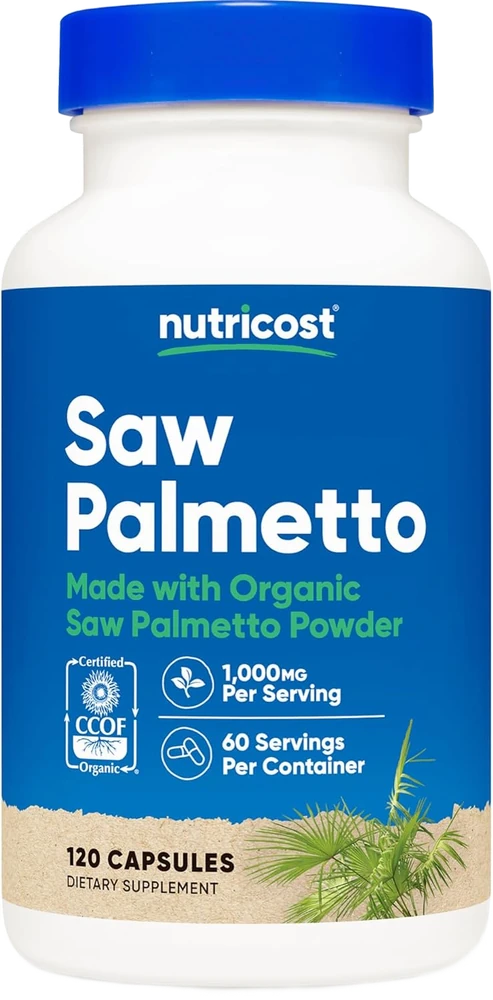 #5 of 9 · Best Tested✓ Label verified · Supplement Facts read Sep 7, 2026
Real retailer photo, cut out. Label unedited.
Consider it. Best-documented product here, wrong form for the evidence. Published COAs and organic certification make this the most transparent option.
approx $15-19approx $0.28/serving
Why It Scores 6.2 — And The Label Line Behind Each Number
Standardization & Form
30% of scoreWhole-berry powder, not a liposterolic extract. It lacks the concentrated fatty-acid fraction the trials tested, which is the single most important axis for this substance.
- Form
- Capsule (whole-berry powder)
- Standardization
- None - unstandardized whole berry
Dose vs Clinical Range
25% of score1000 mg of berry powder sounds high but is not equivalent to 320 mg of standardized extract; the big number does not map to the clinical regimen.
- Dose
- 1000 mg berry per serving (2 x 500 mg)
Third-Party Testing & Purity
20% of scoreCCOF Made-with-Organic, Non-GMO, gluten-free, and third-party tested with published COAs - the strongest documentation package in this roundup.
- Testing
- CCOF organic, Non-GMO, gluten-free, third-party tested with published COA
Tolerability & Safety
15% of scoreWhole-berry capsules are well tolerated; organic sourcing reduces pesticide concerns.
Value / Cost per Dose
10% of score120 capsules for ~$15-19 is fair, but you are paying for tested berry powder rather than the concentrated fraction that matters.
- Count
- 120 capsules (60-day supply)
- Cost per dose
- ~$0.25-0.32/day
Label verified. Every figure read from the Supplement Facts photo, Sep 7, 2026.
Marketing Claims Vs. Reality
Third-party tested with published certificates of analysis
Nutricost publishes COAs and holds CCOF Made-with-Organic certification, the most complete testing disclosure among the nine products.
1000 mg delivers more saw palmetto benefit than a 320 mg extract
Whole-berry milligrams are not comparable to standardized extract milligrams; 1000 mg of berry powder contains far less of the liposterolic fatty-acid fraction than 320 mg of concentrated extract.
Organic certification improves the supplement's effectiveness
CCOF certification addresses sourcing and pesticide status, not clinical efficacy. It is a purity/quality signal, not an effect on outcomes.
What Our Test Actually Found
The milligram number is a trap
A 1000 mg berry-powder label reads as more than a 320 mg extract, but it is the opposite in terms of the active fraction. Extract concentrates the fatty acids and sterols; whole berry does not. Do not let the bigger number drive the decision.
Best paperwork, least trial-relevant form
Nutricost proves you can have excellent testing on a form that does not match the research. If your priority is verified organic sourcing and published COAs, it is the top choice; if your priority is reproducing the studied liposterolic extract, it is near the bottom.
Full analysis: all pros & cons (6), buy if / skip if
- Best testing package here: CCOF organic, Non-GMO, published COAs
- Third-party tested with transparent documentation
- Organic whole-berry sourcing reduces pesticide concerns
- Fair 60-day supply per bottle
- Unstandardized whole-berry powder, not the studied liposterolic extract
- 1000 mg label is not equivalent to 320 mg of concentrated extract
- Best testing package here: CCOF organic, Non-GMO, published COAs
- Third-party tested with transparent documentation
- Organic whole-berry sourcing reduces pesticide concerns
- Unstandardized whole-berry powder, not the studied liposterolic extract
- 1000 mg label is not equivalent to 320 mg of concentrated extract
Published COAs and organic certification make this the most transparent option. But it is unstandardized whole-berry powder, so 1000 mg does not equal the 320 mg extract dose of the trials. Consider it only if third-party testing and organic sourcing outrank matching the studied liposterolic fraction.
Nutricost wins the testing side of the ledger outright: CCOF Made-with-Organic certification, Non-GMO, gluten-free, and third-party tested with published certificates of analysis. That is the best transparency package on this list. The problem is the form. This is whole saw palmetto berry powder, not the concentrated liposterolic extract used in the trials - so the big 1000 mg number is not comparable to 320 mg of standardized extract. You get the cleanest paperwork wrapped around the least trial-relevant form of the herb.
Immaculate testing on the wrong form

Nutricost is the transparency champion of this list - CCOF organic, third-party tested, COAs published. But standardization is the axis that matters most for saw palmetto, and this is unstandardized whole-berry powder whose 1000 mg does not equal 320 mg of extract. Buy it if organic sourcing and published testing are non-negotiable for you and you accept the form trade-off. For matching the clinical evidence, a standardized 320 mg extract is the better tool.
If This Doesn’t Fit — Try These
 02
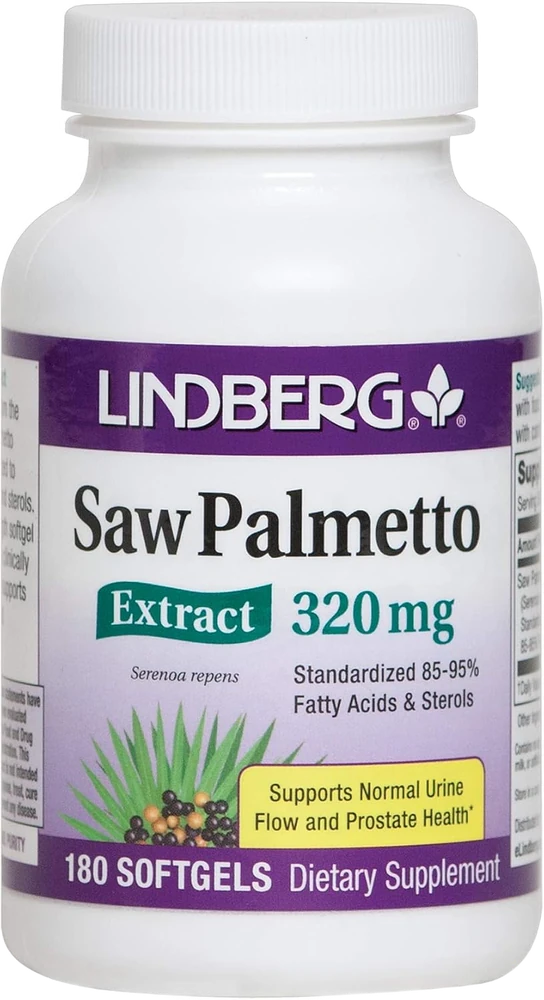
02Lindberg 320 mg
This is the value champion of the list: it matches the trials on both standardization and dose, then undercuts almost everything on price with a six-month bottle.
 01
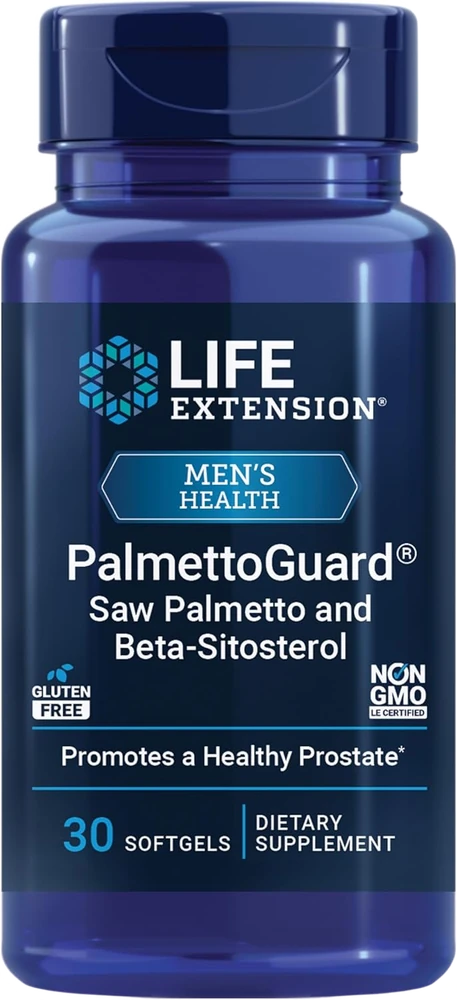
01Life Extension PalmettoGuard
If you want the extract that most closely resembles what researchers actually studied, this is it: CO2-extracted liposterolic saw palmetto at the full clinical dose with a phytosterol that reinforces the DHT-blocking rationale.
Quick Answers
Isn't 1000 mg better than 320 mg?
No - these are different forms. 320 mg of standardized extract concentrates the active fatty acids; 1000 mg of whole-berry powder contains much less of that fraction. Bigger milligrams here do not mean more activity.
Why buy it at all if the form is wrong?
For the testing. If verified organic sourcing and published COAs matter most to you, Nutricost leads the list on transparency - just understand the standardization trade-off.
Sources & Further Reading
2 peer-reviewed sources, each linked to PubMed
- [1] Tacklind J, MacDonald R, Rutks I, Stanke JU, Wilt TJ. Serenoa repens for benign prostatic hyperplasia. Cochrane Database Syst Rev. 2012;12:CD001423. PMID 23235581 — Serenoa repens for benign prostatic hyperplasia. Trials used standardized lipophilic extracts, not whole-berry powder, underscoring that form and standardization define the studied intervention.
- [2] Wilt TJ, Ishani A, Stark G, MacDonald R, Lau J, Mulrow C. Saw palmetto extracts for treatment of benign prostatic hyperplasia: a systematic review. JAMA. 1998;280(18):1604-1609. PMID 9820264 — Saw palmetto extracts for treatment of benign prostatic hyperplasia: a systematic review. The reviewed evidence rested on standardized liposterolic extracts, not unstandardized berry powder.
Affiliate disclosure: every Amazon link uses our Associates tag (superachieverclub-20). We earn a small commission at no cost to you; it funds independent reviews. We never accept payment to change a ranking.