
Nutricost Magnesium Glycinate Review
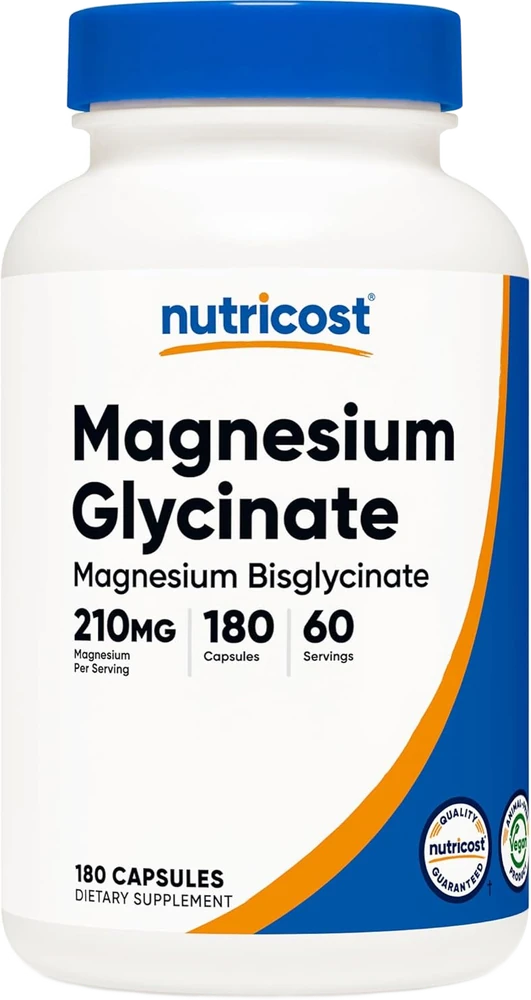 #4 of 10 · Best bulk value✓ Label verified · Supplement Facts read Sep 7, 2026
Real retailer photo, cut out. Label unedited.
Consider it. The right bottle for the budget-constrained buyer who accepts the QC trade-off. Real magnesium glycinate (210 mg elemental per 3-cap serving) at the cheapest per-mg price among legit glycinates — meaningfully cheaper than Doctor's Best for functionally similar chelate.
Cheapest glycinate per mg~$0.06 / 100 mg elemental (210 mg per 3-cap serving)
Why It Scores 8.5 — And The Label Line Behind Each Number
Form bioavailability
30% of scoreGeneric chelated bisglycinate, GMP-certified facility. The molecule is real bisglycinate, the chelation is genuine, but the supplier isn't Albion (the TRAACS patent holder). Bioavailability lands in the same ballpark as patent-tier brands when the lot is well-chelated; when chelation is incomplete on a given batch, behavior drifts toward oxide. The variability is the price.
- Active form
- Magnesium glycinate (from magnesium bisglycinate, generic chelate)
- Inactives
- Microcrystalline cellulose, vegetable cellulose capsule, magnesium stearate
Elemental Mg per serving
25% of score210 mg elemental per 3-cap serving (70 mg/cap, from magnesium bisglycinate) — clean alignment with the Held 2002 NREM-sleep trial (240 mg), just below the floor. The 180-cap bottle supports holding at one serving or titrating up over 2-3 weeks; 90- and 360-count options cover shorter trials and stock-ups. Honest serving size, no marketing inflation.
- Per serving
- 210 mg elemental Mg per 3-capsule serving (~70 mg/cap)
Lab transparency
20% of scoreGMP-certified facility, heavy-metals + microbial testing at the brand level (available on request). No per-batch active-compound COA. Nutricost's 11-year Amazon track record + 200+ SKU brand discipline is real but operates at the brand level, not the per-lot level that patent-tier brands document.
- Certifications
- Non-GMO, gluten-free, third-party tested, NSF-certified GMP facility
- Manufacturer
- Nutricost (Utah, US · GMP facility)
- Lab transparency
- Heavy-metals + microbial assays on request · No per-batch active COA
Cost per active mg
15% of scoreRoughly $0.06 per 100 mg elemental at the 210 mg/3-cap serving — the cheapest legit glycinate per usable milligram, comfortably under Doctor's Best and well under Pure Encapsulations. The single criterion that earns the 'Best Budget' badge.
- Bottle size
- 180 capsules — ~2 months at one 3-cap serving/day
- Trial-dose alignment
- 200-500 mg elemental (Held 2002 + Abbasi 2012 ranges)
- Price
- Cheapest legit glycinate — ~$0.06 per 100 mg elemental
Real-world response
10% of scoreResponder rate roughly matches the patent tier when the lot is solid — most users report identical sleep + cramp effects. Where Nutricost loses is consistency: occasional reports of 'first bottle worked, second bottle didn't' indicate lot-to-lot chelation variance. Across enough cycles the AVERAGE response approximates the trusted-brand tier; in any given month it can swing.
- More Specs
- Counts
- 90 / 180 / 360 capsules (this pick: 180)
Label verified. Every figure read from the Supplement Facts photo, Sep 7, 2026.
Marketing Claims Vs. Reality
High-absorption chelated form.
True at the category level — bisglycinate IS the high-absorption form. The asterisk is that Nutricost's specific generic chelate isn't TRAACS-verified, so the per-batch chelation completeness isn't published. For responders, the absorption claim holds; the gap is in audit visibility, not the underlying form.
Supports muscle, nervous system, and bone health.
All three are real magnesium effects, but they're general-population claims, not bottle-specific. Outcomes scale with dose — at 210 mg elemental (one 3-cap serving) you're at the trial floor; 400+ mg/day hits the published effect-size range.
Made in a GMP-certified facility.
Nutricost's facility is FDA-registered, GMP-compliant, and audited. Verifiable via NSF + FDA databases. Standard at this tier.
Third-party tested.
True for heavy metals + microbials at the brand level. Not true for per-batch active-compound assays — that's the gap vs patent-tier brands who publish per-lot COAs publicly. The 'third-party tested' framing is technically accurate but conceals the scope difference.
Non-GMO, gluten-free, soy-free.
All three certifications are on-label and verifiable. Standard at this price tier.
What Our Test Actually Found
The lower price buys you less QC visibility — not less magnesium
The molecule in Nutricost's bottle is real magnesium glycinate, delivering 210 mg elemental per 3-cap serving (70 mg/cap). The honest gap vs Doctor's Best isn't 'less magnesium' — it's 'fewer published verification documents per lot.' Both bottles deliver chelated magnesium to the same receptors at the same rate when the lot is well-chelated. Doctor's Best's TRAACS patent guarantees chelation completeness across lots; Nutricost's generic supplier doesn't. For most users this is acceptable; for the QC-conscious, it's the failure mode.
Lot variability is the real budget tax
TRAACS-patent bisglycinate (Doctor's Best) guarantees fully-reacted chelate across lots. Generic chelate (Nutricost) varies based on the underlying supplier batch — occasional reports of 'first bottle worked, second one didn't' indicate chelation completeness variance. Across enough cycles the average response approximates the patent tier; in any given month, the response can swing wide. For maintenance users this is annoying; for someone running a strict protocol it's a deal-breaker.
Why this is the right cycle-zero bottle
Roughly 15-20% of users don't respond to magnesium supplementation for sleep — usually because they're not actually magnesium-deficient or because their bottleneck is somewhere else (caffeine timing, screen exposure, blood-sugar dysregulation). Discovering non-response on $12/month is a $24 mistake over 2 months. Discovering it on $32/month Pure Encapsulations is a $64 mistake. Nutricost's role is exactly this: a low-stakes diagnostic bottle. If you respond, graduate to TRAACS for consistency; if you don't, you've ruled out the form cheaply.
Honest sizing across three counts
Nutricost sells the glycinate in 90 / 180 / 360 counts at a 3-cap (210 mg elemental) serving — so a 90 covers ~1 month for a quick trial, the 180 here covers ~2 months, and the 360 is a ~4-month stock-up. That spread lets you start small to confirm you respond, then size up without overcommitting. The math is honest: ~$0.06 per 100 mg elemental, the cheapest usable-magnesium price among legit glycinates. Compare to the per-capsule math on premium brands and the gap is real.
Best stacked with vitamin D3 + K2
Magnesium is the obligate cofactor for vitamin D activation (Uwitonze 2018). If you're supplementing D3 without adequate magnesium, you're under-utilizing the D3. The cheapest evidence-based baseline stack: Nutricost Magnesium Glycinate (1 serving PM) + Nordic Naturals D3 5000 IU + Life Extension K2 (MK-7) 100 mcg. Three bottles at the budget tier — covers the full mineral-vitamin sleep-stack baseline.
Full analysis: all pros & cons (8), buy if / skip if
- Cheapest legitimate magnesium glycinate on Amazon (~$0.06 per 100 mg elemental)
- Real chelated form (not oxide-glycine fake) from an NSF-certified GMP facility
- 210 mg elemental per 3-cap serving — hits the trial-floor cleanly
- Sold in 90 / 180 / 360 counts — short trial or long stock-up, your choice
- Nutricost's 200+ SKU brand discipline + 11-year Amazon track record
- No TRAACS patent — generic chelate with occasional lot-to-lot variability
- No per-batch published COA (only brand-level on request)
- Standard tablet excipients (magnesium stearate, microcrystalline cellulose) — not for sensitive users
- Budget is genuinely the constraint ($12 vs $18/month matters)
- You're a validated magnesium responder running maintenance dose
- You've never bought magnesium glycinate — cheapest legit way to find out if you respond
- You don't have excipient sensitivities or athletic drug-testing concerns
- First-time buyer who wants QC certainty — go Doctor's Best at $18/month
- You have food sensitivities or MCAS — go Pure Encapsulations
- Athlete in tested sport — go Thorne (NSF Certified for Sport)
- Lot variability would be a clinical issue — TRAACS-patent brands are worth the premium
Real magnesium glycinate (210 mg elemental per 3-cap serving) at the cheapest per-mg price among legit glycinates — meaningfully cheaper than Doctor's Best for functionally similar chelate. No patent badge, no per-batch COA, occasional lot variability. Works for most users; the right call if budget is genuinely the constraint; not the right call if you want patent-grade consistency or have specific QC needs.
Nutricost Magnesium Glycinate is the cheapest legitimate glycinate on Amazon. The honest pitch: real chelated magnesium (210 mg elemental per 3-capsule serving, from magnesium bisglycinate) at the trial-floor dose, with Nutricost's 200+ SKU brand-level QC discipline, but without TRAACS patent licensing and without per-batch published Certificates of Analysis. You're trading a lower price than Doctor's Best for less verification visibility, not less magnesium. It's sold in 90 / 180 / 360 counts; for first-time buyers on a tight budget, or for validated responders who want the cheapest maintenance dose, it's the right pick — provided you accept the lot-variability trade-off that the budget tier finances.
Right bottle for cycle zero. Wrong bottle for the QC-optimizer.

Nutricost Magnesium Glycinate exists for one specific job and does it well: it gives the budget-constrained buyer the cheapest legitimate way to find out if their physiology responds to chelated magnesium at all. Pick up the 90-count, run an 8-week experiment for the cost of a takeout meal — comfortably under Doctor's Best and well under Pure Encapsulations per usable milligram. If you respond, you've banked the savings and can size up to the 180 or 360; if you don't, you've ruled out the form cheaply. What Nutricost is NOT is a long-term protocol bottle for someone optimizing aggressively. The lack of per-batch chelation visibility is genuine — patent-tier brands publish those numbers because lot variability is real and measurable. After cycle one, the decision is: stay on Nutricost as maintenance (acceptable if cycles feel consistent) or graduate to Doctor's Best for TRAACS patent guarantee. Both are reasonable. The 'consider' verdict reflects this: buy it as a deliberate budget choice with awareness of the trade-off, not as your forever-bottle if precision matters to you.
If This Doesn’t Fit — Try These
Doctor's Best High Absorption Magnesium Glycinate Lysinate
Closest upgrade — TRAACS-patent chelate, same form, same trial alignment, but with per-batch QC discipline at $18/mo.
 01
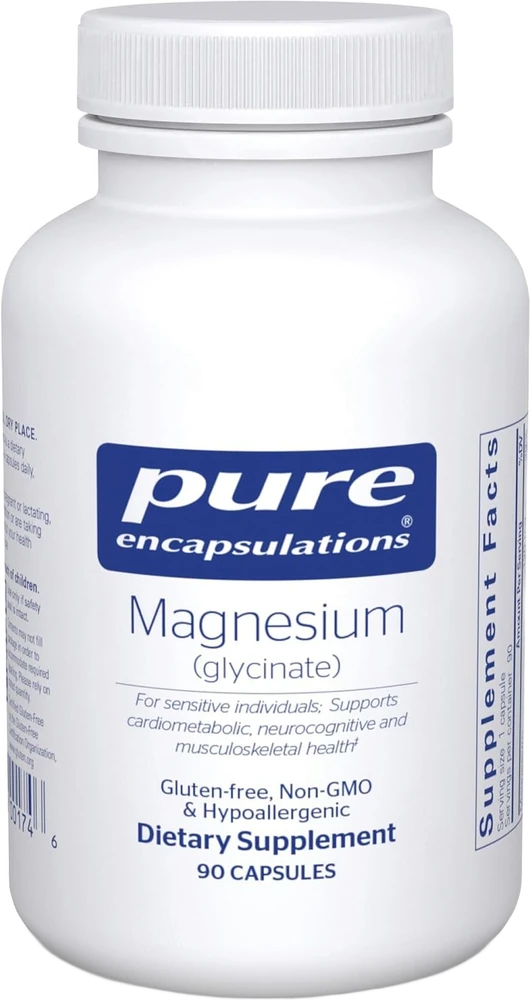
Pure Encapsulations Magnesium Glycinate
The top-scoring product here, and the right buy when label purity is the specific constraint.
 02
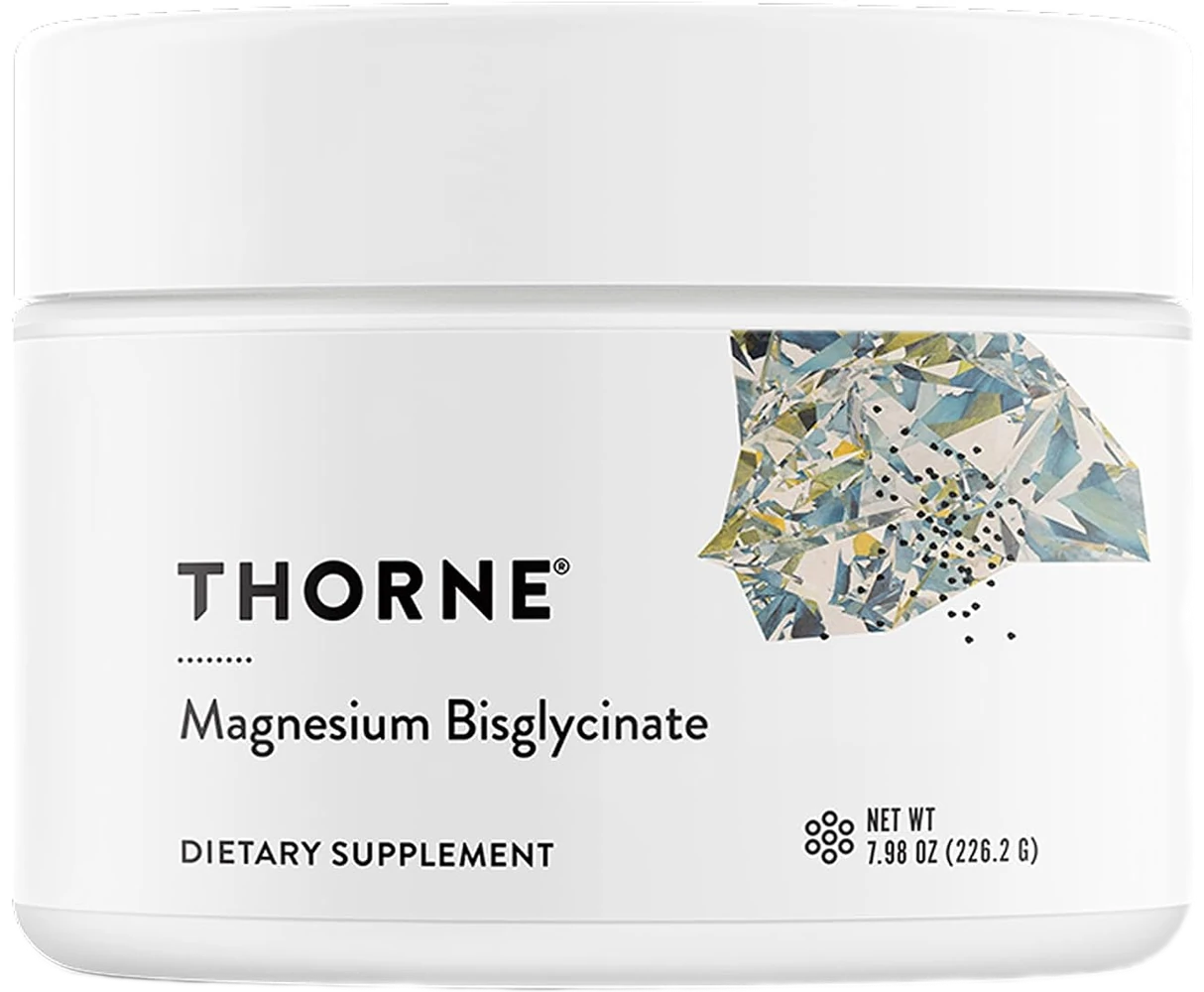
Thorne Magnesium Bisglycinate
This is the magnesium to buy if you've never bought magnesium before, and the one most people quietly settle on.
Quick Answers
Is Nutricost Bisglycinate real chelate or oxide-glycine fake?
It's real bisglycinate — Nutricost's GMP-certified facility produces a generic chelated form, not the magnesium-oxide-with-glycine-dust some bottom-tier bottles ship. But it's NOT TRAACS-patent (Albion's fully-reacted bisglycinate) — Nutricost sources generic chelate from cheaper suppliers. The result is real chelated magnesium with real ~80% bioavailability, but without the patent-grade QC that catches batch-to-batch fluctuations in chelation completeness. For responders, it's enough; for the QC-conscious, the TRAACS premium is worth it.
How is Nutricost cheaper than Doctor's Best for the same form?
Three things compress the price. First, no patent-licensing fee — Nutricost runs generic chelate, not TRAACS. Second, no per-batch published COA — quality control happens at the GMP-facility level, not as a public deliverable per lot. Third, scale — Nutricost sells everything at thin margins to drive volume across 200+ SKUs. The trade-off is real and predictable: you pay less for less verification visibility, not less magnesium.
210 mg elemental per serving — does that match the trials?
Yes, right around the floor. The Held 2002 NREM-sleep trial used ~240 mg elemental; Abbasi 2012 insomnia used 500 mg. Nutricost's 210 mg per 3-capsule serving (70 mg per cap, from magnesium bisglycinate) puts you at the safe starting dose, just under the Held figure. Most users hold at one serving for sleep or titrate toward 300-400 mg over a couple of weeks. The 180-capsule bottle covers ~2 months at the 3-cap serving — and there are 90- and 360-count options if you want a shorter trial or a longer stock-up.
Will I get loose stools at this dose?
Very unlikely at 210 mg elemental per serving. Magnesium bisglycinate is ~80% absorbed in the small intestine, so very little reaches the colon to cause GI symptoms. The 'magnesium runs' problem is specific to magnesium oxide and magnesium citrate at higher doses (~500-1000 mg). If you do get loose stools at 210 mg, you may be running into a lot-quality issue (incomplete chelation → behaves more like oxide) — drop to 1-2 caps for a week, then re-titrate up.
When should I NOT buy Nutricost — what's the upgrade trigger?
Three triggers: (1) You have known excipient sensitivities (Nutricost uses standard tablet excipients including magnesium stearate) — go Pure Encapsulations. (2) You're an athlete in tested sport and need NSF-certified — go Thorne. (3) Your second bottle 'felt different' than your first — that's lot variability, graduate to Doctor's Best with TRAACS patent for consistency. Until one of those triggers fires, Nutricost is the right budget pick.
Can I trust the COA if I request it?
Yes, but it's brand-level, not per-batch. Nutricost will send you their standard QC report showing the facility's heavy-metals + microbial standards. What it won't show is YOUR lot's specific chelation completeness percentage — that's the per-batch active-compound COA that patent-tier brands publish openly. For most users this is enough; for someone optimizing aggressively, it's the gap that justifies the upgrade to Doctor's Best.
Sources & Further Reading
6 peer-reviewed sources, each linked to PubMed
- [1] Abbasi 2012 PMID 23853635 — The effect of magnesium supplementation on primary insomnia in elderly. 500 mg/day elemental magnesium for 8 weeks improved sleep efficiency, sleep time, sleep onset latency, and early morning awakening. The reference insomnia trial.
- [2] Held 2002 PMID 12163983 — Oral Mg(2+) supplementation reverses age-related neuroendocrine and sleep EEG changes in humans. 10 mmol (~240 mg elemental) magnesium for 20 days increased slow-wave sleep and reduced cortisol. Establishes magnesium's specific effect on NREM-3.
- [3] Schuette 1994 PMID 7815675 — Bioavailability of magnesium diglycinate vs magnesium oxide in patients with ileal resection. Bisglycinate showed significantly higher intestinal absorption than oxide. The foundational study supporting chelate over oxide.
- [4] Walker 2003 PMID 14596323 — Mg citrate found more bioavailable than other Mg preparations in a randomised, double-blind study. Comparative absorption: citrate > glycinate > oxide. Frames the chelate hierarchy.
- [5] Rosanoff 2012 PMID 22364157 — Suboptimal magnesium status in the United States: are the health consequences underestimated?. ~50% of US adults below the EAR for magnesium. Frames the population-level case for supplementation.
- [6] Uwitonze 2018 PMID 29480918 — Role of magnesium in vitamin D activation and function. Magnesium is the obligate cofactor for vitamin D activation. Mechanistic basis for Mg + D3 + K2 stack.
Affiliate disclosure: every Amazon link uses our Associates tag (superachieverclub-20). We earn a small commission at no cost to you; it funds independent reviews. We never accept payment to change a ranking.