
Nutricost Biotin (Vitamin B7) 10,000 mcg, 240 Capsules Review
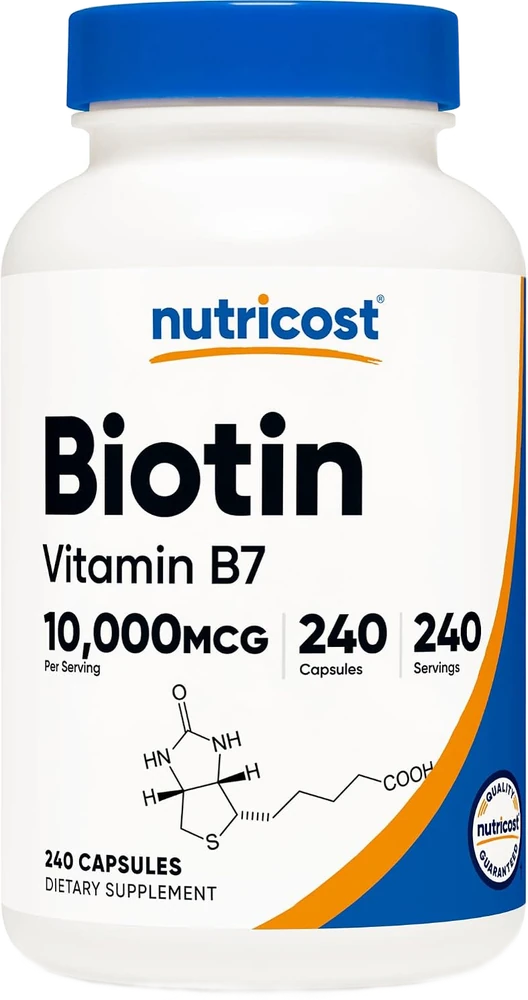 #7 of 9 · Best Value✓ Label verified · Supplement Facts read Sep 7, 2026
Real retailer photo, cut out. Label unedited.
Consider it. The cheapest per serving and the biggest supply -- but a 10 mg megadose with no independent testing. 240 capsules, ~8-month supply, ~$0.07/serving, gluten-free and non-GMO from a GMP/ISO facility.
~$17~$0.07/serving
Why It Scores 5.7 — And The Label Line Behind Each Number
Third-Party Testing & Purity
30% of scoreMade in a GMP-compliant, ISO-accredited facility, but the assurance is the brand's own claim with no independent USP/NSF seal. Weakest testing among the picks that aren't outright 'skip'.
- Testing
- GMP/ISO-accredited facility (brand claim; no USP/NSF)
Dose Sensibility
25% of score10,000 mcg is a marketing-driven megadose with no dietary justification, maximizing troponin/thyroid immunoassay interference (Li 2017, PMID 28973622). A significant mark against it.
- Dose
- 10,000 mcg (10 mg) quick-release
Formulation Integrity
20% of scoreQuick-release vegetarian capsule, gluten-free and non-GMO -- a reasonably clean base formula, though nothing distinguishes it beyond the basics.
- Form
- d-Biotin capsule
Value per Serving
15% of score~$0.07/serving with an ~8-month, 240-capsule supply -- the cheapest cost per serving in the entire set. This is the pick's defining strength and the reason for its Best Value badge.
- Count
- 240 capsules / ~8-month supply
- Serving size
- 1 capsule daily
- Cost per serving
- ~$0.07
- Price
- ~$17
Suitability & Transparency
10% of scoreVegetarian, gluten-free and non-GMO suitability is fine and the label is clear, but the megadose limits how appropriate it is for everyday use.
- More Specs
- Free-from
- Vegetarian, gluten-free, non-GMO
Label verified. Every figure read from the Supplement Facts photo, Sep 7, 2026.
Marketing Claims Vs. Reality
Cheapest cost per serving with an ~8-month supply
240 capsules for about $17 is ~$0.07/serving, tied for the lowest cost per serving in the set and among the longest supplies.
Made in a GMP-compliant, ISO-accredited facility
This is a brand statement about the manufacturing facility, not an independent product certification; there is no USP or NSF seal on the SKU.
Vegetarian, gluten-free and non-GMO
The veg capsule and label support these free-from attributes.
10,000 mcg supports stronger hair and nails
Biotin helps hair only in deficiency (Patel 2017, PMID 28879195); the 10 mg dose exceeds any need and does not add benefit in healthy people, while raising lab-interference risk.
What Our Test Actually Found
Unbeatable on raw cost
240 capsules for ~$17 is the cheapest cost per serving here and an ~8-month supply in one bottle. If price-per-capsule is your only metric, nothing beats it -- hence the Best Value badge.
The megadose tradeoff
That value comes attached to 10,000 mcg -- a marketing number, not a nutritional one. It adds no hair benefit and carries the strongest lab-interference footprint alongside the other 10 mg picks.
Assurance by claim, not seal
GMP/ISO manufacturing is reassuring but self-stated; there is no independent USP or NSF verification. On the testing axis it trails every pick ranked above it.
How to use it sensibly
If you buy it, take the lowest dose that fits your need and stop several days before any bloodwork. The large capsule count means it can double as a long-horizon supply if you dose infrequently.
Full analysis: all pros & cons (7), buy if / skip if
- Cheapest cost per serving in the set with an ~8-month supply
- Quick-release veg cap; gluten-free and non-GMO
- Made in a GMP-compliant, ISO-accredited facility
- Large 240-count bottle reduces reorder frequency
- 10,000 mcg maximizes lab-test interference risk
- No third-party seal beyond the brand's own GMP claim
- Dose is marketing-driven overkill for any real need
- You've decided to buy biotin and want the most capsules for the least money
- You want a long, ~8-month supply in one purchase
- You don't mind a high dose you can't easily split
- You want independent third-party testing
- You want a sensible dose or plan to have bloodwork done
240 capsules, ~8-month supply, ~$0.07/serving, gluten-free and non-GMO from a GMP/ISO facility. The value is real. Just know you're buying a 10 mg megadose with no third-party seal and maximal lab-interference risk. Take the lowest dose that fits your need.
Nutricost's proposition is volume: 240 quick-release veg capsules for about $17, roughly an eight-month supply, at the cheapest cost per serving in the whole set. It's gluten-free, non-GMO, and made in a GMP-compliant, ISO-accredited facility. But the dose is a 10,000 mcg megadose that maximizes lab-interference risk, and the only quality assurance is the brand's own GMP claim -- no independent seal.
The value play, with eyes open

If you've decided to buy biotin and want the most capsules for the least money, this is the value play -- hence the badge. Just know you're buying a 10 mg megadose with no independent testing. Take the lowest dose that fits your need and stop it before any bloodwork. The price is genuinely unbeatable; the dose and missing seal are why it ranks where it does.
If This Doesn’t Fit — Try These
 01
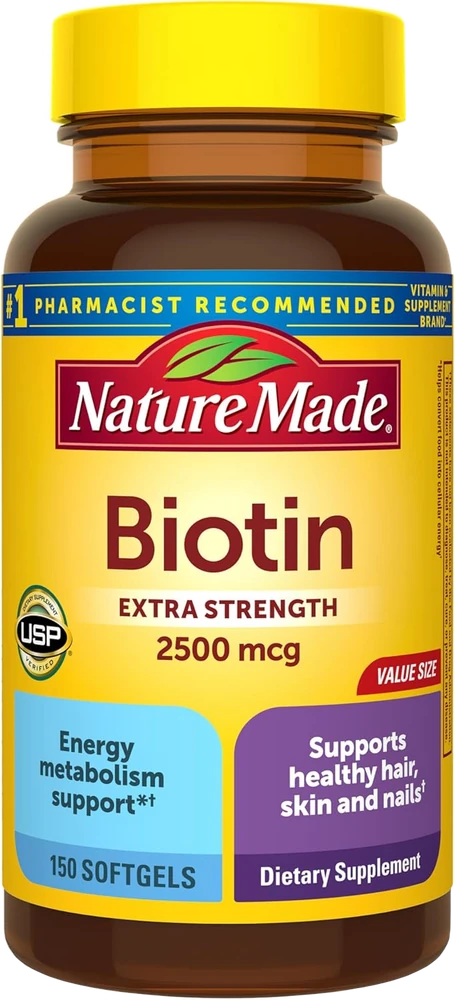
01Nature Made Biotin 2,500 mcg
Our take: If you're going to take biotin at all, this is the one to buy.
 03
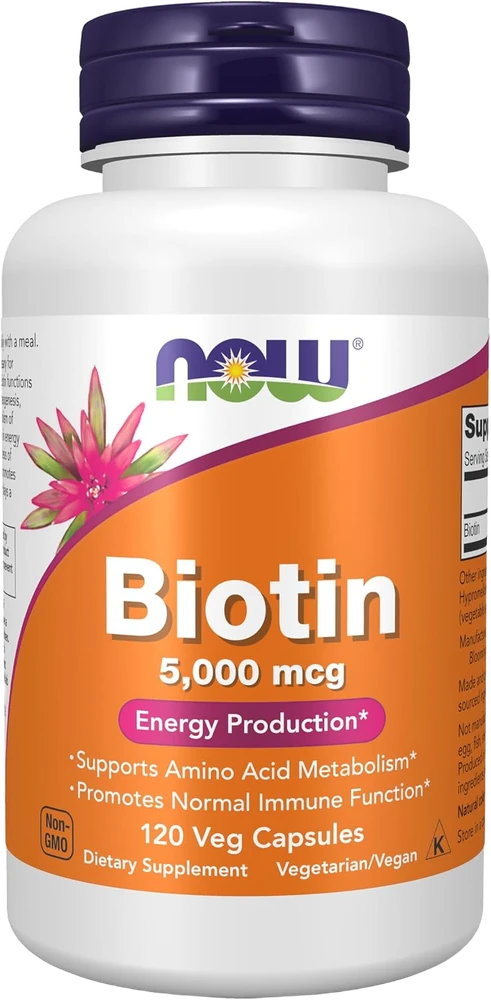
03NOW Biotin 5,000 mcg
Our take: The best pick for someone who wants a clean, allergen-friendly capsule from a brand that actually runs its own testing labs, without paying boutique prices.
 09
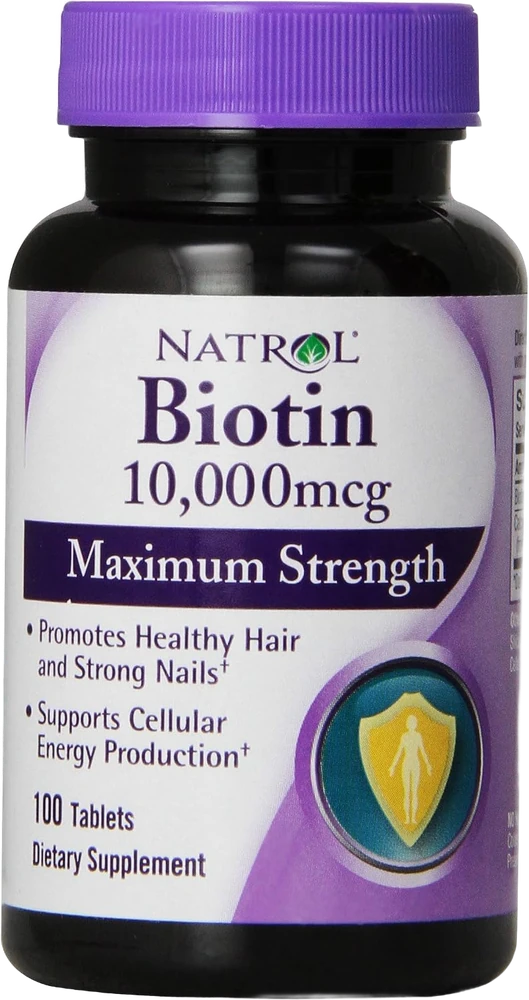
09Natrol Biotin 10,000 mcg
Our take: Highest dose, most added excipients, zero independent testing -- it lands last.
Quick Answers
Why is it the 'Best Value' but ranked 7th?
It wins purely on cost per serving. The ranking weights testing and dose sensibility more heavily, and on both it's weak -- a 10 mg megadose with no independent seal. Great price, mediocre everything else.
Is 10,000 mcg safe?
It's generally well tolerated because excess biotin is excreted, but it's far beyond any need and carries the strongest lab-interference risk in the group. Lower is better.
Can I split the dose to make it last?
The capsules aren't designed to be split, but you can take biotin less frequently to stretch the large bottle if you don't need a daily megadose.
Is the GMP/ISO facility claim reliable?
It's a reasonable manufacturing standard, but it's the brand's own statement, not an independent product certification like USP or NSF.
Sources & Further Reading
2 peer-reviewed sources, each linked to PubMed
- [1] Patel DP, Swink SM, Castelo-Soccio L. A Review of the Use of Biotin for Hair Loss. Skin Appendage Disord. 2017;3(3):166-169. PMID 28879195 — A Review of the Use of Biotin for Hair Loss. Biotin improves hair only in genuine deficiency; a 10 mg dose confers no additional hair benefit over modest replacement in healthy people.
- [2] Li D, Radulescu A, Shrestha RT, et al. Association of Biotin Ingestion With Performance of Hormone and Nonhormone Assays in Healthy Adults. JAMA. 2017;318(12):1150-1160. PMID 28973622 — Association of Biotin Ingestion With Performance of Hormone and Nonhormone Assays in Healthy Adults. High biotin doses such as 10 mg substantially distort hormone and troponin immunoassays in healthy adults.
Affiliate disclosure: every Amazon link uses our Associates tag (superachieverclub-20). We earn a small commission at no cost to you; it funds independent reviews. We never accept payment to change a ranking.