
Nutrafol Men Hair Growth Supplement Review
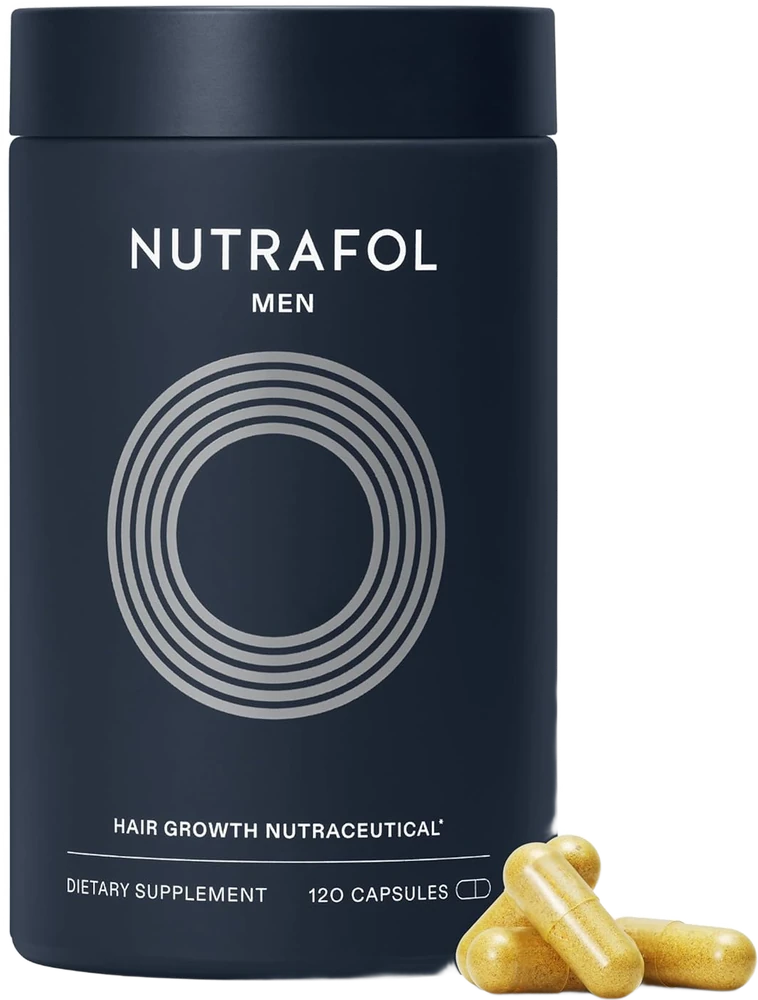 #5 of 8 · Most credible supplement✓ Label verified · Supplement Facts read Sep 7, 2026
Real retailer photo, cut out. Label unedited.
Consider only if you refuse minoxidil — credible ingredients, thin evidence, premium price. Nutrafol is the most legitimate expensive hair supplement, with real disclosed botanicals (saw palmetto, ashwagandha, curcumin) and plausible rationales.
$88 / 120 capsules (1-month supply)$2.93 / day (4 capsules)
Why It Scores 6.5 — And The Label Line Behind Each Number
Evidence (independent RCT data)
45% of scoreThe weak spot, honestly scored. Nutrafol's efficacy data is largely manufacturer-funded and small; independent RCT support is thin. Individual ingredients like saw palmetto have some outside signal — Prager 2002 (PMID 12006122) showed a botanical 5-alpha-reductase blend helped AGA in a small pilot — but that's not proof of this 21-ingredient product. Above the pure-hype tier, far below the proven drugs.
- Dose
- 4 capsules per day
- Evidence
- Manufacturer-funded studies; thin independent data
Mechanism plausibility
20% of scoreMixed. Some components have real rationales — saw palmetto as a mild 5-alpha-reductase inhibitor, ashwagandha for stress-linked shedding, curcumin/tocotrienols for inflammation and oxidative stress. But a 21-ingredient blend is a kitchen-sink mechanism: plausible in parts, unproven as a whole, with doses not clearly at studied levels.
Safety + tolerability
15% of scoreGenerally well tolerated and drug-free, a genuine plus for people who won't use minoxidil. Deductions are minor: it's a large 21-ingredient stack (interaction/idiosyncratic-reaction potential), saw palmetto can rarely cause GI upset, and 'natural' doesn't mean risk-free at 4 caps daily. No major safety flags.
Value / cost per month
10% of scoreThe worst axis. About $88 a month — $2.93 a day — for thin, manufacturer-funded evidence is a poor value signal, not a premium one. On SAC's quality-over-price rule the price can't rescue the weak evidence, and here it actively counts against it: the same money buys ~12 months of proven minoxidil.
- Supply
- 120 capsules — 1-month supply
- Cost basis
- $88 / month ($2.93 / day)
Real-world adherence
10% of scoreA real strength: a once-daily 4-capsule routine is easy to sustain, with no shed, no mess, and no scalp application. Adherence is high — which is precisely why the supplement tier survives commercially despite weak efficacy.
- Form
- Botanical blend — saw palmetto, ashwagandha, curcumin, tocotrienols (21 ingredients)
- More Specs
- Type
- Drug-free oral supplement (not an FDA regrowth drug)
- Role
- Most credible option for minoxidil-avoiders
Label verified. Every figure read from the Supplement Facts photo, Sep 7, 2026.
Marketing Claims Vs. Reality
Clinically tested for visibly thicker hair.
Nutrafol does run trials, but they're largely manufacturer-funded and small, and 'clinically tested' refers to the company's own studies rather than independent RCTs. Real data exists; its strength and independence are the issue. Directionally hopeful, evidentially thin.
Physician-formulated, drug-free.
Accurate and verifiable — it's a disclosed botanical supplement, not a drug, formulated with clinician input. This is a factual descriptor, not an efficacy proof.
Targets root causes like stress, DHT and inflammation.
The ingredients map to plausible pathways — ashwagandha (stress), saw palmetto (DHT; Prager 2002 PMID 12006122 shows a botanical 5AR signal), curcumin (inflammation). But 'targets root causes' overstates proven, product-level effect on hair outcomes. Mechanistically plausible, clinically unproven as a whole.
A natural alternative to minoxidil / finasteride.
Nothing here matches minoxidil's proven effect size (Olsen 2002, PMID 12196747). Framing a thin-evidence botanical blend as an equal alternative to the only FDA-approved OTC regrowth agent is misleading; it's a fallback for people who won't use minoxidil, not a replacement for it.
What Our Test Actually Found
The most credible option in a weak tier
Give Nutrafol its due: disclosed ingredients, plausible individual rationales, clinician involvement, and trials that at least exist. Among expensive hair supplements it's the least objectionable — which is why it's #5 and not lower. That's a relative compliment, not an endorsement of efficacy.
The evidence is thin and manufacturer-funded
The honest read is 'thin independent evidence at a premium price.' Nutrafol's efficacy studies are largely company-run and small; independent replication is sparse. Individual ingredients have some outside signal — saw palmetto's 5-alpha-reductase effect (Prager 2002, PMID 12006122) — but ingredient signals aren't proof of this 21-part product.
$88 a month is the real problem
At $2.93 a day for weak, manufacturer-funded evidence, the price is a poor value signal, not a premium one. On SAC's quality-over-price rule, cost can't buy rank here — and this cost actively hurts it: the same $88 buys roughly a year of the minoxidil proven to work at #1.
Convenience is why the tier survives
A drug-free, once-daily, 4-capsule routine with no shed and no mess is easy to keep up — which is exactly why supplements like this sell despite thin efficacy. If adherence to minoxidil is your real barrier, that's an argument for solving the barrier, not for paying $88 a month for a maybe.
Buy it only with eyes open
If you refuse topical minoxidil and want the most believable supplement, Nutrafol is it — but understand the trade: roughly $88 a month for a maybe, versus about $7 of minoxidil for the proven yes. Manage expectations, give it months, and don't mistake polished 'clinically tested' phrasing for strong proof.
Full analysis: all pros & cons (7), buy if / skip if
- The most legitimate premium hair supplement — real, disclosed ingredients with plausible rationales
- Saw palmetto and others carry some (weak) anti-DHT signal in the broader literature
- Drug-free and generally well tolerated for people who won't use minoxidil
- Convenient once-daily 4-capsule routine with high adherence
- Efficacy evidence is largely manufacturer-funded and small — independent RCT support is thin
- $88/month is premium pricing for weak evidence — a poor value signal, not a quality one
- Nothing here matches the proven effect size of minoxidil (#1)
- You flatly refuse topical minoxidil and want the most credible drug-free supplement
- You value disclosed ingredients and a convenient once-daily (4-cap) routine
- You accept manufacturer-funded evidence and a premium price for a 'maybe'
- You want proven results — $7 of minoxidil (#1) is the evidence-backed yes
- You're price-sensitive — $88/month for thin evidence is a poor value signal
- You expect independent RCT proof — Nutrafol's is largely manufacturer-run and small
Nutrafol is the most legitimate expensive hair supplement, with real disclosed botanicals (saw palmetto, ashwagandha, curcumin) and plausible rationales. But its efficacy evidence is largely manufacturer-funded and small, and nothing here matches minoxidil's proven effect. At ~$88/month it's premium pricing for weak proof. Buy it only if you won't use topical minoxidil and want a drug-free option you can stick with — with eyes open about the trade. Four caps a day, generally well tolerated.
Nutrafol Men lands at #5 because it's the least-bad option in the expensive-supplement tier, not because it works like the four products above it. It's a 21-ingredient botanical blend — saw palmetto, ashwagandha, curcumin, tocotrienols and more — taken as four capsules a day, with real, disclosed ingredients and plausible individual rationales. The problem is the evidence: its efficacy trials are largely manufacturer-funded and small, and independent RCT support is thin. At about $88 a month it's premium pricing for weak proof — a poor value signal, not a quality one. If you flatly refuse topical minoxidil and want a drug-free supplement you can believe in, this is the most credible one; just understand you're paying roughly $88 for a maybe when $7 of minoxidil is the proven yes.
The least-bad expensive supplement — consider it only if you refuse minoxidil, and buy with eyes open.

Nutrafol is #5 because it's the least-bad option in the expensive-supplement tier, not because it works like the four products above it. Its ingredients are real and disclosed, its rationale is plausible, and its trials exist — but those trials are manufacturer-run and small, and the honest read is 'thin independent evidence at a premium price.' If you flatly refuse topical minoxidil and want a supplement you can believe in, this is the most credible one. Just understand the trade you're making: you're paying roughly $88 a month for a maybe, when $7 of minoxidil is the proven yes. Buy it with eyes open, give it several months, and don't let 'clinically tested' phrasing stand in for strong proof.
If This Doesn’t Fit — Try These
 01
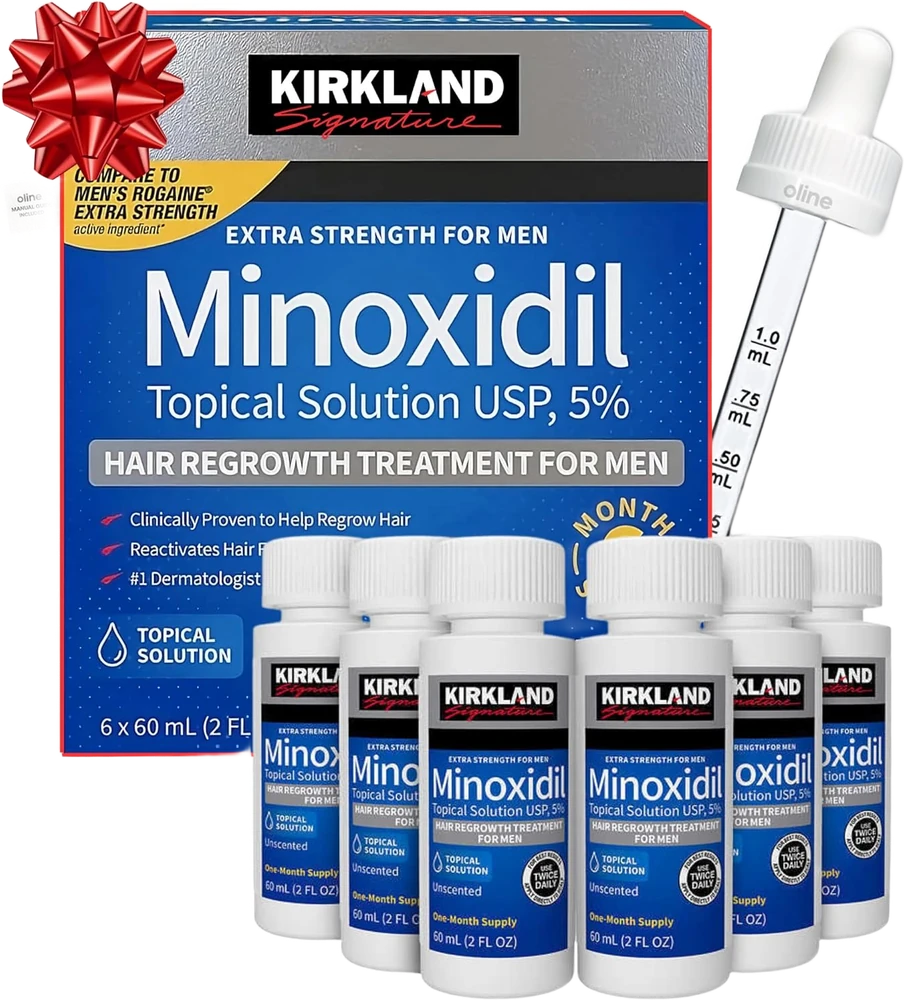
01Kirkland Minoxidil 5%
If you buy one thing from this entire category, buy minoxidil, and if you buy minoxidil, Kirkland is the rational default — it is the exact same 5% active as Rogaine at a fraction of the price, backed by Olsen 2002 and decades of use.
 04
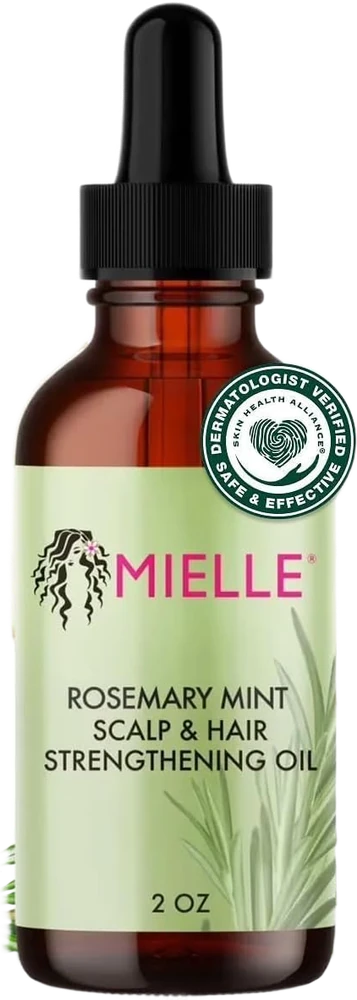
04Mielle Rosemary Mint Scalp Oil
Rosemary oil is the only 'natural' hair product on this list that isn't pure hope — Panahi 2015 is a real randomized trial, and it found rosemary roughly comparable to 2% minoxidil over six months with less itching.
 06
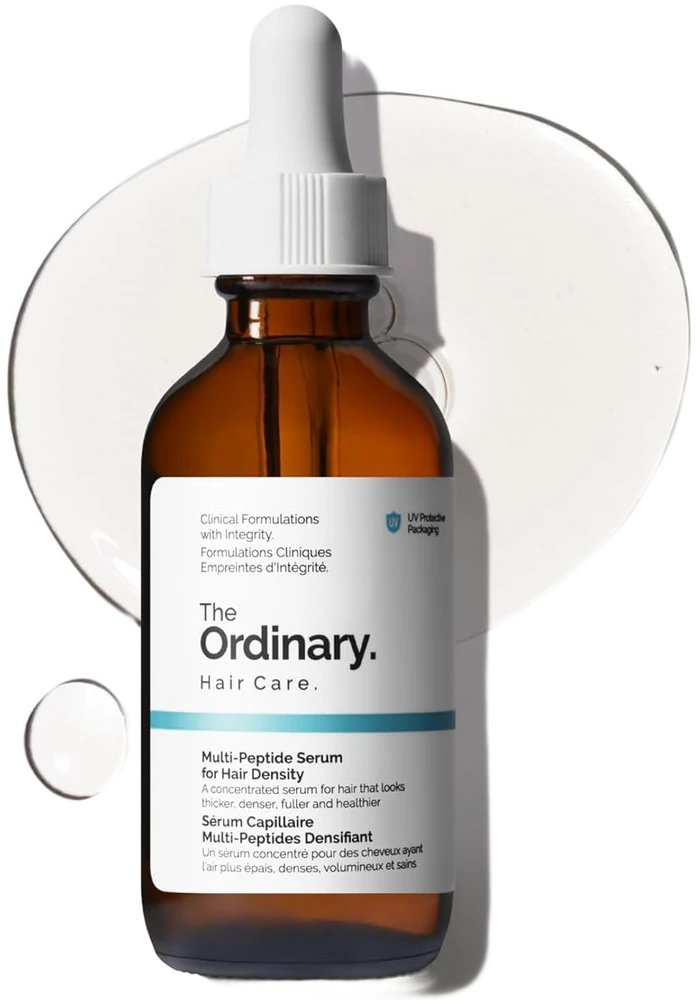
06The Ordinary Multi-Peptide Hair Serum
The Ordinary's hair serum is the most defensible product in the hype tier, mostly because it's honest about being cheap and doesn't cost $88.
Quick Answers
Does Nutrafol actually regrow hair?
The honest answer is 'maybe, weakly, and unproven.' Nutrafol runs trials, but they're largely manufacturer-funded and small, and independent RCT evidence is thin. Some of its ingredients — saw palmetto, for instance — have modest outside signal for hair (Prager 2002), but that's not proof this 21-ingredient product regrows hair. It's the most credible expensive supplement, not a proven regrowth treatment. For proven regrowth, minoxidil (#1) is the evidence-backed choice.
Is $88 a month worth it?
By the evidence, no — that's why it scores lowest on value. You're paying roughly $2.93 a day for thin, manufacturer-funded proof, when about $7 of minoxidil is the proven regrowth agent. The one scenario where it's defensible is if you absolutely won't use topical minoxidil and want the most credible drug-free supplement you'll actually take daily. Even then, go in knowing you're buying a maybe at a premium.
Why is it ranked below cheap products like rosemary oil?
Because ranking here is evidence-first, and rosemary oil (#4) has one real comparative trial on its active while Nutrafol's efficacy data is thin and company-run. Add the $88 price for weak proof and the value axis drags it further down. It's the most credible supplement in its tier, but 'most credible expensive supplement' still ranks below a cheap product with an actual trial behind it.
Is it safe to take?
Generally, yes — it's a drug-free botanical blend and most people tolerate the four-capsule daily dose well. The honest caveats are that it's a large 21-ingredient stack (more room for idiosyncratic reactions or interactions), saw palmetto can occasionally cause mild GI upset, and 'natural' doesn't mean risk-free. If you take medications or have a condition, run the ingredient list past a doctor or pharmacist first.
Sources & Further Reading
2 peer-reviewed sources, each linked to PubMed
- [1] Prager 2002 PMID 12006122 — A randomized, double-blind, placebo-controlled trial to determine the effectiveness of botanically derived inhibitors of 5-alpha-reductase in the treatment of androgenetic alopecia. Small placebo-controlled pilot in which a botanical 5-alpha-reductase inhibitor blend (saw palmetto + beta-sitosterol) improved AGA in 60% of treated subjects. A weak, small-scale signal for the saw-palmetto rationale behind supplements like Nutrafol — not proof of any multi-ingredient product.
- [2] Olsen 2002 PMID 12196747 — A randomized clinical trial of 5% topical minoxidil versus 2% topical minoxidil and placebo in the treatment of androgenetic alopecia in men. The proven-efficacy benchmark Nutrafol is measured against — 5% minoxidil beat 2% and placebo over 48 weeks. Nothing in Nutrafol's evidence base approaches this effect size, which is why it ranks in the honesty tier despite being the most credible supplement.
Affiliate disclosure: every Amazon link uses our Associates tag (superachieverclub-20). We earn a small commission at no cost to you; it funds independent reviews. We never accept payment to change a ranking.