
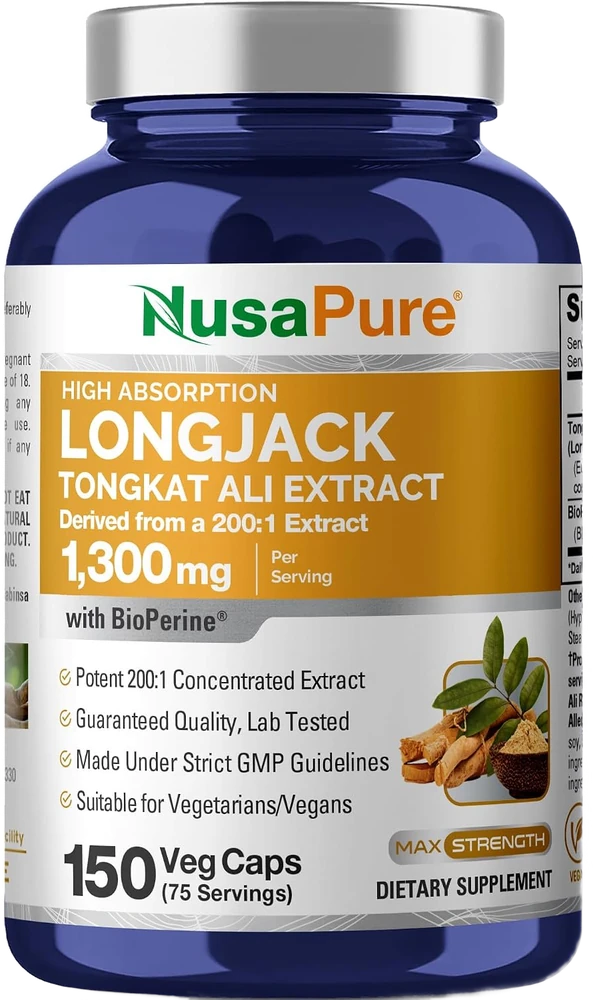
NusaPure Longjack Tongkat Ali 1300 mg, 150 Veg Capsules Review
 #6 of 9 · Best high-dose value✓ Label verified · Supplement Facts read Oct 18, 2026
Real retailer photo, cut out. Label unedited.
Consider it. Fair-priced generic 200:1, with the usual blind spot. One extract line, 1,300 mg per two-cap serving, 2.5 mg BioPerine, 75 servings for $22.99 on the 2026-10-18 US price.
$22.99 / bottle (~$9.20 / month)~$0.31 / serving (2 caps)
Why It Scores 7.6 — And The Label Line Behind Each Number
Active-ingredient potency
30% of scoreReal Eurycoma longifolia root extract at a 200:1 ratio, 1,300 mg per two-capsule serving (650 mg per capsule). The panel prints no eurycomanone percentage, so the active-marker load is unknown. It sits in the same generic class as Nutricost (1,000 mg per serving) and scores the same on this axis: more extract by weight, equally unstandardised.
- Active extract
- Tongkat Ali root extract (Long Jack, Eurycoma longifolia), 200:1
- Per serving (2 veg caps)
- 1,300 mg Tongkat Ali root extract + 2.5 mg BioPerine (black pepper fruit extract)
- Standardisation
- None printed (no eurycomanone %)
Label trust + lab transparency
25% of scoreThe panel is clean and consistent with the front: 1,300 mg, 200:1, 75 servings, and no inflated headline figure. Against that, no lab, assay or per-batch certificate is named anywhere on the frames. The "Tested" badge, "Lab Tested" claim and "cGMP inspected facility" line are the brand's own statements, and the product is distributed by Gmax Central, LLC (Sanford, NC). It scores below Nutricost, whose review notes heavy-metal and microbial assays available on request.
- Label dose
- 2 capsules daily, preferably with a meal
- Lab transparency
- No lab named, no COA or assay shown
Cost per active dose
20% of score$22.99 for 75 servings on the 2026-10-18 US price (NY ZIP) is about $0.31 per serving and roughly $9.20 a month at the label dose of 2 capsules daily. Nutricost is about $0.32 per serving with 1,000 mg of extract, so NusaPure matches it on price and delivers more extract by weight.
- Bottle size
- 150 veg capsules · 75 servings · 75 days at the label dose
- Price
- $22.99 · about $0.31 per serving · about $9.20 a month at the label dose (US price read 2026-10-18)
Formulation + stack
15% of scoreA single extract plus 2.5 mg of BioPerine, with a vegetable cellulose (hypromellose) capsule, rice powder, silica and vegetable magnesium stearate. No Tribulus or other add-ons. BioPerine is a minor addition with no published Tongkat-specific absorption benefit. A tidy formula, not a differentiated one.
- Per capsule
- 650 mg extract + 1.25 mg BioPerine
- Inactives
- Vegetable cellulose capsule (hypromellose), rice powder, silica, magnesium stearate (vegetable source)
Real-world response
10% of scoreGeneric 200:1 Tongkat extracts produce a real but variable response, with lot-to-lot differences because the marker compound is not guaranteed. There is no NusaPure-specific response data, so this is scored at the middle of the generic class rather than credited with a figure.
- More Specs
- Badges on pack
- Vegan, Tested, cGMP inspected facility, Assembled in USA
- Distributor
- Gmax Central, LLC, Sanford, NC
Label verified. Every figure read from the Supplement Facts photo, Oct 18, 2026.
Marketing Claims Vs. Reality
1,300 mg Longjack Tongkat Ali Extract per serving, derived from a 200:1 extract.
The panel prints Tongkat Ali Root Extract (Long Jack) (200:1) at 1300 mg per serving of 2 veg capsules, with the footnote that the serving is derived from a concentrated 200:1 extract-to-plant ratio. The figure is the extract weight, not a raw-root equivalent.
With BioPerine for high absorption.
The panel prints 2.5 mg of BioPerine (black pepper fruit extract) per serving. BioPerine has absorption data for some compounds such as curcumin, but no published human evidence shows it raises Tongkat or eurycomanone bioavailability, so the absorption claim is unsupported for this product.
Guaranteed quality, lab tested, made under strict GMP guidelines.
The pack carries a Tested badge and a cGMP-inspected-facility line and names the distributor (Gmax Central, LLC). No lab, assay or certificate is shown, so testing is brand-stated and the potency of the extract is unverified.
Potent 200:1 concentrated extract.
200:1 is the common ratio for generic Tongkat extract and describes concentration, not eurycomanone content. The panel prints no marker percentage, so potency in the trial sense cannot be confirmed from the label.
Supports testosterone, libido and energy.
Tongkat as a category has trial evidence for testosterone, stress and cortisol outcomes (Talbott 2013, Tambi 2012, Henkel 2014), mostly with standardised extracts at 200-400 mg per day. This bottle is an unstandardised extract at 1,300 mg per serving, so those results do not transfer directly.
What Our Test Actually Found
The panel does not print the "260,000 mg" figure
The label read on 2026-10-18 shows 1300 mg of 200:1 extract per two-capsule serving, and the listing title says 1300mg, 150 Veg Capsules, 75 Servings. An earlier version of this review described a 260,000 mg headline and a roughly 1,000 mg per-capsule dose with 5 mg BioPerine. The current panel contradicts that reading: the dose is 650 mg per capsule and the BioPerine is 1.25 mg per capsule (2.5 mg per serving). The review has been rewritten from the panel.
More extract than Nutricost for about the same money
At $22.99 for 75 servings the cost is about $0.31 per serving. Nutricost's generic 200:1 delivers 1,000 mg per serving plus 20 mg of Tribulus at about $0.32. NusaPure's higher extract weight and cleaner single-extract formula are the case for buying it, and they are real advantages even though both are unstandardised.
Unstandardised means the dose is a guess
Tongkat's trial effects track eurycomanone, and the panel does not print it. 1,300 mg of generic extract may carry anywhere from a small to a reasonable amount of the marker, and the label gives no way to tell. That is the same blind spot the other generic 200:1 bottles have, and it is why the printed-percentage and patent-extract picks rank above this one.
Testing is brand-stated
The Tested badge and the cGMP line are self-declared; no lab or per-batch COA appears in the gallery. For a herbal extract whose active compound is invisible to the buyer, that matters, and it is the main reason this scores below Nutricost on label trust despite the cleaner formula.
The 150-capsule bottle is 75 servings, not five months
The label directs 2 capsules daily, so 150 capsules last 75 days. Per month the cost is roughly $9.20 at the US price read on 2026-10-18.
Full analysis: all pros & cons (8), buy if / skip if
- 1,300 mg of 200:1 root extract per two-capsule serving, more than Nutricost's 1,000 mg
- About $0.31 per serving ($22.99 for 75 servings)
- Single extract plus 2.5 mg BioPerine, no Tribulus or other add-ons
- Vegan hypromellose capsule with a clean inactive list
- No eurycomanone percentage, so the active dose is unknown
- No lab, assay or per-batch COA named; Tested and cGMP statements are brand-stated
- BioPerine has no published benefit for Tongkat absorption
- Unstandardised generic extract, so trial doses do not transfer directly
- You want a low-cost generic 200:1 Tongkat and prefer no Tribulus in the formula
- You are comfortable with an unstandardised extract after validating your own response
- You want a printed eurycomanone percentage or a named patent extract (LJ100, Physta)
- You want a published per-batch COA or an independent third-party seal
- You want maximum label-guaranteed active content per capsule (Toniiq Ultra)
One extract line, 1,300 mg per two-cap serving, 2.5 mg BioPerine, 75 servings for $22.99 on the 2026-10-18 US price. That puts it level with Nutricost on cost and ahead on extract weight, and it carries no Tribulus. It still prints no eurycomanone percentage and names no lab, so the active dose is unknown and the testing claims are the brand's own. A reasonable second-tier budget pick, not a patent-extract substitute.
A plain generic Tongkat extract at a fair price. The Supplement Facts panel prints one active line: Tongkat Ali root extract (Long Jack, 200:1), 1,300 mg per two-capsule serving, plus 2.5 mg of BioPerine, in a 150-capsule bottle that holds 75 servings. That is more extract per serving than Nutricost at about the same cost, with no Tribulus on the label. What the panel leaves out is the part that decides whether Tongkat works: no eurycomanone percentage, no named lab and no certificate of analysis. An earlier version of this page scored a "260,000 mg" headline as a misleading label; the bottle and listing read on 2026-10-18 print no such figure, so that verdict has been withdrawn and the product re-scored from the panel.
A fair-priced generic, with the generic's blind spot.

NusaPure's Longjack Tongkat Ali is a plain 200:1 root extract: 1,300 mg per two-capsule serving with 2.5 mg of BioPerine, 75 servings for $22.99 on the 2026-10-18 US price. On the panel it matches Nutricost on cost and beats it on extract weight, and it leaves out Tribulus. What it shares with the other generic bottles is the problem: no eurycomanone percentage, no named lab and no certificate of analysis. The active dose is unknown and the testing statements are the brand's own. That keeps it below the named-patent and printed-percentage picks and a step under Nutricost on label trust. An earlier version of this review scored a "260,000 mg" headline as a misleading label and told readers to skip the bottle. The bottle and listing read today print no such figure, so that verdict has been withdrawn. Buy it if you want a cheap, simple 200:1 extract and accept the standardisation gap; buy LJ100, Physta or Toniiq Ultra if you want the dose to be verifiable.
If This Doesn’t Fit — Try These
 04
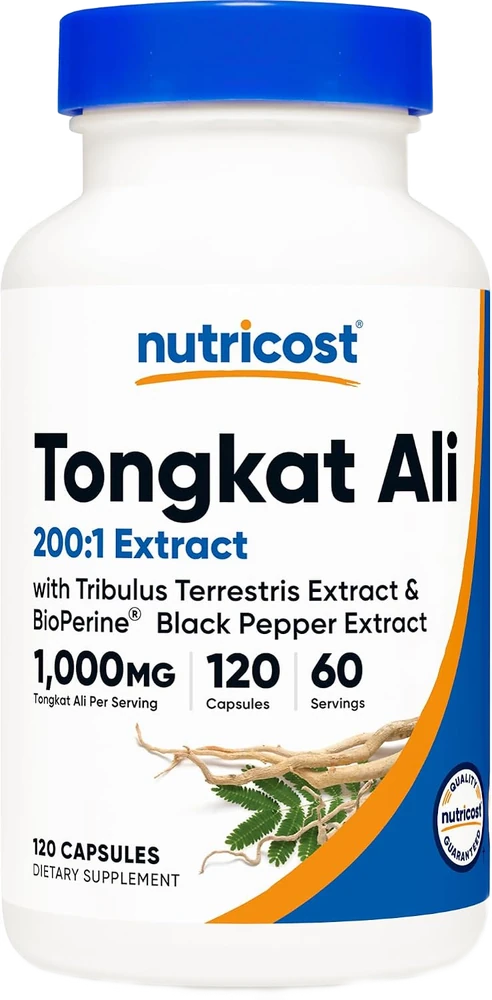
04Nutricost Tongkat Ali
If you want to test the waters without committing $30+/month, Nutricost is the right starting point.
 05
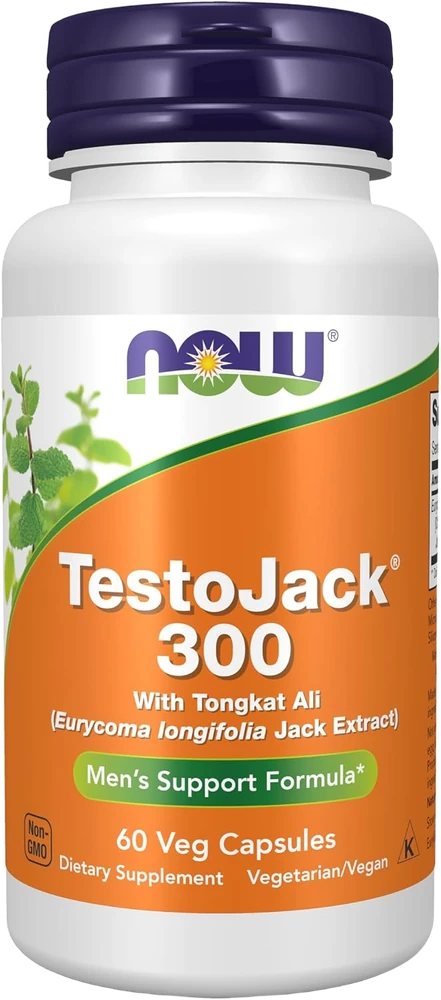
05NOW TestoJack 300
If you want to walk into a Sprouts or Vitamin Shoppe and grab a bottle of something you trust, NOW Foods is the answer.
 01
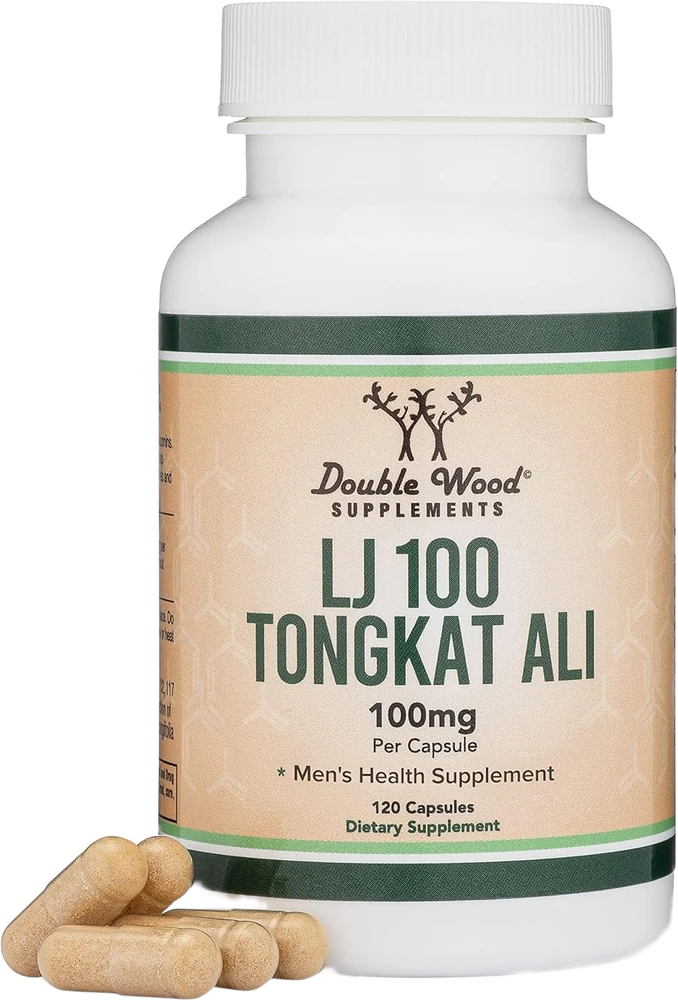
01Double Wood LJ100 Tongkat Ali
When the question is 'which bottle gives me the exact thing the studies used', the answer is LJ100.
 03
03Toniiq Ultra Tongkat Ali
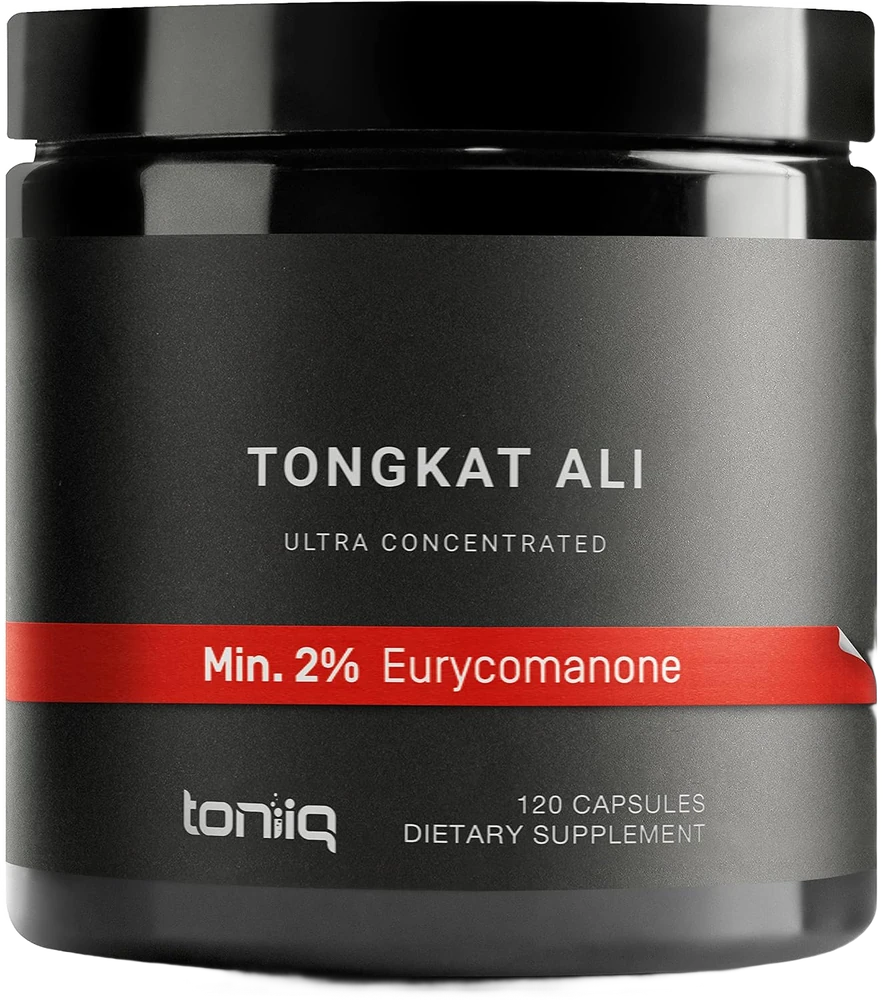
If you want the most label-guaranteed active mg per capsule, this is it.
Quick Answers
How much Tongkat is in one capsule?
The panel's serving size is 2 veg capsules, and that serving carries 1,300 mg of Tongkat Ali root extract (Long Jack, 200:1) plus 2.5 mg of BioPerine. Per capsule that is 650 mg of extract and 1.25 mg of BioPerine. The label directs 2 capsules daily, preferably with a meal, so a 150-capsule bottle is 75 servings.
What happened to the "260,000 mg" label?
An earlier version of this review was built around a 260,000 mg headline. The bottle frames and the listing title read on 2026-10-18 print no such figure: the title says 1300mg, 150 Veg Capsules, 75 Servings, and the panel says 1300 mg of 200:1 extract per serving. For reference, 1,300 mg multiplied by the 200:1 ratio is 260,000 mg of starting root, which is simple arithmetic rather than a rounded-up claim. Because the current label does not print it, this review no longer scores a misleading headline.
Is the 200:1 ratio a stronger extract than the competition?
No. 200:1 is the common ratio for generic Tongkat root extract. It describes how much root was concentrated into the extract, not how much eurycomanone it contains. The panel prints no eurycomanone percentage, so the active-marker dose per serving is unknown, the same limitation Nutricost's generic 200:1 bottle carries.
Does BioPerine help Tongkat absorb better?
Not on published evidence. BioPerine has documented absorption effects for some compounds such as curcumin, but there is no human data showing it raises Tongkat or eurycomanone uptake. At 2.5 mg per serving it is a small, harmless addition rather than a reason to buy.
How does the cost compare with Nutricost?
On the US price read on 2026-10-18 ($22.99 for 75 servings), a serving costs about $0.31, roughly $9.20 a month at the label dose. Nutricost's review prices its 60-serving bottle at $18.95, about $0.32 a serving, with 1,000 mg of extract per serving plus 20 mg Tribulus. NusaPure gives 1,300 mg of extract per serving at about the same price and no Tribulus, but publishes no more testing detail than Nutricost does.
Is there a third-party test or COA?
Not on the panel or the gallery frames. The pack carries a "Tested" badge and a cGMP-inspected-facility badge, and the front says "Guaranteed Quality, Lab Tested", but no lab, no assay and no per-batch certificate is named. Treat testing as brand-stated.
Who is this for?
Buyers who want an inexpensive, plain 200:1 Tongkat extract at a higher per-serving weight than Nutricost, and who accept that nothing on the label lets them verify eurycomanone. If you want a named patent extract or a published COA, the higher-ranked bottles on the list are the right place to look.
Sources & Further Reading
5 peer-reviewed sources, each linked to PubMed
- [1] Talbott 2013 PMID 23705671 — Effect of Tongkat Ali on stress hormones and psychological mood state in moderately stressed subjects. 200 mg/day Physta® for 4 weeks reduced cortisol 16% and raised testosterone 37% in stressed adults vs placebo. Frames the standardised-extract dose window that an unstandardised 200:1 extract such as NusaPure's 1,300 mg per serving can only approximate.
- [2] Tambi 2012 PMID 21671978 — Standardised water-soluble extract of Eurycoma longifolia, Tongkat Ali, as testosterone booster for managing men with late-onset hypogonadism. 200 mg/day standardised Tongkat raised total + free T into the lower normal range in 90% of hypogonadal subjects. Reinforces that standardisation visibility, which the NusaPure panel does not print, is what makes the active-marker dose reliable.
- [3] Henkel 2014 PMID 23754792 — Tongkat Ali as a potential herbal supplement for physically active male and female seniors — a pilot study. 400 mg/day standardised Tongkat improved free T + muscle strength over 5 weeks. Defines the upper end of the trial dose range that NusaPure's gross-weight 1,300 mg per serving may or may not approximate, depending on lot-level eurycomanone content.
- [4] George & Henkel 2014 PMID 24386995 — Phytoandrogenic properties of Eurycoma longifolia as natural alternative to testosterone replacement therapy. Systematic review of mechanism and clinical evidence across standardised Tongkat extracts. Concludes effect sizes track with active-marker dose — the analytical case for valuing standardisation visibility over raw extract weight, the thing the NusaPure panel does not print.
- [5] Chen 2014 PMID 25013692 — Supplementation of Eurycoma longifolia Jack extract for 6 weeks does not affect urinary testosterone:epitestosterone ratio, liver and renal functions in male recreational athletes. Safety dataset on standardised Tongkat over 6 weeks at trial dose. Tongkat's clean hepatic/renal safety profile at trial dose is the reference point; this was a standardised extract, not NusaPure's.
Affiliate disclosure: every Amazon link uses our Associates tag (superachieverclub-20). We earn a small commission at no cost to you; it funds independent reviews. We never accept payment to change a ranking.