
NOW Foods Garlic 5000 Review
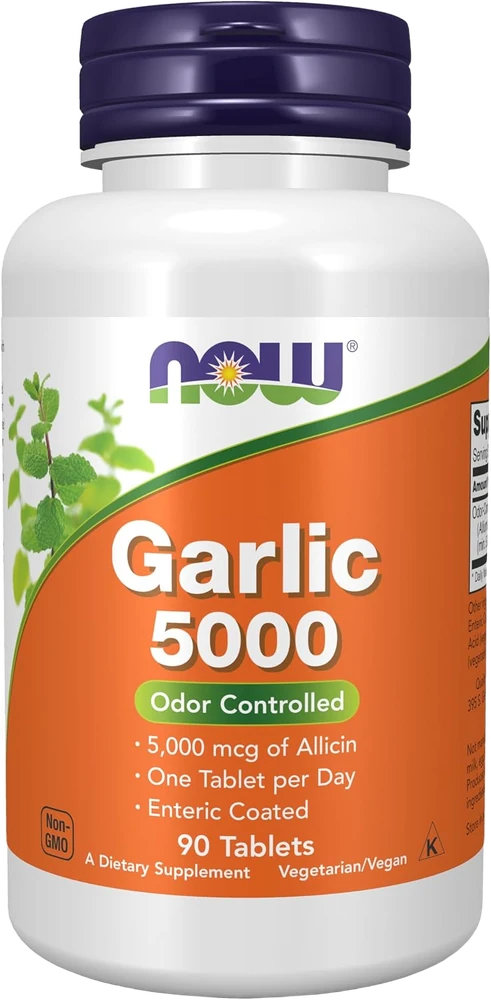 #2 of 9 · Best Value Enteric Allicin✓ Label verified · Supplement Facts read Sep 7, 2026
Real retailer photo, cut out. Label unedited.
Buy it. Credible enteric allicin at a budget price. You get a real enteric coating, a standardized 5000 mcg allicin-yield spec, and GMP-facility oversight for about $11.
$11 approx~$0.12 per tablet (90 tablets)
Why It Scores 7.8 — And The Label Line Behind Each Number
Form & Bioavailability
30% of scoreEnteric-coated tablet built to protect the alliin/alliinase system from gastric acid so allicin forms in the upper intestine. Sound mechanism, though real-world allicin release from any enteric tablet is variable and hard to verify per batch.
- Form
- Enteric-coated tablet
Standardization & Dose
25% of score500 mg garlic standardized to a minimum 5000 mcg allicin yield — a concrete, high potency spec that lands within trial-relevant ranges. 'Yield' is a potential figure, not a guaranteed delivered dose, which is the usual caveat.
- Dose
- 500 mg garlic, min 5000 mcg allicin yield
- Standardization
- Standardized allicin yield + precursors
Third-Party Testing & Purity
20% of scoreMade in a NOW UL/NSF-registered GMP facility with Non-GMO verification. NOW's in-house testing program is well regarded, though this SKU does not carry a per-product NSF Certified for Sport-style seal.
- Testing
- Non-GMO, GMP (UL/NSF-registered facility)
Tolerability & Safety
10% of scoreEnteric coating reduces garlic breath and reflux versus raw powder, though allicin-route products still cause more odor than aged extract for some users. Standard antiplatelet caution applies.
Value
15% of scoreAt roughly $11 for 90 tablets, this is the cheapest credible enteric-allicin option here — excellent cost per effective day for the mechanism.
- Count
- 90 tablets
- Cost per dose
- ~$0.12/day
Label verified. Every figure read from the Supplement Facts photo, Sep 7, 2026.
Marketing Claims Vs. Reality
Enteric coating improves allicin delivery
Dissolution studies (Lawson & Wang) show enteric coating protects allicin precursors from acid, but real-world allicin release varies widely between products and even batches, so the mechanism is sound but delivery is not guaranteed.
The 5000 mcg allicin yield produces proportionally larger heart benefits
Trials do not show a linear dose-response between labeled allicin yield and blood-pressure reduction; garlic's BP effect plateaus around the same modest ~5 mmHg regardless of headline allicin numbers.
It reduces garlic odor versus raw garlic
The enteric coating delays release past the stomach, cutting immediate breath odor, but allicin-route products still produce more sulfur odor for many users than aged garlic extract.
What Our Test Actually Found
Allicin yield is a potential, not a delivered dose
'5000 mcg allicin yield' means the tablet can generate that much allicin under ideal lab conditions. Actual amount released depends on coating integrity, transit time, and enzyme survival — which is exactly why aged extract sidesteps the problem by standardizing a stable end-compound instead.
Best price-to-mechanism ratio in the group
Among products offering a genuine enteric coating and a standardized allicin spec, this is the cheapest. If you have decided you want the allicin route rather than AGE, there is little reason to pay more unless you specifically need a per-product third-party seal.
Full analysis: all pros & cons (7), buy if / skip if
- Genuine enteric coating protecting allicin precursors from stomach acid
- High, concrete 5000 mcg standardized allicin-yield spec
- Made in a UL/NSF-registered GMP facility with Non-GMO verification
- Cheapest credible enteric-allicin option here (~$0.12/day)
- Allicin 'yield' is a lab potential, not a guaranteed delivered dose
- More potential for garlic odor than aged extract for some users
- No per-product third-party certification seal on this SKU
- Genuine enteric coating protecting allicin precursors from stomach acid
- High, concrete 5000 mcg standardized allicin-yield spec
- Made in a UL/NSF-registered GMP facility with Non-GMO verification
- Allicin 'yield' is a lab potential, not a guaranteed delivered dose
- More potential for garlic odor than aged extract for some users
- No per-product third-party certification seal on this SKU
You get a real enteric coating, a standardized 5000 mcg allicin-yield spec, and GMP-facility oversight for about $11. It is the smart choice if you prefer the allicin mechanism to aged extract — as long as you accept the same modest heart effects as the rest of the category.
If you want the allicin approach rather than aged extract, the coating is the whole ballgame. Allicin precursors (alliin plus the enzyme alliinase) are destroyed by stomach acid, so an uncoated garlic tablet delivers far less than its label claims. NOW's Garlic 5000 uses an enteric coating designed to survive the stomach and release in the upper intestine, where conversion to allicin can actually happen. At around $11 and backed by NOW's UL/NSF-registered GMP manufacturing, it is the best-value credible entry in this category. Just keep expectations honest: a high allicin-yield number on the label does not linearly translate into bigger blood-pressure drops.
The value champion of the allicin route

NOW Garlic 5000 is what to buy if you want the allicin mechanism without overpaying. The coating and standardization are legitimate and the GMP oversight is real. It ranks just below Kyolic only because aged extract has the stronger direct trial record — but on price-to-credibility, nothing beats it.
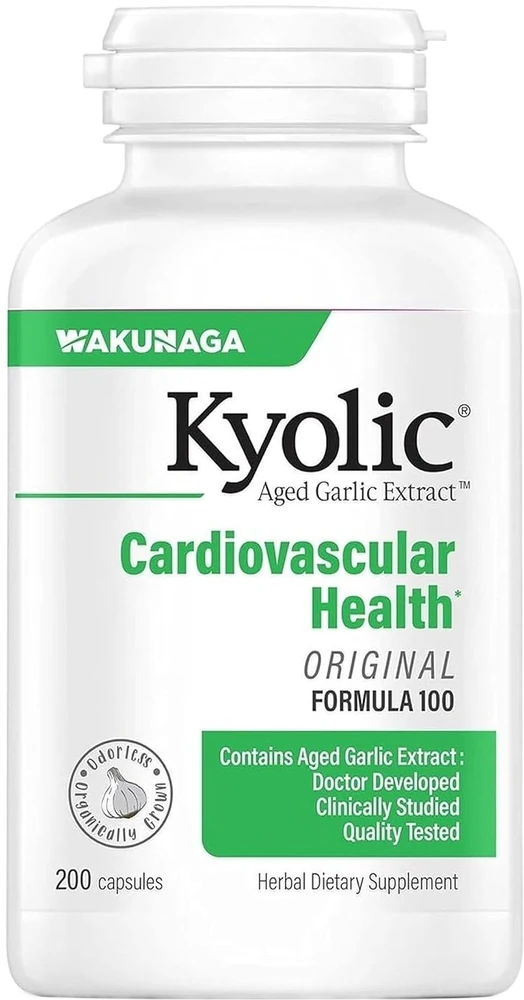
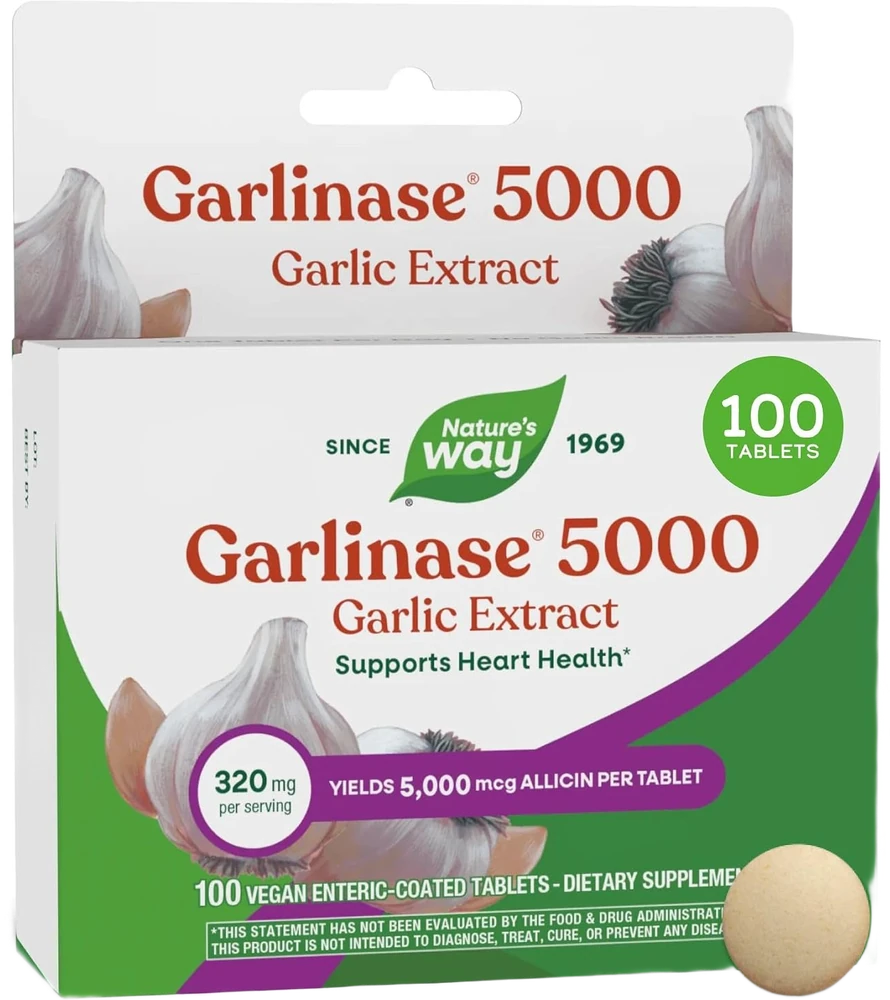
If This Doesn’t Fit — Try These
Quick Answers
Is a higher allicin yield always better?
No. Blood-pressure benefits plateau around a modest level regardless of the headline allicin number, so a 5000 mcg tablet does not outperform a well-designed 1800 mcg one in proportion to the number.
Will the enteric coating stop garlic breath completely?
It reduces it by delaying release past the stomach, but allicin-route tablets can still cause some odor. If odor is your main concern, an aged garlic extract is the more reliable choice.
Sources & Further Reading
2 peer-reviewed sources, each linked to PubMed
- [1] Rohner A, Ried K, Sobenin IA, et al. A Systematic Review and Metaanalysis on the Effects of Garlic Preparations on Blood Pressure in Individuals With Hypertension. Am J Hypertens. 2015;28(3):414-423. PMID 25239480 — A Systematic Review and Metaanalysis on the Effects of Garlic Preparations on Blood Pressure in Individuals With Hypertension. Garlic preparations lowered systolic BP by about 8 mmHg and diastolic by about 5 mmHg in hypertensive subjects, with effects broadly comparable across garlic forms.
- [2] Ried K, Toben C, Fakler P. Effect of garlic on serum lipids: an updated meta-analysis. Nutr Rev. 2013;71(5):282-299. PMID 23590705 — Effect of garlic on serum lipids: an updated meta-analysis. Garlic modestly reduced total and LDL cholesterol only in those with elevated baseline levels and after at least two months of use; the lipid effect was small overall.
Affiliate disclosure: every Amazon link uses our Associates tag (superachieverclub-20). We earn a small commission at no cost to you; it funds independent reviews. We never accept payment to change a ranking.