
Nizoral Anti-Dandruff Shampoo (Ketoconazole 1%) Review
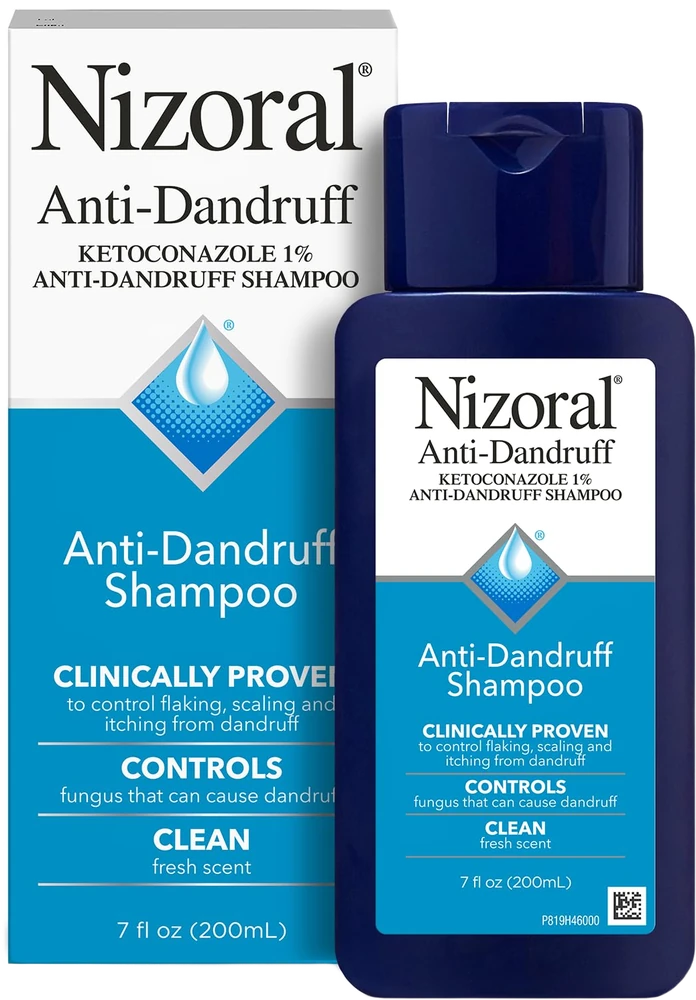 #3 of 8 · Best adjunct✓ Product photos checked Sep 7, 2026
Real retailer photo, cut out. Label unedited.
Buy it as the cheapest evidence-backed adjunct — a twice-weekly wash that supports minoxidil. Ketoconazole 1% shampoo is the best evidence-to-price add-on in hair care.
$15 / 7 fl oz bottle≈ $4 / month at 2 washes per week
Why It Scores 8.6 — And The Label Line Behind Each Number
Evidence (independent RCT data)
45% of scoreReal adjunct evidence, a notch below minoxidil's. Pierard-Franchimont 1998 (PMID 9669136) found long-term 2% ketoconazole improved density, shaft diameter and anagen fraction comparably to 2% minoxidil in AGA. Supportive rather than definitive — the trial base is smaller and the OTC product is 1%, not the 2% studied.
- Active
- Ketoconazole 1% (OTC antifungal)
Mechanism plausibility
20% of scoreA genuine, plausible mechanism: ketoconazole is antifungal and anti-inflammatory and appears to blunt local scalp androgen activity. It acts on real drivers of loss (inflammation, DHT), not a hand-wavy 'phyto-active' story.
- Mechanism
- Anti-inflammatory + local anti-androgen on the scalp
Safety + tolerability
15% of scoreExcellent tolerability at twice-weekly use — this is a mainstream OTC dandruff shampoo. The only honest caveat is dryness with overuse; alternate with a normal conditioner and don't use daily. Near-zero systemic risk.
Value / cost per month
10% of scoreAbout $4 a month of use from a ~$15 bottle — outstanding value for a product with real supporting data. On SAC's quality-over-price rule, the low price is a bonus on top of genuine evidence, not a substitute for it.
- Size
- 7 fl oz bottle
- Cost basis
- ≈ $4 / month at 2 washes per week
Real-world adherence
10% of scoreNearly free adherence: swapping your shampoo twice a week fits into a life with no new habit to build. Far easier to sustain than a twice-daily solution — the routine is the reason it scores high here.
- More Specs
- Use
- Lather, leave 3-5 min, rinse — 2× per week
- Role
- Adjunct to minoxidil — not a standalone regrowth agent
- Key evidence
- Pierard-Franchimont 1998 — density/anagen gains in AGA
Photos checked.This product has no Supplement Facts panel; the retailer's listing photos were reviewed Sep 7, 2026.
Marketing Claims Vs. Reality
Clinically shown to help androgenetic alopecia.
Supported but with caveats. Pierard-Franchimont 1998 (PMID 9669136) studied 2% ketoconazole and found density/anagen gains comparable to 2% minoxidil. The OTC Nizoral is 1%, and the evidence positions ketoconazole as an adjunct, not a standalone cure. True in direction, softened in strength.
Reduces DHT on the scalp.
Plausible and supported by mechanistic literature — topical ketoconazole appears to blunt local androgen activity and inflammation — but the effect size in humans is modest and less characterized than finasteride's systemic DHT reduction. Directionally fair, not a strong anti-DHT drug.
Controls dandruff and flaking.
This is ketoconazole's core, well-established OTC indication. Reducing the flaking and inflammation that sabotage adherence is itself useful for a hair regimen.
Thickens and strengthens hair.
Consistent with the density/shaft-diameter gains in Pierard-Franchimont 1998, but that trial used 2% and framed the effect as adjunctive. As a cosmetic 'thickening' claim on a 1% OTC shampoo it's optimistic; as an adjunct effect it's defensible.
What Our Test Actually Found
A dandruff shampoo with a real second job
Ketoconazole's supporting data in AGA is the reason Nizoral sits at #3. Pierard-Franchimont 1998 (PMID 9669136) found 2% ketoconazole improved hair density, shaft diameter and anagen fraction comparably to 2% minoxidil — a genuine result for a product most people buy for flakes.
It's an adjunct — stack it, don't substitute it
The evidence positions ketoconazole as support for minoxidil, not a replacement. On its own it won't regrow a scalp; layered onto a minoxidil regimen it lowers the inflammation and local DHT that work against you. Buy it as leg two of the stack, not as a hero.
The best evidence-to-price ratio on the page
At roughly $4 a month of use, Nizoral gives you real supporting data for less than a coffee. That's not 'cheap therefore good' — it's genuine evidence that also happens to be inexpensive, which is exactly the combination SAC rewards.
Twice a week, not daily — mind the dryness
Use it two times a week, leave it on 3-5 minutes, then rinse; alternate with a normal conditioner. Daily use can dry the scalp and hair without adding benefit. The twice-weekly cadence is both the studied pattern and near-effortless to sustain.
Full analysis: all pros & cons (8), buy if / skip if
- Real adjunct evidence in AGA — Pierard-Franchimont 1998 saw density gains comparable to 2% minoxidil
- Genuine anti-inflammatory + local anti-androgen mechanism, not marketing
- Reduces the flaking and inflammation that sabotage other treatments and adherence
- Cheap (~$4/month), widely available, near-zero downside at 2 washes a week
- Near-effortless adherence — a shampoo swap, not a new daily habit
- An adjunct, not a standalone regrowth agent — it supports minoxidil, doesn't replace it
- Can be drying; alternate with conditioner and don't use daily
- Evidence base is smaller than minoxidil's and studied at 2% vs the OTC 1%
- You're building a minoxidil-based regimen and want the cheapest proven multiplier
- You have scalp inflammation, flaking, or dandruff alongside thinning
- You want a near-effortless twice-a-week routine
- You want real supporting data, not marketing, at ~$4/month
- You expect it to regrow hair on its own — it's an adjunct, not a standalone drug
- Your scalp is very dry and reacts badly to medicated shampoos (alternate with conditioner)
- You aren't willing to use anything else — it works best stacked on minoxidil
Ketoconazole 1% shampoo is the best evidence-to-price add-on in hair care. Pierard-Franchimont 1998 found 2% ketoconazole improved density and anagen fraction comparably to 2% minoxidil, via a genuine anti-inflammatory + local anti-androgen mechanism. Use it twice a week (lather, leave 3-5 min, rinse) at about $4/month. It's an adjunct, not a standalone regrowth drug — stack it on minoxidil, don't substitute it. Near-zero downside beyond mild dryness.
Nizoral is the highest-leverage cheap add-on in hair care: a mainstream 1% ketoconazole dandruff shampoo whose active ingredient happens to have genuine supporting data in male-pattern hair loss. In Pierard-Franchimont 1998, long-term 2% ketoconazole improved hair density, shaft diameter, and the proportion of anagen follicles to a degree comparable with 2% minoxidil. The mechanism is real — anti-inflammatory action plus a local anti-androgen effect on the scalp — not a marketing story. At roughly $4 a month of use (two washes a week from a $15 bottle), the value-to-evidence ratio is the best on this page. What it is not is a standalone regrowth agent: it's the reliable #2 that supports minoxidil, not a hero that replaces it.
The cheapest evidence-backed add-on in hair care — buy it as minoxidil's reliable #2.

Nizoral is the highest-leverage cheap adjunct on this list: a mainstream dandruff shampoo whose active has real supporting data in male-pattern loss. It won't regrow a scalp alone, but as the second leg of a minoxidil regimen it lowers scalp inflammation and local DHT for about four dollars a month, with near-zero downside. There is almost no reason not to swap your shampoo twice a week. Buy it as the dependable #2 to minoxidil's #1 — not a hero product, but the adjunct with the best evidence-to-price ratio here. Pair it with Kirkland minoxidil (#1) and a derma roller (#3) and you've built essentially the best consumer regimen that exists for under $20 a month.
If This Doesn’t Fit — Try These
 01
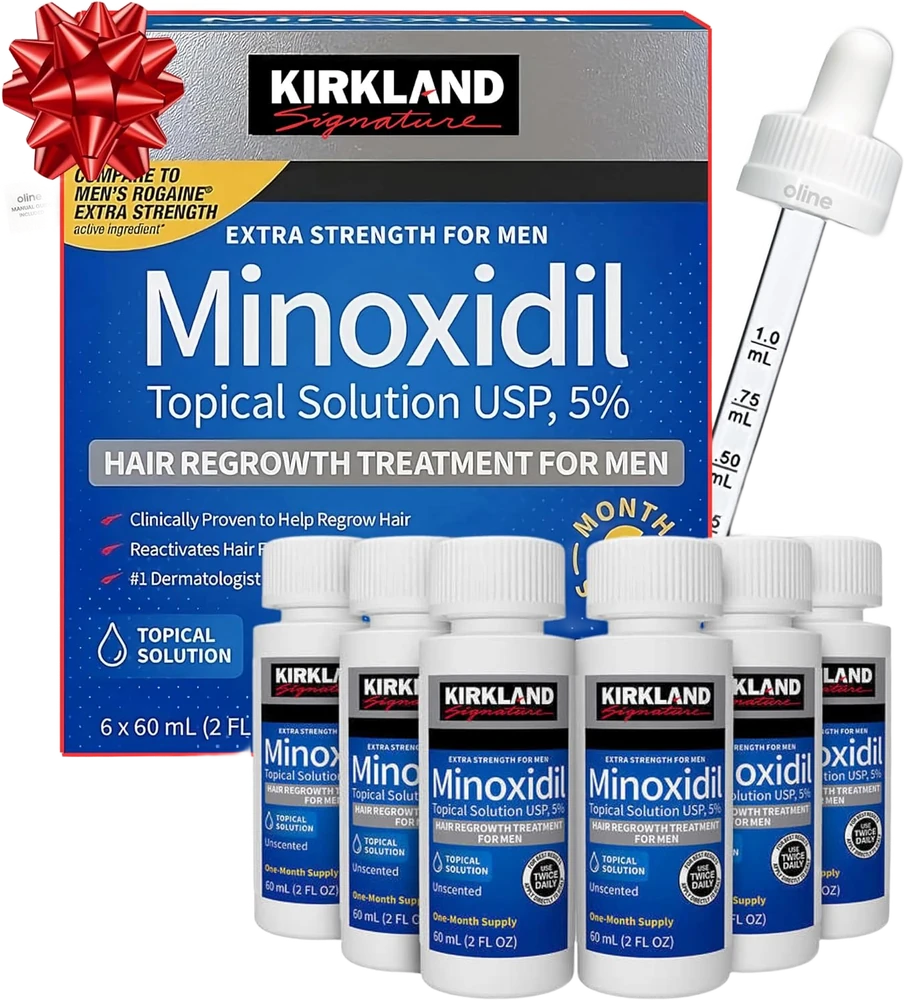
Kirkland Minoxidil 5%
If you buy one thing from this entire category, buy minoxidil, and if you buy minoxidil, Kirkland is the rational default — it is the exact same 5% active as Rogaine at a fraction of the price, backed by Olsen 2002 and decades of use.
 02
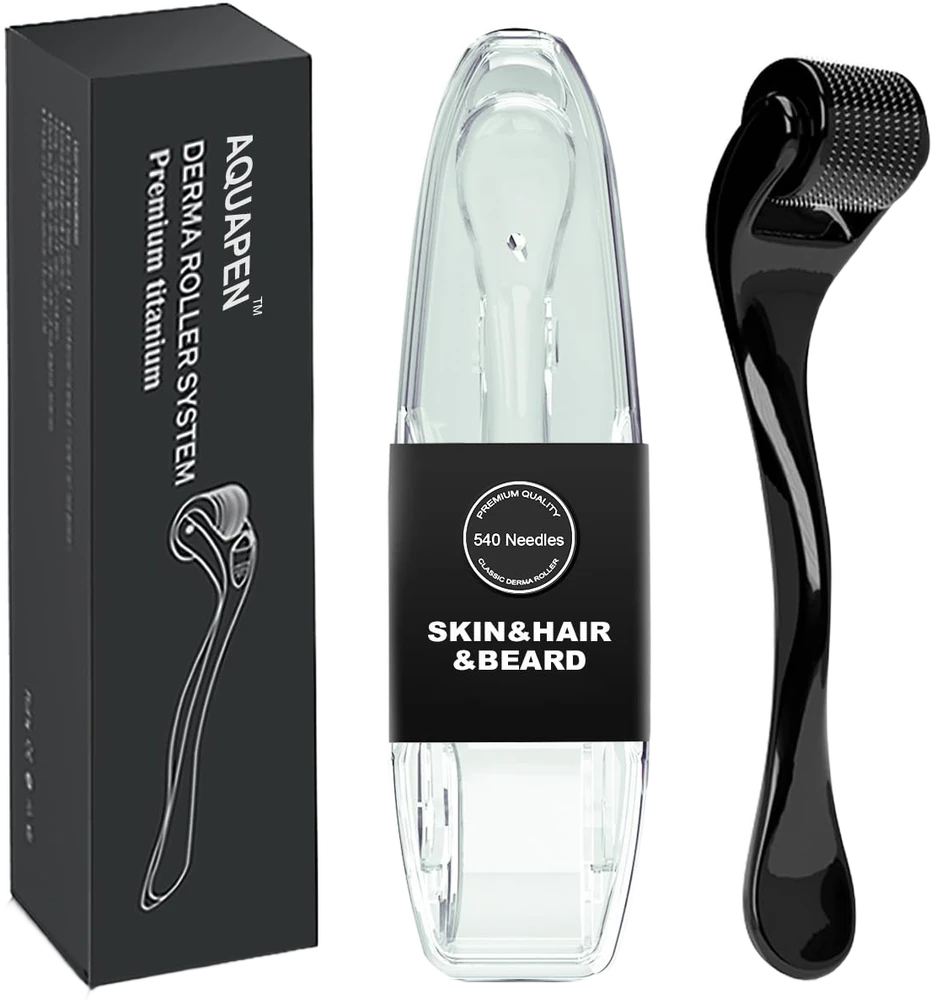
Titanium Derma Roller 0.25 mm
The derma roller is the closest thing to a free lunch in hair growth.
 04
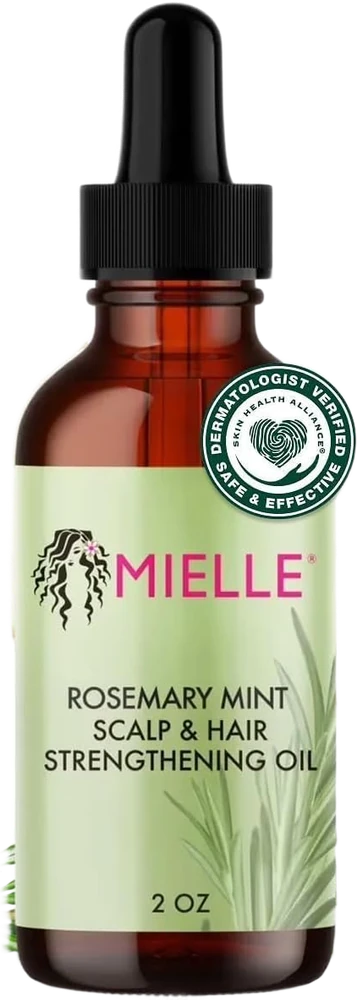
Mielle Rosemary Mint Scalp Oil
Rosemary oil is the only 'natural' hair product on this list that isn't pure hope — Panahi 2015 is a real randomized trial, and it found rosemary roughly comparable to 2% minoxidil over six months with less itching.
Quick Answers
Can Nizoral regrow my hair on its own?
Not really — treat it as an adjunct. The evidence (Pierard-Franchimont 1998) supports ketoconazole as a supportive treatment that improves density and anagen fraction alongside a real regrowth agent, not as a standalone cure. Its biggest value is stacked on minoxidil: it lowers the scalp inflammation and local DHT working against your follicles. Used alone, expect a calmer, flake-free scalp and modest support, not a transformation.
1% OTC vs 2% prescription — does the difference matter?
The strongest trial data (Pierard-Franchimont 1998) used 2% ketoconazole, which is prescription strength in many places. The OTC 1% Nizoral is the practical, widely available option and what most people use as an adjunct. It's reasonable to expect a somewhat smaller effect than the 2% studied, which is another reason to treat it as support for minoxidil rather than a primary treatment.
How often should I use it?
Twice a week is the sweet spot: lather, leave it on the scalp for 3-5 minutes so the ketoconazole can act, then rinse. Daily use tends to dry out hair and scalp without extra benefit, so alternate with a normal or moisturizing conditioner on other days. Two washes a week from one bottle is why it costs about $4 a month.
Will it help if I don't have dandruff?
Potentially yes — its hair-loss adjunct effect (anti-inflammatory, local anti-androgen) is separate from its dandruff action, so people with thinning but no visible flaking still use it as part of a regimen. That said, if you have neither flaking nor thinning, you don't need it. Its role is supporting an active hair-loss treatment, not general hair care.
Sources & Further Reading
3 peer-reviewed sources, each linked to PubMed
- [1] Pierard-Franchimont 1998 PMID 9669136 — Ketoconazole shampoo: effect of long-term use in androgenic alopecia. Long-term 2% ketoconazole shampoo improved hair density, shaft diameter and the proportion of anagen follicles in AGA to a degree comparable with 2% minoxidil, alongside reduced scalp sebum. The evidence behind ranking ketoconazole shampoo as a genuine, cheap adjunct rather than a placebo.
- [2] Olsen 2002 PMID 12196747 — A randomized clinical trial of 5% topical minoxidil versus 2% topical minoxidil and placebo in the treatment of androgenetic alopecia in men. 48-week RCT establishing 5% minoxidil as the proven OTC regrowth agent. The benchmark ketoconazole is compared against and, as an adjunct, supports rather than replaces.
- [3] Dhurat 2013 PMID 23960389 — A randomized evaluator blinded study of effect of microneedling in androgenetic alopecia: a pilot study. Microneedling + minoxidil roughly quadrupled hair count vs minoxidil alone at 12 weeks — the third leg of the cheap, evidence-backed regimen Nizoral fits into.
Affiliate disclosure: every Amazon link uses our Associates tag (superachieverclub-20). We earn a small commission at no cost to you; it funds independent reviews. We never accept payment to change a ranking.