
Natural Vitality CALM Magnesium Citrate Review
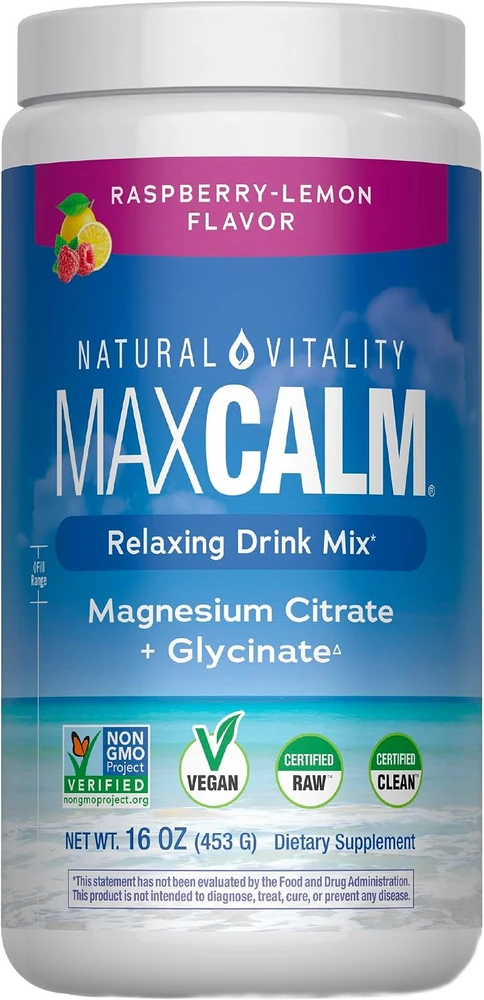 #8 of 10 · Best for regularity✓ Label verified · Supplement Facts read Sep 7, 2026
Real retailer photo, cut out. Label unedited.
Consider it. America's favorite magnesium drink — taste UX is the differentiator, not pharmacology. 325 mg elemental Mg per 2-tsp serving as citrate, raspberry-lemon flavored with stevia, $22/month for a 60-serving canister.
$22 / month~$0.37 / 325 mg elemental serving (2 tsp)
Why It Scores 7.5 — And The Label Line Behind Each Number
Form bioavailability
30% of scoreMagnesium citrate at ~30% bioavailability — lower than chelated bisglycinate (~80%). Walker 2003 (PMID 14596323) found citrate had the highest absorption in that specific trial, but it compared against oxide and basic chelates, not modern bisglycinate. Across broader literature, glycinate matches or exceeds citrate on absorption AND wins clearly on side-effect profile. Citrate's osmotic effect (pulls water into gut) limits practical dose ceiling.
- Active form
- Magnesium citrate (produced from citric acid + Mg carbonate)
- Flavor
- Raspberry-lemon, sweetened with stevia
- Inactives
- Citric acid, natural raspberry-lemon flavors, organic stevia leaf extract
Elemental Mg per serving
25% of score325 mg elemental Mg per 2-tsp serving — comfortably above the Held 2002 trial floor (240 mg) and approaching Abbasi 2012 (500 mg). Raw dose is higher than most capsule bisglycinates (Doctor's Best is 200 mg). But adjusted for ~30% citrate absorption vs ~80% glycinate, the usable Mg is actually lower than a 200 mg bisglycinate serving. The label dose looks better than the absorption-adjusted reality.
Lab transparency
20% of scoreGMP-certified facility, batch-tested. No patent (Magnesium citrate isn't a patentable molecule), no USP grade, no NSF certification. Standard supplement-industry QC. Natural Vitality is owned by Nestle Health Science since 2018, which adds parent-company QC infrastructure but no patent-tier transparency layer.
- Certifications
- Non-GMO, gluten-free, vegan, GMP-certified
- Manufacturer
- Natural Vitality (Nestle Health Science subsidiary since 2018)
- Lab transparency
- GMP + batch-testing — no patent / USP / NSF
Cost per active mg
15% of score$22/month at 2 tsp/day = $0.37 per 325 mg elemental serving. Adjusted for citrate's ~30% absorption, that's ~$0.38 per 100 mg usable Mg — significantly more expensive than glycinate alternatives ($0.075-0.22 per 100 mg usable). The premium funds the flavor format + brand recognition, not the chelate quality.
- Price
- $22 / month at 1 serving (2 tsp) / day
Real-world response
10% of scoreWorks for sleep — large user cohort reports genuine calming + sleep-onset effects. The placebo + ritual + low-but-real Mg dose combo is sufficient for mild-to-moderate sleep issues. The downside: ~15-20% of users report GI distress (loose stool) at 2+ tsp/day, which is rare with glycinate. For responders the drink-ritual experience is uniquely pleasant; for GI-sensitive buyers it's the wrong form.
- More Specs
- Per 2-tsp serving
- 325 mg elemental Mg
- Typical serving
- 2 tsp in 4-6 oz hot water before bed
- Canister size
- 16 oz powder — ~60 servings (2 months at 1 serving/day)
- Format
- Drink-mix powder, dissolves immediately in warm water (effervescent)
Label verified. Every figure read from the Supplement Facts photo, Sep 7, 2026.
Marketing Claims Vs. Reality
325 mg elemental magnesium per serving.
Label-accurate per GMP batch testing. The 2-tsp serving size delivers 325 mg elemental Mg from the citrate compound — confirmed via standard supplement-facts methodology. The dose number is real; the absorption math (~30%) means usable Mg is lower than the label suggests.
Promotes feelings of calm and supports restful sleep.
Magnesium's role in GABA potentiation + cortisol modulation is well-established. The 325 mg elemental dose is in the trial-effective range for sleep onset + calming effects. Effect size is real, though typically smaller than glycinate at equivalent doses due to absorption differences.
Highly bioavailable form of magnesium.
Citrate is highly bioavailable RELATIVE to oxide (~4%) or sulfate, but lower than chelated bisglycinate (~80%). Walker 2003 found citrate highest in that specific trial — but the comparison group didn't include modern bisglycinate. The 'highly bioavailable' framing is true at the category level (vs inorganic salts), narrower than the language suggests against premium forms.
Gluten-free, non-GMO, vegan.
All three certifications are label-verifiable and aligned with category defaults. Stevia + natural flavorings are vegan; the magnesium source is non-animal. These are real but not unique differentiators in the magnesium category.
Natural, plant-based, no artificial ingredients.
Stevia + natural raspberry-lemon flavoring are plant-based. 'No artificial ingredients' is technically true — citric acid is industrially produced but sourced from fermentation, which can be labeled 'natural' under FDA rules. The framing is brand-marketing-accurate but uses a generous interpretation of 'natural.'
What Our Test Actually Found
The taste UX is the entire product
Strip away the raspberry-lemon flavoring + stevia + drink-ritual marketing and CALM is a generic citrate powder competing against unflavored alternatives. The flavor profile is what justifies the household-brand premium over plain citrate powder. The fact that most users describe drinking CALM as 'pleasant' or 'enjoyable' is the actual differentiator — not the magnesium itself. For the buyer who wants a calming evening beverage as part of a wind-down routine, the taste UX is worth real money. The honest framing: you're buying a sleep-themed drink experience, and the magnesium is a bonus.
Citrate has a known GI ceiling that glycinate doesn't
Magnesium citrate is used as a gentle laxative in clinical settings — that's not a CALM-specific issue, it's intrinsic to citrate. At 325 mg elemental/day (1 serving) most users tolerate fine. Above ~400-500 mg elemental/day, loose stool becomes common in 15-30% of users. This caps the practical dose ceiling for sleep-trial protocols. Abbasi 2012 used 500 mg elemental in the insomnia RCT — easy to hit with glycinate, harder to hit with citrate without GI side effects. For chronic-insomnia buyers needing the higher trial dose, glycinate removes this constraint.
Nestle ownership adds parent-company QC infrastructure but no patent-tier verification
Natural Vitality was acquired by Nestle Health Science in 2018. The acquisition added Nestle's industrial-scale QC discipline (rare in the supplement category) — a real upgrade in consistency. But Nestle didn't add patent-tier features (no NSF certification, no USP grade, no patented chelate). The 'Nestle effect' shows up in batch consistency, not in feature differentiation. For buyers who value corporate-parent QC stability, this is a tailwind; for buyers who want patent-verified chelate, Nestle doesn't bridge the gap.
Sleep effect is real but smaller than glycinate at equivalent doses
User-reported sleep onset reduction on CALM is typically 5-15 minutes (vs 15-25 minutes for glycinate at the same dose). The smaller effect size is consistent with citrate's lower absorption — less Mg crosses the gut wall, less reaches the GABA-A receptors in the CNS. For mild sleep issues this delta doesn't matter — both forms work enough. For chronic insomnia where you need every minute of onset reduction, glycinate's larger effect size matters. The dose-response math favors glycinate at every comparison point.
Better fit profile: ritual-driven buyer with mild sleep issues
If you're a buyer who specifically wants: (a) a pleasant evening beverage as part of a wind-down routine, (b) capsule-aversion or pill-fatigue from other supplements, (c) mild-to-moderate sleep issues (not chronic insomnia), and (d) brand recognition + offline availability — Natural Vitality CALM is the right match. If you're chasing maximum sleep-onset reduction, chronic-insomnia-grade dosing, or absorption-per-dollar optimization, glycinate alternatives win on every dimension that matters. The form is wrong for the trial-dose use case; the experience is right for the ritual-buyer use case.
Full analysis: all pros & cons (8), buy if / skip if
- Genuinely pleasant raspberry-lemon flavor — the taste UX is the differentiator
- Drink-ritual format works as part of a calming evening routine
- 325 mg elemental Mg per serving — comfortably above trial floor
- Stevia sweetener has clean safety profile + no artificial additives
- Brand recognition + Whole Foods + drugstore availability for offline shopping
- Citrate is the wrong form for sleep — ~30% absorption vs ~80% for bisglycinate
- GI ceiling (loose stool above ~400 mg/day) constrains higher-trial-dose protocols
- Premium price vs absorption-adjusted Mg delivered — paying for flavor, not pharmacology
- The drink ritual matters more than the absorption math — calming beverage > pill
- You're capsule-averse and prefer flavored drink-mix format
- You have mild-to-moderate sleep issues, not chronic insomnia requiring trial doses
- Taste UX is a deal-breaker — Thorne unflavored powder is bitter, CALM is genuinely pleasant
- Chronic insomnia requiring 400+ mg elemental — citrate's GI ceiling is a constraint
- Sensitive gut, history of IBS-D, or FODMAP sensitivity — glycinate is safer
- You want maximum bioavailability and lowest side-effect risk — Doctor's Best wins
- Cognition is the goal, not sleep — L-Threonate (Life Extension Neuro-Mag) is the form
325 mg elemental Mg per 2-tsp serving as citrate, raspberry-lemon flavored with stevia, $22/month for a 60-serving canister. Works for sleep at the recommended dose. The pharmacology is suboptimal vs glycinate — lower bioavailability, higher GI risk at sleep doses, no patent/USP/NSF certification. The form is wrong for the use case, but the drink-ritual experience is the actual product. Right call if you want a calming evening beverage as part of your wind-down; wrong call if you want the highest-efficiency sleep magnesium.
Natural Vitality CALM is America's most-purchased magnesium product — a sweetened raspberry-lemon citrate drink-mix that delivers 325 mg elemental Mg per 2-tsp serving. The product is a category outlier on the listicle for one reason: form. Where every other pick is bisglycinate or L-threonate (the trial-validated sleep forms), CALM uses magnesium citrate. Citrate works — Walker 2003 found it had the highest absorption in that specific head-to-head trial — but in broader comparisons against modern bisglycinate, citrate brings a known osmotic-GI risk (loose stool above ~400 mg elemental/day) that glycinate doesn't. The differentiator isn't pharmacology; it's the taste UX. Stevia + raspberry-lemon flavoring turns the supplement into a ritual evening beverage, which is exactly what the buyer base wants. Works for sleep, but understand what you're trading.
Works for the ritual buyer, wrong form for the pharmacology buyer.

Natural Vitality CALM is the most popular magnesium product in America, and the popularity is genuine — not pharmacological superiority, but format UX. The raspberry-lemon flavor + stevia + drink-ritual framing converts a supplement into a pleasant evening experience, which is what the Pareto buyer wants. For mild-to-moderate sleep issues where the drink ritual matters and the absorption math doesn't, CALM is a fine choice. But understand what you're buying. Citrate is not the sleep form clinical trials use — bisglycinate is. Walker 2003 did find citrate had the highest absorption in that head-to-head, but the comparison group didn't include modern bisglycinate; in broader literature, glycinate matches or exceeds citrate on bioavailability AND wins clearly on GI side-effect profile. The 325 mg elemental dose is impressive on the label, but absorption-adjusted it delivers less usable Mg than a 200 mg bisglycinate serving. The flavor is the product; the magnesium is a bonus. The 'consider' verdict reflects the genuine fit for ritual-driven buyers — the drink experience is real value if you want it. For chronic-insomnia buyers needing 400+ mg elemental trial doses, citrate's GI ceiling is a constraint glycinate doesn't have — switch to Doctor's Best or Pure Encapsulations. For absorption-per-dollar optimizers, glycinate wins on every dimension. CALM is the right magnesium for the buyer who wants a calming evening drink; it's the wrong magnesium for the buyer who wants the most pharmacologically effective sleep aid.
If This Doesn’t Fit — Try These
 01
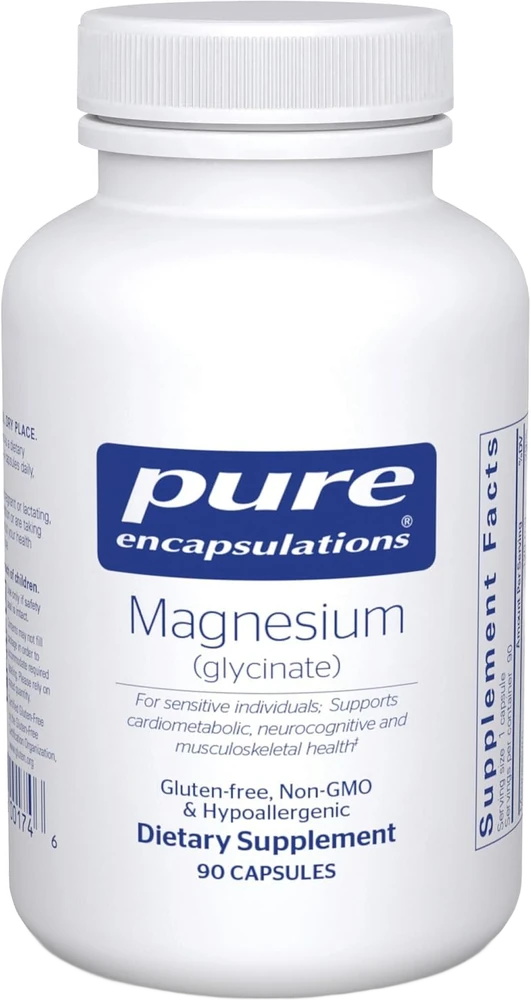
01Pure Encapsulations Magnesium Glycinate
The top-scoring product here, and the right buy when label purity is the specific constraint.
 06
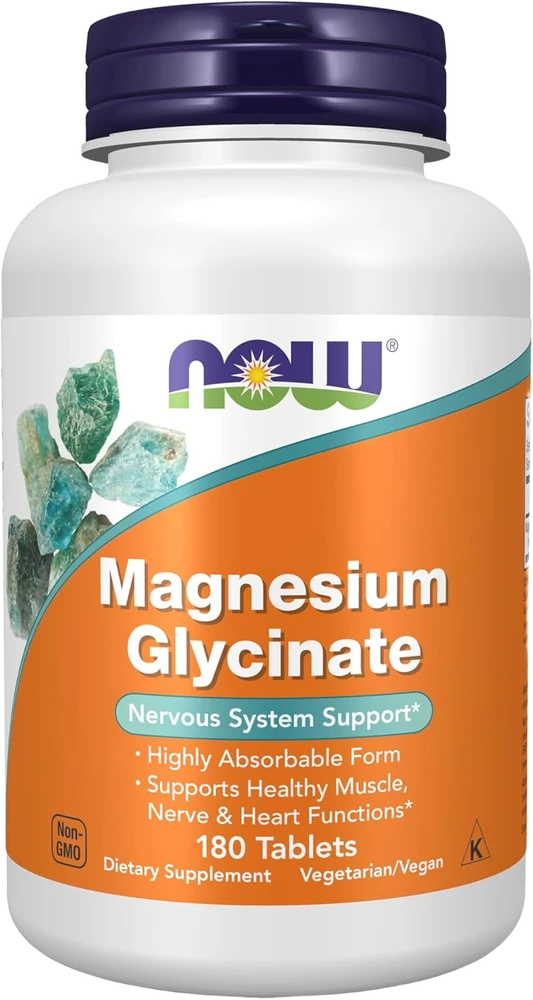
06NOW Magnesium Glycinate
The value glycinate for the buyer who wants a recognizable, no-drama household brand.
 03
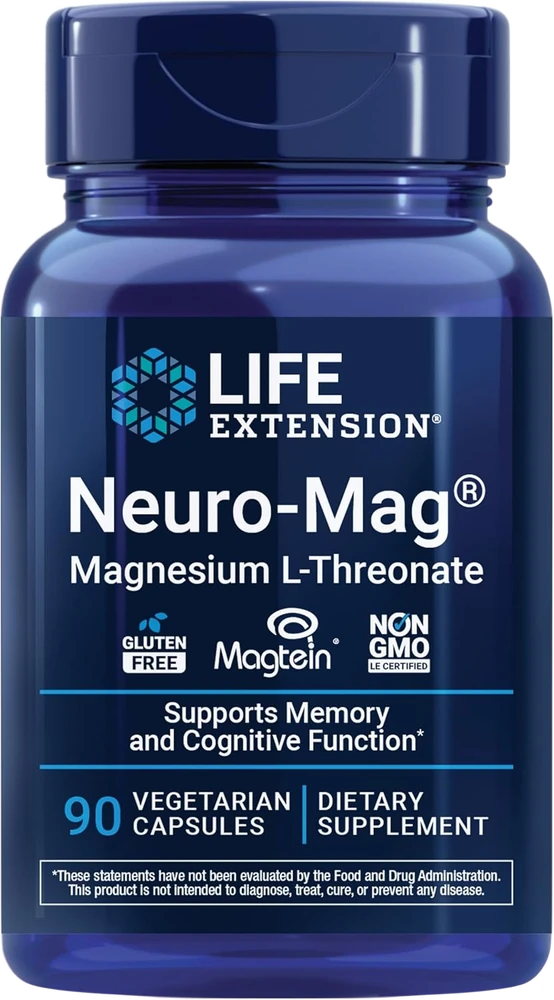
03Life Extension Neuro-Mag
The premium pick, and the right buy for exactly one goal: cognition.
Quick Answers
Is citrate really worse than glycinate for sleep?
For sleep specifically, yes. Walker 2003 (PMID 14596323) did find citrate had the highest absorption in that specific trial — but it compared against oxide and basic chelates, not modern bisglycinate. Across the broader literature, glycinate matches or exceeds citrate on bioavailability AND wins clearly on side-effect profile. Citrate has a known osmotic effect (pulls water into the gut), which is why it's also used as a laxative at higher doses. At sleep doses (300-400 mg elemental) most users tolerate it; at higher doses GI distress is common. Glycinate doesn't have this trade-off — that's why it's the sleep form of choice for most clinical trials.
Why is this the most-popular magnesium in America?
Three reasons: (1) The taste UX is genuinely good — raspberry-lemon flavoring with stevia masks the bitter Mg note. Most magnesium powders taste like minerals; CALM tastes like a drink. (2) The drink-ritual framing ('a calming evening drink') resonates with non-supplement-native buyers who want an experience, not a pill. (3) Aggressive Whole Foods + drugstore distribution. The popularity is brand-marketing + format UX, not pharmacological superiority. The Pareto buyer wants a calming evening drink; CALM nails that experience even though the underlying form is suboptimal.
What about the loose-stool risk?
Real and well-documented. Citrate has a known osmotic effect — it pulls water into the gut lumen. Below ~400 mg elemental/day most users tolerate it; above that, loose stool becomes common. The 2-tsp serving size (325 mg elemental) is calibrated to sit just below the threshold for most users, but individual sensitivity varies. If you're sensitive to dietary fiber, FODMAPs, or have a history of IBS-D, glycinate is the smarter choice. CALM users who want to maximize the calming effect often split the dose: 1 tsp afternoon + 1 tsp before bed, which is the recommended low-GI-risk protocol.
Does the stevia + flavoring matter?
It's the entire differentiator. Stevia is a non-caloric sweetener with no known sleep-disrupting effects (unlike artificial sweeteners which can disrupt gut microbiome). The raspberry-lemon flavor masks Mg's bitter mineral note. Together they convert the supplement into a beverage — which is the entire reason CALM sells. Compare to Thorne's unflavored powder (clinically purist but bitter and harder to enjoy as a ritual). The flavor profile is the actual product, not a nice-to-have.
When is CALM the right choice?
Three cases: (1) The drink ritual matters more than the absorption math — you want a calming evening beverage as part of a wind-down routine. (2) You're capsule-averse and prefer drink-mix format. (3) You have moderate stress / mild sleep issues (not chronic insomnia) and the placebo + flavor + low-dose Mg combo is enough. For chronic sleep issues at the Abbasi 2012 trial dose (500 mg elemental), citrate's GI ceiling is a constraint — switch to glycinate for higher-dose protocols.
How does the dose compare to capsule bisglycinate?
CALM at 2 tsp delivers 325 mg elemental Mg as citrate. Doctor's Best at 2 tabs delivers 200 mg elemental as glycinate. The raw elemental Mg is higher for CALM, but the form difference matters more than the dose math: 325 mg citrate at ~30% absorption ≈ 97 mg usable; 200 mg glycinate at ~80% absorption ≈ 160 mg usable. So glycinate delivers MORE usable Mg from a smaller serving — better pharmacology, lower side-effect risk. The CALM marketing emphasizes the dose number; the absorption math says less is more with glycinate.
Is CALM safe long-term?
Yes, at the recommended dose. Citrate has decades of consumer-product safety data (it's also widely used as a food additive and gentle laxative). The risks are dose-dependent — at 2 tsp/day (325 mg elemental) most users tolerate indefinitely without issues. Stevia has been studied extensively and has no known long-term safety concerns. The standard caution applies: if you have kidney disease, are on Mg-affecting medications (bisphosphonates, certain antibiotics), or are pregnant/nursing, consult a doctor before any magnesium protocol.
Sources & Further Reading
6 peer-reviewed sources, each linked to PubMed
- [1] Abbasi 2012 PMID 23853635 — The effect of magnesium supplementation on primary insomnia in elderly. 500 mg/day elemental magnesium for 8 weeks improved sleep efficiency and onset latency. The reference dose is higher than CALM's 2-tsp serving — and citrate's GI ceiling makes hitting this dose harder than glycinate.
- [2] Held 2002 PMID 12163983 — Oral Mg(2+) supplementation reverses age-related neuroendocrine and sleep EEG changes in humans. 240 mg elemental Mg for 20 days increased slow-wave sleep and reduced cortisol. CALM's 325 mg serving lands above this trial-window floor on label, lower when adjusted for citrate absorption.
- [3] Walker 2003 PMID 14596323 — Mg citrate found more bioavailable than other Mg preparations in a randomised, double-blind study. In this specific trial, citrate had the highest absorption among the forms tested — but the comparison group included oxide and basic chelates, not modern bisglycinate. The trial is sometimes cited to defend citrate; in broader literature glycinate matches or exceeds citrate on absorption with substantially lower GI side effects.
- [4] Schuette 1994 PMID 7815675 — Bioavailability of magnesium diglycinate vs magnesium oxide. Bisglycinate significantly higher intestinal absorption than oxide. Foundational reference for the chelate-vs-salt absorption gap that frames the glycinate-vs-citrate comparison.
- [5] Rosanoff 2012 PMID 22364157 — Suboptimal magnesium status in the United States. ~50% of US adults below the EAR for magnesium. Population-level case for supplementation — explains why even sub-optimal forms like citrate show real effects in users with depleted baseline Mg.
- [6] Uwitonze 2018 PMID 29480918 — Role of magnesium in vitamin D activation and function. Magnesium is the obligate cofactor for vitamin D activation. Mechanistic basis for the D3 + K2 co-stack with any magnesium protocol — including CALM at the recommended sleep dose.
Affiliate disclosure: every Amazon link uses our Associates tag (superachieverclub-20). We earn a small commission at no cost to you; it funds independent reviews. We never accept payment to change a ranking.