
Metabolic Maintenance L-Glutamine Powder Review
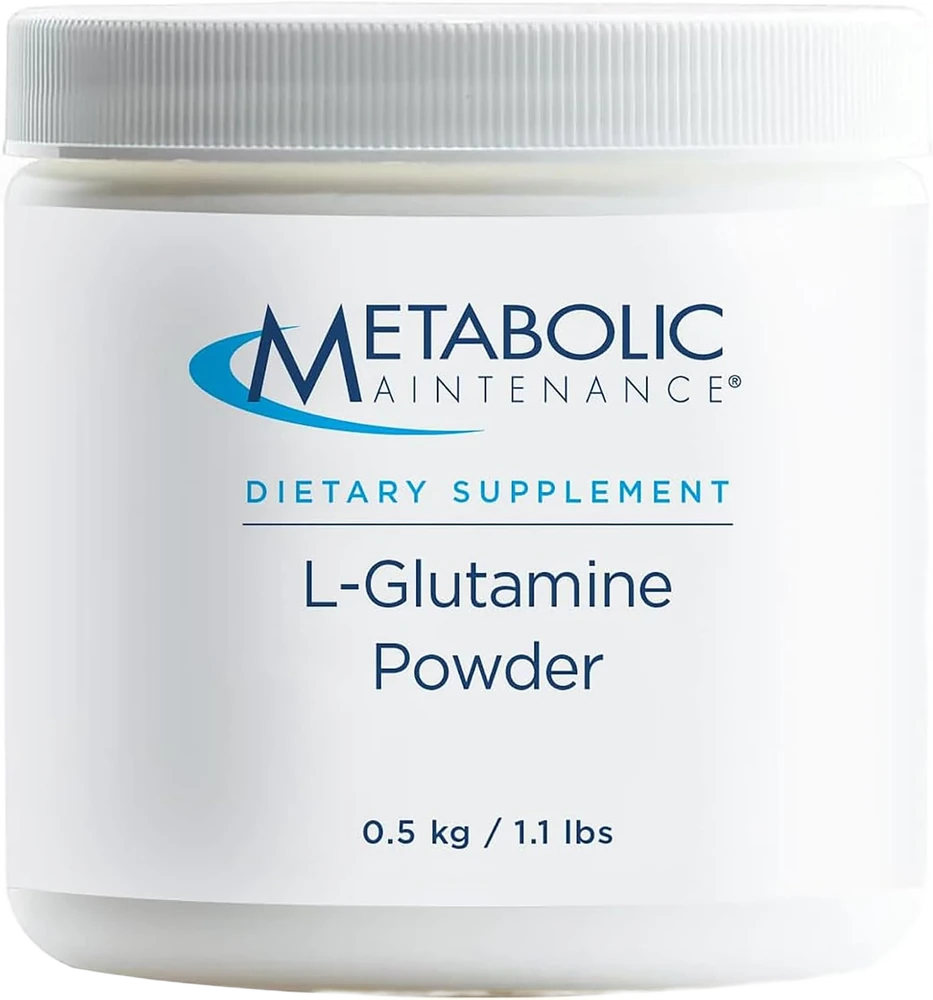 #10 of 10 · Best for microdosing✓ Label verified · Supplement Facts read Sep 7, 2026
Real retailer photo, cut out. Label unedited.
Buy it. The titration specialist — fine 1 g dosing for a reactive, IBS-prone gut. Additive-free single-ingredient free-form L-glutamine (the trial form, the cleanest possible profile) + fine 1 g dosing for slow titration + a practitioner-channel brand built for minimalist formulas.
$35 / tub (500 g)$0.07 / 1 g serving
Why It Scores 7.9 — And The Label Line Behind Each Number
Purity / form
30% of scoreAdditive-free single-ingredient free-form L-glutamine — the exact form used in Zhou 2019 and the mechanistic literature (Wang 2015, PMID 24965526), with nothing but glutamine in the powder. About as clean a profile as exists on the list, which matters most for the reactive gut this pick targets. Among the top scores on the axis that counts most.
- Active form
- Additive-free free-form L-glutamine (single-ingredient, nothing added)
- Inactives
- None — additive-free single-ingredient L-glutamine
- Certifications
- Additive-free formulation, GMP-manufactured, practitioner-channel; NOT NSF or formally hypoallergenic certified
- Manufacturer
- Metabolic Maintenance (practitioner-channel brand; minimalist additive-free formulas)
- Lab transparency
- Practitioner-channel QC + additive-free formulation
Third-party testing + manufacturing quality
25% of scorePractitioner-channel brand with a reputation for minimalist, additive-free formulas and GMP manufacturing — a solid quality floor with real clinical-channel positioning. But it lacks the product-level NSF Certified for Sport per-batch verification of Thorne (#1) and the formal hypoallergenic certification of Pure Encapsulations (#2).
Dose-per-scoop + label honesty
20% of scoreGrams of glutamine per serving are stated plainly with no proprietary-blend ambiguity, and the 1 g granularity is a genuine feature for titration. The honest downside is the same granularity at the full dose: reaching the Zhou 5 g per-dose amount means five 1 g servings, so it's the least convenient pick once you're past ramp-up.
- Per serving
- 1 g L-glutamine per serving (fine control for slow titration; 5 servings = the 5 g trial dose)
- Trial-dose alignment
- Reaches Zhou 2019's 5 g per-dose amount via five 1 g servings; built to ramp toward it
Cost per effective gram
15% of scoreHigher per-gram cost than the bulk budget tubs (NOW #5, Nutricost #6) — you pay a premium for the additive-free practitioner profile and the fine dose control. The 500 g tub still gives months of supply, but if cost-per-effective-gram is your priority rather than gentle titration, this isn't the value play.
- Price
- ~$35 / 500 g tub = ~$0.07 per 1 g serving (higher cost per gram than the bulk tubs)
Tolerability for sensitive / IBS-prone guts
10% of scoreThe standout axis: fine 1 g dosing lets a reactive gut start tiny and ramp in small steps, and the additive-free single-ingredient powder carries zero irritant excipients. For the post-infectious, IBS-prone buyer the evidence actually supports — and who the hub flags as prone to mild GI upset at higher doses — this is the gentlest on-ramp on the list.
- More Specs
- Tub
- 500 g · months of supply (many small 1 g servings)
Label verified. Every figure read from the Supplement Facts photo, Sep 7, 2026.
Marketing Claims Vs. Reality
Additive-free free-form L-glutamine — single ingredient.
The label lists L-glutamine as the only ingredient with no fillers, flow agents, dyes, or sweeteners — the exact free-form used in the human trials and about the cleanest profile on the list. Verified and the core reason it suits a reactive gut.
Fine dosing for gentle titration in sensitive guts.
The 1 g serving genuinely enables small-step titration, letting a reactive gut start tiny and ramp gradually. Accurate and the design feature that defines this pick — the hub notes mild GI upset is most common at higher doses, which is exactly what slow titration mitigates.
Supports a healthy gut lining and intestinal barrier.
Mechanistically grounded (Wang 2015, PMID 24965526) and supported by a strong RCT in a narrow population — post-infectious IBS-D with high permeability (Zhou 2019, PMID 30108163). But Abbasi 2024 (PMID 39397201) found no overall permeability effect across mixed adults except at >30 g/day short-term. True for the specific population, oversold as a general gut-lining fix.
Practitioner-grade, GMP-manufactured.
Metabolic Maintenance is a practitioner-channel brand with a reputation for minimalist additive-free formulas and GMP manufacturing. Accurate — but note this is clinical-channel positioning and in-house quality, not the product-level NSF Certified for Sport per-batch certification a drug-tested athlete needs.
Well absorbed — no special formulation needed.
Plain L-glutamine is well absorbed orally (unlike, say, curcumin), so a simple additive-free powder is genuinely all you need to reach the trial dose. Accurate and a point in favour of a no-frills single-ingredient powder.
What Our Test Actually Found
The 1 g granularity is the whole pitch — built for the gut the evidence actually supports
The population most drawn to glutamine is the post-infectious, IBS-prone, reactive gut — and that's exactly the gut that can react badly to a sudden 5 g scoop. Metabolic Maintenance's 1 g serving lets you start at 1–2 g/day and ramp in fine steps until you find your tolerance, then build toward the Zhou 5 g three-times-daily protocol. The hub flags mild GI upset as the usual side effect, more common at higher doses; slow titration is the direct mitigation. For a genuinely reactive gut, that on-ramp is worth more than a lower sticker price.
The same granularity is the downside at the full dose
Fine dosing cuts both ways. Once you've ramped to the full 5 g per-dose amount, you're scooping five 1 g servings per dose — fifteen a day at the full protocol — which is the least convenient dosing on the list. That's the honest trade: the 1 g serving is a feature during ramp-up and a chore at steady state. If you tolerate glutamine fine and just want to hit 5 g quickly, a single-scoop 5 g pick like Nutricost (#6) or Klaire Labs (#4) is the easier choice. This pick earns its place specifically for the careful, slow ramp.
Be honest about the ceiling: this is for IBS-D and barrier support, not generic 'leaky gut'
The most important thing we can tell you is what no bottle can do. Abbasi 2024 pooled adult RCTs and found no significant overall effect of glutamine on intestinal permeability, with benefit only in a >30 g/day short-term subgroup. Burrin 2006 even questioned whether glutamine is a uniquely essential gut fuel at all. So Metabolic Maintenance is the gentlest on-ramp tool for a specific job — post-infectious IBS-D, documented hyperpermeability, clinician-guided recovery from major stress — not a guaranteed fix for everyday bloating or food sensitivities.
You pay a premium per gram for the additive-free practitioner profile
Cost-per-gram is this pick's weakest axis: it's pricier than the bulk budget tubs (NOW #5, Nutricost #6) because you're paying for the additive-free practitioner-channel formula and the fine dose control, not better glutamine. The 500 g tub still lasts months, but if your priority is the cheapest path to 15 g/day rather than a gentle ramp, this isn't the value play. The premium is justified only by the titration use case — match the spend to whether your gut actually needs it.
Plain glutamine is well absorbed, so the additive-free powder is a feature
Unlike fat-soluble or poorly-absorbed compounds, L-glutamine doesn't need a special carrier or formulation to work — it's well absorbed as a plain free-form powder. That means a 'gut complex' blend has no absorption advantage over this single ingredient, and every added excipient in those blends is just another potential irritant for the reactive gut this pick targets. For a sensitive-gut buyer, additive-free single ingredient is genuinely the right call, not a compromise.
Full analysis: all pros & cons (8), buy if / skip if
- Fine 1 g dosing is ideal for cautiously titrating up in a reactive or IBS-prone gut
- Additive-free single-ingredient powder — nothing but glutamine, about the cleanest profile on the list
- Practitioner-channel brand with a reputation for minimalist, additive-free formulas
- Large 500 g tub still gives months of supply despite the small serving size
- Single-ingredient free-form glutamine — the exact form used in the Zhou 2019 IBS-D trial
- 1 g serving means a lot of scooping (five servings per dose) to reach the 5 g trial per-dose amount once tolerated
- Higher per-gram cost than the bulk budget tubs (NOW #5, Nutricost #6)
- Not NSF Certified for Sport or formally hypoallergenic-certified like the top clinical picks
- Your gut is reactive enough that you want to start at 1 g and titrate up gradually
- You have post-infectious or IBS-prone digestion and prior bad reactions to jumping straight to a 5 g scoop
- You want the cleanest possible additive-free single-ingredient profile, nothing but glutamine
- You value a practitioner-channel brand known for minimalist formulas over the lowest sticker price
- You tolerate glutamine fine and just want to hit 5 g without scooping five servings — Nutricost (#6) or Klaire Labs (#4) are easier
- Cost per gram is your priority — the bulk budget tubs (NOW #5, Nutricost #6) are cheaper
- You're a drug-tested athlete who needs product-level NSF Certified for Sport — go with Thorne (#1)
Additive-free single-ingredient free-form L-glutamine (the trial form, the cleanest possible profile) + fine 1 g dosing for slow titration + a practitioner-channel brand built for minimalist formulas. The right pick when your gut is reactive enough that you want to start at 1 g and creep upward. Two honest trade-offs: 1 g servings mean lots of scooping at the full dose, and per-gram cost is higher than the bulk tubs. Start at 1–2 g/day, ramp gradually toward 5 g three times daily, and give it the full 8 weeks the trial used.
Metabolic Maintenance L-Glutamine Powder is the bottle we point reactive-gut buyers to when they need to start tiny and ramp up slowly rather than jumping to a full scoop. Before anything else, the honest frame: glutamine is not a magic gut-healer, and the strong human evidence is narrow. There is exactly one standout RCT (Zhou 2019, in Gut) showing 5 g three times daily for 8 weeks dramatically helped post-infectious diarrhoea-predominant IBS with a measured leaky barrier — and a 2024 meta-analysis found no overall permeability effect outside very high short-term doses. So this is a product for a specific job, not a cure-all. Within that job, Metabolic Maintenance's pitch is fine dose control: an additive-free single-ingredient powder with 1 g granularity, built to titrate gently in exactly the sensitive, IBS-prone gut the evidence actually supports. You give up convenience and cost-per-gram once you reach the full dose. Here's the full breakdown.
The titration specialist for a genuinely reactive gut.

Metabolic Maintenance L-Glutamine Powder is what we recommend to any reader whose gut is reactive enough that they want to start at 1 g and creep upward rather than jumping to a 5 g scoop. The form is right (additive-free single-ingredient free-form, the trial form), the profile is about as clean as glutamine gets, and the 1 g granularity is a genuine feature for the post-infectious, IBS-prone gut the evidence actually supports. The glutamine itself is molecularly the same as the bulk tubs. Two honest caveats. First, the trade-offs: at the full dose you'll be scooping five 1 g servings per dose, which is the least convenient dosing on the list, and per-gram cost is higher than the budget tubs — so if you tolerate glutamine fine and just want to hit 5 g, a single-scoop pick like Nutricost (#6) or Klaire Labs (#4) is easier and cheaper, and drug-tested athletes should choose Thorne (#1). The premium here is justified only by the titration use case. Second, and more important: be clear on what you're buying it for. Glutamine has strong human evidence in post-infectious IBS-D with high permeability (Zhou 2019) and under major physiological stress (Shariatpanahi 2019) — but a 2024 meta-analysis found no overall permeability benefit outside very high short-term doses (Abbasi 2024). So this is the gentlest on-ramp tool for a specific job, not a cure for the catch-all 'leaky gut.' Buy unflavored, start at 1–2 g/day, ramp gradually toward 5 g three times daily, and give it the full 8 weeks before you judge it. If you have a serious GI condition, are pregnant, or have liver disease or active cancer, clear it with your doctor first.
If This Doesn’t Fit — Try These
 02
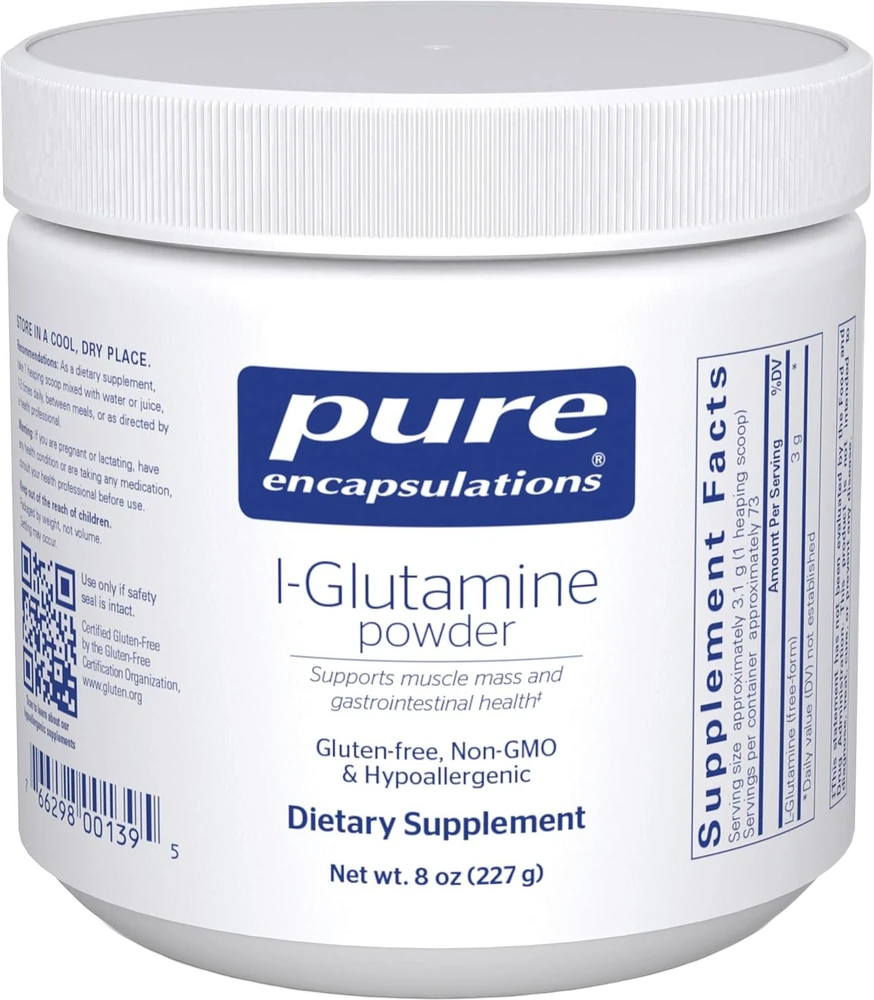
02Pure Encapsulations L-Glutamine
The right pick if your gut is the reason you're here.
 04
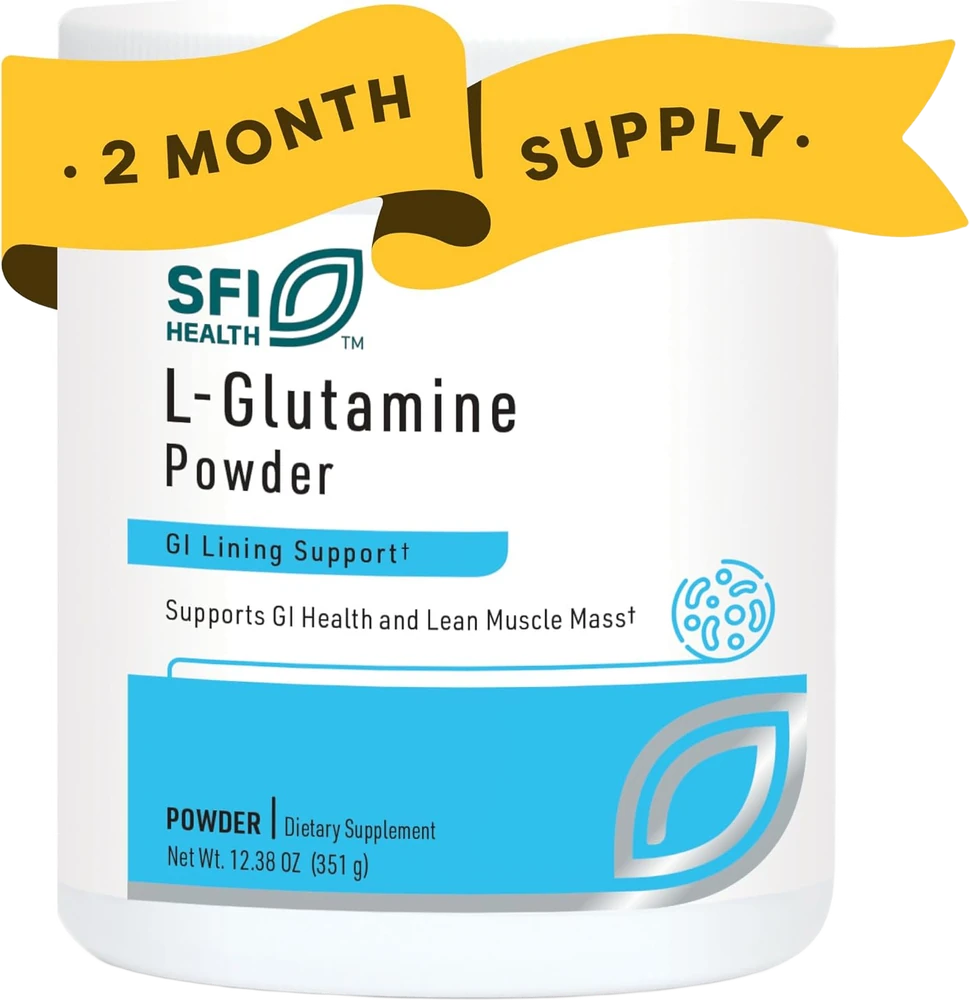
04Klaire Labs L-Glutamine
The pick for an aggressive, full-dose barrier-repair protocol.
 07
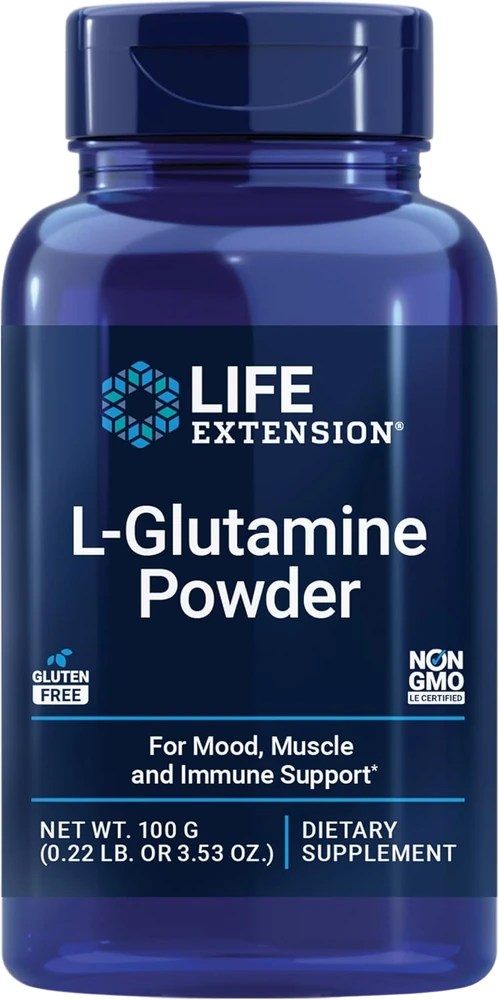
07Life Extension L-Glutamine Powder
The pick for the undecided buyer.
Quick Answers
Why would I want a 1 g serving when the trial dose is 5 g?
Because the people most drawn to glutamine for gut health are exactly the ones with reactive guts — post-infectious IBS, restrictive diets, sensitive digestion — and for them, jumping straight to a 5 g scoop can provoke bloating or loose stools (the hub lists mild GI upset as the usual side effect, more common at higher doses). The 1 g serving lets you start tiny and ramp up in fine steps until you find what your gut tolerates, then build toward the Zhou 2019 protocol of 5 g three times daily. Once you're at the full dose you'll be scooping a lot — five 1 g servings per dose — which is the honest downside. But the fine control during the ramp-up phase is the entire reason this pick exists, and for a genuinely reactive gut it's worth it.
How is this different from the cheaper bulk powders?
On the molecule, it's the same single-ingredient free-form glutamine. The difference is positioning and dose granularity. Metabolic Maintenance is a practitioner-channel brand with a reputation for minimalist, additive-free formulas, and its 1 g serving is built for slow titration in sensitive guts. The bulk budget tubs (NOW #5, Nutricost #6) are cheaper per gram and dose in larger increments (~4.5–5 g), which is more convenient at the full dose but less forgiving during ramp-up. So you pay a higher per-gram price here for the clean additive-free profile and the fine dose control — a trade that makes sense if your gut is reactive, and doesn't if you just want the cheapest path to 15 g/day.
How should I dose it, and how long before I judge it?
The best-evidenced gut protocol is Zhou 2019's: 5 g three times daily (15 g/day total) for eight weeks, in post-infectious diarrhoea-predominant IBS with a leaky barrier. With this powder the smart approach is to use the 1 g granularity to ramp: start at 1–2 g/day, increase gradually as tolerated, and build toward the full protocol. Plain L-glutamine is well absorbed, so no special formulation is needed — mix into water and split across the day. Give it the full 8 weeks at an adequate dose before deciding; glutamine works by supporting gut-lining turnover over time, not as a fast symptom blocker, so a quiet first week or two is normal. If there's no meaningful change by 8 weeks, it's reasonable to stop.
Is 'additive-free' the same as hypoallergenic-certified?
They overlap but aren't identical, and we'd rather be precise. 'Additive-free' means the powder is just glutamine — no fillers, flow agents, dyes, or sweeteners — which is genuinely the cleanest possible profile and exactly what a reactive gut wants. Pure Encapsulations (#2) and Klaire Labs (#4) go a step further with explicit hypoallergenic certification, a formal program that screens against common allergens. In practice a single-ingredient additive-free powder like this one is about as clean as you can get for most sensitive guts. If you have specific diagnosed allergies and want the formal hypoallergenic guarantee, the certified clinical picks edge it; for general reactivity, the additive-free single ingredient is more than adequate.
Is glutamine worth it for muscle recovery, or just gut health?
We treat Metabolic Maintenance L-Glutamine as a gut-health product, because that's where the mechanism and the strongest human trials live — and the fine-titration design is built squarely for the sensitive-gut buyer, not the gym. The evidence for glutamine improving muscle mass, strength, or recovery in healthy, well-fed athletes is weak; most controlled studies show no meaningful benefit, since you already get ample glutamine from dietary protein. Buy this to ramp into the Zhou-2019 gut-barrier protocol gently — and if you have a serious GI condition, liver disease, or active cancer, clear it with your doctor first.
Sources & Further Reading
5 peer-reviewed sources, each linked to PubMed
- [1] Zhou 2019 PMID 30108163 — Randomised placebo-controlled trial of dietary glutamine supplements for postinfectious irritable bowel syndrome. Double-blind RCT in adults with post-infectious diarrhoea-predominant IBS and increased intestinal permeability: glutamine 5 g three times daily for 8 weeks produced a ≥50-point IBS-SS reduction in ~79.6% of the glutamine group versus 5.8% on placebo, with reduced stool frequency and normalised permeability. The single strongest human trial behind glutamine for gut-barrier support — the 5 g per-dose target a 1 g-titration powder ramps toward — but in a narrow, high-permeability population.
- [2] Shariatpanahi 2019 PMID 31485104 — Effects of Early Enteral Glutamine Supplementation on Intestinal Permeability in Critically Ill Patients. RCT in 80 ICU patients: early enteral glutamine (0.3 g/kg/day) reduced plasma zonulin (a tight-junction permeability marker) by ~40% over 10 days versus placebo and lowered endotoxin, indicating a tighter barrier — though clinical outcomes did not differ. Supports glutamine's 'conditionally essential under stress' barrier role, a clinical setting distinct from healthy everyday use.
- [3] Wang 2015 PMID 24965526 — Glutamine and intestinal barrier function. Mechanistic review: glutamine fuels enterocyte proliferation and survival and regulates intestinal barrier function — including expression of tight-junction proteins (occludin, claudins) — in injury, infection, weaning stress and other catabolic states. The mechanistic backbone for why pure free-form glutamine is the right form for gut-barrier support.
- [4] Alpers 2000 PMID 17024034 — Is glutamine a unique fuel for small intestinal cells?. Critical review arguing glutamine is NOT a uniquely essential small-intestinal fuel — glutamate and aspartate are also major mucosal fuels — and that where supplementation helps, the benefit may relate to functions other than gut-fuelling. The honest counterweight to over-stated 'gut fuel' marketing on any glutamine bottle.
- [5] Abbasi 2024 PMID 39397201 — A systematic review and meta-analysis of clinical trials on the effects of glutamine supplementation on gut permeability in adults. Meta-analysis of adult RCTs: glutamine supplementation had no significant overall effect on intestinal permeability; a reduction appeared only in a subgroup using high doses (>30 g/day) over a short period. The key honesty anchor — it sets the limits on glutamine's gut-permeability claims and argues against treating any bottle as a universal 'leaky gut' fix.
Affiliate disclosure: every Amazon link uses our Associates tag (superachieverclub-20). We earn a small commission at no cost to you; it funds independent reviews. We never accept payment to change a ranking.