
Manuka Health UMF 13+ / MGO 400+ Manuka Honey Review
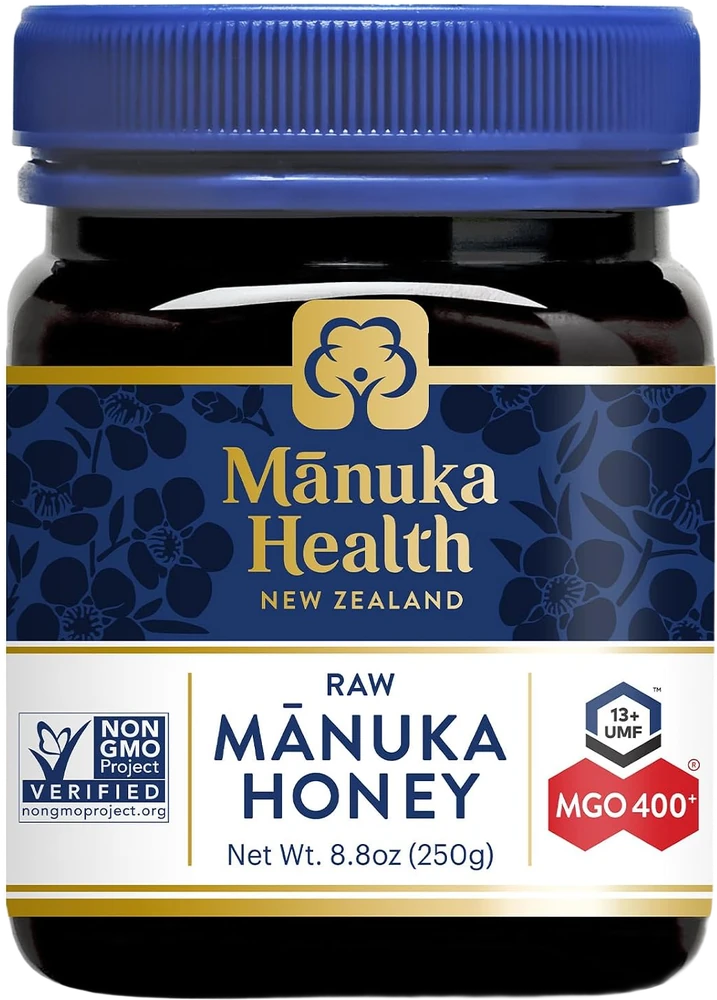 #3 of 7 · Best MGO-labeled
Real retailer photo, cut out. Label unedited.
Buy it. An exact MGO number ON a UMF-certified jar — the cleanest of both worlds. Manuka Health pioneered MGO-first labeling, and this jar states MGO 400+ plus the UMF 13+ it maps to, triple-tested and UMF-certified with QR traceability to the beekeeper.
$42 / 8.8 oz jar (~35 servings)~$4.75 / oz at UMF 13+ / MGO 400+
Why It Scores 8.9 — And The Label Line Behind Each Number
UMF/MGO grade verification
30% of scoreBest-in-class verification: dual-labeled UMF 13+ / MGO 400+, UMF-certified AND triple-tested for methylglyoxal level. You get the UMF Honey Association's three-marker certification (Leptosperin, DHA, MGO) plus an exact, separately-verified MGO figure. Full marks — this is the most thoroughly grade-verified jar in the lineup, combining the gold-standard UMF seal with a precise tested number.
- Grade
- Dual-labeled UMF 13+ / MGO 400+
Origin & licensing (NZ, traceability)
25% of scoreMade, tested, and sealed in New Zealand with QR traceability on every lid back to the beekeeper — genuine NZ provenance (imports into NZ are illegal) plus an auditable chain to source. Strong traceability. Just shy of the very top because the listing emphasises the testing/QR story over a stated UMFHA license number the way the best-documented picks do, but provenance and traceability are both solidly established.
- Origin
- Made, tested & sealed in New Zealand · QR traceability to the beekeeper
Independent testing & labeling honesty
20% of scoreTriple-tested for MGO plus UMF certification, with honest dual labeling that states both the exact number and its UMF-grade equivalent rather than implying a higher tier. No K-Factor confusion, no MGO figure substituting for absent certification. The only honesty wrinkle is inherent to dual labeling — MGO 400 can 'look' stronger than UMF 13 to newcomers — but the jar transparently shows both, which is disclosure, not deception.
- Certification
- UMF-certified AND triple-tested for methylglyoxal level
Value per ounce at grade
15% of score~$4.75/oz at UMF 13+ / MGO 400+ — the honest weak axis. It costs nearly as much as (or more than) the certified UMF 15+ picks while carrying a lower 13+ grade, so on pure cost-per-ounce-at-grade you can get more methylglyoxal per dollar elsewhere (#2 at ~$4.40/oz for a 15+). You're paying a premium for the MGO-first heritage and triple-testing, which are real but don't translate into best-in-class value.
- Jar
- 250 g (8.8 oz) · ~35 teaspoon servings
- Price
- ~$42 / 8.8 oz jar = ~$4.75/oz at UMF 13+ / MGO 400+
Taste & daily use
10% of scoreVersatile and approachable: the listing positions it as a spread, wholefood sweetener, or straight spoonful, and at the 13+ grade the flavour is more accessible than the intense 15+/20+ jars. Raw and unpasteurized with quality NZ packaging. A pleasant, flexible daily-use honey — marked at a solid 8 because it handles everyday use well without being either the mildest or the most premium experience here.
- More Specs
- Type
- Raw, unpasteurized
- Best for
- An exact MGO number backed by UMF certification; a useful middle grade
- Evidence note
- MGO antibacterial mechanism (Mavric 2008); topical wound care (Jull 2015). Oral immune use = traditional/supportive
Marketing Claims Vs. Reality
Dual-labeled UMF 13+ / MGO 400+, UMF-certified and triple-tested.
The listing states both UMF 13+ and MGO 400+ (the two are equivalent: UMF 13+ ≈ MGO 400+ per these listings), with UMF certification and triple-testing of the methylglyoxal level. This is the most thoroughly verified grade in the lineup — gold-standard UMF certification plus an exact, separately-tested MGO figure.
MGO-first labeling gives an exact potency number, not just a tier.
Manuka Health built its grading around the precise MGO figure (mg/kg of methylglyoxal), and this jar states ≥400 mg/kg — a genuinely exact number rather than a graded band. The claim that MGO labeling provides more precision than a tier alone is accurate, and here it's backed by UMF certification rather than offered as a substitute for it.
Full New Zealand traceability back to the beekeeper.
Made, tested, and sealed in New Zealand with a QR code on every lid that traces to the beekeeper. As genuine NZ provenance (honey imports into NZ are illegal) with an auditable per-jar chain to source, the traceability claim is accurate and meaningful in an adulterated category.
Supports immune and digestive wellbeing.
Honest framing required. The MGO is real and antibacterial in vitro (Mavric 2008, Adams 2008), and manuka is a traditional soothing food for throat and gut comfort. But oral immune/digestive benefit is supportive and traditional, not clinically proven — the best antibacterial evidence is topical (Jull 2015 Cochrane). Accurate as a verified antibacterial honey and traditional comfort food; overstated if read as proven immune or digestive therapy you eat.
MGO 400 is stronger than UMF 13.
This is the dual-label trap. MGO 400+ and UMF 13+ describe the SAME potency on different scales (UMF 13+ ≈ MGO 400+) — the larger-looking MGO number is not a higher strength. Any implication that the MGO figure represents more potency than the UMF grade is not verified; they are equivalent. Manuka Health prints both for transparency, so the honest reading is 'same honey, two scales,' not 'stronger.'
What Our Test Actually Found
Exact MGO number plus UMF certification — you don't have to choose
The usual manuka trade-off is precision (an MGO number) versus assurance (UMF certification). Manuka Health collapses that choice: this jar gives you the exact figure (MGO 400+, triple-tested) AND the UMF Honey Association's three-marker certification (UMF 13+). For a buyer who wants to know the precise methylglyoxal level but won't give up the gold-standard seal, it's the cleanest jar in the lineup on verification — which is exactly why it earns 'best MGO-labeled (certified).'
UMF 13+ is a real middle grade, not a marketing oddity
The number looks unusual because it's the exact MGO measurement (400 mg/kg) rather than a rounded tier, but UMF 13+ is a genuinely useful step: more potency than an everyday 10+ (MGO 263+), less cost than a 15+ (MGO 514+). For someone who wants a step up from daily without paying throat-season prices, it's a sensible target grade. The precision is the point — Manuka Health grades by what's actually in the jar, not by a marketing band.
The honest weak spot is value
At ~$4.75/oz, this jar is priced like a certified 15+ while carrying a 13+ grade — so on cost-per-ounce-at-grade it's beaten by New Zealand Honey Co.'s 15+ (~$4.40/oz, #2), which gives you more methylglyoxal for slightly less. You're paying a premium for the MGO-first heritage and triple-testing, both real, but not a discount. If exact-MGO labeling and the brand matter to you, it's defensible; if you're maximizing potency per dollar, look at a certified 15+.
Don't let the big MGO number fool you — it equals UMF 13
The one thing first-time buyers get wrong with dual labeling: 'MGO 400' looks dramatically stronger than 'UMF 13+,' but they're the same potency on different scales. Manuka Health prints both precisely so you can map them — it's transparency, not inflation. The practical takeaway: judge this jar as a UMF 13+ (a solid middle grade), and treat the MGO 400 figure as the exact equivalent, not as evidence you're getting more than the UMF grade indicates.
Buy it for the verified grade — oral immune use stays a ritual
As with every manuka, the framing that keeps it credible: the best antibacterial evidence is topical (wound and burn care, Jull 2015 Cochrane), and the throat-and-immune use you might reach for this jar for is a traditional, soothing ritual rather than a proven treatment. The value here is a precisely-known, independently-certified potency in a genuine NZ honey. Enjoy the spoonful and the verified grade; don't substitute it for real care when you're actually unwell.
Full analysis: all pros & cons (8), buy if / skip if
- Most thoroughly grade-verified jar here — UMF-certified AND triple-tested, with both MGO 400+ and UMF 13+ stated
- Exact MGO number (≥400 mg/kg) gives precise potency, backed by the gold-standard UMF seal rather than replacing it
- Useful middle grade — more potency than everyday 10+, less cost than a concentrated 15+
- Full NZ traceability with QR on every lid back to the beekeeper
- Versatile, approachable daily honey — spread, sweetener, or straight spoonful
- At ~$4.75/oz it's priced like a certified 15+ while carrying a lower 13+ grade — not the value leader
- Dual MGO/UMF labeling can confuse newcomers (MGO 400 'looks' stronger than UMF 13, but they're equal)
- Oral immune/digestive benefit is traditional and supportive, not clinically proven — buy it for the verified grade
- You want an exact MGO number (≥400 mg/kg) AND independent UMF certification on the same jar
- You want a useful middle grade — more than everyday 10+, less than a pricey 15+
- You value triple-tested potency with full NZ traceability (QR to the beekeeper)
- You like Manuka Health's MGO-first heritage and want the brand behind your jar
- You're optimizing potency per dollar — a certified UMF 15+ (#2, #5) gives more MGO for similar money
- You want the cheapest certified daily jar — Comvita UMF 10+ (#1) is better value at ~$3.75/oz
- The dual MGO/UMF label confuses you — note MGO 400 and UMF 13+ are the SAME potency, not different
Manuka Health pioneered MGO-first labeling, and this jar states MGO 400+ plus the UMF 13+ it maps to, triple-tested and UMF-certified with QR traceability to the beekeeper. UMF 13+ is a useful step between everyday 10+ and concentrated 15+. The honest catch: at ~$4.75/oz it's priced like a 15+ while carrying a 13+ grade. Buy it if you want an exact potency figure backed by UMF certification; if you're optimizing potency per dollar, a certified 15+ gives more MGO for similar money. Oral immune use is traditional, not clinical.
Manuka Health is the brand that grades by the precise MGO number — the actual milligrams of methylglyoxal per kilogram — and this jar is the cleanest expression of that approach because it's UMF-certified on top. It states both MGO 400+ and the UMF 13+ it maps to, triple-tested for potency, with full New Zealand traceability via a QR code that runs back to the beekeeper. So you get an exact potency figure AND independent three-marker certification, not one or the other. UMF 13+ (MGO 400+) is a genuine, useful middle grade — more potency than an everyday 10+, without quite the price of a 15+. The honest knock is value: at ~$4.75/oz it's priced like a certified 15+ while carrying a 13+ grade. And the usual framing applies: manuka's antibacterial evidence is topical (Mavric 2008, Adams 2008; Jull 2015 Cochrane), so the oral throat-and-immune use is a traditional, soothing ritual, not a clinical promise. Buy it for the verified, exactly-stated grade. Here's the full breakdown.
The cleanest exact-MGO-on-a-certified-jar pick — buy it for precise, verified potency.

Manuka Health UMF 13+ / MGO 400+ is the jar for the buyer who wants to know exactly how much methylglyoxal they're getting without giving up UMF certification. It states both the precise number (MGO 400+, triple-tested) and the UMF grade it maps to (13+), backed by the UMF Honey Association's three-marker certification and full NZ traceability to the beekeeper. UMF 13+ is a genuinely useful middle grade, and on verification this is the most thoroughly-checked jar in the lineup. The honest reason it sits at #3 rather than higher is value: at ~$4.75/oz it's priced like a certified 15+ while carrying a 13+ grade, so if you're optimizing potency per dollar, New Zealand Honey Co.'s 15+ (#2) or a Kiva deal (#4) give you more MGO for similar money, and Comvita's 10+ (#1) is the cheaper everyday certified jar. But if exact-MGO labeling matters to you and you want it backed by the UMF seal rather than offered instead of it, this is the cleanest expression of that on the list. Buy it for the precisely-known, independently-certified grade — and keep oral immune expectations honest, since manuka's real antibacterial evidence is topical.
If This Doesn’t Fit — Try These
 02
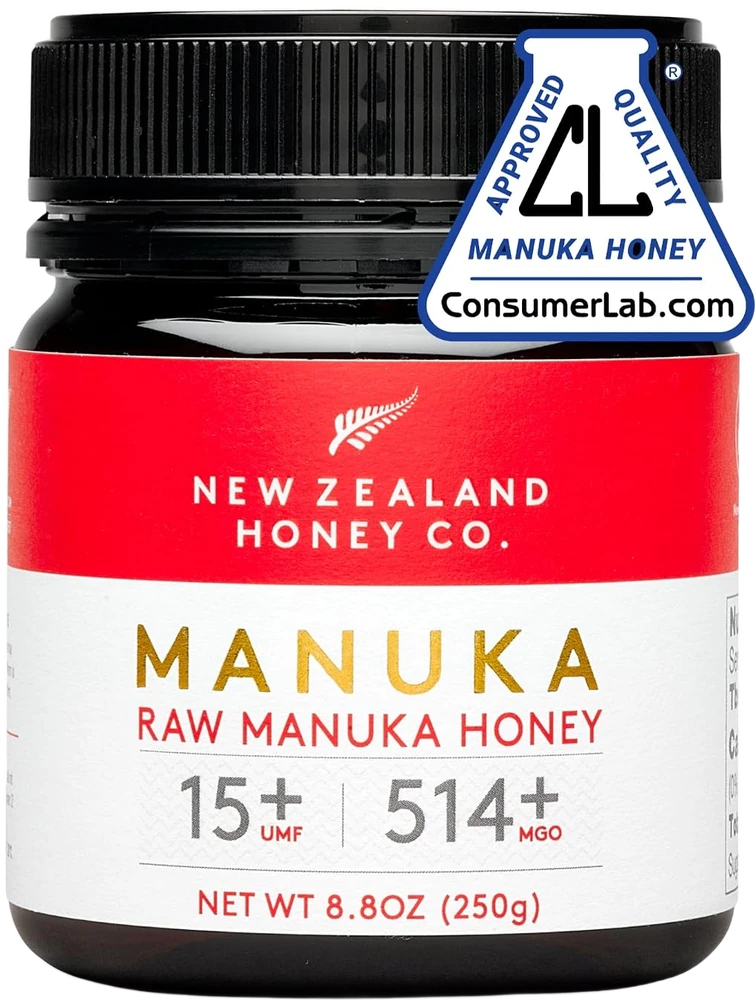
02New Zealand Honey Co. UMF 15+
This is the pick when you want real, concentrated potency without overpaying for it.
 01
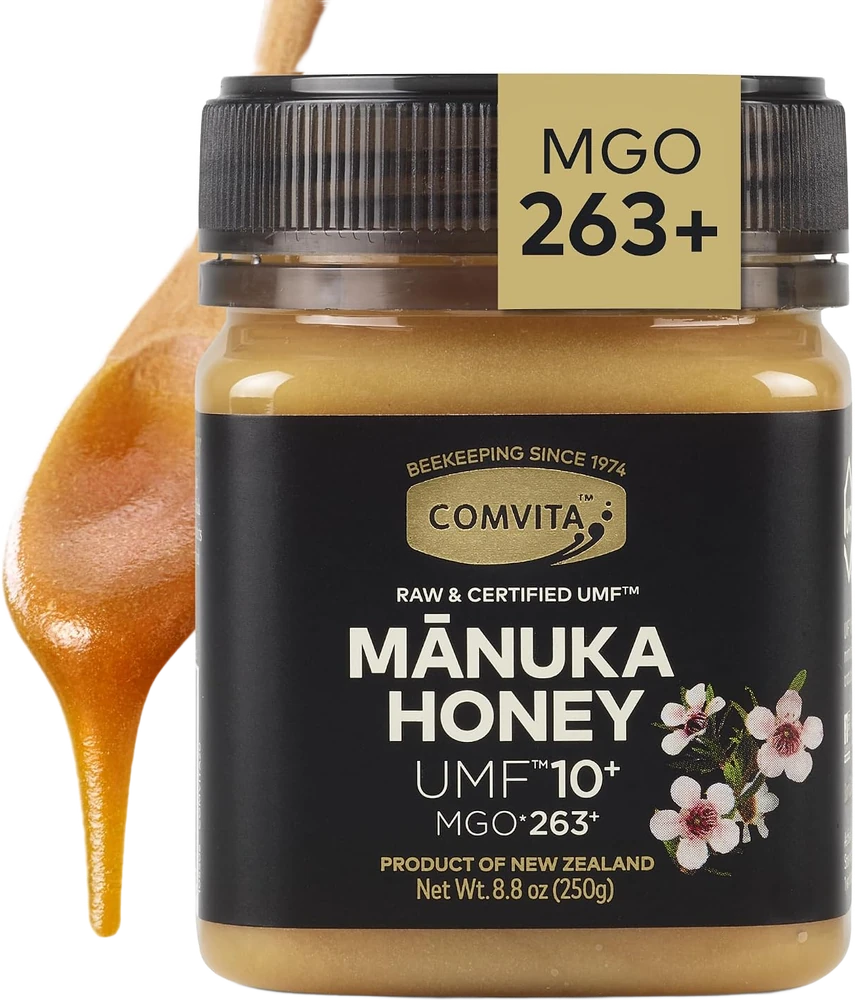
01Comvita Manuka Honey UMF 10+
If you want one jar of genuine, independently certified manuka and you don't want to study the category, this is it.
03Manuka Health UMF 13+
Manuka Health is the brand that grades by the precise MGO number — the actual milligrams of methylglyoxal per kilo — and crucially, this jar is UMF-certified on top of stating MGO 400+, so you get an exact potency figure backed by independent certification.
Quick Answers
MGO 400+ vs UMF 13+ — which number should I read?
They're two ways of stating the same potency, and this jar gives you both. MGO 400+ means ≥400 mg/kg methylglyoxal — the exact compound that drives manuka's antibacterial activity — while UMF 13+ is the equivalent grade on the UMF Honey Association's certified scale (UMF 13+ ≈ MGO 400+ per these listings). Manuka Health pioneered MGO-first labeling because the MGO number is a precise figure rather than a tier, but crucially this jar is ALSO UMF-certified, so you get the exact number AND independent three-marker certification (Leptosperin, DHA, MGO). Read whichever you prefer — they describe the same honey. The point is you don't have to choose between an exact MGO figure and UMF certification here; you get both.
Is UMF 13+ a useful grade, or an odd in-between number?
It's a genuine, useful middle step. UMF 13+ (MGO 400+) sits between the common everyday UMF 10+ (MGO 263+) and the concentrated UMF 15+ (MGO 514+) — so it offers more potency than a daily 10+ without quite the price of a 15+. For a buyer who wants a step up from everyday but doesn't need full throat-season strength, 13+ is a sensible target. The odd-looking number just reflects the exact MGO measurement Manuka Health grades by (400 mg/kg) rather than rounding to a marketing tier. It's not a gimmick; it's a precise grade that happens to fall between the two most common ones.
What does 'triple-tested' actually mean?
Manuka Health states the honey is triple-tested for its methylglyoxal level and is UMF-certified on top of that. In practice this means the potency is verified through multiple testing passes plus the UMF Honey Association's batch certification, which checks the three authenticity markers (Leptosperin, DHA, MGO). Combined with the QR code on every lid that traces back to the beekeeper, you have a well-verified chain from hive to grade. In a category that's heavily adulterated, that layered verification is a real trust signal — you're not relying on a single self-reported number.
Why does it cost about as much as a certified 15+?
That's the honest knock on this jar. At ~$4.75/oz, Manuka Health UMF 13+ costs nearly as much as — sometimes more than — the certified UMF 15+ picks like New Zealand Honey Co. (~$4.40/oz, #2), while carrying a lower 13+ grade. You're partly paying for the brand's MGO-first heritage and triple-testing, which are real, but on pure cost-per-ounce-at-grade it's not the value leader. If exact-MGO-number labeling and the brand matter to you, the premium is defensible; if you're optimizing potency per dollar, a certified 15+ gives you more methylglyoxal for similar money.
Does MGO 400 mean it's stronger than UMF 13?
No — and this is a common point of confusion the dual label can create. MGO 400 and UMF 13+ describe the SAME potency; the numbers just look different because they're on different scales (one is a direct mg/kg figure, the other a graded factor). A first-time buyer might see 'MGO 400' and assume it's far stronger than 'UMF 13,' but they're equivalent (UMF 13+ ≈ MGO 400+). Don't let the larger-looking MGO number fool you into thinking you're getting more than the UMF grade indicates. The honesty here is that Manuka Health prints both precisely so you can map them — it's transparency, not inflation.
Sources & Further Reading
3 peer-reviewed sources, each linked to PubMed
- [1] Mavric 2008 PMID 18210383 — Identification and quantification of methylglyoxal as the dominant antibacterial constituent of Manuka (Leptospermum scoparium) honeys from New Zealand. Identified methylglyoxal (MGO) as manuka's dominant antibacterial constituent, 20-1000× higher than ordinary honey, correlating directly with antibacterial activity. The basis for MGO grading — and the reason Manuka Health's exact MGO 400+ figure is a meaningful potency statement.
- [2] Adams 2008 PMID 18194804 — Isolation by HPLC and characterisation of the bioactive fraction of New Zealand manuka (Leptospermum scoparium) honey. Showed manuka's non-peroxide antibacterial activity arises from MGO formed from the nectar's dihydroxyacetone (DHA) — the markers UMF certification tests, underpinning this jar's dual UMF 13+ / MGO 400+ grade.
- [3] Jull 2015 (Cochrane) PMID 25742878 — Honey as a topical treatment for wounds. 26 trials (3,011 participants): topical honey may shorten healing of burns and some infected wounds. Cited for honesty — manuka's best-supported use is TOPICAL, distinct from the traditional oral immune/digestive use this jar is often bought for.
Affiliate disclosure: every Amazon link uses our Associates tag (superachieverclub-20). We earn a small commission at no cost to you; it funds independent reviews. We never accept payment to change a ranking.