
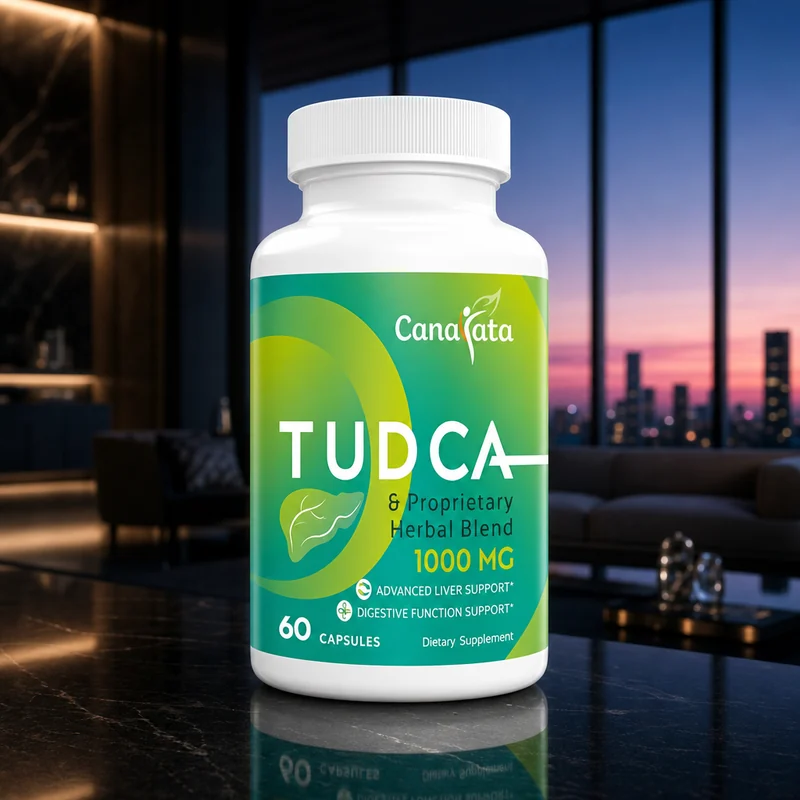
“Each serving provides 1000mg of TUDCA.”
The 1000mg is a proprietary blend of eight ingredients (TUDCA, milk thistle, dandelion, beet root, probiotics and more), so the actual TUDCA content is undisclosed and well below 1000mg.
On paper the 8-in-1 blend looks generous: TUDCA plus milk thistle, dandelion, beet root, probiotics and more, at a '1000mg' headline. In practice that 1000mg is a proprietary blend, which means the label does not disclose how much is actually TUDCA versus filler botanicals — and in a category where purity and verified dose are the entire axis, that's disqualifying. The milk-thistle pairing mirrors a popular stack, and the price and count are fine, but you cannot confirm you're getting a research-range TUDCA dose. When the one number that matters is hidden, the rest doesn't save it.
Check on AmazonAffiliate link — Super Achiever Club earns a small commission at no extra cost to you.
Read the complete TUDCA guide →Eight ingredients under a 1000mg proprietary blend. You cannot verify the TUDCA quantity or purity — the blend structure defeats the one thing that matters for a bile-acid supplement.
Non-GMO and GMP, but a multi-ingredient proprietary blend is inherently hard to verify per-component, and no HPLC-vs-USP TUDCA assay is published.
Headline 1000mg is the total blend, not TUDCA. The undisclosed TUDCA fraction is very likely below the 250-500mg range — the weakest, least-confirmable dose delivery here.
The added botanicals and probiotics are generally benign, but more ingredients means more interaction and tolerability variables, and no way to know which is doing what.
120-count at a modest price looks cheap per cap, but if the TUDCA dose is sub-therapeutic the value is illusory — you may be paying mostly for filler botanicals.
“Each serving provides 1000mg of TUDCA.”
The 1000mg is a proprietary blend of eight ingredients (TUDCA, milk thistle, dandelion, beet root, probiotics and more), so the actual TUDCA content is undisclosed and well below 1000mg.
“The milk-thistle stack enhances liver support.”
TUDCA + milk thistle is a common pairing with plausible complementary rationale, but the proprietary blend hides both doses, so no meaningful efficacy can be inferred.
“This is a cost-effective way to get TUDCA plus a stack.”
Low per-cap price cannot be judged cost-effective when the TUDCA dose is undisclosed and likely sub-therapeutic — you can't price what you can't see.
This category's whole axis is verified TUDCA dose and purity. A proprietary blend that lumps TUDCA with seven other ingredients under a single 1000mg figure makes that verification impossible — the format is fundamentally mismatched to the product's purpose.
If you want the TUDCA + milk thistle combo, buy a single-ingredient TUDCA at a known 250-500mg dose (e.g., Double Wood or Nutricost) and add a standardized milk-thistle product. You get the same stack with dosing you can actually confirm.
The 8-in-1 blend fails on the exact axis TUDCA buyers care about: you cannot tell how much actual TUDCA you're getting. The '1000mg' is a proprietary blend, the botanical extras pad the number, and no TUDCA-specific assay is published. Convenient concept, wrong execution. Buy a single-ingredient TUDCA at a verified dose and stack milk thistle yourself if you want it.
Check Lunakai (8in1) on AmazonNotes that TUDCA effects are dose-dependent — reinforcing why an undisclosed dose in a proprietary blend cannot be evaluated.
Human TUDCA effects appeared at 1,750mg/day; without a disclosed TUDCA dose, a proprietary blend cannot claim a comparable effect.