
Life Extension Bio-Quercetin Review
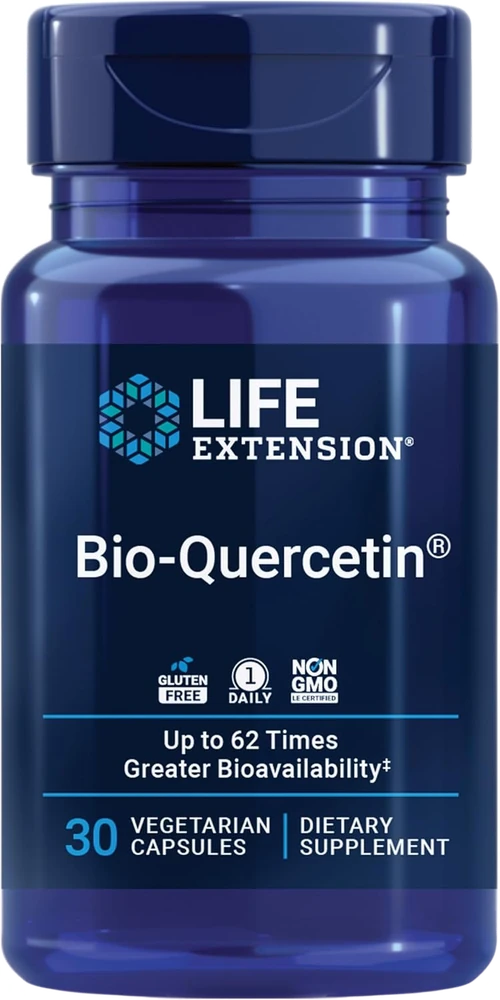 #7 of 9 · Micro-Dose Add-On✓ Label verified · Supplement Facts read Sep 7, 2026
Real retailer photo, cut out. Label unedited.
Skip it. Great absorption, too little quercetin to matter alone. The phytosome format is legitimate, but 15 mg is a fraction of studied doses even after an optimistic absorption multiple.
~$8~$0.27 / capsule
Why It Scores 5.7 — And The Label Line Behind Each Number
Form & Bioavailability
35% of scoreA real phytosome format with a strong absorption claim, but the 62x figure is manufacturer-derived and applied to a dose so small that even large multiples yield little absolute quercetin.
- Form
- Galactomannan/quercetin phytosome complex, veggie capsule
Third-Party Testing & Purity
20% of scoreNon-GMO, gluten-free, vegetarian from a brand with a solid QC reputation. Reasonable, though the marketing multiplier deserves skepticism.
- Testing
- Brand QC; Non-GMO
Dose vs Clinical Range
20% of score~15 mg is a tiny fraction of the 500-1000 mg used in human trials. Even a generous absorption multiple can't close that gap, the biggest weakness here.
- Dose
- ~15 mg quercetin (phytosome, ~62x absorption claim)
Tolerability & Safety
10% of scoreAt 15 mg it's extremely gentle and easy to add to any stack, with essentially no tolerability concerns.
Value
15% of score~$8 is cheap in absolute terms but expensive per milligram of quercetin delivered; you'd need many caps to approach studied doses.
- Count
- 30 capsules
- Cost per dose
- ~$0.27 per 15 mg cap (~$8/30)
- More Specs
- Standardization
- Non-GMO, gluten-free, vegetarian
Label verified. Every figure read from the Supplement Facts photo, Sep 7, 2026.
Marketing Claims Vs. Reality
62x bioavailability makes 15 mg equivalent to a large standard dose
The 62x figure is a manufacturer PK comparison; even taken at face value, 15 mg x an absorption multiple does not replicate the plasma exposure of 500-1000 mg studied doses, and the equivalence is marketing math.
The phytosome format genuinely improves absorption
Phytosome delivery does improve quercetin uptake in principle (Riva 2019, PMID 30328058), but Life Extension's specific 62x multiple isn't independently verified and is applied to a very small base dose.
What Our Test Actually Found
Engineered for a stack, not solo use
Bio-Quercetin is designed to slot alongside Life Extension's vitamin C and other formulas. As a component it's fine; as your only quercetin it delivers too little to match the evidence base.
Absorption multiples can mislead
A high 'Nx absorption' number distracts from absolute dose. Multiplying a tiny amount still leaves a tiny amount, which is exactly the trap this product's marketing invites.
Full analysis: all pros & cons (7), buy if / skip if
- Cheapest entry point in the category
- Genuine highly-absorbable phytosome format
- Extremely gentle and easy to add to a stack
- Non-GMO, gluten-free, vegetarian
- ~15 mg absolute dose is far below studied 500-1000 mg ranges
- 62x absorption claim is manufacturer-derived marketing math
- Poor cost-per-milligram of quercetin actually delivered
- Cheapest entry point in the category
- Genuine highly-absorbable phytosome format
- Extremely gentle and easy to add to a stack
- ~15 mg absolute dose is far below studied 500-1000 mg ranges
- 62x absorption claim is manufacturer-derived marketing math
- Poor cost-per-milligram of quercetin actually delivered
The phytosome format is legitimate, but 15 mg is a fraction of studied doses even after an optimistic absorption multiple. Buy it only as a cheap add-on to a vitamin C stack, not as your main quercetin. As a standalone immune supplement, skip it.
Life Extension's Bio-Quercetin is the category's paradox: a highly-absorbable galactomannan phytosome that leans entirely on a 62x bioavailability claim to justify a tiny ~15 mg dose. At ~$8 it's the cheapest entry and pairs naturally with the brand's vitamin C. But even a big absorption multiple can't turn 15 mg into the 500-1000 mg used in trials, so it functions as a supporting micro-dose, not a primary quercetin.
An add-on, not a quercetin supplement

As a cheap phytosome micro-dose to round out a vitamin C stack, Bio-Quercetin is harmless and inexpensive. As a standalone immune supplement it's the wrong tool: no absorption multiplier turns 15 mg into a study-relevant dose, so most buyers should skip it in favor of a real-dose phytosome.
If This Doesn’t Fit — Try These
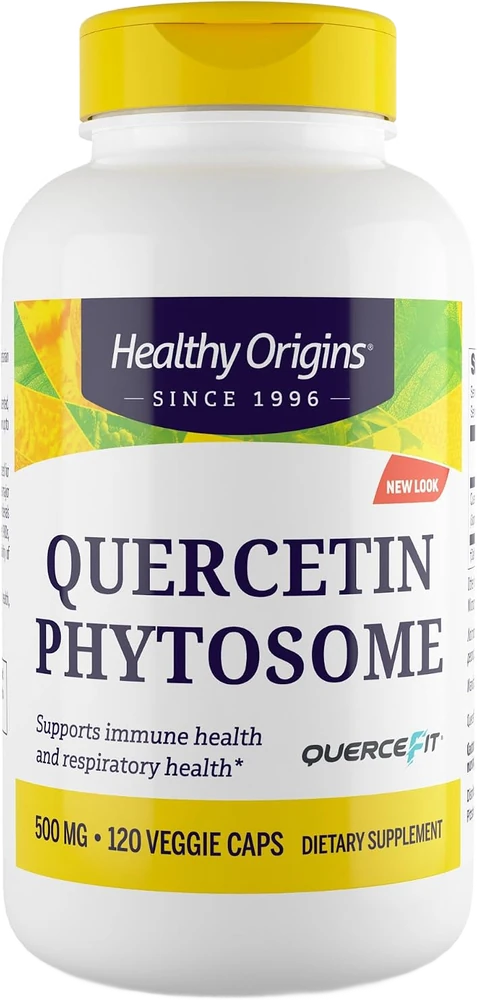 01
Healthy Origins Quercefit
This is the rare supplement where the premium format is actually backed by the same branded ingredient used in the human literature, and it's priced sensibly for a 500 mg dose.
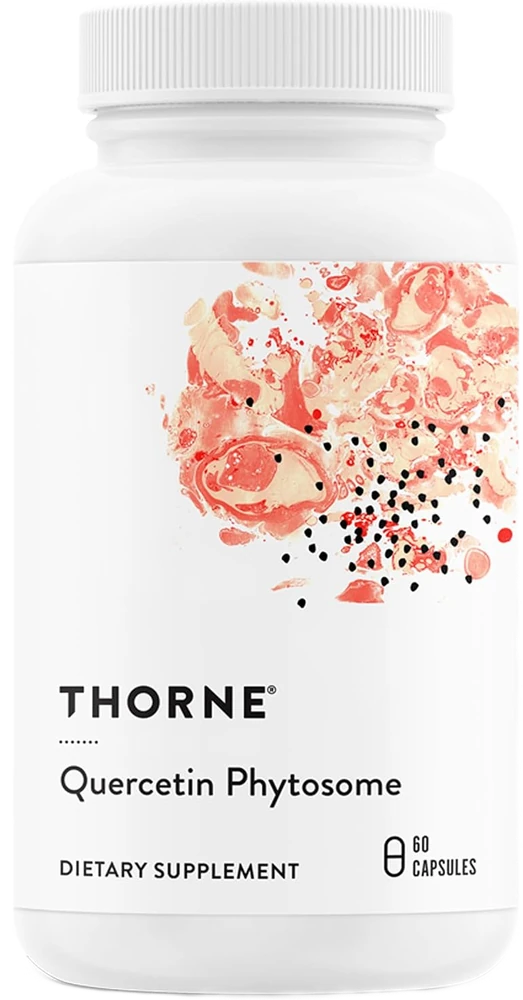 02
Thorne Quercetin Phytosome
If you want the most trustworthy label on the shelf and cost is no object, Thorne is the pick.
Quick Answers
Can 15 mg really match a 500 mg dose?
No. Even with an optimistic 62x absorption claim, the absolute quercetin delivered stays far below the doses used in human studies. The equivalence is marketing math, not measured plasma parity.
Is there any reason to buy it?
As a cheap add-on to a vitamin C or antioxidant stack it's fine and gentle. As your primary quercetin, choose a real-dose phytosome instead.
Sources & Further Reading
2 peer-reviewed sources, each linked to PubMed
- [1] Riva A, et al. Eur J Drug Metab Pharmacokinet. 2019;44(2):169-177. PMID 30328058 — Improved Oral Absorption of Quercetin from Quercetin Phytosome. Confirms phytosome delivery raises quercetin absorption, but the trials used far larger doses than 15 mg.
- [2] Nieman DC, et al. Med Sci Sports Exerc. 2007;39(9):1561-1569. PMID 17805089 — Quercetin reduces illness but not immune perturbations after intensive exercise. Immune benefit was seen at 1000 mg/day, roughly 60x this product's dose, underscoring the dose gap.
Affiliate disclosure: every Amazon link uses our Associates tag (superachieverclub-20). We earn a small commission at no cost to you; it funds independent reviews. We never accept payment to change a ranking.