
Kyolic Aged Garlic Extract Cardiovascular Formula 100 Review
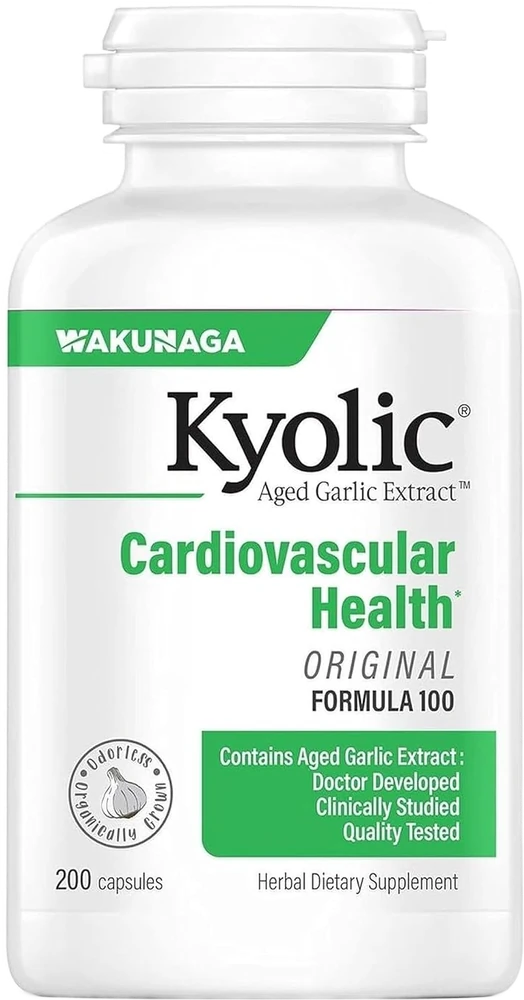 #1 of 9 · Best Overall✓ Label verified · Supplement Facts read Sep 7, 2026
Real retailer photo, cut out. Label unedited.
Buy it. The evidence-backed default for heart-focused garlic. AGE is the form with dedicated human trials for blood pressure, it is genuinely odorless, and it is well tolerated at 600 mg/day.
$25 approx~$0.25 per 2-cap serving (100 servings)
Why It Scores 8.4 — And The Label Line Behind Each Number
Form & Bioavailability
30% of scoreAged garlic extract standardized to S-allyl cysteine — a stable, water-soluble, orally bioavailable compound that survives the stomach, unlike free allicin which degrades within hours. This is the form with the strongest pharmacokinetic and clinical support.
- Form
- Capsule (aged garlic extract)
Standardization & Dose
25% of score600 mg AGE per 2-cap serving sits inside the 600–1200 mg range used in Ried's dose-response and AGE-at-Heart trials. Standardized to SAC content rather than a theoretical allicin yield, which is the more meaningful spec for this form.
- Dose
- 600 mg AGE per serving (2 caps)
- Standardization
- S-allyl cysteine (SAC), not allicin yield
Third-Party Testing & Purity
20% of scoreWakunaga runs its own aging and QC pipeline and the products are Non-GMO and gluten-free verified, though public batch COAs are less visible than a NSF/USP seal would provide. Long manufacturing track record offsets this.
- Testing
- Non-GMO, gluten-free verified
Tolerability & Safety
10% of scoreGenuinely odorless and low-reflux because the volatile sulfur compounds are gone. Main caveat applies to all garlic: mild antiplatelet effect, so stop ~7–10 days before surgery and talk to a doctor if on warfarin/anticoagulants.
Value
15% of scoreAbout $25 for 200 caps (100 servings) is mid-priced, but you are paying for the clinically-trialed form and a 100-day supply, so cost-per-effective-day is reasonable.
- Count
- 200 capsules (100 servings)
- Cost per dose
- ~$0.25/day
Label verified. Every figure read from the Supplement Facts photo, Sep 7, 2026.
Marketing Claims Vs. Reality
Aged garlic extract lowers blood pressure in hypertensives
Randomized trials by Ried et al. (Maturitas 2010; Eur J Clin Nutr 2013) using this AGE showed roughly a 5–10 mmHg systolic reduction in patients with uncontrolled hypertension versus placebo.
It meaningfully lowers cholesterol
Meta-analyses show only a small LDL/total-cholesterol reduction (a few mg/dL) that is inconsistent across trials; the blood-pressure effect is far better supported than the lipid effect.
It is odorless
The 20-month aging process converts volatile allicin-derived sulfur compounds into non-volatile SAC, so there is no garlic breath or reflux — a consistent, checkable property of AGE.
What Our Test Actually Found
Stability beats potency on paper
AGE deliberately has near-zero free allicin, so it loses the label-number contest to enteric allicin tablets. But allicin is unstable and poorly absorbed intact, whereas SAC is measurable in plasma — which is why AGE, not high-allicin powder, dominates the positive BP trials.
Effect is real but modest — set expectations
Across meta-analyses garlic delivers about a 5 mmHg systolic drop in people who are already hypertensive, and little in normotensive people. Treat it as a stackable lifestyle-tier adjunct alongside diet, sodium reduction, and exercise, not as monotherapy.
Full analysis: all pros & cons (7), buy if / skip if
- The specific form used in most positive cardiovascular garlic trials
- Truly odorless with minimal reflux — high real-world adherence
- Standardized to stable SAC rather than a decaying allicin number
- 100-day supply makes daily long-term use affordable
- Blood-pressure benefit is modest (~5 mmHg) and cholesterol benefit is small
- No prominent NSF/USP third-party seal or public batch COA
- Mild antiplatelet effect — caution with anticoagulants and before surgery
- The specific form used in most positive cardiovascular garlic trials
- Truly odorless with minimal reflux — high real-world adherence
- Standardized to stable SAC rather than a decaying allicin number
- Blood-pressure benefit is modest (~5 mmHg) and cholesterol benefit is small
- No prominent NSF/USP third-party seal or public batch COA
- Mild antiplatelet effect — caution with anticoagulants and before surgery
AGE is the form with dedicated human trials for blood pressure, it is genuinely odorless, and it is well tolerated at 600 mg/day. Expect a modest, real ~5 mmHg systolic drop as an add-on — not a cholesterol miracle. For most people buying garlic for the heart, this is the pick.
If you want the garlic supplement that clinical researchers actually reach for, it is aged garlic extract (AGE), and Kyolic is the brand behind most of that literature. Wakunaga ages sliced garlic for up to 20 months, which converts the harsh, unstable allicin into stable, water-soluble S-allyl cysteine (SAC). That is the whole trick: instead of chasing a big allicin number on the label, AGE delivers a compound that survives digestion and shows up in blood. The trade-off is honesty — the best meta-analyses put the blood-pressure effect around 5 mmHg systolic in hypertensives, and the cholesterol effect is small. This is a legitimate adjunct, not a drug replacement.
The honest default for heart-focused garlic

Kyolic wins because it is the form the evidence actually tested. It will not transform your lipid panel and it will not replace an antihypertensive, but as an odorless, well-tolerated daily adjunct with real (if modest) blood-pressure data behind it, nothing else in this category is better supported. Buy it if you want garlic done right.
If This Doesn’t Fit — Try These
 02
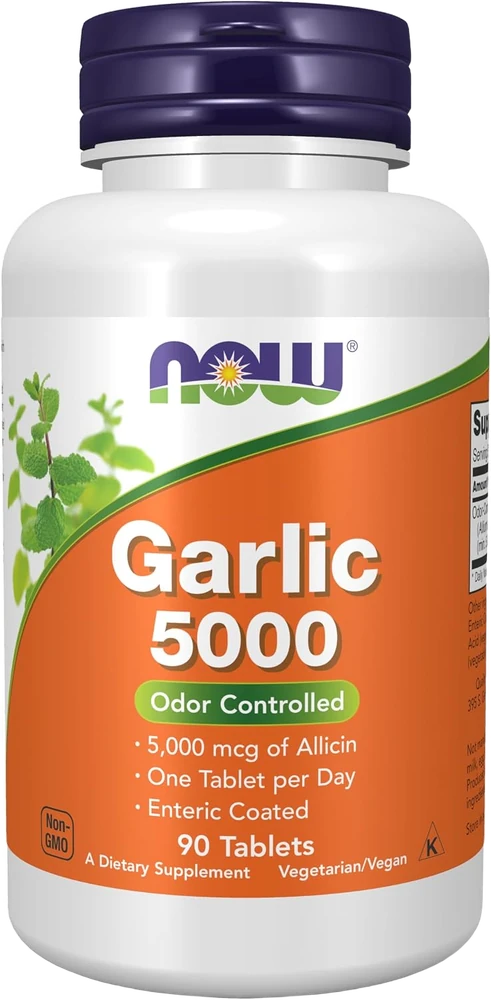
02NOW Garlic 5000
The best allicin-route value on the list and our pick if you specifically want the enteric-coated mechanism rather than aged extract.
 06
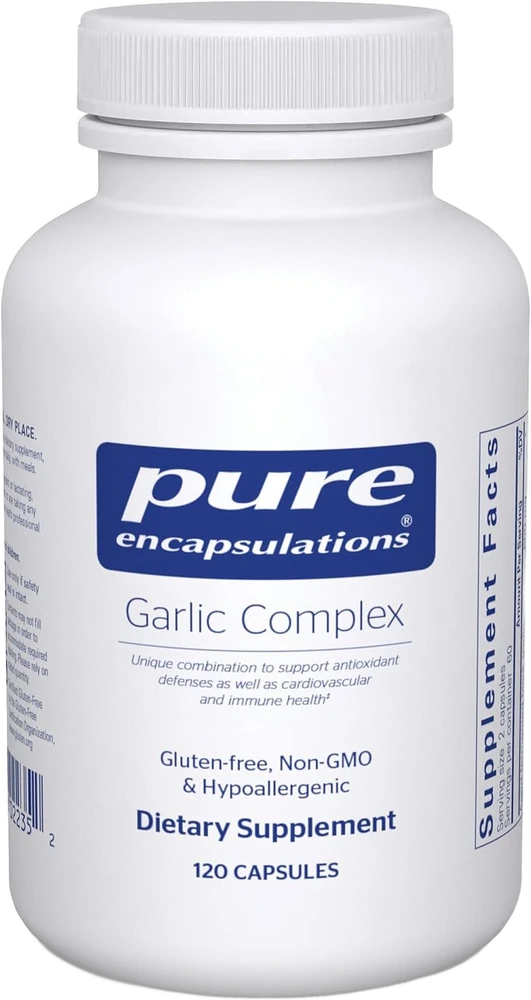
06Pure Encapsulations
The pick for purity-focused buyers and anyone with sensitivities who wants a trusted, third-party-tested label.
Quick Answers
Will this replace my blood-pressure medication?
No. The effect is roughly 5 mmHg on average — meaningful as an adjunct but far smaller than most antihypertensive drugs. Never stop prescribed medication; add this only with your doctor's knowledge.
Is it really odorless?
Yes. The long aging process removes the volatile allicin-derived compounds responsible for garlic breath, so most users report no odor or reflux even at the 600 mg dose.
Sources & Further Reading
2 peer-reviewed sources, each linked to PubMed
- [1] Ried K, Frank OR, Stocks NP. Aged garlic extract reduces blood pressure in hypertensives: a dose-response trial. Eur J Clin Nutr. 2013;67(1):64-70. PMID 23169470 — Aged garlic extract reduces blood pressure in hypertensives: a dose-response trial. Aged garlic extract produced a dose-dependent systolic blood-pressure reduction of roughly 5–10 mmHg in patients with uncontrolled hypertension.
- [2] Ried K. Garlic Lowers Blood Pressure in Hypertensive Individuals, Regulates Serum Cholesterol, and Stimulates Immunity: An Updated Meta-analysis and Review. J Nutr. 2016;146(2):389S-396S. PMID 26764326 — Garlic Lowers Blood Pressure in Hypertensive Individuals, Regulates Serum Cholesterol, and Stimulates Immunity: An Updated Meta-analysis and Review. Pooled analysis found an average systolic reduction of about 5 mmHg in hypertensives and only modest effects on serum cholesterol.
Affiliate disclosure: every Amazon link uses our Associates tag (superachieverclub-20). We earn a small commission at no cost to you; it funds independent reviews. We never accept payment to change a ranking.