
Kwai Heart Care Garlic 300 mg One-A-Day Review
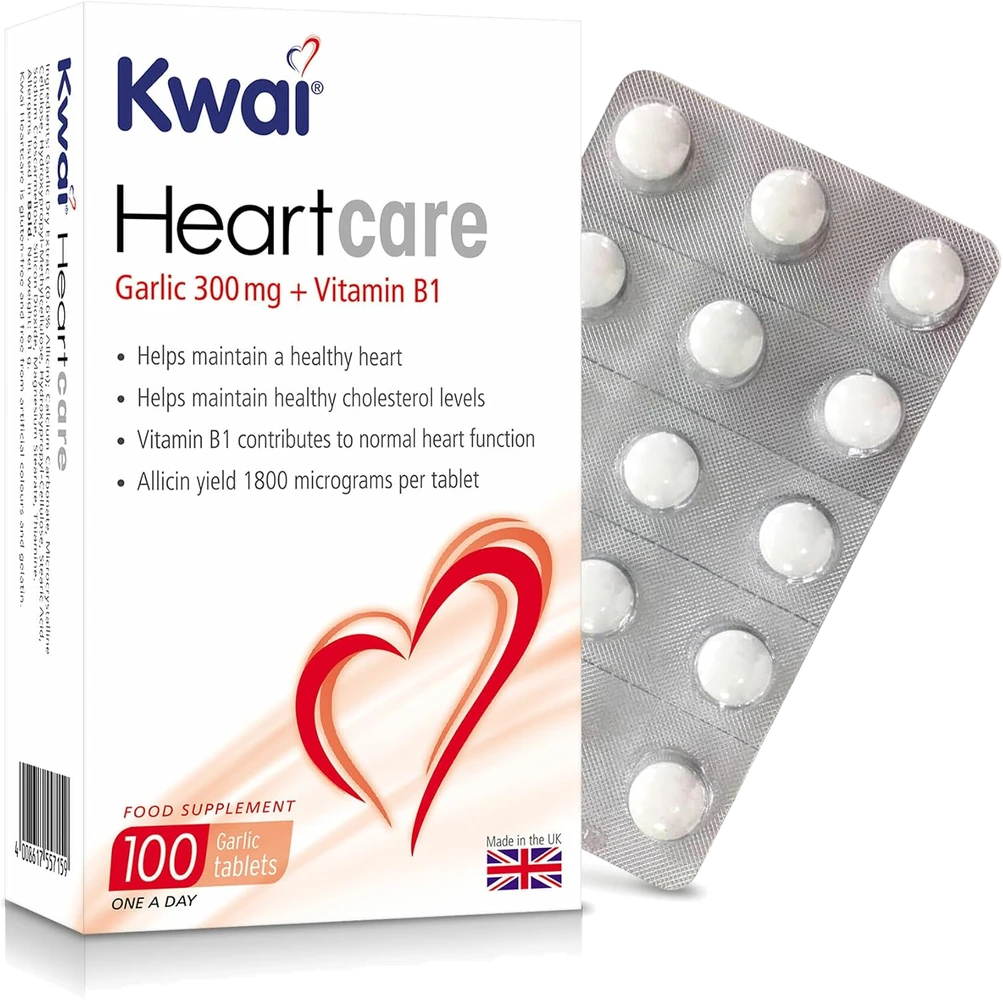 #4 of 9 · Classic Clinical-Trial Powder✓ Label verified · Supplement Facts read Sep 7, 2026
Real retailer photo, cut out. Label unedited.
Consider it. Historically studied, honestly modest. The Kwai standardized powder is the form behind many classic garlic trials, which is reassuring.
$15 approx~$0.15 per tablet (100 tablets)
Why It Scores 7.1 — And The Label Line Behind Each Number
Form & Bioavailability
30% of scoreStandardized dried garlic powder in a multi-coated tablet. Well-characterized in the literature, but powder tablets depend on alliinase surviving digestion, and coating primarily addresses odor rather than guaranteeing allicin delivery.
- Form
- Coated standardized-powder tablet
Standardization & Dose
25% of score300 mg standardized powder yielding ~1800 mcg allicin — the exact dose used in landmark trials, which is a documentation advantage even though the dose is modest by modern high-allicin standards.
- Dose
- 300 mg standardized garlic powder (~1800 mcg allicin yield)
- Standardization
- ~1800 mcg allicin yield (LI-111 lineage)
Third-Party Testing & Purity
20% of scoreLong-standing branded formulation with historical QC pedigree, but no modern prominent NSF/USP seal or public batch COA on the current SKU.
- Testing
- None claimed on current SKU
Tolerability & Safety
10% of scoreThe ~60x coating is designed for odor control and the one-a-day format is easy to tolerate. Standard garlic antiplatelet caution applies.
Value
15% of scoreAround $15 for 100 one-a-day tablets is reasonable for a named, historically-studied formulation, though the modest dose caps the value ceiling.
- Count
- 100 tablets (one-a-day)
- Cost per dose
- ~$0.15/day
Label verified. Every figure read from the Supplement Facts photo, Sep 7, 2026.
Marketing Claims Vs. Reality
This is the garlic form used in major clinical trials
The Kwai/LI-111 standardized garlic powder was the intervention in numerous 1980s–1990s randomized trials referenced across garlic meta-analyses, making its clinical characterization well documented.
It reliably lowers cholesterol at 300 mg
Better-controlled later trials (e.g., Isaacsohn 1998; Neil 1996) using the Kwai powder found small or non-significant lipid changes, and meta-analyses classify garlic's cholesterol effect as modest and baseline-dependent.
The coating controls garlic odor
The heavy multi-layer coating delays release and reduces immediate odor for many users, though powder-based tablets still produce more breath odor than aged garlic extract.
What Our Test Actually Found
Famous form, sober data
Kwai's fame rests on being studied, not on being the strongest performer. Several of the most rigorous trials using this exact powder reported disappointing lipid results, which is part of why the field shifted toward aged extract and higher-allicin enteric forms for blood pressure specifically.
The dose is modest by modern labels
At ~1800 mcg allicin yield, Kwai delivers less than the 5000 mcg enteric tablets. That is not necessarily worse for BP (effects plateau), but it means you are not buying a high-potency product — you are buying a well-documented standard dose.
Full analysis: all pros & cons (7), buy if / skip if
- The exact standardized powder used in landmark garlic trials
- Convenient one-a-day coated tablet
- Heavy coating for meaningful odor control
- Reasonable price for a historically-characterized formula
- Rigorous trials showed only small or non-significant lipid effects at this dose
- Modest ~1800 mcg allicin yield versus modern 5000 mcg tablets
- No modern third-party seal or public COA on the current SKU
- The exact standardized powder used in landmark garlic trials
- Convenient one-a-day coated tablet
- Heavy coating for meaningful odor control
- Rigorous trials showed only small or non-significant lipid effects at this dose
- Modest ~1800 mcg allicin yield versus modern 5000 mcg tablets
- No modern third-party seal or public COA on the current SKU
The Kwai standardized powder is the form behind many classic garlic trials, which is reassuring. But the better-controlled studies showed only small or non-significant lipid effects, so buy it for the pedigree and odor control, not for outsized results.
Kwai is a piece of garlic-research history. Its standardized dried-garlic-powder tablets (the LI-111/Kwai formulation) were the intervention in a large share of the 1980s–1990s clinical trials that put garlic on the cardiovascular map. That heritage is a genuine strength — you are buying the exact form that was studied. But honesty cuts both ways: many of those same trials, especially the later, better-controlled ones, found only small or statistically non-significant lipid changes at the 300 mg dose. The tablet is coated roughly 60x for odor control and standardized to about 1800 mcg allicin yield. It is a legitimate, well-characterized option that simply carries a more sober evidence record than its historical fame implies.
For the pedigree, with realistic expectations

Kwai is worth considering if you value buying the exact form that clinical research studied and want reliable odor control. Just go in clear-eyed: the very trials that made it famous produced modest, sometimes null lipid results. For a stronger evidence base choose Kyolic AGE; for higher allicin choose NOW.
If This Doesn’t Fit — Try These
 01
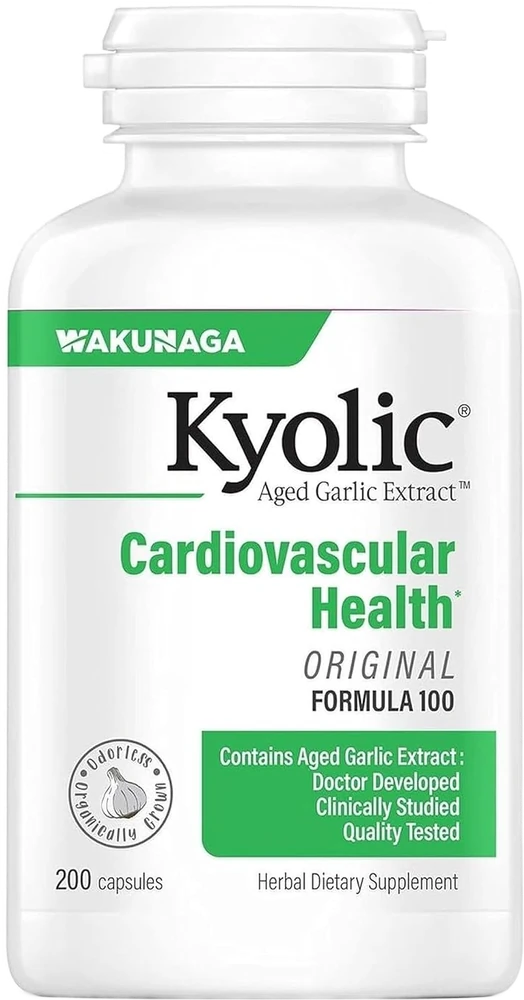
01Kyolic Aged Garlic
If you want the garlic form with the best human cardiovascular evidence, Kyolic AGE is the default pick.
 02
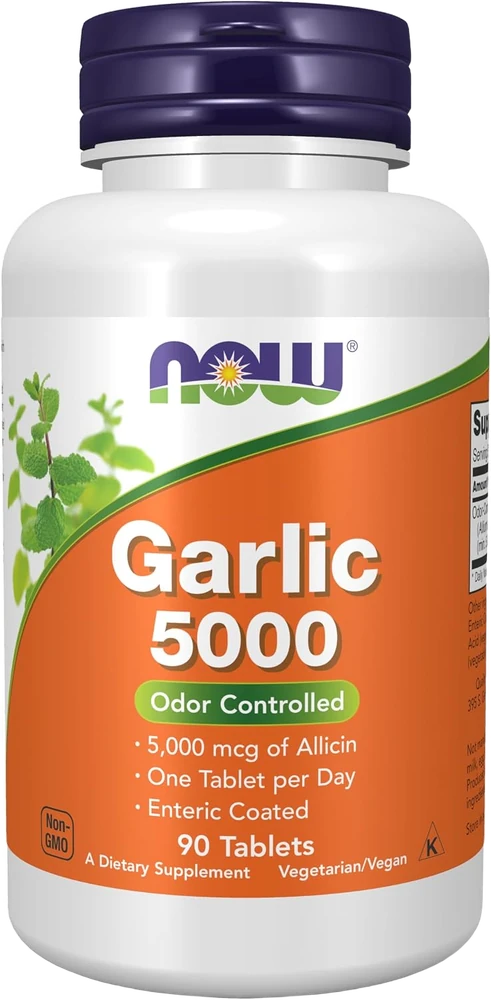
02NOW Garlic 5000
The best allicin-route value on the list and our pick if you specifically want the enteric-coated mechanism rather than aged extract.
Quick Answers
Why is Kwai ranked below newer products if it was the one studied?
Because being studied is not the same as performing best. The most rigorous trials of this exact powder found only small or non-significant lipid effects, so newer aged-extract and higher-allicin forms edge it out.
Is 300 mg too low a dose?
It is modest but it is the dose used in the classic trials. Garlic's BP effect tends to plateau, so a lower standardized dose is not necessarily inferior — but it is not a high-potency product.
Sources & Further Reading
2 peer-reviewed sources, each linked to PubMed
- [1] Silagy CA, Neil HA. A meta-analysis of the effect of garlic on blood pressure. J Hypertens. 1994;12(4):463-468. PMID 8064171 — A meta-analysis of the effect of garlic on blood pressure. Pooled trials, several using standardized garlic powder, showed a modest systolic BP reduction of roughly 7–8 mmHg versus placebo.
- [2] Ried K, Toben C, Fakler P. Effect of garlic on serum lipids: an updated meta-analysis. Nutr Rev. 2013;71(5):282-299. PMID 23590705 — Effect of garlic on serum lipids: an updated meta-analysis. Garlic powder preparations lowered cholesterol only modestly and mainly in people with elevated baseline levels using it for two months or longer.
Affiliate disclosure: every Amazon link uses our Associates tag (superachieverclub-20). We earn a small commission at no cost to you; it funds independent reviews. We never accept payment to change a ranking.