
Host Defense Lion's Mane Capsules Review
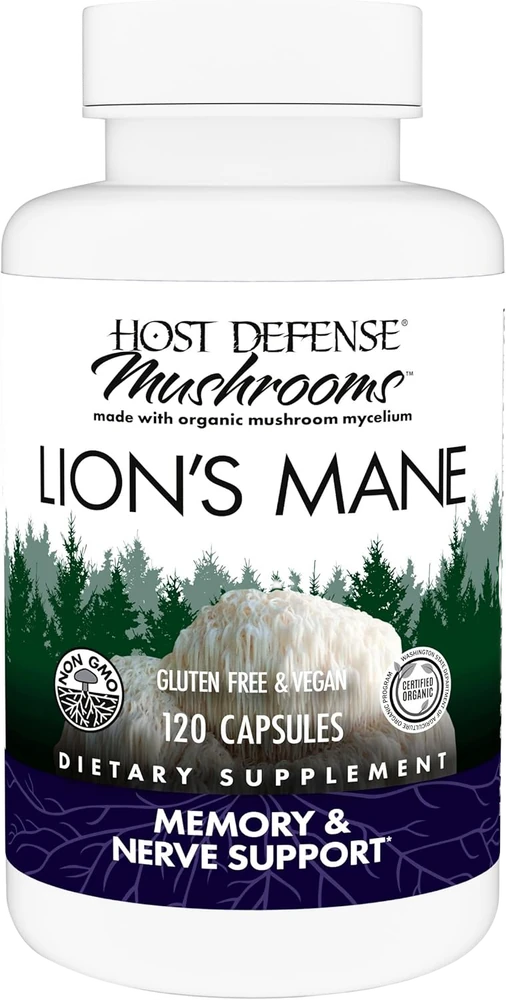 #8 of 10 · Founder's brand✓ Label verified · Supplement Facts read Aug 27, 2026
Real retailer photo, cut out. Label unedited.
Consider it. Paul Stamets' flagship — real organic credentials, but it's the mycelium form at the highest price. Host Defense is the founder's brand: certified-organic (label-confirmed), with brand-stated US cultivation and third-party testing, and backed by Stamets' genuine mycology credibility and conservation mission.
$42.95$0.72 / 2-capsule serving
Why It Scores 6.0 — And The Label Line Behind Each Number
Form honesty (fruiting body vs mycelium-on-grain)
40% of scoreMycelium-based, not fruiting body — the criterion that decides the ranking, and Host Defense's weak spot. The studied compounds (hericenones, beta-glucans) are concentrated in the fruiting body, and mycelium grown on grain typically carries lower beta-glucan density. The cultivation is premium (certified-organic, with brand-stated US sourcing), so it's above anonymous budget mycelium — but it's still the mycelium form, which sits structurally below the 100% fruiting-body leaders no matter how good the brand is.
- Active form
- Certified-organic (label ‡ mark) Lion's Mane (Hericium erinaceus) mycelium/fermented brown rice biomass — not fruiting body; brand states US-grown (Olympia, WA)
- Inactives
- Pullulan (vegetarian) capsule — the only other ingredient; the 1 g active per serving is mycelium + fermented brown rice biomass
Verified beta-glucans (not 'polysaccharides')
25% of scoreDoes not lead with a high verified beta-glucan %, which is partly inherent to the mycelium form — beta-glucans are concentrated in the fruiting body, so a mycelium product structurally carries less and the brand foregrounds organic cultivation instead. Host Defense states it third-party tests and is transparent generally, but on the bioactive metric that defines the category it can't match the fruiting-body leaders (Real Mushrooms #1, FreshCap #2), which publish beta-glucans because their form is dense in them.
- Beta-glucans
- Not stated on the label; no beta-glucan, polysaccharide, or standardization figure appears on the panel or any gallery image
Extraction + dose
15% of scoreNot a concentrated extract — 500 mg caps of dried organic mycelium (on substrate) served at 1000 mg (2 caps), with no extraction or concentration step to offset the form's lower beta-glucan density. The fruiting-body trials used gram-level doses of the denser material (Mori 2009, 3 g/day fruiting body; Saitsu 2019, 2.4 g/day). Li 2020 (PMID 32581767) did use mycelium — but that was a specialized erinacine-enriched, standardized preparation, not a general organic mycelium capsule.
- Per cap
- 500 mg organic mycelium/fermented brown rice biomass (on substrate)
- Per serving
- 1000 mg (2 caps) — label lists 1 g of mycelium/fermented brown rice biomass per 2-capsule serving
Third-party testing + transparency
12% of scoreGenuinely strong on what the label and Host Defense's own gallery images actually confirm: the panel's ‡ mark backs 'Certified Organic' on both the mycelium and the fermented-brown-rice biomass, the front label adds Non-GMO, Gluten-Free & Vegan marks, and the brand's own photos show a Certified B Corporation seal and a 'No Fillers' claim. Third-party lab testing and the Olympia, WA / US-grown cultivation are statements Host Defense makes about itself — plausible given Paul Stamets' mycology credibility, but not printed on the Supplement Facts panel, the front label, or any gallery image we reviewed, so we count them as brand-stated rather than independently verified. The disclosure gap that holds regardless: no beta-glucan potency number appears anywhere on the label.
- Testing
- Brand states third-party testing (not shown on the label or gallery images); certified-organic per the panel's ‡ mark
- Certifications
- Certified Organic (WSDA, USDA-NOP), Non-GMO (brand mark), Vegan, Gluten-Free, No Fillers; Certified B Corporation
- Manufacturer
- Host Defense / Fungi Perfecti (Paul Stamets); brand states Olympia, WA / US-grown — not shown on the label images we reviewed
- Lab transparency
- Strong on certified-organic/Non-GMO/vegan disclosure; third-party lab testing is brand-stated, not label-shown; no beta-glucan number anywhere
Value / cost-per-serving
8% of scoreThe most expensive bottle on the list at ~$0.72 per serving — and the value math is the hard part, because the premium buys brand, mission, and organic cultivation rather than higher potency. You're paying top dollar for the mycelium form when the fruiting-body leaders deliver the more-potent form for less and NOW Foods (#5) delivers real fruiting-body powder for a fraction of the price. Weak on price-performance; the criterion where the premium is hardest to justify on potency grounds.
- Bottle size
- 120 capsules — 60-day supply at 2 caps/day (60 servings per container)
- Price
- ~$43 / 120-cap bottle = ~$0.72 per serving — the most expensive on the list
Label verified. Every figure read from the Supplement Facts photo, Aug 27, 2026.
Marketing Claims Vs. Reality
Certified-organic, US-grown mushroom mycelium.
The 'certified-organic' half is label-confirmed — the panel's ‡ mark backs it on both the mycelium and the fermented brown rice biomass. 'US-grown' (Olympia, WA) is a claim Host Defense makes about itself; it isn't printed on the Supplement Facts panel, the front label, or any gallery image we reviewed, so we treat it as brand-stated rather than independently verified. The other honest caveat lives in the word 'mycelium': confirmed, but it's the less-potent form for Lion's Mane, not fruiting body.
Supports cognitive health and neurological function.
The cognition direction is supported by the trials (Mori 2009, PMID 18844328; Saitsu 2019, PMID 31413233) — but those used fruiting body. Li 2020 (PMID 32581767) did use erinacine-enriched mycelium for early Alzheimer's, so mycelium has a signal — but that was a specialized standardized preparation, not a general organic mycelium capsule, and the broader evidence is early (PMID 40959699). Real direction, mycelium-form and preliminary-evidence asterisks.
Backed by Paul Stamets' mycology research.
True and a legitimate part of the brand's value — Stamets is a serious, published mycologist and the company's research and conservation mission are real. This is a genuine differentiator on ethos and credibility; it just doesn't change the fruiting-body-vs-mycelium potency reality for this specific product.
Activated, third-party tested for quality.
Host Defense states it third-party tests its products and is transparent about cultivation — a brand claim we couldn't independently confirm on the Supplement Facts panel, front label, or any gallery image. Separately, the testing the brand does foreground (organic certification, identity/purity) isn't a high verified beta-glucan %, which mycelium structurally can't match the fruiting-body leaders on — the main reason for the 'partial' verdict.
Sustainably and ethically produced.
Consistent with Host Defense's documented conservation mission and Certified B Corporation status, both shown in the brand's own gallery images. The US-cultivation claim is brand-stated and not shown on the label images we reviewed. A real brand strength on the mission and certification side — and for the buyer who values mission, a legitimate reason to pay the premium even knowing the form trade-off.
What Our Test Actually Found
Correction: the FAQ score and the image caption didn't match this review's own data
An earlier version of this review's FAQ said 'The score is 6.6,' but this review's overallScore has always been 6.0 — an internal inconsistency, not a label error. The image caption also said the bottle photo was 'from the Amazon listing'; it is our studio composite, not an Amazon photo. We re-read the label and this review's own data on Sep 3, 2026 and corrected both: the FAQ now says 6.0, and the image caption now says 'studio render.' We also re-verified every label-dependent fact in this review — mycelium form, 1 g per 2-capsule serving (500 mg/cap), 60 servings per 120-cap bottle, no extract ratio, no beta-glucan % printed anywhere on the label, certified organic, non-GMO, gluten-free, vegan — against the Supplement Facts panel and front label, and softened claims about third-party lab testing and Olympia, WA / US-grown cultivation: Host Defense states both, but neither is printed on the Supplement Facts panel, the front label, or any gallery image we reviewed, so this review now marks them as brand-stated rather than independently verified. No score changed.
In Lion's Mane, form beats brand — and Host Defense ships the weaker form
Host Defense is a great brand: Stamets' mycology credibility, certified-organic cultivation (brand states US-grown), a genuine conservation mission. But this category is decided by fruiting-body-vs-mycelium, and Host Defense Lion's Mane is mycelium-based. The studied compounds (hericenones, beta-glucans) are concentrated in the fruiting body — the actual mushroom — and mycelium grown on grain typically carries lower beta-glucan density. So the brand's strengths (ethics, cultivation, testing) are real but sit on top of the less-potent form. A reader who buys on brand reputation alone would over-pay for a lower-potency product; the form is the thing to weigh.
Premium mycelium is better than budget mycelium — but still mycelium
It's fair to give Host Defense credit: certified-organic mycelium with brand-stated US cultivation is a real step above anonymous bulk mycelium-on-grain, and the brand's stance (rooted in Stamets' research that mycelium has its own bioactives) is a sincere position, not a dodge. That's why it edges a budget mycelial-biomass bottle like Om (#9) on credentials. But the core limitation is structural and doesn't disappear with better cultivation: beta-glucans concentrate in the fruiting body, and mycelium products generally test lower on them than fruiting-body extracts. Premium mycelium, still below pure fruiting body.
It's the most expensive bottle on the list — for ethos, not potency
At ~$0.72 per serving, Host Defense is the priciest Lion's Mane here, and the premium is the hardest part to justify on a potency basis. You're paying for Stamets' name, certified-organic cultivation (label-confirmed), the brand's stated US sourcing and third-party testing, and a mission-driven company — but NOT for higher beta-glucan content. The fruiting-body leaders (Real Mushrooms #1, FreshCap #2) deliver the more-potent, verified form for less; NOW Foods (#5) delivers genuine fruiting-body powder for a fraction of the price. If maximum Lion's Mane per dollar is the goal, this is the wrong bottle. If the brand's mission is the point, the premium is a values choice you can make with eyes open.
Mycelium isn't inert — but the trial that used it was a special preparation
To stay honest in both directions: mycelium isn't worthless. The single most ambitious Lion's Mane clinical trial, Li 2020 (PMID 32581767), used erinacine A-enriched mycelium (not fruiting body) in early Alzheimer's patients for 49 weeks and reported improvement on the MMSE. So a standardized, erinacine-enriched mycelium preparation has genuine clinical support. But that's a specific, enriched, standardized form — not the same as a general organic mycelium capsule. Host Defense's product doesn't claim to be that enriched preparation, so the Li 2020 result doesn't transfer directly. It's a reason to respect mycelium as a category, not a reason to expect this bottle to match the fruiting-body trials.
Buy it as a values purchase, not a potency-per-dollar purchase
The clean way to place Host Defense: if you specifically want to support a mission-driven, certified-organic, Stamets-backed mycology company and you value that enough to pay a premium for the mycelium form, it's a defensible, honest buy — the credentials behind it are real. If instead you want the studied form at the best potency-per-dollar, the answer is the fruiting-body tier. Both can be right; they're just answering different questions. Host Defense optimizes for brand ethos and organic cultivation; the leaders optimize for verified fruiting-body potency. Know which one you're actually buying.
Full analysis: all pros & cons (8), buy if / skip if
- Genuinely strong organic credentials — certified-organic (label-confirmed), brand-stated US cultivation, mission-driven (Paul Stamets' flagship)
- Brand states third-party testing; real certified-organic/Non-GMO/vegan cultivation transparency and Certified B Corporation status
- Premium mycelium is a step above anonymous budget mycelium-on-grain on quality and sourcing
- Defensible values purchase for buyers who prioritize brand mission and organic standards
- MYCELIUM-based, not fruiting body — typically lower beta-glucan density than the studied form
- The MOST EXPENSIVE bottle on the list (~$0.72/serving) — premium pays for ethos, not potency
- No leading verified beta-glucan % — mycelium structurally carries less than fruiting body
- Weak potency-per-dollar — fruiting-body leaders (#1, #2) and NOW (#5) all deliver more for less
- You specifically value Paul Stamets' brand, mission, and certified-organic cultivation with its brand-stated US sourcing
- You're willing to pay a premium for ethos and standards, knowing it's the mycelium form
- You want to support a mission-driven mycology company with genuine conservation credentials
- Brand trust and organic sourcing rank above maximum beta-glucan potency for you
- You want the studied, higher-potency FRUITING-BODY form — go Real Mushrooms (#1) / FreshCap (#2)
- You want maximum Lion's Mane per dollar — it's the most expensive bottle on the list
- You want a high verified beta-glucan % — mycelium structurally carries less, and it's not foregrounded
Host Defense is the founder's brand: certified-organic (label-confirmed), with brand-stated US cultivation and third-party testing, and backed by Stamets' genuine mycology credibility and conservation mission. The catch that decides the ranking: it's MYCELIUM-based (not fruiting body), which typically means lower beta-glucan density than the fruiting-body leaders — and it's the most expensive bottle on the list (~$0.72/serving). Consider it if the brand's mission and organic standards matter to you specifically. For maximum potency per dollar, the fruiting-body leaders (#1, #2) and value fruiting body (NOW #5) all win.
Host Defense Lion's Mane is the founder's-brand pick — Paul Stamets' flagship company, with genuinely strong organic credentials and brand-stated US cultivation. The brand's reputation is earned: Stamets is a serious mycologist, the cultivation standards are real, and the conservation mission is genuine. But in Lion's Mane specifically, the form is what decides the ranking, and Host Defense's form is its weak spot: this is a MYCELIUM-based product, not fruiting body. That matters because the studied compounds — hericenones, beta-glucans — are concentrated in the fruiting body (the actual mushroom), and mycelium grown on grain typically carries lower beta-glucan density. Compounding it, Host Defense is the MOST EXPENSIVE bottle on the list at ~$0.72 per serving. So you have a great brand with strong ethics shipping the less-potent form at the highest price — a premium you pay for mission and cultivation, not for potency. Premium mycelium does edge budget mycelium-on-grain (it's a step above Om #9 on credentials), but it sits clearly below the fruiting-body leaders. We checked the form, testing, and brand claims against the web-verified evidence, and here's the full breakdown.
Paul Stamets' flagship — a real values buy, but the mycelium form at the highest price.

Host Defense Lion's Mane earns a 'consider' verdict that's almost entirely about brand and ethos rather than form or value. This is Paul Stamets' flagship company, and the strengths are genuine: certified-organic cultivation (label-confirmed), the brand's stated US sourcing and third-party testing, serious mycology credibility, and a real conservation mission. For the buyer who specifically values supporting a mission-driven mycology company with strong organic standards, that's a legitimate reason to buy — the credentials behind the brand are real, and premium mycelium does edge budget mycelium-on-grain. But the ranking is decided by the two things the brand can't spin away. It's a MYCELIUM-based product, not fruiting body — and the studied, higher-potency compounds (hericenones, beta-glucans) are concentrated in the fruiting body, so mycelium typically carries lower beta-glucan density. And it's the MOST EXPENSIVE bottle on the list at ~$0.72 per serving, meaning you pay top dollar for the less-potent form. If your goal is maximum Lion's Mane potency per dollar, this is the wrong pick: Real Mushrooms (#1) and FreshCap (#2) deliver the studied fruiting-body form with verified beta-glucans for less, and NOW Foods (#5) delivers genuine fruiting-body powder for a fraction of the price. Buy Host Defense if its mission and organic cultivation are the point and you'll pay a premium for them with eyes open; buy a fruiting-body pick if potency-per-dollar is what you're really after.
If This Doesn’t Fit — Try These
 01
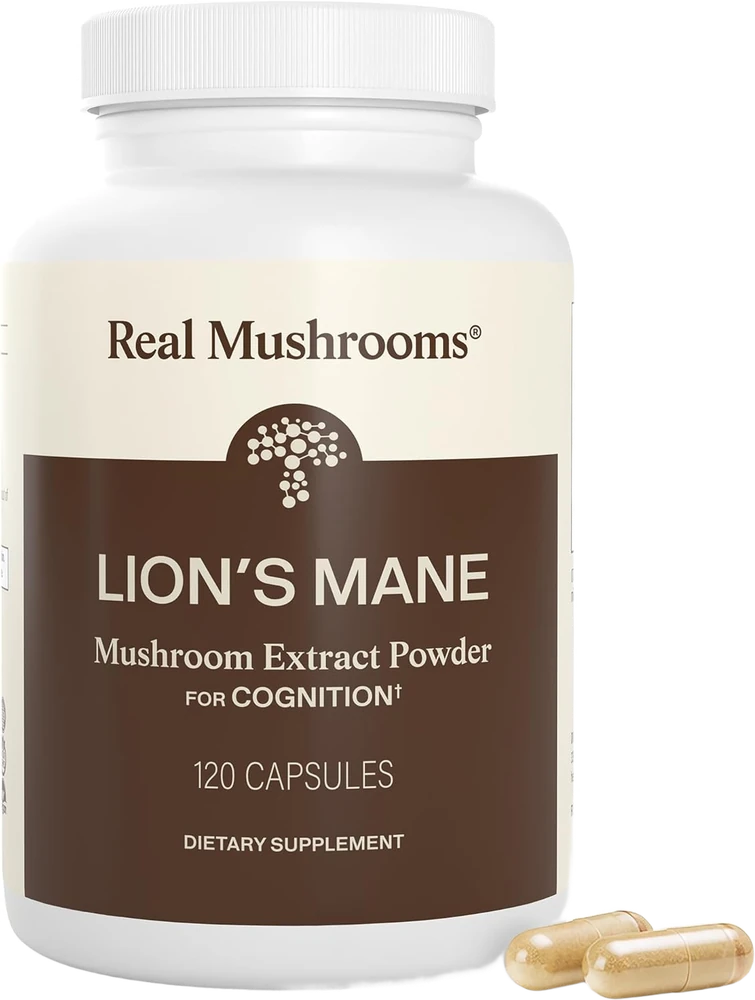
01Real Mushrooms
If you want one Lion's Mane that does the single most important thing right, Real Mushrooms is the pick and the benchmark the rest of this list is measured against.
 02
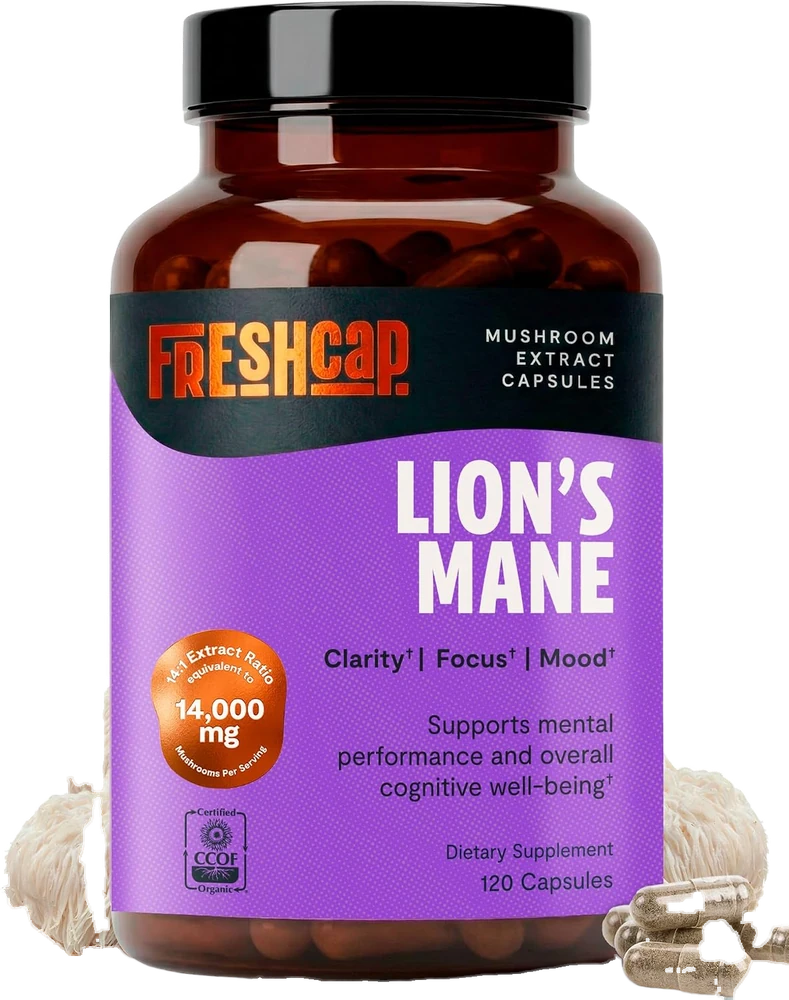
02FreshCap
FreshCap is the value-meets-potency pick and a genuine rival to #1.
 06
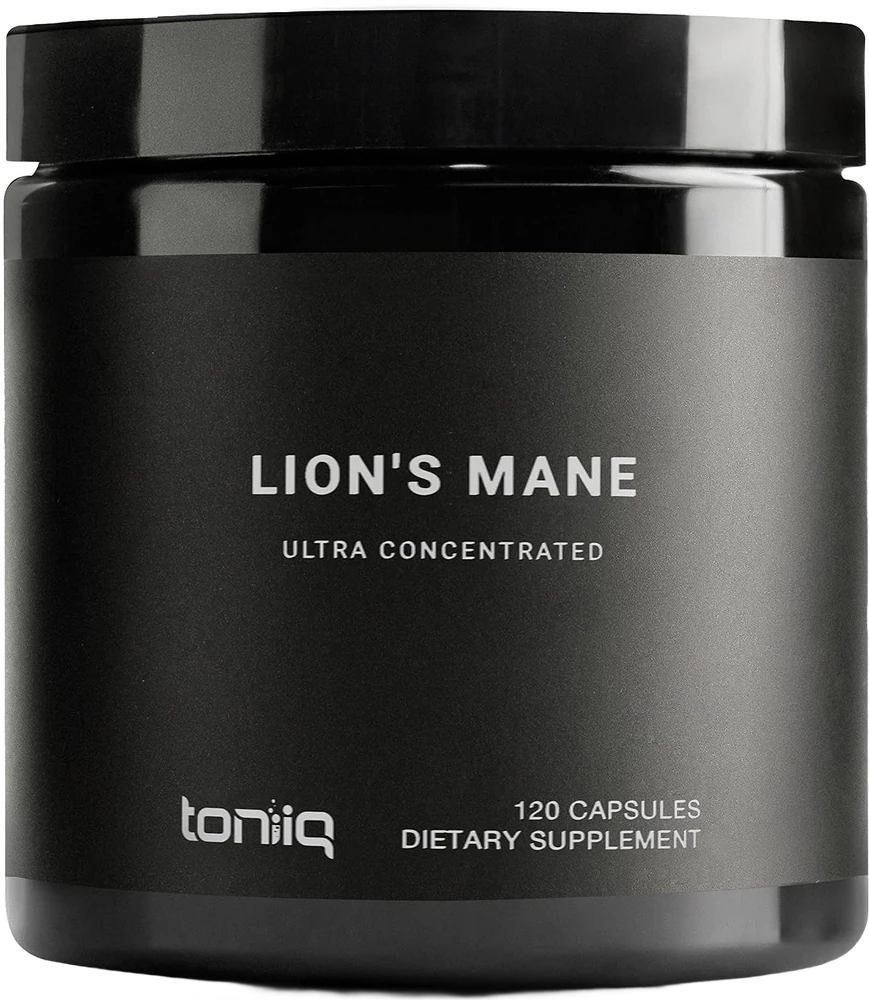
06Toniiq 10:1
Toniiq is the high-potency value play, but it's where the list crosses from 'pure' into 'blend.' Label re-read 27 Aug 2026: the old '30% polysaccharides' criticism no longer matches the bottle — the panel now declares 360 mg (20%) of real β-glucans per serving with a matching COA tile, and its score rose from 6.8 to 7.0.
Quick Answers
Host Defense is the famous mushroom brand — why does it rank this low?
Because in Lion's Mane specifically, form beats brand, and Host Defense's form is its weak spot. This is Paul Stamets' flagship company, and the organic credentials and brand-stated US cultivation are genuinely excellent — there's a real reason for the brand's reputation. But Host Defense Lion's Mane is MYCELIUM-based, not fruiting body. The studied compounds (hericenones, beta-glucans) are concentrated in the fruiting body — the actual mushroom — and mycelium grown on grain typically carries lower beta-glucan density. So a great brand with strong ethics is shipping the less-potent form, at the highest price on the list. The ranking reflects the product's form and value, not disrespect for the company.
Isn't Host Defense mycelium different from cheap mycelium-on-grain?
It's better-pedigreed, but it's still mycelium. Host Defense's stance, rooted in Stamets' research, is that mycelium has its own bioactives worth having — and the cultivation is certified-organic, with brand-stated US sourcing, which is a real quality step above anonymous bulk mycelium. But the core issue doesn't go away: mycelium is grown on a grain substrate, the actual mushroom actives (beta-glucans) are concentrated in the fruiting body, and mycelium products generally test lower on beta-glucan density than fruiting-body extracts. So Host Defense is premium-quality mycelium — which is better than budget mycelium-on-grain (it edges a bottle like Om #9 on credentials) but still sits below the fruiting-body leaders (Real Mushrooms #1, FreshCap #2) on the criterion that matters most.
Why is it the most expensive bottle on the list if the form is weaker?
You're paying for the brand, the ethos, and the cultivation standards — not for higher beta-glucan potency. At ~$0.72 per serving, Host Defense is the priciest Lion's Mane here, and the premium buys Stamets' name, certified-organic mycelium, the brand's stated US cultivation and third-party testing, and a company with genuine mycology credibility and conservation mission. What it does NOT buy is the more-potent fruiting-body form: the leaders (Real Mushrooms #1, FreshCap #2) deliver 100% fruiting body with verified beta-glucans for less. So the value math is the hard part — it's a premium price for a lower-potency form, justified mainly if the brand's mission and standards matter to you specifically.
Does it have a verified beta-glucan percentage?
Host Defense states it third-party tests and is transparent about its cultivation (a brand claim, not something printed on the label or gallery images we reviewed), but it does not lead with a high verified beta-glucan % the way the fruiting-body leaders do — and that's somewhat inherent to mycelium. Beta-glucans are concentrated in the fruiting body; a mycelium-on-grain product structurally carries less, so it's not the metric the brand foregrounds. The fruiting-body picks (Real Mushrooms #1, FreshCap #2) publish beta-glucans precisely because their form is dense in them. With Host Defense you're trusting the organic cultivation and the brand's testing, rather than a high beta-glucan number — which is the honest signal that you're buying the mycelium form.
Who should buy Host Defense Lion's Mane?
The buyer who specifically values Paul Stamets' brand, mission, and organic cultivation with its brand-stated US sourcing, and is willing to pay a premium for that even knowing it's the mycelium form. If supporting a mission-driven mycology company with strong conservation ethics matters to you, Host Defense is a defensible, honest buy — the credentials are real. But if your goal is maximum Lion's Mane potency per dollar, this is the wrong pick: the fruiting-body leaders (Real Mushrooms #1, FreshCap #2) give you the studied, higher-beta-glucan form for less money, and NOW Foods (#5) gives you real fruiting body at a fraction of the price. The score is 6.0 — a 'consider' driven by brand value, not by form or price-performance.
Sources & Further Reading
4 peer-reviewed sources, each linked to PubMed
- [1] Mori 2009 PMID 18844328 — Improving effects of the mushroom Yamabushitake (Hericium erinaceus) on mild cognitive impairment: a double-blind placebo-controlled clinical trial. Double-blind, placebo-controlled trial in 30 adults aged 50-80 with mild cognitive impairment: 3 g/day of FRUITING-BODY powder for 16 weeks significantly improved cognitive-scale scores vs placebo, with gains fading after stopping. The cornerstone cognition trial — and it used fruiting body, not the mycelium form Host Defense ships.
- [2] Saitsu 2019 PMID 31413233 — Improvement of cognitive functions by oral intake of Hericium erinaceus. Trial in 31 healthy older adults: 2.4 g/day of Hericium erinaceus for 12 weeks significantly improved scores on a standardized Japanese cognitive test. A supporting cognition signal at a gram-level fruiting-body dose — the higher-potency form that mycelium typically can't match on beta-glucan density.
- [3] Li 2020 PMID 32581767 — Prevention of early Alzheimer's disease by erinacine A-enriched Hericium erinaceus mycelia pilot double-blind placebo-controlled study. Pilot double-blind trial in mild Alzheimer's patients: ~1 g/day of erinacine A-enriched H. erinaceus MYCELIA for 49 weeks improved MMSE scores vs placebo. The strongest evidence that mycelium isn't inert — but it used a specialized, erinacine-enriched, standardized preparation, not a general organic mycelium capsule like Host Defense's, so the result doesn't transfer directly.
- [4] Menon 2025 PMID 40959699 — Benefits, side effects, and uses of Hericium erinaceus as a supplement: a systematic review. Systematic review of the Hericium erinaceus supplement literature: reports consistent neuroprotective and NGF/BDNF-stimulating signals across fruiting-body and mycelium preparations, while concluding the human evidence remains preliminary and calls for larger, longer trials. The honest 'early evidence' frame — strong brand credentials don't change how settled the science is.
Affiliate disclosure: every Amazon link uses our Associates tag (superachieverclub-20). We earn a small commission at no cost to you; it funds independent reviews. We never accept payment to change a ranking.