
Horbaach Saw Palmetto Extract Review
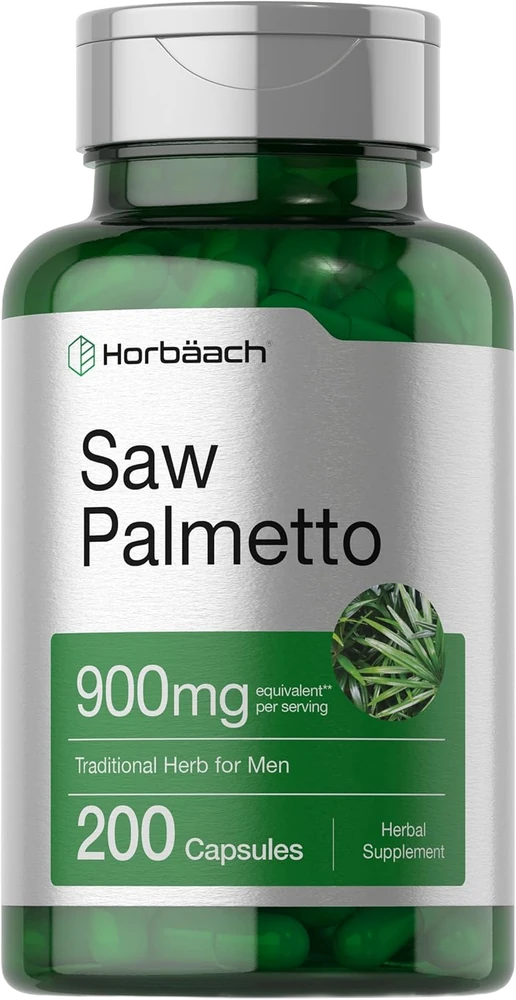 #9 of 9 · Longest Supply Runway✓ Label verified · Supplement Facts read Sep 7, 2026
Real retailer photo, cut out. Label unedited.
Skip it. Maximum supply, hidden dose split. 200 capsules built on a 225 mg proprietary blend (marketed as a 900 mg equivalent) is the longest-running, lowest-per-capsule bottle here.
approx $13-17approx $0.08/serving
Why It Scores 4.6 — And The Label Line Behind Each Number
Standardization & Form
30% of scoreThe 225 mg "Saw Palmetto Proprietary Blend" combines Saw Palmetto powder and a 10:1 extract without disclosing the split between them, and the label states no percentage of active fatty acids or sterols. An undisclosed blend split is worse for transparency than a plainly stated whole-berry dose, and it still is not liposterolic standardization.
- Form
- Capsule (proprietary blend of Saw Palmetto powder and 10:1 extract)
- Standardization
- 10:1 extract blended with plain powder in an undisclosed ratio - not fatty-acid standardized
Dose vs Clinical Range
25% of scoreThe label does not break out how much of the 225 mg blend (marketed as a 900 mg herbal equivalent) is 10:1 extract versus plain powder, so the real dose is unknown - it cannot be equated to the 320 mg liposterolic clinical dose, or even compared honestly to products that print a single ingredient weight.
- Dose
- 225 mg Saw Palmetto Proprietary Blend per serving (2 capsules), marketed as a 900 mg herbal equivalent; individual extract/powder split not printed
Third-Party Testing & Purity
20% of scoreMarketed as laboratory tested, Non-GMO and gluten-free; testing is claimed but not backed by a prominently published independent COA like Nutricost's.
- Testing
- Non-GMO, gluten-free, laboratory tested (no published independent COA)
Tolerability & Safety
15% of scoreStandard tolerability for a berry-blend capsule; no unusual additives flagged.
Value / Cost per Dose
10% of score200 capsules at ~$13-17 is the lowest cost per capsule here - but low cost per capsule of an undisclosed-dose blend is not the same as low cost per clinical dose.
- Count
- 200 capsules (long supply runway)
- Cost per dose
- ~$0.07-0.09/capsule
Label verified. Every figure read from the Supplement Facts photo, Sep 7, 2026.
Marketing Claims Vs. Reality
200-capsule bottle gives the longest supply runway
At 200 capsules, this is the highest-count bottle in the roundup, delivering the longest per-bottle supply.
The 900 mg herbal equivalent means you get 900 mg of active saw palmetto extract
The 900 mg figure is a marketing equivalent claim built from a 225 mg proprietary blend of powder and 10:1 extract. The label does not disclose how much of that 225 mg is actual 10:1 extract, so the true active dose is unknown and is not the same as 900 mg of extract.
Laboratory tested ensures purity
The label claims laboratory testing, which is reassuring, but no independent COA is publicly published to verify potency and contaminants the way Nutricost's is.
What Our Test Actually Found
Correction: label shows a 225 mg proprietary blend with a 10:1 extract, not 500 mg of 4:1 concentrate
An earlier version of this review said this product delivers 500 mg per serving of a 4:1 concentrated extract. The Supplement Facts panel reads 225 mg Saw Palmetto Proprietary Blend per serving (2 capsules), marketed as a 900 mg Herbal Equivalent from a blend of Saw Palmetto powder and Saw Palmetto 10:1 Extract, with no individual amount printed for either component. We re-read the label on Sep 7, 2026 and corrected the dose, the extract ratio, and the Standardization and Dose-vs-Clinical-Range scores throughout this review.
10:1 extract, but the real dose is hidden in a proprietary blend
The label names a 10:1 extract as one ingredient in the blend, but the 225 mg "Saw Palmetto Proprietary Blend" does not break out how much is that 10:1 extract versus plain Saw Palmetto powder. The 900 mg figure printed alongside it is a herbal-equivalent marketing claim, not a measured weight of active extract.
Cheapest per capsule, not per clinical dose
Horbaach wins on sticker economics - pennies per capsule and 200 of them. But the 900 mg herbal-equivalent claim does not disclose the extract-to-powder ratio inside the blend, so low cost per capsule does not translate into low cost per unit of trial-relevant activity.
Full analysis: all pros & cons (6), buy if / skip if
- 200-capsule bottle is the longest supply runway on the list
- Lowest cost per capsule here
- Non-GMO, gluten-free, with a laboratory-tested claim
- Simple, additive-light capsule
- Proprietary blend does not disclose how much of the 225 mg is 10:1 extract vs. plain powder, and no fatty-acid/sterol standardization is printed
- No published independent COA despite the tested claim
- 200-capsule bottle is the longest supply runway on the list
- Lowest cost per capsule here
- Non-GMO, gluten-free, with a laboratory-tested claim
- Proprietary blend does not disclose how much of the 225 mg is 10:1 extract vs. plain powder
- No published independent COA despite the tested claim
200 capsules built on a 225 mg proprietary blend (marketed as a 900 mg equivalent) is the longest-running, lowest-per-capsule bottle here. But the label does not break out how much of that blend is 10:1 extract versus plain powder, so the real dose is unknown and cannot be matched to the 320 mg liposterolic standard the trials used - that is enough to skip it for anyone shopping on the evidence.
Horbaach competes purely on runway: 200 capsules built from a 225 mg "Saw Palmetto Proprietary Blend" of powder and 10:1 extract, laboratory tested, at a low cost per capsule. That is a lot of supply. But the blend is proprietary - the Supplement Facts panel prints a 900 mg "Herbal Equivalent" claim without disclosing how much of the 225 mg is actual 10:1 extract versus plain berry powder, and it says nothing about the percentage of active fatty acids, which is what the clinical extracts standardize to. So you get a long, cheap supply of a form whose real dose you cannot verify.
Skip it - the runway is real, but the dose is not on the label

Horbaach is the budget-runway pick: 200 capsules for pennies each. If your decision were driven purely by raw supply and lowest sticker cost, it would deliver on that narrow promise. But the Supplement Facts panel hides the number that matters most: the 225 mg "Saw Palmetto Proprietary Blend" is marketed as a 900 mg herbal equivalent without disclosing how much of it is actually 10:1 extract versus plain berry powder. Standardization is the axis that matters most for saw palmetto, and this label does not even disclose a plain dose for its extract, let alone a fatty-acid standardization. Anyone trying to reproduce the studied extract should step up to a standardized 320 mg product.
If This Doesn’t Fit — Try These
 02
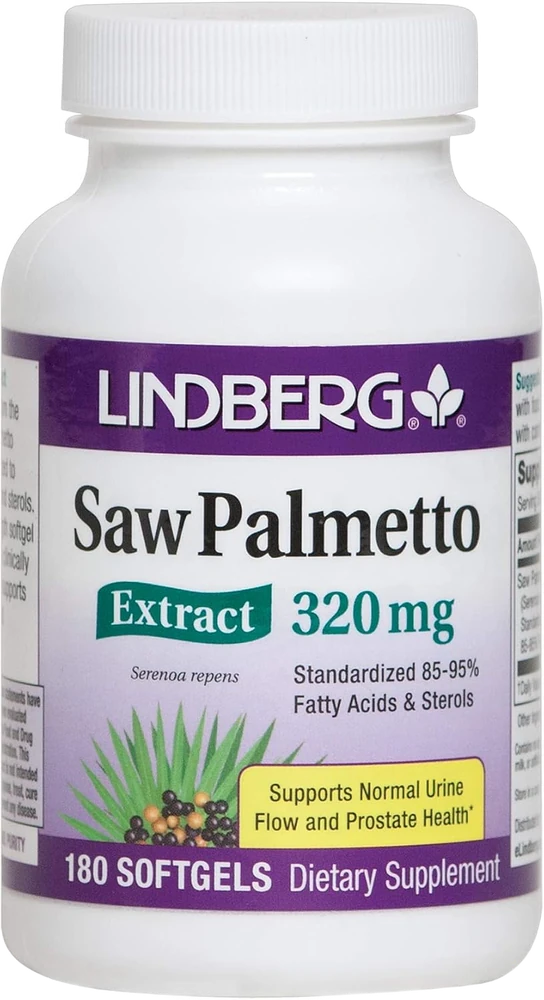
02Lindberg 320 mg
This is the value champion of the list: it matches the trials on both standardization and dose, then undercuts almost everything on price with a six-month bottle.
 05
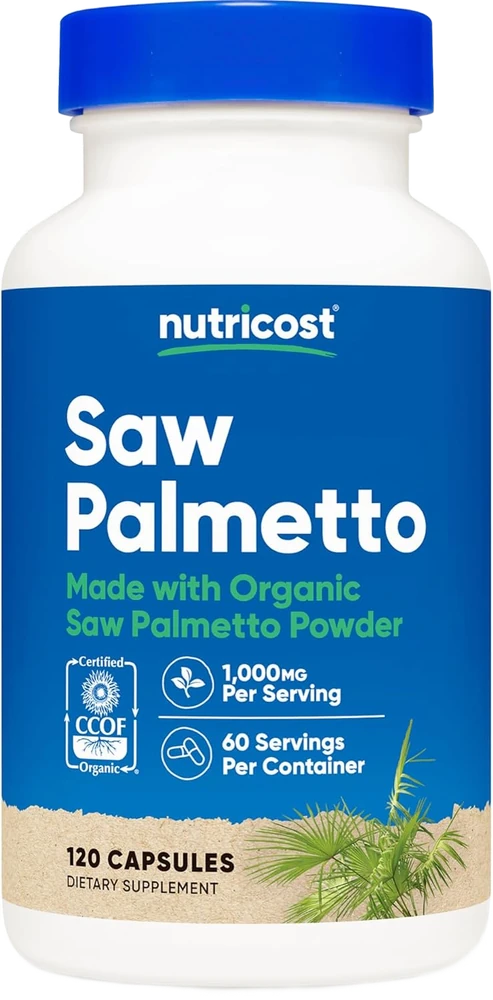
05Nutricost Organic 1,000 mg
On testing and organic transparency, Nutricost is the best on this list — and if you specifically want a clean whole-berry product, this is the one to buy.
Quick Answers
What does the 10:1 extract ratio mean here?
10:1 means ten parts raw berry were reduced to one part extract. But that 10:1 extract is only one ingredient inside a 225 mg "Saw Palmetto Proprietary Blend" that also contains plain Saw Palmetto powder - the label does not say how much of the 225 mg is which. Neither figure says anything about the percentage of active fatty acids, which is what the clinical extracts standardize to.
Is the low price a good deal?
It is cheap per capsule, but the label's 900 mg herbal equivalent claim does not disclose the extract-to-powder ratio behind it, so it is not necessarily cheap per unit of trial-relevant activity. A standardized 320 mg product is a truer value for matching the research.
Sources & Further Reading
2 peer-reviewed sources, each linked to PubMed
- [1] Bent S, Kane C, Shinohara K, et al. Saw palmetto for benign prostatic hyperplasia. N Engl J Med. 2006;354(6):557-566. PMID 16467543 — Saw palmetto for benign prostatic hyperplasia. The trial used a standardized liposterolic extract at 320 mg/day - the benchmark an undisclosed-dose proprietary blend does not match.
- [2] Tacklind J, MacDonald R, Rutks I, Stanke JU, Wilt TJ. Serenoa repens for benign prostatic hyperplasia. Cochrane Database Syst Rev. 2012;12:CD001423. PMID 23235581 — Serenoa repens for benign prostatic hyperplasia. Standardized lipophilic extracts, not undisclosed proprietary blends, defined the intervention across the pooled trials.
Affiliate disclosure: every Amazon link uses our Associates tag (superachieverclub-20). We earn a small commission at no cost to you; it funds independent reviews. We never accept payment to change a ranking.