
Himalaya Organic Ashwagandha Review
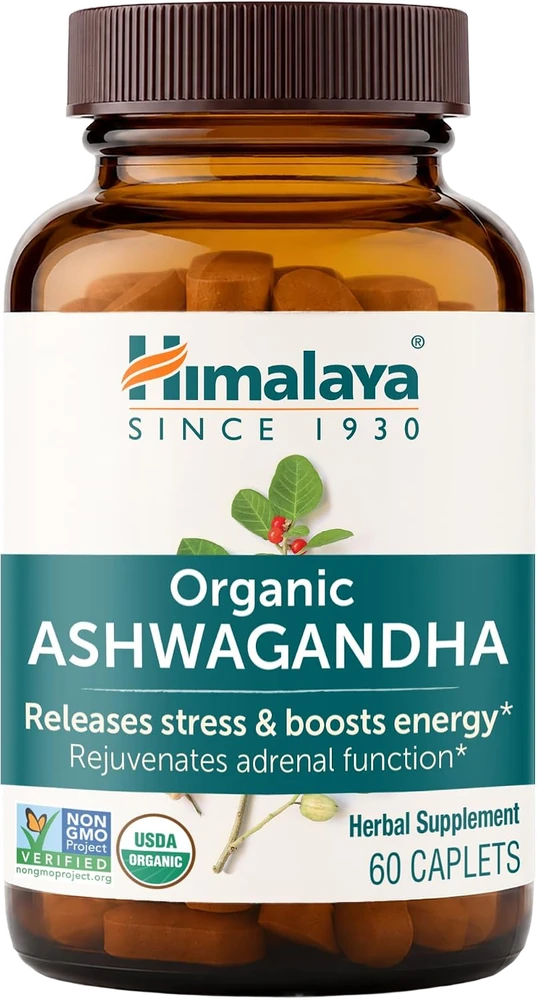 #10 of 10 · Best traditional source✓ Label verified · Supplement Facts read Aug 27, 2026
Real retailer photo, cut out. Label unedited.
Consider it. The Ayurvedic traditional pick — USDA Organic + 90-year heritage, but the declared active load is ~3 mg per caplet, a tenth of the trial dose. Powder-plus-extract caplet at 670 mg with the withanolides declared per component on the panel — ~3 mg per caplet (~0.44% effective), 1 caplet/day per the label.
$13 / month$0.22 / 670 mg cap
Why It Scores 6.7 — And The Label Line Behind Each Number
Standardisation
30% of scoreThe Supplement Facts panel declares the withanolides per component — 380 mg organic root powder (0.2%, 0.76 mg), 280 mg organic root extract (0.5%, 1.4 mg), 10 mg supercritical CO2 extract (8%, 0.8 mg) — about 3 mg withanolides per 670 mg caplet, ~0.44% effective. (Corrected 27 Aug 2026: we originally wrote 'no declared percentage' and estimated 7-13 mg; the panel declares it, and lower.) Full credit for disclosure honesty, but this is the lowest declared active density on the list — a tenth of KSM-66's 30 mg per 600 mg cap — on the criterion that carries 30% weight.
Clinical source
25% of scoreHimalaya operates direct-from-India ashwagandha supply chain with 90-year company continuity — founded 1930 specifically to systematise Ayurvedic preparations. The traditional-use evidence base for whole-root ashwagandha runs ~3000 years, which is meaningful for general adaptogen/wellness applications but doesn't directly transfer to the modern RCT evidence on testosterone (which was run on patent extracts). Himalaya has published their own clinical trials on their proprietary preparations (mostly mild stress/anxiety endpoints, smaller sample sizes than the KSM-66 trials), which adds some direct evidence. Strong heritage + minor in-house clinical evidence, no published testosterone RCT on this specific preparation.
- Active form
- Organic root powder + organic root extract + supercritical CO2 root extract blend (Withania somnifera), pressed caplet, USDA Organic certified
- Per caplet
- 670 mg total: 380 mg powder (0.2%) + 280 mg extract (0.5%) + 10 mg CO2 extract (8%) ≈ 3 mg declared withanolides
- Daily dose
- 1 caplet/day per the Supplement Facts panel (60 caplets = 2-month supply)
- Trial-dose context
- ~3 mg declared withanolides/day — about a tenth of the ~30 mg KSM-66 trial active load
- Inactives
- None declared — pressed caplet, label lists no other ingredients (brand states no additives, fillers, or binders)
Lab transparency
20% of scoreUSDA Organic certification (3+ year pesticide-free farmland audit, full supply-chain verification) + Non-GMO Project Verified + brand-stated testing for identity, microbial presence, strength, and efficacy in a GMP-certified facility (corrected 3 Sep 2026: we previously cited a specific heavy-metals/USP claim the label and product photos don't actually show — softened to what's verifiable). The certification stack is genuinely strong at this price point and is the single biggest reason Himalaya earns a spot on this list. Loses 1 point because they publish annual QC summaries rather than per-batch COA lookup (Double Wood / Toniiq give you lot-by-lot verification you can self-check; Himalaya gives you category-level QC commitments). Strong relative to the household-tier QC story, weaker than per-batch-COA patent brands.
- Certifications
- USDA Organic (Control Union CU 867461), Non-GMO Project Verified; brand-stated: cGMP facility, gluten/corn/soy/dairy-free, 100% plant-based
- Manufacturer
- Himalaya Drug Company (Bangalore, India · 90-year continuous operation since 1930)
- Lab transparency
- USDA Organic supply-chain audit + brand-stated identity/microbial/strength/efficacy testing in a GMP facility; annual QC summaries published, no public per-batch COA
Trial-dose alignment
15% of scoreThe label's serving is 1 caplet/day (the panel calls the 60-count a 2-month supply) — about 3 mg of declared withanolides daily, a tenth of the ~30 mg active load in the 600 mg KSM-66 trials; even an off-label 2 caplets reaches only ~6 mg. Gram weight (670 mg) looks close to the 600 mg trial dose on the bottle, but the active-mg comparison is where trials live, and the declared numbers don't approach it. Scored for the honest gap: fine for a traditional daily routine, not a trial-dose match.
Price per active mg
10% of scoreAt the label's 1 caplet/day, the $13 bottle is a 2-month supply — about $6.50/month, the cheapest bottle on the list, and USDA Organic at that price is genuinely unmatched. But this axis measures price per ACTIVE mg: at the declared ~3 mg withanolides per caplet, that's roughly $0.073/mg — nearly ten times Nutricost's $0.0078/mg for KSM-66 actives. (Corrected 27 Aug 2026: our earlier $0.022/mg figure relied on an undeclared 10 mg estimate the panel does not support.) Cheap bottle, expensive actives — scored on the actives, credited in prose for the bottle.
- Bottle size
- 60 caplets — 2-month supply at the label's 1 caplet/day
- Price
- $13 / 60 caplets = ~$6.50/month at the label's 1 caplet/day (~$0.22/day)
Label verified. Every figure read from the Supplement Facts photo, Aug 27, 2026.
Marketing Claims Vs. Reality
USDA Organic certified.
USDA Organic certification is verifiable via the USDA National Organic Program database. The audit covers 3+ year pesticide-free farmland verification, full supply-chain auditing, and prohibition of synthetic inputs. This is a meaningful certification — most ashwagandha brands don't carry it because their supply chains don't qualify.
Releases stress & boosts energy.*
This is the front-label claim itself (the asterisk points to the standard FDA structure/function disclaimer), not paraphrased Amazon listing copy. It maps onto ~3000 years of documented traditional Ayurvedic use of ashwagandha for stress and vitality, which is historically well-substantiated. 'Releases stress' and 'boosts energy' are regulator-safe structure/function language, not a specific clinical-endpoint claim.
Precision pressed blend of powder and extract preserves the full plant matrix.
Accurate for part of the caplet, not all of it. The 380 mg organic root powder (57% of the 670 mg caplet) is unconcentrated and does carry compounds beyond withanolides — alkaloids, saponins, fatty acids — that a concentration step can strip out; the 280 mg root extract and 10 mg CO2 extract (43% of the caplet) are, by definition, concentrated fractions, not whole-plant material. The pharmacological significance of preserving the 'full plant matrix' on the powder portion is genuinely contested — most pharmacologists weight standardisation higher, most Ayurvedic practitioners weight whole-plant preparations higher — but the testosterone evidence base doesn't directly support the claim either way.
From the Himalaya 90-year tradition.
Himalaya Drug Company was founded 1930 in Bangalore, India — 95 years of continuous operation as of 2026. The heritage claim is literal historical fact and is meaningful as a track-record signal for supply-chain consistency.
Supports a balanced response to stress (our paraphrase of the label's 'Releases stress & boosts energy*').
Thin at the label's declared numbers: 1 caplet/day delivers ~3 mg withanolides, about four times below the low-dose arm of Salve 2019 (250 mg KSM-66, ~12.5 mg withanolides), where cortisol still fell. The mechanism is well-established at the patent-extract level; the declared active load here doesn't reach any trialled dose. Generic adaptogen claim, weakly supported at this density.
What Our Test Actually Found
Correction: what the label actually shows for ingredients, price, and certifications
An earlier version of this review said the caplet was whole-root powder in a vegetable capsule with microcrystalline cellulose and silicon dioxide, certified vegan and kosher, priced at $13/month, and that Himalaya declares no withanolide percentage anywhere (a claim that survived unchanged in the Cons list). The Supplement Facts panel reads differently on every count: a pressed caplet blend of 380 mg organic root powder (0.2% withanolides), 280 mg organic root extract (0.5%), and 10 mg supercritical CO2 extract (8%), with no 'Other Ingredients' line at all — no capsule, no cellulose, no silica; USDA Organic (Control Union CU 867461) and Non-GMO Project Verified are the only certifications on the label, with no kosher symbol and no 'vegan' wording anywhere in the product photos (the brand states '100% Plant-Based'); and 60 caplets at the label's 1-per-day serving is a 2-month supply, so the $13 bottle runs ~$6.50/month, not $13/month. We also softened an unverifiable heavy-metals/USP claim that wasn't shown on the label or product gallery. We re-read the label and full photo set on Sep 3, 2026 and revised the Active form, Bottle size, Inactives, and Certifications specs, the standardisation FAQ, the heavy-metals FAQ and its other mentions, the price references in the oneLiner/pros/findings, and the Cons withanolide-disclosure line — text only; no score changes, since the 27 Aug 2026 rescore to 6.7 already used the correct label figures.
USDA Organic is the genuine differentiator that earns Himalaya its spot on the list
Among the ten ashwagandha bottles on the listicle, Himalaya is the only one carrying full USDA Organic certification. KSM-66 brands don't publish organic certification because the patent license + standardisation step is their priority story, and the licensing infrastructure doesn't typically include organic supply-chain audit. For buyers who weight organic provenance as a deciding criterion — particularly those concerned about Indian agricultural pesticide use or heavy-metal soil contamination — Himalaya is structurally the best-priced legitimate option. The organic certification isn't a marketing add-on; it's the central reason this bottle is worth considering at ~$6.50/month ($13 for a 2-month bottle).
Whole-root vs standardised extract is a real philosophical disagreement, not pseudoscience
The Ayurvedic position — that whole-root preparations preserve synergistic effects between withanolides and other plant compounds that standardisation removes — is a legitimate pharmacological hypothesis with ~3000 years of traditional-use evidence. The modern RCT evidence base sides with standardisation (the testosterone trials were run on patent extracts at fixed withanolide percentages). Most pharmacologists weight the RCT evidence higher; most Ayurvedic practitioners weight the traditional-use evidence higher. This is a contested question, not a settled one. Himalaya's whole-root approach is defensible within the traditional-medicine framework — it's just not the framework the testosterone trials were designed within.
Lot-to-lot active variance is the structural cost of whole-root preparations
Withanolide content in raw ashwagandha root varies dramatically based on plant variety, growing conditions (rainfall, soil, altitude), harvest timing (root age matters — older roots have higher withanolide concentration), and storage (degradation occurs over time). Himalaya handles this more honestly than most whole-root brands: the panel declares a guaranteed withanolide figure for each component — 0.2% on the 380 mg powder, 0.5% on the 280 mg extract, 8% on the 10 mg CO2 extract, ~3 mg per caplet in total. KSM-66 contracts for a fixed 5% standardisation — every 600 mg cap delivers ~30 mg withanolides ±5%. Declared and honest, but roughly a tenth of the patent-extract active load per caplet.
Himalaya's own clinical evidence is real but smaller than the patent-extract evidence base
Himalaya has published their own clinical research on the company's preparations — mostly small-sample studies on stress, anxiety, and general wellness endpoints, several conducted at Indian medical schools. The internal evidence base adds some direct support for Himalaya's specific preparation rather than relying purely on extrapolation from KSM-66 trials. But the sample sizes are smaller, the endpoints are softer (perceived stress vs cortisol blood draws), and there's no published Himalaya-specific testosterone RCT. The clinical scaffolding is real, just substantially thinner than the 24+ KSM-66 RCT evidence base.
Pick Himalaya for organic provenance, not for the testosterone protocol
The 'consider' verdict reflects a real product within the wrong framework for the testosterone endpoint. If your priority order is: (1) USDA Organic certification first, (2) traditional supply-chain provenance second, (3) heavy-metals via audited sourcing third, (4) general wellness/adaptogen effect fourth — Himalaya is structurally well-positioned. If your priority order is: (1) testosterone trial evidence first, (2) standardised active dose second, (3) per-batch COA verification third — KSM-66 brands (Double Wood at $22, Nutricost at $14) win on every criterion. The two products serve different buyers; the framing here is for the testosterone-protocol buyer, where Himalaya is a second-tier option, not a first-tier one.
Full analysis: all pros & cons (8), buy if / skip if
- USDA Organic certified + Non-GMO Project Verified — strongest organic certification stack on the list
- Direct India Ayurvedic supply chain with 90-year company continuity (founded 1930)
- Brand-stated testing for identity, microbial presence, strength, and efficacy in a GMP-certified facility
- Whole-plant matrix preserved — philosophically consistent with traditional Ayurvedic preparation
- ~$6.50/month ($13 for a 2-month supply) — the best-priced organic-certified bottle on the list
- Declared withanolides are only ~3 mg per caplet (~0.44%) — a tenth of the KSM-66 trial active load
- Testosterone trial evidence base (Wankhede 2015, Lopresti 2019) was built on standardised patent extracts, not whole root
- Annual QC summaries rather than per-batch COA lookup — less transparency than KSM-66 patent brands
- USDA Organic certification is the deciding criterion — no KSM-66 brand publishes equivalent organic provenance
- Philosophically aligned with whole-plant/traditional preparations over isolated standardised extracts
- Stack-building with other Ayurvedic herbs (Brahmi, Triphala) and supply-chain consistency matters
- Heavy-metals provenance via USDA-audited Indian sourcing is part of your priority order
- Testosterone is the primary endpoint anchored to RCT evidence — KSM-66 evidence base doesn't transfer to whole-root preparations
- You need a trial-level active dose — the label commits to only ~3 mg withanolides per caplet
- Public per-batch COA lookup is required — Himalaya publishes annual QC summaries, not lot-by-lot verification
Powder-plus-extract caplet at 670 mg with the withanolides declared per component on the panel — ~3 mg per caplet (~0.44% effective), 1 caplet/day per the label. USDA Organic + Non-GMO Project Verified certifications + Himalaya's 90-year direct-India supply chain are the real differentiators. The declared active load is ~a tenth of the KSM-66 trial dose. ~$6.50/month (60 caplets = 2-month supply) is the cheapest bottle on the list. Pick this when traditional supply-chain provenance + organic certification beat patent standardisation in your priority order; pick KSM-66 (Double Wood at $22, Nutricost at $14) when the testosterone-trial evidence base is what you're optimising for.
Himalaya Organic Ashwagandha is the traditional Ayurvedic supply-chain pick for buyers who weight USDA Organic certification + 3000-year medicinal heritage over patent-extract standardisation. Himalaya was founded in 1930 specifically to bring traditional Ayurvedic preparations into modern manufacturing standards, and the 90-year track record is real — direct India supply chain, USDA Organic + Non-GMO Project Verified certifications, brand-stated testing for identity, microbial presence, strength, and efficacy in a GMP-certified facility. Label truth (corrected 27 Aug 2026): the Supplement Facts panel declares the actives per component — 380 mg root powder (0.2%, 0.76 mg) + 280 mg root extract (0.5%, 1.4 mg) + 10 mg supercritical CO2 extract (8%, 0.8 mg) — about 3 mg withanolides per caplet, at the label's one-caplet-a-day serving. We originally estimated 13-27 mg/day at two caplets; the declared figure is far lower, about a tenth of the ~30 mg KSM-66 trial active load. The 'consider' verdict reflects this: Himalaya is a legitimate product within the traditional-medicine framework, but the testosterone-trial evidence base (Wankhede 2015, Lopresti 2019) was built on standardised patent extracts at active loads this preparation doesn't approach. Real heritage + real organic certification at ~$6.50/month earns the spot; the active-density gap caps the score.
Consider Himalaya — the traditional Ayurvedic pick when organic provenance is the deciding criterion.

Himalaya Organic Ashwagandha is a legitimate product within the traditional-medicine framework — 90 years of continuous Indian Ayurvedic supply chain, USDA Organic certification verified through 3+ year farmland audit, in-house heavy-metals testing, and the whole-root philosophy executed with brand-level consistency. For buyers who weight organic provenance, traditional preparation, or Ayurvedic stack-consistency above patent-extract standardisation, this is structurally the best-priced option on the list. At the label's 1 caplet/day, $13 buys a 2-month supply (~$6.50/month) — genuinely competitive given the USDA Organic premium that other brands don't carry. The 'consider' verdict reflects that the testosterone-trial evidence base doesn't anchor to this preparation's declared active load. Wankhede 2015 and Chandrasekhar 2012 were both run on KSM-66 standardised to 5% withanolides — a trial-relevant active load of ~30 mg withanolides/day — while Himalaya's panel declares ~3 mg per caplet at a one-caplet-a-day serving (corrected 27 Aug 2026; we originally estimated 13-27 mg/day from an assumed 1-2% content the label does not support). This isn't dishonesty in Himalaya's product — the declaration is admirably precise — it's a framework mismatch between traditional Ayurvedic preparation and modern RCT dosing. The honest framing: pick Himalaya when organic provenance + traditional supply-chain + Ayurvedic philosophical alignment are higher in your priority order than RCT-anchored standardisation. Pick KSM-66 brands (Double Wood at $22, Nutricost at $14) when the testosterone-trial evidence base is what you're optimising for. Both are legitimate buyer profiles; this listicle's frame is testosterone-protocol-first, which is why Himalaya lands at #10 — its declared active density is the lowest on the list.
If This Doesn’t Fit — Try These
 01
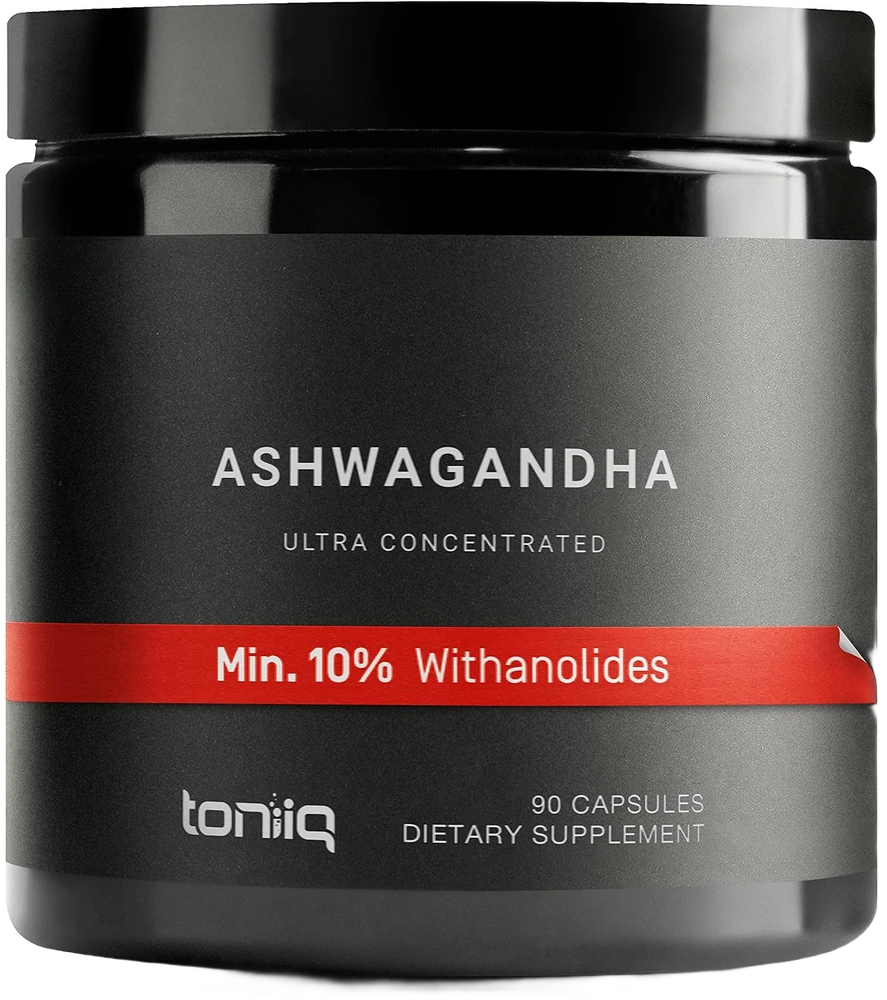
01Toniiq Ultra High Strength
If you want the highest verified active withanolide load per capsule on the consumer market, this is it.
 03
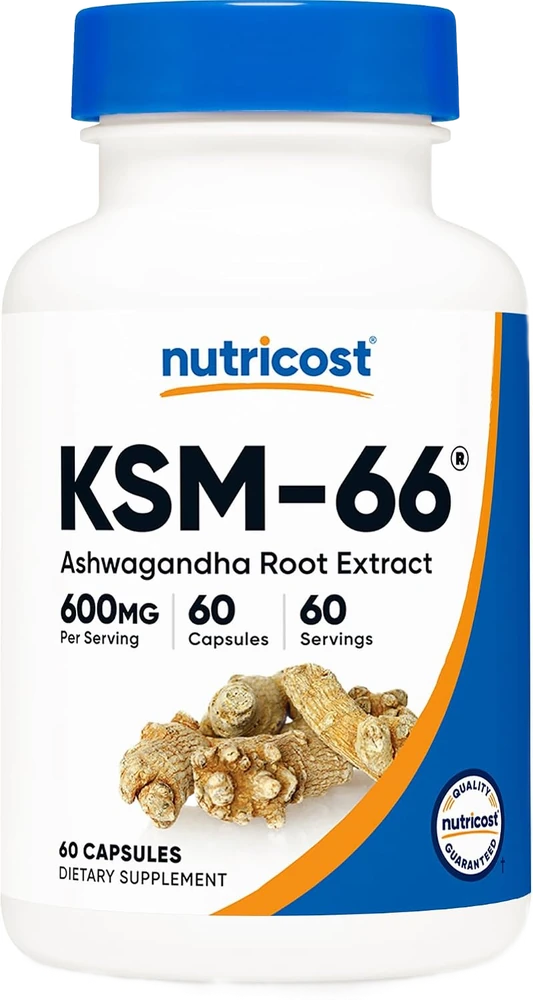
03Nutricost KSM-66 600 mg
If you want to test the KSM-66 waters without committing $20+/month, Nutricost is the right starting point.
 06
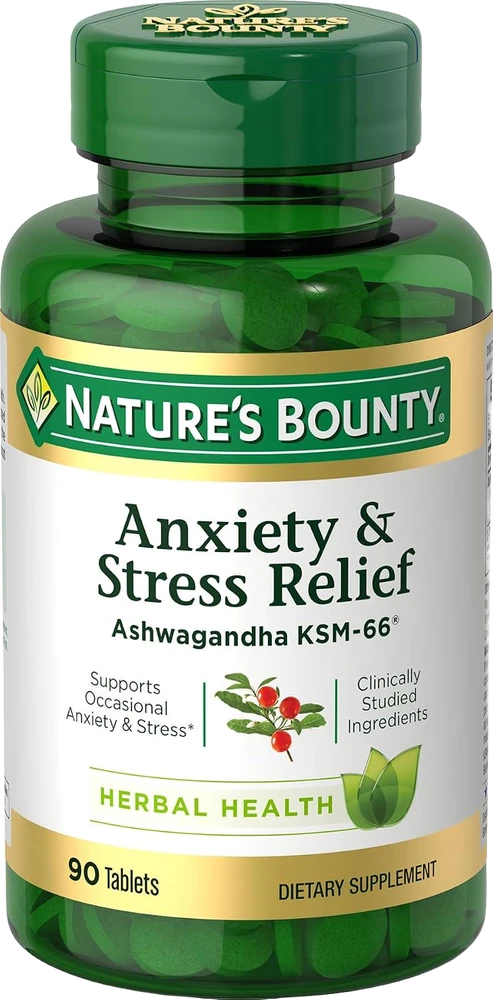
06Nature's Bounty Stress Relief KSM-66
A genuine form upgrade.
Quick Answers
Whole-root vs standardised extract — what's actually the difference?
Standardisation is a manufacturing step that concentrates withanolides (the bioactive marker compound family) to a guaranteed minimum percentage. KSM-66 contracts for 5% withanolides, Sensoril for 10%. Whole-root ashwagandha is exactly what it sounds like — ground dried root, no concentration step, no standardisation guarantee. Himalaya's caplet is actually a powder-plus-extract blend, and — credit where due — the Supplement Facts panel declares the withanolides for each component: 380 mg organic root powder at 0.2% (0.76 mg), 280 mg organic root extract at 0.5% (1.4 mg), and 10 mg supercritical CO2 extract at 8% (0.8 mg) — about 3 mg withanolides per caplet in total. (We originally wrote that no percentage was declared and estimated 7-13 mg; the panel declares it, and lower — corrected 27 Aug 2026.) Patent extracts concentrate actives to a fixed 5-10%; Himalaya's declared ~0.44% effective density preserves the 'full plant matrix' of the Ayurvedic preference at a fraction of the active load.
Does the 'whole root is more traditional' argument hold up?
Yes for cultural authenticity, mixed for clinical effect. Traditional Ayurvedic medicine has used whole-root ashwagandha for ~3000 years — the historical use is real and well-documented. Himalaya's 90-year company history is built on continuity with that tradition (the brand was founded in 1930 specifically to bring Ayurvedic preparations into modern manufacturing standards). But the modern clinical evidence base for testosterone — Wankhede 2015 (KSM-66), Lopresti 2019 (Shoden) — was built on standardised patent extracts at concentrations whole-root preparations don't reach. The argument is therefore: traditional preparations are legitimate as traditional medicine; standardised extracts are what the published RCT evidence is based on. They're different products for different purposes.
Is the USDA Organic certification actually meaningful?
Yes, and it's the genuine differentiator that earns Himalaya its spot on this list. USDA Organic certification for an Indian-sourced botanical means: (1) the farmland is verified pesticide-free for 3+ years, (2) the supply chain is audited from farm to bottle, (3) no synthetic pesticides, herbicides, or fertilisers are used in production. For ashwagandha specifically this matters because Indian agricultural regions where the plant is grown commercially have historical issues with heavy metal contamination (lead, cadmium) from industrial runoff and pesticide use. USDA Organic doesn't directly address heavy metals (that's a separate test), but the audit process improves the odds. Himalaya's also Non-GMO Project Verified, which adds another verification layer.
Why is Himalaya's declared withanolide density so low if the extracts are standardised?
Himalaya does standardise — just not the whole caplet. The 280 mg organic root extract carries a declared 0.5% withanolide guarantee and the 10 mg supercritical CO2 extract carries a declared 8% guarantee; both are real standardisation commitments printed on the Supplement Facts panel. What keeps the overall number low is the blend ratio: the largest component by weight, 380 mg of organic root powder, is unstandardised at only 0.2% withanolides. Add the three declared figures (0.76 mg + 1.4 mg + 0.8 mg) across the 670 mg caplet and the effective density works out to ~0.44% — honest, but a tenth of KSM-66's 5%. (We originally wrote that Himalaya doesn't standardise at all; the panel shows two of the three components carry a declared percentage — corrected 27 Aug 2026.) This is a formulation choice consistent with the Ayurvedic 'whole-plant matrix' philosophy — withanolides aren't the only compound Himalaya is optimising for — not a refusal to standardise.
How does the heavy-metals testing look for Himalaya?
Weaker than we originally described, and we can't verify a heavy-metals-specific claim from what Himalaya actually shows. Neither the label nor the product photo gallery references USP or Indian Pharmacopoeia limits, or heavy metals by name; the gallery's own wording is that the product is 'stringently tested for identity, microbial presence, strength & efficacy' in a GMP-certified facility. (We originally wrote that Himalaya publishes rejecting lots above named USP/Pharmacopoeia limits for lead, cadmium, mercury and arsenic — that specific claim isn't shown on the label or gallery and has been softened — corrected 3 Sep 2026.) Combined with the USDA Organic supply-chain audit — which improves pesticide-exposure odds but is not a heavy-metals test — Himalaya's verifiable QC story is real but general-purpose, not the lot-lookup transparency Double Wood / Toniiq offer with public per-batch COAs.
When does Himalaya beat KSM-66 brands on the buying decision?
Three specific cases: (1) USDA Organic is the deciding criterion for you — KSM-66 brands don't publish organic certification because the patent license + standardisation step is the bigger story for them. (2) You're philosophically aligned with whole-plant/traditional preparations and don't view standardisation as essential. (3) You're stacking ashwagandha with other Ayurvedic herbs (Brahmi, Ashoka, Triphala) and brand-consistency in the Ayurvedic supply chain matters to you. For the primary testosterone endpoint with a Western evidence-base lens, KSM-66 still wins. For traditional/integrative approaches, Himalaya is a different but legitimate philosophy.
How many caps per day should I take?
The box says 1 caplet per day (the Supplement Facts serving size is one 670 mg caplet, and the panel calls the 60-count bottle a 2-month supply). At the declared withanolide contents that's about 3 mg of withanolides a day — roughly a tenth of the ~30 mg active load in the 600 mg KSM-66 testosterone trials. Even doubling to 2 caplets (as we originally described) only reaches ~6 mg. The honest conclusion: dose Himalaya for the traditional, organic, whole-plant routine it is — not to chase the standardised-extract trial numbers, which its declared active load doesn't approach at any label-sanctioned dose.
Sources & Further Reading
6 sources — studies link to PubMed, product specs to the manufacturer
- [1] Wankhede 2015 PMID 26609282 — Examining the effect of Withania somnifera supplementation on muscle strength and recovery: a randomized controlled trial. 600 mg/day KSM-66 (= 30 mg withanolides) for 8 weeks in resistance-trained men raised testosterone +96 ng/dL vs +18 placebo. Cited as the testosterone-trial active load Himalaya's caplet does not approach: the panel declares ~3 mg withanolides per caplet at a 1-caplet/day serving — about a tenth of the trial's ~30 mg.
- [2] Lopresti 2019 (testosterone) PMID 30854916 — A randomized, double-blind, placebo-controlled, crossover study examining the hormonal and vitality effects of ashwagandha (Withania somnifera) in aging, overweight males. 57 overweight men aged 40-70 took Shoden (21 mg withanolide glycosides a day) or placebo for 8 weeks each in a crossover trial. Testosterone rose 14.7% and DHEA-S 18% more than on placebo; cortisol, fatigue and sexual well-being did not differ.
- [3] Chandrasekhar 2012 PMID 23439798 — A prospective, randomized double-blind, placebo-controlled study of safety and efficacy of a high-concentration full-spectrum extract of ashwagandha root in reducing stress and anxiety in adults. 600 mg/day KSM-66 for 60 days in chronically stressed adults reduced perceived stress -44% and morning cortisol -27.9%. The patent-extract benchmark — Himalaya's whole-root preparation has no parallel published RCT at this concentration.
- [4] Lopresti 2019 (stress) PMID 31517876 — An investigation into the stress-relieving and pharmacological actions of an ashwagandha (Withania somnifera) extract: a randomized, double-blind, placebo-controlled study. 60 stressed adults took 240 mg of Shoden or placebo once daily for 60 days. Anxiety scores (HAM-A) fell more than on placebo, as did morning cortisol and DHEA-S. Sleep was not an outcome.
- [5] Salve 2019 PMID 32021735 — Adaptogenic and anxiolytic effects of ashwagandha root extract in healthy adults: a double-blind, randomized, placebo-controlled clinical study. 60 stressed adults took 250 or 600 mg a day of ashwagandha root extract, or a placebo, for 8 weeks. Perceived stress and serum cortisol fell at both doses. Sleep quality improved compared with placebo. Whole-root preparations like Himalaya's have not been tested this way.
- [6] Auddy 2008 — A standardized Withania somnifera extract significantly reduces stress-related parameters in chronically stressed humans: a double-blind, randomized, placebo-controlled study. 125-250 mg/day Sensoril (10% withanolides) reduced cortisol -24.2%. Demonstrates how standardised-extract concentration enables predictable dose-response; whole-root preparations can't match this precision because the active percentage varies lot-to-lot.
Affiliate disclosure: every Amazon link uses our Associates tag (superachieverclub-20). We earn a small commission at no cost to you; it funds independent reviews. We never accept payment to change a ranking.