
Havasu Nutrition Saw Palmetto for Men (DHT Blocker) Review
 #6 of 9 · Most Marketing, Least Standardization✓ Label verified · Supplement Facts read Sep 7, 2026
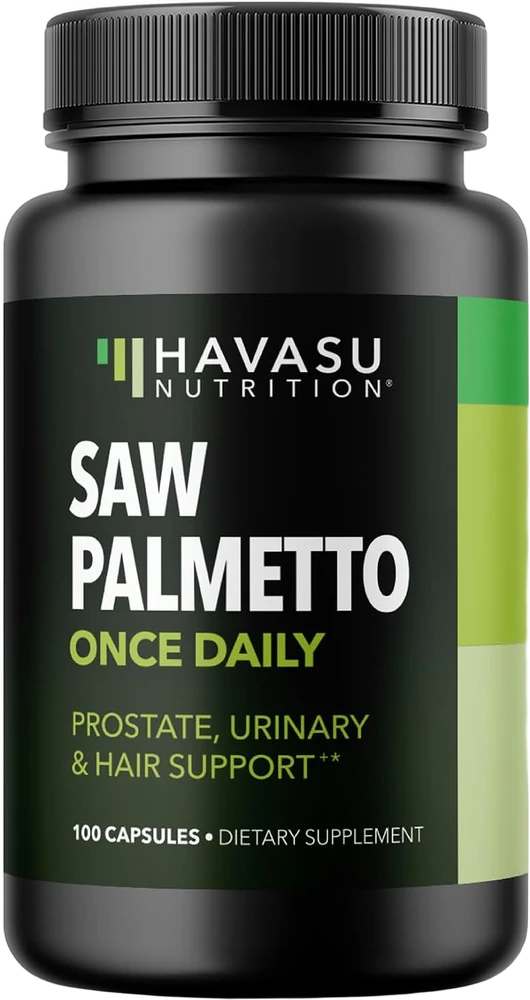
Real retailer photo, cut out. Label unedited.
Skip it. The pitch is loud; the standardization and evidence are not. 500 mg blend of raw saw palmetto fruit and an extract standardized to 45% fatty acids, sold as a DHT-blocking hair vitamin.
approx $14-18approx $0.16/serving
Why It Scores 6.1 — And The Label Line Behind Each Number
Standardization & Form
30% of scoreThe label lists a blend of raw fruit and an extract standardized to 45% fatty acids, but does not disclose how much of the 500 mg is the standardized portion, and 45% sits well below the roughly 85-95% fatty-acid standard used in most clinical liposterolic extracts. Partial disclosure, still the weakest link here.
- Form
- Capsule (whole-berry)
- Standardization
- Blend of raw fruit + extract standardized to 45% Fatty Acids (split not disclosed)
Dose vs Clinical Range
25% of score500 mg per serving of an undisclosed-ratio blend of raw fruit and a 45%-fatty-acid extract cannot be equated to the 320 mg, ~85-95%-fatty-acid liposterolic extract dose used in trials.
- Dose
- 500 mg per serving
Third-Party Testing & Purity
20% of scoreNon-GMO and vegan, but no prominently published independent COA to back the hair/DHT positioning.
- Testing
- Non-GMO, vegan (no published independent COA)
Tolerability & Safety
15% of scoreGenerally well tolerated as a berry capsule; the main risk is disappointment against overstated hair claims, not physical harm.
Value / Cost per Dose
10% of score100 capsules for ~$14-18 is average; you are partly paying for the DHT-blocker branding rather than a superior extract.
- Count
- 100 capsules
- Cost per dose
- ~$0.14-0.18/day
Label verified. Every figure read from the Supplement Facts photo, Sep 7, 2026.
Marketing Claims Vs. Reality
Blocks DHT to stop hair loss
Saw palmetto weakly inhibits 5-alpha-reductase, but human hair-loss evidence is limited to small preliminary studies (Prager 2002; Rossi 2012). It is not an established DHT blocker for hair on par with finasteride.
Provides prostate and urinary support
Saw palmetto is traditionally used for BPH, but the largest rigorous trials (Bent 2006, Barry 2011) found no benefit over placebo, so support claims are contested.
500 mg delivers a clinically meaningful saw palmetto dose
The label lists a 500 mg blend of raw fruit and an extract standardized to only 45% fatty acids (split undisclosed), not the ~85-95% fatty-acid, 320 mg liposterolic extract used in the trials, so the dose is not clinically equivalent.
What Our Test Actually Found
Correction: the label does print a fatty-acid standardization figure
An earlier version of this review called the saw palmetto "unstandardized" with "no fatty-acid specification." The Supplement Facts panel reads: Saw Palmetto Blend 500 mg (Saw Palmetto Fruit + Saw Palmetto Extract 45% Fatty Acids). The label does not disclose how much of the 500 mg is the standardized extract versus raw fruit, and 45% is well below the roughly 85-95% fatty-acid standard used in most clinical liposterolic extracts - but it is not undisclosed. We re-read the label on Sep 7, 2026 and corrected the standardization language and the Standardization & Form score throughout this review.
Marketing is doing the heavy lifting
The DHT-blocker, hair-vitamin framing is the product's main feature. The actual contents - a 500 mg blend of raw fruit and an extract standardized to only 45% fatty acids, with the split undisclosed and no published COA - are less impressive than the label implies. When the claim is louder than the substantiation, that is the tell.
The hair-loss evidence does not support the promise
The few human trials of saw palmetto for androgenetic alopecia (Prager 2002; Rossi 2012) are small and preliminary and show far weaker effects than finasteride. Buying this expecting reliable regrowth is buying the marketing, not the data.
Full analysis: all pros & cons (6), buy if / skip if
- Non-GMO and vegan capsule
- Reasonable 500 mg per-serving amount for a berry product
- Widely available and familiar in the hair-loss niche
- Simple once-daily capsule
- Blend ratio of raw fruit vs. the 45%-fatty-acid extract is not disclosed, despite prominent DHT-blocker marketing
- Hair-growth claims rest on weak preliminary evidence; no published COA
- Non-GMO and vegan capsule
- Reasonable 500 mg per-serving amount for a berry product
- Widely available and familiar in the hair-loss niche
- Blend ratio of raw fruit vs. the 45%-fatty-acid extract is not disclosed, despite prominent DHT-blocker marketing
- Hair-growth claims rest on weak preliminary evidence; no published COA
500 mg blend of raw saw palmetto fruit and an extract standardized to 45% fatty acids, sold as a DHT-blocking hair vitamin. Skip it unless you specifically want the marketing framing - the label doesn't disclose how much of the 500 mg is the standardized extract, 45% is well below the clinical-extract standard, there's no published COA, and the hair-growth claims rest on weak preliminary data. A standardized 320 mg extract is a better use of the same money.
Havasu leans into the hair-loss niche: the label sells a DHT blocker for men, hair and prostate support, the whole pitch. Under the marketing is a 500 mg Saw Palmetto Blend of raw fruit and an extract standardized to 45% fatty acids per serving - the label does not say how much of the 500 mg is the standardized extract, and 45% is well below the roughly 85-95% fatty-acid standard used in most trial extracts, plus there is no published COA - and hair-growth claims that ride on a handful of small, preliminary studies. Saw palmetto does act on the 5-alpha-reductase/DHT pathway, but far more weakly than finasteride, and the human hair evidence is thin. This is the clearest example on the list of claims outrunning substantiation.
Skip the pitch, keep your money

Havasu is the product where marketing most outruns substance. It is sold as a DHT-blocking hair vitamin, but inside is a 500 mg blend of raw fruit and an extract standardized to only 45% fatty acids - the label doesn't say how much of each - with no published testing and hair claims built on a few small, preliminary studies. Saw palmetto's DHT effect is real but weak, and there is no reason to pay for the branding. If you want to trial saw palmetto honestly, a standardized 320 mg extract is the better buy.
If This Doesn’t Fit — Try These
 01
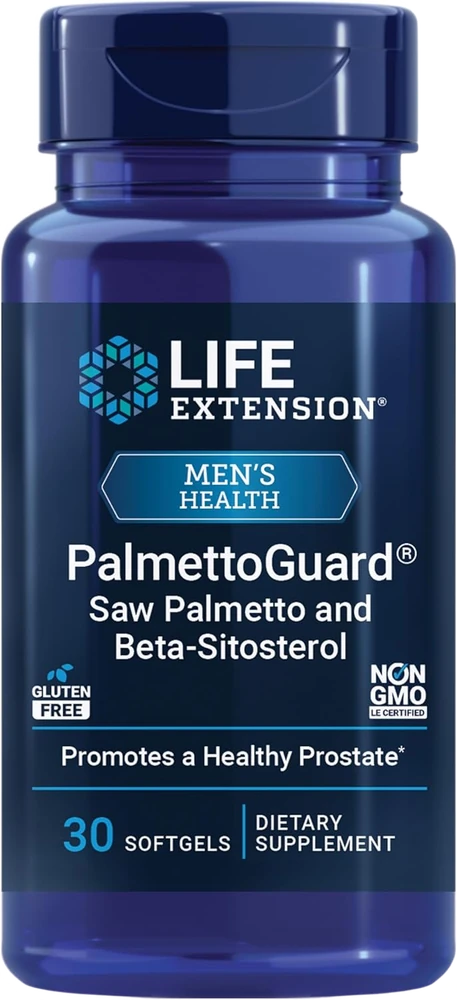
01Life Extension PalmettoGuard
If you want the extract that most closely resembles what researchers actually studied, this is it: CO2-extracted liposterolic saw palmetto at the full clinical dose with a phytosterol that reinforces the DHT-blocking rationale.
 02
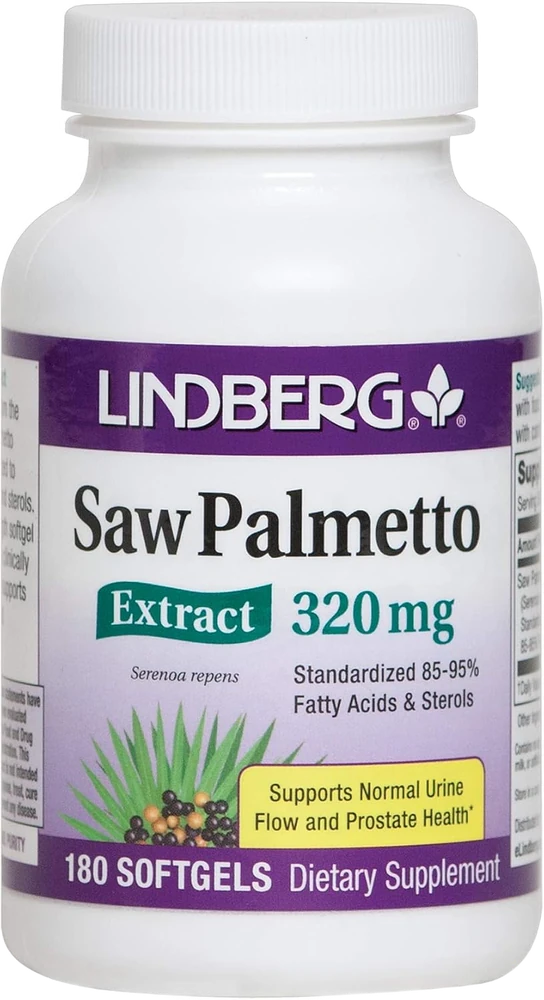
02Lindberg 320 mg
This is the value champion of the list: it matches the trials on both standardization and dose, then undercuts almost everything on price with a six-month bottle.
Quick Answers
Is saw palmetto a real DHT blocker for hair?
It weakly inhibits 5-alpha-reductase, the enzyme that makes DHT, but the effect is much smaller than finasteride and human hair evidence is limited and preliminary. Do not expect reliable regrowth.
Why does this rank below cheaper, plainer products?
Because it charges partly for DHT-blocker marketing while providing an undisclosed split of raw berry and a 45%-fatty-acid extract, well below the standard used in trials, and no published testing. Standardization and evidence matter more than the label's promises.
Sources & Further Reading
2 peer-reviewed sources, each linked to PubMed
- [1] Prager N, Bickett K, French N, Marcovici G. A randomized, double-blind, placebo-controlled trial to determine the effectiveness of botanically derived inhibitors of 5-alpha-reductase in the treatment of androgenetic alopecia. J Altern Complement Med. 2002;8(2):143-152. PMID 12006122 — A randomized, double-blind, placebo-controlled trial to determine the effectiveness of botanically derived inhibitors of 5-alpha-reductase in the treatment of androgenetic alopecia. A small pilot trial reported modest hair improvement with a saw palmetto-based formula, but the sample was tiny and preliminary - not proof of reliable regrowth.
- [2] Rossi A, Mari E, Scarno M, et al. Comparative effectiveness of finasteride vs Serenoa repens in male androgenetic alopecia. Int J Immunopathol Pharmacol. 2012;25(4):1167-1173. PMID 23298508 — Comparative effectiveness of finasteride vs Serenoa repens in male androgenetic alopecia. Saw palmetto produced far smaller hair improvements than finasteride, confirming its DHT effect is weak relative to the pharmaceutical standard.
Affiliate disclosure: every Amazon link uses our Associates tag (superachieverclub-20). We earn a small commission at no cost to you; it funds independent reviews. We never accept payment to change a ranking.