
Goli Zero Sugar Ashwagandha Gummies Review
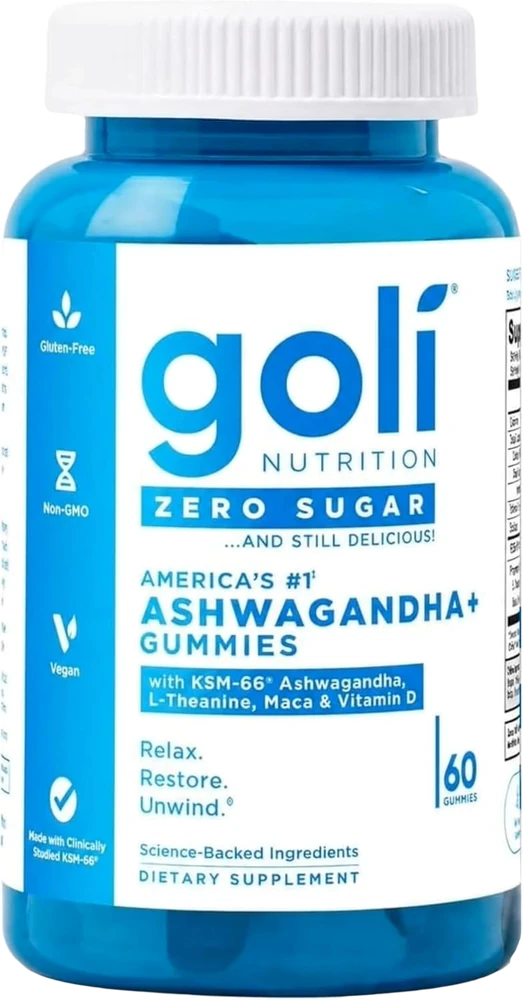 #3 of 7 · Best low-sugar✓ Label verified · Supplement Facts read Aug 27, 2026
Real retailer photo, cut out. Label unedited.
Buy it. The zero-sugar gummy that keeps real KSM-66 — the pick when sugar is a dealbreaker. Same 300 mg KSM-66 as the mainstream gummies (the extract the trials used), but sweetened with allulose + stevia instead of cane sugar — so 0 g sugar and, crucially, NO sugar alcohols, so it's gentler on the gut than New Nordic's maltitol/erythritol.
$22 / 60 gummies (30 servings)$0.73 / 2-gummy serving (300 mg KSM-66)
Why It Scores 8.0 — And The Label Line Behind Each Number
Extract form & standardisation
30% of scoreReal, branded KSM-66 — Ixoreal's patented full-spectrum root extract, specified by Ixoreal to standardise to 5% withanolides (that figure isn't printed on this bottle, but it's fixed by the branded ingredient), the exact material behind the cortisol, sleep, and stress RCTs (Chandrasekhar 2012, Langade 2019, Salve 2019). This is the gold-standard extract for an ashwagandha product and the single most important criterion: a named, standardised extract is the biggest predictor that a gummy does anything at all. It loses the top mark only because the format's per-gummy split (150 mg each) makes it easy to under-dose if you chew one instead of two, and because the bundled L-theanine/maca sit in an undisclosed 10 mg blend rather than being fully spec'd. Materially ahead of any unbranded 'root extract' gummy (e.g. New Nordic's 10:1) on this axis.
- Active form
- KSM-66 ashwagandha — Ixoreal patented full-spectrum root extract, specified by Ixoreal to standardise to 5% withanolides (not printed on this bottle)
- Per gummy
- 150 mg KSM-66 — one gummy is half a serving
- Daily dose
- Label directs 2 gummies, twice daily (4 gummies/600 mg total per day); a single 2-gummy serving before bed is a lighter alternative some buyers choose instead
- Trial-dose context
- 300 mg/serving = floor of the 300-600 mg evidence range; the label's own directed 2-serving/day use reaches the top of that range, with zero added-sugar penalty
- Bundled actives
- L-theanine + maca share an undisclosed 10 mg proprietary blend; vitamin D2 is fully disclosed at 25 mcg (125% DV, the D2 form, not D3)
- Diet
- Keto-friendly, vegan, non-GMO, gluten-free
Dose vs clinical range
25% of score300 mg KSM-66 per 2-gummy serving sits at the FLOOR of the 300-600 mg evidence range. It's a legitimate, studied dose — Salve 2019 showed 250 mg already beat placebo on stress — but it's the minimum, not the optimum, identical to every other mainstream gummy at the single-serving level. Worth noting: Goli's own suggested use is 'Take 2 gummies, twice daily' (600 mg/day), which matches the higher-effect arm Chandrasekhar and Langade both used (300 mg ×2/day) — so a buyer following the label as printed is already at the top of the studied range, not the floor. We score the 300 mg per-serving dose here since that's the comparable unit across the list; see Value per serving for what the label's directed 600 mg/day actually costs.
Label cleanliness & testing
20% of scoreMixed, and lower than we previously scored it. The macro side is genuinely the cleanest on the list: 0 g sugar, sweetened with allulose + stevia, critically NO sugar alcohols (sidesteps the maltitol/erythritol GI issues that dock New Nordic), plus keto-friendly, vegan, non-GMO, and gluten-free icons on the bottle. But the bonus-actives side isn't as clean as we previously credited: L-theanine and maca are combined into a single undisclosed 'Blend 10 mg' on the Supplement Facts panel — that IS a proprietary blend, not two separately disclosed ingredients, and it's exactly the kind of split this axis should mark down. Vitamin D2 is the one fully disclosed extra, at 25 mcg (125% DV). We also can't verify GMP manufacturing or third-party testing at this axis: the bottle carries no GMP/NSF/USP seal, and Goli's own listing claims 'third-party tested' with no certifier to check it against; there's no public per-batch COA either. Score reflects a genuinely clean macro profile weighed against an undisclosed secondary-actives blend and unverified certification claims.
- Certifications
- No GMP/NSF/USP seal printed on the bottle; Goli's own listing claims third-party testing, unverified at a certifier; no public per-batch COA lookup
- Manufacturer
- Goli Nutrition
Format & adherence
15% of scoreA gummy is the lowest-friction way to take ashwagandha daily, and daily consistency is the entire mechanism — the cortisol and sleep effects build over 4-8 weeks of consistent dosing, so a gummy you'll actually take beats a capsule you forget. This pick earns top-tier format marks because it adds two things the plain gummies don't: zero sugar (so there's no daily-sugar reason to skip it) and a 10 mg L-theanine + maca blend that leans toward the evening wind-down use case, even though the label doesn't break out how the 10 mg splits between the two. The standard format caveat still applies — one gummy is only 150 mg, so chewing one to ration the bottle quietly halves your dose. Excellent adherence vehicle; just confirm you're taking the full 2-gummy serving.
Value per serving
10% of scoreAt $22 for 60 gummies (30 servings) the cost is $0.73 per 2-gummy serving — the most expensive of the mainstream gummy picks, ahead of Goli's own regular gummy ($0.63), Nature Made ($0.50), and Nature's Bounty ($0.43). That's the per-serving math; at Goli's own directed use of 2 gummies twice daily, the real cost is $1.46/day and the 60-gummy bottle lasts 15 days, not 30 — worth knowing before budgeting for a 60-day bottle. You're paying a real premium for the zero-sugar formulation. Within the format that premium is defensible for the buyer who specifically needs sugar-free-with-real-KSM-66 — there's no cheaper way to get exactly that combination (New Nordic is cheaper but drops the KSM-66 branding). But on raw cost per active ashwagandha mg, especially at directed use, it's the priciest mainstream option, and a KSM-66 capsule is cheaper still. The lowest of the five criteria, by design — value is where the zero-sugar premium shows up.
- Per serving
- 300 mg KSM-66 + a 10 mg L-theanine/maca blend + 25 mcg (125% DV) vitamin D2, per 2-gummy serving
- Bottle size
- 60 gummies — a 30-day supply at one 2-gummy serving/day; Goli's own directed use (2 gummies, twice daily) makes it a 15-day supply
- Price
- $22 / 60 gummies (30 servings) — $0.73 per 2-gummy serving; $1.46/day at the label's directed 2-serving use
- More Specs
- Sugar
- 0 g — sweetened with allulose + stevia, NO sugar alcohols (no maltitol/erythritol)
Label verified. Every figure read from the Supplement Facts photo, Aug 27, 2026.
Marketing Claims Vs. Reality
Zero sugar.
Accurate and verifiable from the Supplement Facts panel: 0 g sugar per serving, achieved with allulose and stevia rather than cane sugar. Unlike many 'sugar-free' gummies it does not use sugar alcohols (maltitol/erythritol), so the zero-sugar claim doesn't come with the usual GI-tolerability asterisk.
Made with KSM-66 ashwagandha.
Real, branded KSM-66 standardised root extract at 300 mg per 2-gummy serving — the patented 5%-withanolide material used in the cortisol, sleep, and stress trials. The dose is the same as the mainstream KSM-66 gummies, not reduced to make room for the added actives.
Supports stress relief and a calm mind.
Defensible at the mechanism level — 300 mg KSM-66 is a studied stress dose (Salve 2019 showed 250 mg beat placebo). 'Calm mind' isn't verbatim label language; the bottle reads 'Relax. Restore. Unwind.' and the box reads 'Reduce Stress.' The L-theanine/maca sit in an undisclosed 10 mg blend rather than being separately dosed, so treat the 'calm stack' framing as directional, not a clinical claim.
Keto-friendly and vegan.
Consistent with the 0 g sugar / allulose-sweetened formulation and the pectin (gelatin-free) gummy base. Both claims are verifiable from the label and orthogonal to the ashwagandha efficacy question — they're macro/diet claims, not dose claims.
L-theanine, maca and vitamin D for a complete calm formula.
'Complete calm formula' isn't printed on the label or listing, so we're softening the language to what's verifiable. The three ingredients are genuinely present: vitamin D2 is fully disclosed at 25 mcg (125% DV), while L-theanine and maca share a single undisclosed 10 mg blend, well below theanine's standalone clinical dose (100-200 mg) or maca's (1.5-3 g powder). Treat them as a light stack on top of the real KSM-66, not a 'complete' formula in their own right.
What Our Test Actually Found
Correction: the L-theanine + maca are an undisclosed 10 mg blend, and the label directs 600 mg/day
An earlier version of this review said the added L-theanine, maca, and vitamin D were 'disclosed, real ingredients rather than a proprietary mystery calm blend,' called vitamin D 'a small top-up,' and described the L-theanine amount as 'on the lower end of' its 100-200 mg clinical range while assuming a 2-gummy/day dose on a 30-day bottle. The Supplement Facts panel reads differently: Vitamin D2 (Ergocalciferol) 25 mcg (125% DV) — a full, fully disclosed daily dose — plus a single 'Blend 10 mg' combining L-theanine and Maca Root Powder with no individual amounts broken out (that IS a proprietary blend). The label's Suggested Use is also 'Take 2 gummies, twice daily' — 600 mg KSM-66/day — making the bottle a 15-day supply at directed use, not 30. We re-read the label on Sep 3, 2026 and revised the text throughout (the calm-stack framing, vitamin D framing, GMP/third-party-testing wording, and the daily-dose and bottle-life math), and lowered the Label cleanliness & testing score from 9.0 to 7.0, moving the overall score from 8.4 to 8.0 (still a narrow buy).
Allulose + stevia is the detail that separates it from the other sugar-free gummy
There are two sugar-free ashwagandha gummies on the list, and the sweetener choice is what splits them. Goli Zero Sugar uses allulose plus stevia; New Nordic (#6) uses maltitol plus erythritol. That's not a trivial distinction. Maltitol and erythritol are sugar alcohols that ferment in the gut and can cause bloating, gas, or a laxative effect at higher amounts — a real daily-tolerability issue for a product you take every day. Allulose is a rare sugar, not a sugar alcohol: it tastes like sugar, is nearly calorie-free, doesn't spike blood glucose, and doesn't carry the same GI baggage for most people. So the 'zero sugar' on this bottle comes without the hidden GI tax that often accompanies sugar-free candy. For a sensitive gut, this is the meaningfully gentler way to get sugar-free ashwagandha.
The dose wasn't cut to make room for the extras — the 300 mg KSM-66 is intact
A reasonable worry with any 'ashwagandha + L-theanine + maca + vitamin D' gummy is that the headline ingredient got diluted to fit everything in. It didn't. The KSM-66 is at the full 300 mg per 2-gummy serving — identical to Goli's standard gummy, Nature Made, and Nature's Bounty — with the L-theanine, maca, and vitamin D added on top rather than substituted in. The honest qualifier is the same one that applies to the whole category: 300 mg is the FLOOR of the 300-600 mg evidence range. It's a legitimate, studied dose (Salve 2019 had 250 mg beating placebo), but it's the minimum, not the optimum. The extras change the positioning toward a calm stack; they don't change the core ashwagandha dose in either direction.
The bundled L-theanine and maca are bonuses in an undisclosed blend, not standalone doses
Be clear-eyed about the extras — and about how they're disclosed. L-theanine and maca aren't separately dosed at all: the label lists them together as a single 'Blend 10 mg,' with no split given. L-theanine's studied dose is 100-200 mg, so even in the best case (all 10 mg being theanine) this is under a tenth of that range — an order of magnitude below the clinical dose, not 'the low end of' it. Maca's own studied dose is 1.5-3 g of powder, so whatever share of the 10 mg it gets is a token amount. Vitamin D is the exception: it's fully disclosed at 25 mcg (125% DV) — a full daily dose, not a token one, though it's the D2 form rather than D3. This IS a proprietary blend for the theanine/maca portion, worth knowing before you credit the 'calm stack' positioning. The reason to buy this gummy is real KSM-66 at zero sugar; the calm stack is a pleasant nudge on top, not a set of clinical doses you'd otherwise pay for separately.
The label already directs the full 600 mg trial dose — read the back of the bottle
This is on the label, and it's easy to miss: Goli's Suggested Use is 'Take 2 gummies, twice daily' — 4 gummies, 600 mg of KSM-66 a day, matching the higher-effect arm Chandrasekhar and Langade both used, not the 300 mg floor. At that directed use, the 60-gummy bottle is a 15-day supply ($1.46/day), not the 30-day supply a single-serving read implies. The mainstream sugared gummies carry ~4 g of sugar per serving, so running their label's two-serving equivalent costs ~8 g of added sugar a day — exactly why we tell high-dose buyers to switch to capsules. Because this one is zero sugar, running the full label-directed 600 mg/day costs nothing extra in sugar. If you'd rather stretch the bottle and take the 300 mg floor dose instead, that's a reasonable deviation from what Goli suggests — but set your budget and dose expectations from the label's actual directions, not from a 30-day assumption.
The price is the real tradeoff — buy it only if you specifically need sugar-free KSM-66
At $0.73 per serving this is the most expensive mainstream gummy on the list — more than Goli's own regular gummy ($0.63), Nature Made ($0.50), and Nature's Bounty ($0.43). The premium buys exactly one thing: a clean 0 g-sugar macro profile that still uses real KSM-66. If that's what you need — keto, diabetic, sugar-counting, or sugar-alcohol-sensitive — it's the best (and effectively only) way to get that precise combination, and the premium is justified. If you don't care about sugar, you're paying extra to remove something that wasn't bothering you, and Goli's regular gummy or Nature's Bounty deliver the identical KSM-66 dose for less. And if you want sugar-free purely to save money, New Nordic is cheaper — it just isn't KSM-66. The 'buy' verdict is real but narrow: it's earned by the sugar-conscious KSM-66 buyer, not by everyone.
Full analysis: all pros & cons (8), buy if / skip if
- Real KSM-66 standardised root extract at the full 300 mg/serving — the exact material the trials used, not cut for the extras
- 0 g sugar via allulose + stevia, with NO sugar alcohols — the cleanest macro profile and gentler on the gut than maltitol/erythritol
- A fully disclosed 125% DV vitamin D2 dose, plus a 10 mg L-theanine + maca blend that leans it toward a calm/wind-down stack
- Keto-, diabetic-, and low-carb-friendly without dropping the studied extract
- Zero sugar means Goli's own label-directed 600 mg (2-serving) dose costs nothing extra in added sugar
- Most expensive per serving of the mainstream picks ($0.73 vs $0.43-0.63) — and Goli's own directed use (2 gummies twice daily) makes it $1.46/day, a 15-day bottle, not 30
- Still a 300 mg FLOOR dose per serving — the bottom of the 300-600 mg evidence range, not the optimum
- L-theanine and maca share an undisclosed 10 mg proprietary blend — not the separately disclosed, standalone doses this review previously implied
- Sugar is a dealbreaker — keto, low-carb, diabetic, or just done with cane sugar in a daily supplement
- You want sugar-free AND the real studied extract — KSM-66, not an unbranded root extract
- You react badly to sugar alcohols — allulose + stevia avoids the maltitol/erythritol GI upset
- You like the calm-stack angle — the 10 mg L-theanine + maca blend leans into wind-down/stress, even though the split isn't disclosed
- You want to run the full 600 mg trial dose — that's what Goli's own label directs, and two servings costs zero extra sugar here
- Sugar isn't a concern — Goli's regular gummy (#1) or Nature's Bounty (#4) give the same KSM-66 for less
- Budget is the priority and you want sugar-free — New Nordic (#6) is cheaper (but unbranded extract)
- You're running a sustained high-dose protocol — a KSM-66 capsule is cheaper and cleaner per mg
Same 300 mg KSM-66 as the mainstream gummies (the extract the trials used), but sweetened with allulose + stevia instead of cane sugar — so 0 g sugar and, crucially, NO sugar alcohols, so it's gentler on the gut than New Nordic's maltitol/erythritol. Bundles a 10 mg L-theanine + maca blend (proprietary split) plus a fully-dosed 125% DV vitamin D2 as extras. The honest catches: it's the priciest mainstream pick per serving ($0.73, $1.46/day at Goli's own directed 2-serving use), and the ashwagandha is still a 300 mg floor dose. Buy it for the cleanest macro profile on the list with real KSM-66; if sugar doesn't matter to you, Goli's regular gummy or Nature's Bounty cost less.
Goli Zero Sugar Ashwagandha Gummies solve the gummy format's defining problem — sugar — without giving up the thing that actually works. Every standard ashwagandha gummy makes you eat about 4 g of cane sugar per serving to get your dose, which is daily and adds up to roughly a pound of sugar over a 60-day bottle. Goli Zero Sugar keeps the same 300 mg of real KSM-66 standardised root extract — the exact material the cortisol and sleep trials used — but sweetens it with allulose and stevia instead. The result is 0 g of sugar with no sugar alcohols, which is the detail that separates it from the other sugar-free option on the list: allulose doesn't ferment in the gut the way maltitol and erythritol do, so it's gentler than New Nordic's sweetener route. On top of the ashwagandha it bundles a 10 mg L-theanine + maca blend (a proprietary blend — the split between the two isn't broken out) plus a fully-dosed 25 mcg (125% DV) vitamin D2, real ingredients but the theanine/maca portion is label dressing rather than a standalone dose. The two honest catches are the ones we name on every gummy: the ashwagandha is still a 300 mg FLOOR dose (the bottom of the 300-600 mg evidence range, legitimate but minimal), and at $0.73 per serving it's the most expensive of the mainstream gummy picks. The 'buy' call is narrow and clear: this is the gummy to reach for the moment sugar is a dealbreaker and you still want the studied KSM-66 extract.
Buy it the moment sugar is a dealbreaker — it's the one gummy that keeps real KSM-66 at 0 g sugar.

Goli Zero Sugar Ashwagandha Gummies earn a clear but narrow 'buy.' They solve the gummy format's defining downside — the ~4 g of daily cane sugar — without sacrificing the only thing that actually matters: the extract. You get real, branded KSM-66 standardised root extract at the full 300 mg per serving (the exact material behind Chandrasekhar 2012, Langade 2019, and Salve 2019), sweetened with allulose and stevia instead of sugar. The result is the cleanest macro profile on the entire gummy list — 0 g sugar — and, unlike the other sugar-free option, it does it without sugar alcohols, so there's no maltitol/erythritol GI tax. A 10 mg L-theanine + maca blend, plus a fully disclosed 125% DV vitamin D2 dose, rides on top for the wind-down use case. The two honest catches are the ones we name on every gummy. First, the ashwagandha is still a 300 mg FLOOR dose — the bottom of the 300-600 mg evidence range. It's a legitimate, studied amount (Salve 2019 had 250 mg beating placebo), but it's the minimum, not the optimum, and it's identical to what the cheaper KSM-66 gummies deliver. Second, the L-theanine and maca sit in an undisclosed 10 mg blend rather than separately dosed amounts — real, but not disclosed doses you could compare to a standalone L-theanine or maca product; vitamin D2 is the one fully disclosed extra, at 125% DV, though it's the D2 form rather than D3 — none of them a substitute for a dedicated L-theanine, maca, or D3 protocol. And the price is the real tradeoff: at $0.73 per serving it's already the most expensive mainstream gummy on the list, and Goli's own directed use (2 gummies, twice daily) makes the real cost $1.46/day — a 15-day bottle, not 30. So the call comes down to one question: does sugar matter to you? If you're keto, diabetic, counting grams, or sensitive to sugar alcohols, this is the right buy — there's effectively no other way to get sugar-free ashwagandha with the real KSM-66 extract, and the zero-sugar base means that following the label's own directed 600 mg two-serving dose costs nothing extra in sugar. If sugar isn't a concern, don't pay the premium to remove it: Goli's regular gummy (#1) or Nature's Bounty (#4) give you the identical KSM-66 dose for less. If you want sugar-free purely to save money, New Nordic (#6) is cheaper — but it drops the KSM-66 branding, and that's the whole reason this one ranks above it. The sugar-conscious KSM-66 buyer should buy this; everyone else has a cheaper match elsewhere on the list. And as always, anyone running a sustained high-dose protocol should compare a KSM-66 capsule, which is cheaper and cleaner per active mg.
If This Doesn’t Fit — Try These
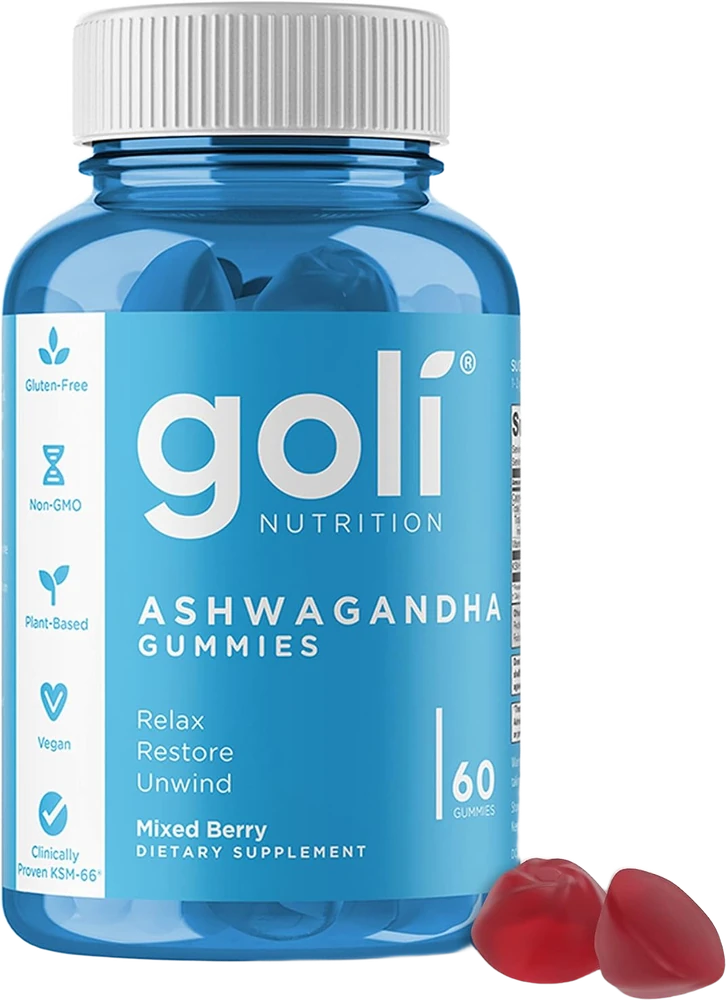 01
01Goli Ashwagandha Gummies
The default pick for the person a gummy is actually built for: someone who has tried capsules and didn't stick with them.
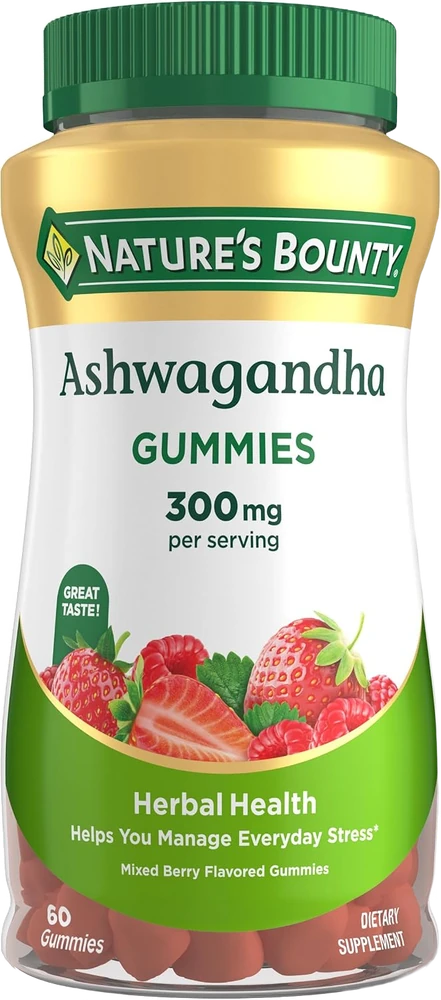 04
04Nature's Bounty Ashwagandha Gummies
When you want a real KSM-66 gummy and the lowest price, this is it.
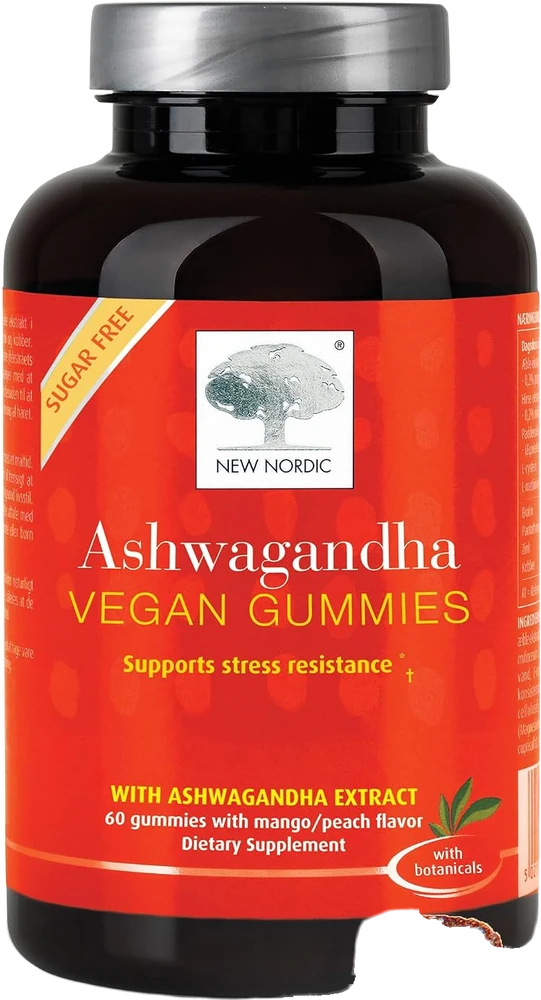 06
06New Nordic Ashwagandha Gummies
A fair budget-minded sugar-free option with one important asterisk: it isn't KSM-66 or Sensoril.
Quick Answers
How is a Goli gummy 'zero sugar' and still sweet — what's the catch?
It's sweetened with allulose plus stevia instead of cane sugar. Allulose is a rare sugar that tastes almost exactly like sugar but is nearly calorie-free and doesn't meaningfully raise blood glucose — and, importantly, it is NOT a sugar alcohol. That's the distinction that matters: most 'sugar-free' gummies (New Nordic, our #6) lean on maltitol or erythritol, the sugar alcohols that ferment in the gut and cause bloating, gas, or a laxative effect at higher amounts. Goli Zero Sugar avoids that whole category. So the catch isn't a hidden GI tax — it's the price. At $22/60 gummies ($0.73 per 2-gummy serving) it's the most expensive of the mainstream gummy picks. You're paying a premium for a clean 0 g macro profile that keeps the real extract.
Is this real KSM-66, or did Goli cut the dose to make room for the other ingredients?
It's real KSM-66 at the same 300 mg per 2-gummy serving as Goli's standard ashwagandha gummy and as Nature Made and Nature's Bounty — the dose isn't cut. KSM-66 is Ixoreal's patented full-spectrum root extract, specified by Ixoreal (not printed on this bottle's label) to be standardised to 5% withanolides, and it's the exact material behind the cortisol (Chandrasekhar 2012), sleep (Langade 2019), and stress (Salve 2019) trials. The L-theanine, maca, and vitamin D are added ON TOP, not in place of the ashwagandha — so the headline 300 mg is intact. The honest framing on the ashwagandha specifically is the same as every mainstream gummy: 300 mg is the FLOOR of the 300-600 mg evidence range, a legitimate studied dose but the minimum, not the optimum.
Do the added L-theanine, maca, and vitamin D actually do anything, or is it just label dressing?
They're real, but the label bundles L-theanine and maca into a single 'Blend 10 mg' — the combined total for both ingredients, with no individual split disclosed. L-theanine's clinical dose is 100-200 mg, so even if all 10 mg were theanine it would be under a tenth of the studied range — treat it as label dressing, not a calm dose. Maca's own studied dose is 1.5-3 g of powder, so whatever share of the 10 mg it gets is a token amount. Vitamin D is the exception: it's fully disclosed at 25 mcg (Vitamin D2/ergocalciferol) — 125% of the Daily Value, a genuine full daily dose, though the D2 form raises blood vitamin D levels less efficiently than D3. The honest read: the calm-stack framing rests on an undisclosed 10 mg blend, not real standalone doses of theanine or maca; the reason to buy this gummy is the real KSM-66 at zero sugar — not the extras.
Goli Zero Sugar vs Goli's regular ashwagandha gummy — which should I buy?
Same brand, same real KSM-66, same 300 mg dose — the only meaningful difference is sugar and price. Goli's standard Ashwagandha & Vitamin D gummy (our #1, ~$19) carries 4 g of cane sugar per serving and is the easiest, best-value everyday pick. Goli Zero Sugar (this one, ~$22) trades that 4 g of sugar for allulose + stevia (0 g sugar) and adds L-theanine + maca, for a few dollars more. If sugar isn't a concern for you, the regular Goli is the better value — don't pay the premium to remove sugar you don't care about. Buy Zero Sugar specifically if you're keto, diabetic, counting every gram, or simply don't want a daily ~1 lb of sugar over a 60-day bottle.
Goli Zero Sugar vs New Nordic — both are sugar-free, so why does Goli rank higher?
Two reasons, and they're the whole story. First, the extract: Goli Zero Sugar uses real, branded KSM-66 (per Ixoreal's own specification, standardised to 5% withanolides — the material the trials used; that percentage isn't printed on this bottle, but it's fixed by the branded ingredient). New Nordic uses an UNBRANDED 10:1 root extract with no stated withanolide percentage, so you can't be sure it matches the studied material. Second, the sweetener: Goli uses allulose + stevia (not sugar alcohols), while New Nordic uses maltitol + erythritol (sugar alcohols that can cause GI upset). New Nordic is cheaper ($17 vs $22), which is its only real edge. If you want sugar-free ashwagandha and you want to know you're getting the studied extract, Goli Zero Sugar is the better buy and worth the few extra dollars. New Nordic is the budget sugar-free fallback when KSM-66 branding genuinely isn't a priority.
Is 300 mg enough, or should I take two servings?
Worth knowing first: Goli's own label directs 'Take 2 gummies, twice daily' — that's 4 gummies (two servings) and 600 mg of KSM-66 a day, matching the higher-effect arm Chandrasekhar and Langade both used, not the 300 mg floor. At that directed use the 60-gummy bottle is a 15-day supply, not 30. A single 2-gummy serving (300 mg) is still a legitimate, studied dose — Salve 2019 showed even 250 mg beat placebo on stress — so if you'd rather start at the floor and stretch the bottle to 30 days, that's a reasonable deviation from the label, not a mistake. Because this gummy is zero sugar, running the full label-directed 600 mg/day costs you nothing in added sugar, unlike the 4 g-sugar gummies where two servings means 8 g of sugar. Even so, at a sustained 600 mg/day a KSM-66 capsule is cheaper per active mg, so heavy high-dose users should still compare formats.
Who is this gummy actually for — and who should skip it?
Buy it if sugar is a dealbreaker but you still want the real extract: keto and low-carb eaters, people managing blood sugar or diabetes, and anyone who simply doesn't want a daily dose of cane sugar from a supplement. It's also a good fit if the 10 mg L-theanine + maca blend's calm-stack positioning appeals to you and you want one gummy that leans into the wind-down/stress angle. Skip it if you don't care about sugar — Goli's regular gummy (#1) or Nature's Bounty (#4) give you the identical KSM-66 dose for less. Skip it if budget is your priority and you want sugar-free — New Nordic (#6) is cheaper, just not KSM-66. And skip gummies altogether if you're running a sustained high-dose protocol where a capsule is cheaper and cleaner per mg.
Sources & Further Reading
5 sources — studies link to PubMed, product specs to the manufacturer
- [1] Chandrasekhar 2012 PMID 23439798 — A prospective, randomized double-blind, placebo-controlled study of safety and efficacy of a high-concentration full-spectrum extract of ashwagandha root in reducing stress and anxiety in adults. The headline KSM-66 trial. 300 mg twice daily (600 mg/day) for 60 days reduced serum cortisol by 27.9% and significantly lowered stress-scale scores vs placebo in chronically stressed adults — establishing the 300-600 mg/day standardised-extract range this gummy's 300 mg dose sits at the floor of.
- [2] Lopresti 2019 PMID 31517876 — An investigation into the stress-relieving and pharmacological actions of an ashwagandha (Withania somnifera) extract: A randomized, double-blind, placebo-controlled study. 60 stressed adults took 240 mg of Shoden or placebo once daily for 60 days. Anxiety scores (HAM-A) fell more than on placebo, as did morning cortisol and DHEA-S. Sleep was not an outcome.
- [3] Salve 2019 PMID 32021735 — Adaptogenic and anxiolytic effects of ashwagandha root extract in healthy adults: A double-blind, randomized, placebo-controlled clinical study. 60 stressed adults took 250 or 600 mg a day of ashwagandha root extract, or a placebo, for 8 weeks. Perceived stress and serum cortisol fell at both doses. Sleep quality improved compared with placebo. Both doses worked, so 250-300 mg a day, where this gummy sits, is a real dose. The abstract does not say whether 600 mg worked better.
- [4] Langade 2019 PMID 31728244 — Efficacy and safety of ashwagandha (Withania somnifera) root extract in insomnia and anxiety: A double-blind, randomized, placebo-controlled study. 300 mg KSM-66 twice daily improved sleep onset latency, sleep quality, and sleep efficiency vs placebo over 10 weeks in adults with insomnia — the basis for taking the evening serving 1-2 hours before bed, and a case where this gummy's zero-sugar base makes the 2-serving 600 mg dose practical.
- [5] Auddy 2008 — A standardized Withania somnifera extract significantly reduces stress-related parameters in chronically stressed humans: A double-blind, randomized, placebo-controlled study. The foundational Sensoril trial: a standardised root-and-leaf extract at 125-500 mg/day reduced cortisol, C-reactive protein, and stress scores dose-dependently — establishing that a NAMED, standardised extract (like this gummy's KSM-66) is the trial-relevant variable, not unbranded root powder.
Affiliate disclosure: every Amazon link uses our Associates tag (superachieverclub-20). We earn a small commission at no cost to you; it funds independent reviews. We never accept payment to change a ranking.