
Garden of Life Vitamin Code Men's Review
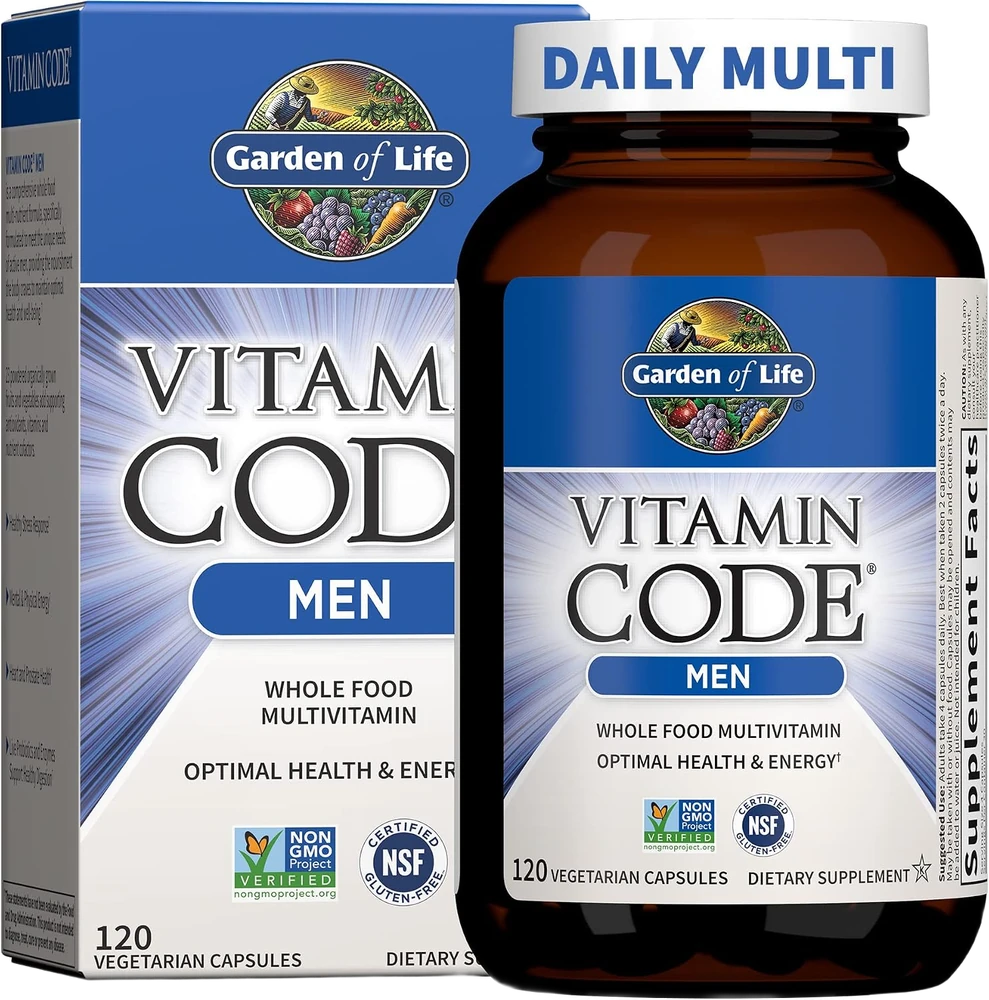 #5 of 10 · Best whole-food✓ Label verified · Supplement Facts read Sep 7, 2026
Real retailer photo, cut out. Label unedited.
Buy it. The whole-food men's pick — iron-free, folate not folic acid, prostate-tuned, certified. A RAW whole-food men's multivitamin with folate (not folic acid), no added iron, and zinc and selenium for prostate and heart — plus food-form vitamins, live probiotics and enzymes — Non-GMO Project Verified, Certified Gluten-Free, and Kosher.
$32 / 120 capsules (30 days)~$1.07 / day (4 capsules)
Why It Scores 8.3 — And The Label Line Behind Each Number
Nutrient forms & bioavailability
30% of scoreStrong for a whole-food formula — folate (not folic acid), a real quality marker (Pietrzik 2010), with food-form vitamins and minerals including prostate-relevant zinc and selenium, and no iron (correct for men). Scored below the methylated clinician-grade picks because 'whole-food folate' is a food-complexed form rather than explicitly labelled L-5-MTHF, and food-state minerals trade some potency for gentleness.
Sensible dosing (no megadose)
25% of scoreExcellent restraint — moderate whole-food potencies, no megadosed fat-solubles, and correctly iron-free so it can't over-supply iron to men who don't need it. The zinc/selenium are at sensible gap-level amounts for prostate support, not heroic doses. Exactly the disciplined gap-insurance profile a men's multivitamin should have.
- Men's actives
- Zinc + selenium (prostate), vitamin E (heart)
Third-party testing
20% of scoreSolid certification stack: Non-GMO Project Verified, Certified Gluten-Free, and Kosher — verifying GMO status, gluten-free integrity, and dietary suitability. Just below the very top because these are category-specific certifications rather than a full USP/NSF nutrient-by-nutrient potency-and-accuracy verification (as Thorne's NSF or Kirkland's USP provide).
- Testing
- Non-GMO Project Verified · Certified Gluten-Free · Kosher
Value per day
15% of score~$1.07/day from a $32, 30-day bottle (120 capsules at four/day). Mid-to-premium cost-per-day, reflecting the whole-food sourcing, certifications, and bundled probiotics/enzymes. Fair for what's included, but the four-cap serving limits the bottle to a month, so it's not a value leader versus the longer-lasting once-dailies.
- Count
- 120 capsules · 30-day supply
- Price
- $32 / 120 capsules = ~$1.07 / day (4 capsules)
Real-world fit (pill burden / audience)
10% of scoreThe weakest axis, and slightly weaker than the women's version: four capsules a day (two plus two) is a real adherence ask, and while the iron-free, prostate-tuned design is correct for men, it's a touch less differentiating than the women's iron-and-reproductive tuning (men's needs are closer to a standard iron-free unisex multi). Good for the committed whole-food man; poor for anyone wanting minimal pills.
- Audience
- Men · iron-free
- More Specs
- Folate form
- Folate (not folic acid), in a whole-food matrix
- Iron
- None — iron-free (appropriate for men)
- Matrix
- RAW whole-food blend + food-form vitamins, live probiotics, enzymes
- Caps per day
- 4 capsules (2 + 2)
Label verified. Every figure read from the Supplement Facts photo, Sep 7, 2026.
Marketing Claims Vs. Reality
Whole-food RAW formula with folate (not folic acid) and no added iron.
Confirmed by the label — folate in a whole-food form rather than synthetic folic acid (a genuine quality marker, Pietrzik 2010), and no added iron, which is the correct choice for men. Both the folate-form and iron-free claims are accurate and match the men's formulation.
Zinc, selenium and vitamin E targeted to men's prostate and heart.
The formula includes zinc, selenium, and vitamin E with men's prostate and cardiovascular health in mind — nutrients with recognized roles there. The inclusion and men's-targeting are accurately stated; the amounts are sensible gap-level (not therapeutic prostate doses), which is appropriate for a multivitamin.
Non-GMO Project Verified, Certified Gluten-Free, and Kosher.
These are genuine third-party certifications carried by the product, verifying GMO status, gluten-free integrity, and dietary suitability respectively. Accurately claimed.
Includes live probiotics and enzymes.
The probiotics and enzymes are genuinely present and cultured into the formula, so the inclusion is accurate. But the probiotic dose in a multivitamin is modest versus a dedicated probiotic, so it's a reasonable digestive bonus rather than a primary gut-health solution. True as an extra, not as a standalone probiotic.
Complete nutrition to support men's health and vitality.
Fair as food-based gap-insurance tuned for men, but 'complete nutrition' and 'vitality' should not be read as disease prevention or longevity; multivitamin RCTs show only a modest cancer signal and no cardiovascular benefit (Gaziano 2012; Sesso 2012), and whole-food potencies are moderate. Honest as targeted men's insurance, overstated if read as a health transformation.
What Our Test Actually Found
Iron-free is the right men's call, and it's done correctly
The most important men's-formulation decision is to leave iron out, because most men don't need supplemental iron and can accumulate too much over time. Vitamin Code Men's gets this right — it's deliberately iron-free, which is one of the genuine reasons to choose a men's formula over a unisex one. Combined with folate-not-folic-acid and zinc/selenium for prostate support, the men-specific essentials are sensibly handled. It's a properly differentiated men's product, not just a relabeled generic.
Prostate and heart tuning is sensible, not therapeutic
The zinc, selenium and vitamin E are included with men's prostate and cardiovascular health in mind, and that's a reasonable reason to prefer a men's formula. Keep it proportionate, though: these are gap-level whole-food amounts meant to ensure men aren't short on prostate- and heart-relevant nutrients, not therapeutic doses that function like a dedicated prostate supplement. As targeted insurance it's well-judged; as a prostate treatment it's not, and shouldn't be read that way.
Whole-food means gentle and moderate, not high-potency
Like the women's version, this is a food-matrix formula at moderate potencies, not a synthetic megadose product. That's a feature for men who want food-based nutrition the body recognizes and who distrust megadosing — there's essentially no risk of overdoing a fat-soluble vitamin. It's a drawback only for someone chasing big label numbers or men's-performance extras, who'd be better served by a higher-potency synthetic like Opti-Men. Know which buyer you are before choosing.
Four capsules a day is the real cost — and it's why it sits at #5 on our core multivitamin list
The four-capsule daily serving is the biggest practical drawback, and it's a slightly bigger deal here than for the women's version: a man's needs are closer to a standard iron-free unisex multi, so the four-capsule whole-food commitment buys somewhat less differentiation than the women's iron-and-reproductive tuning does. If four capsules won't fit your routine, the one-tablet whole-food alternative is MegaFood One Daily, or the iron-free two-capsule Thorne gives you superior forms in fewer pills. Consistency beats philosophy.
Certifications are real but category-specific; probiotics are a bonus
Two proportionality notes. The certifications — Non-GMO Project Verified, Certified Gluten-Free, Kosher — are genuine and valuable if you want those specific assurances, but they verify GMO/gluten/kosher status, not the full nutrient-potency accuracy a USP/NSF product verification provides (Thorne, Kirkland). And the live probiotics and enzymes are a pleasant extra at modest doses, not a substitute for a dedicated probiotic. Buy this for the iron-free whole-food vitamins and minerals with prostate tuning; treat certifications and probiotics as the right kind of bonus.
Full analysis: all pros & cons (8), buy if / skip if
- Whole-food form with folate (not folic acid) and no added iron — appropriate for most men
- Zinc, selenium and vitamin E targeted to men's prostate and heart
- Non-GMO Project Verified, Certified Gluten-Free, Kosher, with live probiotics
- Moderate, sensible potencies with no risk of megadosing fat-soluble vitamins
- Gentle food-based forms that can be split across the day
- Four capsules a day for a full serving
- Lower per-nutrient amounts than synthetic high-potency men's labels
- Iron-free men's tuning is slightly less differentiating than a women's formula's iron/reproductive tuning
- You're a man who prefers food-based / whole-food nutrition over synthetic isolates
- You want an iron-free formula with folate (not folic acid)
- You want zinc and selenium tuned to prostate and cardiovascular support
- You value real certifications — Non-GMO Project Verified, Certified Gluten-Free, Kosher
- Four capsules a day is too many — MegaFood One Daily is a one-tablet whole-food option
- You want top forms in minimal pills — the iron-free Thorne is two capsules, methylated and chelated
- You want high-potency numbers or men's-performance extras — Opti-Men is higher-potency (synthetic forms)
A RAW whole-food men's multivitamin with folate (not folic acid), no added iron, and zinc and selenium for prostate and heart — plus food-form vitamins, live probiotics and enzymes — Non-GMO Project Verified, Certified Gluten-Free, and Kosher. The trade-offs are a four-capsule serving and moderate whole-food potencies. For a man who wants food-based, certified, iron-free nutrition, it's an excellent buy — gap-insurance, not a longevity pill.
Garden of Life Vitamin Code Men's is the male mirror of its women's sibling: the same whole-food philosophy and folate-not-folic-acid formulation, the same strong certifications (Non-GMO Project Verified, Certified Gluten-Free, Kosher) — but correctly built for men, with no added iron and added zinc and selenium aimed at prostate and cardiovascular support. It bundles food-form vitamins with live probiotics and enzymes. The same two honest caveats apply: a four-capsule daily serving and intentionally moderate whole-food potencies rather than synthetic megadoses. And the same frame holds: a multivitamin is gap-insurance, not a longevity drug. For a man who wants food-based, certified, iron-free nutrition and doesn't mind the capsule count, this is the men's whole-food pick. Here's the full breakdown.
The whole-food men's pick — buy it for iron-free food-based nutrition, not for longevity.

Garden of Life Vitamin Code Men's is the multivitamin we recommend to men who want food-based nutrition rather than synthetic isolates. It makes the right men's choices — iron-free, folate (not folic acid), with zinc and selenium for prostate and heart — bundles probiotics and enzymes, and backs it with genuine certifications (Non-GMO Project Verified, Certified Gluten-Free, Kosher). For the man whose priority is 'whole-food and certified,' it's the best option on the list. It lands just below the women's version for one honest reason: a man's needs are close to a standard iron-free unisex multi, so the four-capsule whole-food commitment buys slightly less differentiation than the women's iron-and-reproductive tuning. The same caveats apply — four capsules a day (the one-tablet alternative is MegaFood One Daily) and moderate whole-food potencies (a higher-potency synthetic is Opti-Men, or superior forms in two pills is the iron-free Thorne). And the frame holds: this is food-based gap-insurance for men — not a longevity or heart drug (Gaziano 2012; Sesso 2012). For the right man who values food-based nutrition and doesn't mind the capsule count, it's an excellent buy.
If This Doesn’t Fit — Try These
 10
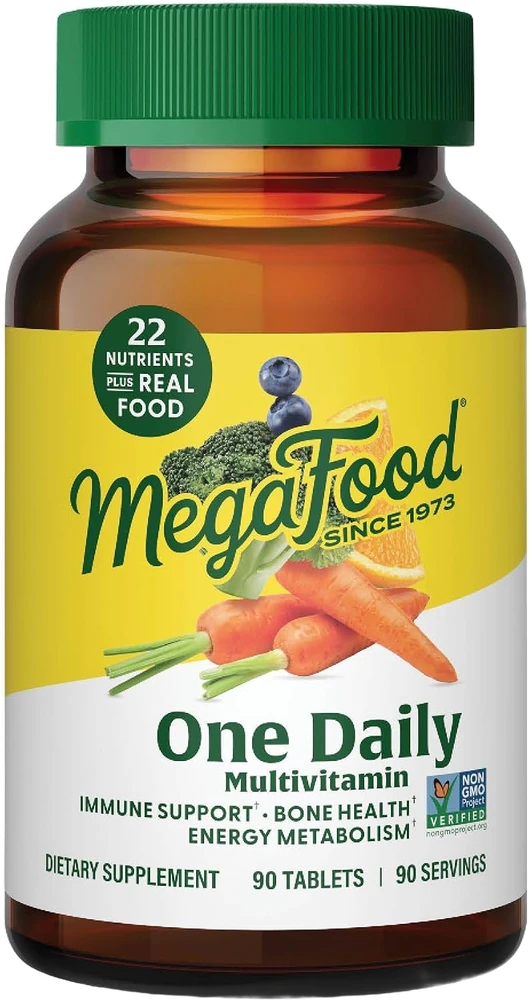
MegaFood One Daily
MegaFood One Daily solves the whole-food category's biggest annoyance — pill count — by delivering a food-based formula in a single tablet you can take on an empty stomach.
 01
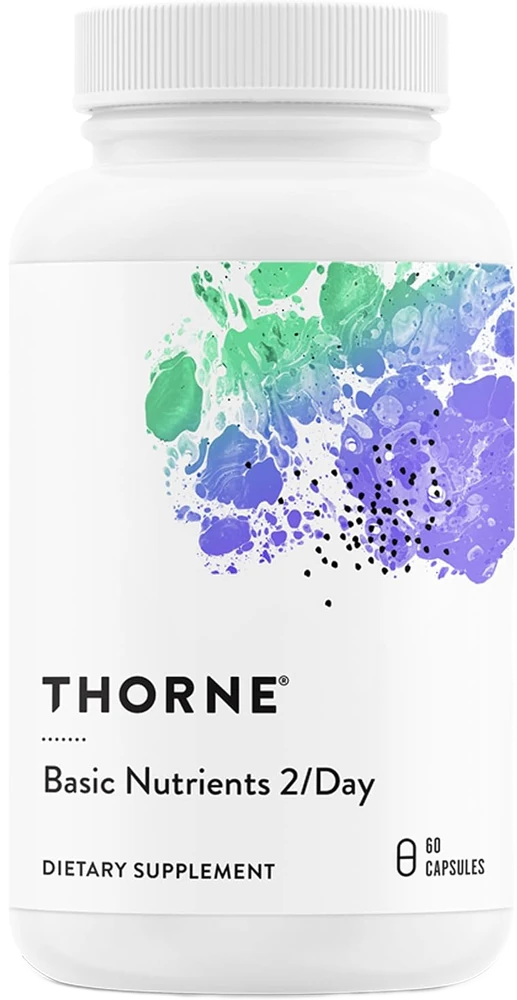
Thorne Basic Nutrients 2/Day
If you want the multivitamin done right and don't want to study the category, this is it.
 06
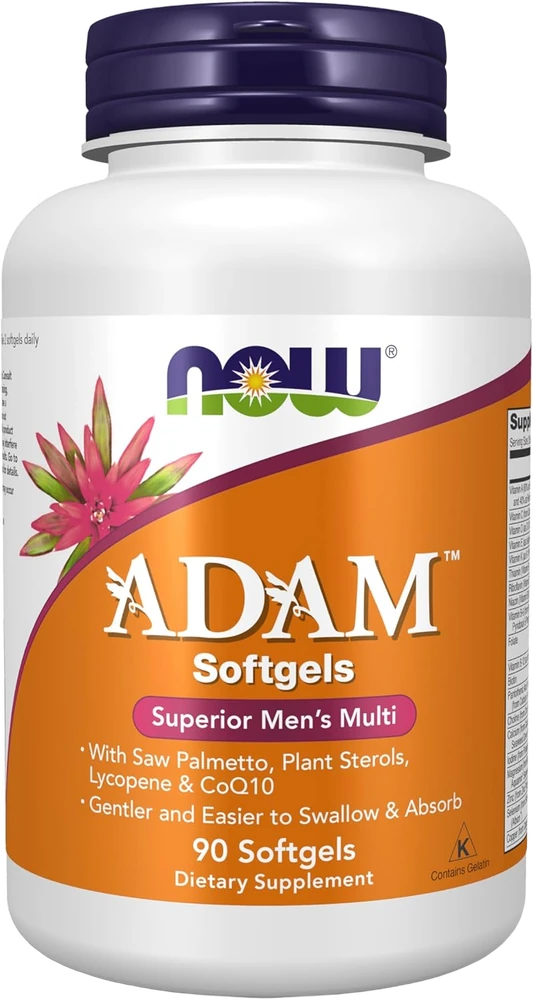
NOW ADAM Men's Multi
NOW ADAM is the value men's pick: a comprehensive iron-free softgel with zinc picolinate, Albion-chelated trace minerals and methylcobalamin B12, plus men's-health botanicals (saw palmetto, lycopene, plant sterols, CoQ10) at roughly $0.49/day.
Quick Answers
Why is there no iron in the men's version?
Because most men don't need supplemental iron and can slowly accumulate too much from iron-containing products. Unlike menstruating women, men don't lose iron monthly, so a well-designed men's multivitamin is deliberately iron-free — and Vitamin Code Men's is. That's the correct formulation choice for the vast majority of men, and it's one of the genuine reasons to pick a men's formula over a unisex one. (If you're a man with a diagnosed iron-deficiency for some specific medical reason, that needs targeted treatment under a doctor, not a multivitamin's gap-level amount anyway.)
What do the zinc and selenium add for men specifically?
They're included with men's health in mind — zinc and selenium both play roles in normal prostate function and antioxidant defense, and the formula pairs them with vitamin E for cardiovascular support. Think of it as sensible, gap-level targeting rather than a therapeutic prostate treatment: the amounts are whole-food moderate, designed to ensure men aren't short on nutrients relevant to prostate and heart health, not to treat a condition. It's a reasonable reason to choose a men's formula over a generic unisex one, but don't expect it to function like a dedicated prostate supplement.
Why four capsules a day?
Whole-food formulas need more capsule volume because the nutrients are delivered in a food matrix (cultured with the fruits, vegetables, probiotics and enzymes) rather than as concentrated synthetic isolates, so a full serving is four capsules, taken two plus two. That's the honest cost of the food-based approach. You can split the dose and take it with or without food. If four capsules won't fit your routine, the whole-food one-tablet alternative is MegaFood One Daily, or a synthetic two-capsule clinician-grade men's-appropriate option is the iron-free Thorne. Consistency matters more than philosophy — pick the pill count you'll actually keep up.
Is whole-food really better than a synthetic men's multivitamin?
It's a genuine preference, not a clear-cut win. The real advantages of this whole-food formula are that it uses folate (not folic acid), delivers nutrients in a food matrix some people prefer and tolerate well, and bundles probiotics and enzymes. The trade-offs are a four-capsule serving and moderate potencies versus synthetic high-dose labels. A well-formulated synthetic like the iron-free Thorne can match or beat it on form quality (methylated folate, chelated minerals) in fewer pills. So choose Vitamin Code Men's if you specifically want food-based nutrition with certifications; choose synthetic if you want top forms in minimal pills. Both are legitimately good.
Will a whole-food multivitamin make me healthier or help me live longer?
Be realistic about what any multivitamin can do. 'Whole-food' is a formulation style, not a different health outcome — the largest trials show only a modest cancer-incidence signal and no cardiovascular benefit over more than a decade (Gaziano 2012; Sesso 2012), with an emerging cognition benefit in older adults (Baker 2022). What Vitamin Code Men's genuinely does is fill the dietary gaps men commonly have, in food-based forms, iron-free, with prostate- and heart-relevant nutrients, and trustworthy certifications. That's worthwhile insurance and a sensible men's formulation — not a longevity drug, and not a substitute for diet, exercise, and regular checkups.
Sources & Further Reading
3 peer-reviewed sources, each linked to PubMed
- [1] Pietrzik 2010 PMID 20608755 — Folic acid and L-5-methyltetrahydrofolate: comparison of clinical pharmacokinetics and pharmacodynamics. Active folate is usable without the enzymatic conversion folic acid requires. The basis for crediting Vitamin Code Men's use of folate (not folic acid) as a genuine quality marker.
- [2] Gaziano 2012 (PHS II — cancer) PMID 23162860 — Multivitamins in the prevention of cancer in men: the Physicians' Health Study II randomized controlled trial. 14,641 men, 11.2 years: a modest 8% reduction in total cancer incidence — the largest men's multivitamin trial. Cited to keep the upside honest: a small long-run signal, not a men's-health transformation.
- [3] Sesso 2012 (PHS II — cardiovascular) PMID 23117775 — Multivitamins in the prevention of cardiovascular disease in men: the Physicians' Health Study II randomized controlled trial. Same cohort: NO cardiovascular benefit, despite the heart-relevant nutrients. The null behind the framing — a whole-food men's multivitamin is gap-insurance, not a heart or longevity drug.
Affiliate disclosure: every Amazon link uses our Associates tag (superachieverclub-20). We earn a small commission at no cost to you; it funds independent reviews. We never accept payment to change a ranking.