
Comvita Manuka Honey UMF 5+ (MGO 83+) Review
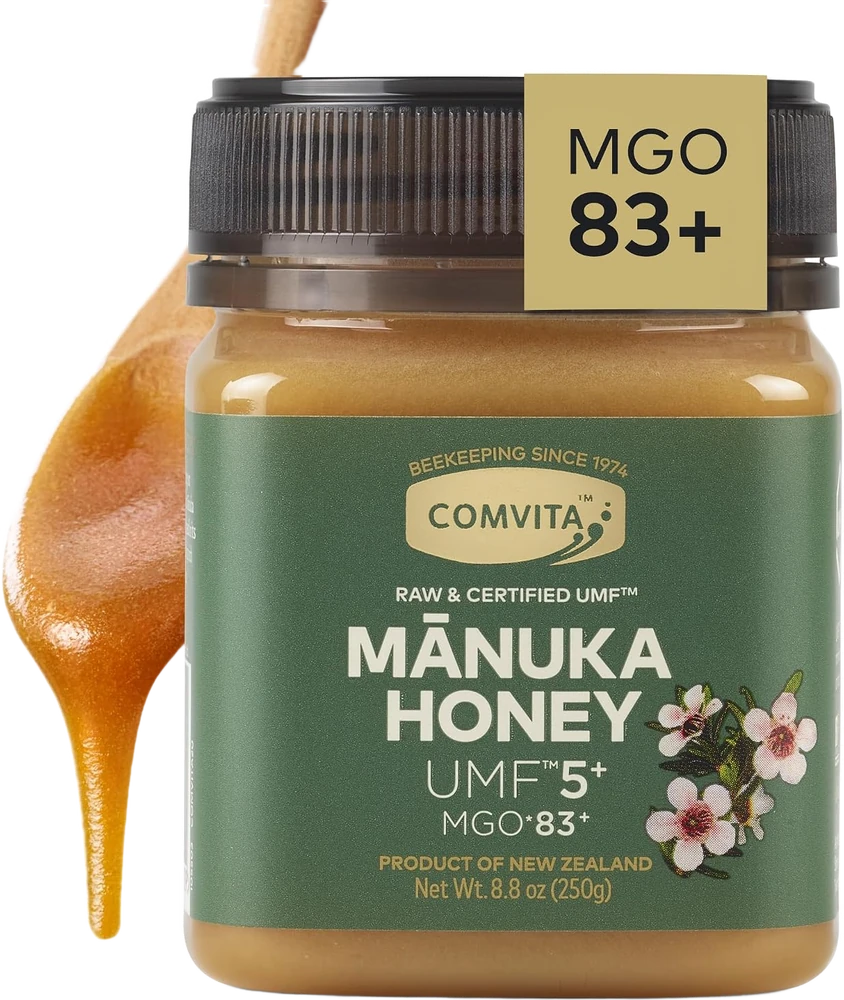 #5 of 7 · Best value entry into certified UMF
Real retailer photo, cut out. Label unedited.
Buy it. The cheapest genuinely UMF-certified jar — the honest, rational entry into real manuka. Same UMF Honey Association certification and 50-year Comvita pedigree as the #1 jar, at the entry UMF 5+ / MGO 83+ grade — the lowest per-ounce price of any certified manuka here (~$2.20-2.60/oz).
$22 / 8.8 oz jar (seen $19-23 at retail)~$2.20-2.60 / oz at certified UMF 5+
Why It Scores 8.7 — And The Label Line Behind Each Number
UMF/MGO grade verification
30% of scoreGenuinely certified UMF 5+ (MGO 83+) by the independent UMF Honey Association, batch-tested for Leptosperin, DHA, and MGO — identical gold-standard verification to the higher Comvita grades. The certification quality is top-tier; the only reason this isn't a perfect-10 axis is that the grade itself is the entry tier, so what's being verified is real but modest potency. Verification: excellent. Potency verified: entry-level.
- Grade
- Certified UMF 5+ (MGO 83+)
Origin & licensing (NZ, traceability)
25% of scoreSame strong provenance as the #1 jar: genuine New Zealand origin from Comvita, the category pioneer with a 50-year pedigree and full traceability (honey imports into NZ are illegal, so it's verifiable). Raw, wild, monofloral, Non-GMO. Among the strongest origin stories in the lineup — the entry grade doesn't dilute the brand's authenticity and supply-chain credibility one bit.
- Origin
- New Zealand · Comvita 50-year pedigree · full traceability
Independent testing & labeling honesty
20% of scoreClean and honest: certified UMF 5+ with its MGO 83+ equivalent, backed by independent UMFHA batch testing — no K-Factor confusion, no MGO number substituting for certification, no implied higher grade. The label transparently states an entry grade as an entry grade. Exactly the honesty manuka demands; the buyer knows precisely what modest potency they're getting and that it's genuinely certified.
- Certification
- UMF Honey Association — every batch (Leptosperin, DHA, MGO)
Value per ounce at grade
15% of score~$2.20-2.60/oz — the lowest per-ounce price of any certified-UMF jar in the lineup, which is genuinely strong value for real UMF certification. The honest asterisk: it's the lowest grade, so you're getting the cheapest certified jar but also the least potency per ounce, and it's still 2-3× the price of high-quality raw honey. Scored well as the value-entry into certification; not a potency bargain.
- Jar
- 250 g (8.8 oz) · ~35 teaspoon servings
- Price
- ~$22 / 8.8 oz jar (seen $19-23) = ~$2.20-2.60/oz at certified UMF 5+
Taste & daily use
10% of scoreThe most food-friendly grade in the lineup. At UMF 5+ the manuka flavour is at its mildest and most approachable — easiest to stir into tea, yogurt, oatmeal, or smoothies without overpowering them, which is exactly the everyday food use it's meant for. Raw, wild, monofloral with Comvita's quality packaging. For low-friction daily food use, among the best here — the entry grade is an advantage on taste accessibility.
- More Specs
- Type
- Raw, wild, monofloral, unpasteurized, Non-GMO
- Best for
- Cheapest genuine UMF certification for everyday food use
- Evidence note
- MGO antibacterial mechanism (Mavric 2008); topical wound care (Jull 2015). Oral immune use = traditional/supportive
Marketing Claims Vs. Reality
Certified UMF 5+ (MGO 83+) by the UMF Honey Association.
Comvita's UMF 5+ carries genuine UMF Honey Association certification with every batch tested for the three markers (Leptosperin, DHA, MGO). UMF 5+ maps to MGO 83+ per these listings. This is the same gold-standard, independent, batch-level verification as the higher Comvita grades — real certification, at the entry potency tier.
Lowest-priced certified UMF jar at ~$2.20-2.60 per ounce.
At ~$22 for a 250 g (8.8 oz) jar (seen $19-23 at retail), the per-ounce cost works out to roughly $2.20-2.60/oz, the lowest of any certified-UMF jar in our verified lineup. The value claim holds specifically for the certified-jar comparison; cheaper manuka exists only without UMF certification (e.g. Wedderspoon's KFactor jar, #7).
Same certification and pedigree as the higher Comvita grades.
Accurate. This jar shares the identical UMF Honey Association batch certification, the 50-year Comvita pedigree, and the NZ traceability of the brand's higher grades — the only differences are the grade (UMF 5+ vs 10+/higher) and the price. The pedigree-and-certification parity claim is genuine.
Supports immune health and wellbeing.
Honest framing required, and especially at this grade. The MGO is real and antibacterial in vitro (Mavric 2008, Adams 2008), and a spoonful is a traditional soothing ritual — but at MGO 83+ this is the entry potency, oral immune benefit is supportive and traditional rather than clinically proven, and the best antibacterial evidence is topical (Jull 2015 Cochrane). Accurate as certified manuka and a soothing ritual; overstated as proven immune support, more so at this entry grade.
Premium manuka honey, healthier than regular honey.
Partly true, honestly qualified. It IS genuine certified manuka with a real (if modest, MGO 83+) antibacterial profile that ordinary honey lacks. But at the entry grade the practical 'health' gap over a high-quality raw honey is small, and you're paying 2-3× the price largely for the manuka identity, certification, and flavour. Accurate that it's premium certified manuka; overstated if 'healthier' implies a large functional advantage over good raw honey at this grade.
What Our Test Actually Found
Same certification as the #1 jar — at the lowest price in the lineup
The core appeal: you get Comvita's identical UMF Honey Association batch certification (Leptosperin, DHA, MGO) and 50-year pedigree as the best-overall #1 jar, but at ~$2.20-2.60/oz — the cheapest certified manuka in our lineup. So if your priority is owning genuine, independently-certified manuka at the lowest possible price, nothing here beats it. You're not compromising on certification quality or brand; you're choosing the entry grade to get the best price on the real thing.
UMF 5+ is the floor of real potency — buy it for the right reason
The honest framing: UMF 5+ (MGO 83+) is the entry tier, the floor of genuine manuka potency. That makes it ideal for everyday food use — daily tea, yogurt, smoothies — where a concentrated 15+ or 20+ would simply be wasted. But it's the wrong pick if you're buying for meaningful antibacterial strength, in which case the certified 10+ (#1) or 15+ (#2, #5) are the right tiers. Match the grade to the goal: 5+ for cheapest-certified everyday food use, higher grades for potency.
At this grade, you're paying for identity and certification, not big potency
The most honest thing we can tell you: at MGO 83+, this jar is largely a taste-and-identity upgrade over a high-quality raw honey, plus genuine UMF certification and a modest real antibacterial profile. You're paying 2-3× the price of a great raw honey, and the practical 'health' gap at the entry grade is small. That's a perfectly rational purchase if you specifically value owning certified manuka and enjoy its distinctive flavour — just go in clear-eyed that the premium here is mostly about authenticity and taste, not concentrated strength.
The mildest, most food-friendly grade — an advantage for daily use
Counterintuitively, the entry grade is a taste advantage. At UMF 5+ the manuka flavour is at its mildest, so it stirs into tea, yogurt, oatmeal, or smoothies without overpowering them — exactly the everyday food use it's designed for. The intense, herbaceous high-grade jars can be polarizing straight off the spoon; this one is approachable. For someone who wants certified manuka as a pleasant daily food rather than a concentrated 'medicine spoonful,' the mild entry grade is genuinely well-suited.
If the small step up to UMF 10+ is affordable, take it
One practical nudge: the Comvita UMF 10+ (#1) costs only about $1.30 more per ounce than this jar but carries roughly 3× the methylglyoxal (MGO 263+ vs 83+). So if the modest price gap is comfortable and you want more genuine potency, the 10+ is the better value-for-potency buy. The UMF 5+ wins on one axis only — the absolute lowest price for certified manuka. If that's your priority, it's exactly right; if you can stretch slightly, the 10+ gives meaningfully more.
Full analysis: all pros & cons (8), buy if / skip if
- Lowest per-ounce price of any certified-UMF jar here (~$2.20-2.60/oz) — the cheapest way into the real thing
- Identical UMF Honey Association batch certification and 50-year Comvita pedigree as the higher grades
- Ideal for daily food use — tea, yogurt, smoothies — where a 15+ or 20+ would be wasted potency
- Mildest, most approachable manuka flavour in the lineup — easy everyday use
- Clean, honest entry-grade labeling — genuinely certified, no K-Factor or implied-grade confusion
- UMF 5+ (MGO 83+) is the entry grade — the wrong pick if you're buying for concentrated antibacterial potency
- Still 2-3× the price of high-quality raw honey for what, at this grade, is largely a taste/identity upgrade
- Oral immune benefit is traditional and supportive (and weakest at this entry grade), not clinically proven
- You want genuine UMF certification at the absolute lowest price (~$2.20-2.60/oz) — the cheapest certified jar here
- You'll use it daily in tea, yogurt, or smoothies where a 15+ or 20+ would be wasted potency
- You value the same Comvita batch certification and 50-year pedigree as the higher grades
- You want to own genuine certified manuka and enjoy its distinctive flavour without overpaying
- You're buying for concentrated antibacterial potency — UMF 5+ (MGO 83+) is the entry grade; step up to 10+ (#1) or 15+ (#2, #5)
- You don't care about the manuka identity — at this grade a great raw honey does the food job for less
- The small price gap to UMF 10+ is affordable — the 10+ gives ~3× the MGO for about $1.30 more per ounce
Same UMF Honey Association certification and 50-year Comvita pedigree as the #1 jar, at the entry UMF 5+ / MGO 83+ grade — the lowest per-ounce price of any certified manuka here (~$2.20-2.60/oz). Ideal for daily food use where a high grade would be wasted. Two honest caveats: UMF 5+ is entry potency (wrong pick for concentrated strength), and at this grade it's largely a taste/identity upgrade over good raw honey. Buy it for genuine certification at the lowest price; step up to 10+ (#1) for meaningful potency.
Comvita UMF 5+ is the honest entry point into genuine UMF, and the right answer for a lot of buyers. You get the exact same UMF Honey Association batch certification (Leptosperin, DHA, MGO) and the same 50-year Comvita pedigree and NZ traceability as the #1 jar, at the lowest per-ounce price of any certified manuka in our lineup (~$2.20-2.60/oz) — perfect for daily tea, yogurt, or smoothie use where a 15+ or 20+ would be wasted. Two honest caveats keep it at the value-entry slot rather than higher, and you should own both. UMF 5+ (MGO 83+) is the floor of real potency, so it's the wrong pick if you're buying for concentrated antibacterial strength. And at this grade you're paying 2-3× the price of a great raw honey largely for the manuka identity, the certification, and the flavour. As always, manuka's antibacterial evidence is topical (Mavric 2008, Adams 2008; Jull 2015 Cochrane), so oral use is a traditional, soothing ritual. If you want certified manuka without overpaying, start here. Here's the full breakdown.
The honest, cheapest way into genuine UMF — buy it for certification and daily use, not potency.

Comvita UMF 5+ is the value-entry into real manuka, and the right answer for a specific, sensible buyer. You get the exact same UMF Honey Association batch certification and 50-year Comvita pedigree as the best-overall #1 jar, at the lowest per-ounce price of any certified manuka in our lineup (~$2.20-2.60/oz). For daily food use — tea, yogurt, smoothies — where a high grade would be wasted, and for someone who wants to own genuine certified manuka without overpaying, it's exactly right, and its mild flavour is an everyday-use advantage. Two honest caveats define it. UMF 5+ (MGO 83+) is the entry potency, so it's the wrong pick if you're buying for concentrated antibacterial strength — step up to the certified 10+ (#1) or a 15+ (#2, #5) for that, and note the 10+ gives ~3× the MGO for only about $1.30 more per ounce. And at this grade you're paying 2-3× the price of a great raw honey largely for the manuka identity, the certification, and the flavour, since the practical 'health' gap over good raw honey is small here. Buy it clear-eyed for what it is: the cheapest genuinely certified manuka, well-suited to daily food use and a soothing ritual — and keep oral immune expectations honest, because manuka's real antibacterial evidence is topical.
If This Doesn’t Fit — Try These
 01
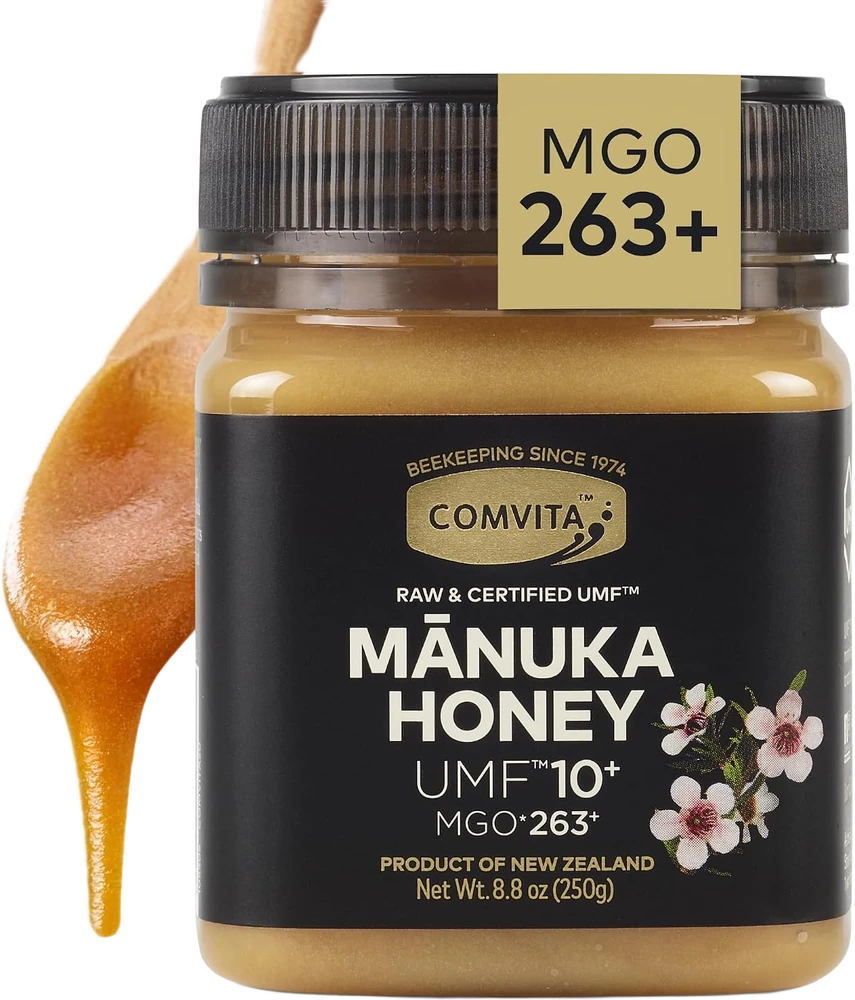
Comvita Manuka Honey UMF 10+
If you want one jar of genuine, independently certified manuka and you don't want to study the category, this is it.
 02
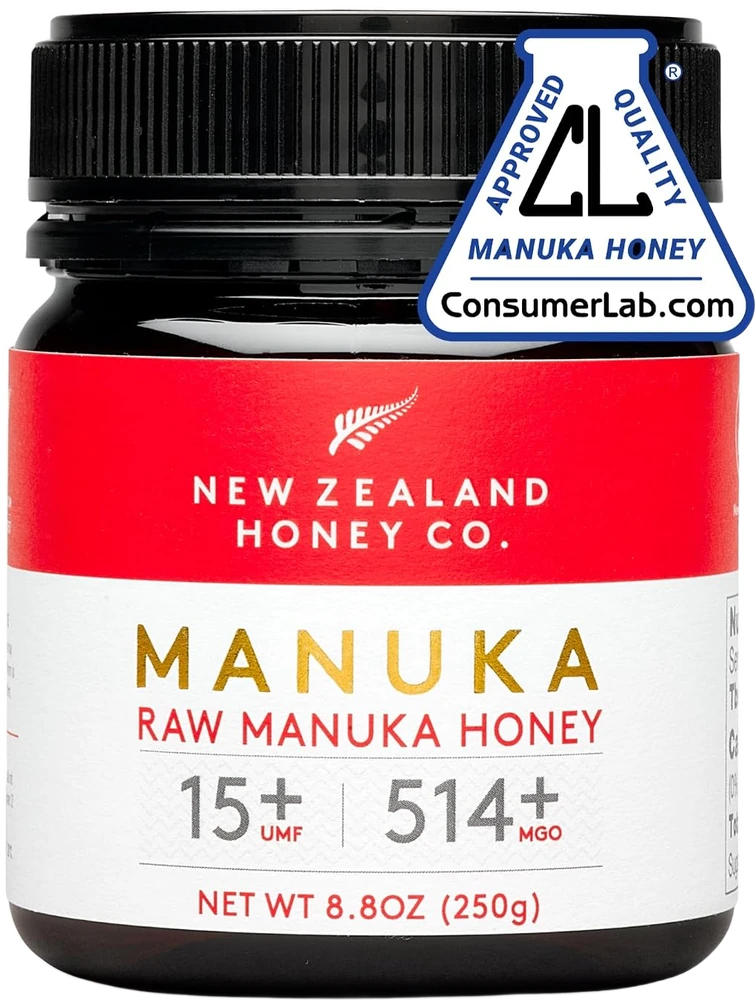
New Zealand Honey Co. UMF 15+
This is the pick when you want real, concentrated potency without overpaying for it.
 06
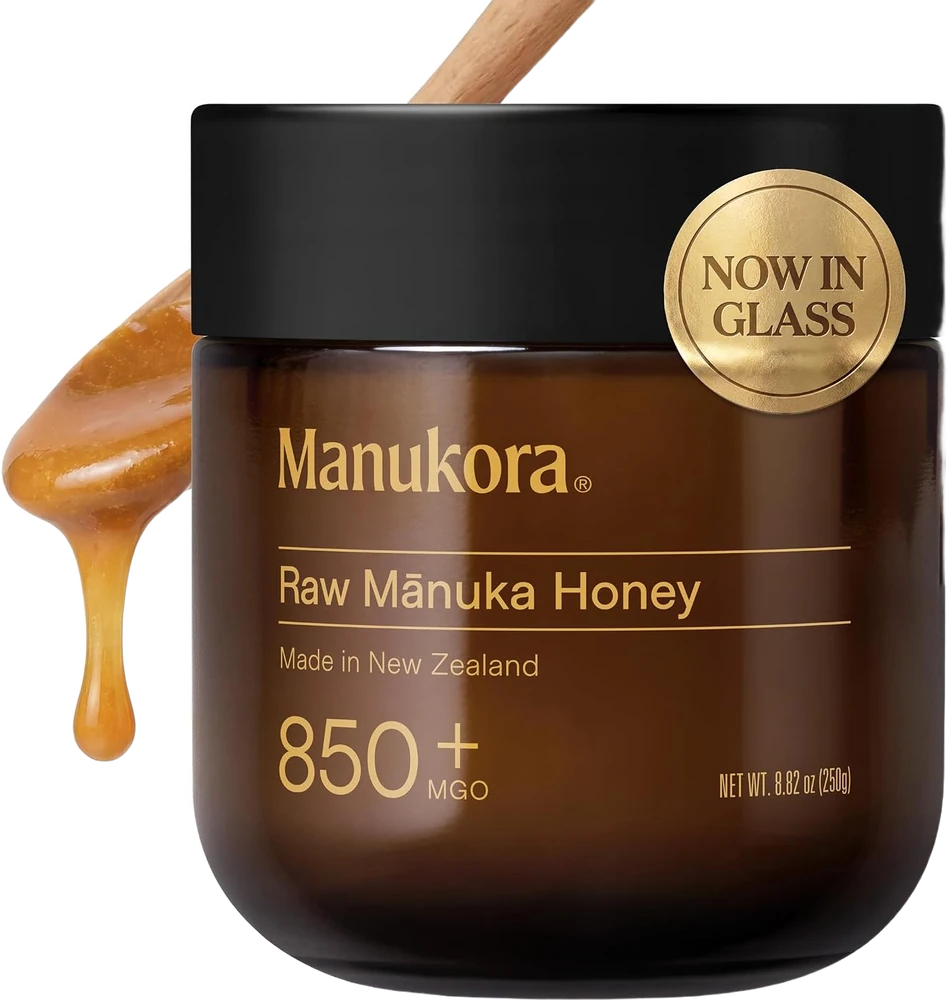
Manukora MGO 850+
When you want the strongest jar on the table and price is not the constraint, this is it.
Quick Answers
Is UMF 5+ worth buying, or too weak to bother?
It depends entirely on what you want. UMF 5+ (MGO 83+) is the entry grade — the floor of genuine, certified manuka potency. As an everyday food honey that happens to carry real UMF certification and a modest antibacterial profile, it's a perfectly rational buy, and it's the cheapest certified jar in our lineup. But be honest about the trade-off: at MGO 83+ you're buying mostly the manuka identity, the certification, and the flavour — not concentrated potency. If your goal is meaningful antibacterial strength, UMF 5+ is the wrong pick and you should step up to a certified 10+ (#1) or 15+ (#2, #5). If your goal is genuine UMF certification at the lowest price for daily use, it's exactly right.
How is this different from the Comvita UMF 10+?
Same brand, same certification, same pedigree — different grade and price. Both are certified by the UMF Honey Association on every batch (Leptosperin, DHA, MGO) with full Comvita traceability. The difference is potency and cost: UMF 5+ is MGO 83+ at ~$2.20-2.60/oz, while UMF 10+ is MGO 263+ at ~$3.75/oz. So the 10+ has roughly 3× the methylglyoxal for about $1.30 more per ounce. The 5+ is the value-entry jar for everyday food use; the 10+ is the sweet-spot daily-wellness grade. If the small price gap is affordable, the 10+ gives meaningfully more potency; if you want the absolute cheapest certified manuka, the 5+ is it.
Is paying for UMF 5+ better than buying regular raw honey?
Only if you specifically value the manuka identity, the certification, or the flavour — because at this grade you're paying 2-3× the price of high-quality raw honey for what is largely a taste-and-identity upgrade. UMF 5+ does carry genuine UMF certification and a modest, real antibacterial profile that ordinary honey lacks, so it's not nothing. But it's the entry potency, so the practical 'health' gap over a great raw honey is small. The honest take: if you want to own genuine, certified manuka and enjoy its distinctive flavour at the lowest price, UMF 5+ is the rational entry. If you just want healthy honey on toast and don't care about the manuka name, a great raw honey does the job for less.
Will eating UMF 5+ help my immune system?
Keep expectations honest, especially at this grade. Manuka's antibacterial activity is real and MGO-driven (Mavric 2008, Adams 2008), but at MGO 83+ this is the entry potency, and manuka's best-evidenced benefit is topical anyway (wound and burn care, Jull 2015 Cochrane). The oral throat-and-immune use is a traditional, soothing ritual — a spoonful in warm water genuinely comforts an irritated throat — but it's not a clinically proven immune treatment, and a low-grade jar is the weakest version of that. Buy UMF 5+ for genuine certified manuka at a value price and for the soothing daily ritual; don't buy it expecting an eaten entry-grade jar to meaningfully boost immunity.
Why does Comvita appear twice in the ranking?
Because no other shortlisted brand had a verifiable single-jar UMF 5+ at the 8.8 oz size on Amazon — Comvita is effectively the reference for genuine entry-grade certified manuka. New Zealand Honey Co.'s Amazon range starts at UMF 10+, and other brands' verified jars were higher grades or different sizes. So Comvita earns both the best-overall daily slot (UMF 10+, #1) and the value-entry slot (UMF 5+, #7) on merit: it's the brand with verifiable certified jars across the grade ladder, from the entry tier to the sweet-spot daily grade. The two jars serve genuinely different buyers — concentrated daily wellness versus cheapest-certified everyday food use.
Sources & Further Reading
3 peer-reviewed sources, each linked to PubMed
- [1] Mavric 2008 PMID 18210383 — Identification and quantification of methylglyoxal as the dominant antibacterial constituent of Manuka (Leptospermum scoparium) honeys from New Zealand. Identified methylglyoxal (MGO) as manuka's dominant antibacterial constituent, with potency scaling on MGO content. The basis for grading — and the reason UMF 5+ (MGO 83+) represents genuine but entry-level certified potency.
- [2] Adams 2008 PMID 18194804 — Isolation by HPLC and characterisation of the bioactive fraction of New Zealand manuka (Leptospermum scoparium) honey. Showed manuka's non-peroxide antibacterial activity arises from MGO formed from the nectar's dihydroxyacetone (DHA) — the markers UMF certification tests, underpinning even this entry UMF 5+ grade's authenticity.
- [3] Jull 2015 (Cochrane) PMID 25742878 — Honey as a topical treatment for wounds. 26 trials (3,011 participants): topical honey may shorten healing of burns and some infected wounds. Cited for honesty — manuka's best-supported use is TOPICAL; at the entry UMF 5+ grade, oral immune claims are especially weak and the jar is best seen as certified everyday food honey.
Affiliate disclosure: every Amazon link uses our Associates tag (superachieverclub-20). We earn a small commission at no cost to you; it funds independent reviews. We never accept payment to change a ranking.