
Canarata TUDCA with Milk Thistle Liver Supplements 1000mg - 120 Capsules Review
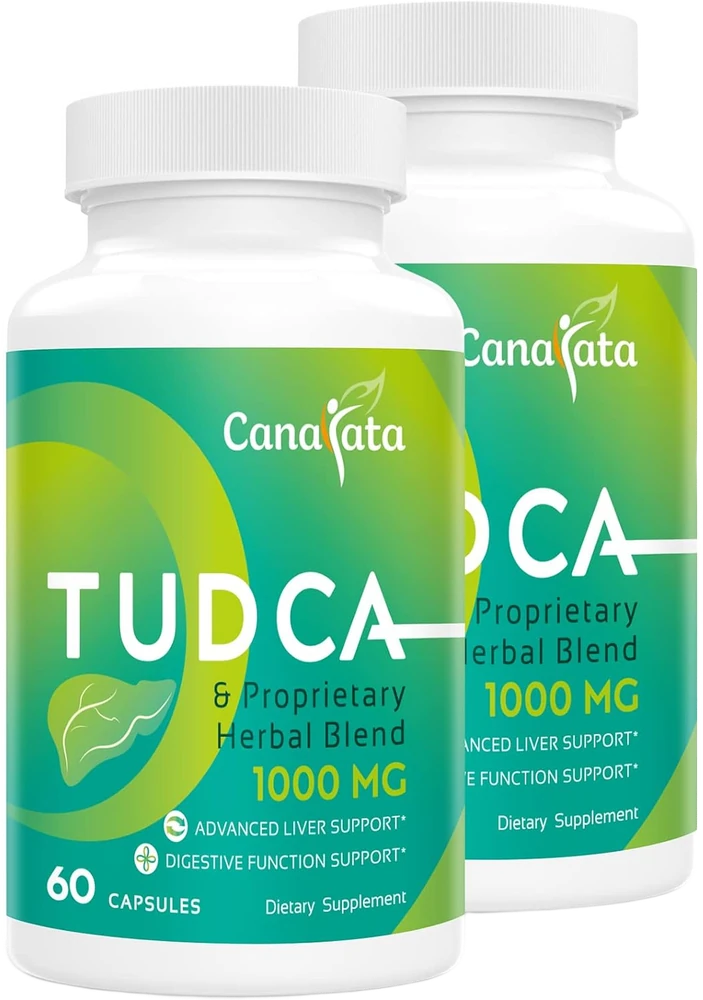 #9 of 9 · Skip: 1000mg Is the Blend, Not the TUDCA✓ Label verified · Supplement Facts read Sep 7, 2026
Real retailer photo, cut out. Label unedited.
Skip it. 900mg of disclosed TUDCA, backed by no third-party testing. The Supplement Facts panel discloses both numbers: TUDCA at 900mg and a six-herb blend at 100mg, split into 20mg, 20mg, 20mg, 20mg, 10mg and 10mg per botanical.
Why It Scores 5.5 — And The Label Line Behind Each Number
Third-Party Testing & Purity
30% of scoreNo third-party testing claim appears anywhere on the listing. What is there is the manufacturer's own marketing language: high potency, scientifically researched, formulated without unnecessary or artificial additives. That is a manufacturer statement, not a certificate or a published test. The dose itself is stated — TUDCA at 900mg — but there is no facility statement and no third-party certificate to test that number against; the weakest tested pick in this roundup still carries both.
- Testing
- No third-party testing claim on the listing
Form & Bioavailability
20% of scoreThe listing states the formula is vegan, and the lineup is liver-directed. TUDCA's amount is fully established at 900mg per serving, and each of the six botanicals is given its own milligram figure too (20mg milk thistle, 20mg beetroot, 20mg chanca piedra, 20mg artichoke, 10mg chicory, 10mg dandelion), so nothing here is a black-box proprietary blend. What is still missing is standardization: no extract ratio and no marker percentage is published for any of the six botanicals, and milk thistle's activity is conventionally expressed as silymarin content, which nothing on this label states. The blend is dosed but unstandardized.
- Form
- Capsule, 7-ingredient liver blend (listing states vegan)
Dose vs Functional Range
20% of scoreThe 250-500mg band this ranking scores against is our own benchmark, drawn from the doses single-ingredient TUDCA products actually sell at; the one controlled human trial in our sources used 1,750mg/day (Kars 2010). This blend states 900mg of TUDCA per two-capsule serving — well above the 250-500mg benchmark and roughly half the trial dose. That is a genuinely strong, disclosed amount; the case against this product is not the TUDCA dose.
- Dose
- TUDCA 900mg + 100mg six-herb blend = 1000mg total per 2-capsule serving (label figures)
Tolerability & Safety
15% of scoreBile acids can trigger GI upset, loose stools or nausea, and that standing caveat for the category applies here as much as anywhere — more so at 900mg, a dose on the higher end of what single-ingredient TUDCA products sell at. The botanicals themselves are common ones, and each carries a stated milligram amount, so if something disagrees with you the label at least tells you what and how much you took. What it cannot tell you is which of the seven ingredients, taken together, is responsible.
Value
15% of scoreNo price is published in our verified data for this listing, so this scores supply structure only, not cost. Two capsules per serving, 60 capsules per bottle, two bottles in the box: 60 servings, about two months, and you open one bottle at a time. The TUDCA amount is known at 900mg per serving; whether that is good value cannot be settled until a price is on the record too.
- Count
- 120 capsules, shipped as 2 bottles of 60
- Servings
- 30 per bottle, 60 total, about 2 months at 1 serving/day
- Price
- Not published in our verified data
- More Specs
- Blend
- TUDCA 900mg; Herbal Blend 100mg (milk thistle 20mg, beetroot 20mg, chanca piedra 20mg, artichoke 20mg, chicory root 10mg, dandelion root 10mg)
Label verified. Every figure read from the Supplement Facts photo, Sep 7, 2026.
Marketing Claims Vs. Reality
TUDCA with Milk Thistle Liver Supplements 1000mg (as titled).
The title pairs 1000mg with TUDCA in a way that reads as if 1000mg were the TUDCA dose. The Supplement Facts panel says otherwise: TUDCA is 900mg, and the other six ingredients make up the remaining 100mg to reach the 1000mg total. The product is what the title says it is, and the panel does disclose the TUDCA share — it just is not the number printed on the front of the bottle.
120 capsules.
Correct: 120 capsules, shipped as two 60-count bottles (size data: 60 Count, Pack of 2). At the stated two-capsule serving that is 30 servings per bottle and 60 in the box.
High potency, scientifically researched, formulated without unnecessary or artificial additives.
All three are the manufacturer's own words on the listing. The label does publish per-ingredient amounts, but there is still no independent test or facility statement to check high potency, scientific research or additive claims against, so none of the three can be verified.
What Our Test Actually Found
Correction: the label states TUDCA at 900mg, not an undisclosed amount
An earlier version of this review said the 1000mg on the label was the blend total and that the TUDCA amount was never disclosed. The Supplement Facts panel reads TUDCA (Tauroursodeoxycholic Acid) 900mg, plus a six-herb blend totaling 100mg (milk thistle, beetroot, chanca piedra and artichoke at 20mg each, chicory root and dandelion root at 10mg each). We re-read the label on Sep 7, 2026 and corrected the dose claims, the Dose vs Functional Range and Form & Bioavailability scores, and every place in this review that called the TUDCA amount undisclosed.
The dose you came for is disclosed, and it is a strong one
Everything on this label is disclosed: TUDCA at 900mg, six named botanicals each at their own milligram figure, a 1000mg total. The 900mg TUDCA dose sits well above the 250-500mg most single-ingredient products sell at, and closer to the 1,750mg/day used in the one human trial in our sources (Kars 2010). The number this category is judged on is not the problem here.
Dosed, but not standardized
TUDCA's 900mg is not the concern; the six botanicals are. Each has a milligram figure — 20mg milk thistle, 20mg beetroot, 20mg chanca piedra, 20mg artichoke, 10mg chicory, 10mg dandelion — but none has an extract ratio or a marker percentage. Milk thistle is the clearest case: its activity is conventionally expressed as silymarin content, and at 20mg of raw weight it is a fraction of the 150-300mg standardized silymarin extracts sold on their own. So even the parts of this blend that are quantified cannot be lined up against a standardized single-ingredient product.
Build the same stack with a standardized milk thistle
TUDCA plus milk thistle is a sensible pairing, and this bottle delivers a real 900mg TUDCA dose alongside it. What it does not deliver is a milk thistle dose that matters: 20mg is a token amount next to the 150-300mg standardized extracts sold on their own. Take this TUDCA dose, or a tested equivalent, add a standardized milk thistle separately, and you have the same combination with a herbal dose you can actually feel.
Full analysis: all pros & cons (7), buy if / skip if
- TUDCA is dosed at 900mg per serving, above the 250-500mg most single-ingredient TUDCA products sell at, and every other ingredient carries its own milligram figure too
- Vegan formula, per the listing
- Two 60-count bottles rather than one 120-count bottle: 60 servings, about two months at one serving a day
- The six-herb blend is dosed at 10-20mg per botanical, well under the amounts standardized single-ingredient extracts use
- No extract ratio or marker percentage for any of the six botanicals — milk thistle's silymarin content, the industry standard, is not stated
- No third-party testing claim appears anywhere on the listing
- The title reads like one 120-count bottle; it is two bottles of 60
- You want a genuinely high, disclosed 900mg TUDCA dose with six named herbs alongside it
- The seven botanicals named on the label are the ones you were going to buy anyway
- Two 60-count bottles cover roughly two months at one serving a day
- You will not buy a bile acid without published third-party testing
- You want a milk thistle dose that does more than sit on the label — this blend delivers 20mg, well under the 150-300mg standardized extracts sold on their own
- You want to titrate TUDCA below the fixed 900mg-per-serving dose
- You need to know which ingredient caused a reaction if one happens
The Supplement Facts panel discloses both numbers: TUDCA at 900mg and a six-herb blend at 100mg, split into 20mg, 20mg, 20mg, 20mg, 10mg and 10mg per botanical. The TUDCA dose is genuinely strong — well above the 250-500mg benchmark and roughly half the 1,750mg/day used in the one human trial in our sources. No third-party testing claim appears anywhere on the listing, though, and the herbs are dosed too low to do much beyond naming rights. If you want a high-dose, disclosed TUDCA with six named herbs along for the ride and you don't need third-party verification, this is a reasonable bottle. If you want that dose tested, or a milk thistle dose that actually does something, buy them as separate, tested single-ingredient products.
Canarata puts 1000mg on the front of the bottle and pairs TUDCA with milk thistle, chanca piedra, beet root, artichoke, chicory root and dandelion root. The Supplement Facts panel breaks that 1000mg down: TUDCA is 900mg, and the other six botanicals share the remaining 100mg at 20mg, 20mg, 20mg, 20mg, 10mg and 10mg each. The TUDCA dose is real and disclosed, above the 250-500mg most single-ingredient TUDCA products sell at. The herbal additions are printed on the panel too — they are just too small, at 10-20mg apiece, to do much beyond appear on the label. No third-party testing claim backs any of it. The 120 capsules arrive as two 60-count bottles, which covers roughly two months.
Skip for the missing testing, not the TUDCA dose

Judge this as a TUDCA supplement and the dose holds up: 900mg per serving, disclosed on the panel, above the 250-500mg most single-ingredient products sell at. Judge it as a tested product, and it fails: no third-party testing claim appears anywhere on the listing, and the six botanicals riding along are dosed at 10-20mg each with no standardization behind them — milk thistle at 20mg is a fraction of what a dedicated extract delivers. If you want a strong, disclosed TUDCA dose and don't need third-party verification, this bottle works. If you want that dose tested, or a milk thistle dose that does something, buy them as separate, tested single-ingredient products.
If This Doesn’t Fit — Try These
 01
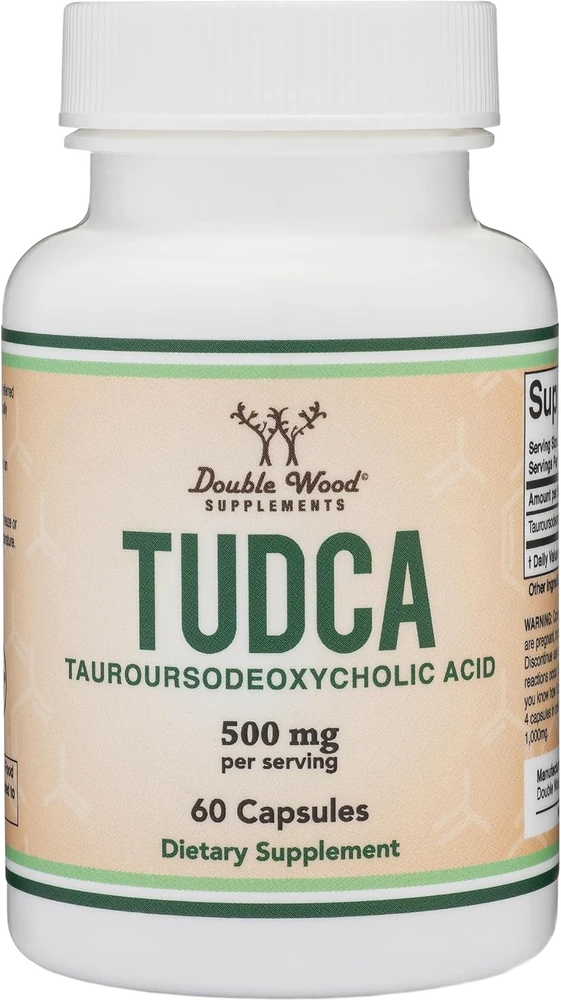
01Double Wood
Double Wood wins because it removes the one thing you cannot verify yourself: whether the powder is real, potent TUDCA.
 03
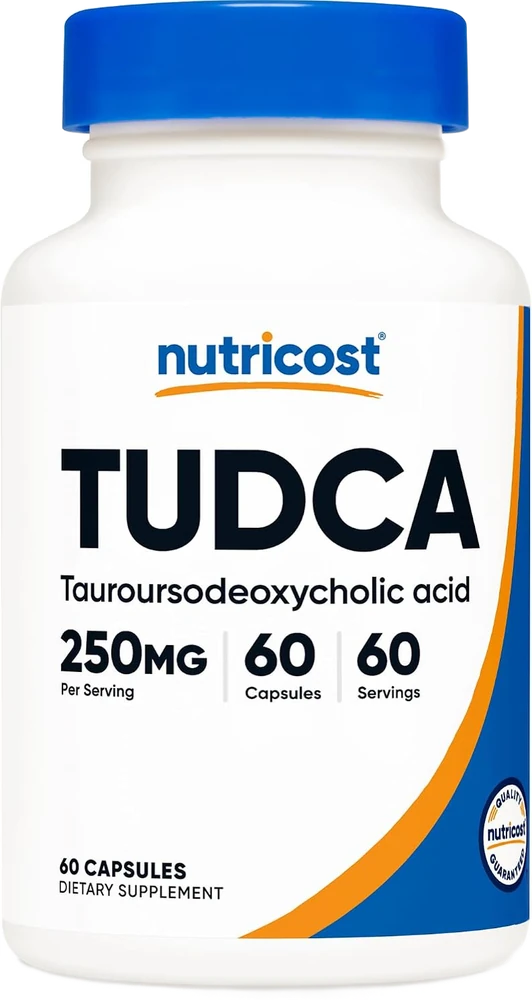
03Nutricost 250 mg
Nutricost is the safe, sane default for a first TUDCA bottle — trusted brand, real third-party testing, honest single-ingredient label, and a price that does not sting.
Quick Answers
How much TUDCA is actually in a serving?
900mg. The Supplement Facts panel lists TUDCA (Tauroursodeoxycholic Acid) at 900mg per two-capsule serving, with the remaining 100mg split across a six-herb blend (milk thistle, beetroot, chanca piedra and artichoke at 20mg each, chicory root and dandelion root at 10mg each). Both numbers are printed on the label; nothing here is undisclosed.
Is it really 120 capsules?
Yes. It arrives as two 60-count bottles rather than one 120-count bottle, so you open one at a time. At the stated two-capsule serving that is 30 servings per bottle and 60 in the box, roughly two months at one serving a day.
I want TUDCA and milk thistle together. What should I buy?
This bottle gives you a real TUDCA dose (900mg) but a token milk thistle dose (20mg, versus the 150-300mg standardized extracts sold on their own). A single-ingredient TUDCA at a stated milligram plus a standardized milk thistle gives you the same pairing with a milk thistle dose you can actually feel, and both numbers third-party tested if you pick tested products.
Sources & Further Reading
2 peer-reviewed sources, each linked to PubMed
- [1] Vang S, et al. The unexpected uses of urso- and tauroursodeoxycholic acid in the treatment of non-liver diseases. Glob Adv Health Med. 2014;3(3):58-69. PMID 24891994 — The unexpected uses of urso- and tauroursodeoxycholic acid in the treatment of non-liver diseases. Notes that TUDCA effects are dose-dependent — this blend's 900mg dose is disclosed and can be evaluated against it.
- [2] Kars M, et al. Tauroursodeoxycholic acid may improve liver and muscle but not adipose tissue insulin sensitivity in obese men and women. Diabetes. 2010;59(8):1899-1905. PMID 20522594 — Tauroursodeoxycholic acid may improve liver and muscle but not adipose tissue insulin sensitivity in obese men and women. Human TUDCA effects appeared at 1,750mg/day; this blend's 900mg per serving is roughly half that trial dose, a meaningful fraction rather than an unknown quantity.
Affiliate disclosure: every Amazon link uses our Associates tag (superachieverclub-20). We earn a small commission at no cost to you; it funds independent reviews. We never accept payment to change a ranking.