
Beast Bites Creatine Infused Gummies Review
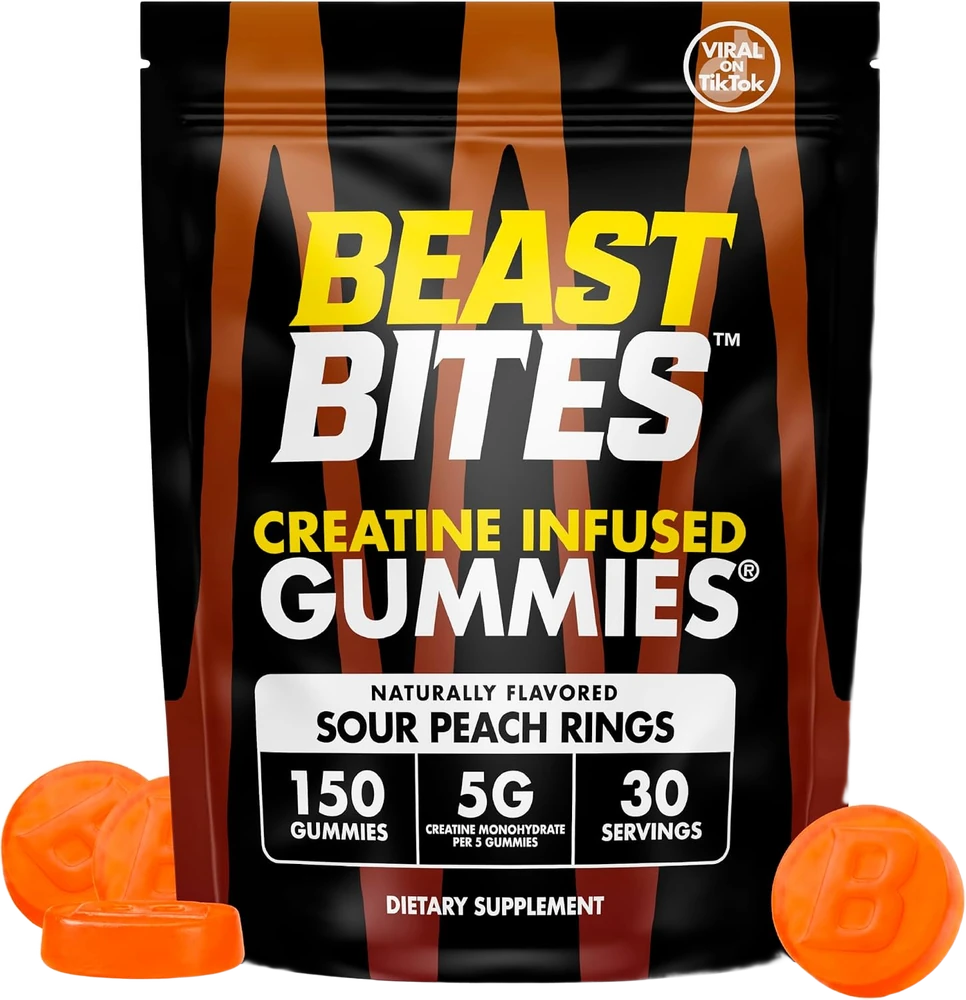 #6 of 7 · Best certified value✓ Label verified · Supplement Facts read Oct 11, 2026
Real retailer photo, cut out. Label unedited.
Consider it. The cheaper certified gummy: NSF Certified for Sport at $1.17 a dose, but five gummies per dose. What checks out: NSF Certified for Sport for all lots, confirmed at the certifier, and a label serving that is a real 5 g.
$34.99 · 150 count (Amazon US featured offer, 2026-10-11)$1.17 per real 5 g dose · 30 real doses per 150-count pouch
Why It Scores 6.7 — And The Label Line Behind Each Number
Dose per gummy vs the 5 g standard
30% of score1 g of creatine monohydrate per gummy, so the 5 g research dose is five gummies. That is the lowest density on our list, level with Legion and Bear Balanced. Create Wellness reaches 5 g in four gummies.
- Per gummy
- 1 g creatine monohydrate (5 g per five-gummy serving, printed on the panel)
- Label serving
- 5 gummies = 5 g, the research-standard maintenance dose
Third-party testing
25% of scoreNSF Certified for Sport, confirmed in the certifier's own database: the flavours on sale are certified for all lots in both sizes. That puts it level with Create Wellness, the only other certified gummy we rank. The brand publishes no certificate of analysis of its own, and the panel names no branded raw material.
- Third-party testing
- NSF Certified for Sport, confirmed at nsfsport.com on Oct 11, 2026 (listing 1796822, all lots, sizes 75 and 150)
- Creapure
- Not named on the current Supplement Facts panel or in the listing title. An earlier pouch printed 'Creapure Creatine'
Cost per real 5 g dose
20% of score$34.99 for 150 gummies is $1.17 per real 5 g dose, the same as Legion and well under Create Wellness at $1.85. Jacked Factory is cheaper at $0.67. Scored on the same anchors as the rest of the list, where about $1.20 a dose earns 8.0.
- Price
- $34.99 for 150 gummies, $19.99 for 75 (Amazon US featured offer from the brand's store, Oct 11, 2026)
- Cost per real 5 g dose
- $1.17 in the 150-count pouch, $1.33 in the 75-count jar. Powder is about $0.23
Taste and format
15% of scoreA soft pectin gummy sweetened with tapioca syrup, cane sugar and stevia, with no sugar alcohols. We did not buy or taste it, so this scores what the label shows. The anti-melt claim is the brand's own; we have seen no data behind it.
- Sugar
- 6 g added sugars, 14 g carbohydrate and 60 calories per serving. No sugar alcohols on the ingredient list
- Other ingredients
- Tapioca syrup, cane sugar, pectin, natural flavors, water, spirulina extract (color), citric acid, sodium citrate, organic stevia
Label honesty
10% of scoreThe label serving is the full 5 g, so there is no small 'serving' that hides the real dose, and the added sugar is printed plainly. The pouch states only what its panel supports: creatine monohydrate, with no branded-ingredient claim.
- More Specs
- Active form
- Creatine monohydrate (standard; the current panel does not name Creapure)
- Pouch size
- 150 gummies · 30 real 5 g doses. A 75-count jar (15 doses) is sold as well
- Trial-dose alignment
- 5 g a day (5 gummies) matches the Kreider 2017 ISSN maintenance protocol
- Flavor linked
- Sour Peach Rings
Label verified. Every figure read from the Supplement Facts photo, Oct 11, 2026.
Marketing Claims Vs. Reality
NSF Certified for Sport.
Confirmed at the certifier on Oct 11, 2026, not from listing copy. NSF's database carries 13 Beast Bites creatine-gummy listings across eight flavours. The listings for Sour Peach Rings and Sweet Blue Raspberry cover all lots in the 75- and 150-gummy sizes, and their serving values (60 calories, 14 g carbohydrate, 6 g sugar per five gummies) match the Supplement Facts panel. NSF Certified for Sport verifies that the contents match the label and screens for banned substances.
5 g of creatine monohydrate per serving.
The Supplement Facts panel prints a five-gummy serving with 5 g of creatine monohydrate, which is 1 g per gummy, and the NSF record lists the same five-gummy serving. This covers the label's stated amount against the certifier's record. We did not commission a lab assay of the contents.
Made with Creapure.
The pouch on sale does not make this claim. Its panel reads 'Creatine Monohydrate 5g' and the current Amazon title no longer names Creapure. An earlier pouch printed 'Creapure Creatine', and an earlier version of this review marked the claim verified for that pouch. Creapure's maker publishes no public list of licensed brands, so the panel is the only place a shopper can check. It is not there now, so we score this as standard creatine monohydrate.
Zero artificial colors and flavors.
Consistent with the ingredient list: the colour is spirulina extract and the flavours are listed as natural flavors. This is a check of the label against its own ingredient list, not a lab test.
Clean Label Project Certified.
Stated in the Amazon listing title. We have not confirmed it in Clean Label Project's own records, so it carries no weight in the score.
What Our Test Actually Found
The certification is real, and it covers every lot
NSF Certified for Sport is the credential drug-tested athletes are told to look for: it verifies that the contents match the label and screens the product for banned substances. Many certified products are listed lot by lot, so a buyer has to match the lot number on the package. The Beast Bites listings for the flavours on sale read 'all lots' for the 75- and 150-gummy sizes, which is the simpler case. Only one other gummy on our list holds this certification, Create Wellness, and it costs $1.85 a dose against $1.17 here.
The panel no longer names Creapure
An earlier pouch printed 'Creapure Creatine' as the source of the 5 g serving, and this review said so. The pouch sold today prints 'Creatine Monohydrate 5g', and the listing title dropped the name as well. We do not know whether the raw material changed or only the wording. What a shopper can check is the panel, and the panel now supports one statement: 5 g of creatine monohydrate. For performance this changes nothing, because the trials used creatine monohydrate from many suppliers. It does change what this page may claim, so every Creapure statement has been removed.
The dose: 1 g a gummy, five gummies a day
The research-standard maintenance dose for creatine is 3-5 g a day (Kreider 2017, ISSN position stand). The label serving here is five gummies for 5 g, so following the label gives the full dose. That is better than gummies that print a two- or three-gummy 'serving' below 5 g. The cost is chew count: five gummies a day, every day, with 6 g of added sugar. Create Wellness reaches 5 g in four gummies and Jacked Factory in four.
The price is readable now, and it is fair
The last version of this page printed no price, because the old listing returned none we could tie to the product. The current listings are sold by the brand's own Amazon store with a featured offer: $34.99 for 150 gummies and $19.99 for 75, read on Oct 11, 2026. Per real 5 g dose that is $1.17 and $1.33. Among the six gummies we rank, only Jacked Factory ($0.67) and Animal ($1.06) cost less per dose. Plain creatine monohydrate powder is about $0.23 for the same 5 g.
Sugar instead of sugar alcohols
Several creatine gummies, Legion and Jacked Factory among them, are sweetened with sugar alcohols, which can cause bloating at four or five gummies a day. Beast Bites uses tapioca syrup and cane sugar with a little stevia: 6 g of added sugars and 60 calories per serving, and no sugar alcohols on the ingredient list. That is the better choice for a sensitive stomach and the worse one if you are counting sugar.
Who should buy it
A tested athlete who wants a gummy. The setup that makes sense for that buyer: plain creatine monohydrate powder at home, where cost and dose accuracy favour it, and a certified gummy in the gym bag and the travel kit. If you are not tested, the certification is a cost with no benefit for you, and Jacked Factory or powder is the rational buy.
Full analysis: all pros & cons (10), buy if / skip if
- NSF Certified for Sport for all lots, confirmed in the certifier's own database
- $1.17 per real 5 g dose in the 150-count pouch: the cheaper of the two certified gummies we rank
- The label serving is the full 5 g research dose, five gummies
- No sugar alcohols on the ingredient list
- A 150-count pouch is 30 real doses, a full month
- Only 1 g per gummy: a dose is five chews, the most on our list
- 6 g of added sugars and 60 calories per serving
- The current panel does not name Creapure; an earlier pouch did
- No certificate of analysis published by the brand
- About five times the cost of the same 5 g as plain powder
- You are drug-tested (NCAA, a pro league, tactical or military) and want a creatine gummy that is NSF Certified for Sport
- You want that certification for less than Create Wellness: $1.17 a dose here against $1.85 there
- You want a label serving that is the full 5 g research dose, with nothing to recalculate
- Sugar alcohols upset your stomach: this gummy is sweetened with tapioca syrup, cane sugar and stevia
- You are not drug-tested: Jacked Factory costs $0.67 a dose and plain powder about $0.23
- You want the fewest chews per dose: this takes five gummies, Create Wellness takes four
- You avoid added sugar: a serving carries 6 g, and Jacked Factory is the sugar-free pick
What checks out: NSF Certified for Sport for all lots, confirmed at the certifier, and a label serving that is a real 5 g. A 150-count pouch is 30 doses for $34.99, $1.17 each. What holds it back: 1 g per gummy is the lowest density on our list, so a dose is five chews and 6 g of added sugar. The panel reads plain creatine monohydrate; an earlier pouch named Creapure and this one does not. Buy it if you are drug-tested and want a certified gummy for less than Create Wellness. Everyone else pays less with Jacked Factory or with powder.
Beast Bites Creatine Infused Gummies are the lower-priced of the two creatine gummies on our list that hold NSF Certified for Sport. We confirmed the certification in the certifier's own database on Oct 11, 2026: the flavours on sale are certified for all lots in the 75- and 150-gummy sizes. The dose is honest and ordinary. One gummy carries 1 g of creatine monohydrate, the label serving is five gummies for a full 5 g, and a 150-count pouch is 30 real doses. At $34.99 that is $1.17 a dose. Two things changed since our last version of this page. The pouch on sale no longer names Creapure on its panel, so we no longer describe it as a Creapure product. And the price is now readable, which is why this review carries a score again: 6.7, #5 of the six gummies we rank.
A certified gummy at a fair price, held back by its density.

Beast Bites does two things well. It holds NSF Certified for Sport for every lot, which we confirmed at the certifier, and it costs $1.17 per real 5 g dose, which is $0.68 less than the other certified gummy on our list. Its label serving is the full research dose, so there is nothing to recalculate. What keeps it at 6.7 is dose density. One gummy carries 1 g, so a day's creatine is five chews with 6 g of added sugar, and the denser gummies do the same job in four. The panel also reads plain creatine monohydrate now. An earlier pouch named Creapure; this one does not, and we score what the label shows. Buy it if you are drug-tested and want your creatine as a gummy. If you are not tested, Jacked Factory at $0.67 a dose or plain powder at about $0.23 gives you the same molecule for less.
If This Doesn’t Fit — Try These
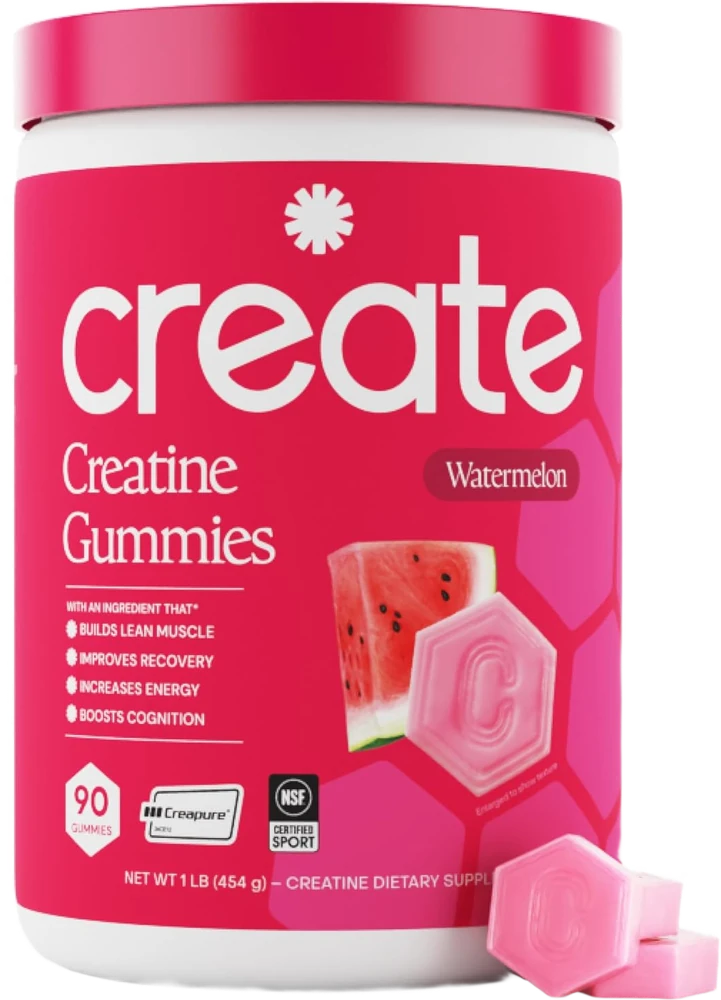 01
01Create Creatine Gummies
The pick we'd point most buyers at, on two things we could actually check.
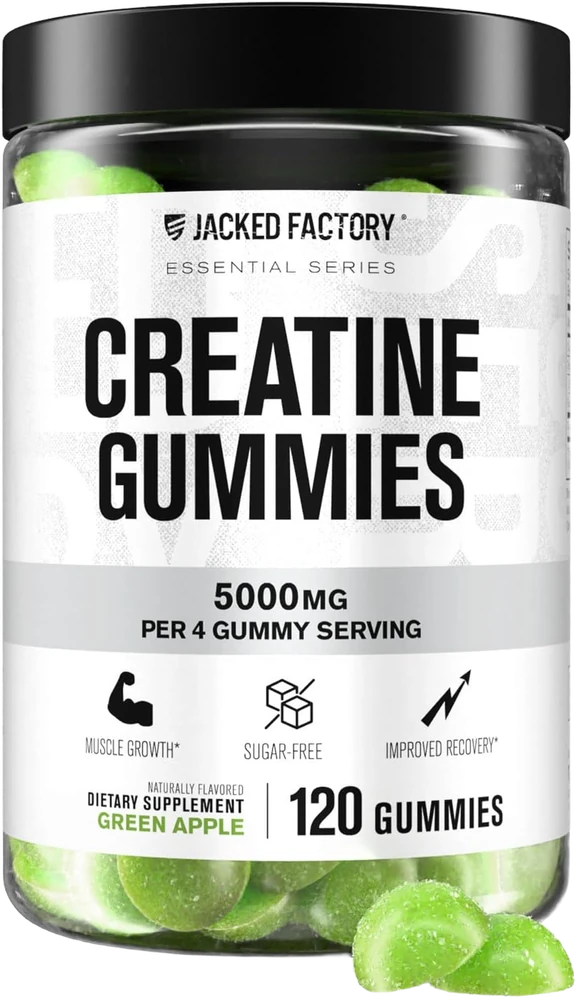 03
03Jacked Factory Creatine Gummies
The pick for someone who wants the label to tell the truth about the dose, and the pick for anyone counting money.
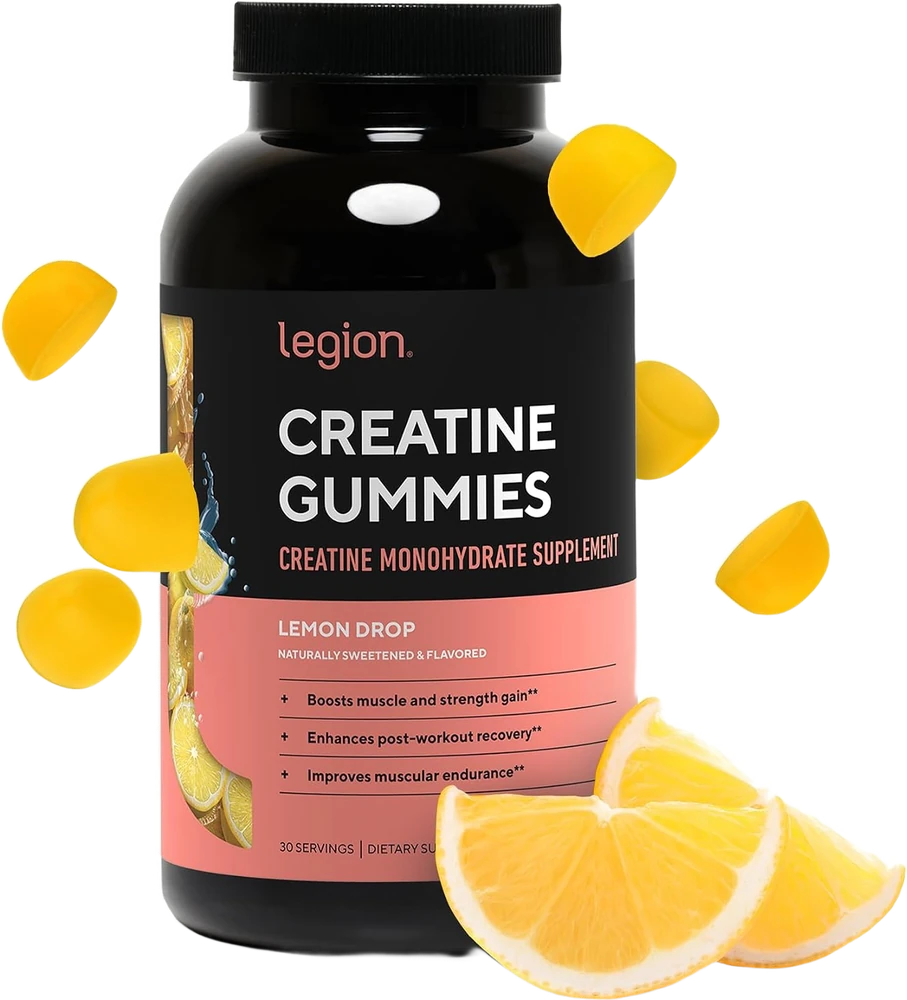 05
05Legion Creatine Gummies
This pick moved in both directions when we re-checked it, which is why it is worth reading carefully.
Quick Answers
How much creatine is in each Beast Bites gummy?
1 g of creatine monohydrate per gummy. The Supplement Facts panel prints a serving of five gummies with 5 g of creatine monohydrate, and the NSF record for the product lists the same five-gummy serving. The research-standard maintenance dose is 3-5 g a day (Kreider 2017, ISSN position stand), so the label serving is a real dose. The 150-count pouch holds 30 of them, the 75-count jar holds 15.
Is Beast Bites really NSF Certified for Sport?
Yes. We checked the certifier's own database on Oct 11, 2026, not the Amazon listing. NSF lists 13 Beast Bites creatine-gummy entries across eight flavours. The entries for Sour Peach Rings and Sweet Blue Raspberry cover all lots in the 75- and 150-gummy sizes, and the serving values on the record (60 calories, 14 g carbohydrate, 6 g sugar per five gummies) match the panel on the pouch. NSF Certified for Sport confirms that the contents match the label and screens for banned substances.
Is Beast Bites made with Creapure?
The pouch on sale today does not say so. Its Supplement Facts panel reads 'Creatine Monohydrate 5g', and the current Amazon title no longer names Creapure. An earlier pouch printed 'Creapure Creatine' on its panel, and an earlier version of this review reported that. Creapure's maker publishes no public list of licensed brands, so a claim can only be checked on the panel. With the name gone from the panel, we treat this product as standard creatine monohydrate.
What does a dose of Beast Bites cost?
$1.17 per 5 g dose in the 150-count pouch ($34.99) and $1.33 in the 75-count jar ($19.99). Both prices are the featured Amazon US offer from the brand's own store on Oct 11, 2026. That matches Legion ($1.17) and sits well below Create Wellness ($1.85). Jacked Factory is cheaper at $0.67, and the same 5 g as plain powder costs about $0.23. Prices move, so check the listing before you order.
How much sugar is in a serving?
6 g of added sugars per five-gummy serving, with 14 g of carbohydrate and 60 calories. The sweeteners on the ingredient list are tapioca syrup, cane sugar and organic stevia. There are no sugar alcohols on the list, which matters if sugar alcohols upset your stomach. If you want a creatine gummy with no sugar, Jacked Factory is the sugar-free pick on our list.
Who is this gummy for?
For an athlete who is drug-tested (NCAA, a pro league, tactical or military) and wants creatine as a gummy. For that buyer the certification is the point, and this is the cheaper of the two certified gummies on our list: $1.17 a dose against $1.85 for Create Wellness. The trade is chew count. Beast Bites takes five gummies for 5 g, Create Wellness takes four. If you are not tested, Jacked Factory costs less per dose and plain powder costs far less.
Do I need a loading phase with these?
No. A loading phase of 20 g a day would mean about 20 gummies a day and 24 g of added sugar, and it empties a 75-count jar in under four days. Loading only speeds up saturation; it does not raise the endpoint. Five gummies every day, rest days included, saturates muscle in three to four weeks.
Sources & Further Reading
6 peer-reviewed sources, each linked to PubMed
- [1] Kreider 2017 PMID 28615996 — International Society of Sports Nutrition position stand: safety and efficacy of creatine supplementation in exercise, sport, and medicine. ISSN position statement after reviewing 500+ studies: creatine monohydrate is the most effective form, with 3-5 g/day chronic dosing established as the safe, effective maintenance protocol. This is the benchmark the label serving is measured against — five gummies at 1 g each deliver a real 5 g maintenance dose, so the serving on the pouch is an honest one.
- [2] Buford 2007 PMID 17908288 — International Society of Sports Nutrition position stand: creatine supplementation and exercise. Predecessor ISSN position statement establishing creatine monohydrate as the most extensively studied and clinically effective form, with muscle phosphocreatine saturation as the mechanism. Confirms the molecule — not the delivery format — drives the effect, so a monohydrate gummy and a monohydrate powder scoop are functionally equivalent once dosed to the same grams.
- [3] Cooper 2012 PMID 22817979 — Creatine supplementation with specific view to exercise/sports performance: an update. Comprehensive safety and efficacy review across 30+ controlled trials: chronic creatine at 3-5 g/day shows no adverse effects on kidney or liver function in healthy adults. The safety floor that lets a daily creatine habit run indefinitely without cycling — nothing on this page is a safety question; the open questions here are format, verifiability and cost.
- [4] Antonio 2021 PMID 33557850 — Common questions and misconceptions about creatine supplementation: what does the scientific evidence really show?. Myths review confirming no alternative creatine form or delivery system outperforms monohydrate at equivalent doses, and that consistent daily intake — not timing or format — drives saturation. Supports the review's core point: the form here is plain monohydrate, and a gummy's only legitimate edge over powder is adherence and portability, not a superior molecule.
- [5] Volek 1997 PMID 9216554 — Creatine supplementation enhances muscular performance during high-intensity resistance exercise. Seminal RCT showing creatine supplementation significantly increased peak power and total work during high-intensity resistance exercise at the standard dose. The strength and power benefit this product markets is real and well-supported — contingent only on reaching the trial dose, which the five-gummy, 5 g serving does deliver.
- [6] Rae 2003 PMID 14561278 — Oral creatine monohydrate supplementation improves brain performance: a double-blind, placebo-controlled, cross-over trial. Demonstrated creatine monohydrate improved working memory and processing speed vs placebo. The legitimate cognitive co-benefit of creatine itself — it comes from the monohydrate, the same molecule in this product, not from any added blend or branded formulation.
Affiliate disclosure: every Amazon link uses our Associates tag (superachieverclub-20). We earn a small commission at no cost to you; it funds independent reviews. We never accept payment to change a ranking.