
Fadogia agrestis has NO published human randomised controlled trials. None. Its entire testosterone reputation is built on animal work — principally Yakubu 2005, a 5-day study in male albino rats. There is no human efficacy trial to point to, at any dose, for any endpoint. Everything else is anecdote and podcast discussion.
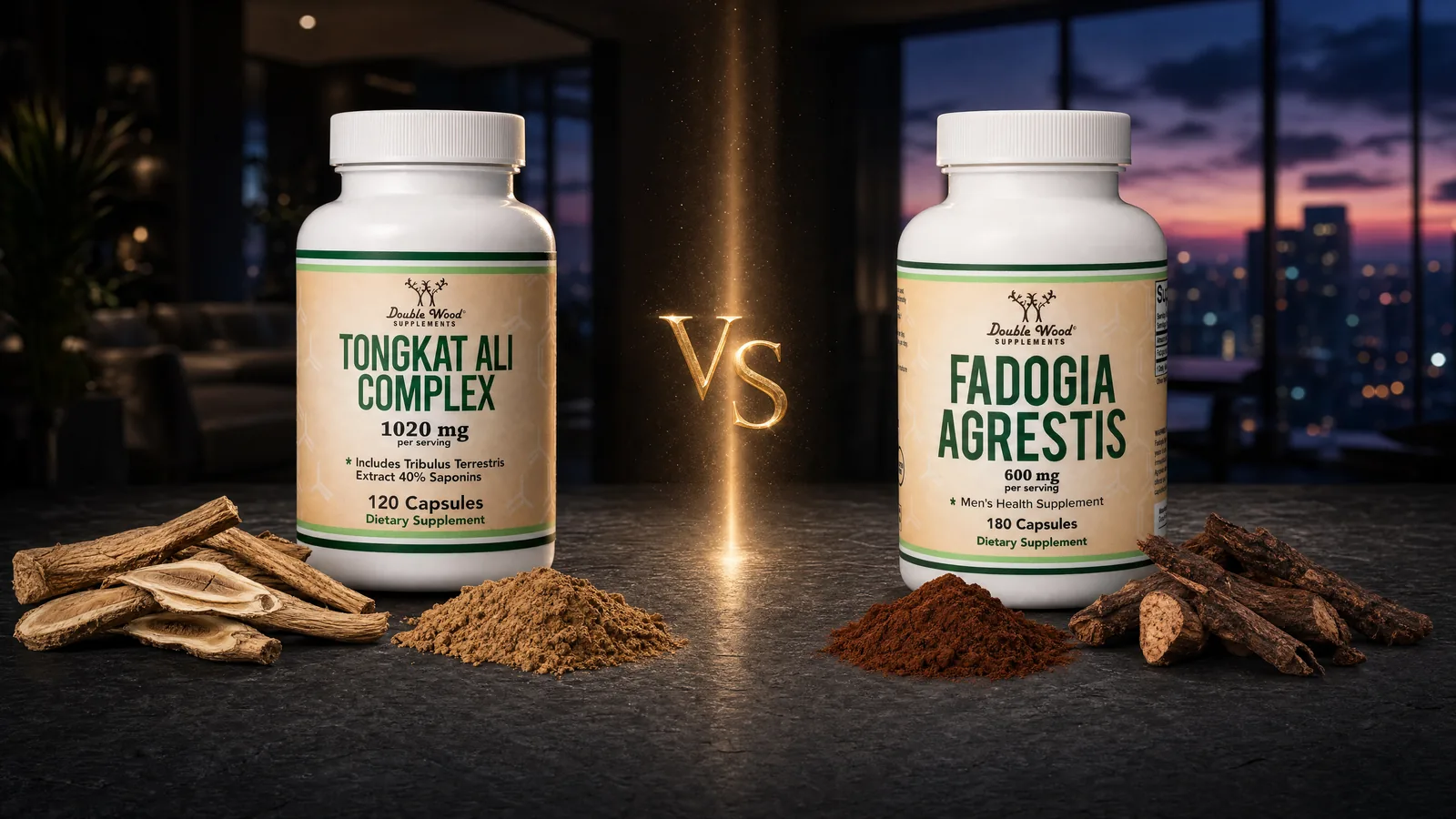
Tongkat Ali vs Fadogia Agrestis
Updated Jul 29, 2026 · by Felix Hesse · 7 peer-reviewed sources
The testosterone community pairs these two constantly — but they don't belong in the same conversation on evidence. Tongkat ali has 10+ human RCTs, +10-37% total testosterone, and 6-month human safety data. Fadogia agrestis has ZERO published human RCTs: its entire reputation rests on rat studies (Yakubu 2005), and the same lab's follow-ups (2008, 2009) documented a testicular + liver/kidney toxicity signal in rats. Below: 6 honest rounds, and a verdict that treats fadogia's hype with the caution it deserves.
Contender A
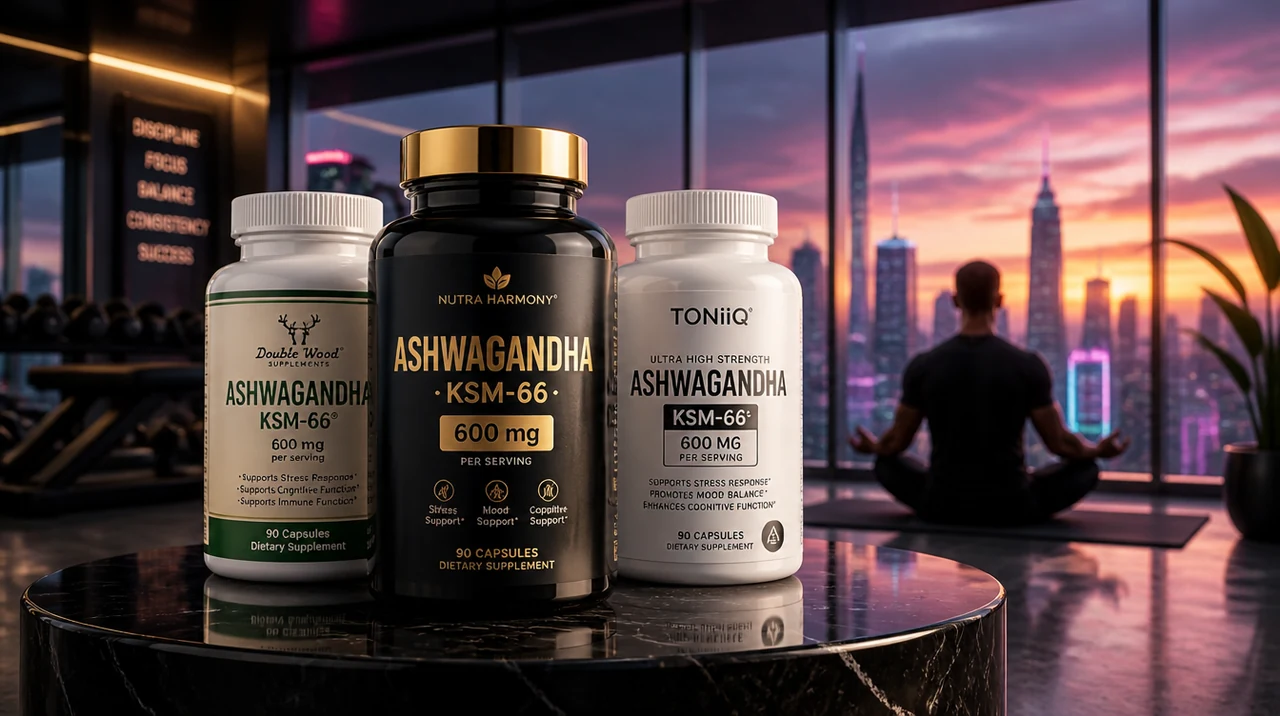
Fadogia Agrestis
Rat data only · 0 human RCTs · testicular-toxicity signal · unstandardised
Podcast-popularised, evidence-thin. Raised testosterone in rats over 5 days (Yakubu 2005) — but no human trial has ever tested it, and the same lab flagged testicular + liver/kidney toxicity. An experiment, not a proven supplement.
3.4/10
Best forHonestly? Nobody yet — not until human safety + efficacy data exist
Read the full ranking →
Contender B
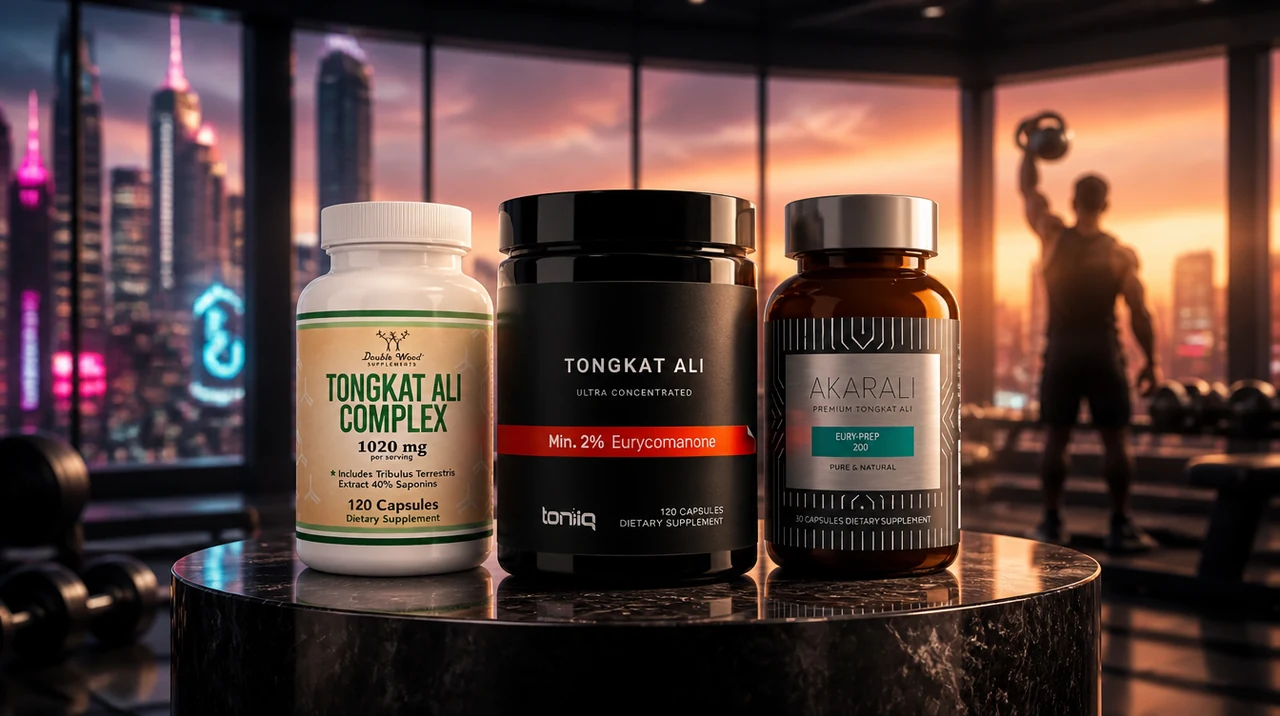
Tongkat Ali (Physta/LJ100)
Quassinoid · 10+ human RCTs · T +10-37% · eurycomanone ≥2% · 6-mo safety
Displaces SHBG, raises free testosterone, lowers cortisol. A decade of placebo-controlled human trials, standardised extracts, and clean 6-month safety data. The evidence-backed, safe pick.
9.3/10
Best forAnyone who wants a proven, safe testosterone-support herb
Read the full ranking →
How we scored each round
Five criteria that decide a real, safe testosterone-support choice — weighted toward what actually protects the reader. Each round both contenders get a 0-10 score based on the published evidence. The winner is whoever scores higher; ties are explicit and rare. Because one contender has human trials and the other has rat studies plus a toxicity signal, most rounds are not close — and we say so honestly.
- Human evidence25%
Published placebo-controlled human RCTs — the only evidence that proves a human effect.
- Testosterone effect (proven)20%
Magnitude of testosterone uplift demonstrated in HUMANS, not animals.
- Safety25%
Human safety data + absence of toxicity signals. Weighted heaviest — no benefit is worth harm.
- Standardisation + mechanism15%
Reliable, assayable dosing and a mechanism validated in humans.
- Cost + accessibility15%
Monthly cost and availability of a usable product.
6 rounds — head-to-head on the criteria that matter
- Round 1
Round 1 · Human evidence base
Published placebo-controlled human RCTsFadogia Agrestis1.5 Tongkat Ali (Physta/LJ100)9.5 Tongkat ali has 10+ placebo-controlled human RCTs on standardised extracts (Physta, LJ100), spanning stressed adults, late-onset hypogonadism, ageing males, and athletes. The Tambi & Imran 2022 meta-analysis pooled 5 RCTs and found a large effect on total testosterone (SMD 1.35). This is one of the better-evidenced botanicals in the category.
- Round 2
Round 2 · Testosterone effect PROVEN in humans
Magnitude of T uplift demonstrated in peopleFadogia Agrestis2.5 Fadogia's famous testosterone effect is a rat finding. Yakubu 2005 reported a dose-dependent rise in serum testosterone in male albino rats given the aqueous stem extract at 18-100 mg/kg for 5 days. Impressive in rodents — but it has never been reproduced, or even measured, in humans. For a human buying decision, the proven-in-humans effect size is effectively unknown.
Tongkat Ali (Physta/LJ100)9.5 Tongkat's testosterone effect is measured in humans repeatedly. Talbott 2013: +37% total testosterone at 200 mg Physta / 4 weeks in stressed adults. Tambi 2012: testosterone restored to the eugonadal range in most late-onset-hypogonadism men. Leitao 2021: sustained T + erectile-function gains over 6 months. Pooled SMD 1.35 — a large, replicated human effect.
- Round 3
Round 3 · Safety
Human safety data + toxicity signalsFadogia Agrestis2.0 This is fadogia's biggest problem. The same research group that reported the testosterone effect also found the extract altered testicular function indices in rats (Yakubu 2008) and caused liver and kidney cellular toxicity (Yakubu 2009) — a dose-dependent, organ-level toxicity signal. Crucially, NO human safety study exists to show whether these effects appear in people. Unknown safety plus a documented animal toxicity flag is the worst possible combination.
Tongkat Ali (Physta/LJ100)9.0 Tongkat has genuine human safety data. Standardised Physta has been run for 6 continuous months in ADAM populations (Leitao 2021) with no adverse effects, and multiple RCTs report clean tolerability at 200-400 mg/day. Known cautions are mild and manageable: don't dose late (sleep), don't stack with TRT. No organ-toxicity signal at trial doses.
- Round 4
Round 4 · Standardisation + mechanism
Reliable dosing + human-validated mechanismFadogia Agrestis3.0 Fadogia is unstandardised. There is no eurycomanone-equivalent marker, no accepted assay, and huge variability between products — you genuinely cannot know how much active compound you're taking. Its mechanism (a proposed androgen-like / luteinising action) is a hypothesis from rat work, never confirmed in humans. You can't reliably dose it, and you can't fully explain how it works.
Tongkat Ali (Physta/LJ100)8.5 Tongkat is standardised to ≥2% eurycomanone (or 22% eurypeptides for LJ100), HPLC-verified, with COAs available — so the trial dose actually means something. Its mechanism (SHBG displacement raising free T, plus cortisol reduction) is validated in humans and tracks with the dose-response. Reliable dosing, replicable mechanism.
- Round 5
Round 5 · Cost + accessibility
Monthly cost + availability of a usable productFadogia Agrestis7.5 This is the one place fadogia scores. Raw fadogia powder is cheap — roughly $10-20/month — and widely sold online. On price and sheer availability alone, it undercuts standardised tongkat. But the caveat swallows the win: cheap, plentiful, and unstandardised means you're paying little for an unmeasurable, unproven, toxicity-flagged material. Low cost isn't a bargain when you can't trust what's in the jar.
Tongkat Ali (Physta/LJ100)6.5 Standardised tongkat (Physta or LJ100) runs $22-45/month — a premium that reflects the patented extract, the assay, and the COA. More expensive than raw fadogia powder, but you're paying for a known, tested, dosable quantity backed by human trials. Widely available from reputable brands.
- Round 6
Round 6 · Hype vs evidence — the real-world call
What a careful person should actually doFadogia Agrestis2.5 Fadogia's popularity is a case study in how anecdote outruns evidence. It got hot because it was discussed on influential podcasts, not because trials validated it. Anecdote can't separate a real effect from placebo or regression to the mean, and it can't catch a slow toxicity problem. For a careful person, 'people online say it works' is not a reason to accept an unquantified organ-toxicity risk.
Tongkat Ali (Physta/LJ100)9.5 Tongkat is the opposite story: it earned its reputation through replicated, placebo-controlled human RCTs and only then became popular. When you choose tongkat you're choosing the herb whose claims survived scrutiny. That's exactly the profile a careful buyer wants — proven benefit, known safety, standardised product.
After 6 rounds
1
Fadogia Agrestis
0
Ties
5
Tongkat Ali (Physta/LJ100)
Tongkat ali, decisively — and treat fadogia as an experiment, not a supplement

After 6 rounds the scoreboard is 5-1 for tongkat ali, and the single round fadogia wins is cost — which is exactly the round that matters least when the product is unproven and carries a toxicity flag.
The core truth is simple: tongkat ali has real human evidence and real human safety data; fadogia agrestis has neither. Tongkat delivers +10-37% total testosterone across 10+ placebo-controlled human RCTs, a pooled SMD of 1.35, and 6 months of clean continuous safety data. Fadogia's entire testosterone reputation rests on a single line of rat research — Yakubu 2005 — and the same research programme documented a testicular-function and liver/kidney toxicity signal in rats (Yakubu 2008, 2009) that has never been ruled out in humans, because no human trial exists.
The recommendation: use standardised tongkat ali. Physta or LJ100 at 200 mg/day, before noon, for 8-12 weeks, with a baseline and follow-up panel. It's proven, it's safe, and it's dosable.
On fadogia, be scrupulously honest with yourself: it is popular because of podcasts, not because of evidence. If you still choose to trial it despite that, you are running an uncontrolled experiment on your own body — so keep it short, keep the amount minimal, bracket it with liver, kidney, and testosterone bloodwork, and stop at any sign of trouble. But the genuinely smart move is the boring one: skip the experiment and use the herb that already has a decade of human trials behind it.
The one thing you should not do is treat these two as equals. They aren't. One is an evidence-backed supplement; the other is a hypothesis with a toxicity flag.
Every claim above traces back to one of these
- [1]Talbott 2013
Effect of Tongkat Ali on stress hormones and psychological mood state in moderately stressed subjects
200 mg/day of Physta tongkat ali for 4 weeks raised total testosterone +37% and lowered cortisol −16% vs placebo in moderately stressed adults.
- [2]Tambi 2012
Standardised water-soluble extract of Eurycoma longifolia, Tongkat ali, as testosterone booster for managing men with late-onset hypogonadism
Multicentre trial: 200 mg Physta daily restored testosterone into the eugonadal range in the majority of men with late-onset hypogonadism.
- [3]Leitao 2021
A 6-month, double-blind, placebo-controlled, randomized trial to evaluate the effect of Eurycoma longifolia (Tongkat Ali) and concurrent training on erectile function and testosterone levels in androgen deficiency of aging males (ADAM)
6-month placebo-controlled RCT in ADAM men: tongkat ali improved erectile function and testosterone with no adverse effects — a key human safety-duration data point.
- [4]Leisegang 2022
Eurycoma longifolia (Jack) Improves Serum Total Testosterone in Men: A Systematic Review and Meta-Analysis of Clinical Trials
Systematic review + meta-analysis of human RCTs found tongkat ali significantly increased serum total testosterone, with a large pooled effect size (SMD ≈ 1.35).
- [5]Yakubu 2005
Aphrodisiac potentials of the aqueous extract of Fadogia agrestis (Schweinf. Ex Hiern) stem in male albino rats
In male albino rats, aqueous fadogia agrestis stem extract (18-100 mg/kg for 5 days) increased serum testosterone dose-dependently and enhanced mating behaviour. The sole basis of fadogia's testosterone reputation — an ANIMAL study, never replicated in humans.
- [6]Yakubu 2008
Effects of oral administration of aqueous extract of Fadogia agrestis (Schweinf. Ex Hiern) stem on some testicular function indices of male rats
In male rats, oral fadogia agrestis extract altered testicular function indices in a pattern consistent with impaired testicular function — an animal toxicity signal that has never been evaluated in humans.
- [7]Yakubu 2009
Mode of cellular toxicity of aqueous extract of Fadogia agrestis (Schweinf. Ex Hiern) stem in male rat liver and kidney
Aqueous fadogia agrestis stem extract produced dose-dependent cellular toxicity in the liver and kidney of male rats — reinforcing the safety concern and the absence of any human safety data.