
This is L-Theanine's home turf. Nobre 2008: 50-200 mg raised occipital alpha-wave EEG activity within 40 minutes, dose-dependently. Kimura 2007: 200 mg blunted heart-rate reactivity and salivary cortisol response to an acute stress task the same session. Hidese 2019 found reduced stress-related symptoms and improved cognitive scores in healthy adults. The effect is real, fast, and repeatable on day one.
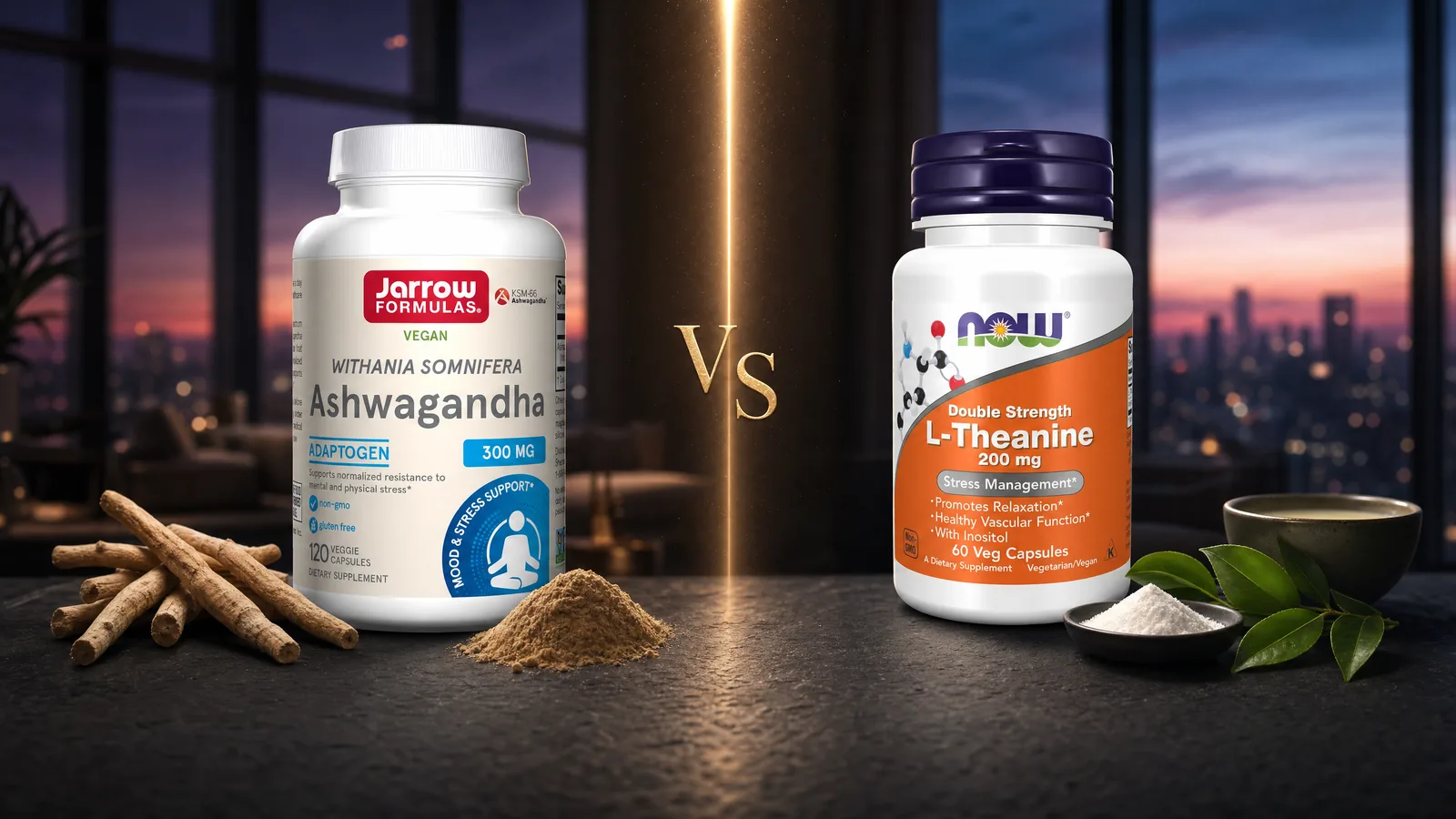
Ashwagandha vs L-Theanine
Updated Oct 19, 2026 · by Felix Hesse · 10 peer-reviewed sources
These two barely compete — they solve different problems on different clocks. L-Theanine is an amino acid from green tea that produces acute calm-focus in 30-60 minutes via alpha-wave EEG induction (Nobre 2008, Kimura 2007), non-sedating, with the cleanest safety profile in the category. Ashwagandha is an adaptogen that lowers cortisol 16-33% and eases anxiety + improves sleep over 2-8 weeks via HPA-axis modulation (Chandrasekhar 2012, Salve 2019). Below: 6 rounds head-to-head, and an honest verdict — including the case for running both.
Contender A
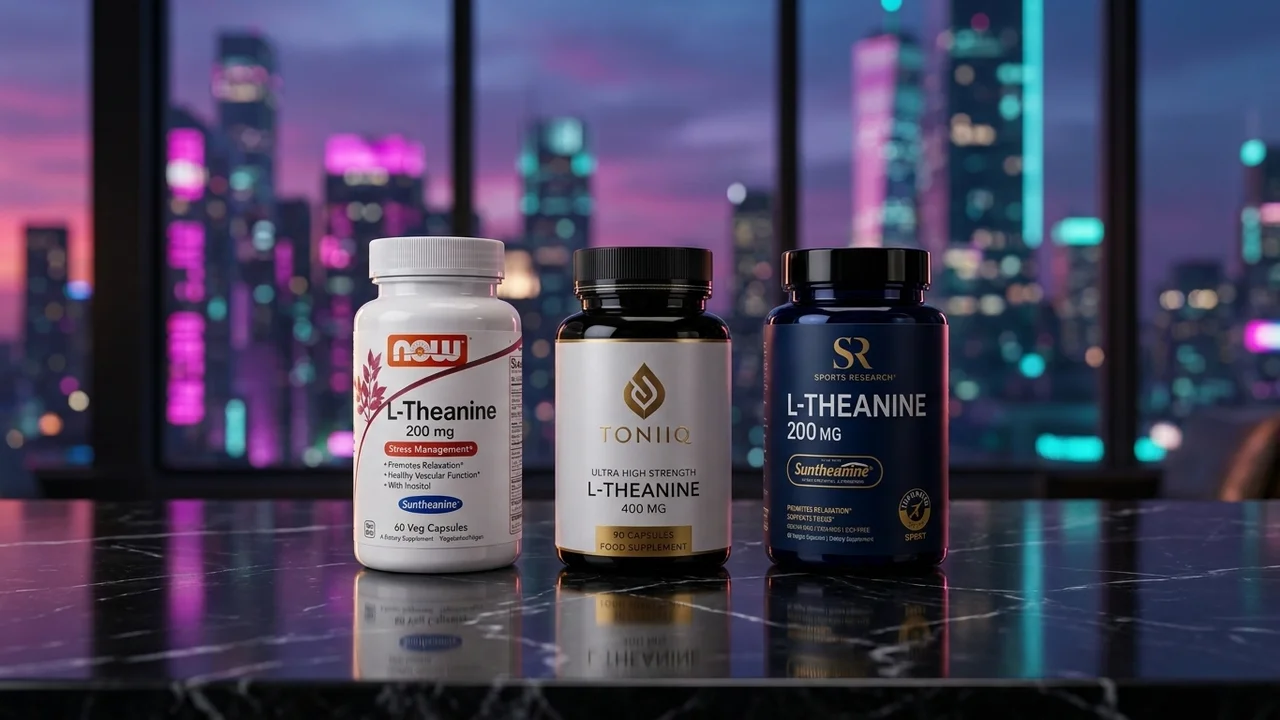
L-Theanine
Amino acid · 15+ RCTs · acute calm-focus · ~40 min onset
Raises alpha-wave EEG activity in ~40 minutes for alert calm without sedation. The acute tool — situational stress, and the 'smart caffeine' focus stack. Cleanest safety profile in the category.
8.6/10
Best forAcute calm · focus with caffeine · lowest-risk pick
Read the full ranking →
Contender B
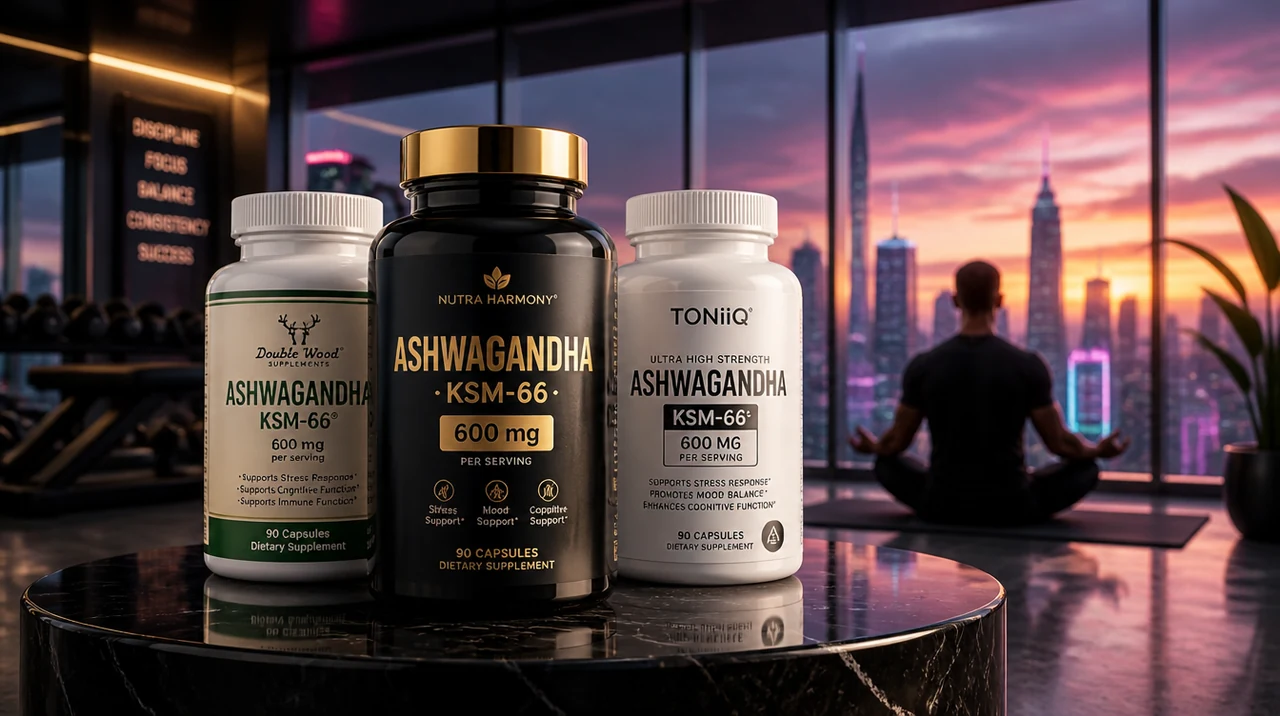
Ashwagandha (KSM-66)
Adaptogen · 12+ RCTs · cortisol −16-33% · sleep + hormonal
Modulates the HPA cortisol axis over weeks, easing chronic anxiety, deepening sleep, and modestly lifting testosterone in stressed men. The baseline tool — sustained stress, not same-day calm.
8.9/10
Best forChronic stress · sleep · hormonal support
Read the full ranking →
How we scored each round
Six criteria that matter for a real decision between two calming supplements, judged on the published placebo-controlled trials. Each round, both contenders get a 0-10 score. The winner is whoever scores higher on that round; ties are explicit when both genuinely perform comparably. Because these two work on different timescales, several rounds are decisive rather than close — that's the honest picture.
- Acute calm + focus20%
Same-session effect on calm, focus, and stress reactivity.
- Chronic stress + cortisol20%
Sustained cortisol reduction + perceived-stress improvement over weeks.
- Sleep + recovery15%
Effect on sleep quality, onset, and downstream recovery.
- Trial-evidence base15%
Number of placebo-controlled RCTs, sample size, review support.
- Safety + tolerability15%
Adverse-event profile, contraindications, drug interactions.
- Cost + accessibility15%
Monthly cost at the trial dose + availability of standardised product.
6 rounds — head-to-head on the criteria that matter
- Round 1
Round 1 · Acute calm + focus
Same-session effect on calm, focus, and stress reactivityL-Theanine9.3 Ashwagandha (KSM-66)3.5 Ashwagandha simply isn't an acute tool. The HPA axis takes weeks to recalibrate — no ashwagandha RCT shows a same-session calm effect, and the trials are all 60-day designs. Taken as a single dose expecting in-the-moment calm, it does effectively nothing. This isn't a knock on the supplement; it's the wrong use case for it.
- Round 2
Round 2 · Chronic stress + cortisol reduction
Sustained cortisol + perceived-stress improvement over weeksL-Theanine5.5 L-Theanine blunts the acute cortisol SPIKE (Kimura 2007) but there's little evidence it lowers baseline cortisol over weeks — it's a situational tool, not an HPA-axis modulator. The Williams 2020 systematic review of 21 trials found its strongest, most consistent evidence for acute stress reduction within 1-2 hours, not chronic baseline change.
Ashwagandha (KSM-66)9.4 This is Ashwagandha's home turf. Chandrasekhar 2012: 300 mg twice daily of KSM-66 for 60 days cut serum cortisol 27.9% and perceived-stress score 44%. Salve 2019 found cortisol down 16% at 250 mg and 33% at 600 mg a day over 8 weeks, with anxiety scores improving at 600 mg. Lopresti 2019 (240 mg Shoden, 60 days) also lowered morning cortisol and anxiety scores more than placebo. Consistent, sizeable, weeks-long baseline reduction — the most-evidenced natural cortisol lever there is.
- Round 3
Round 3 · Focus + cognitive performance
Effect on attention, focus, and cognitive outputL-Theanine9.0 L-Theanine is the only one of the two with a real cognitive claim. Owen 2008: 200 mg L-Theanine + 100 mg caffeine at a 2:1 ratio improved attention-switching task performance and alertness significantly more than caffeine alone. Hidese 2019 found improved cognitive scores (verbal fluency, executive function) in healthy adults. The 'smart caffeine' stack is the most-replicated cognitive-enhancement combination in supplement science.
Ashwagandha (KSM-66)4.5 Ashwagandha is a stress/sleep/hormonal supplement, not a nootropic. There are some cognitive findings downstream of better sleep + lower stress, but no ashwagandha trial positions it as a direct focus enhancer, and it has no stimulant-pairing role. For the focus use case specifically, it's off-target.
- Round 4
Round 4 · Sleep + recovery
Effect on sleep quality, onset, and downstream recoveryL-Theanine6.5 L-Theanine helps a specific sleep sub-case: a racing, anxious mind at bedtime. It's non-sedating — it produces alert calm, not drowsiness — so it doesn't drive sleep onset directly. It can attenuate pre-sleep anxiety, but for baseline sleep architecture it's a lighter lever than a dedicated sleep protocol.
Ashwagandha (KSM-66)8.3 Ashwagandha is the stronger sleep tool over time. Langade 2019 (600 mg/day root extract, 10 weeks) improved sleep scores against placebo; the broader KSM-66 record shows PSQI sleep-score improvements as the cortisol reduction compounds. It deepens sleep and reduces night wakings over 2-8 weeks — and stacks cleanly with magnesium glycinate for more.
- Round 5
Round 5 · Safety + tolerability
Adverse-event profile, contraindications, drug interactionsL-Theanine9.4 L-Theanine has the cleanest safety profile in the calming category. GRAS status, no documented hepatic, renal, or cardiovascular adverse effects at doses up to 1,200 mg/day in multi-week studies, present in tea for centuries. Only a theoretical additive effect with sedatives at high doses. No cycling required. For sensitive populations, it's the low-risk default.
Ashwagandha (KSM-66)7.3 Ashwagandha is well-tolerated for most — mild GI or drowsiness at high doses — but it carries three real cautions: it can elevate thyroid hormones (a problem with thyroid medication), it's mildly immunostimulating (avoid with autoimmune conditions like Hashimoto's, RA, lupus), and it should be avoided in pregnancy. Rare idiosyncratic liver-injury reports also exist. Manageable, but a longer contraindication list.
- Round 6
Round 6 · Stacking + combinability
Can these be co-administered? Does it make sense?L-Theanine8.7 L-Theanine is the most stackable supplement in the category. It pairs with caffeine (focus), magnesium (sleep), and — relevantly here — Ashwagandha: acute alpha-wave calm during the day layered on top of Ashwagandha's chronic cortisol modulation. Different mechanisms, different clocks, no documented conflict. The daytime-focus + evening-baseline split is coherent.
Ashwagandha (KSM-66)8.7 Ashwagandha explicitly benefits from an L-Theanine layer. Its HPA-axis cortisol modulation is a weeks-long baseline effect; adding L-Theanine covers the acute moments it can't touch. No mechanistic competition, no interaction of note. Ashwagandha in the evening (sleep + baseline) plus L-Theanine in the day (calm + focus) is a clean, complementary protocol.
After 6 rounds
3
L-Theanine
1
Ties
2
Ashwagandha (KSM-66)
L-Theanine for the acute + focus reader, Ashwagandha for the chronic-stress reader — and the stack for those who need both

After 6 rounds the scoreboard is 3-2 with 1 tie — L-Theanine edges it, but that number undersells how situation-specific this really is. These two barely compete; they solve different problems on different clocks.
L-Theanine wins the acute rounds decisively. If your problem is 'I need to calm down or focus RIGHT NOW' — pre-presentation nerves, caffeine jitter, a high-pressure block of work — L-Theanine is the answer. 200 mg produces alpha-wave calm-focus in 30-60 minutes (Nobre 2008), blunts acute stress reactivity (Kimura 2007), and pairs with caffeine at 2:1 for the most-replicated focus stack there is (Owen 2008). It also has the cleanest safety profile in the category, which makes it the default for anyone on thyroid medication, with an autoimmune condition, or pregnant.
Ashwagandha wins the chronic rounds just as decisively. If your problem is weeks of grinding stress that's wrecking your sleep and mood, Ashwagandha is the better lever. KSM-66 300-600 mg daily lowers baseline cortisol 16-33% over 8 to 9 weeks (Salve 2019, Chandrasekhar 2012), deepens sleep, and in one trial in overweight men aged 40-70 ashwagandha lifted testosterone modestly (Lopresti 2019). It is NOT a same-day tool — give it a full 3-8 weeks before judging.
The one wrong move: expecting either to do the other's job. Ashwagandha won't calm you down in an hour. L-Theanine won't fix a broken sleep baseline over weeks.
And for many readers the honest answer is 'both.' They don't conflict — different mechanisms, different clocks. Run L-Theanine 200 mg in the day (with caffeine for focus) and Ashwagandha KSM-66 300-600 mg in the evening (for sleep + baseline stress). Combined cost is $20-60/month, and the coverage — acute AND chronic — is broader than either alone.
Every claim above traces back to one of these
- [1]Nobre 2008
L-theanine, a natural constituent in tea, and its effect on mental state
50-200 mg L-Theanine produced dose-dependent increases in occipital alpha-wave EEG activity within 40 minutes — the neurophysiological signature behind its acute calm-focus effect.
- [2]Kimura 2007
L-Theanine reduces psychological and physiological stress responses
200 mg L-Theanine reduced heart-rate reactivity and salivary cortisol response to an acute stress task vs placebo — establishing L-Theanine's same-session stress-attenuation mechanism.
- [3]Owen 2008
The combined effects of L-theanine and caffeine on cognitive performance and mood
200 mg L-Theanine + 100 mg caffeine improved attention-switching task performance and alertness significantly more than caffeine alone — the cornerstone 'smart caffeine' stack trial.
- [4]Hidese 2019
Effects of L-Theanine Administration on Stress-Related Symptoms and Cognitive Functions in Healthy Adults: A Randomized Controlled Trial
200 mg/day L-Theanine for 4 weeks reduced stress-related symptoms and improved cognitive scores (verbal fluency, executive function) in healthy adults vs placebo.
- [5]Williams 2020
The Effects of Green Tea Amino Acid L-Theanine Consumption on the Ability to Manage Stress and Anxiety Levels: a Systematic Review
Systematic review of 21 L-Theanine human trials concluded it consistently reduces stress + anxiety at 200-400 mg, with the strongest evidence for acute stress reduction within 1-2 hours of dosing.
- [6]Chandrasekhar 2012
A prospective, randomized double-blind, placebo-controlled study of safety and efficacy of a high-concentration full-spectrum extract of ashwagandha root in reducing stress and anxiety in adults
300 mg twice daily of KSM-66 for 60 days reduced serum cortisol 27.9% and perceived-stress score 44% in chronically stressed adults — the cornerstone cortisol-reduction trial.
- [7]Lopresti 2019 (stress)
An investigation into the stress-relieving and pharmacological actions of an ashwagandha (Withania somnifera) extract: A randomized, double-blind, placebo-controlled study
60 stressed adults took 240 mg of Shoden or placebo once daily for 60 days. Anxiety scores (HAM-A) fell more than on placebo, as did morning cortisol and DHEA-S. Sleep was not an outcome.
- [8]Lopresti 2019 (testosterone)
A Randomized, Double-Blind, Placebo-Controlled, Crossover Study Examining the Hormonal and Vitality Effects of Ashwagandha (Withania somnifera) in Aging, Overweight Males
57 overweight men aged 40-70 took Shoden (21 mg withanolide glycosides a day) or placebo for 8 weeks each in a crossover trial. Testosterone rose 14.7% and DHEA-S 18% more than on placebo; cortisol, fatigue and sexual well-being did not differ.
- [9]Wankhede 2015
Examining the effect of Withania somnifera supplementation on muscle strength and recovery: a randomized controlled trial
600 mg/day of KSM-66 for 8 weeks increased muscle strength + size and reduced exercise-induced muscle damage in trained men — evidence for the recovery side of Ashwagandha's profile.
- [10]Salve 2019
Adaptogenic and Anxiolytic Effects of Ashwagandha Root Extract in Healthy Adults: A Double-Blind, Randomized, Placebo-Controlled Clinical Study
60 stressed adults took 250 or 600 mg a day of ashwagandha root extract, or a placebo, for 8 weeks. Perceived stress and serum cortisol fell at both doses. Sleep quality improved compared with placebo. The authors conclude it eased anxiety, but the abstract gives no anxiety-score numbers.