
Top 8 Best Smart Scales for Weight Loss (2026)
 01 · Best overall✓ Product photos checked Sep 7, 2026
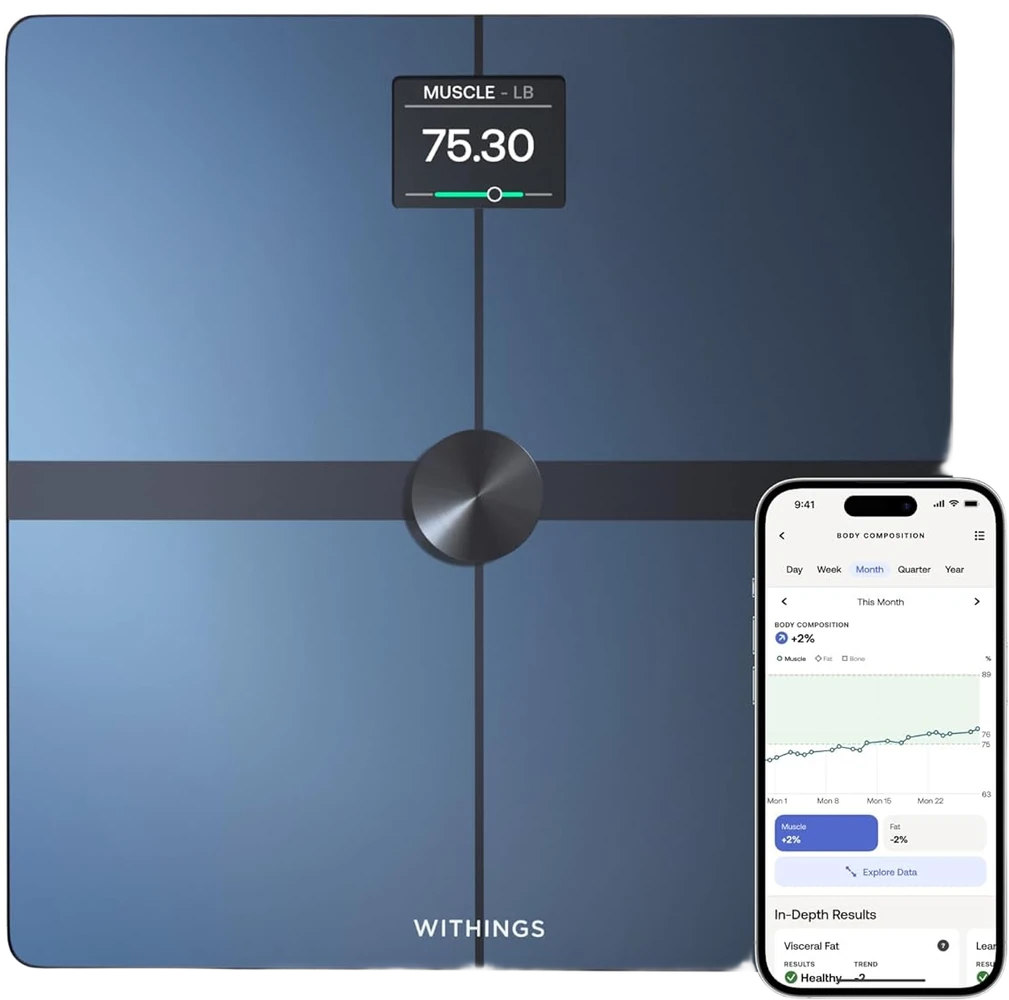
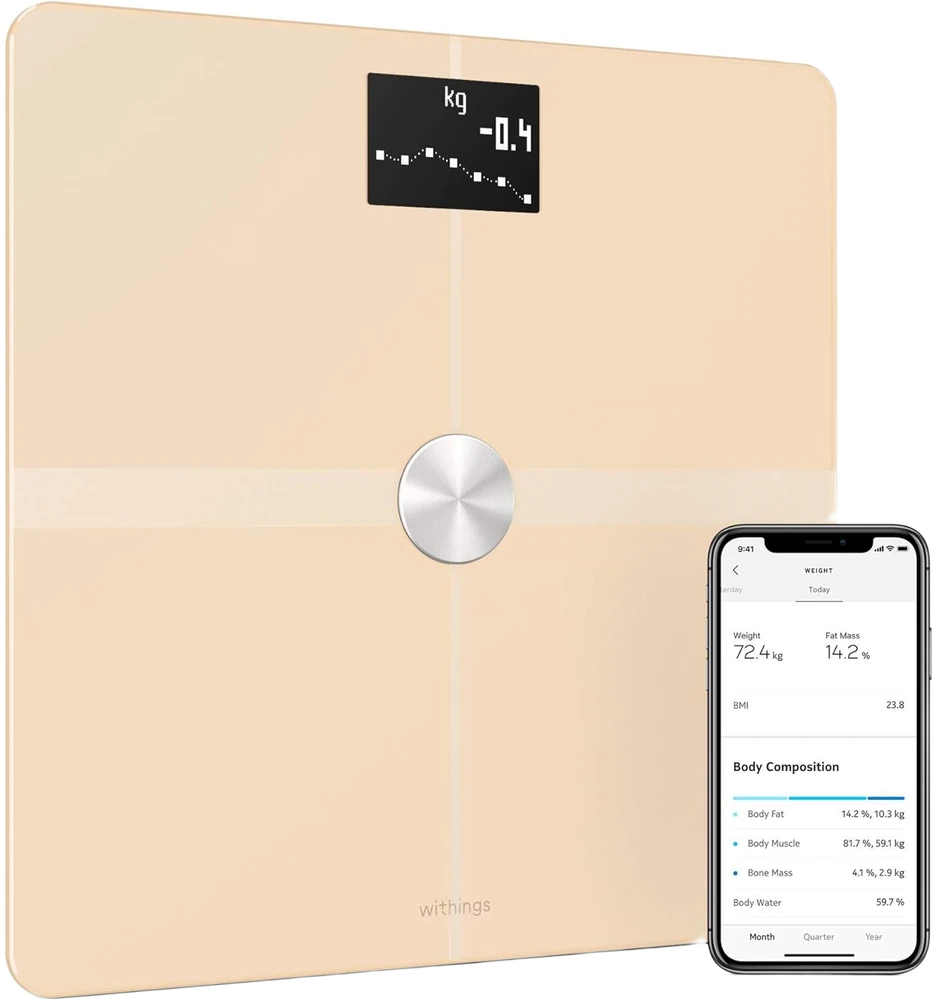
Best overall: Withings Body Smart Wi-Fi Body Composition Scale
The accuracy-first default for weight-loss trend tracking — the benchmark brand for a trustworthy weight, Wi-Fi auto-sync to the best trend app, and honestly-framed BIA body-comp.
~$79
Why it wins: all four scores, pros & cons, full label
- Accuracy-benchmark brand — the most trustworthy weight and trend line on the list
- Wi-Fi auto-sync uploads each weigh-in with no phone needed; Health Mate is the best trend app
- Exports to Apple Health and Google Fit, with a bright color display and standing heart rate
- Weight-only and athlete/pregnancy modes; body fat from BIA, presented as a trend not an absolute
- Mid-premium price — costs more than the Bluetooth value scales (that's the accuracy you're paying for)
- 8 metrics is fewer than the 13-16 some budget scales list (but those are trend indicators, not added truth)
- Connectivity
- Wi-Fi + Bluetooth (auto-sync)
- App
- Health Mate + Apple Health & Google Fit
- Metrics
- 8 via BIA (fat, muscle, water, bone, visceral, BMI, BMR, HR)
- Modes
- Color screen; weight-only, athlete & pregnancy modes
Our take — This is the smart scale to buy if you want one and want it right. Withings is the accuracy-benchmark brand, so the weight reading — the foundation of any trend — is the most trustworthy here, and the Body Smart pairs it with effortless Wi-Fi auto-sync, the best trend app in the category (Health Mate), and clean export to Apple Health and Google Fit. The body-composition metrics come from BIA, and to its credit the experience nudges you toward reading them as a trend rather than gospel. On our criteria it leads on accuracy and ties for the top on app/sync, which is exactly what matters for tracking weight-loss progress — so it wins on merit, not price. The accuracy-first default.
 02
 03
 04
 05
 06
 07
 08
Who Wins Which Aspect
Sorted by overall SAC Product Score™ — the official ranking.
| # | Pick | Score | Weight accuracy & consistency35% | App & trend tracking / sync25% | Body-comp metrics & sensors25% | Value15% | Buy |
|---|---|---|---|---|---|---|---|
| 01 | | 9.2 | 9.61 | 9.61 | 8.82 | 8.63 | Check price |
| Accuracy-benchmark brand — the most trustworthy weight and trend line on the listMid-premium price — costs more than the Bluetooth value scales (that's the accuracy you're paying for) | |||||||
| 02 | | 8.9 | 9.52 | 9.32 | 8.82 | 7.2 | Check price |
| Garmin-grade precision and a premium build — a rock-solid, repeatable weight readingThe priciest pick by a wide margin, so it scores lower on value | |||||||
| 03 | | 8.9 | 8.9 | 8.7 | 9.41 | 8.4 | Check price |
| The longest metric list here — 16 BIA measurements, plus heart rate and a 3D body modeMore metrics means more BIA trend indicators, not more absolute accuracy — easy to over-read | |||||||
| 04 | | 8.7 | 9.23 | 9.03 | 8.4 | 7.6 | Check price |
| Withings accuracy pedigree and the best-in-class Health Mate trend app, a generation backMonochrome display and an older generation than the Body Smart (no standing heart rate) | |||||||
| 05 | | 8.7 | 8.5 | 8.5 | 8.63 | 9.61 | Check price |
| Exceptional value — 13 BIA metrics and a reliable weight at a fraction of the premium scales' priceBluetooth-only — you must open the app to sync, so the trend doesn't update on its own | |||||||
| 06 | | 8.3 | 8.5 | 8.6 | 7.8 | 8.2 | Check price |
| Genuine Wi-Fi auto-sync at a mid price — uploads the weigh-in even with your phone in another roomFewer body-comp metrics (~7) than the budget Bluetooth scales' 13-16 | |||||||
| 07 | | 8.3 | 8.2 | 8.0 | 8.4 | 8.82 | Check price |
| 13 BIA metrics and broad export (Apple Health, Fitbit, Samsung, Google) at a budget priceBluetooth-only — the trend updates only when you open the app | |||||||
| 08 | | 8.0 | 7.9 | 7.6 | 7.9 | 8.82 | Check price |
| Among the cheapest ways to get an app-connected trend tracker with 13 BIA metricsBluetooth-only and the most basic app of the group — the trend updates only in-app | |||||||
The Other 7, Ranked
- 02
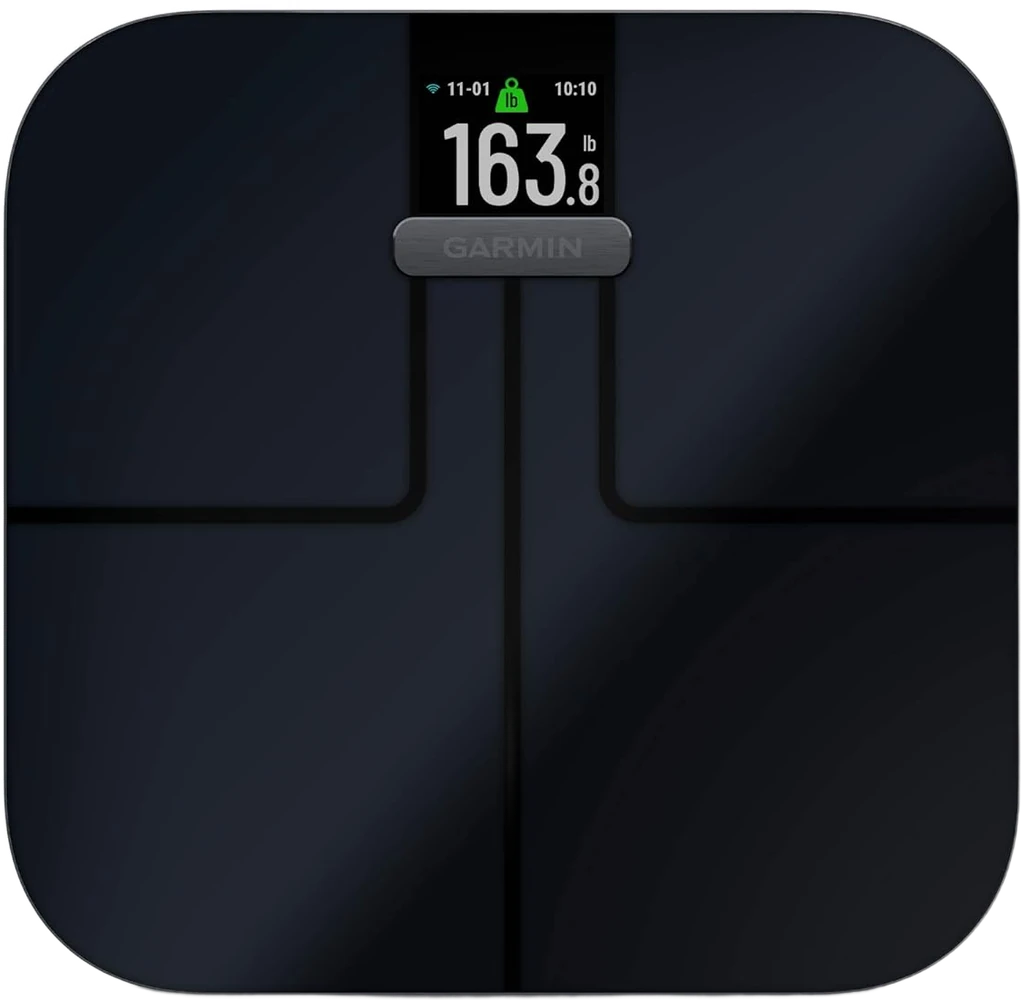
Best premium: Garmin Index S2 Wi-Fi Smart Scale
8.9SAC Score™The premium pick and the tightest loop for Garmin watch owners — Wi-Fi auto-sync to Garmin Connect, an on-device weight-trend graph, and Garmin-grade precision.
StrongestWeight accuracy & consistency9.52WeakestValue7.2- Connectivity
- Wi-Fi (auto-sync to Garmin Connect)
- App
- Garmin Connect; on-device weight-trend graph
- Metrics
- Weight, BMI, body fat, skeletal muscle, bone, water (BIA)
All four scores, pros & cons, full label
What We Like- Garmin-grade precision and a premium build — a rock-solid, repeatable weight reading
- Wi-Fi auto-sync to Garmin Connect plus an on-device weight-trend graph you see while standing on it
- The tightest feedback loop for Garmin watch owners — weight beside training and wellness data
- Supports up to 16 user profiles; color display with a weather forecast touch
What You Live With- The priciest pick by a wide margin, so it scores lower on value
- Its app advantage is biggest inside the Garmin ecosystem; less compelling if you don't use Garmin
- Users
- Up to 16 profiles; color display
Our take — If you wear a Garmin and live in Garmin Connect, the Index S2 is the obvious premium choice. The weight reading is Garmin-precise and beautifully consistent, it auto-syncs over Wi-Fi, and it draws a weight-trend graph right on the device — then drops your weight alongside your training load and wellness data for the tightest feedback loop of any scale here. Its body-comp metrics are the usual BIA estimates, best read as a trend. It sits at #2 rather than #1 purely on value — it's the most expensive scale on the list, and its biggest edge is realized inside the Garmin world. But for accuracy plus ecosystem fit, it's superb; pay once and never think about syncing again.
- 03
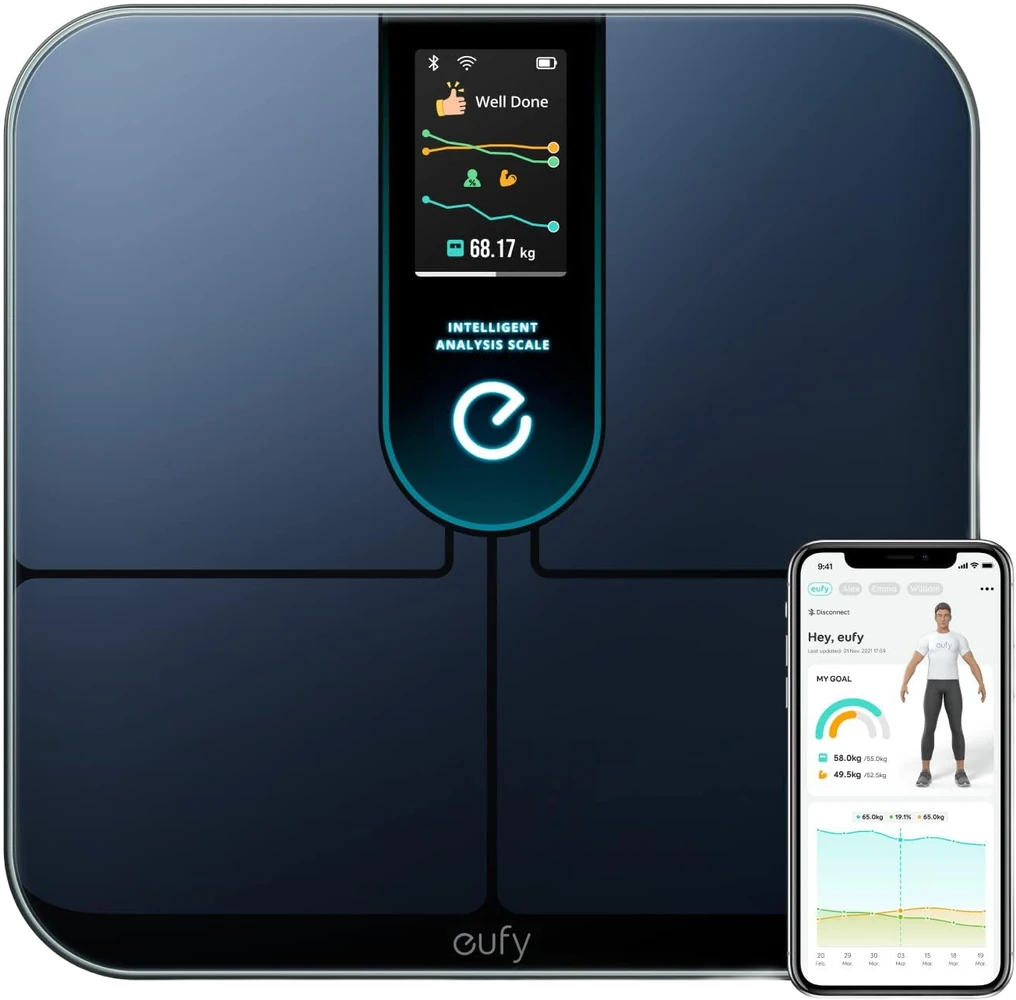
Best for metrics & display: eufy by Anker Smart Scale P3
8.9SAC Score™The feature pick — 16 BIA metrics and a big, readable display with both Wi-Fi and Bluetooth, at a fair mid price. The most data per dollar, read as a trend.
StrongestBody-comp metrics & sensors9.41WeakestValue8.4- Connectivity
- Wi-Fi + Bluetooth (auto-sync)
- App
- EufyLife + Apple Health, Fitbit, Google Fit
- Metrics
- 16 via BIA (incl. visceral fat, metabolic age, heart rate)
All four scores, pros & cons, full label
What We Like- The longest metric list here — 16 BIA measurements, plus heart rate and a 3D body mode
- Both Wi-Fi and Bluetooth, so weigh-ins can auto-sync without the phone present
- Large, easy-to-read color display; exports to Apple Health, Fitbit, and Google Fit
- Strong value — Wi-Fi plus the most metrics at a fair mid price
What You Live With- More metrics means more BIA trend indicators, not more absolute accuracy — easy to over-read
- App and brand trail Withings/Garmin slightly on trend polish and accuracy pedigree
- Display
- Large color screen; 3D virtual body mode
Our take — The eufy P3 is the pick for someone who wants the most on-screen and in-app for their money. It packs sixteen BIA metrics, heart rate, and a slick large display, and — importantly — it has both Wi-Fi and Bluetooth, so it auto-captures weigh-ins like the premium scales while costing far less than the Garmin. The honest caveat is the one this whole page makes: a longer metric list is more trend indicators, not more truth, so read body fat and the rest as direction over time. It lands at #3 because its accuracy pedigree and trend-app polish sit just behind Withings and Garmin, but on features-per-dollar with real Wi-Fi, it's the standout.
- 04
Best proven Wi-Fi (value): Withings Body+ Wi-Fi Body Composition Scale
8.7SAC Score™The mature, proven Withings Wi-Fi scale for less than the Body Smart — the same accuracy pedigree and best-in-class Health Mate trend tracking, a generation back.
StrongestWeight accuracy & consistency9.23WeakestValue7.6- Connectivity
- Wi-Fi (auto-sync; Bluetooth setup)
- App
- Health Mate + Apple Health, Fitbit, Google Fit (100+ apps)
- Metrics
- Full BIA: weight, body fat & water %, muscle & bone mass, BMI
All four scores, pros & cons, full label
What We Like- Withings accuracy pedigree and the best-in-class Health Mate trend app, a generation back
- True Wi-Fi auto-sync with no phone needed; integrates with 100+ apps incl. Apple Health & Fitbit
- Full BIA body composition, up to 8 auto-recognized users, and a long ~18-month battery
- Often discounted below the Body Smart — the value way into the Withings ecosystem
What You Live With- Monochrome display and an older generation than the Body Smart (no standing heart rate)
- List price is mid-premium; the newer Body Smart is the better buy when prices are close
- Users
- Auto-recognizes up to 8 users; ~18-month battery
Our take — The Body+ is the smart move for anyone who wants the Withings experience — benchmark accuracy and the best trend app in the category — without paying for the newest model. It's a mature, proven Wi-Fi scale that auto-syncs with no phone present, recognizes up to eight users, runs ~18 months on a charge, and plugs into more than a hundred apps including Apple Health and Fitbit. You give up the Body Smart's color screen and standing heart rate, and on value it depends on the price gap. It ranks #4 simply because the Body Smart does everything it does and a little more — but when the Body+ is discounted, it's the value way into the best ecosystem here.
- 05
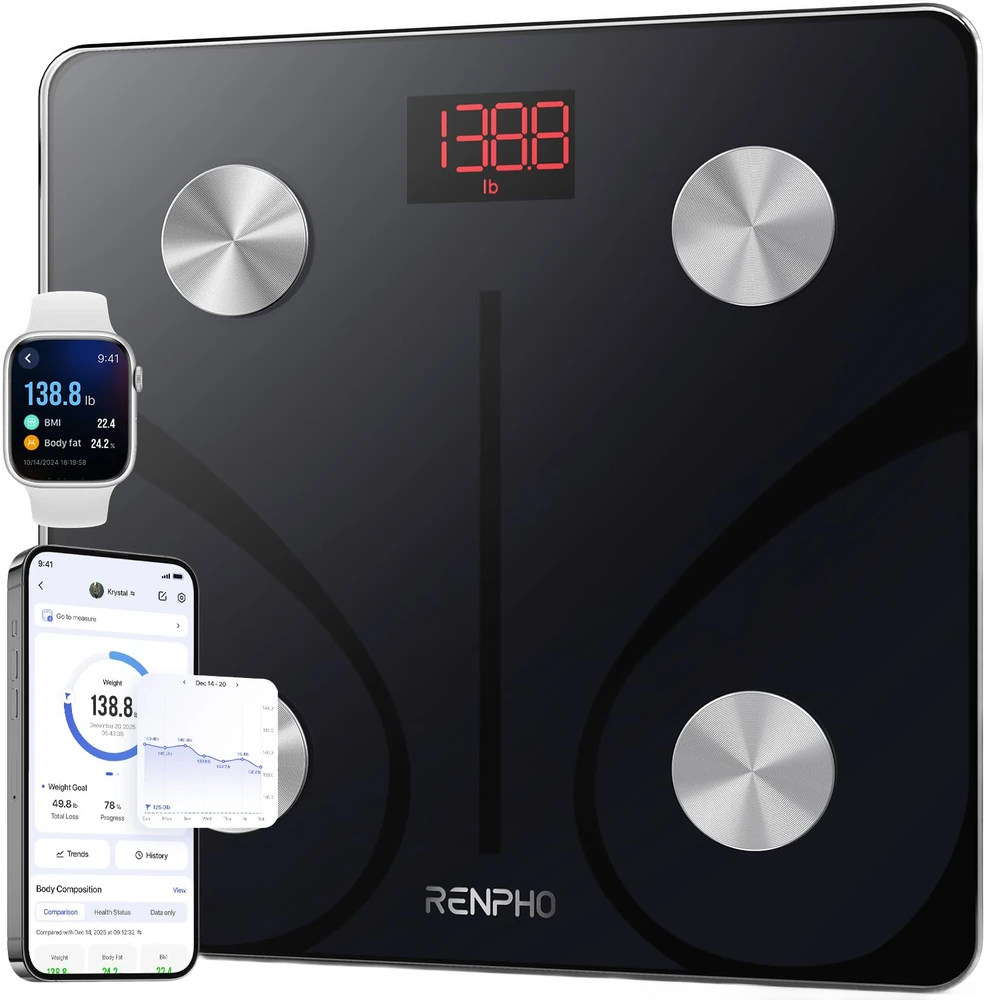
Best value: Renpho Elis 1 Bluetooth Body Fat Scale
8.7SAC Score™The value champion — 13 BIA metrics, four precision sensors, and reliable weight at a budget price, from one of the most-owned smart scales on Amazon.
StrongestValue9.61WeakestWeight accuracy & consistency8.5- Connectivity
- Bluetooth (open the app to sync)
- App
- Renpho + Apple Health, Fitbit, Google Fit, Samsung Health
- Metrics
- 13 via BIA (incl. visceral fat, protein, metabolic age)
All four scores, pros & cons, full label
What We Like- Exceptional value — 13 BIA metrics and a reliable weight at a fraction of the premium scales' price
- Four high-precision sensors and 400 lb capacity; a clean, well-liked trend app
- Exports to Apple Health, Fitbit, Google Fit, and Samsung Health; unlimited user profiles
- One of the most-owned and most-reviewed smart scales on Amazon — a proven workhorse
What You Live With- Bluetooth-only — you must open the app to sync, so the trend doesn't update on its own
- Brand accuracy pedigree is below Withings/Garmin (fine for trend-tracking, just not benchmark-grade)
- Sensors
- 4 high-precision sensors; 400 lb capacity; unlimited users
Our take — The Renpho Elis 1 is the value play and a genuinely smart default. For around a quarter of the Garmin's price you get a reliable weight reading, thirteen BIA metrics, four precision sensors, and a clean, popular trend app that exports to Apple Health, Fitbit, Google Fit, and Samsung Health — everything a weight-loss trend tracker needs. The trade-off, and why it sits mid-list rather than higher, is Bluetooth-only syncing: you have to open the app for the weigh-in to land, a small daily friction the Wi-Fi scales avoid, and its accuracy pedigree is a notch below the benchmark brands. But for the cheapest honest, full-featured way to track your trend, it's the one to buy — pair it with a calorie deficit and let it chart the progress.
- 06
Best mid-price Wi-Fi: Greater Goods WiFi Premium Smart Body Composition Scale
8.3SAC Score™True Wi-Fi auto-sync at a mid price — sends your weigh-in even when your phone is away, via the clean Weight Gurus app, from a brand with a charitable mission.
StrongestApp & trend tracking / sync8.6WeakestBody-comp metrics & sensors7.8- Connectivity
- Wi-Fi + Bluetooth (auto-sync, phone-away)
- App
- Weight Gurus + Apple Health, Fitbit, Google Fit
- Metrics
- ~7 (weight, BMI, body fat, muscle, water, bone) via BIA
All four scores, pros & cons, full label
What We Like- Genuine Wi-Fi auto-sync at a mid price — uploads the weigh-in even with your phone in another room
- Clean, well-regarded Weight Gurus trend app; exports to Apple Health, Fitbit, and Google Fit
- Up to 8 auto-recognized users; St. Louis brand with a charitable giving mission
- A focused, sensible metric set rather than an inflated list
What You Live With- Fewer body-comp metrics (~7) than the budget Bluetooth scales' 13-16
- Accuracy and app polish are good rather than benchmark-grade
- Users
- Up to 8 auto-recognized users; backlit display
Our take — Greater Goods' WiFi Premium scale is the pick for someone who specifically wants true Wi-Fi auto-sync but doesn't want to pay Withings or Garmin money. It uploads your weigh-in even when your phone is in another room, feeds the clean Weight Gurus trend app, exports to Apple Health, Fitbit, and Google Fit, and handles up to eight users — and the brand's charitable mission is a nice bonus. Its metric list (~7) is shorter than the cheaper Bluetooth scales, and its accuracy and app are good rather than class-leading, which is why it sits at #6. But as an honest, mid-priced Wi-Fi trend tracker, it does the core job well.
- 07
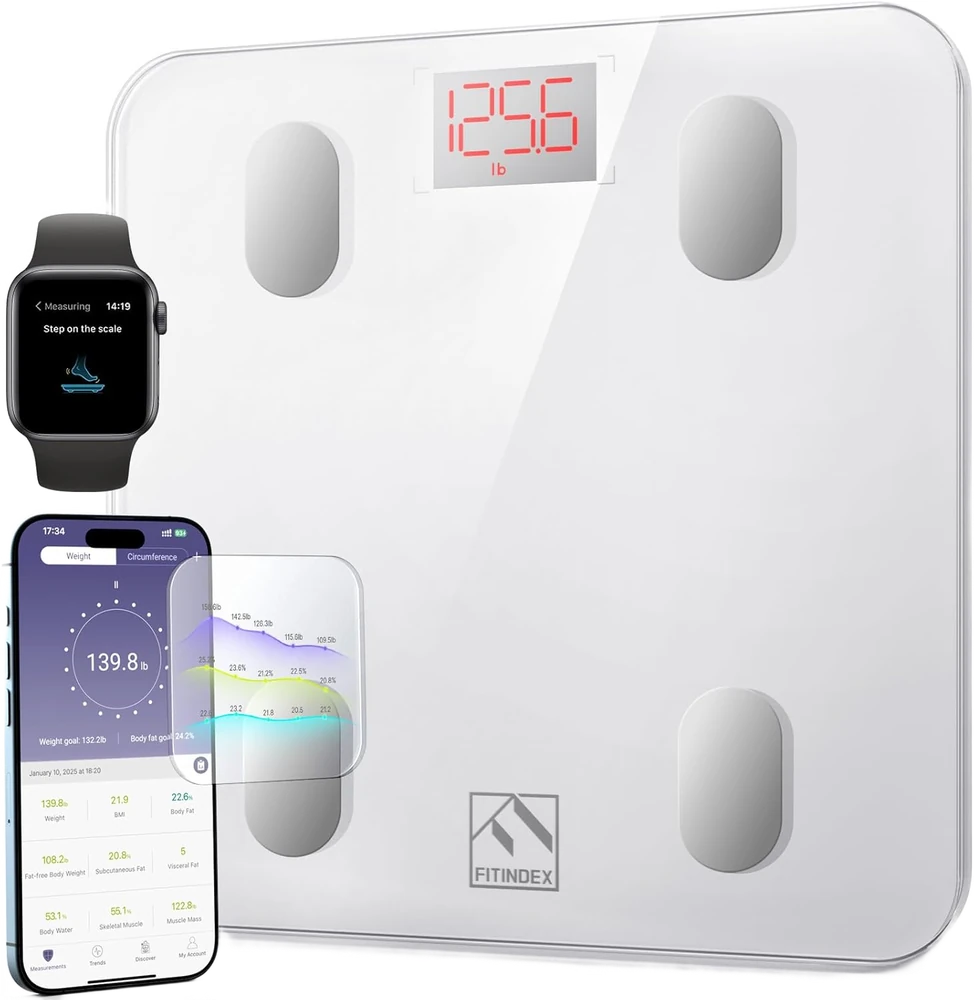
Best budget Bluetooth: FITINDEX Smart Scale for Body Weight
8.3SAC Score™A popular, dependable budget Bluetooth scale with 13 BIA metrics and broad app export — a clean, cheap trend tracker that does the essentials well.
StrongestValue8.82WeakestApp & trend tracking / sync8.0- Connectivity
- Bluetooth 4.0 (open the app to sync)
- App
- FITINDEX + Apple Health, Fitbit, Samsung Health, Google Health Connect
- Metrics
- 13 via BIA (incl. visceral fat, BMR, metabolic age)
All four scores, pros & cons, full label
What We Like- 13 BIA metrics and broad export (Apple Health, Fitbit, Samsung, Google) at a budget price
- Popular and well-reviewed; FSA/HSA eligible, with a 400 lb capacity
- Clean app with solid trend charts; auto-recognizes multiple users
- A dependable, no-drama cheap trend tracker
What You Live With- Bluetooth-only — the trend updates only when you open the app
- No standout edge over the similarly-priced Etekcity beyond a slightly stronger reputation
- Capacity
- 400 lb; FSA/HSA eligible; backlit display
Our take — FITINDEX is a popular, dependable budget pick that does the essentials well. You get thirteen BIA metrics, a clean app with proper trend charts, broad export to Apple Health, Fitbit, Samsung Health, and Google Health Connect, and a 400 lb capacity — all at a low price and FSA/HSA eligible. Like the other value scales it's Bluetooth-only, so the trend updates when you open the app, and it doesn't have a single feature that leaps past the comparably-priced Etekcity. It ranks #7 on that basis, but for a cheap, well-reviewed, broadly-compatible trend tracker, it's a perfectly sound buy — just read the body-fat metrics as a trend, as always.
- 08
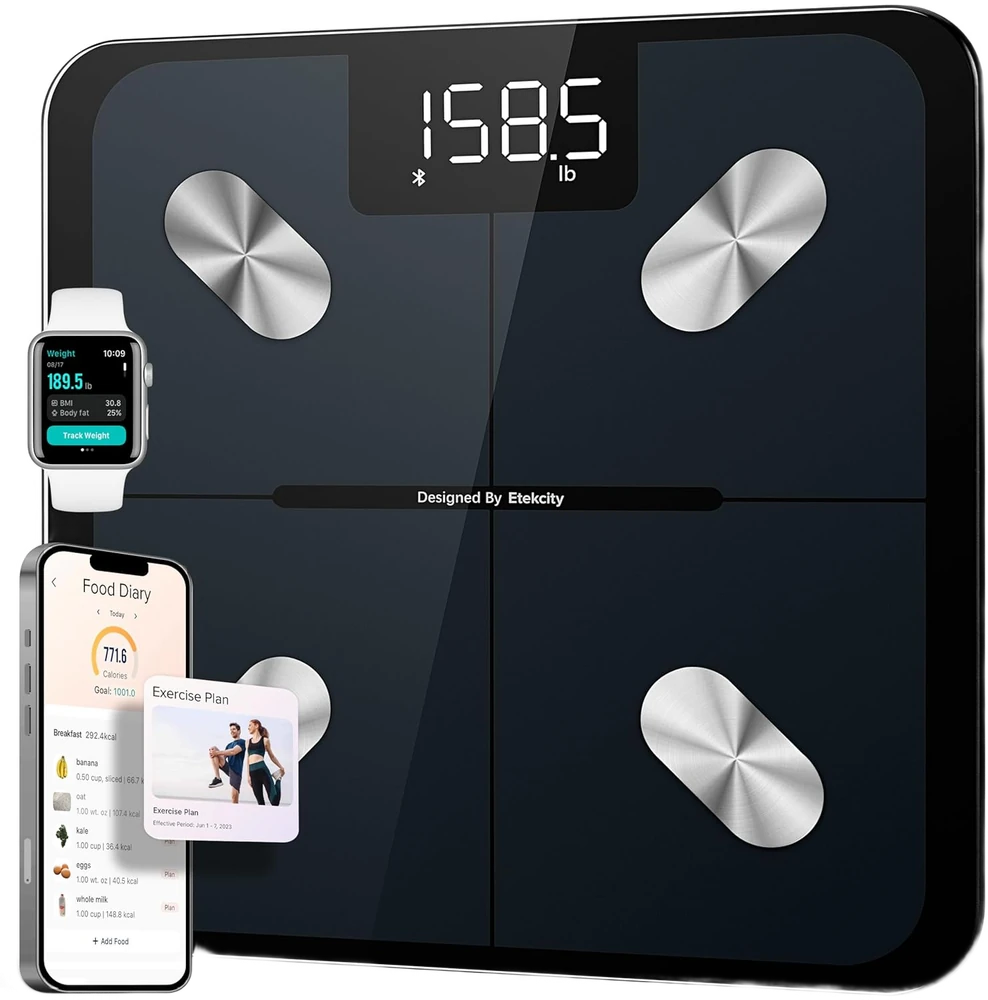
Best budget (cheapest): Etekcity Smart Fitness Scale (Body Weight & Fat)
8.0SAC Score™The honest bare-minimum smart scale — 13 BIA metrics and wide app export at the lowest price, with Bluetooth-only sync as the trade-off for the cheapest entry.
StrongestValue8.82WeakestApp & trend tracking / sync7.6- Connectivity
- Bluetooth (open the app to sync)
- App
- VeSync + Apple Health, Google Fit, Fitbit, MyFitnessPal
- Metrics
- 13 via BIA; 0.05 lb accuracy increments
All four scores, pros & cons, full label
What We Like- Among the cheapest ways to get an app-connected trend tracker with 13 BIA metrics
- Wide export — VeSync app plus Apple Health, Google Fit, Fitbit, and MyFitnessPal
- Baby mode and a zero-current mode (no BIA) for those who want weight only
- Fine 0.05 lb increments and a clean tempered-glass build
What You Live With- Bluetooth-only and the most basic app of the group — the trend updates only in-app
- No standout feature; it's the floor of the category, chosen on price
- Modes
- Baby & zero-current modes; tempered glass, LED display
Our take — The Etekcity rounds out the list as the honest cheapest pick — and an honest cheap pick is exactly what it is, not a flimsy one we're punishing. It tracks weight reliably, gives you thirteen BIA metrics, exports widely (VeSync plus Apple Health, Google Fit, Fitbit, and MyFitnessPal), and even offers a zero-current mode for weight-only use, all at the lowest price here. It ranks #8 squarely on our criteria: Bluetooth-only syncing, the most basic app of the group, and no feature that stands out — which is the real trade-off for the rock-bottom price. We deliberately did not crown it for being cheap, but if budget is the deciding factor, buy it without worry: it gives you the automatic trend line that does the actual work, and that's what matters.
The Guide In Four Short Lessons
What a smart scale's numbers are really worth (the evidence)
- Trend
- The weight-trend line is the part of a smart scale you can actually trust — daily weight is mostly noise
- 4.6-6.4%
- BIA's standard error for body-fat % in Jackson 1988 — reliable, but coarse in absolute terms
- −3.5 to +11.7%
- How far 15 consumer BIA devices ranged from a lab 4-compartment reference (Siedler 2022)
- Deficit
- The scale measures whether a calorie deficit is working — it doesn't replace the deficit
Sources: Jackson AS, Pollock ML, Graves JE, Mahar MT. Reliability and validity of bioelectrical impedance in determining body composition. J Appl Physiol 1988 (PMID 3372410). Siedler MR, et al. Assessing the reliability and cross-sectional and longitudinal validity of fifteen bioelectrical impedance analysis devices. Br J Nutr 2022 (PMID 36404739).
Buy it for the weight trend.
Daily weight bounces a pound or two on water and salt; only the multi-week trend is signal. Weight accuracy and consistency lead our score at 35%.
Read body fat as a trend, never as a fact.
Impedance estimates ranged from 3.5% under to 11.7% over a lab reference across 15 consumer devices (Siedler 2022), and they shift with hydration.
Prefer Wi-Fi sync.
A Wi-Fi scale uploads each weigh-in by itself. Bluetooth-only scales are cheaper and fine, but need the app open every time.
BIA-accuracy evidence: Jackson 1988 (PMID 3372410) + Siedler 2022 (PMID 36404739); every per-pick number is a manufacturer spec — full scoring in the methodology below.
Each pick was scored 0-10 across four criteria, then weighted to a final composite. Weight accuracy and consistency carries the most weight — 35% — because the trend line is only as trustworthy as the weigh-ins under it: we reward high-precision load cells, repeatable readings, sensible capacity headroom, and the track record of accuracy-benchmark brands. App and trend tracking / sync is next (25%): whether the scale captures the weigh-in automatically (Wi-Fi beats Bluetooth-only for adherence), draws a clear weight trend, recognizes multiple users, and exports to Apple Health / Google Fit / Fitbit so your weight lives beside your steps and calories. Body-comp metrics and sensors (25%) covers the number of BIA metrics, electrode quality, and useful modes (athlete, pregnancy, on-device trend) — but we weight it honestly: more metrics are more trend indicators, NOT more absolute accuracy, because all of them come from the same moderately-accurate BIA estimate. Value (15%) is the tie-breaker: price for the accuracy, app, and sensors delivered. Crucially, PRICE IS SUBORDINATE — the best pick can cost more, and affordability is recognized with a 'Best value' badge rather than by crowning a cheap Bluetooth-only scale #1. We do not invent numbers: every per-pick spec is the manufacturer's own, and the only research cited is the BIA-accuracy evidence (Jackson 1988, Siedler 2022) that justifies reading body fat as a trend, each with a verified PMID.
Weight accuracy & consistency · 35%
The most important factor — a trend is only as good as the weigh-ins under it. We reward high-precision load cells, repeatable readings, real capacity headroom, and the track record of accuracy-benchmark brands (Withings, Garmin). A scale that drifts a pound in random directions makes a trend you can't read.
App & trend tracking / sync · 25%
The trend is the product; the app is how you see it. Wi-Fi auto-capture (no phone needed) beats Bluetooth-only for adherence; we also reward a clear trend chart, multi-user recognition, and export to Apple Health, Google Fit, and Fitbit so weight sits beside steps and calories.
Body-comp metrics & sensors · 25%
Number of BIA metrics, electrode quality, and useful modes (athlete, pregnancy, on-device trend). Weighted — but framed honestly: more metrics are more trend INDICATORS, not more absolute truth, since they all derive from the same moderately-accurate BIA estimate. Read them as direction over time.
Value (price) · 15%
Price for the accuracy, app, and sensors delivered. Tie-breaker — the first three criteria do most of the ranking. PRICE IS SUBORDINATE: a more accurate, better-syncing scale can rank higher even if it costs more, while affordability is recognized with a 'Best value' badge rather than by crowning the cheapest Bluetooth-only scale.

How a smart scale drives weight loss
- 1
Daily weight is noisy — the trend is the signal
Your weight bounces a pound or two daily on water, food, salt, and hormones with no real fat change. Judging progress by any single reading is misleading; the moving-average TREND over weeks is the real signal of whether a deficit is working. A smart scale exists to surface that trend.
- 2
The scale captures and charts it automatically
Step on, and the weigh-in syncs by itself (Wi-Fi) or with a tap of the app (Bluetooth), then lands in a trend chart — no spreadsheet, no manual logging — and exports to Apple Health, Google Fit, or Fitbit so weight sits beside steps and calories. It also estimates body composition by BIA, shown honestly as a trend, not an absolute.
- 3
An honest trend makes the deficit verifiable
With a clean weight trend you can see, within a couple of weeks, whether your calorie deficit is actually moving the line — and adjust deliberately instead of guessing. Paired with a food scale (which makes intake honest), it closes the loop: control the input, confirm the output. The scale doesn't burn calories; it makes the result measurable.
What to expect in your first few weeks with a smart scale
The noise looks alarming
Your first few daily readings will jump around — up after a salty dinner, down after a workout — and the body-fat % will wobble with hydration. This is normal BIA noise, not real change. Resist reacting to any single day; you're just establishing a baseline.
The trend line emerges
Once you have a week or two of weigh-ins, the app's moving average starts to reveal direction through the noise. This is the moment the scale earns its keep: you can finally see whether the deficit is nudging the trend down, independent of daily fluctuations.
Progress becomes verifiable
With a few weeks of trend, weight loss becomes something you can confirm and tune rather than hope for — and body-fat and muscle TRENDS (read as direction, not absolutes) add color. If the line is flat, you know to tighten the deficit; if it's falling, you know it's working.
The bottom line
The Withings Body Smart (#1) is the overall winner.
It's the accuracy-benchmark brand, so the weight reading and trend are the most trustworthy here, with effortless Wi-Fi auto-sync, the best trend app (Health Mate), and clean export to Apple Health and Google Fit. It wins on merit, not price.
Different priorities, different pick — and the budget scales are placed honestly, not punished.
Want the tightest loop for a Garmin watch and an on-device trend graph: the Garmin Index S2 (#2). Want the most metrics and a big display with real Wi-Fi: the eufy P3 (#3). Cheapest honest, full-featured tracker: the Renpho Elis 1 (#5) — Bluetooth-only but excellent.
The rule to leave with: accuracy first, Wi-Fi for adherence, body fat as a trend — and the scale only measures the deficit, it doesn't do the work.
Prioritize weight accuracy, prefer Wi-Fi, and read body fat % as a trend under consistent conditions, never as an absolute. Pair it with a food scale, weigh consistently, watch the trend — the scale measures whether a calorie deficit is working; it doesn't replace the deficit.
Quick Answers
Are smart scales accurate for weight loss?
For tracking your weight TREND — which is what matters for weight loss — yes, the good ones are very reliable, and that's their highest-value job. A smart scale captures each weigh-in automatically, syncs it to an app, and charts a moving average, so you can see whether a calorie deficit is actually working over weeks instead of over-reacting to noisy daily swings (water, food, salt, hormones move the scale a pound or two daily with no real fat change). The accuracy-benchmark brands here (Withings, Garmin) repeat weight especially consistently. Just be clear-eyed about the body-fat % the same scale shows — that's a rougher BIA estimate best read as a trend, not an exact figure. The weight trend is the part you can trust.
How accurate is the body-fat percentage on a smart scale?
Honestly: reliable but rough. The body-fat reading comes from bioelectrical impedance (BIA) — a small current sent up through your feet — which repeats consistently (good) but isn't very accurate in absolute terms. In Jackson 1988 (J Appl Physiol) BIA's standard error for body-fat % was about 4.6-6.4 percentage points, far coarser than skinfold calipers, and a 2022 study of fifteen consumer BIA devices (Siedler, Br J Nutr) found estimates ranging from −3.5% to +11.7% off a laboratory 4-compartment reference. So don't treat '22% body fat' as ground truth. The right way to use it — supported by that same research, which found some devices acceptable for tracking CHANGE — is as a trend under consistent conditions: same scale, same time of day, similar hydration, watching the direction over weeks.
Why does my body-fat reading change so much day to day?
Because BIA measures impedance through your body water, so anything that changes your hydration changes the number — and that's most of the daily swing, not real fat change. Dehydration increases resistance and can push the body-fat estimate up by several points; a big drink of water, a salty meal, a workout, alcohol, or even the time of day (you're more dehydrated in the morning) all move it. This is exactly why the absolute number is unreliable and the trend is what counts. Weigh under the same conditions every time — most people pick first thing in the morning, after the bathroom, before eating or drinking — and judge progress by the multi-week direction, not any single reading.
Wi-Fi or Bluetooth — which smart scale should I get?
Wi-Fi if you value zero-friction tracking, Bluetooth-only if you value price. A Wi-Fi scale (Withings Body Smart, Garmin Index S2, eufy P3, Greater Goods) uploads each weigh-in by itself, so your trend updates whether or not your phone is nearby — you literally just step on. A Bluetooth-only scale (Renpho, FITINDEX, Etekcity) needs the companion app open to sync, which is a tiny extra step but keeps the price far lower, often under $40. Both track the trend perfectly well once the data is in; the only real difference is adherence friction. If you know you'll forget to open an app, pay up for Wi-Fi; if a few seconds each morning is fine, the Bluetooth value scales are excellent.
Do I really need a smart scale, or is a regular scale enough?
A regular scale weighs you; a smart scale weighs you AND does the tracking for you — and the tracking is where the value is for weight loss. Because daily weight is noisy, the signal lives in the trend, and a smart scale draws that trend automatically (no spreadsheet, no manual logging) and recognizes multiple users so each person gets their own line. It also estimates body composition, though that's a rough BIA trend rather than a precise figure. If you're disciplined enough to log weight by hand and read your own moving average, a $15 analog scale genuinely works. Most people aren't, and the automatic trend line plus app sync is what keeps them consistent — that's what you're paying for.
How is a smart scale different from a food scale for weight loss?
They're two halves of the same loop, which is exactly why this is the sibling guide to our best-food-scale list. A FOOD scale measures the INPUT — it makes your calorie count honest by weighing portions in grams, so your tracker isn't a hopeful guess. A SMART scale measures the PROGRESS — it tracks whether your body weight is actually responding to that input, via an automatic trend line. The food scale fixes what you can control (intake); the smart scale tells you if it's working (output). Using both closes the feedback loop: weigh your food to run an honest deficit, and weigh yourself to confirm the deficit is moving the trend. Neither does the work — a calorie deficit does — but together they make the work measurable.
Can the whole family use one smart scale?
Yes — multi-user support is one of the best features of this category, and nearly every pick here has it. Scales like the Withings, Garmin, eufy, Renpho, and FITINDEX auto-recognize who's standing on them (by weight and prior data) and route each weigh-in to that person's private profile and trend, so partners or family members each see only their own line. Withings and Renpho support up to eight users; Garmin up to sixteen. Set up each profile in the app once, and from then on everyone just steps on. It's a genuine convenience and means one good scale can serve a whole household without the trends getting mixed up.
Are smart scales safe — what about the electrical current and pacemakers?
For the vast majority of people the BIA current is completely safe — it's a tiny, imperceptible signal you can't feel. The one real caution is medical implants: manufacturers (Withings, Garmin, and others) advise that people with a pacemaker or other implanted electronic device should NOT use the body-composition (BIA) feature, because the current could theoretically interfere with it. Those users can still use the scale purely as a weight scale where a weight-only mode exists, or choose a plain digital scale instead. Pregnancy is another case where the body-fat estimate is unreliable (and some scales offer a dedicated pregnancy/weight-only mode). If in doubt, check the manual or your doctor — but for a healthy adult without an implant, there's nothing to worry about.
Every Claim Ranked Above Traces Back To One Of These
2 peer-reviewed sources, each linked to PubMed
- [1] Jackson 1988 PMID 3372410 — Reliability and validity of bioelectrical impedance in determining body composition. Bioelectrical impedance (BIA) was highly RELIABLE (it repeated consistently, Rxx ~0.96-0.99) but only moderately VALID for body-fat %: its standard error of estimate was about 4.6-6.4 percentage points — far coarser than skinfold calipers (2.6-3.6) and comparable to BMI. This is the evidence that a smart scale's body-fat number is consistent but rough in absolute terms, so it should be read as a trend, not a precise figure. (Evidence about the BIA method; not a product spec.)
- [2] Siedler 2022 PMID 36404739 — Assessing the reliability and cross-sectional and longitudinal validity of fifteen bioelectrical impedance analysis devices. Across fifteen consumer and research BIA devices measured against a 4-compartment reference, body-fat estimates varied widely between devices — constant error ranged from about −3.5% to +11.7% — yet select foot-to-foot and octapolar models tracked CHANGES over time acceptably. This directly supports the page's stance: don't trust the absolute body-fat number from a smart scale, but it can be useful for following a trend under consistent conditions. (Evidence about BIA accuracy, not a manufacturer claim.)
Affiliate disclosure: every Amazon link uses our Associates tag (superachieverclub-20). We earn a small commission at no cost to you; it funds independent reviews. We never accept payment to change a ranking.