
Top 8 Best Appetite Suppressant Supplements for Weight Loss (2026)
 01 · Best overall✓ Label verified · Supplement Facts read Sep 7, 2026
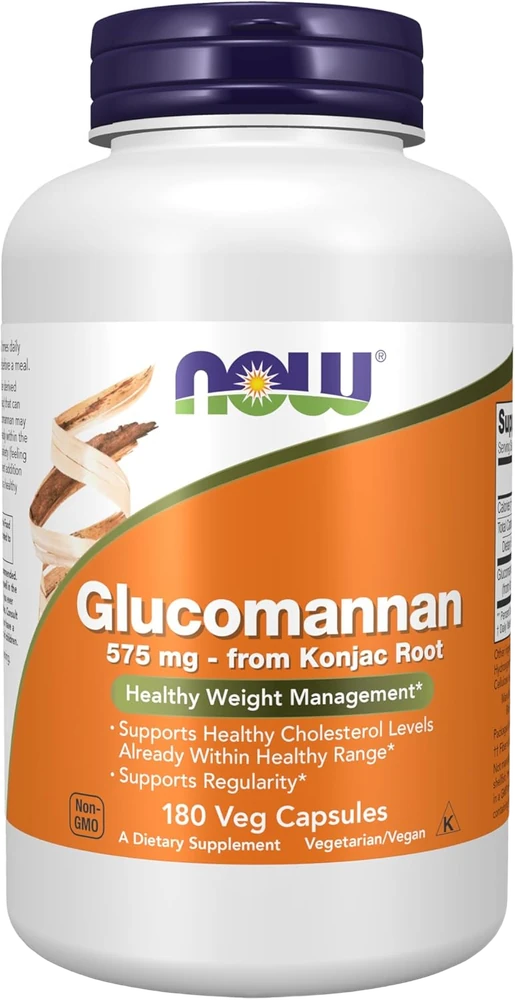
Best overall: NOW Foods Glucomannan 575 mg
A highly viscous soluble fiber that fills the stomach and slows gastric emptying — the best-evidenced over-the-counter satiety mechanism, from a trusted brand at a fair price. Take it before meals with a full glass of water (never dry).
Low cost per servingLow per serving (180 caps; 3-cap pre-meal dose)
Why it wins: all five scores, pros & cons, full label
- Viscous fiber that genuinely fills the stomach and slows digestion — a real satiety mechanism (Keithley 2005)
- Strong fullness per gram, so a modest pre-meal dose works
- Trusted brand, non-GMO, GMP-quality, and inexpensive per serving
- Doubles as a soluble-fiber and regularity benefit
- CHOKING RISK if taken dry — must always be taken with a full glass of water, never lying down
- Boosts fullness but a meta-analysis found no significant weight loss on its own (Onakpoya 2014) — it's a deficit helper, not a fat burner
- Active
- Glucomannan (konjac) soluble fiber, 575 mg per cap
- Dose
- ~1 g (3 caps) + a FULL glass of water before meals
- Size
- 180 veg capsules
- Quality
- Non-GMO, GMP, NOW in-house QA

Our take — For an honest, evidence-first appetite tool, glucomannan is the one to start with — and NOW's is the trustworthy, affordable version. It's a viscous soluble fiber that swells in your stomach and slows gastric emptying, which is the best-supported over-the-counter way to feel full sooner (Keithley 2005). Two honest caveats keep this grounded: first, the safety rule — you MUST take it with a full glass of water, never dry, because it expands dramatically and can choke you otherwise; and second, the evidence — it reliably increases fullness, but a pooled analysis of RCTs found it does not by itself produce significant weight loss (Onakpoya 2014). Used correctly, before meals, it makes eating less genuinely easier, which is exactly what an appetite aid should do. That's why it's #1 — real mechanism, real safety guidance, no hype.
 02
 03
 04
 05
 06
 07
 08
Who Wins Which Aspect
Sorted by overall SAC Product Score™ — the official ranking.
| # | Pick | Score | Dose vs the Trials30% | Label Directions & Safety20% | Testing & Manufacturing20% | Formulation & Form15% | Value15% | Buy |
|---|---|---|---|---|---|---|---|---|
| 01 | | 8.8 | 9.21 | 9.21 | 8.61 | 8.21 | 8.41 | Check price |
| Viscous fiber that genuinely fills the stomach and slows digestion — a real satiety mechanism (Keithley 2005)CHOKING RISK if taken dry — must always be taken with a full glass of water, never lying down | ||||||||
| 02 | | 8.7 | — | — | — | — | — | Check price |
| Protein is the most satiating macronutrient; whey lowers short-term appetite + raises fullness hormones (Astrup 2013)It's protein, not a dedicated 'suppressant' — works by replacing/anchoring meals, not as a magic pill | ||||||||
| 03 | | 8.6 | — | — | — | — | — | Check price |
| Psyllium before meals cut hunger + desire to eat and raised fullness in two double-blind RCTs (Brum 2016) — the strongest pre-meal satiety evidence on this listCapsules deliver less fiber per piece than a powder scoop, so you take several | ||||||||
| 04 | | 8.5 | — | — | — | — | — | Check price |
| Same protein-satiety benefit as any quality whey (Astrup 2013), in a cleaner-label grass-fed isolatePremium price and a smaller tub — the highest cost per serving of the proteins here | ||||||||
| 05 | | 8.5 | — | — | — | — | — | Check price |
| Same psyllium satiety mechanism backed by Brum 2016 — fills the stomach, slows emptyingAt 500 mg per cap you swallow several to reach a meaningful pre-meal fiber dose | ||||||||
| 06 | | 7.1 | — | — | — | — | — | Check price |
| Plausible mechanism: as a serotonin precursor it may influence satiety in some peopleEvidence for appetite/weight is limited and far weaker than fiber or protein | ||||||||
| 07 | | 7.1 | — | — | — | — | — | Check price |
| One reasonably good 16-week RCT (Rao 2021) found lower caloric intake + reduced waist vs placeboThe broader human evidence is thin and conflicting — one positive trial is not a strong base | ||||||||
| 08 | | 7.0 | — | — | — | — | — | Check price |
| Real, specific mechanism: inhibits alpha-amylase to slow starch digestion (Phase 2 is the studied branded extract)Real-world weight-loss effects are small and inconsistent across trials | ||||||||
The Other 7, Ranked
- 02
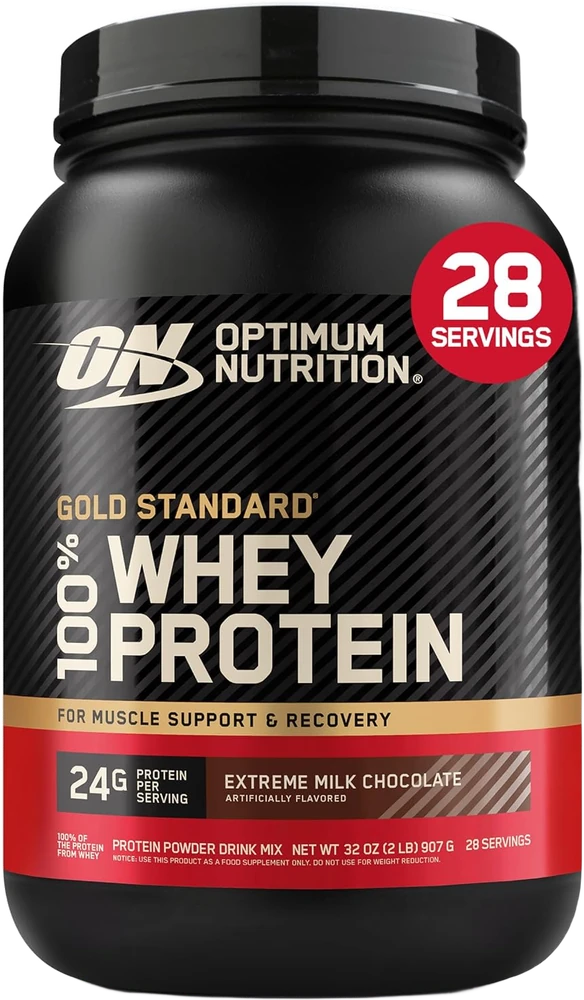
Best protein (most satiating): Optimum Nutrition Gold Standard 100% Whey
8.7SAC Score™Protein is the most satiating macronutrient and the most honest 'appetite suppressant' on this list — and this is the category-standard whey at excellent value. A scoop keeps you fuller than any herbal pill here.
- Active
- Whey protein (isolate + concentrate), 24 g protein/scoop
- Dose
- 1 scoop (~24 g) in water/milk, or 25-30 g protein per meal
- Size
- 2 lb tub (≈29 servings)
All five scores, pros & cons, full label
What We Like- Protein is the most satiating macronutrient; whey lowers short-term appetite + raises fullness hormones (Astrup 2013)
- Functionally outperforms most herbal 'appetite pills' for keeping you full
- Protects muscle while you're in a calorie deficit
- Banned-substance tested, mixes cleanly, outstanding value per gram
What You Live With- It's protein, not a dedicated 'suppressant' — works by replacing/anchoring meals, not as a magic pill
- Adds calories, so it must fit your overall deficit (swap it in for less-satiating food, don't just pile it on)
- Quality
- Banned-substance tested; 35-year trusted brand
Our take — This is the pick that follows the evidence to its logical end: the single most reliable, best-tolerated 'appetite suppressant' available over the counter is protein, and a quality whey is the easiest way to get more of it. Reviews of controlled trials (Astrup 2013) show whey lowers short-term appetite and raises the gut hormones that signal fullness — and in real life, a 24 g scoop or a high-protein meal simply keeps you fuller for longer than any herbal pill on this list, while protecting muscle in a deficit. Optimum Nutrition's Gold Standard is the category benchmark: banned-substance tested, clean-mixing, and excellent value per gram. The only reason it's #3 rather than higher is framing — it works by anchoring meals and crowding out less-satiating food, not as a stand-alone pill, and the calories have to fit your deficit. Use it that way and it beats most of the products marketed specifically as appetite suppressants.
- 03
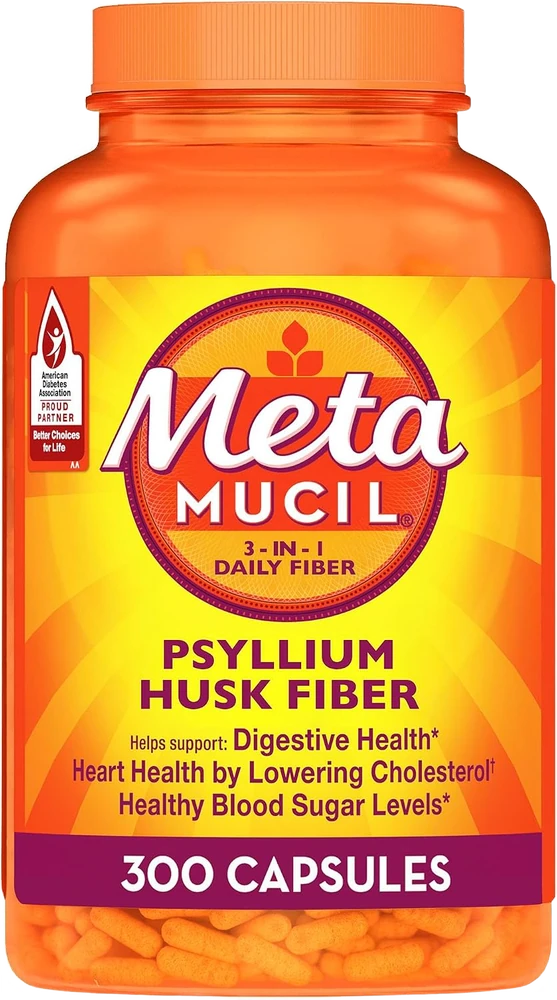
Best psyllium (most-replicated): Metamucil 3-in-1 Psyllium Fiber Capsules
8.6SAC Score™The exact psyllium fiber used in the best-replicated pre-meal satiety trials, in convenient capsules — plus a real cholesterol and regularity bonus. Take before meals with a full glass of water.
- Active
- Psyllium husk soluble fiber
- Dose
- Capsules before meals with a full glass of water
- Size
- 300 capsules (single bottle)
All five scores, pros & cons, full label
What We Like- Psyllium before meals cut hunger + desire to eat and raised fullness in two double-blind RCTs (Brum 2016) — the strongest pre-meal satiety evidence on this list
- It's the very psyllium (Metamucil) used in those satiety studies
- Adds well-established LDL-cholesterol-lowering and regularity benefits
- Capsule form is convenient — no gritty drink to mix
What You Live With- Capsules deliver less fiber per piece than a powder scoop, so you take several
- Like all psyllium, must be taken with plenty of water; can cause initial gas/bloating
- Quality
- Plant-based, no added sweetener; mainstream brand QA
Our take — If you want the appetite tool with the cleanest pre-meal satiety evidence, psyllium is it, and Metamucil is the brand that was actually studied. In two double-blind, placebo-controlled crossover trials, taking psyllium before breakfast and lunch significantly reduced hunger and desire to eat and increased fullness between meals (Brum 2016) — exactly the effect you want from an appetite suppressant, and better-replicated than anything else here. On top of that you get psyllium's proven cholesterol and regularity benefits, which no herbal pill offers. It sits just behind glucomannan only because capsules deliver fiber a bit less efficiently than a concentrated konjac dose, and you'll swallow several before a meal. Take them with a full glass of water, ramp up slowly to avoid gas, and you have a safe, evidence-backed, multi-benefit pick.
- 04
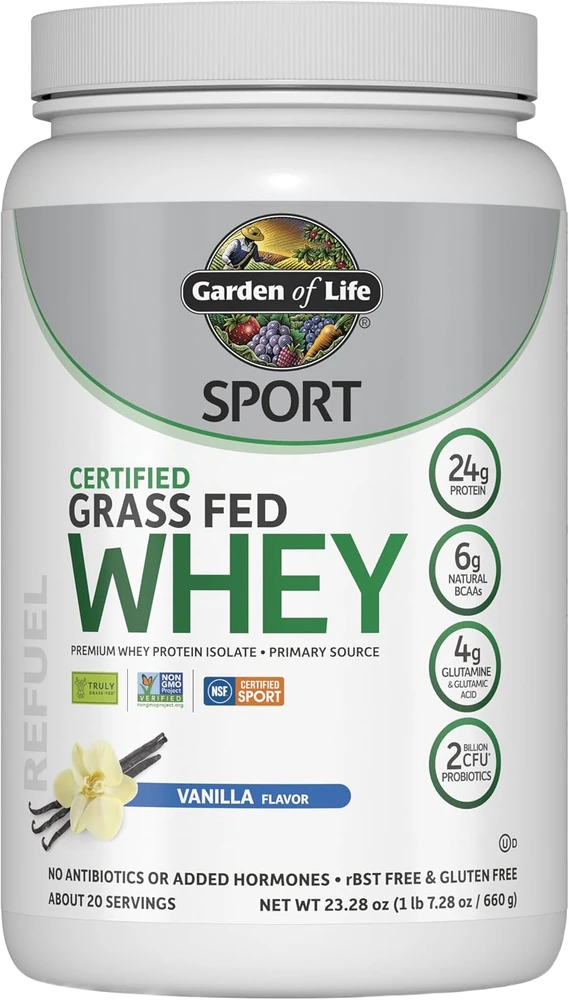
Best grass-fed protein: Garden of Life Sport Grass-Fed Whey
8.5SAC Score™The same protein-satiety lever as #3, in a grass-fed, NSF-Certified-for-Sport, probiotic-added isolate for shoppers who want the cleanest-label whey. A premium take on the most honest appetite tool.
- Active
- Grass-fed whey protein isolate, 24 g protein/scoop
- Added
- Probiotics + glutamine; NSF Certified for Sport
- Size
- 20 servings
All five scores, pros & cons, full label
What We Like- Same protein-satiety benefit as any quality whey (Astrup 2013), in a cleaner-label grass-fed isolate
- NSF Certified for Sport and Informed-Choice-level testing — strong third-party verification
- Grass-fed, non-GMO, gluten-free, with added probiotics
- Whey isolate is lower in lactose — easier on sensitive stomachs
What You Live With- Premium price and a smaller tub — the highest cost per serving of the proteins here
- Same honest framing as #3: it's protein, not a magic suppressant; calories must fit your deficit
- Quality
- Grass-fed, non-GMO, gluten-free, cold-processed, third-party certified
Our take — Garden of Life Sport is the clean-label protein pick for someone who wants the protein-satiety benefit with the most rigorous testing and sourcing. The appetite mechanism is identical to any good whey — protein is the most satiating macronutrient (Astrup 2013) — but here it comes as a grass-fed, cold-processed isolate that's NSF Certified for Sport, non-GMO, gluten-free, and lower in lactose, with probiotics added. That third-party certification is genuinely best-in-class and matters if you're drug-tested or simply want maximum label trust. It ranks #4 rather than #3 purely on value: the tub is smaller and the price per serving is the highest of the proteins, and 'grass-fed' buys you a cleaner label, not extra appetite effect. If sourcing and certification outrank cost for you, it's an easy, honest choice.
- 05
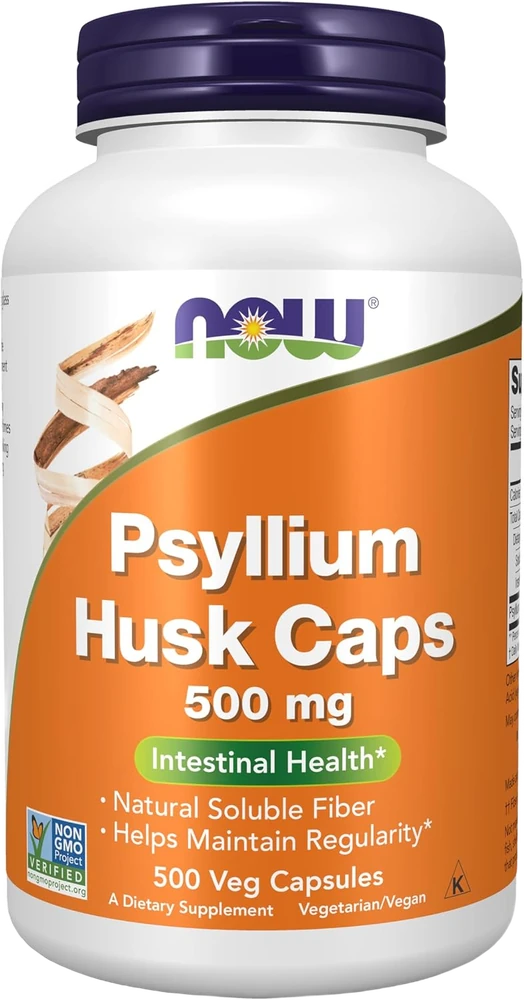
Best value (soluble fiber): NOW Foods Psyllium Husk 500 mg
8.5SAC Score™The same evidence-backed psyllium satiety mechanism as #2, in a no-frills 500-count bottle from a trusted brand — the lowest cost per serving among the fibers. Take before meals with a full glass of water.
- Active
- Psyllium husk soluble fiber, 500 mg per cap
- Dose
- Several caps before meals with a full glass of water
- Size
- 500 veg capsules — large supply
All five scores, pros & cons, full label
What We Like- Same psyllium satiety mechanism backed by Brum 2016 — fills the stomach, slows emptying
- Huge 500-count bottle = the lowest honest cost per serving among the fibers
- Non-GMO Project Verified, vegan, GMP-quality from a trusted brand
- Bonus cholesterol and regularity benefits, like all psyllium
What You Live With- At 500 mg per cap you swallow several to reach a meaningful pre-meal fiber dose
- No-frills capsules; must be taken with plenty of water (gas/bloating possible at first)
- Quality
- Non-GMO Project Verified, vegan, GMP
Our take — NOW Psyllium Husk is the value play among the evidence-backed fibers — the same satiety mechanism as the Metamucil pick (Brum 2016) at the lowest cost per serving on the list, thanks to a 500-count bottle. The glycine of fibers, essentially: cheap, clean, and effective for what it does. It lands at #5 rather than #2 for two practical reasons — at 500 mg per capsule you need several to hit a meaningful pre-meal dose, and it lacks the specific brand pedigree of the exact product used in the trials. But the psyllium itself is identical in function, Non-GMO Project Verified, and vegan. If you respond to fiber and want the cheapest sustainable supply, this is the smart re-buy. Take it with a full glass of water before meals and ramp up gradually.
- 06
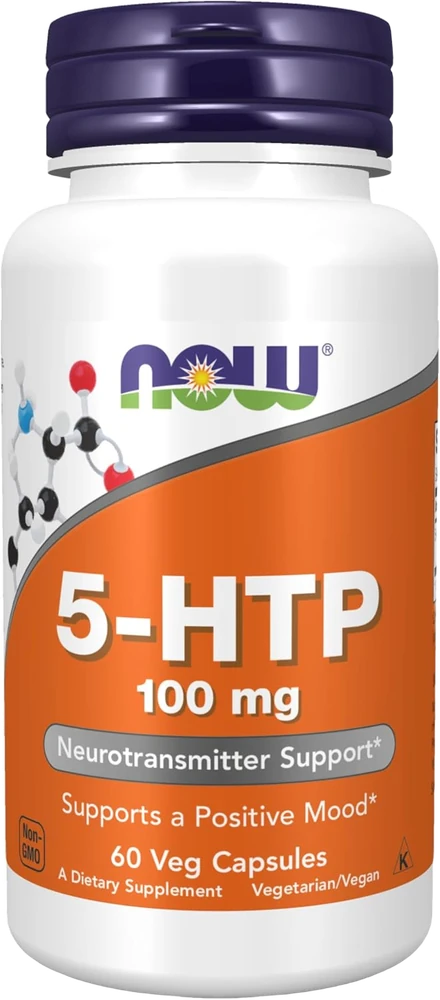
Herbal option — limited evidence: NOW Foods 5-HTP 100 mg
7.1SAC Score™A serotonin precursor with some small studies on reduced intake — but limited evidence and real drug interactions. A trustworthy brand of a weak-evidence ingredient, ranked honestly below fiber and protein.
- Active
- 5-HTP from Griffonia simplicifolia, 100 mg per cap
- Dose
- 1 cap, often before a meal or at night (start low)
- Size
- 60 veg capsules
All five scores, pros & cons, full label
What We Like- Plausible mechanism: as a serotonin precursor it may influence satiety in some people
- Some small studies suggest reduced food intake
- Clean, trustworthy NOW formulation, non-GMO and GMP-quality
- Inexpensive to trial
What You Live With- Evidence for appetite/weight is limited and far weaker than fiber or protein
- Can interact with antidepressants (SSRIs/SNRIs) and other serotonergic drugs — do not combine without medical advice; may cause drowsiness/GI upset
- Quality
- Non-GMO, GMP, NOW in-house QA
Our take — 5-HTP is where this list crosses from evidence-backed into experimental, and we rank it honestly. As a serotonin precursor it has a plausible appetite mechanism and a few small studies hinting at reduced food intake, but the evidence is thin and nowhere near the strength of soluble fiber or protein. There's also a real safety caveat: 5-HTP raises serotonin, so it can interact dangerously with antidepressants and other serotonergic medications, and it may cause drowsiness or GI upset — this is not a casual stack-on-everything supplement. NOW's version is a clean, trustworthy, inexpensive way to trial the ingredient IF you've cleared it with a doctor and you go in with low expectations. For most people, the fiber and protein picks above are a better, safer use of money. It earns a mid-table spot for a plausible mechanism and a quality brand, not for proven results.
- 07
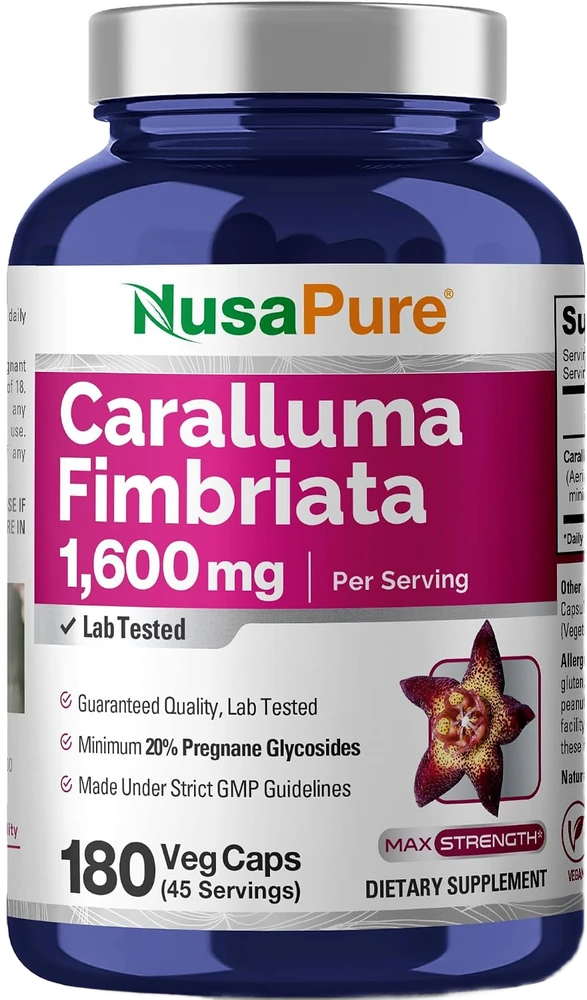
Best-evidenced herbal (still thin): NusaPure Caralluma Fimbriata 1600 mg
7.1SAC Score™A traditional appetite-control botanical with one decent 16-week RCT behind it (reduced intake + waist) — but a thin, conflicting wider literature. The best-evidenced herbal here, which still isn't saying much.
- Active
- Caralluma fimbriata extract, 1,600 mg per serving
- Dose
- Per label, typically before meals
- Size
- 180 veggie capsules
All five scores, pros & cons, full label
What We Like- One reasonably good 16-week RCT (Rao 2021) found lower caloric intake + reduced waist vs placebo
- Traditional appetite-suppressant botanical with a plausible (if unproven) hypothalamic mechanism
- Non-GMO, vegan, generous 180-capsule bottle
- Stimulant-free, unlike many 'diet pills'
What You Live With- The broader human evidence is thin and conflicting — one positive trial is not a strong base
- Smaller brand; testing transparency below the NOW / mainstream picks, and effect is modest at best
- Quality
- Non-GMO, vegan; NusaPure standard
Our take — Caralluma fimbriata is the best-evidenced of the herbal appetite suppressants here — and that's a low bar we want to be honest about. It does have one genuinely decent study in its favor: a 16-week randomized controlled trial (Rao 2021) in which participants taking the extract reduced their caloric intake by roughly 245 calories and trimmed waist circumference versus placebo. That's more than most herbals can show. But a single positive trial against a thin and conflicting wider literature is a 'maybe,' not a proven tool, and the effect is modest. NusaPure's is a stimulant-free, non-GMO, vegan, generously sized bottle at a fair price, so if you want to experiment with a botanical, this is a reasonable one to choose. Just rank your expectations accordingly — and keep fiber, protein, and a calorie deficit as the real foundation. It sits at #7 because plausible-plus-one-study still loses to the genuinely evidence-backed picks above.
- 08
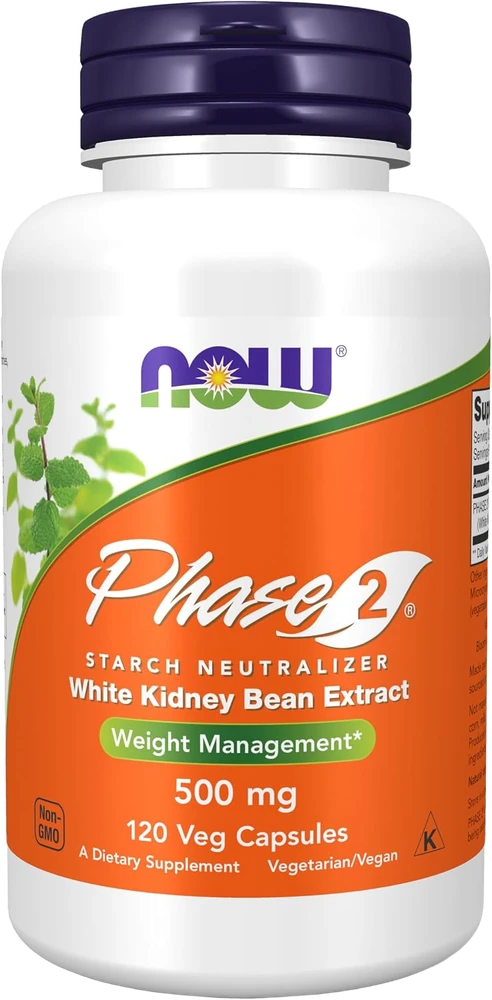
Carb blocker — weak evidence: NOW Foods Phase 2 White Kidney Bean 500 mg
7.0SAC Score™A non-stimulant 'carb blocker' that inhibits a starch-digesting enzyme — a real mechanism, but small and inconsistent real-world effects. A trustworthy brand of a weak-evidence concept, and it isn't strictly an appetite suppressant.
- Active
- Phase 2 white kidney bean extract, 500 mg per cap
- Dose
- 3 caps before a starch-containing meal
- Size
- 120 veg capsules
All five scores, pros & cons, full label
What We Like- Real, specific mechanism: inhibits alpha-amylase to slow starch digestion (Phase 2 is the studied branded extract)
- Non-stimulant and well-tolerated; trustworthy NOW quality
- Reasonable price; targeted use before high-starch meals
- May cause modestly reduced post-meal glucose for some people
What You Live With- Real-world weight-loss effects are small and inconsistent across trials
- It blocks some carb absorption rather than suppressing appetite — different goal, and can cause gas/GI upset from undigested starch
- Quality
- Non-stimulant; NOW GMP / in-house QA
Our take — NOW's Phase 2 white kidney bean extract rounds out the list as the honest 'carb blocker' — and we include it mainly to address it fairly, because it's heavily marketed in the weight-loss aisle. The mechanism is real and specific: Phase 2 inhibits alpha-amylase, the enzyme that breaks down dietary starch, so in theory fewer starch calories get absorbed. The problem is the payoff: across human trials the real-world weight effects are small and inconsistent, and it isn't truly an appetite suppressant — it doesn't make you less hungry, it (partially) blocks carbs you've already eaten, which can also mean gas from undigested starch. NOW's is a non-stimulant, GMP-quality, fairly priced version if you specifically want to experiment with carb-blocking before high-starch meals. But it ranks last because it's the furthest from the page's actual job — curbing appetite — and the evidence is the weakest of the included picks. Fiber, protein, and a deficit beat it comfortably.
The Guide In Four Short Lessons
What the evidence actually shows (and doesn't)
- Full glass
- Of water with glucomannan, every time — never dry. It swells in liquid and can choke if taken without enough water
- No sig. loss
- Onakpoya 2014's RCT meta-analysis: glucomannan does NOT produce significant weight loss on its own — it's a satiety aid
- ↓ hunger
- Psyllium before meals cut hunger + desire to eat and raised fullness vs placebo in two RCTs (Brum 2016)
- Deficit
- The only reliable driver of fat loss on this page is a sustained calorie deficit — fiber and protein just make it easier
Sources: Keithley 2005 (PMID 16320857; glucomannan satiety mechanism); Onakpoya 2014 (PMID 24533610; glucomannan meta-analysis); Brum 2016 (PMID 27166077; psyllium inter-meal hunger); Bendtsen/Astrup 2013 (PMID 23858091; protein satiety).
Start with fiber or protein.
Soluble fiber and protein are the only appetite tools with solid human evidence. Almost everything else sold as an appetite pill rests on one or two small trials.
Take fiber before meals with a full glass of water.
Glucomannan and psyllium swell into a gel that fills the stomach (Keithley 2005). Fullness is the effect; a 2014 meta-analysis found no significant weight loss from glucomannan alone (Onakpoya).
Skip Garcinia and be sceptical of the herbals.
5-HTP, caralluma and white-kidney-bean blockers rest on weak or mixed evidence. Garcinia is excluded from this list: its pooled trials show about 0.88 kg (Onakpoya 2011) and HCA carries liver-injury case reports.
Ranked evidence-first (40% satiety evidence, 25% mechanism & dose, 20% purity & testing, 15% value); citing Keithley 2005 (PMID 16320857), Onakpoya 2014 (PMID 24533610), Brum 2016 (PMID 27166077) and Bendtsen/Astrup 2013 (PMID 23858091).
Each pick was scored 0-10 across four criteria, then weighted to a final composite. Evidence for satiety carries the most weight (40%) because this is a category drowning in hype — the entire point is to reward the few products with real human evidence for curbing appetite (soluble fiber before meals, protein) and to demote the ones without it. Mechanism and dose (25%) asks whether there's a plausible biological reason it would work AND whether the product delivers a usable, studied amount (real glucomannan/psyllium grams, ~25 g protein) rather than a token sprinkle. Purity and testing (20%) covers label transparency, third-party or GMP quality, and a clean form — this category is lightly regulated. Value (15%) is cost per effective serving; fiber and protein are cheap, so you should never pay a premium for an 'appetite' label. We do not invent numbers: the only clinical figures we cite are the published studies, and we state their limits — and the Garcinia exclusion — plainly. The glucomannan choking warning is surfaced on its pick because safety is part of an honest recommendation.
Evidence for satiety · 40%
Is there real human evidence that this curbs appetite or food intake? Soluble fiber before meals (Keithley 2005; Brum 2016) and protein (Astrup 2013) score highest; single-study or mixed herbals score low; ingredients with trivial or negative evidence (Garcinia) are excluded entirely. This is the dominant criterion because the category's biggest failure is hype without evidence.
Mechanism & dose · 25%
Is there a plausible mechanism, and does the product deliver a usable, studied dose? Viscous fiber that fills the stomach and protein that triggers fullness hormones have clear mechanisms; we also check the product hits a real amount (≈1 g glucomannan or several grams of psyllium before meals, ~25 g protein) rather than a marketing-sized sprinkle.
Purity & testing · 20%
Label transparency, third-party testing or GMP/established-brand QA, and a clean form (plain fiber, real whey — not a proprietary 'fat-burn' blend). This category is lightly regulated and full of hype labels, so verification is what separates a trustworthy product from an anonymous one.
Value (cost per serving) · 15%
Price divided by the number of effective servings. Fiber and protein are inherently cheap, so a big-count fiber bottle or a value tub of whey wins decisively; paying a premium for an 'appetite suppressant' label over plain fiber or protein is penalized.

How appetite suppressants work (honestly)
- 1
Soluble fiber fills the stomach
Glucomannan and psyllium absorb water and swell into a viscous gel that physically fills the stomach and slows gastric emptying, so you feel full sooner and longer (Keithley 2005; Brum 2016). This is the best-evidenced over-the-counter appetite mechanism — and the reason the water (and the choking rule for glucomannan) matters.
- 2
Protein triggers fullness signals
Dietary protein is the most satiating macronutrient: it stimulates gut hormones (like GLP-1 and PYY) and fullness signaling that reduce appetite, and whey in particular lowers short-term hunger (Astrup 2013). Eating enough protein is the most reliable, honest 'appetite suppressant' you can use.
- 3
Herbal pills: weak or unproven
5-HTP (serotonin precursor), caralluma, and white-kidney-bean carb-blockers have weak, single-study, or mixed evidence — caralluma's one positive 16-week RCT (Rao 2021) is the exception, not the rule. Garcinia/HCA barely beats placebo and carries liver-safety reports, so it's excluded. None of these is a substitute for fiber, protein, and a deficit.
What to honestly expect
Noticeably fuller at meals
Taken before meals with water, soluble fiber makes you feel full sooner, so you may leave food on the plate. Protein at each meal stretches fullness between meals. Some mild gas/bloating from fiber at first is normal — ramp up gradually.
Easier to hold the deficit
The real benefit shows up here: less between-meal snacking and smaller portions, which makes a calorie deficit easier to maintain. If you added a herbal pill, judge it honestly against this baseline — most add little.
Decide honestly
Track weight, waist, and hunger. If fiber + protein are helping you eat less, keep them — they're cheap and safe with other health upsides. If a herbal add-on did nothing measurable, drop it. The deficit, not the supplement, is doing the work.
The bottom line
NOW Glucomannan (#1) is the overall winner.
A viscous soluble fiber that genuinely fills you up before meals — cheap and evidence-backed for satiety. Take 3 caps with a full glass of water, never dry. It boosts fullness, but the deficit does the fat loss.
For everyone else: Metamucil Psyllium (#3) for the best-replicated evidence, Optimum Nutrition Whey (#2) for protein.
Metamucil Psyllium capsules (#3) have the best-replicated pre-meal satiety evidence plus a cholesterol and regularity bonus. For the most satiating, most honest option — protein — choose Optimum Nutrition Whey (#2), or Garden of Life Sport (#4) for a grass-fed isolate. NOW Psyllium Husk (#5) is the cheapest fiber route.
None of these is a shortcut — spend your effort on the deficit, not the pill.
The only over-the-counter appetite tools with solid evidence are fiber before meals and protein; the herbal pills are weak or mixed, and Garcinia is excluded. The only thing that reliably drives fat loss is a sustained calorie deficit, supported by protein, fiber, and movement. And respect the glucomannan choking rule every single time — full glass of water, never dry.
Quick Answers
Do appetite suppressant supplements actually work?
Some do, modestly — and most don't. The honest answer is that only two things on the shelf have solid human evidence for curbing appetite: soluble FIBER (glucomannan, psyllium) taken before meals with water, and PROTEIN. Fiber swells into a gel that fills your stomach and slows digestion, and psyllium before meals cut hunger and raised fullness in placebo-controlled trials (Brum 2016). Protein is simply the most satiating macronutrient. The popular herbal pills — 5-HTP, caralluma, white-kidney-bean 'carb blockers' — have weak, single-study, or mixed evidence, and Garcinia cambogia barely beats placebo while carrying liver-safety concerns, so we exclude it. Bottom line: use fiber and protein to make eating less easier, and rely on a calorie deficit for actual fat loss.
Is glucomannan safe? What is the choking warning?
Glucomannan is safe and well-tolerated WHEN you take it correctly — but it carries a real choking risk if you don't. It's a soluble fiber that absorbs water and swells up to many times its volume into a thick gel. That's exactly how it creates fullness, but it also means that if you swallow it with too little liquid, it can expand in your throat or esophagus and cause a blockage. The rule is simple and non-negotiable: take glucomannan with a FULL glass of water (at least 8 oz), never dry, never with just a sip, and never lying down or right before bed. Used that way it's a gentle, effective satiety aid. People with swallowing difficulties or esophageal narrowing should avoid it.
Does glucomannan cause weight loss?
It helps you feel full, but on its own it does not reliably cause weight loss — and we'd rather tell you that than sell the hype. The satiety mechanism is real: glucomannan forms a viscous gel that fills the stomach and slows gastric emptying (Keithley 2005). But when researchers pooled the randomized controlled trials, the 2014 meta-analysis by Onakpoya concluded that glucomannan does NOT produce statistically significant weight loss. So think of it as an honest appetite tool that can make a calorie deficit easier to stick to — take it before meals with a full glass of water, eat less as a result, and let the deficit do the actual fat loss.
Is psyllium or glucomannan better for appetite?
They're both soluble fibers that work the same way — swelling into a gel that fills the stomach — and both are good, cheap, safe choices. Psyllium (the fiber in Metamucil) has the best-replicated pre-meal satiety evidence here: in two double-blind trials, taking it before breakfast and lunch significantly reduced hunger and desire to eat and increased fullness between meals (Brum 2016), and it has well-established cholesterol and regularity benefits too. Glucomannan is more viscous gram-for-gram, so a smaller dose creates strong fullness, but it carries the stricter choking warning. Either works; psyllium is the gentler, more versatile pick, glucomannan the more concentrated one. Both must be taken with plenty of water.
Is protein really an appetite suppressant?
Yes — and it's the most honest one on this entire list. Protein is the most satiating of the three macronutrients: it triggers fullness signals and gut hormones that reduce appetite, and reviews of controlled trials (Bendtsen/Astrup 2013) show whey protein in particular lowers short-term appetite and raises anorexigenic gut peptides. Practically, eating 25-30 g of protein at a meal (or a whey shake when you're stuck) keeps you fuller for longer than any herbal pill here, and it protects muscle while you're losing fat. It's not marketed as an 'appetite suppressant,' but functionally it outperforms most products that are.
What about 5-HTP, caralluma, and carb blockers?
These are the weak end of the category, and we rank them honestly. 5-HTP (a serotonin precursor) has some small studies suggesting reduced intake, but the evidence is limited and it can interact with antidepressants — use caution. Caralluma fimbriata has one reasonably good 16-week RCT (Rao 2021) showing lower caloric intake and waist circumference versus placebo, but the wider literature is thin and conflicting, so it's a 'maybe,' not a sure thing. White-kidney-bean extract ('carb blocker,' Phase 2) inhibits a starch-digesting enzyme and may blunt some carb absorption, but real-world weight effects are small and inconsistent. If you experiment with any of them, treat it as exactly that — and never let it replace fiber, protein, and a deficit.
Why isn't Garcinia cambogia on this list?
Because the evidence doesn't support it and there's a safety flag. Garcinia cambogia (hydroxycitric acid) is one of the most heavily marketed weight-loss herbs, but when Onakpoya and colleagues pooled the randomized trials in 2011, the difference versus placebo was only about 0.88 kg — a trivial amount of questionable clinical relevance — and longer, better trials tend to find nothing. More importantly, Garcinia/HCA has been linked to case reports of liver injury, including serious cases. Given a tiny-at-best benefit and a real safety concern, we will not present it as an appetite suppressant. That's the Trust standard: if an ingredient doesn't earn its place, it doesn't get listed.
Every Claim Ranked Above Traces Back To One Of These
6 sources — studies link to PubMed, product specs to the manufacturer
- [1] Keithley 2005 PMID 16320857 — Glucomannan and obesity: a critical review. Critical review of glucomannan, a soluble, highly viscous fiber from konjac. Found evidence that glucomannan promotes satiety and fecal energy loss and, at 2-4 g/day, was well tolerated. Establishes the real, mechanistic basis for glucomannan as a pre-meal satiety aid — feeling fuller — while later RCT pooling (Onakpoya 2014) shows that satiety does not translate into reliable weight loss on its own.
- [2] Onakpoya 2014 PMID 24533610 — The efficacy of glucomannan supplementation in overweight and obesity: a systematic review and meta-analysis of randomized clinical trials. Systematic review and meta-analysis of randomized controlled trials. Concluded that 'the evidence from available RCTs does not show that glucomannan intake generates statistically significant weight loss.' This is the honest counterweight to the satiety story: glucomannan can increase fullness, but it does not, by itself, reliably reduce body weight — which is why we frame fiber as a deficit-helper, not a fat-loss drug.
- [3] Brum 2016 PMID 27166077 — Satiety effects of psyllium in healthy volunteers. Two randomized, double-blind, placebo-controlled crossover trials in healthy adults. Psyllium taken before breakfast and lunch produced directional-to-significant reductions in inter-meal hunger and desire to eat and increased fullness versus placebo, with a 6.8 g dose most consistent. The best-replicated pre-meal satiety evidence on this page — the basis for ranking psyllium near the top as a genuine appetite tool.
- [4] Astrup 2013 (Bendtsen) PMID 23858091 — Effect of dairy proteins on appetite, energy expenditure, body weight, and composition: a review of the evidence from controlled clinical trials. Review of controlled clinical trials on dairy proteins. Found that protein induces satiety and increases gastrointestinal satiety-hormone secretion, with whey more satiating in the short term (casein more so long-term). Supports the page's core honest point: protein is the most satiating macronutrient and the most reliable over-the-counter 'appetite suppressant' — outperforming the herbal pills.
- [5] Rao 2021 PMID 33762661 — The effect of an orally-dosed Caralluma Fimbriata extract on appetite control and body composition in overweight adults. Double-blind, randomized, placebo-controlled trial; 83 overweight adults completed 16 weeks of Caralluma fimbriata extract or placebo. The extract group reduced caloric intake by ~245 kcal (vs ~16 kcal placebo), decreased waist circumference (-2.7 cm vs +0.3 cm) and maintained body weight while placebo gained. One genuinely positive trial — the reason caralluma is the best-evidenced herbal here — but the wider literature is thin and conflicting, so it is ranked as a 'maybe,' not a proven tool.
- [6] Onakpoya 2011 (Garcinia — excluded) — The use of Garcinia extract (hydroxycitric acid) as a weight loss supplement: a systematic review and meta-analysis of randomised clinical trials. Meta-analysis of randomized trials of Garcinia cambogia/HCA found only a small difference versus placebo (about -0.88 kg) of questionable clinical relevance, with better-quality trials trending null. Combined with documented case reports of HCA-associated liver injury, this is why Garcinia cambogia is DELIBERATELY EXCLUDED from this list rather than ranked — a trivial-at-best benefit against a real safety concern fails the Trust standard.
Affiliate disclosure: every Amazon link uses our Associates tag (superachieverclub-20). We earn a small commission at no cost to you; it funds independent reviews. We never accept payment to change a ranking.