
Thorne Phosphatidyl Choline Review
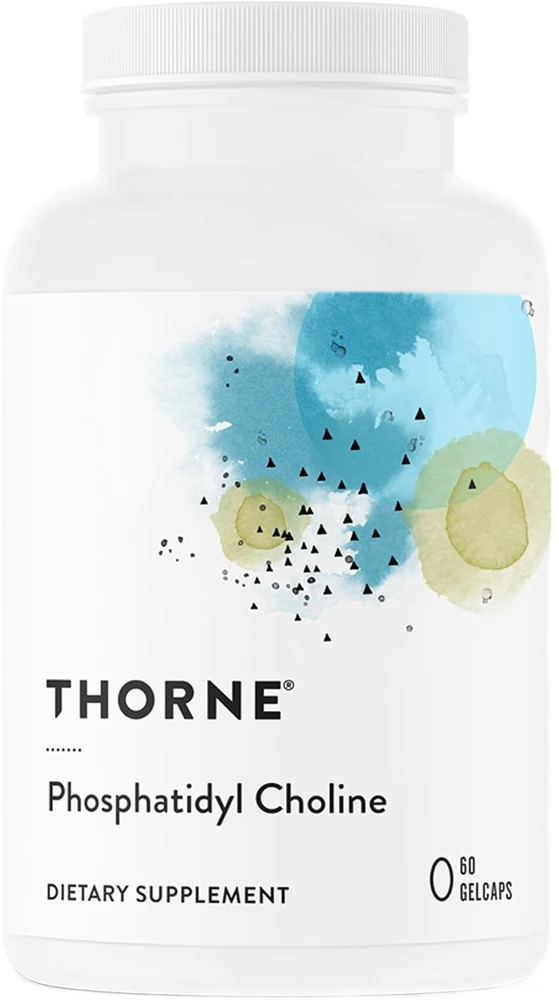 #2 of 9 · Most Liver-Specific Form✓ Label verified · Supplement Facts read Sep 7, 2026
Real retailer photo, cut out. Label unedited.
Consider it. Right form for the liver angle, priced like it. Choose this if you specifically want the phospholipid pathway and there is a small but real evidence base (essential-phospholipid trials) for steatosis.
~$34~$1.70 / 3-softgel serving
Why It Scores 8.0 — And The Label Line Behind Each Number
Form & Bioavailability
25% of scorePhosphatidylcholine is the membrane phospholipid the liver uses to export triglycerides as VLDL and to build bile. For the liver angle it is the most mechanistically apt form on the list.
- Form
- Softgel (phosphatidylcholine / phospholipid complex)
Dose vs Clinical Range
25% of scoreThe labeled serving is one softgel delivering 420mg phosphatidylcholine. That is still below the doses used in the clinical steatosis trials, and phosphatidylcholine converts to relatively little elemental choline by weight. It is a phospholipid delivery vehicle, not a high-choline dose; you take it for the form, not the milligrams.
- Dose
- 420mg phosphatidylcholine per softgel (1-softgel labeled serving)
Third-Party Testing & Purity
20% of scoreThorne's in-house certified testing, gluten-free and dairy-free formulation is among the most rigorous in the category.
- Testing
- Thorne third-party certified, gluten-free, dairy-free
Tolerability & Safety
15% of scorePhosphatidylcholine softgels are generally well tolerated; mild GI effects at higher intakes. No odor issue typical of high-dose bitartrate.
Value
15% of scoreAround $34 for 60 softgels is a 60-day supply at the labeled one-softgel serving, about $0.57/day — cheaper than we first had it, since the label prints one softgel per serving, not three. It is still expensive per gram of elemental choline because phosphatidylcholine is a low-choline-density form. You pay for the form and Thorne's testing.
- Count
- 60 softgels (60 servings, 1 softgel per serving)
- Cost per dose
- ~$0.57 per softgel/serving (approx, not live-checked)
- More Specs
- Standardization
- Phospholipid complex, liver/bile positioning
Label verified. Every figure read from the Supplement Facts photo, Sep 7, 2026.
Marketing Claims Vs. Reality
Supports liver, bile and cholesterol metabolism
Phosphatidylcholine is the phospholipid used for VLDL export and bile; essential-phospholipid trials show modest steatosis improvement (PMID 32095253). Evidence is supportive but not definitive, and much of it uses higher polyunsaturated-PC doses than one softgel serving.
Phosphatidylcholine is a more liver-relevant form than bitartrate or Alpha-GPC
Mechanistically the liver exports fat specifically as phosphatidylcholine-coated VLDL; this form is downstream of choline and directly relevant, unlike cognition-oriented Alpha-GPC/citicoline.
What Our Test Actually Found
Correction: label shows 420mg phosphatidylcholine per one-softgel serving
An earlier version of this review said the labeled serving was three softgels delivering roughly 385mg phosphatidylcholine total, making a 60-count bottle a 20-day supply at about $1.70/day. The Supplement Facts panel reads 1 gelcap per serving, 420mg Phosphatidylcholine, 60 servings per container. We re-read the label on Sep 7, 2026 and corrected the serving size, per-serving dose, bottle-supply length, cost-per-day math, and the Dose vs Clinical Range and Value scores throughout this review.
Best-matched biology, modest clinical size
The MANPOWER study of polyunsaturated phosphatidylcholine reported reduced steatosis in NAFLD patients with cardiometabolic comorbidities (PMID 32095253), but the effect was modest and the doses studied exceed a single softgel serving.
You are buying a form, not a dose
Elemental choline per serving is low. If your goal is simply reaching the choline RDA cheaply, a bitartrate delivers far more choline per dollar. This pick is for people who specifically want the phospholipid.
Full analysis: all pros & cons (7), buy if / skip if
- Most liver-and-bile-specific form on the list
- Thorne's certified third-party testing is category-leading
- Real, if modest, human steatosis evidence for the phospholipid class
- Gentle, no high-dose choline odor issue
- Expensive per gram of elemental choline, even though the labeled serving is just one softgel
- Low elemental-choline yield, poor for simple RDA coverage
- Clinical steatosis data use higher PC doses than one serving delivers
- Most liver-and-bile-specific form on the list
- Thorne's certified third-party testing is category-leading
- Real, if modest, human steatosis evidence for the phospholipid class
- Expensive per gram of elemental choline, even though the labeled serving is just one softgel
- Low elemental-choline yield, poor for simple RDA coverage
- Clinical steatosis data use higher PC doses than one serving delivers
Choose this if you specifically want the phospholipid pathway and there is a small but real evidence base (essential-phospholipid trials) for steatosis. Skip it if you just need cheap RDA coverage.
If the whole point is liver, phosphatidylcholine is the form that best matches the biology: it is the actual phospholipid the liver uses to package and export fat, and it supports bile and cholesterol metabolism. Thorne's third-party-certified softgel is the most liver-specific pick on this list. We hold it at #2, not #1, because the elemental choline per softgel is low relative to its price, so it is an expensive way to buy choline gram-for-gram.
The connoisseur's liver form

Pick Thorne if you want the phospholipid pathway and you value Thorne's testing over cost efficiency. For plain choline adequacy or methylation, the Pure Encapsulations bitartrate is a better-value #1. Neither cures established NAFLD.
If This Doesn’t Fit — Try These
 01
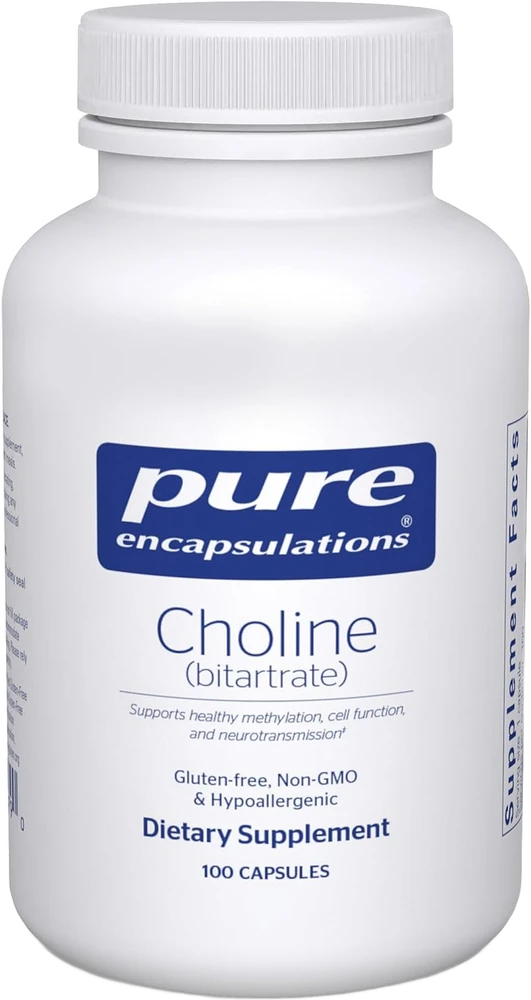
01Pure Encapsulations 275 mg
For the stated goal — repleting choline for liver and methylation support — this is the pick that respects your intelligence.
 03
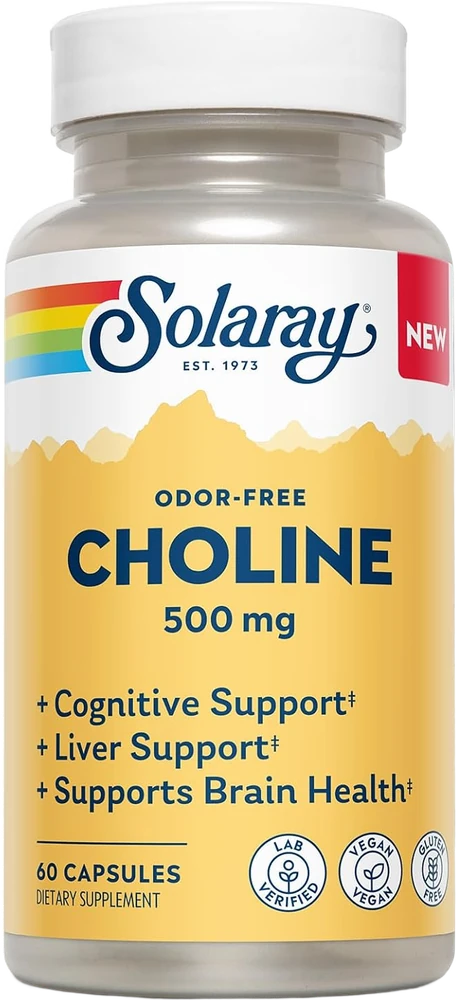
03Solaray 500 mg
The convenience-and-value pick: a big, cheap, tolerable single-cap dose for people who just want to top up choline without swallowing two pills.
Quick Answers
Is phosphatidylcholine better than regular choline for the liver?
It is the more directly liver-relevant form because the liver exports fat as phosphatidylcholine-coated particles. But per-milligram choline is low, and the clinical steatosis data use higher doses than one softgel serving, so treat the benefit as modest.
How many softgels is a serving?
One softgel is the full labeled serving, delivering 420mg phosphatidylcholine, so a 60-softgel bottle is about a 60-day supply at the labeled dose.
Sources & Further Reading
2 peer-reviewed sources, each linked to PubMed
- [1] Maev IV, et al. BMJ Open Gastroenterol. 2020;7(1):e000341. PMID 32095253 — Effectiveness of phosphatidylcholine in alleviating steatosis in patients with non-alcoholic fatty liver disease and cardiometabolic comorbidities (MANPOWER study). Adjuvant polyunsaturated phosphatidylcholine was associated with modest improvement in hepatic steatosis in NAFLD patients with cardiometabolic comorbidities.
- [2] Corbin KD, Zeisel SH. Curr Opin Gastroenterol. 2012;28(2):159-165. PMID 22134222 — Choline metabolism provides novel insights into nonalcoholic fatty liver disease and its progression. Phosphatidylcholine synthesis is central to hepatic VLDL export, linking choline status directly to liver fat handling.
Affiliate disclosure: every Amazon link uses our Associates tag (superachieverclub-20). We earn a small commission at no cost to you; it funds independent reviews. We never accept payment to change a ranking.