
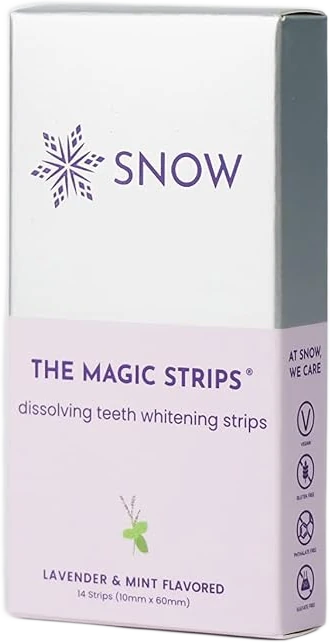
SNOW Magic Teeth Whitening Strips Review
 #2 of 8 · Best premium✓ Product photos checked Sep 7, 2026
Real retailer photo, cut out. Label unedited.
Buy it. Premium dissolving strips — no peel, no rinse, gentler on sensitivity, and you'll actually finish the course. The strips dissolve fully on the teeth, so there's no plastic to remove and no mess — the #1 reason people quit strips is gone.
$39 / 14-treatment pack (often ~$32)~$2.79 / treatment
Why It Scores 8.8 — And The Label Line Behind Each Number
Whitening efficacy
35% of scoreThe strips oxidize stain like a strip should and users report a real, visible change, but SNOW does not publish the active oxidizer or its concentration, and the product carries no ADA Seal, so we can't independently confirm the strength. We score efficacy strong on real-world result but hold it below the ADA-sealed Crest strip because the chemistry is neither disclosed nor third-party validated.
Sensitivity management
25% of scoreFormulated to be gentler on sensitivity than a full-strength peroxide strip, and the dissolving format means shorter, more even contact than a saturated plastic strip — most users report low sting. It ranks with the gentle-leaning peroxide options, just behind the leave-on emulsion and the peroxide-free PAP pick that are built for comfort first.
Ease of use + fit
20% of scoreThe headline strength. Strips dissolve completely on the teeth — no plastic to peel, nothing to rinse or spit — which removes the main friction that makes people quit strips. Genuinely portable: apply and go, anywhere. Loses a touch only because the dissolving format trades some raw contact-time control for convenience.
Value per full course
15% of scoreAt ~$2.79/treatment for a 14-treatment course, it's the priciest strip per use here and the course is shorter than Crest's 22. You're paying a premium for the mess-free experience; whitening-per-dollar is good, not category-best.
- Course
- 28 strips (14 upper/lower treatments)
- Price
- ~$39 / pack (often ~$32)
- Cost per treatment
- ~$2.79
Honesty of claims
5% of scoreBuilt on a genuine oxidizing strip rather than an abrasive or a decorative lamp, which earns real credit. It loses points for not disclosing the active whitening agent or its concentration on the listing, and for 'award-winning' brand language that isn't a whitening measure — the chemistry is real but under-documented.
- More Specs
- Oxidizer
- Enamel-safe whitening (dissolving strip); active agent and % not disclosed on listing
- Format
- Fully dissolving strips — no peel, no rinse
- Wear
- Apply and go; strips dissolve on the teeth
- Comfort
- Formulated to be gentle on sensitivity; lavender-mint
- Backing
- No ADA Seal; brand-reported testing
Photos checked.This product has no Supplement Facts panel; the retailer's listing photos were reviewed Sep 7, 2026.
Marketing Claims Vs. Reality
Strips fully dissolve — no mess, nothing to rinse.
The dissolving format is the product's core, verifiable feature and is widely confirmed by users. It's a genuine convenience advantage over peel-off strips and the single biggest driver of course completion.
Enamel-safe whitening.
Plausible for a consumer strip, but SNOW does not publish the active oxidizer or concentration on the listing and the product carries no ADA Seal, so 'enamel-safe' rests on brand assurance rather than disclosed chemistry or third-party validation.
Gentle on sensitivity.
Consistent with the lower-saturation dissolving format and user reports, but without a disclosed formula the gentleness is a reasonable inference, not a documented specification.
Award-winning whitening.
'Award-winning' is brand/marketing language, not a measure of whitening efficacy; it does not substitute for disclosed oxidizer strength or clinical data.
Clinically effective / professional-grade results.
The strips do whiten in practice, but the peroxide/PAP class the product belongs to isn't disclosed and no SKU-specific trial is published, so 'clinical/professional' is unsubstantiated at the product level.
What Our Test Actually Found
The mess problem is solved — and that's the whole point
The reason people quit strips is the wet plastic: the peel, the slide, the spit-out. SNOW's strips dissolve on the teeth, so none of that exists. It's the most friction-free strip experience on the list, and friction-free means people actually finish the course — which is what whitens.
It genuinely whitens, but the chemistry is undisclosed
Real-world results are good and users see a visible change, but SNOW doesn't publish the active oxidizer or its concentration, and there's no ADA Seal or SKU-specific trial. So we can vouch for the experience while being honest that we can't independently verify the whitening strength the way we can for an ADA-sealed peroxide strip.
Gentler on sensitivity, good for daily use
The formula is tuned to be milder than a full-strength peroxide strip, and the dissolving delivery means shorter, more even contact. Most users report low sting, which makes it comfortable to run daily — just don't over-whiten indefinitely.
You pay a premium for a shorter course
At ~$2.79/treatment across 14 treatments, it's the most expensive strip per use here and finishes faster than Crest's 22-treatment box. The premium buys the mess-free experience, not more whitening-per-dollar.
Transparency is the real gap versus the benchmark
The single thing separating this from a top-tier ranking is disclosure. An ADA-sealed strip tells you the oxidizer works and is safe; SNOW asks you to trust the brand. If published strength and third-party validation matter to you, that's the reason to prefer #1.
Full analysis: all pros & cons (8), buy if / skip if
- Strips dissolve completely on the teeth — no plastic to peel, no rinse, no mess
- Genuinely portable: apply and go, which helps people actually finish the course
- Tuned to be gentler on sensitivity than a full-strength peroxide strip
- Pleasant lavender-mint taste instead of a chemical tang
- A real oxidizing strip, not an abrasive scrub or a decorative lamp
- Active oxidizer and concentration aren't disclosed on the listing; no ADA Seal
- Priciest strip per treatment here, over a shorter 14-treatment course
- The dissolving format trades some contact-time control for convenience
- You've abandoned peel-off strips before and want a mess-free, no-rinse format
- You travel and want to apply-and-go without a sink
- You want a gentler-on-sensitivity strip with a pleasant taste
- You'll pay a premium for the experience and don't require an ADA Seal
- You want the most-proven, independently-validated whitening per dollar — get Crest (#1)
- You require a published oxidizer strength or clinical backing before buying
The strips dissolve fully on the teeth, so there's no plastic to remove and no mess — the #1 reason people quit strips is gone. Tuned to be gentler on sensitivity, genuinely travel-friendly, pleasant lavender-mint. The catches: it costs more per treatment than Crest for a shorter (14-treatment) course, and SNOW doesn't publish its active oxidizer or % on the listing, so the whitening strength can't be independently verified like an ADA-sealed strip.
SNOW's Magic Teeth Whitening Strips reimagine the format dentists trust: instead of peeling a plastic strip off wet teeth, these dissolve completely on contact, so there's nothing to remove and nothing to spit out. That solves the single biggest reason people abandon strips mid-course. The formula is tuned to be gentler on sensitivity than a full-strength peroxide strip and finishes with a lavender-mint taste rather than a chemical tang. A pack runs 28 strips (14 upper/lower treatments) at about $39 (~$32 on deal, ~$2.79/treatment) — pricier per treatment than Crest and a shorter course, so #1 still wins on proven value. The honest caveat is transparency: SNOW does not publish its active oxidizer or concentration on the listing, so we can confirm the experience is excellent but can't independently verify the whitening strength the way we can for an ADA-sealed peroxide strip. For a mess-free, will-actually-finish-it premium experience, it's the best on the list.
The premium, mess-free strip — the best experience on the list, if you don't need disclosed chemistry.

SNOW's Magic Strips are what you buy when you want whitening to feel premium and frictionless. The strips dissolve on the tooth, so there's no plastic to peel and nothing to spit out — the biggest reason people abandon strips is gone. They're formulated to be gentler on sensitivity, they travel anywhere, and they taste good. The honest trade-offs are cost and transparency: you pay more per treatment than Crest over a shorter course, and SNOW doesn't publish its oxidizer or concentration, so #1 still wins on proven, independently-validated value. But for a comfortable, mess-free, you'll-actually-finish-it experience, this is the best on the list.
If This Doesn’t Fit — Try These
 01
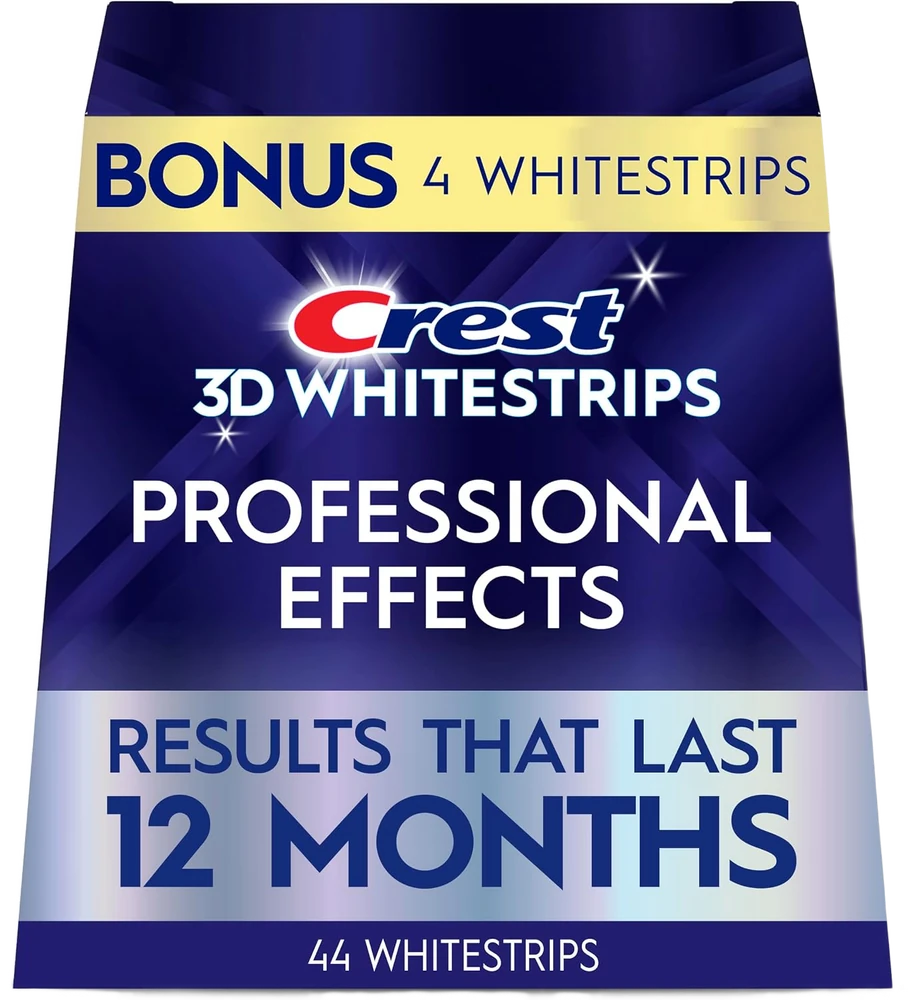
01Crest 3D Whitestrips Professional Effects
If you want the most reliably effective at-home whitening and you don't want to gamble, Crest 3D Whitestrips Professional Effects is the default.
 03
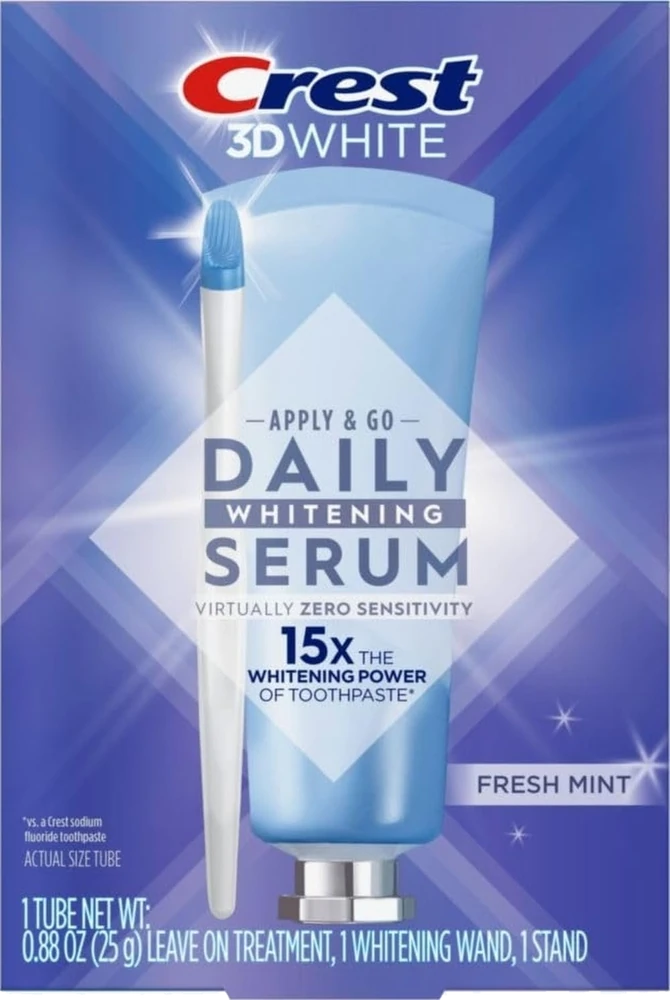
03Crest Whitening Emulsions
Crest Whitening Emulsions is the pick for people who want real peroxide whitening without the hassle or the sting of strips.
 06
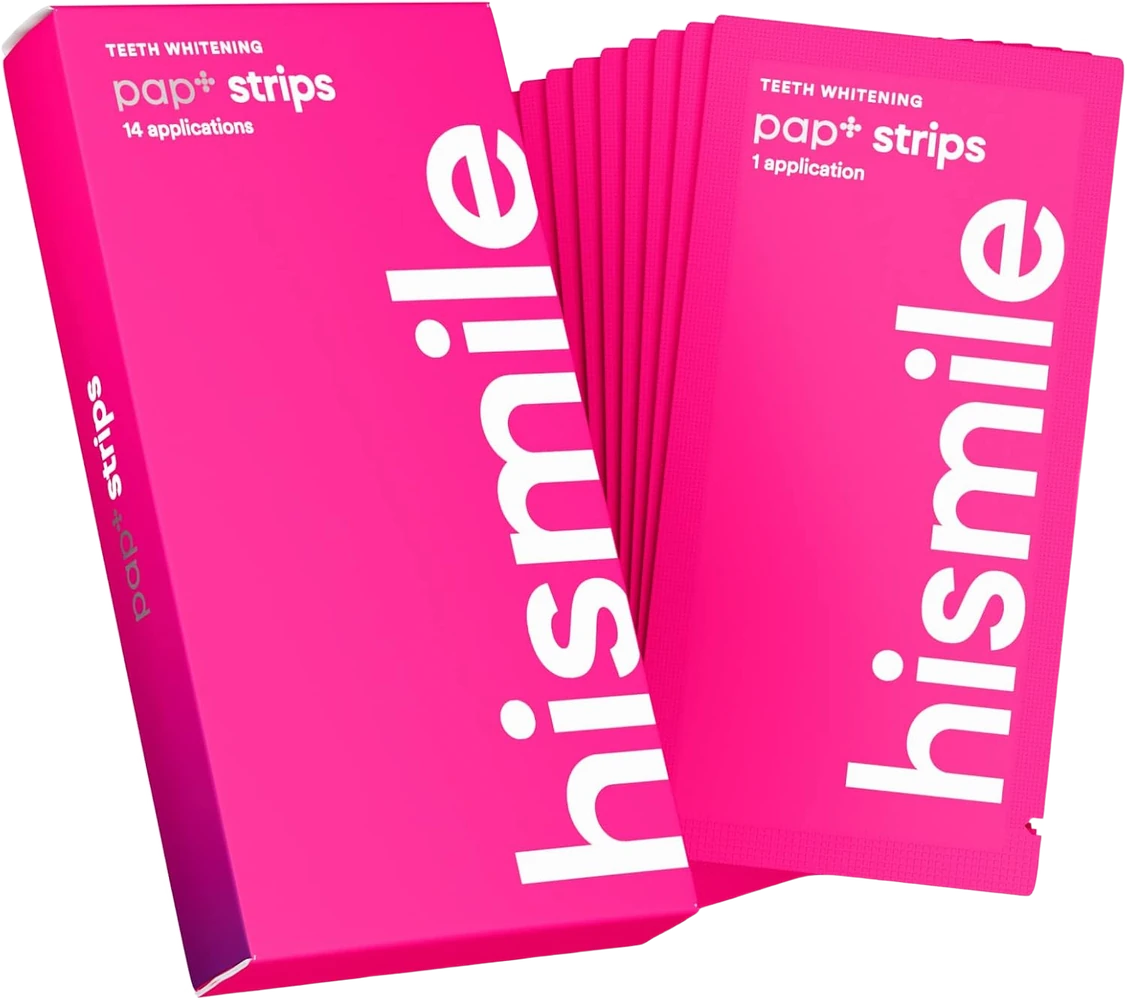
06Hismile PAP+ Whitening Strips
This is the pick that matters most if whitening hurts you.
Quick Answers
Do the strips really dissolve completely?
Yes — that's the defining feature. Rather than a plastic strip you peel off and discard, these dissolve on the teeth during wear, so there's nothing to remove and nothing to rinse or spit out. It's the main reason the format is so easy to stick with and travel-friendly.
What's the active whitening ingredient?
SNOW doesn't publish the specific oxidizer or its concentration on the Amazon listing, and the product carries no ADA Seal. Users report genuine whitening, so it clearly contains an oxidizing agent, but we can't independently verify its strength the way we can for a disclosed, ADA-sealed peroxide strip. If published chemistry matters to you, Crest (#1) is the transparent choice.
Is it gentle enough for sensitive teeth?
It's formulated to be gentler than a full-strength peroxide strip and most users report low sensitivity, helped by the shorter, more even contact of a dissolving strip. But if your teeth genuinely sting from whitening, the honest sensitive-teeth pick is the peroxide-free PAP strips at #6, which are built specifically for that.
Is it worth the premium over Crest?
For the experience, yes; for whitening-per-dollar, no. You pay more per treatment over a shorter course, and Crest's disclosed, ADA-sealed chemistry is the better proven value. Buy SNOW if a mess-free, no-rinse, travel-ready ritual is what will actually keep you whitening.
Sources & Further Reading
3 sources — studies link to PubMed, product specs to the manufacturer
- [1] ADA — Tooth Whitening — Whitening — Oral Health Topics and the ADA Seal of Acceptance program. The ADA states that peroxide-based bleaching agents are what change tooth color, and awards its Seal of Acceptance only to whitening products that demonstrate safety and efficacy — the standard SNOW's undisclosed formula has not publicly met, which is why its efficacy is scored on real-world result rather than validated chemistry.
- [2] Carey 2014 PMID 24929591 — Tooth whitening: what we now know. A review confirming that measurable intrinsic shade change requires an oxidizing agent (peroxide, or a peroxide-free oxidizer) diffusing into the tooth, and that reversible sensitivity is the main side effect — the framework used to judge a strip whose active is not disclosed.
- [3] Epple 2019 PMID 31374877 — A Critical Review of Modern Concepts for Teeth Whitening. A critical review distinguishing genuine oxidative bleaching from surface-stain removal and marketing accessories, underscoring why a strip's disclosed oxidizer and concentration — absent here — are what determine credible whitening claims.
Affiliate disclosure: every Amazon link uses our Associates tag (superachieverclub-20). We earn a small commission at no cost to you; it funds independent reviews. We never accept payment to change a ranking.