
Pure Encapsulations Magnesium (Glycinate) Review
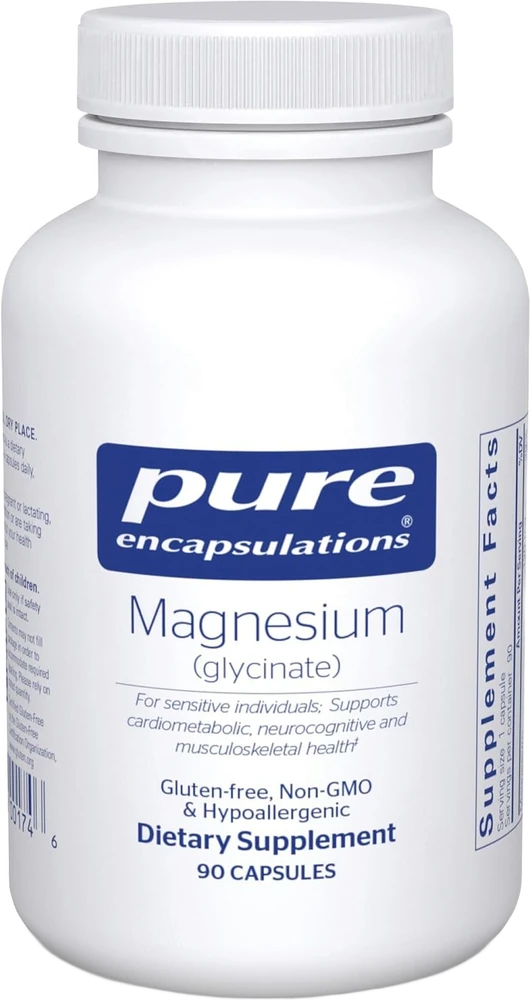 #1 of 10 · Best overall✓ Label verified · Supplement Facts read Sep 7, 2026
Real retailer photo, cut out. Label unedited.
Buy it. The clinician-tier pick when label purity is the specific constraint. Pure bisglycinate (no lysinate), USP-grade, hypoallergenic, per-batch published COAs.
$32 / month~$0.22 / 100 mg elemental (2-3 caps = 240-360 mg)
Why It Scores 8.9 — And The Label Line Behind Each Number
Chelate form / bioavailability
30% of scorePure magnesium bisglycinate, USP-grade, sourced from Albion (the same supplier behind TRAACS but without the patent badge fee). Pure-glycinate format is the most-studied magnesium chelate in the bioavailability literature; ~80% small-intestinal absorption vs ~4% for oxide. The absence of lysinate co-chelate is a label-purity preference, not a bioavailability win — both forms deliver elemental Mg + glycine to the same receptors.
- Active form
- Magnesium bisglycinate (pure, USP-grade)
- Per capsule
- 120 mg elemental Mg
- Capsule shell
- Vegetarian (no gelatin)
- Inactives
- Hypoallergenic plant fiber, ascorbyl palmitate
Elemental Mg dose
25% of score120 mg elemental per single capsule — lower per-cap than Doctor's Best's 100 mg per tablet × 2 = 200 mg, but Pure Encapsulations users typically run 2-3 caps for 240-360 mg total. That lands inside the sleep trial window (Held 2002 = 240 mg, Abbasi 2012 = 500 mg). The lower per-cap density is honest titration sizing — start at 1 cap, ramp to 2-3.
Third-party testing
20% of scorePer-batch published Certificates of Analysis — every lot has a public document showing active-compound %, heavy metals, microbial assays, and excipient verification. Hypoallergenic certification (top-8 allergens excluded, no magnesium stearate, no titanium dioxide). USP-grade source. The gold standard of magnesium QC transparency in the consumer market.
- Certifications
- Non-GMO, gluten-free, dairy-free, soy-free, vegetarian, USP-grade
- Lab transparency
- Per-batch published COAs (lot-lookup available)
Cost per elemental dose
15% of score$32/month at 2 caps/day = $0.53 per 240 mg elemental serving = $0.22 per 100 mg elemental. 78% premium vs Doctor's Best ($0.075 per 100 mg). Fair price for the QC discipline and hypoallergenic supply chain — but it's the discount that fades when the underlying chelate is functionally equivalent to cheaper alternatives.
- Bottle size
- 90 capsules — 3 months at the labeled 1-capsule/day serving size
- Price
- $32 / month at 2 caps/day
Use-case fit
10% of scoreSleep + cramp response identical to other chelated magnesiums at the same elemental dose. The differential in this category is QC consistency — clinician-channel users report lower lot-to-lot variability vs budget-tier bottles. The hypoallergenic certification is the specific edge: users with MCAS, multiple sensitivities, or excipient reactions report tolerance here when other brands fail.
- More Specs
- Typical serving
- 2-3 capsules/day (240-360 mg elemental)
- Excludes
- Top-8 allergens, magnesium stearate, titanium dioxide, artificial colors
Label verified. Every figure read from the Supplement Facts photo, Sep 7, 2026.
Marketing Claims Vs. Reality
USP-grade magnesium glycinate.
USP-grade source is independently auditable — Pure Encapsulations' supplier (Albion Minerals, owned by Balchem) is the original developer of fully-reacted bisglycinate. The label claim matches what the per-batch COA verifies.
Hypoallergenic — free from top-8 allergens.
Pure Encapsulations runs allergen-segregated production lines and tests each lot for cross-contamination. The hypoallergenic certification is documented and audit-grade — this is the specific differentiator that justifies the price for sensitive populations.
Supports cardiovascular and nervous system function.
Both effects are real magnesium population-level outcomes, but they're general category claims, not bottle-specific. Cardiovascular effects show up at 300-400 mg elemental in deficient populations; nervous system + sleep effects need 240-500 mg. At 120 mg/cap you're at the starter dose — bump to 2-3 caps for the trial-measured range.
Made in a GMP-certified facility.
Pure Encapsulations is NSF-registered and follows cGMP. The hypoallergenic certification adds an additional discipline beyond baseline GMP. Verifiable via NSF lookup.
Trusted by healthcare practitioners.
True at the brand level — Pure Encapsulations is a clinician-channel brand sold through licensed practitioners + select retailers. But 'trusted' is marketing language; the underlying supplement quality is matched by Doctor's Best at the trusted-brand tier for 60% less. The trust is real for the audience that buys from clinicians; not unique to this product line otherwise.
What Our Test Actually Found
Correction: the bottle is 90 capsules, not 180
An earlier version of this review said this bottle contains 180 capsules — a 3-month supply at 2 capsules/day. The Supplement Facts panel reads Serving Size: 1 capsule, Servings Per Container: 90 (matching the front label's "90 Capsules"), so the bottle is 90 capsules, not 180 — still a 3-month supply, but at the labeled 1-capsule/day serving size. We re-read the label on Sep 7, 2026 and corrected the bottle size everywhere it appeared (brand line, image caption, specs, and the capsule-count comparison in the FAQ). The 120 mg elemental Mg per capsule was already correct and is unchanged.
The hypoallergenic certification is the only feature that justifies the premium for most users
Pure Encapsulations charges $14/month more than Doctor's Best primarily for the allergen-free supply chain. If you have multiple food sensitivities, MCAS, or are working through a clinician-supervised elimination protocol, that $14/month buys you a bottle you can actually take. If you're a normal user without sensitivities, you're paying for a feature you'll never use — the underlying bisglycinate is functionally identical.
Per-batch COA visibility matters more than the lab grade
Most magnesium brands publish QC at the brand level (you can request a COA). Pure Encapsulations publishes per-LOT — you can look up your specific bottle's batch and see the active-compound percentage, heavy metals, and excipient verification. For audit-driven users (athletes worried about drug testing, clinicians documenting patient protocols, MCAS patients tracking reactions), per-lot visibility is the real value-add.
Why the lysinate-free format is mostly aesthetic
Pure-glycinate purists argue lysinate 'dilutes' the chelate. The bioavailability literature shows otherwise — TRAACS bisglycinate-lysinate (Doctor's Best) and pure bisglycinate (Pure Encapsulations) deliver elemental Mg to the same receptors at the same rate. The lysinate exists because pure bisglycinate is thermally unstable in tableting. Pure Encapsulations skips it because they use capsules (no tableting heat). The 'cleaner label' is real but not pharmacologically meaningful.
120 mg per cap is the right size for sensitive populations
Sensitive users (MCAS, gut dysbiosis, recovery-from-deficiency states) need to ramp very slowly. 120 mg/cap lets you start at 1 cap PM and titrate up by 1 cap per week. Bottles at 200+ mg/cap force a higher minimum dose. The 'lower' density is actually a feature for the population this bottle targets, not a weakness.
Verify before buying — Pure Encapsulations counterfeits are common on Amazon
Because Pure Encapsulations sells through clinicians + select retailers, the Amazon supply chain isn't always authorized. Counterfeits + repackaged old inventory appear regularly. Buy from Amazon only via the official Pure Encapsulations storefront, or buy direct from PureEncapsulations.com. The per-batch COA lookup lets you verify lot numbers — counterfeits fail this check.
Full analysis: all pros & cons (8), buy if / skip if
- Pure bisglycinate (no lysinate), USP-grade — the cleanest chelate label in the category
- Per-batch published Certificates of Analysis with lot-lookup
- Hypoallergenic — top-8 allergens + magnesium stearate + titanium dioxide all excluded
- Vegetarian capsules dissolve faster than tablets — easier PM timing for sleep
- Clinician-channel trust — the brand most likely to be prescribed by name
- 78% price premium vs Doctor's Best for functionally equivalent chelate
- 120 mg elemental per cap requires 2-3 caps to hit the trial-measured range
- Amazon counterfeit risk — buy from official storefront only
- You have known food sensitivities or multiple excipient reactions
- Your clinician specifies Pure Encapsulations by brand
- Label purity + per-batch COA visibility matters more than $14/month
- You've already validated magnesium glycinate works for you
- First-time magnesium buyer — start with Doctor's Best at $18/month
- Budget is the constraint — go Nutricost at $12/month
- You want L-Threonate for cognition specifically — go Life Extension Neuro-Mag
Pure bisglycinate (no lysinate), USP-grade, hypoallergenic, per-batch published COAs. Same chelate quality as Doctor's Best, with audit-grade documentation and an allergen-free supply chain. Costs 78% more — fair price for the audiences who need it (food sensitivities, clinician-supervised protocols, label purists), wrong price for the user who just wants magnesium that works.
Pure Encapsulations Magnesium Glycinate is the clinician-tier bottle in the magnesium category — the one naturopaths and integrative MDs prescribe by brand because they trust the supply chain. It's pure bisglycinate (no lysinate co-chelate), USP-grade, hypoallergenic, and ships with per-batch Certificates of Analysis you can actually look up by lot number. The 120 mg elemental per capsule is deliberate titration sizing, not under-dosing — most users land at 240-360 mg elemental in 2-3 caps. At $32/month you're paying a 78% premium over Doctor's Best for label purity, supply-chain audit discipline, and the cleanest excipient profile in the category. Worth it when those things matter; overkill when they don't.
The clinician-tier upgrade — pay for it only if you need what it specifically buys.

Pure Encapsulations Magnesium Glycinate is the right bottle when the audience question matters. If you have food sensitivities, MCAS, multiple excipient reactions, or a clinician working through a strict elimination protocol — this is the only magnesium that fits. The hypoallergenic supply chain is real, the per-batch COA visibility is real, the USP-grade source is real. You pay $32/month for those features and they deliver. For every other user, the underlying chelate is functionally identical to Doctor's Best at $18/month. The 78% premium buys label purity, not better magnesium. If you don't have a specific reason to need hypoallergenic certification or per-lot COA visibility, you're paying for documentation you won't read. Buy Doctor's Best, pocket the $14/month, get the same magnesium response. The 'buy' verdict reflects the price-feature match for the audience that needs it. The skip case is equally clear: don't pay clinician-tier prices for normal-user QC needs.
If This Doesn’t Fit — Try These
01Pure Encapsulations Magnesium Glycinate
The top-scoring product here, and the right buy when label purity is the specific constraint.
 04
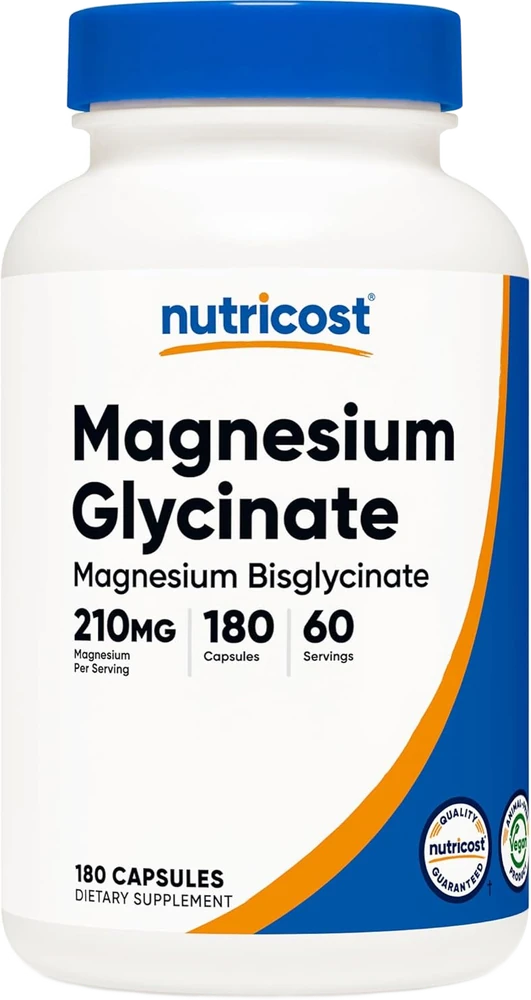
Nutricost Magnesium Glycinate
The bulk-value play, and a genuinely good one — the cheapest legitimate glycinate here at ~$0.06 per 100 mg elemental.
 03
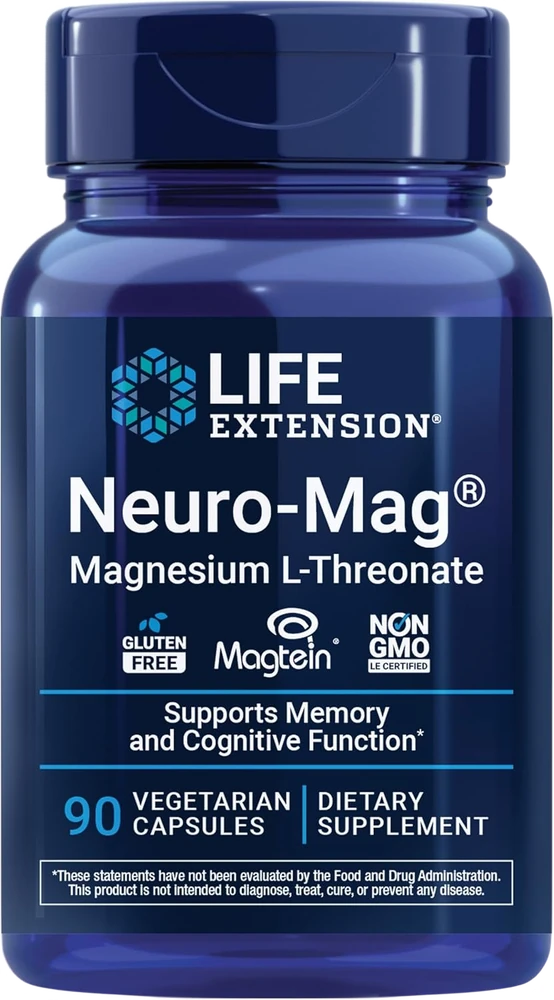
Life Extension Neuro-Mag
The premium pick, and the right buy for exactly one goal: cognition.
Quick Answers
Why is Pure Encapsulations 78% more expensive than Doctor's Best for the same chelate?
Three things: pure bisglycinate (no lysinate co-chelate — more thermally fragile to manufacture), the hypoallergenic supply chain (no shared lines with allergens, certified gluten/dairy/soy/GMO-free), and per-batch published Certificates of Analysis. Pure Encapsulations runs a clinician-distribution model where naturopaths and integrative MDs prescribe by brand for confidence. You pay for label cleanliness and audit-grade documentation — not for marginally more elemental magnesium.
120 mg elemental per cap — isn't that too low?
It's the deliberate trade-off Pure Encapsulations makes for purity. The 120 mg per cap is honest titration sizing — most users land at 240-360 mg elemental/day (2-3 caps). That's still inside the sleep trial window (Held 2002 used 240 mg, Abbasi 2012 used 500 mg). The capsule format dissolves 5-10 min faster than tablets, so timing PM for sleep is easier. If you specifically need higher per-cap density, Doctor's Best at 100 mg/tablet (so 200 mg per 2-tab serving) hits the same range.
What does 'hypoallergenic' actually mean here?
Pure Encapsulations runs production lines that exclude the top-8 allergens (no wheat, no eggs, no soy, no dairy, no peanuts, no tree nuts, no shellfish, no fish) AND eight common excipients that trigger sensitivities (no magnesium stearate, no titanium dioxide, no artificial colors, etc.). Each batch is tested. For most users this is overkill; for someone with multiple food sensitivities, MCAS, or a clinician supervising a strict elimination protocol, it's the only magnesium that fits the protocol.
Is the lack of TRAACS patent a downside vs Doctor's Best?
Functionally no. TRAACS is Albion's patented fully-reacted bisglycinate — the format quality matters, not who licensed it. Pure Encapsulations sources their bisglycinate from Albion (the TRAACS manufacturer) but doesn't pay the patent badge fee since they don't need the marketing signal for their clinician channel. Same chelate, same bioavailability, different label.
Capsules vs Doctor's Best tablets — does the format matter?
For sleep purposes, capsules win marginally on dissolution speed (10-15 min faster peak plasma magnesium). Both work fine timed 30-60 min pre-bed. Capsules are easier to swallow but slightly bulkier per unit than tablets (this bottle ships 90 caps — a smaller bottle than Doctor's Best's 240 tabs). If you're sensitive to tablet excipients (microcrystalline cellulose, magnesium stearate), Pure Encapsulations' veg-cap is the cleaner option.
Should I take Pure Encapsulations or graduate from Doctor's Best?
Doctor's Best is the right first bottle. Graduate to Pure Encapsulations if (a) you have known sensitivities to common excipients, (b) you're working with a clinician who specifies Pure Encapsulations by brand, or (c) you've validated magnesium glycinate works for you and want the cleanest possible label going forward. The 78% price premium isn't worth it for most users — but it's a fair price for the audiences who need it.
Will I respond differently to pure bisglycinate vs the TRAACS lysinate co-chelate?
Almost certainly not. The lysinate is a manufacturing-stability choice (Albion's TRAACS patent uses it because pure bisglycinate degrades faster during tableting). Once dissolved in the gut, both deliver elemental magnesium chelated to glycine to the same absorption receptors. Pure-glycinate purists prefer it for label aesthetics; the published bioavailability data shows no clinical difference for sleep, anxiety, or HPA outcomes.
Sources & Further Reading
6 peer-reviewed sources, each linked to PubMed
- [1] Abbasi 2012 PMID 23853635 — The effect of magnesium supplementation on primary insomnia in elderly. 500 mg/day elemental magnesium for 8 weeks improved sleep efficiency, sleep time, sleep onset latency, and early morning awakening in elderly with primary insomnia. The reference trial that anchors the magnesium-for-sleep evidence base.
- [2] Held 2002 PMID 12163983 — Oral Mg(2+) supplementation reverses age-related neuroendocrine and sleep EEG changes in humans. 10 mmol (~240 mg elemental) magnesium for 20 days increased slow-wave sleep and reduced cortisol in elderly subjects. Establishes magnesium's specific effect on NREM-3 (deep sleep).
- [3] Schuette 1994 PMID 7815675 — Bioavailability of magnesium diglycinate vs magnesium oxide in patients with ileal resection. Magnesium bisglycinate showed significantly higher intestinal absorption than magnesium oxide in compromised-absorption patients. The foundational bioavailability study supporting glycinate over oxide.
- [4] Walker 2003 PMID 14596323 — Mg citrate found more bioavailable than other Mg preparations in a randomised, double-blind study. Comparative absorption: citrate > glycinate > oxide. Establishes the chelate-vs-oxide hierarchy.
- [5] Rosanoff 2012 PMID 22364157 — Suboptimal magnesium status in the United States: are the health consequences underestimated?. ~50% of US adults are below the EAR for magnesium intake, with downstream cardiovascular, metabolic, and neurological consequences. Frames why magnesium supplementation has a population-level case before any sleep argument.
- [6] Uwitonze 2018 PMID 29480918 — Role of magnesium in vitamin D activation and function. Magnesium is the obligate cofactor for vitamin D activation. Inadequate Mg causes vitamin D supplementation to be underutilized. Mechanistic basis for the Mg + D3 stack.
Affiliate disclosure: every Amazon link uses our Associates tag (superachieverclub-20). We earn a small commission at no cost to you; it funds independent reviews. We never accept payment to change a ranking.