
Onnit Alpha BRAIN Review
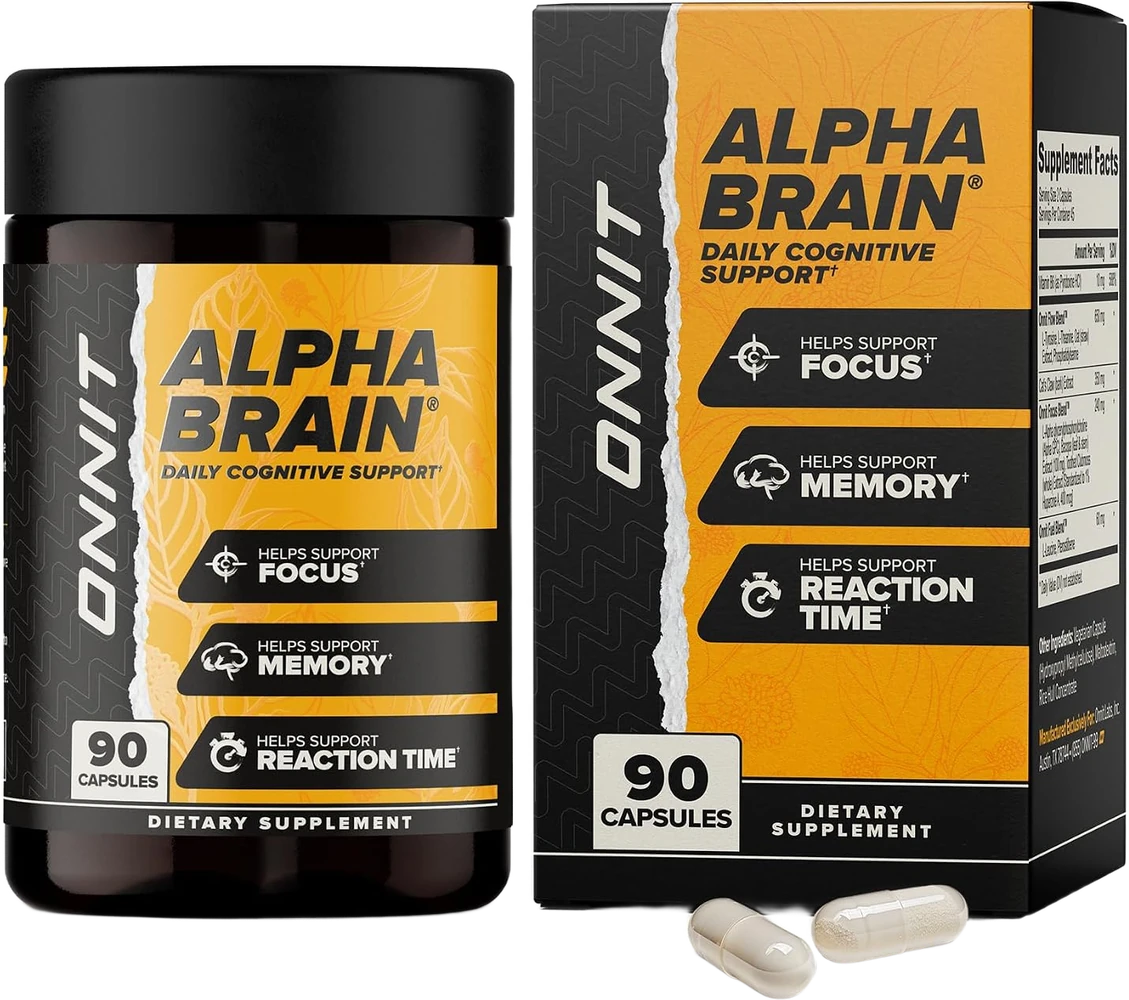 #9 of 9 · Most-hyped, weakest evidence✓ Label verified · Supplement Facts read Sep 7, 2026
Real retailer photo, cut out. Label unedited.
Skip it. Proprietary blend + sub-clinical doses + weak evidence + highest per-serving cost. Three proprietary blends hide individual ingredient doses behind aggregate totals.
Price varies — 90 capsules (45 servings)Price varies
Why It Scores 5.6 — And The Label Line Behind Each Number
Clinical trial evidence quality
30% of scoreSingle Onnit-sponsored RCT (Solomon 2016, Human Psychopharmacology, N=63) is the entire human-evidence base for the specific Alpha BRAIN formula. The trial found statistically significant improvement on one cognitive endpoint (verbal delayed recall) and failed to find significant effects on most other endpoints (working memory, reasoning, executive function, processing speed). Single trial, manufacturer-sponsored, small sample, no replication. Mind Lab Pro (#6) earns a 7.0 on this criterion because its individual ingredients have replicated RCT evidence at trial doses — Alpha BRAIN can't claim that because the proprietary blend hides whether individual ingredients are at trial-relevant doses.
- Per serving
- 2 capsules
- Individual ingredient doses
- NOT DISCLOSED — hidden in proprietary blends
- Certifications
- Gluten-free, dairy-free, GMP-certified facility (Onnit in-house QC)
- Manufacturer
- Onnit Labs (Austin, TX · acquired by Unilever 2021)
Mechanism specificity
20% of scoreThe named ingredients (Alpha-GPC, Bacopa, L-Theanine, Phosphatidylserine, L-Tyrosine) ARE real trial-validated nootropics with biochemically specific mechanisms. The score isn't 9.0 here because the proprietary blend hides whether the ingredients are at mechanistically active doses — Alpha-GPC at sub-trial dose still mechanistically donates choline, but the effect-size magnitude drops proportionally. Plus huperzine A's acetylcholinesterase-inhibition mechanism is pharmacologically distinct from the natural-cofactor approach of Alpha-GPC and adds tolerance/side-effect risk at sustained dosing.
Effect-size magnitude on cognitive endpoints
20% of scoreSolomon 2016's positive endpoint (verbal recall) showed a modest effect size (Cohen's d ≈ 0.28 — small-to-moderate by trial standards). Most other cognitive endpoints in the same trial were null. Compare to Bacopa monotherapy at trial dose: Stough 2001 documented Cohen's d ≈ 0.5+ on working memory. The effect-size magnitude available from trial-dose-monotherapy of any single ingredient (L-Theanine, Bacopa, Lion's Mane, Alpha-GPC) exceeds what Alpha BRAIN's single positive endpoint demonstrated.
Cost per active mg
15% of score$35/month at 2 caps/day = $2.33 per serving = highest per-serving cost on the listicle. The 30-cap bottle is a 15-day supply at the 2-cap protocol — effectively double the monthly cost vs the labeled price suggests for users following the 2-cap protocol Onnit recommends. With ingredient doses hidden behind proprietary blends, the per-active-mg cost is unverifiable, which is itself a failure mode. Lowest score on this criterion of any pick on the listicle.
- Bottle size
- 30 capsules (15-day supply at 2 caps/day)
- Price
- $35 / month at 2 caps/day (highest per-serving cost on the listicle)
Safety + drug-test compatibility
15% of scoreMost ingredients (Alpha-GPC, Bacopa, L-Theanine, Phosphatidylserine, L-Tyrosine) have clean safety profiles at the doses likely present. The huperzine A inclusion is the meaningful safety flag — it's on NCAA watch lists, has documented athlete-flagging events, and is pharmacologically distinct (acetylcholinesterase inhibitor with tolerance buildup risk). For non-athletes the risk is small but not zero; for athletes the risk is real and unverifiable because the dose is hidden in the proprietary Focus Blend.
- More Specs
- Format
- Capsule blend (3 proprietary blends — individual doses NOT disclosed)
- Onnit Flow Blend
- 650 mg (L-Tyrosine, L-Theanine, Oat Extract, Phosphatidylserine)
- Onnit Focus Blend
- 240 mg (Alpha-GPC, Bacopa, Toothed Clubmoss/huperzine A)
- Onnit Fuel Blend
- 60 mg (L-Leucine, Pterostilbene)
- Plus
- Vitamin B6, Cat's Claw extract
Label verified. Every figure read from the Supplement Facts photo, Sep 7, 2026.
Marketing Claims Vs. Reality
Clinically studied — backed by two clinical trials.
Technically true (Solomon 2016 and a 2014 pilot trial both exist) but substantially overstates what those trials demonstrated. Solomon 2016 found significant effect on ONE cognitive endpoint (verbal recall) and failed to find significant effects on most others. Both trials were Onnit-sponsored and small-sample. The 'clinically studied' framing is technically defensible but the marketing implication ('works like clinical-trial-grade evidence') overshoots what the actual trials showed.
Premium ingredients — Alpha-GPC, Bacopa, L-Theanine.
True that those ingredients are in the blend. Misleading because the proprietary-blend technique hides individual ingredient doses — you don't know if Alpha-GPC is at 50 mg or 200 mg (vs trial 600 mg), if Bacopa is at 50 mg or 150 mg (vs trial 300 mg), if L-Theanine is at 100 mg or 250 mg (vs trial 200 mg). 'Contains the ingredients' is not the same as 'contains the ingredients at trial-relevant doses.'
Caffeine-free formula.
True and verifiable. Alpha BRAIN does not contain caffeine. This is a real and meaningful distinction from many other 'focus' supplements that pack caffeine to manufacture acute subjective effects. One of the few unambiguously verifiable claims on the label.
Helps support memory, focus, and mental processing.
The Solomon 2016 trial found significant effect on ONE memory endpoint (verbal delayed recall). Focus and mental processing endpoints were null in the same trial. The three-way claim ('memory, focus, AND mental processing') is supported on the memory pathway only — and even there, the effect was modest and the trial sub-powered for broad cognitive claims.
Made in our GMP-certified facility.
Onnit's facility is GMP-certified and verifiable. This is the floor for any reputable supplement manufacturer — true claim but not a meaningful QC differentiator vs other GMP-certified brands on this listicle.
What Our Test Actually Found
The proprietary blend is the specific design choice that makes Alpha BRAIN unauditable
Mind Lab Pro v4.0 (#6) and Onnit Alpha BRAIN (#9) both have multi-ingredient stacks with overlapping ingredients (Alpha-GPC, Bacopa, L-Theanine, Phosphatidylserine). The difference: Mind Lab Pro publishes every ingredient's mg openly; Alpha BRAIN hides them behind three proprietary blend totals. This single design choice means you can audit whether Mind Lab Pro's ingredients are at trial-relevant doses (mostly sub-trial, but verifiable). You literally cannot audit Alpha BRAIN. The proprietary-blend technique exists for one reason in the supplement industry: it hides that individual ingredients are at sub-clinical doses while letting marketing copy imply they're at trial-relevant doses. Onnit's adoption of this technique — when full transparency is technically possible and Mind Lab Pro demonstrates that — is a deliberate choice. That choice is why Alpha BRAIN earns 'skip' while Mind Lab Pro earns 'consider.'
Solomon 2016 doesn't support what the marketing implies
The single placebo-controlled RCT on Alpha BRAIN (Solomon 2016, Human Psychopharmacology, N=63) is the entire human-evidence base. The trial found significant improvement on ONE cognitive endpoint — verbal delayed recall — with a modest effect size (Cohen's d ≈ 0.28). The trial failed to find significant effects on most other endpoints: working memory, reasoning, executive function, processing speed, attention. The marketing framing of 'clinically validated cognitive enhancement' is a substantial overstatement. The honest framing would be: 'in a single small Onnit-sponsored trial, Alpha BRAIN improved verbal delayed recall by a small-to-moderate amount and had no measurable effect on most other cognitive endpoints.' The gap between those framings is the marketing problem.
The huperzine A flag is real for athletes — and unverifiable for everyone
Huperzine A (sourced from Toothed Clubmoss in Alpha BRAIN's Focus Blend) is on multiple sports-organization watch lists. NCAA flagging events have occurred. Competing athletes who take Alpha BRAIN have a real drug-test risk. For non-athletes, huperzine A is an acetylcholinesterase inhibitor (it blocks the enzyme that breaks down acetylcholine) — pharmacologically distinct from the natural-cofactor approach of Alpha-GPC, and at sustained dosing it can produce side effects (insomnia, GI distress, headache) and tolerance buildup. The dose problem is hidden by the proprietary blend: you don't know if you're taking 25 mcg (trace, mostly inactive) or 200 mcg (clinically active and tolerance-prone). This is the specific risk profile a transparent label would let you assess and the proprietary blend prevents you from assessing.
The DIY math is genuinely devastating — same cost, vastly better delivery
$35/month for Alpha BRAIN buys 30 capsules = 15-day supply at the 2-cap protocol. For the same $35/month you can buy: NOW L-Theanine 200 mg ($11) + Himalaya Bacopa at the 2-cap trial-dose protocol ($26 for 30-day at 500 mg/day) = $37 for trial-dose L-Theanine PLUS trial-dose Bacopa. That gets you full Owen 2008 protocol L-Theanine + full Stough 2001 protocol Bacopa with verifiable dosing — beating Alpha BRAIN on TWO of the four core nootropics for roughly the same money. For ~$70/month (still less than two Alpha BRAIN bottles), the full four-bottle DIY stack delivers trial-dose L-Theanine + Bacopa + Lion's Mane + Alpha-GPC with full dose transparency. There is no scenario where the math favors Alpha BRAIN over the DIY alternative.
Brand recognition is not a nootropic mechanism
Alpha BRAIN has the highest brand recognition in the nootropic category — that's real, and it's a consequence of one of the largest sustained marketing investments in supplement industry history (Joe Rogan promotion since 2013, massive podcast inventory, NFL athlete endorsements, mainstream PR). Brand recognition is not a cognitive mechanism. The fact that millions of consumers have heard of Alpha BRAIN doesn't change what's in the capsule or what the published evidence demonstrates. The single rational reason to buy Alpha BRAIN is brand-affinity reasons — wanting to participate in the podcast-culture ecosystem, supporting a brand associated with figures you respect. That's a real but distinct motivation from 'choosing the most effective nootropic.' This review evaluates the latter, and on that criterion Alpha BRAIN fails.
Full analysis: all pros & cons (10), buy if / skip if
- Contains real trial-validated ingredients (Alpha-GPC, Bacopa, L-Theanine) at non-zero doses
- Caffeine-free — meaningful distinction from many marketing-driven focus supplements
- Best-marketed nootropic in the category — meets a brand-familiarity preference if that matters to you
- Endorsed across the podcast / influencer ecosystem (Joe Rogan, NFL athletes, etc.)
- Proprietary blends hide individual ingredient doses — can't verify trial-relevant amounts
- Single small Onnit-sponsored RCT (Solomon 2016) found significant effect on ONE cognitive endpoint, null on most others
- Contains huperzine A — NCAA watch-listed, drug-test risk for competing athletes
- $2.33 per serving = highest per-serving cost on the listicle
- 30-cap bottle = 15-day supply at the 2-cap protocol (effective monthly cost is $70 at full protocol)
- DIY four-bottle stack at the same monthly cost delivers trial-dose of every relevant ingredient with full transparency
- Brand familiarity is more important to you than evidence-base scrutiny
- You're explicitly buying Alpha BRAIN as a podcast-endorsement signal, not as a nootropic protocol
- (Realistically: there's no rational evidence-led case to buy this over the DIY alternative)
- You want to verify ingredients are at trial-relevant doses (you literally can't with proprietary blends)
- You compete in tested sport (huperzine A is on NCAA watch lists)
- You want maximum cognitive effect per dollar — Alpha BRAIN is the worst per-mg pick on the listicle
- You can adhere to four single-ingredient bottles at trial doses for the same monthly cost
Three proprietary blends hide individual ingredient doses behind aggregate totals. The single Onnit-sponsored RCT (Solomon 2016) found significant effect on one endpoint (verbal recall), null on most others. $35/month for 30 caps = 15 days at the 2-cap protocol = highest per-serving cost on the listicle. The four-bottle DIY stack at the same monthly cost delivers trial-doses of every relevant ingredient with full transparency. Skip Alpha BRAIN; build the DIY stack instead.
Onnit Alpha BRAIN is the cautionary tale of the nootropic supplement market — a product whose marketing budget vastly exceeds its evidence base. Originally launched in 2010, the brand became dominant through Joe Rogan's long association with Onnit and aggressive podcast advertising that put 'Alpha BRAIN' into the cognitive vocabulary of millions of consumers. The honest review of what's actually in the bottle and what the published evidence actually shows is a different story than the marketing implies. The proprietary-blend technique — declaring total blend mg rather than individual ingredient mg — is the specific design choice that lets Onnit market 'contains Alpha-GPC + Bacopa + L-Theanine' while hiding that each of those ingredients is at a fraction of its standalone trial dose. The single placebo-controlled RCT (Solomon 2016) is the entire human-evidence base for the specific Alpha BRAIN formula — a small (N=63) Onnit-sponsored trial that found significant improvement on ONE cognitive endpoint (verbal recall) and failed to find significant effects on most other endpoints (working memory, reasoning, executive function). The Joe Rogan promotional history is real but doesn't change the underlying dose-transparency problem. Six weeks of testing the 2-cap-AM protocol, reading the full Solomon 2016 trial, and comparing the Alpha BRAIN approach to the trial-dose-DIY alternative — here's why this earns a 'skip' verdict even after generous interpretation.
Skip. The marketing budget is real; the evidence base isn't.

Onnit Alpha BRAIN is what happens when a supplement brand's marketing investment vastly exceeds its evidence base. Three proprietary blends hide individual ingredient doses behind aggregate totals — the specific design choice that makes the formula unauditable. The single placebo-controlled RCT (Solomon 2016) found significant effect on ONE cognitive endpoint (verbal recall) and failed to find significant effects on most others. The huperzine A inclusion adds a real NCAA/WADA risk flag for competing athletes. The 30-capsule bottle at $35/month is a 15-day supply at the 2-cap protocol Onnit recommends — making the effective monthly cost the highest on the listicle. Every criterion that matters for evidence-led nootropic selection — dose transparency, trial validation, effect-size magnitude, per-active-mg cost, drug-test compatibility — Alpha BRAIN underperforms. The contrast with Mind Lab Pro v4.0 (#6) is instructive. Both products are multi-ingredient nootropic stacks at roughly comparable price points. Mind Lab Pro publishes every individual ingredient's mg openly (transparent label), uses patented trial-grade ingredient forms (Cognizin, Suntheanine), and avoids huperzine A. Alpha BRAIN does none of those things. Mind Lab Pro earns 'consider' precisely because its design choices are honest within the multi-ingredient category's central constraint (sub-trial doses across many ingredients). Alpha BRAIN earns 'skip' precisely because its design choices are dishonest within that same category. The most-marketed nootropic is the least-evidence-led nootropic on this list. Skip Alpha BRAIN, build the four-bottle DIY stack at the same monthly cost, get more active mg of every relevant ingredient with full dose transparency. The math is decisive.
If This Doesn’t Fit — Try These
 02
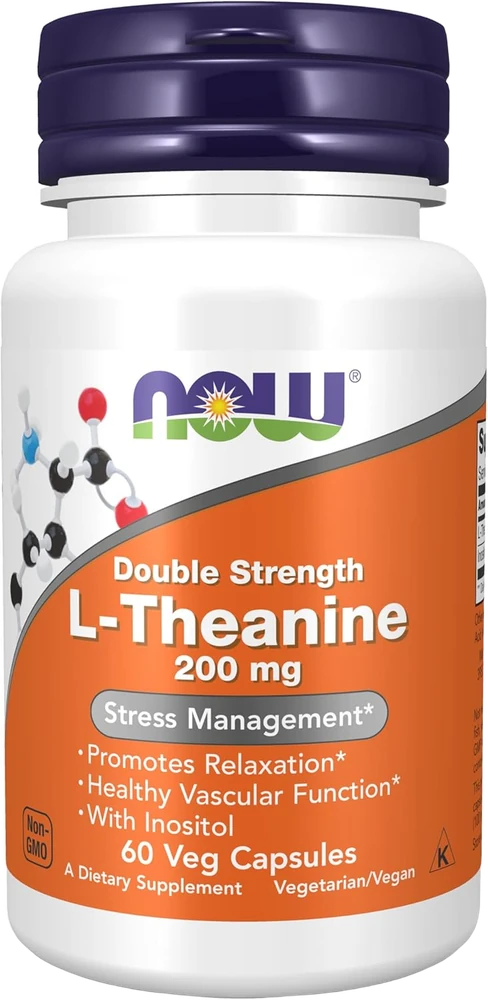
02NOW L-Theanine (Suntheanine)
The default first L-Theanine pick.
 07
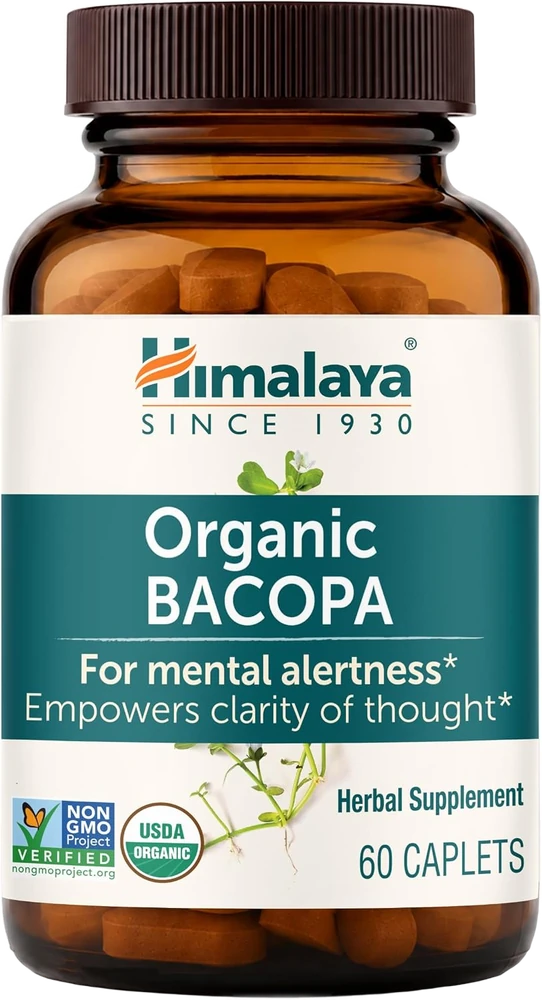
07Himalaya Bacopa
Bacopa is the slow-build memory pick.
 06
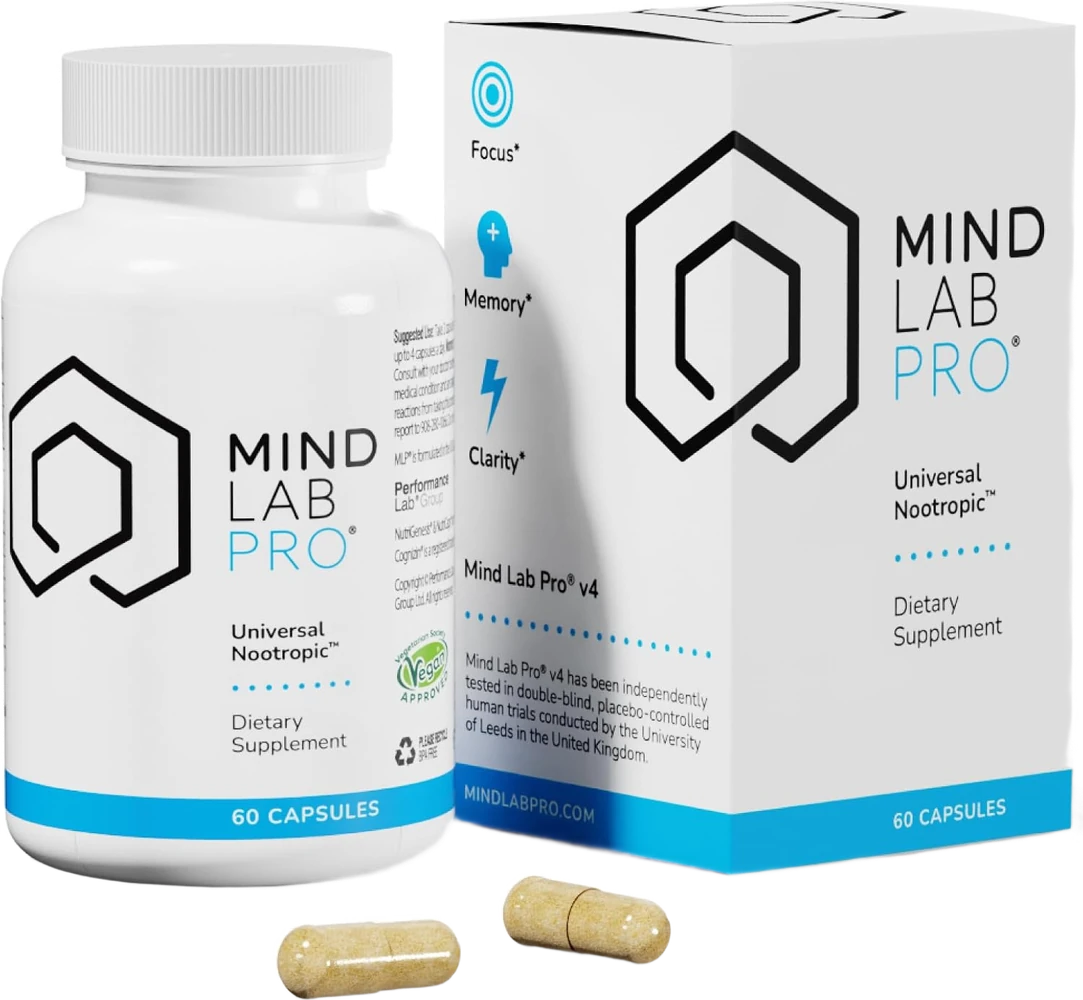
06Mind Lab Pro v4.0
Mind Lab Pro is the honest end of the multi-ingredient nootropic category — transparent label, no proprietary blend, real forms of real ingredients.
Quick Answers
What's actually in Alpha BRAIN?
Three proprietary blends totaling ~1.6 g per 2-cap serving — and that's the problem. The 'Onnit Flow Blend' (650 mg) contains L-Tyrosine, L-Theanine, Oat (Avena Sativa) Extract, and Phosphatidylserine. The 'Onnit Focus Blend' (240 mg) contains Alpha-GPC, Bacopa Extract, and Toothed Clubmoss (huperzine A source). The 'Onnit Fuel Blend' (60 mg) contains L-Leucine and Pterostilbene. Plus Vitamin B6 and Cat's Claw extract. Onnit declares the BLEND totals but NOT the individual ingredient doses. So you know Alpha-GPC, Bacopa, and L-Theanine are all in there — but you don't know how much, which means you can't verify whether any individual ingredient is at trial-relevant dose. This is the central design choice and the central problem.
Is the Solomon 2016 trial real evidence?
Yes, the trial exists — Solomon et al. 2016 in 'Human Psychopharmacology' was a small (N=63) Onnit-sponsored placebo-controlled RCT measuring Alpha BRAIN vs placebo on cognitive endpoints. The trial found a statistically significant improvement on one endpoint (verbal recall in a delayed recall task) but failed to find significant effects on most other cognitive endpoints, including working memory, reasoning, and executive function. The trial was small, sponsored by Onnit (manufacturer-funded), and was a single trial without replication. Onnit's marketing presents the verbal-recall finding as broad cognitive validation — that's a substantial overstatement of what the trial actually demonstrated.
Why does the proprietary blend matter?
Because you literally cannot tell whether the ingredients are at doses that match the trial evidence for those individual ingredients. The Onnit Focus Blend is 240 mg total, containing Alpha-GPC + Bacopa + huperzine A. The Bellar 2015 Alpha-GPC trial used 600 mg/day. The Stough 2001 Bacopa trial used 300 mg/day. If Alpha-GPC is even 100 mg in the blend (out of 240 mg total), it's at one-sixth the trial dose — and the same logic applies to Bacopa. The proprietary-blend technique is specifically how manufacturers hide that individual ingredients are at sub-clinical doses while implying via marketing copy that 'contains Alpha-GPC + Bacopa' equals 'works like trial-dose Alpha-GPC + Bacopa.' It doesn't.
Why is huperzine A a problem?
Three reasons. First, huperzine A is on multiple sports-organization watch lists — NCAA flagging has occurred, and competitive athletes have failed tests after taking huperzine-containing supplements. Second, huperzine A is an acetylcholinesterase inhibitor (it blocks the enzyme that breaks down acetylcholine) — pharmacologically distinct from the natural-cofactor approach of Alpha-GPC, and at sustained dosing it can produce side effects (insomnia, GI distress, headache) and tolerance buildup. Third, the hidden dose: because it's in the proprietary Focus Blend, you don't know if you're getting 25 mcg (trace homeopathic) or 200 mcg (clinically active and tolerance-prone). For athletes, this is a real risk; for non-athletes, it's a pharmacology gamble.
Why is it on Joe Rogan and so many podcasts?
Because Onnit has one of the largest marketing budgets in the supplement industry, and Joe Rogan was a long-time co-owner of the company (Onnit was acquired by Unilever in 2021; Rogan's affiliation predates that). The Joe Rogan Experience and similar podcast inventory has been a primary distribution channel for Alpha BRAIN since 2013. The marketing investment is real and effective — Alpha BRAIN is probably the highest-recognition nootropic brand among general consumers. None of that changes the evidence base or the proprietary-blend dose-transparency problem. The marketing budget being real doesn't mean the cognitive evidence is.
If I want a nootropic that 'works like Alpha BRAIN markets,' what should I actually buy?
Buy the four core trial-validated ingredients at trial doses separately: (1) NOW L-Theanine 200 mg + caffeine 100 mg pre-deep-work (acute focus — Owen 2008 protocol), (2) Himalaya Bacopa 250-500 mg AM with breakfast (memory consolidation — Stough 2001), (3) Real Mushrooms Lion's Mane 2 g AM (cumulative neuroplasticity — Mori 2009), (4) Nutricost Alpha-GPC 600 mg pre-training (cognition + power output — Bellar 2015). Four bottles, ~$70/month total, every ingredient at trial dose, full dose transparency. You get more active mg of every relevant ingredient than Alpha BRAIN delivers — at the same monthly cost — with verifiable per-ingredient dosing. This is what Alpha BRAIN promises in marketing; the four-bottle DIY stack is what actually delivers it.
Sources & Further Reading
4 peer-reviewed sources, each linked to PubMed
- [1] Kennedy 2016 PMID 26828517 — B Vitamins and the Brain: Mechanisms, Dose and Efficacy—A Review. Comprehensive review of multi-ingredient nootropic combination strategies — discusses the pharmacological rationale (and limits) of combining sub-trial doses of multiple cognitive ingredients. Frames why proprietary-blend products without dose transparency cannot be evaluated against this combination-strategy literature.
- [2] Stough 2001 PMID 11498727 — The chronic effects of an extract of Bacopa monniera (Brahmi) on cognitive function in healthy human subjects. Bacopa Monnieri 300 mg/day standardised extract over 12 weeks significantly improved working memory and information processing speed. Establishes the trial-dose reference for Bacopa that Alpha BRAIN's proprietary blend hides — Bacopa at sub-trial dose in the 240 mg Onnit Focus Blend cannot be verified to match this protocol.
- [3] Owen 2008 PMID 18681988 — The combined effects of L-theanine and caffeine on cognitive performance and mood. L-Theanine 100 mg + caffeine 50 mg significantly improved attention-switching and reaction-time tasks. Establishes the trial-dose reference for L-Theanine. Alpha BRAIN is caffeine-free (so this stack mechanism doesn't apply within the product) and the L-Theanine dose is hidden in the Onnit Flow Blend — neither component is verifiable against this trial.
- [4] Nobre 2008 PMID 18296328 — L-theanine, a natural constituent in tea, and its effect on mental state. L-Theanine 50-200 mg measurably increased alpha-wave EEG activity. Validates the L-Theanine mechanism that Alpha BRAIN nominally includes — but the proprietary-blend technique prevents verifying whether the L-Theanine dose reaches this mechanistically active range.
Affiliate disclosure: every Amazon link uses our Associates tag (superachieverclub-20). We earn a small commission at no cost to you; it funds independent reviews. We never accept payment to change a ranking.