
Nature Made Magnesium Oxide 250 mg Review
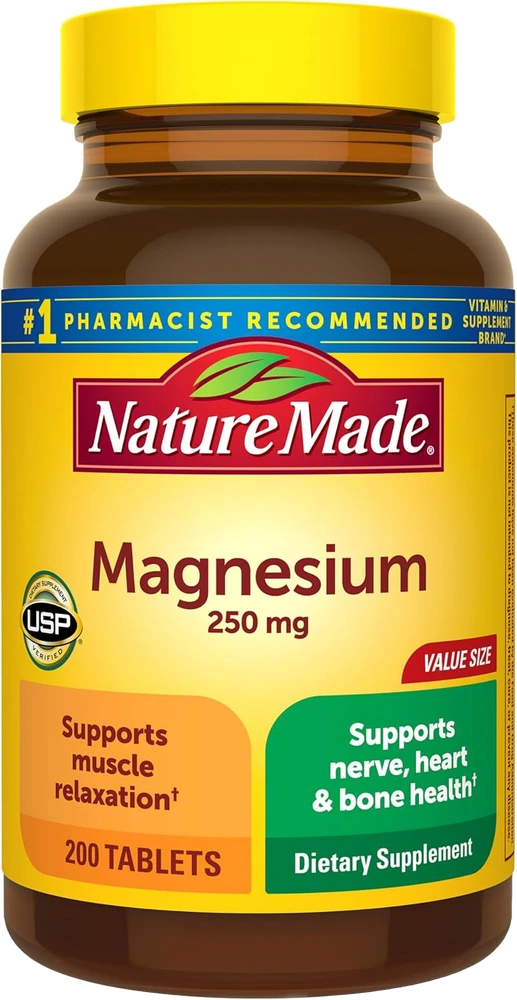 #5 of 5 · Budget pick: the trial form✓ Label verified · Supplement Facts read Oct 14, 2026
Real retailer photo, cut out. Label unedited.
Consider it. Weak for raising magnesium, strong for the bowel, and very cheap. If you want to raise your magnesium level, oxide is the wrong form.
$6.79 · 200 tablets (Amazon US, Oct 14, 2026)$0.03 per 250 mg tablet
Why It Scores 6.4 — And The Label Line Behind Each Number
Form bioavailability
30% of scoreMagnesium oxide. Firoz 2001 measured a fractional absorption of about 4%, and in Walker 2003 oxide did not raise magnesium levels more than placebo. As a supplement that is a weakness; as a laxative the unabsorbed magnesium is what draws water into the bowel.
- Form
- Magnesium oxide tablets
- Other ingredients
- Cellulose gel, stearic acid, croscarmellose sodium; under 2%: rice starch, magnesium stearate, hypromellose, silicon dioxide, isomalt, medium chain triglycerides, carnauba wax
Elemental Mg per serving
25% of score250 mg of magnesium per tablet, as printed. A lot on paper, but little of it reaches the blood. The constipation trials used 1.5 g of magnesium oxide a day, about three and a half of these tablets.
Lab transparency
20% of scoreThe label shows the USP Verified mark and says USP has tested and verified it. USP's own directory, checked on Oct 14, 2026, lists Nature Made Magnesium Citrate 250 mg softgels but not this oxide tablet. We score what the certifier confirms today.
- Testing
- USP Verified mark on the label; not in USP's directory on Oct 14, 2026
Cost per active mg
15% of score$6.79 for 200 tablets on Oct 14, 2026: about 3 cents per tablet and under 2 cents per 100 mg of magnesium on the label. The cheapest product on this list.
- Per tablet
- 250 mg magnesium (as magnesium oxide)
- Servings
- 200 tablets, 1 tablet daily
- Price
- $6.79 for 200 tablets (Amazon US, Oct 14, 2026)
- Cost per tablet
- $0.03
Real-world response
10% of scoreFor constipation it does what the trials found. For sleep, cramps or calm, buyers report little, which matches how little is absorbed.
Label verified. Every figure read from the Supplement Facts photo, Oct 14, 2026.
Marketing Claims Vs. Reality
Supports muscle relaxation.
Magnesium is needed for normal muscle function, but oxide raises blood magnesium very little (Firoz 2001), so other forms are better for this.
Supports nerve, heart and bone health.
Correct for magnesium in general, if you are low. Oxide is a poor way to correct a low level.
USP Verified.
The mark is on the label, but USP's directory did not list this product when we checked on Oct 14, 2026.
What Our Test Actually Found
The low absorption is the point for constipation
In Mori 2019, 70.6% of women on 1.5 g of magnesium oxide a day improved overall over four weeks, against 25% on placebo. In Morishita 2021 the rate was 68.3%, the same as senna, against 11.7% on placebo.
The trial dose is higher than the label dose
1.5 g of magnesium oxide holds about 900 mg of magnesium, roughly three and a half tablets. That is well above the 350 mg upper limit for supplements and was given under medical supervision. One tablet a day is a mild starting dose.
Wrong form for everything else
For sleep, calm, cramps or a low blood level, choose glycinate or citrate. Oxide shows almost no rise in blood magnesium (Walker 2003).
Full analysis: all pros & cons (7), buy if / skip if
- The form tested in two constipation trials
- About 3 cents per tablet
- One small tablet a day
- Gluten-free, no synthetic dyes
- About 4% absorbed: poor for raising magnesium
- Trial dose is several tablets, above the supplement limit
- USP mark not confirmed by USP today
- You want the cheapest magnesium for occasional constipation
- You prefer the form used in the clinical trials
- You only need a small tablet once a day
- You want magnesium for sleep, calm, cramps or a low blood level: glycinate or citrate absorb far better
- You have kidney disease: magnesium can build up
- You want a product confirmed by a certifier today
If you want to raise your magnesium level, oxide is the wrong form. If you want a softer stool, it is the form with the best trials. One tablet a day is a mild dose; the trials used more, under medical supervision.
Magnesium oxide has a bad name on supplement sites because the body absorbs little of it: about 4% in one study (Firoz 2001). For constipation that is the useful part. What is not absorbed stays in the gut and draws water in, and two Japanese trials found that magnesium oxide clearly helped people with chronic constipation (Mori 2019, Morishita 2021). Nature Made sells it as a 250 mg tablet for about 3 cents. The trials used about three to four of these tablets a day, more than the 350 mg upper limit for supplements, so a doctor should be involved if you need that much.
Buy it for the bowel, not for your magnesium level

For occasional constipation, one tablet in the evening with a full glass of water is a mild, cheap start. If you need more for weeks, talk to a doctor; the trial doses are above the supplement limit and magnesium can build up if your kidneys are weak. For any other reason to take magnesium, choose a citrate or glycinate.
If This Doesn’t Fit — Try These
 01
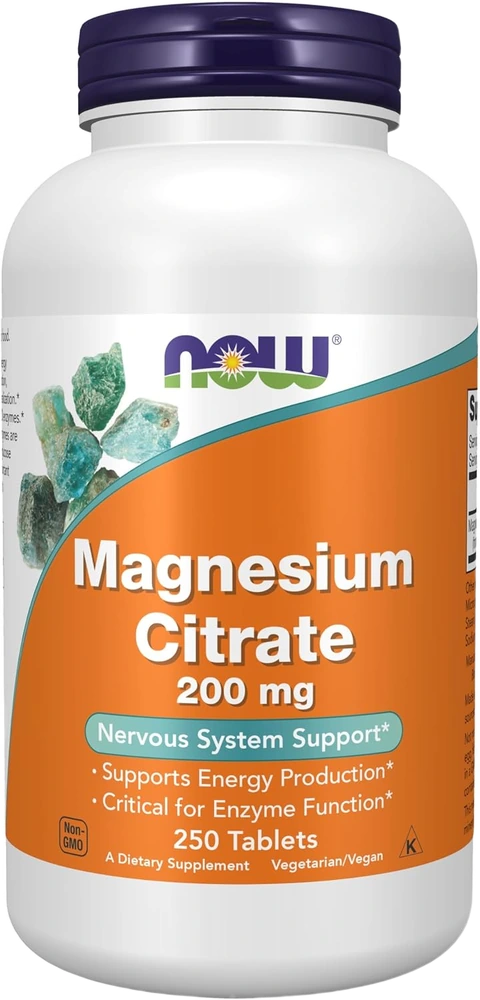
01NOW Magnesium Citrate
The simplest way to use citrate for constipation: one tablet, water, wait until morning, two if needed.
 02
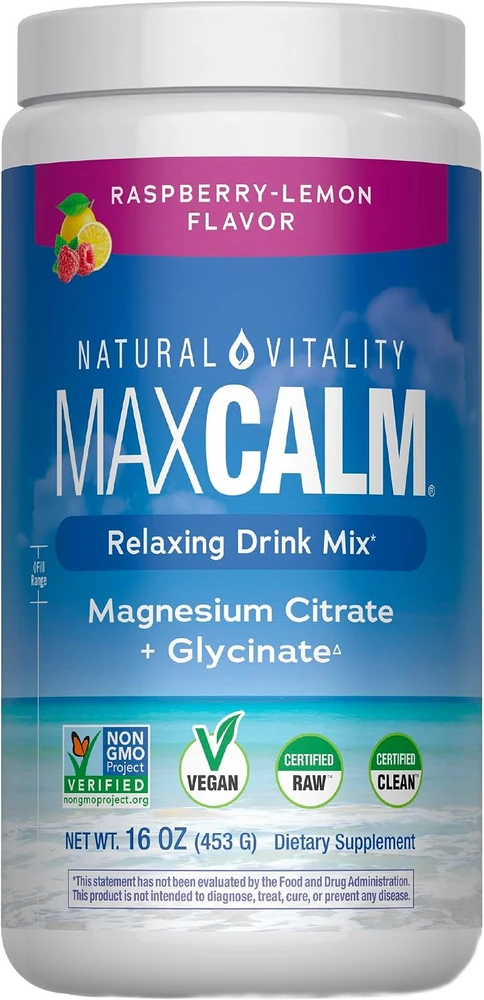
02Natural Vitality CALM
If you prefer a drink to tablets, start here.
 03
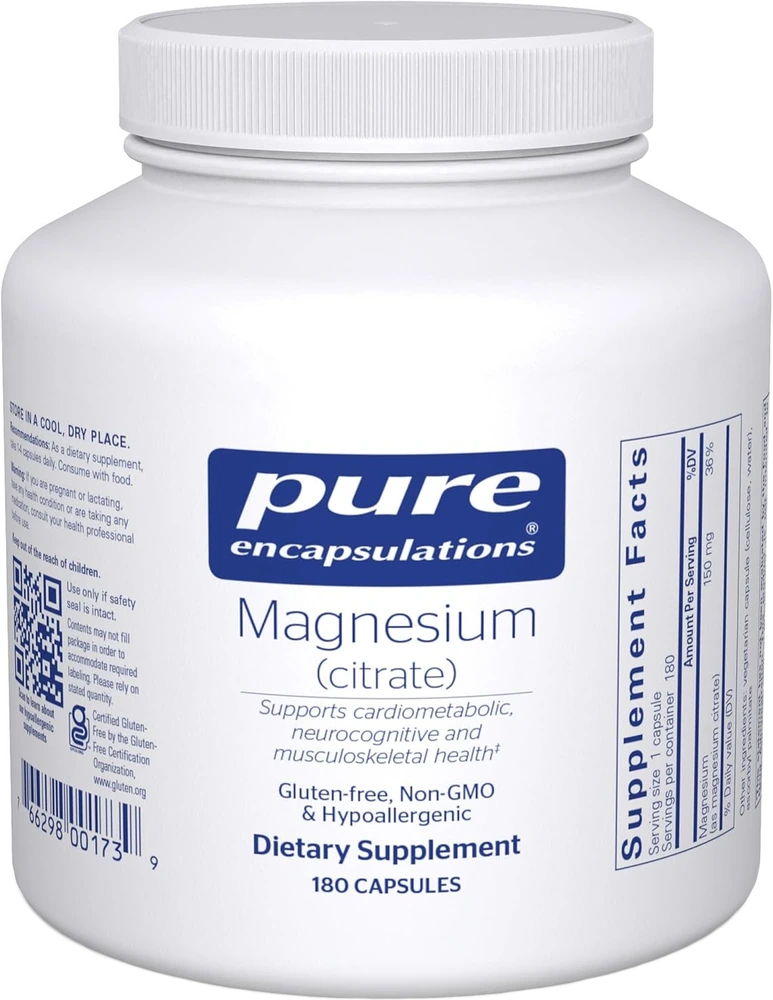
03Pure Magnesium Citrate
Choose it if fillers bother you or you want to raise the dose in small steps: one capsule in the evening, one more each day until it works.
Quick Answers
Does magnesium oxide work for constipation?
Yes. In two placebo-controlled trials about 70% of people with chronic constipation improved on 1.5 g of magnesium oxide a day (Mori 2019, Morishita 2021).
How many Nature Made magnesium oxide tablets for constipation?
Start with one tablet in the evening with a full glass of water. The trials used about three and a half tablets a day, which is above the supplement limit; do that only with a doctor.
Is magnesium oxide poorly absorbed?
Yes, about 4% in one study (Firoz 2001). That makes it a poor choice for raising your magnesium level and a good one for softening stool.
Is Nature Made magnesium oxide USP verified?
The label carries the USP mark, but USP's directory did not list this product when we checked on Oct 14, 2026. It lists Nature Made Magnesium Citrate 250 mg softgels.
Sources & Further Reading
4 peer-reviewed sources, each linked to PubMed
- [1] Firoz 2001 PMID 11794633 — Bioavailability of US commercial magnesium preparations. Urinary magnesium after four commercial magnesium preparations in healthy volunteers: magnesium oxide had a fractional absorption of about 4%; chloride, lactate and aspartate were absorbed equally and better.
- [2] Mori 2019 PMID 31587548 — A Randomized Double-blind Placebo-controlled Trial on the Effect of Magnesium Oxide in Patients With Chronic Constipation. 34 women with mild to moderate chronic constipation took 1.5 g of magnesium oxide a day or placebo for 28 days. Overall improvement: 70.6% on magnesium oxide, 25.0% on placebo; colonic transit time shortened.
- [3] Morishita 2021 PMID 32969946 — Senna Versus Magnesium Oxide for the Treatment of Chronic Constipation: A Randomized, Placebo-Controlled Trial. 90 adults with chronic constipation took senna, 1.5 g of magnesium oxide or placebo for 28 days. Overall improvement: 68.3% on magnesium oxide, 69.2% on senna, 11.7% on placebo; no severe side effects.
- [4] Walker 2003 PMID 14596323 — Mg citrate found more bioavailable than other Mg preparations in a randomised, double-blind study. 46 healthy adults took 300 mg of magnesium a day as citrate, amino acid chelate or oxide for 60 days. Oxide did not differ from placebo; citrate gave the highest blood magnesium.
Affiliate disclosure: every Amazon link uses our Associates tag (superachieverclub-20). We earn a small commission at no cost to you; it funds independent reviews. We never accept payment to change a ranking.