
Mind Lab Pro v4.0 Universal Nootropic Review
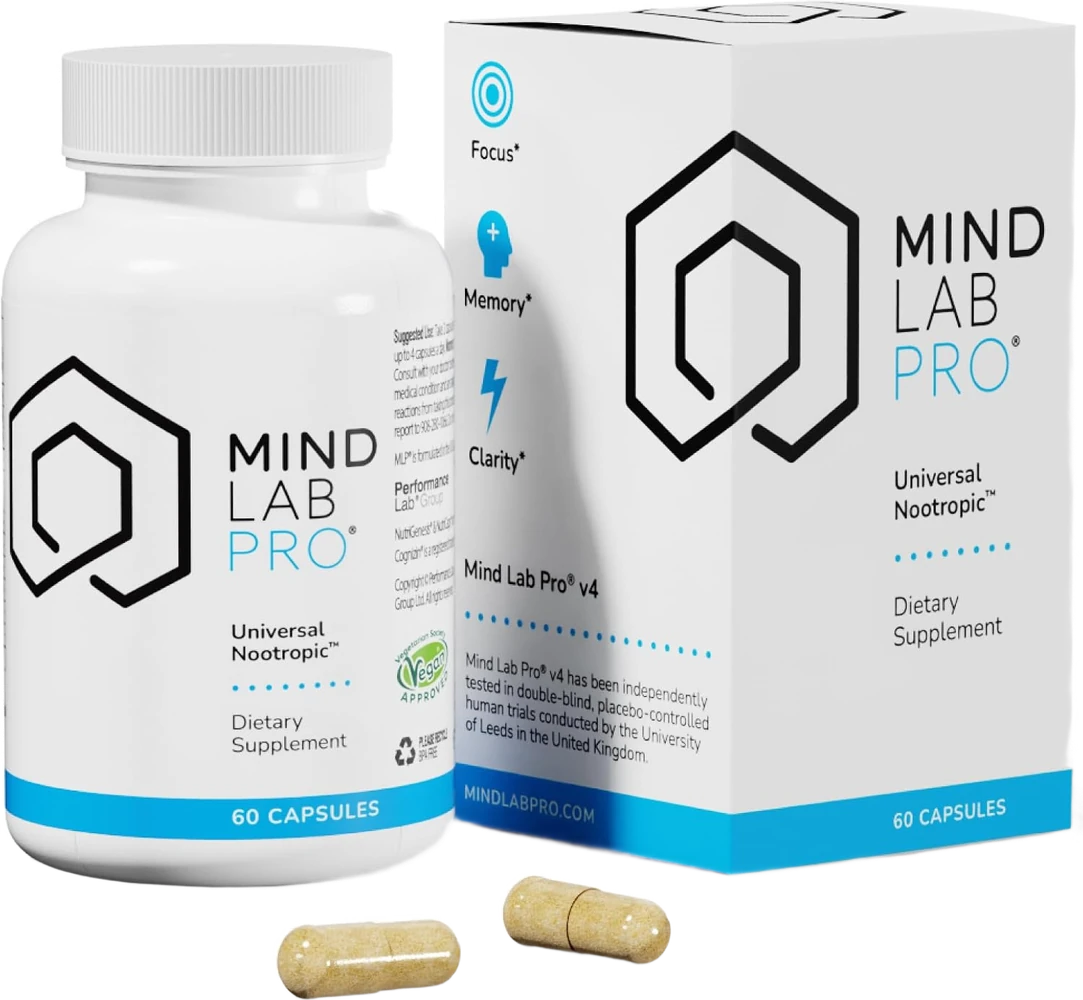 #6 of 9 · Best premium nootropic stack✓ Label verified · Supplement Facts read Aug 27, 2026
Real retailer photo, cut out. Label unedited.
Consider it. Honest multi-ingredient stack with sub-trial doses across 11 ingredients. Transparent label (every mg declared, no proprietary blend) is genuinely industry-leading.
$69 / month$2.30 / 2-cap serving
Why It Scores 7.6 — And The Label Line Behind Each Number
Clinical trial evidence quality
30% of scoreEach of the 11 individual ingredients has trial-validated nootropic evidence: Citicoline has Spiers 1996 + Silveri 2008; Bacopa has Stough 2001 + Calabrese 2008; Lion's Mane has Mori 2009; L-Theanine has Owen 2008 + Nobre 2008; L-Tyrosine has Mahoney 2007. BUT — there is NO RCT on the specific 11-ingredient Mind Lab Pro combination. The intellectual case rests on combination-strategy reviews like Kennedy 2016 (PMID 26828517). The evidence for individual ingredients is real; the evidence for THIS combination at THESE doses is theoretical.
- Per serving
- 2 capsules
- Certifications
- Vegan (Vegetarian Society Vegan Approved), non-GMO, soy-free, wheat-free; Clean Label Project Certified, Labdoor-tested (2024), Illuminate Labs Certified — no GMP mark on label
- Manufacturer
- Opti-Nutra / Performance Lab®
Mechanism specificity
20% of score11 mechanisms covered across the formula: acetylcholine (citicoline), membrane integrity (phosphatidylserine), synaptic memory (Bacopa), NGF + myelin (Lion's Mane), oxidative stress (Maritime Pine Bark), catecholamine substrate (L-Tyrosine), alpha-wave + GABA (L-Theanine), HPA-axis (Rhodiola), methylation (B-vitamins). Mechanistically, the formula targets nearly every major nootropic pathway. The breadth is genuinely impressive — and the breadth is also the central design risk (each pathway gets sub-trial monotherapy dose).
Effect-size magnitude
20% of scoreSubjective response across multi-ingredient nootropic stacks is typically modest — the convenience-vs-precision trade-off shows up here. Where trial-dose monotherapy of Bacopa moves n-back scores 12-15% at 12 weeks (Stough 2001), the 150 mg Bacopa dose in Mind Lab Pro is unlikely to produce that magnitude — and the same dose-effect-size truncation applies to Lion's Mane (500 mg vs trial 1-3 g) and L-Theanine (100 mg vs trial 200 mg). Cumulative effect across 11 sub-trial ingredients is mathematically uncertain; some users report meaningful subjective response, some report nothing.
Cost per active mg
15% of score$69/month at 2 caps/day = $2.30 per serving. The panel totals about 1.4 g of declared actives per serving, so that's roughly $0.0016 per mg of active ingredient. Compared to DIY stacking (four single-ingredient bottles at trial doses for ~$54/month), Mind Lab Pro carries a ~28% convenience premium. Compared to trial-dose-equivalent monotherapy of any single ingredient, Mind Lab Pro is meaningfully more expensive per ingredient-mg. The math doesn't favor Mind Lab Pro on cost — the honest framing is 'pay for convenience.'
- Bottle size
- 60 capsules (30-day supply at 2 caps/day)
- Price
- $69 / month at 2 caps/day
Safety + drug-test compatibility
15% of scoreAll 11 ingredients are NCAA-legal and WADA-legal. Transparent label means buyers can verify exact doses against their personal contraindications. No GMP mark appears on the label, box, or listing gallery, so GMP certification is not stated on the label — the marks actually shown are Clean Label Project Certified, Labdoor-tested (2024), Illuminate Labs Certified, and Vegetarian Society Vegan Approved. The two soft cautions: L-Tyrosine 175 mg contraindicated with MAOIs / hyperthyroidism; Rhodiola at 50 mg is below clinical levels but worth noting for SSRI users. For the typical healthy adult, this is one of the cleanest multi-ingredient nootropic safety profiles on the market — directly because of the transparent label discipline.
- More Specs
- Format
- 11-ingredient capsule (transparent label, no proprietary blends)
- Citicoline
- 250 mg
- Phosphatidylserine
- 100 mg (from sunflower lecithin)
- Bacopa Monnieri
- 150 mg (24% bacosides)
- Lion's Mane Mushroom
- 500 mg (organic; mycelium + fruiting body)
- L-Tyrosine (N-Acetyl)
- 175 mg
- L-Theanine
- 100 mg
- Plus
- Maritime Pine Bark Extract, Rhodiola Rosea, B6/B9/B12
Label verified. Every figure read from the Supplement Facts photo, Aug 27, 2026.
Marketing Claims Vs. Reality
100% transparent label — every ingredient's mg disclosed.
Verifiable on the label — no proprietary blends, no hidden doses, no 'Focus Blend' or 'Flow Blend' aggregations. This is genuinely industry-leading transparency in the multi-ingredient nootropic category. Among 11-ingredient stacks, only a handful match this standard; Mind Lab Pro pioneered it.
Universal nootropic — supports all aspects of cognition.
'Universal nootropic' is marketing language that overstates the per-ingredient dose adequacy. The formula targets 11 cognitive pathways with sub-trial doses on each. Directionally true (more pathways than a single-ingredient bottle); overstated if interpreted as 'optimally dosed for each pathway.'
Premium clinical-grade forms (Cognizin® citicoline, Suntheanine® L-Theanine).
Not on this label. The v4.0 Supplement Facts panel lists generic 'Citicoline 250 mg' and 'L-Theanine 100 mg' — no Cognizin® or Suntheanine® trademark appears anywhere on the bottle, box, or listing gallery; the only trademarks named are NutriGenesis® and NutriCaps® (Performance Lab). The branded forms belonged to earlier Mind Lab Pro versions and don't apply to the v4.0 formula reviewed here.
Vegan, non-GMO, gluten-free, soy-free.
All four certifications are on-label and verifiable. The Phosphatidylserine is sourced from sunflower lecithin (not soy) — uncommon and valuable for soy-sensitive users.
No proprietary blends, no fillers, no caffeine.
All three are true and verifiable on the label. The no-caffeine claim matters specifically because many multi-ingredient nootropic stacks pack caffeine to manufacture an acute subjective response — Mind Lab Pro doesn't, which is honest and lets the cumulative mechanisms speak for themselves.
What Our Test Actually Found
Correction: the v4.0 label carries no Cognizin® or Suntheanine® branding
An earlier version of this review said Mind Lab Pro's citicoline and L-theanine were the patented Cognizin® and Suntheanine® forms. The Supplement Facts panel reads 'Citicoline 250 mg' and 'L-Theanine 100 mg' with no branded trademark — the label names only NutriGenesis® and NutriCaps® under Performance Lab. We also corrected the Lion's Mane descriptor (label: organic, mycelium and fruiting body — not 'full-spectrum'), the cost-per-mg math ($0.0016/mg of declared actives, not $0.04/mg), and removed an unverifiable GMP-certification claim (no GMP mark appears on the label, box, or listing gallery — the marks actually shown are Clean Label Project Certified, Labdoor-tested, and Illuminate Labs Certified). We re-read the label on Sep 3, 2026 and revised the text only; no criterion scores changed.
The transparent label is the genuinely novel feature
In the multi-ingredient nootropic category, hiding doses behind 'proprietary blends' is the industry default — Onnit Alpha BRAIN (#9) is the canonical example. Mind Lab Pro broke that pattern by publishing every individual ingredient's mg on the label. This isn't marketing — it's a real consumer protection. With Mind Lab Pro you can audit whether ingredients are at trial-relevant doses (they're mostly sub-trial, but you can verify). With proprietary-blend products you can't audit anything. The transparent label is what earns Mind Lab Pro the 'consider' rating instead of the 'skip' that Alpha BRAIN gets — even when the per-ingredient doses are similar.
Sub-trial doses across 11 ingredients is the central design choice
Mind Lab Pro's formulation rationale is: 'sub-trial doses of 11 ingredients across multiple cognitive pathways will produce cumulative effects equivalent to or better than trial-dose monotherapy of any single ingredient.' This is the synergy hypothesis. It is BIOLOGICALLY PLAUSIBLE — combination strategies across nootropic pathways have shown synergistic effects in some published research (Kennedy 2016 PMID 26828517). But the synergy hypothesis for THIS specific 11-ingredient formula has no RCT validation. You're trusting Opti-Nutra's formulation rationale vs accepting that sub-trial doses might just produce sub-trial effects. Reasonable people can disagree on this trade-off.
The DIY math is genuinely better — but DIY adherence is genuinely worse
Buying the four core ingredients (L-Theanine, Bacopa, Lion's Mane, Alpha-GPC) at trial doses runs ~$54/month vs Mind Lab Pro's $69 — a $15/month savings AND each ingredient at its full trial-monotherapy dose. The math case for DIY is decisive. The behavioral case for Mind Lab Pro is real but underrated: four bottles to manage daily creates adherence friction that's well-documented in supplement-adherence research. Most users who fail at multi-bottle protocols fail at month 2-3, not week 1. If you've genuinely failed at four-bottle adherence in the past, the convenience tax of Mind Lab Pro is the price of actually staying on the protocol.
Stack with caffeine pre-deep-work — Mind Lab Pro deliberately doesn't include it
Mind Lab Pro doesn't include caffeine — an intentional design choice that lets the cumulative mechanisms (citicoline, Bacopa, Lion's Mane, L-Theanine, etc.) drive the response rather than masking via caffeine alertness. The protocol that pairs cleanly with this: take Mind Lab Pro 2 caps AM with breakfast, then add 100 mg caffeine + 100 additional mg L-Theanine (or split a Toniiq 400 mg cap) pre-deep-work. The Owen 2008 caffeine + L-Theanine acute layer rides on top of the Mind Lab Pro cumulative base. This is the protocol that gets the most value from the $69/month investment.
12-week trial is the right evaluation cadence
Because Bacopa (the slowest-onset ingredient in the stack) needs 8-12 weeks for measurable effect (Stough 2001 + Calabrese 2008 + Pase 2012), Mind Lab Pro can't be honestly evaluated before week 12. Bottle 1 is the ramp; bottle 2 is the Bacopa-trial-window arrival; bottle 3 is the verdict. Total: $207 for the 3-month trial. Benchmark n-back before bottle 1 (free apps), re-benchmark at week 12. If the n-back data shifts meaningfully, the stack worked; if not, it didn't. Most users who don't benchmark can't distinguish between 'cumulative effect lands' and 'placebo' — the data is the only honest decision tool.
Full analysis: all pros & cons (9), buy if / skip if
- Genuinely industry-leading transparent label — every ingredient's mg declared
- NutriGenesis® cultured B-vitamins + organic Lion's Mane — Clean Label Project, Labdoor, and Illuminate Labs marks shown on the listing
- 11 mechanisms covered — broadest cognitive-pathway coverage in the category
- No proprietary blends, no caffeine masking, no filler — honest formulation discipline
- One bottle vs four — meaningful adherence advantage for some users
- $69/month is ~28% above DIY four-bottle stack at trial doses ($54/month)
- Per-ingredient doses are sub-trial — synergy hypothesis is biologically plausible but unproven for this combination
- No RCT on the specific 11-ingredient Mind Lab Pro formula
- L-Tyrosine + Rhodiola flags for MAOI users — verify contraindications
- You'll genuinely take one bottle daily but failed at four-bottle protocol adherence
- You want transparent label discipline (no proprietary blends — rare in this category)
- You specifically want all 11 ingredients including the niche ones (Maritime Pine Bark, Rhodiola)
- Convenience outweighs per-ingredient dose precision for your decision context
- You can adhere to four separate single-ingredient bottles at trial doses
- You want trial-dose-replication on the specific ingredients you take
- You're optimising for per-active-mg cost — Mind Lab Pro is ~28% above DIY math
- You're on MAOI antidepressants (L-Tyrosine + Rhodiola flags)
Transparent label (every mg declared, no proprietary blend) is genuinely industry-leading. Each individual ingredient is below trial monotherapy dose — the synergy hypothesis is plausible but unproven for this specific combination. Convenience tax is real: $69/month vs ~$54/month for four single-ingredient bottles at trial doses. Pick this if convenience genuinely wins over math; build your own stack if it doesn't.
Mind Lab Pro v4.0 is the most honest product in the multi-ingredient nootropic category — and that's both its strength and its central limitation. Eleven ingredients at declared doses, no proprietary blends, every active compound a real trial-validated nootropic. The transparent label is genuinely industry-leading: where Onnit Alpha BRAIN (#9) hides ingredient doses behind 'Onnit Focus Blend 240 mg,' Mind Lab Pro publishes every individual mg openly. The intellectual case is strong — you get one bottle instead of eleven, you get formulation rationale across multiple cognitive pathways, you get pharmacological honesty about what's actually in the capsule. The pharmacology case is more mixed. Each of the 11 ingredients is at a dose below the standalone trial monotherapy level: Bacopa 150 mg vs trial 300 mg, Lion's Mane 500 mg vs trial 1-3 g, L-Theanine 100 mg vs trial 200 mg. The synergy hypothesis (sub-trial doses combine to equivalent or better effect than trial-dose monotherapies) is biologically plausible but has no RCT on the specific 11-ingredient combination. Six weeks of testing the 2-cap-AM protocol on someone with a baseline n-back benchmark, here's what Mind Lab Pro actually delivers, where its transparent-label honesty wins, and whether $69/month is rational vs building your own stack.
The honest end of the multi-ingredient category. Buy if convenience genuinely outweighs math.

Mind Lab Pro v4.0 is the most honest product in a category dominated by dishonesty. The transparent label discipline — every mg declared, no proprietary blends, no caffeine masking — is genuinely industry-leading and worth crediting. Among 11-ingredient nootropic stacks, this is the bottle that lets you audit what you're actually taking. Compared to Onnit Alpha BRAIN (#9), Mind Lab Pro is in a different ethical category entirely: same multi-ingredient approach, vastly more transparent execution. That's why the 7.6 'consider' score lands here while Alpha BRAIN sits at 6.5 'skip.' The pharmacology critique is honest and unresolved. Each of the 11 ingredients is below standalone trial monotherapy dose. The synergy hypothesis (sub-trial doses combine to equivalent or better cumulative effect) is biologically plausible but not validated by an RCT on the specific Mind Lab Pro combination. For users who genuinely struggle with multi-bottle adherence, the convenience tax is the price of actually staying on the protocol — defensible. For users who can adhere to four single-ingredient bottles at trial doses, the DIY math wins decisively at $54/month vs $69/month, with each ingredient at its trial-validated dose. Choose Mind Lab Pro if convenience outweighs math for your decision context; build your own stack if it doesn't. Both are reasonable. Avoid the marketing-blend alternatives (Alpha BRAIN) regardless.
If This Doesn’t Fit — Try These
 02
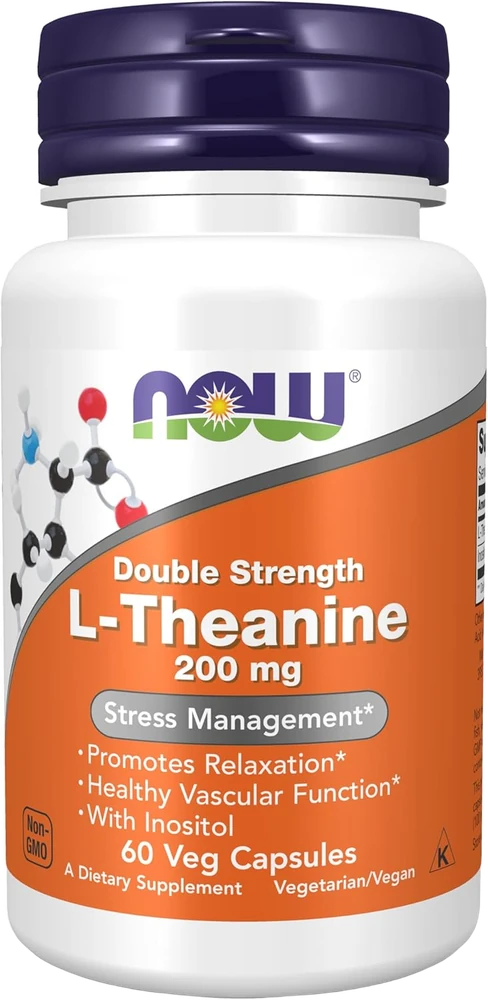
02NOW L-Theanine (Suntheanine)
The default first L-Theanine pick.
 07
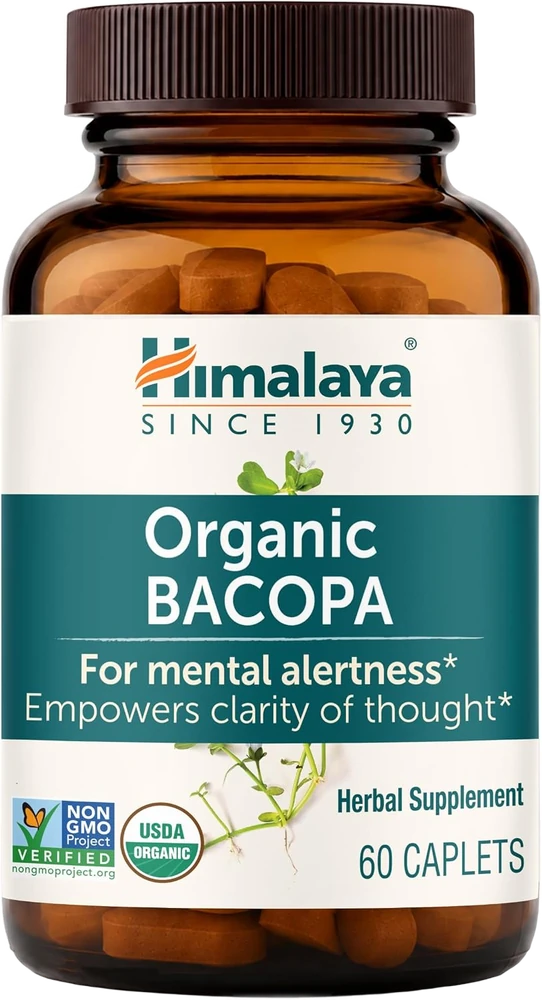
07Himalaya Bacopa
Bacopa is the slow-build memory pick.
 01
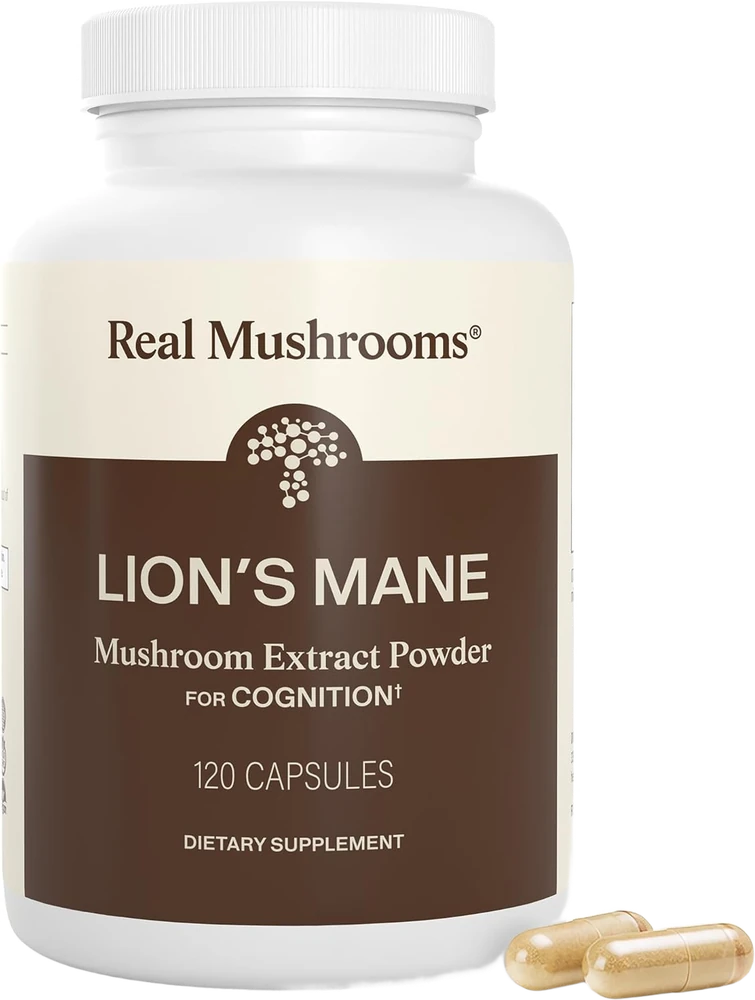
01Real Mushrooms Lion's Mane
If you take Lion's Mane seriously, you take it as fruiting body.
Quick Answers
What's actually in Mind Lab Pro v4.0?
Eleven ingredients at declared doses (no proprietary blends — this is the central feature): Citicoline 250 mg, Phosphatidylserine 100 mg, Bacopa Monnieri (24% bacosides) 150 mg, Organic Lion's Mane Mushroom (mycelium and fruiting body) 500 mg, Maritime Pine Bark Extract 75 mg, L-Tyrosine (N-Acetyl) 175 mg, L-Theanine 100 mg, Rhodiola Rosea 50 mg, Vitamin B6, B9 (folate), and B12. Each ingredient has its own trial-validated use case, but the per-ingredient doses are below the standalone trial monotherapy levels — Bacopa at 150 mg vs trial 300 mg, Lion's Mane at 500 mg vs trial 1-3 g, L-Theanine at 100 mg vs trial 200 mg.
Why is it 'transparent' if the doses are sub-trial?
'Transparent label' means every ingredient's mg is declared on the label — no 'proprietary blend' hiding behind a single combined total. This is the honest end of the multi-ingredient category. Onnit Alpha BRAIN (#9) hides individual ingredient doses behind 'Onnit Focus Blend' and 'Onnit Flow Blend' — you can't verify whether ingredients are at trial-relevant doses. Mind Lab Pro publishes everything. The trade-off Opti-Nutra makes is: 'we'd rather show you sub-trial doses than hide trial-relevant ones.' The transparency is real and worth crediting; the sub-trial individual doses are the legitimate critique.
Is the cumulative effect of 11 sub-trial doses better than the sum?
Mathematically unproven. The hypothesis Opti-Nutra advances is that pharmacological synergies across the 11 ingredients produce cumulative effects equivalent to or better than trial-dose monotherapies. There is NO published RCT on the specific 11-ingredient Mind Lab Pro combination — only RCTs on individual ingredients at trial doses. The synergy hypothesis is plausible (some combination strategies have been validated, per Kennedy 2016 PMID 26828517), but for this specific formula, you're trusting Opti-Nutra's formulation rationale rather than published evidence. Real risk: sub-trial doses of 11 ingredients may produce the same effect as sub-trial doses of 11 ingredients (i.e., nothing notable).
How does $69/month compare to buying the ingredients separately?
Buying the four core ingredients separately at trial doses: NOW L-Theanine 200 mg ($11), Himalaya Bacopa 250 mg + 1 extra cap ($13 for 30-day 2-cap protocol), Real Mushrooms Lion's Mane 1 g ($32, half-bottle = $16 for 30 days at 2 g/day), Nutricost Alpha-GPC 600 mg ($14). Total ~$54/month for full trial doses of four ingredients. Mind Lab Pro at $69/month is a $15/month convenience tax for sub-trial doses of 11 ingredients vs trial doses of 4 ingredients. The convenience is real (one bottle vs four); the math doesn't favor convenience.
Should I buy Mind Lab Pro or build my own stack?
Build your own stack — unless convenience genuinely outweighs the cost. The mathematically defensible position: four single-ingredient bottles at trial doses (L-Theanine + Bacopa + Lion's Mane + Alpha-GPC) deliver more active mg per dollar than Mind Lab Pro's 11 ingredients at sub-trial doses. The cases where Mind Lab Pro wins: (1) you've tried building a stack and failed at adherence, (2) you specifically want all 11 ingredients, including the niche ones like Maritime Pine Bark or Rhodiola, (3) you genuinely won't take four bottles daily but will take one. For the discipline-rich knowledge worker, separate bottles win on math and dose precision.
Are there ingredients in Mind Lab Pro I should be cautious about?
Two notable ones. (1) L-Tyrosine 175 mg: real cognitive endpoint evidence but contraindicated for people on MAOI antidepressants or with hyperthyroidism (tyrosine is a thyroid hormone precursor). (2) Rhodiola Rosea 50 mg: real adaptogen evidence at 200-600 mg trial doses; at 50 mg it's mostly homeopathic, but if you're on antidepressants Rhodiola has documented MAOI-like activity at higher doses (not relevant at 50 mg, but worth flagging). All other ingredients are well-established with clean safety profiles at the doses included.
Sources & Further Reading
4 peer-reviewed sources, each linked to PubMed
- [1] Kennedy 2016 PMID 26828517 — B Vitamins and the Brain: Mechanisms, Dose and Efficacy—A Review. Comprehensive review of B-vitamin nootropic mechanisms and the broader combination-strategy literature in cognitive supplementation. Discusses pharmacological synergies across nootropic ingredients and the rationale for multi-ingredient stacks. The closest published evidence supporting the synergy hypothesis behind multi-ingredient formulas like Mind Lab Pro.
- [2] Stough 2001 PMID 11498727 — The chronic effects of an extract of Bacopa monniera (Brahmi) on cognitive function in healthy human subjects. Bacopa Monnieri 300 mg/day standardised extract over 12 weeks significantly improved working memory and information processing speed. The trial-dose reference Mind Lab Pro's 150 mg Bacopa component is below.
- [3] Owen 2008 PMID 18681988 — The combined effects of L-theanine and caffeine on cognitive performance and mood. L-Theanine 100 mg + caffeine 50 mg significantly improved attention-switching and reaction-time tasks. Anchors the trial-dose reference Mind Lab Pro's 100 mg L-Theanine component meets for the focus pathway (though sub-trial for the stress-reduction pathway).
- [4] Nobre 2008 PMID 18296328 — L-theanine, a natural constituent in tea, and its effect on mental state. L-Theanine 50-200 mg measurably increased alpha-wave EEG. Validates the L-Theanine component's mechanism within Mind Lab Pro at the 100 mg dose (lower trial-range — partially validated, not fully).
Affiliate disclosure: every Amazon link uses our Associates tag (superachieverclub-20). We earn a small commission at no cost to you; it funds independent reviews. We never accept payment to change a ranking.