
Life Extension Boswellia (AprèsFlex) Review
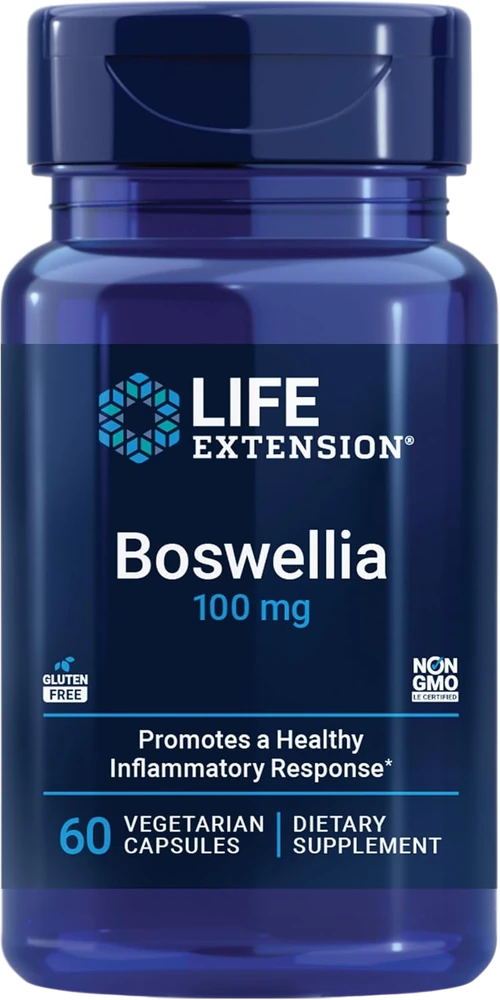 #1 of 10 · Best overall✓ Label verified · Supplement Facts read Oct 18, 2026
Real retailer photo, cut out. Label unedited.
Buy it. A named AKBA-enriched extract at exactly its trial dose. 100 mg of AprèsFlex (20% AKBA) per capsule — the dose both AprèsFlex trials used, with pain and function improving from day 5-7.
$15 / month$0.50 / 100 mg AprèsFlex cap
Why It Scores 9.2 — And The Label Line Behind Each Number
Standardisation to AKBA
35% of scoreUses AprèsFlex, a trademarked AKBA-enriched extract standardised to 20% AKBA — a named clinical extract with its own placebo-controlled trials, and the highest-precision form in the category. Our method gives named AKBA-enriched extracts (5-Loxin, AprèsFlex) full marks; this one earns them.
- Standardisation precision
- Highest in category — a stated AKBA %, not total boswellic acids
Dose alignment with the trial window
25% of scoreEach capsule is 100 mg of AprèsFlex — exactly the daily dose used in both AprèsFlex trials (Sengupta 2010, Vishal 2011), in a single cap. Half a point held back because 100 mg is the only dose ever tested, in two small trials, so there is no evidence on whether more helps if one cap isn't enough.
- Per serving
- 100 mg AprèsFlex (1 vegetarian capsule)
- Trial-dose alignment
- One cap matches the 100 mg daily dose of Sengupta 2010 and Vishal 2011
Third-party testing + manufacturing
20% of scoreLife Extension's QC pedigree is strong in the longevity-supplement space — GMP-certified manufacturing and a history of using branded clinical materials. Sourcing a trademarked branded extract (AprèsFlex) carries its own identity/potency documentation, an added quality signal for an adulteration-prone botanical.
- Label name
- Now sold as "Life Extension Boswellia"; formerly "5-LOX Inhibitor with AprèsFlex" (same formula per the listing)
- Testing
- Life Extension QC, GMP-certified, branded clinical material with identity documentation
- Manufacturer
- Life Extension (Fort Lauderdale, FL · longevity-supplement QC pedigree)
Cost per standardised serving
10% of scoreRoughly $0.50 per 100 mg AprèsFlex cap — meaningfully pricier per gram than the $0.08-0.09 whole-extract picks. That's the cost of AKBA enrichment, not a markup on boswellia. Reasonable for the precision, but it's the weakest criterion and the reason it isn't the budget call.
- Bottle
- 60 vegetarian capsules · two months at one a day
- Price
- ~$15 / month = ~$0.50 per AprèsFlex cap
Formulation logic
10% of scoreA clean, single-active AKBA cap — besides the extract, the panel lists only microcrystalline cellulose, the vegetable-cellulose capsule, silica and vegetable stearate. No proprietary blend, nothing hiding the dose. Exactly what you want from a precision pick: you know precisely what you're taking, which makes it the easiest bottle in the category to stack with curcumin and omega-3.
- Active form
- AprèsFlex — trademarked Boswellia serrata gum-resin extract, standardised to 20% AKBA (sold outside the US as Aflapin)
- Other ingredients
- Microcrystalline cellulose, vegetable cellulose (capsule), silica, vegetable stearate
- More Specs
- Format
- Vegetarian capsules · gluten-free, non-GMO
Label verified. Every figure read from the Supplement Facts photo, Oct 18, 2026.
Marketing Claims Vs. Reality
Made with standardized Boswellia serrata.
The Supplement Facts panel lists 100 mg of AprèsFlex (Boswellia serrata gum-resin extract) per capsule, standardised to 20% AKBA — a stated, specific standardisation rather than an unquantified "boswellia" claim.
Supports joint health & function.
AprèsFlex (as Aflapin) was tested at this exact 100 mg daily dose in two placebo-controlled knee-osteoarthritis trials — Sengupta 2010 (PMID 21060724, 90 days) and Vishal 2011 (PMID 22022214, 30 days) — with significant improvements in pain and physical function versus placebo. Both trials are small (60 patients each) and close to the ingredient maker, so treat it as supported, not settled.
Promotes a healthy inflammatory response.
AKBA is the most potent 5-LOX-inhibiting boswellic acid, and the Sengupta 2010 paper adds lab (in vitro) data showing Aflapin inhibits MMP-3 and ICAM-1, two inflammation-linked targets. A fair description of the mechanism, as long as it's read as joint-inflammation support rather than a general immune claim.
Promotes arterial health & cell division.
This gallery claim goes beyond the evidence we cite: both AprèsFlex trials measured knee-osteoarthritis pain and function, not arterial health or cell division. We found nothing here to rate it on, so we don't count it in the score.
What Our Test Actually Found
The label says AprèsFlex — not 5-Loxin
An earlier version of this review described the capsule as 5-Loxin. The Supplement Facts panel says otherwise: 100 mg of AprèsFlex (Boswellia serrata gum-resin extract), standardised to 20% AKBA, and the back label names AprèsFlex as a trademark of PLT Health Solutions–Laila Nutraceuticals. AprèsFlex is the US name of Aflapin, a sister extract to 5-Loxin from the same research group, with its own trials. The bottle in our photo still carries the old name, "5-LOX Inhibitor with AprèsFlex"; the listing now calls it "Boswellia" with the same formula.
One capsule is the whole trial dose
Both AprèsFlex trials used 100 mg a day — Sengupta 2010 for 90 days, Vishal 2011 for 30 days — and both reported significant improvements in pain and physical function versus placebo, from day 7 and day 5 respectively. That is exactly one capsule of this bottle, which is also the label's suggested use. No doubling needed, and the 60 caps last two months.
You're paying for the AKBA fraction, not for more boswellia
At ~$0.50 a cap, it costs roughly five times more per cap than NOW's whole extract — and on paper it delivers less total boswellic acid. That sounds backwards until you understand what you're buying: not more boswellia, but a stated amount of the specific potent fraction (AKBA) the trials were built around. A whole extract gives you more total material with no AKBA figure; AprèsFlex gives you less total material at a guaranteed 20% AKBA. For evidence-matching the trade is worth it; for raw cost-per-acid it isn't.
It's the easiest boswellia to stack, because the dose is precise
Boswellia's best use is often in a stack — with curcumin (NF-κB) and omega-3 (inflammation resolution) — because the three hit separate arms of the inflammatory cascade. This capsule is the cleanest stacking partner in the category: a single-active, precisely-dosed AKBA cap with nothing else in it, so you always know exactly what you're adding to the mix. Whole extracts with co-ingredients (like NOW's turmeric) muddy that math slightly. If you're building a deliberate three-pathway protocol, the precision here is a real practical advantage.
The evidence is real, but small and close to the supplier
Two trials of 60 patients each, both in knee osteoarthritis, both at 100 mg a day. In the 2010 trial AprèsFlex also beat 5-Loxin at the same 100 mg dose, by the authors' account. But that trial was run from the ingredient maker's own R&D centre, and the 2011 trial's three authors all co-wrote the 2010 paper. Treat it as a strong early signal at the exact dose in this cap, not settled science — which is still more than most boswellia bottles can show.
Full analysis: all pros & cons (8), buy if / skip if
- Uses AprèsFlex — a named extract standardised to 20% AKBA, tested in two placebo-controlled trials
- One 100 mg capsule is exactly the trial dose — and the label's one-a-day serving
- AKBA standardisation is the highest-precision form in the entire category
- Life Extension's QC pedigree and a trademarked branded extract make it low-risk for a botanical
- Clean single-active cap — the easiest boswellia bottle to stack with curcumin and omega-3
- More expensive per gram of boswellic acids than whole-extract picks like NOW or Swanson
- The AprèsFlex evidence is two small 60-patient trials close to the ingredient maker
- Not 5-Loxin — if you want the exact extract from Sengupta 2008, this isn't it
- You want a named AKBA-enriched extract (AprèsFlex) at the exact dose it was tested at
- You care about matching the evidence rather than just buying "boswellia 500 mg"
- You want the highest-precision standardisation in the category, not a whole-extract approximation
- You're stacking with curcumin and omega-3 and want a precise, single-active AKBA dose to add
- You want the lowest cost per gram of boswellic acids — a whole extract like Swanson (#5) or Nutricost (#6) wins
- You specifically want 5-Loxin, the extract from Sengupta 2008 — this bottle contains AprèsFlex instead
- You want boswellia plus a clinical curcumin dose in one bottle — Terry Naturally Curamin (#2) combines both
100 mg of AprèsFlex (20% AKBA) per capsule — the dose both AprèsFlex trials used, with pain and function improving from day 5-7. The highest-precision form in the category, from a brand with serious QC. It costs more per gram than a whole extract because AKBA enrichment is the expensive part, and the evidence is two small 60-patient trials close to the ingredient maker. For evidence-matchers, it's the pick.
If you want a boswellia that tells you exactly what's in it — and matches the dose it was tested at — Life Extension Boswellia is the one. The most important number in this category isn't the milligrams on the front of the bottle; it's the standardisation, and specifically the AKBA content. AKBA (acetyl-11-keto-β-boswellic acid) is the most potent 5-LOX-inhibiting fraction of the boswellic acids. Each capsule here holds 100 mg of AprèsFlex, a trademarked extract standardised to 20% AKBA, and 100 mg a day is the dose both AprèsFlex trials used (Sengupta 2010, Vishal 2011). It's pricier per gram than a whole-extract bottle because AKBA enrichment is the expensive part, and the trials behind it are small — but precision is what you're paying for. Here's the full breakdown.
The pick for anyone who wants a defined, tested extract — not just boswellia.

Life Extension Boswellia is the bottle we point to when a reader wants to know exactly what they're taking. Each capsule holds 100 mg of AprèsFlex, a trademarked extract standardised to 20% AKBA, and that is precisely the daily dose both AprèsFlex trials used — with pain and function improving within the first week. The standardisation is the highest-precision in the category, the panel is clean, and Life Extension's QC is strong. That's why it ranks #1. Two things to keep in mind. First, the evidence is promising but small: two 60-patient trials close to the ingredient maker. Second, it costs more per gram than a whole extract, because AKBA enrichment is the expensive part. If cost-per-acid is your priority, Swanson (#5) or Nutricost (#6) win on value; if you want boswellia plus turmeric in one budget bottle, NOW (#4) does that. But for a precise, tested AKBA dose in one capsule a day, this is the bottle — and it's the cleanest one to slot into a boswellia-plus-curcumin-plus-omega-3 stack.
If This Doesn’t Fit — Try These
 02
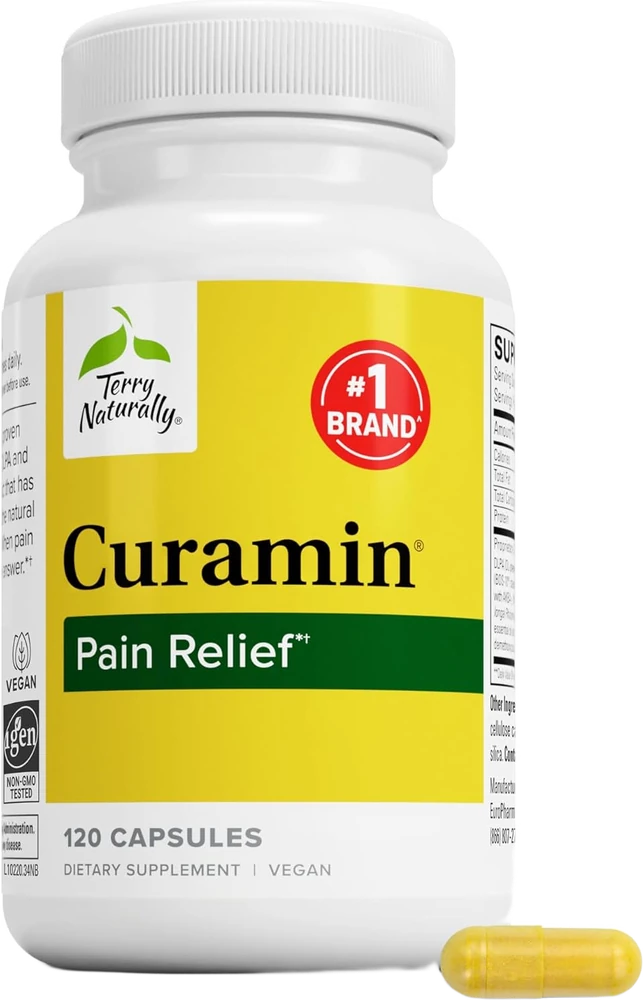
Terry Naturally Curamin
If you're already convinced you want both boswellia and curcumin — and the mechanism logic says you should, since they hit different pathways — Curamin is the cleanest single-bottle way to get both with standardised, branded actives.
 04
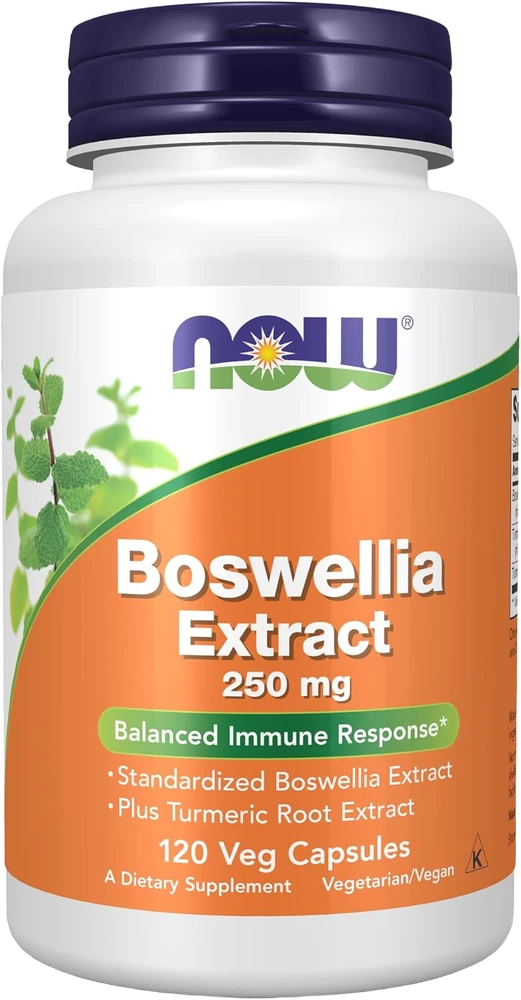
NOW Boswellia Extract
A solid budget bottle that does two jobs: a standardised boswellia extract and a real turmeric dose (200 mg of 95%-curcuminoid extract plus 200 mg of powder per two caps), made under NOW's reliable QC for about $11.
 06
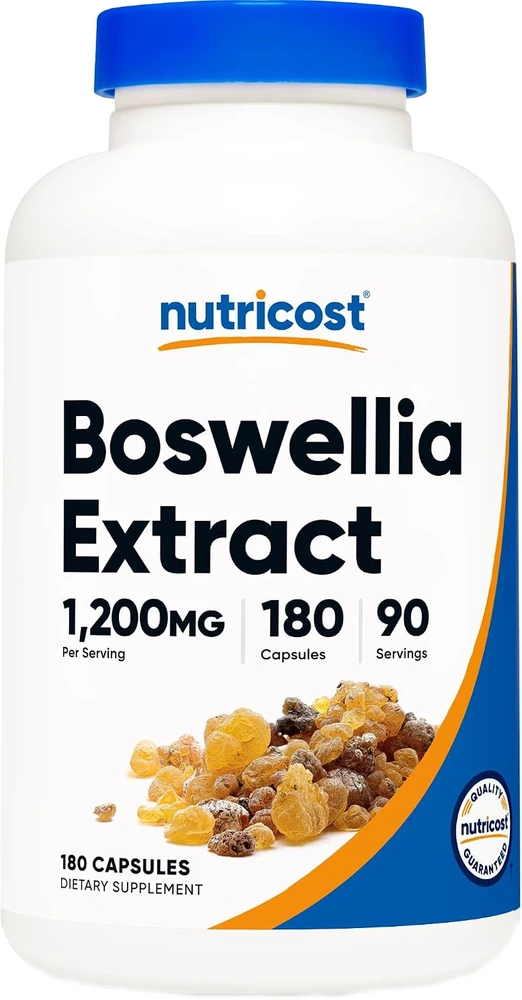
Nutricost Boswellia Extract
Nutricost is the pure value play: a genuinely standardised 65%-boswellic-acid extract that hits the trial dose in two caps, at the lowest cost-per-gram on the list.
Quick Answers
What is AprèsFlex, and is it the same as 5-Loxin?
No. They are sister extracts from the same Indian research group (Laila), but different materials. 5-Loxin is enriched to about 30% AKBA and is the extract tested in Sengupta 2008 (PMID 18667054). AprèsFlex, sold outside the US as Aflapin, is the newer one, standardised to 20% AKBA; its trial papers describe it as a synergistic composition derived from Boswellia serrata gum resin. This bottle's Supplement Facts panel lists 100 mg of AprèsFlex per capsule, standardised to 20% AKBA, and no 5-Loxin. An earlier version of this review called it 5-Loxin; the label is what counts.
Is 100 mg enough, or should I take two caps?
One capsule is the dose to take. 100 mg a day is the only dose the AprèsFlex trials tested: Sengupta 2010 (PMID 21060724) ran it for 90 days and Vishal 2011 (PMID 22022214) for 30 days, and both found significant improvements in pain and physical function versus placebo, from day 7 and day 5 respectively. So one capsule daily with food matches the evidence, and the label's suggested use is also one a day, which makes the 60-cap bottle a two-month supply. A second capsule takes you outside what was tested, so there is no data showing it adds anything.
Why is this more expensive per gram than NOW or Swanson?
Because AKBA enrichment is the expensive part. NOW (#4) and Swanson (#5) sell standardised whole extracts, where AKBA is present but neither concentrated nor stated. AprèsFlex is processed to a guaranteed 20% AKBA, which costs more to produce, so you pay roughly $0.50 per 100 mg cap versus about $0.08-0.09 for a whole-extract cap. You're not paying for more boswellia; you're paying for a defined amount of the fraction the trials were built around. If precision and evidence-matching are your priority, the premium is the point. If cost-per-gram of boswellic acids is your priority, a whole extract wins.
How strong is the AprèsFlex evidence?
Promising but thin. There are two placebo-controlled trials in knee osteoarthritis with 60 patients each. Sengupta 2010 compared 100 mg Aflapin (AprèsFlex), 100 mg 5-Loxin and placebo over 90 days: both extracts beat placebo, the authors report Aflapin worked better than 5-Loxin, and its group improved from day 7. Vishal 2011 tested 100 mg Aflapin against placebo for 30 days and saw improvement from day 5. The 2010 trial was run from the ingredient maker's own R&D centre, and all three authors of the 2011 trial also co-wrote the 2010 paper. That is a real signal at the exact dose in this capsule, but small, short and close to the supplier — not the same as large independent trials.
Can I stack it with curcumin and omega-3?
Yes — that's arguably the ideal use. Boswellia (5-LOX), curcumin (NF-κB), and omega-3 (which fuels inflammation resolution) each hit a different arm of the inflammatory cascade, so they add rather than overlap. Running this capsule alongside a high-absorption curcumin and a fish-oil dose gives you a three-pathway anti-inflammatory base for stubborn joints. Because it delivers a precise, single-active AKBA dose, it's particularly easy to stack — you know exactly what you're adding. If you'd rather not manage three bottles, Terry Naturally Curamin (#2) combines boswellia and curcumin in one, though you lose the ability to dose each independently.
Is Life Extension's quality control trustworthy for a botanical?
Yes. Life Extension has a strong QC pedigree in the longevity-supplement space — GMP-certified manufacturing, published testing standards, and a long history of using branded clinical materials rather than commodity powder. Sourcing a trademarked branded extract (AprèsFlex) rather than a generic AKBA claim is itself a quality signal, because the branded material carries its own identity and potency documentation. For an adulteration-prone botanical category, buying a named clinical extract from a brand with this track record is about as low-risk as boswellia gets.
Sources & Further Reading
4 peer-reviewed sources, each linked to PubMed
- [1] Sengupta 2010 PMID 21060724 — Comparative efficacy and tolerability of 5-Loxin and Aflapin against osteoarthritis of the knee: a double blind, randomized, placebo controlled clinical study. 90-day, double-blind, placebo-controlled trial in 60 knee-osteoarthritis patients: 100 mg/day Aflapin (AprèsFlex) or 100 mg/day 5-Loxin versus placebo. Both extracts significantly improved pain and physical function; the Aflapin group improved from day 7, and the authors report Aflapin outperformed 5-Loxin. Run from the ingredient maker's (Laila) R&D centre. The dose in one capsule of this bottle.
- [2] Vishal 2011 PMID 22022214 — A double blind, randomized, placebo controlled clinical study evaluates the early efficacy of aflapin in subjects with osteoarthritis of knee. 30-day, double-blind, placebo-controlled trial in 60 knee-osteoarthritis patients: 100 mg/day Aflapin (AprèsFlex) produced significant improvements in pain and physical function versus placebo, starting at day 5, with no safety signal in blood and urine tests.
- [3] Sengupta 2008 PMID 18667054 — A double blind, randomized, placebo controlled study of the efficacy and safety of 5-Loxin for treatment of osteoarthritis of the knee. Placebo-controlled trial of 5-Loxin (the sister extract, enriched to ~30% AKBA) at 100 and 250 mg/day in knee osteoarthritis, with significant, dose-related reductions in pain and improvements in physical function — benefits within ~7 days at 250 mg. Cited for comparison: this bottle contains AprèsFlex, not 5-Loxin.
- [4] Kimmatkar 2003 PMID 12622457 — Efficacy and tolerability of Boswellia serrata extract in treatment of osteoarthritis of knee — a randomized double blind placebo controlled trial. Randomised, double-blind, placebo-controlled crossover trial in knee-osteoarthritis patients: a standardised Boswellia serrata extract significantly reduced knee pain, improved joint function, and increased walking distance versus placebo over 8 weeks. Establishes the boswellia osteoarthritis efficacy that AKBA-enriched extracts refine.
Affiliate disclosure: every Amazon link uses our Associates tag (superachieverclub-20). We earn a small commission at no cost to you; it funds independent reviews. We never accept payment to change a ranking.