
Hismile PAP+ Whitening Strips Review
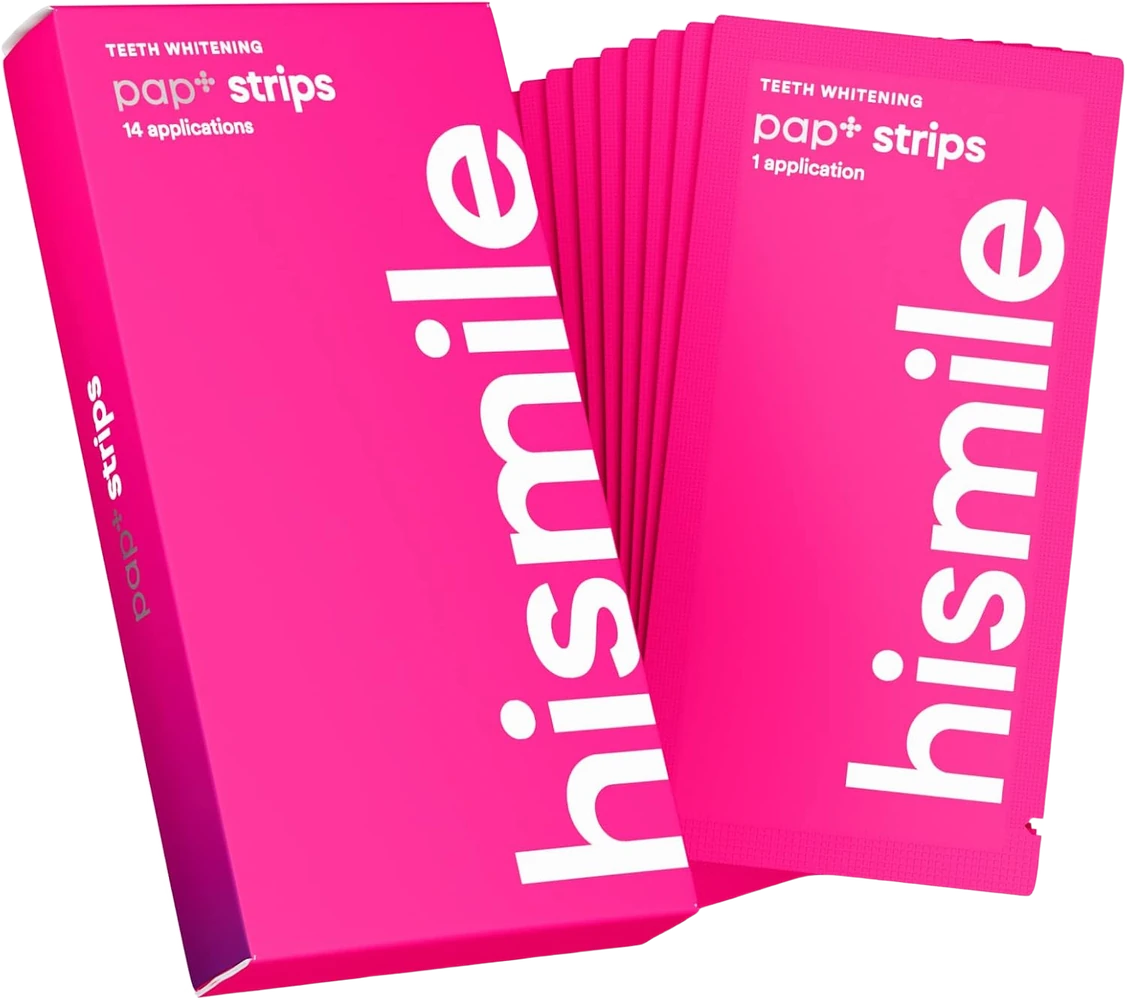 #6 of 8 · Best for sensitive teeth✓ Product photos checked Sep 7, 2026
Real retailer photo, cut out. Label unedited.
Buy it. The sensitive-teeth answer — peroxide-free PAP that whitens by oxidation with far less nerve pain. PAP (phthalimidoperoxycaproic acid) is a peroxide-free oxidizer: it still breaks down stain, but it doesn't provoke the tooth nerve the way hydrogen peroxide does, so sensitivity drops dramatically.
$19 / 14-treatment pack~$1.36 / treatment
Why It Scores 8.3 — And The Label Line Behind Each Number
Whitening efficacy
35% of scorePAP genuinely whitens by oxidation without hydrogen peroxide, and the emerging clinical literature supports it as an effective non-peroxide agent (Kumbhare 2025; Jiménez-Díez 2026). But shade-for-shade it is generally a touch less potent than a high-percentage peroxide strip, and deep set-in stains respond more slowly. Real whitening, deliberately gentler — the lowest efficacy among the working oxidizers here, and honestly so.
Sensitivity management
25% of scoreThe top of the list, by design. Peroxide-free PAP doesn't provoke the tooth nerve the way hydrogen peroxide does, and the PAP+ formula adds desensitizing/remineralizing support, so sensitivity drops dramatically. This is the whole reason the product exists and the correct pick for anyone who stings from peroxide.
Ease of use + fit
20% of scoreShort ~10-minute daily wear, a clean low-irritation experience, and a simple strip application — easy to run alongside a sensitive-teeth toothpaste. Loses only a fraction to the molded-tray coverage of a full kit; as a strip it's quick and painless to use.
Value per full course
15% of scoreAt ~$1.36 per treatment across 14 treatments it's affordable and cheaper per use than the premium strips, but the course is shorter and, being slightly less potent, may need more patience or repeat courses for a big change. Fair value; the comfort, not the cost, is the reason to buy.
- Course
- 28 strips (14 upper/lower treatments)
- Price
- ~$19 / 14-treatment pack
- Cost per treatment
- ~$1.36
Honesty of claims
5% of scoreBuilt on a genuine peroxide-free oxidizer — not an abrasive scrub or a decorative lamp — which is the honest kind of 'natural/peroxide-free.' It slips only where marketing implies parity with peroxide potency or leans on 'clinically proven' harder than the still-growing PAP evidence base supports.
- More Specs
- Oxidizer
- PAP (phthalimidoperoxycaproic acid) — peroxide-free
- Format
- Whitening strips; ~10 min/day
- Comfort
- Peroxide-free — built specifically for sensitive teeth
- Formula
- PAP+ with desensitizing/remineralizing support ingredients
- Best for
- Sensitive teeth that sting from peroxide
Photos checked.This product has no Supplement Facts panel; the retailer's listing photos were reviewed Sep 7, 2026.
Marketing Claims Vs. Reality
Peroxide-free formula that whitens by oxidation.
PAP (phthalimidoperoxycaproic acid) is a genuine peroxide-free oxidizer that whitens by breaking down chromogens, and recent studies evaluate it as an effective non-hydrogen-peroxide whitening agent (Kumbhare 2025; Jiménez-Díez 2026). The core mechanism claim is accurate.
No sensitivity / far gentler than peroxide.
Peroxide-free oxidizers provoke the tooth nerve far less than hydrogen peroxide, and PAP is specifically positioned for low sensitivity (Epple 2019). 'Far gentler' is well-supported; 'zero sensitivity' is optimistic for every user, but the comfort advantage is real and large.
PAP+ includes ingredients to protect and desensitize teeth.
Hismile's PAP+ formula lists supporting ingredients associated with desensitization and enamel support alongside PAP, consistent with the sensitive-teeth positioning. Marked partial because these are label-based formulation claims, not independently validated per-SKU outcomes.
Whitens as effectively as peroxide.
PAP whitens, but shade-for-shade it is generally slightly less potent than a high-% peroxide strip, and the clinical evidence base is shorter and still developing (Epple 2019). Claiming parity with peroxide overstates it; 'effective and far gentler' is the honest framing.
Clinically proven, dentist-developed whitening.
PAP has a real but limited and growing clinical literature (Kumbhare 2025; Jiménez-Díez 2026) versus decades of peroxide data, so 'clinically proven' is generous at the SKU level even though the mechanism is genuine.
What Our Test Actually Found
The correct move when whitening hurts
The single most important fork in this category isn't which peroxide product — it's what to do if whitening stings. The wrong answer is a stronger peroxide; the right answer is PAP. It whitens by oxidation without provoking the nerve, so sensitivity drops dramatically. If peroxide makes you wince, buy this.
Genuinely gentle — and it actually whitens
Unlike the 'natural' abrasive products that only scrub surface stain, PAP is a real oxidizer that breaks down the stain compounds inside the tooth. So it delivers actual shade change, not just maintenance — the key distinction that puts it well above the peroxide-free strip at #8.
The honest trade is potency
Shade-for-shade, PAP is generally a touch weaker than a high-percentage peroxide strip, and deep, set-in stains respond more slowly. If you have no sensitivity and want the biggest, fastest change, a peroxide strip (#1) is stronger. You choose PAP for comfort, accepting a slightly gentler result.
Short wear, low friction, cheap
About ten minutes a day, a clean low-irritation experience, and roughly $1.36 per treatment make it easy to run — and easy to pair with a sensitive-teeth toothpaste. The comfort is the selling point, and the price makes it an easy yes for sensitive teeth.
Newer chemistry, shorter track record
PAP's clinical literature is real but still growing versus the decades of peroxide data, so 'clinically proven' claims run a little ahead of the evidence. The mechanism is sound and the comfort is genuine — just calibrate expectations to 'effective and gentle,' not 'stronger than peroxide.'
Full analysis: all pros & cons (8), buy if / skip if
- PAP whitens by oxidation without hydrogen peroxide — much lower sensitivity
- The right pick when peroxide strips make your teeth or gums zing
- Short ~10-minute wear and a clean, low-irritation experience
- Affordable per treatment and easy to pair with sensitive-teeth toothpaste
- A real oxidizer, not an abrasive scrub — it changes shade, not just surface stain
- Peroxide-free means slightly less potent shade-for-shade than a strong HP strip
- Shorter clinical track record than the decades-studied peroxide strips
- Deep, set-in stains may respond more slowly than they would to high-% peroxide
- Your teeth or gums sting from hydrogen-peroxide strips or gels
- You want genuine whitening by oxidation without the peroxide nerve pain
- You prefer a short (~10-minute) daily wear and a low-irritation experience
- You accept a slightly gentler shade change in exchange for far more comfort
- You have no sensitivity and want the biggest, fastest shade change — get Crest (#1)
- You want the longest clinical track record — peroxide has decades more data
PAP (phthalimidoperoxycaproic acid) is a peroxide-free oxidizer: it still breaks down stain, but it doesn't provoke the tooth nerve the way hydrogen peroxide does, so sensitivity drops dramatically. Short ~10-minute wear, 14 treatments, ~$1.36 each. The honest trade is potency — slightly weaker shade-for-shade than a high-% peroxide strip, with a shorter clinical track record. If whitening stings you, this is the right move, not a stronger peroxide.
This is the pick that matters most if whitening hurts you. Hismile PAP+ uses PAP (phthalimidoperoxycaproic acid), a peroxide-free oxidizer that still whitens by breaking apart stain molecules but doesn't provoke the tooth nerve the way hydrogen peroxide does — so sensitivity drops dramatically. The PAP+ formula pairs the oxidizer with ingredients associated with desensitization and enamel support, and the strips wear for only about ten minutes a day across 14 treatments, at roughly $1.36 each. The honest trade is potency: shade-for-shade, PAP is generally a touch weaker than a high-percentage peroxide strip, and its clinical track record is shorter and still growing. But for sensitive teeth, the correct move is never 'push a stronger peroxide' — it's this. Gentle, effective enough, and cheap.
The sensitive-teeth answer — gentle, genuinely effective, and the right move when peroxide stings.

This is the pick that matters most if whitening hurts you. PAP (phthalimidoperoxycaproic acid) is a peroxide-free oxidizer: it still whitens by breaking apart stain molecules, but it doesn't provoke the tooth nerve the way hydrogen peroxide does, so sensitivity drops dramatically. The honest trade is potency — shade-for-shade it's a touch weaker than a high-percentage peroxide strip, and the clinical track record is shorter and still growing. But for sensitive teeth, the correct move is never 'push a stronger peroxide' — it's this. Gentle, effective enough, and cheap. And crucially, unlike the 'natural' strip at #8, it's a real oxidizer that actually changes your shade. If peroxide makes you wince, buy Hismile PAP+.
If This Doesn’t Fit — Try These
 08
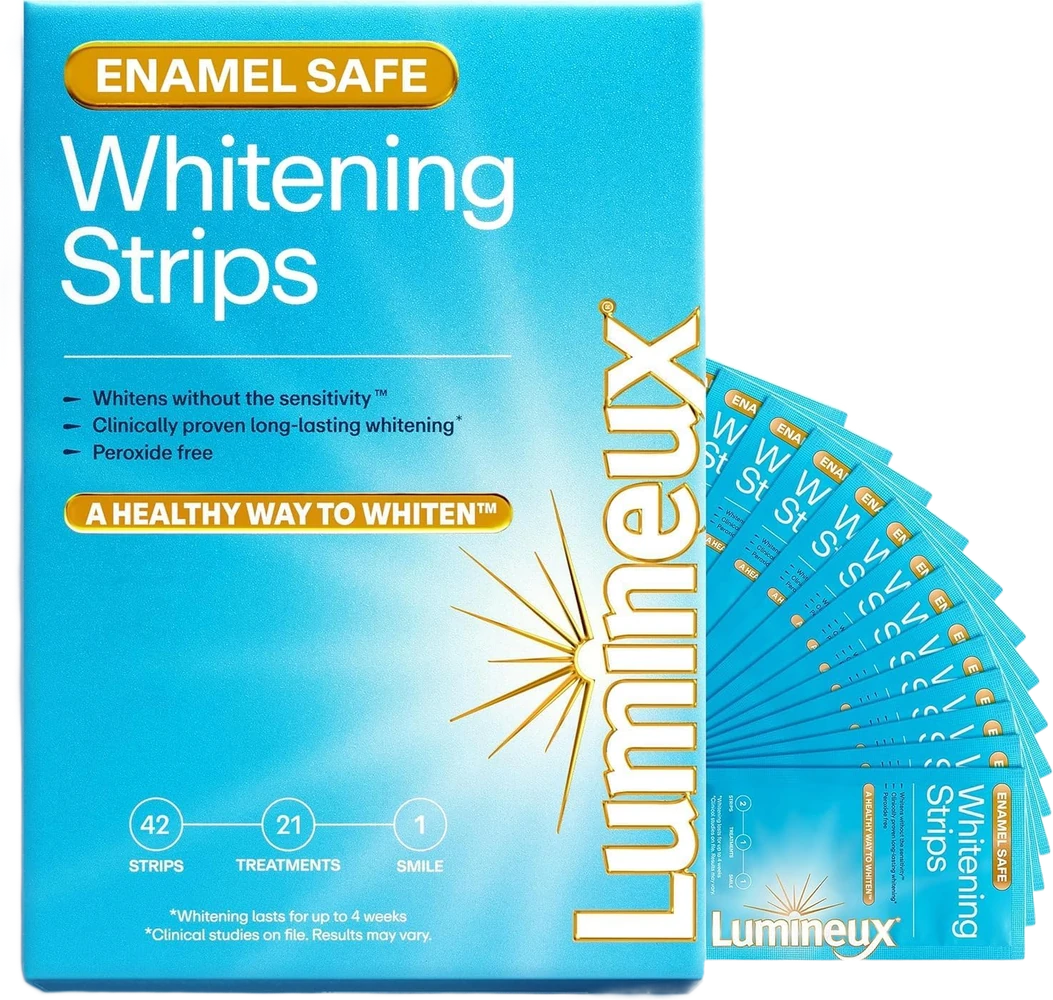
08Lumineux Whitening Strips
Lumineux earns its place as the category's honest cautionary tale.
 03
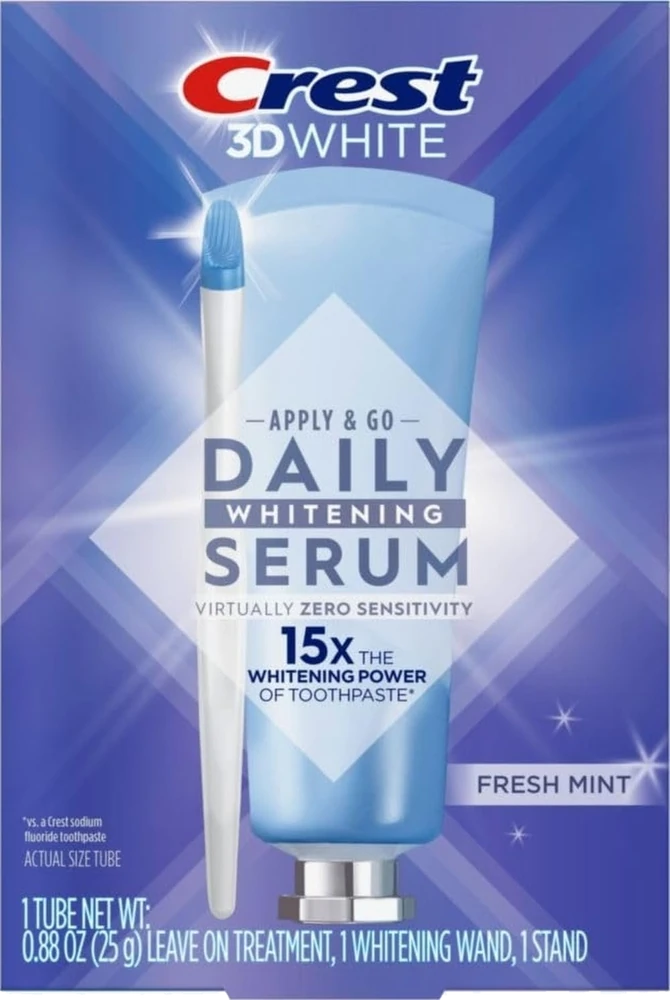
03Crest Whitening Emulsions
Crest Whitening Emulsions is the pick for people who want real peroxide whitening without the hassle or the sting of strips.
 01
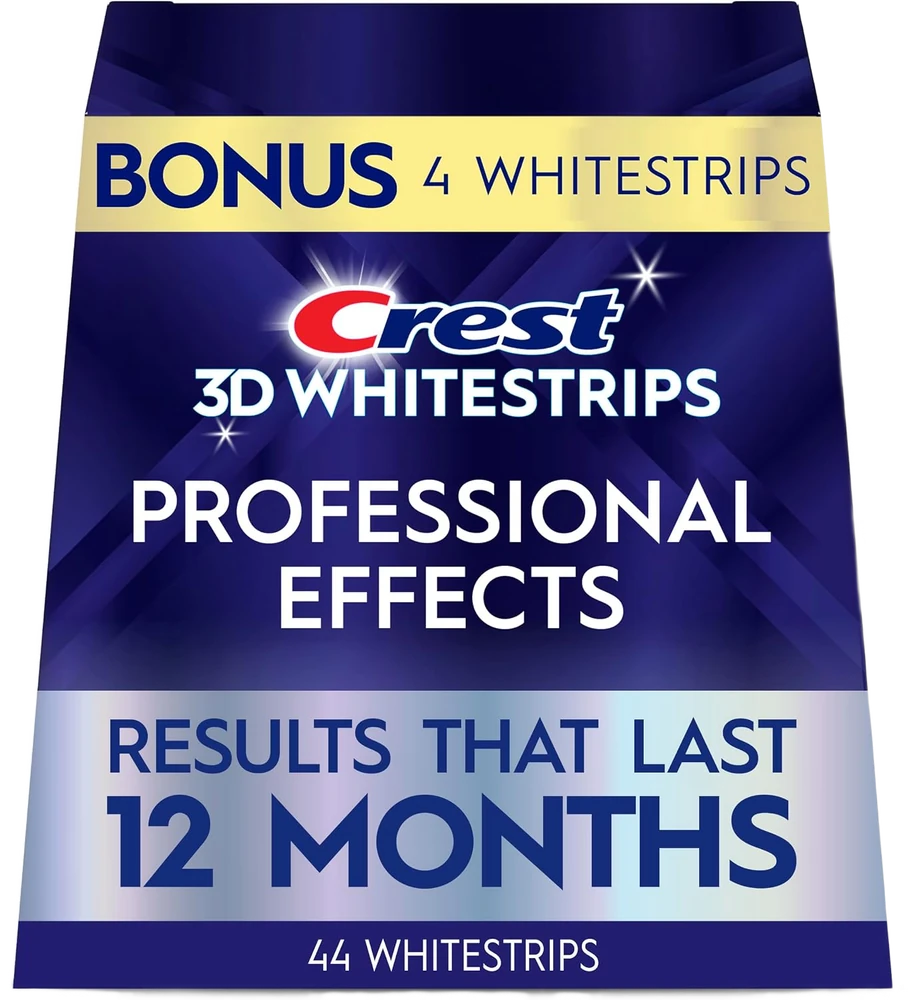
01Crest 3D Whitestrips Professional Effects
If you want the most reliably effective at-home whitening and you don't want to gamble, Crest 3D Whitestrips Professional Effects is the default.
Quick Answers
What is PAP and how does it whiten without peroxide?
PAP (phthalimidoperoxycaproic acid) is a peroxide-free oxidizer. Like hydrogen peroxide, it whitens by oxidation — breaking apart the colored stain molecules locked inside the tooth — but it does so without provoking the tooth nerve the way peroxide does, which is why sensitivity is dramatically lower. It's genuine whitening chemistry, just a gentler oxidizer.
Is it as effective as peroxide strips?
Almost, but not quite — and that's the honest trade. Shade-for-shade, PAP is generally a touch less potent than a high-percentage peroxide strip, and deep set-in stains respond more slowly. You choose it for the comfort: far less nerve pain in exchange for a slightly gentler, slower result. For sensitive teeth that's the right trade; for teeth that don't sting, a peroxide strip (#1) whitens harder.
How is this different from the 'natural' Lumineux strips at #8?
Crucially different. PAP is a real oxidizer that changes your actual tooth shade, while Lumineux is a peroxide-free 'natural' strip with no oxidizer at strength — it lifts light surface stain and maintains brightness but barely changes shade. If you want genuinely gentle whitening that actually works, PAP is the pick; Lumineux is comfort without much whitening.
Will it help if peroxide makes my teeth zing?
That's exactly what it's for. The correct move when whitening stings is not to push a stronger peroxide — it's to switch to a peroxide-free oxidizer like PAP, which whitens with far less nerve provocation. Pair it with a sensitive-teeth toothpaste and the short ~10-minute wear, and most people who can't tolerate peroxide can use this comfortably.
Sources & Further Reading
4 sources — studies link to PubMed, product specs to the manufacturer
- [1] Epple 2019 PMID 31374877 — A Critical Review of Modern Concepts for Teeth Whitening. A critical review that identifies PAP (phthalimidoperoxycaproic acid) as a peroxide-free oxidative whitening agent positioned for lower sensitivity, while noting its evidence base is younger and generally less potent than established peroxide systems — the basis for scoring PAP gentlest but slightly less potent.
- [2] Kumbhare 2025 PMID 40655646 — An Evaluation of the Efficacy of a Novel Non-Peroxide, Phthalimidoperoxycaproic Acid Teeth Whitening Agent in Conjunction with 810-nm Diode Laser. A clinical evaluation of a non-peroxide PAP whitening agent, part of the emerging primary literature indicating PAP produces genuine whitening by oxidation without hydrogen peroxide — supporting PAP as a real, if newer, oxidative whitener.
- [3] Jiménez-Díez 2026 PMID 42061739 — Efficacy, pH, and enamel effects of an over-the-counter non-hydrogen peroxide gel for at-home tooth bleaching. A 2026 study evaluating an over-the-counter non-hydrogen-peroxide (peroxide-free) at-home bleaching product for whitening efficacy, pH, and enamel effects — recent primary data on exactly the peroxide-free OTC category PAP strips belong to, informing both efficacy and enamel-safety expectations.
- [4] ADA — Tooth Whitening — Whitening — Oral Health Topics and the ADA Seal of Acceptance program. The ADA notes tooth sensitivity is the most common whitening side effect and that it is dose-dependent and generally transient — the clinical rationale for choosing a low-sensitivity peroxide-free oxidizer over a stronger peroxide when teeth sting.
Affiliate disclosure: every Amazon link uses our Associates tag (superachieverclub-20). We earn a small commission at no cost to you; it funds independent reviews. We never accept payment to change a ranking.