
Himalaya Boswellia (Shallaki) Review
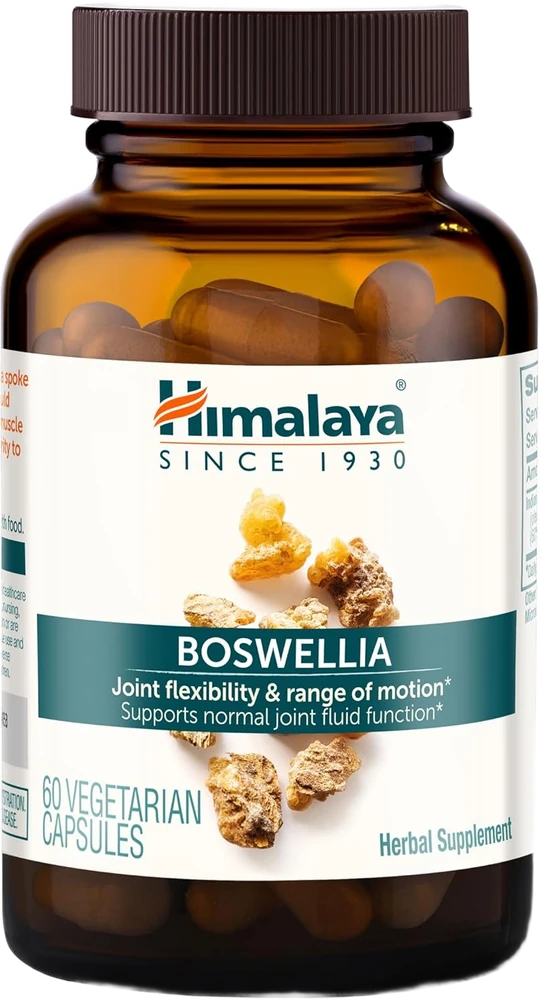 #9 of 10 · Best traditional / Ayurvedic
Real retailer photo, cut out. Label unedited.
Consider it. The Ayurvedic-heritage boswellia, with genuine provenance. A genuinely standardised Boswellia serrata (Shallaki) extract with solid botanical identity testing, from an Indian brand with decades of Ayurvedic expertise in the plant.
$12 / month$0.20 / caplet
Why It Scores 7.4 — And The Label Line Behind Each Number
Standardisation to AKBA
35% of scoreA genuinely standardised Shallaki (Boswellia serrata) extract with botanical identity testing — real, characterised material well above raw resin. It sits in the mid tier because it standardises to the extract generally rather than a stated AKBA % or named clinical fraction — the same precision gap as NOW and Swanson.
- Standardisation precision
- Standardised extract — not a stated AKBA % (same gap as NOW / Swanson)
Dose alignment with the trial window
25% of scoreStandardised extract per caplet, typically 2/day with food, reaching a productive dose within the trial range. Solid, though the 60-caplet bottle and caplet format give slightly less dosing runway and flexibility than the higher-count capsule picks. Adequate alignment for the tier.
- Per serving
- Standardised extract per caplet (2/day typical, with food)
- Trial-dose alignment
- Reaches a productive standardised-extract dose within the trial range at ~2 caplets/day
Third-party testing + manufacturing
20% of scoreHimalaya manufactures under GMP and applies botanical identity testing — genuinely valuable for an Ayurvedic herb where correct species identification matters. Combined with the brand's deep botanical expertise, that's a reasonable, real quality floor for an adulteration-prone category.
- Testing
- Himalaya GMP-certified, botanical identity-tested
- Manufacturer
- Himalaya (Indian brand, deep Ayurvedic botanical heritage)
Cost per standardised serving
10% of scoreRoughly $12/month and ~$0.20 per caplet — a reasonable, fair price for a standardised, brand-backed extract with genuine heritage. Not the cheapest (Swanson and NOW undercut it) but solid value, especially given the identity testing and provenance.
- Bottle
- 60 caplets · ~1 month at 2/day
- Price
- ~$12 / 60-caplet bottle = ~$0.20 per caplet
Formulation logic
10% of scoreA clean standardised single-active extract in the traditional Shallaki context. Scores mid because the caplet format and 60-count bottle give less flexibility and runway than capsule competitors, and it adds no co-factor or enrichment beyond the standardised extract. The heritage positioning is a plus, not a formulation advantage.
- Active form
- Standardised Boswellia serrata (Shallaki) extract
- More Specs
- Heritage
- Shallaki = boswellia's traditional Ayurvedic name; decades of Himalaya botanical expertise
- Format
- Caplets
Marketing Claims Vs. Reality
Standardised Boswellia serrata (Shallaki) extract.
A genuine standardised extract under boswellia's traditional Ayurvedic name (Shallaki), consistent with Himalaya's published label and backed by the brand's botanical identity testing — real, characterised material well above unstandardised resin. The standardisation and Shallaki identity are both accurate.
Backed by Himalaya's Ayurvedic botanical expertise and identity testing.
Himalaya is a long-standing Indian brand with genuine, decades-deep expertise in Ayurvedic botanicals, and it applies botanical identity testing — particularly valuable for correct species identification of a traditional herb. The heritage and identity-testing claims are real and verifiable from the brand's documented practices.
Traditionally used for joint and musculoskeletal comfort.
Accurate — boswellia (Shallaki) has a centuries-long traditional use for inflammatory and joint conditions in Ayurveda, and modern RCTs (Kimmatkar 2003, PMID 12622457) support the joint benefit of standardised extract. The traditional-use framing is genuine and aligns with the contemporary evidence.
Pure herb with no fillers, suitable for everyday use.
Largely fair — it's a standardised single-herb extract without unnecessary additives, in caplet form. The minor caveat: caplets typically require some binding/compression agents to form, so "no fillers" is directionally true for the active profile but caplet manufacturing usually involves minimal excipients. A clean label overall, lightly overstated.
What Our Test Actually Found
Shallaki is boswellia — bought from the tradition that's used it longest
The first thing to understand is that Shallaki and boswellia are the same plant: Shallaki is the Ayurvedic name for Boswellia serrata, used for inflammatory conditions in traditional Indian medicine for centuries. Himalaya, an Indian brand with deep botanical roots, sells it under that traditional name with genuine expertise behind it. So this isn't a different or exotic ingredient — it's the same standardised Boswellia serrata as every other pick, sourced by a company that has worked with it in its original context far longer than most Western supplement brands have existed. For a buyer drawn to that provenance, it's a real differentiator.
Genuinely standardised and identity-tested — but not AKBA-enriched
Himalaya does the important things right: it standardises the Shallaki extract and applies botanical identity testing, so you're getting characterised material, not unverified resin. The identity testing is especially valuable for a traditional herb where correct species sourcing matters. The limitation is the familiar mid-tier one: it standardises to the extract generally rather than to a stated AKBA percentage, so it trails the AKBA-enriched AprèsFlex pick (Life Extension, #1). Genuinely standardised and well-identified; just not AKBA-enriched.
The 60-caplet bottle is short runway in caplet form
Two practical knocks. First, runway: at the typical 2 caplets a day, the 60-count bottle is a one-month supply, where Swanson (100 caps), Nutricost (180 caps), and Double Wood (240 caps) run longer between reorders. Second, format: caplets give slightly less dosing flexibility than capsules. Neither is disqualifying, but together they make Himalaya a bit less convenient and cost-efficient on a per-month basis than the higher-count capsule picks — worth weighing if you're committing to boswellia long-term rather than buying for the heritage.
The identity testing is a genuine, underrated strength
For an Ayurvedic botanical, correct species identification and clean sourcing aren't trivial — adulteration and misidentification are real risks in the herbal supply chain. Himalaya's botanical identity testing, backed by decades of expertise in exactly this category, is a genuine quality signal that's easy to overlook. You're not just buying heritage marketing; you're buying material from a company that knows how to correctly identify and source the plant. That testing rigour is one of the stronger reasons to trust this bottle, even if the AKBA precision sits a tier below the enriched picks.
Buy it for the provenance, not because it beats NOW on the numbers
On the pure numbers — standardisation precision, dose alignment, price — Himalaya is comparable to the other mid-tier standardised whole extracts; it doesn't outperform NOW (#4) or Pure Encapsulations (#3) on those axes. What it adds is genuine provenance: boswellia bought from the tradition that originated its medicinal use, from a brand with real botanical heritage and identity testing. So the honest buying logic is: choose Himalaya if that traditional-medicine context and trusted botanical name matter to you. If they don't, NOW gives you a similar standardised extract plus a turmeric dose for slightly less.
Full analysis: all pros & cons (8), buy if / skip if
- Standardised extract from a brand with deep Ayurvedic botanical heritage (Shallaki is boswellia's traditional name)
- Himalaya's botanical identity testing and GMP manufacturing are solid and genuinely valuable for a traditional herb
- Reasonable price for a standardised, brand-backed extract with real provenance
- Good fit for buyers who value the traditional-medicine sourcing context
- Genuinely standardised material — well above the unstandardised resin in the budget aisle
- Standardises to the extract generally, not a stated AKBA % or named clinical fraction
- Caplet format and 60-count bottle give less flexibility and runway than capsule competitors
- Heritage positioning, not the strongest match to the AKBA-enriched trial material
- You value boswellia's traditional Ayurvedic context (Shallaki) and want genuine provenance
- You want a standardised extract from a brand with decades of botanical and Ayurvedic expertise
- You appreciate solid botanical identity testing for correct species and sourcing
- You want a fairly-priced, brand-backed standardised extract and aren't optimising for AKBA precision
- You want a named AKBA-enriched extract at its trial dose — Life Extension Boswellia (#1) delivers it with AprèsFlex
- You want the longest runway or lowest price — Swanson (#5) or Nutricost (#6, 180 caps) are better value
- You prefer capsules to caplets, or want a boswellia-plus-curcumin combo (Terry Naturally Curamin #2)
A genuinely standardised Boswellia serrata (Shallaki) extract with solid botanical identity testing, from an Indian brand with decades of Ayurvedic expertise in the plant. Fairly priced, with real provenance. The trade-offs: it standardises to the extract rather than a stated AKBA % (behind the enriched picks on precision), and the 60-caplet bottle gives less runway. Buy it when the traditional-medicine sourcing story and a trusted botanical-heritage name matter to you.
Himalaya Boswellia (Shallaki) is the pick for the buyer drawn to boswellia's traditional roots. Shallaki is boswellia's Ayurvedic name, and Himalaya — an Indian brand with deep botanical heritage — has worked with this herb in its original traditional context for decades, far longer than most Western supplement companies have existed. What you get is a genuinely standardised Boswellia serrata extract with solid botanical identity testing, at a fair price, from a name with real provenance in the plant. The limitation is the familiar one for this tier: it standardises to the extract generally rather than to a stated AKBA percentage, so it trails the AKBA-enriched AprèsFlex pick on precision. And the 60-caplet bottle gives less runway than the capsule competitors. It's a situational pick — right when the traditional-medicine sourcing story matters to you. Here's the full breakdown.
A competent, well-provenance standardised extract for the heritage buyer.

Himalaya Boswellia (Shallaki) is a competent, well-made standardised extract with something the other picks don't have: genuine Ayurvedic provenance. Himalaya has worked with this botanical in its traditional context — under its original name, Shallaki — longer than most Western brands have existed, with real expertise and solid botanical identity testing behind it. It's fairly priced, properly standardised, and a sound choice for a buyer drawn to the traditional-medicine sourcing story and a trusted botanical-heritage name. The limitations are the familiar mid-tier ones. It standardises to the extract rather than a defined AKBA percentage, so it trails the 5-Loxin / AprèsFlex tier on precision, and the 60-caplet bottle gives less runway than the higher-count capsule picks. So this is a situational pick: right when the Ayurvedic context and provenance matter to you, not the call if you want AKBA precision (Life Extension Boswellia #1), the best value and runway (Swanson #5, Nutricost #6), or a boswellia-plus-curcumin combo (Terry Naturally Curamin #2). Buy it for the heritage and the trusted name — both of which are real.
If This Doesn’t Fit — Try These
 01
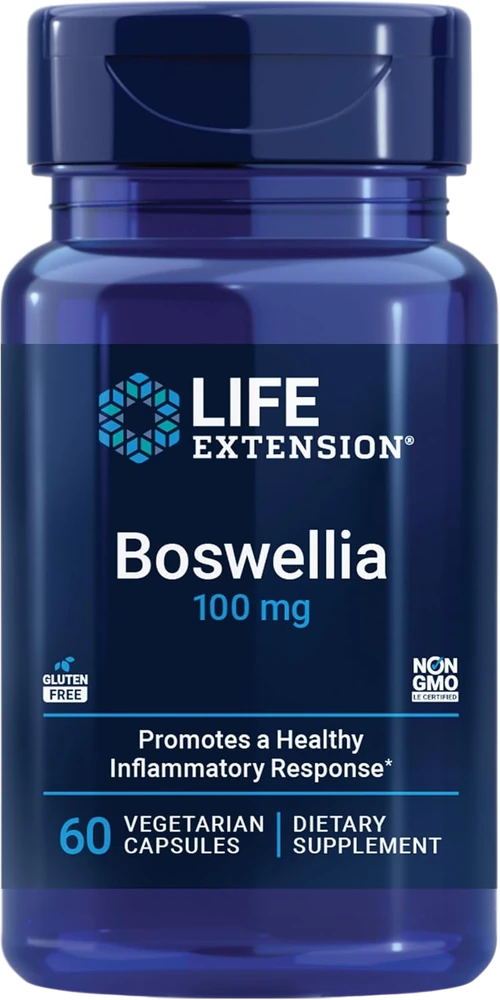
Life Extension Boswellia
If you want a named, AKBA-enriched extract at exactly the dose it was tested at, this is the bottle.
 04
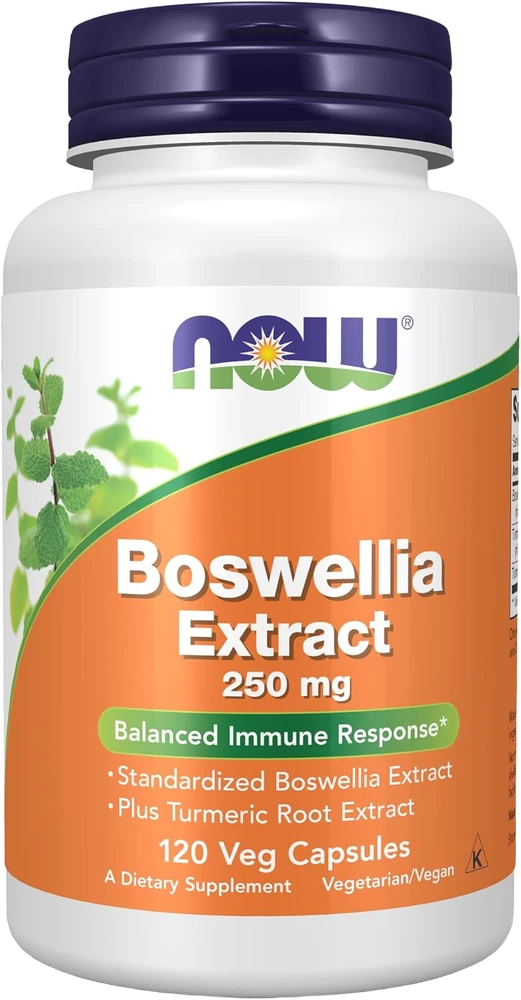
NOW Boswellia Extract
A solid budget bottle that does two jobs: a standardised boswellia extract and a real turmeric dose (200 mg of 95%-curcuminoid extract plus 200 mg of powder per two caps), made under NOW's reliable QC for about $11.
 10
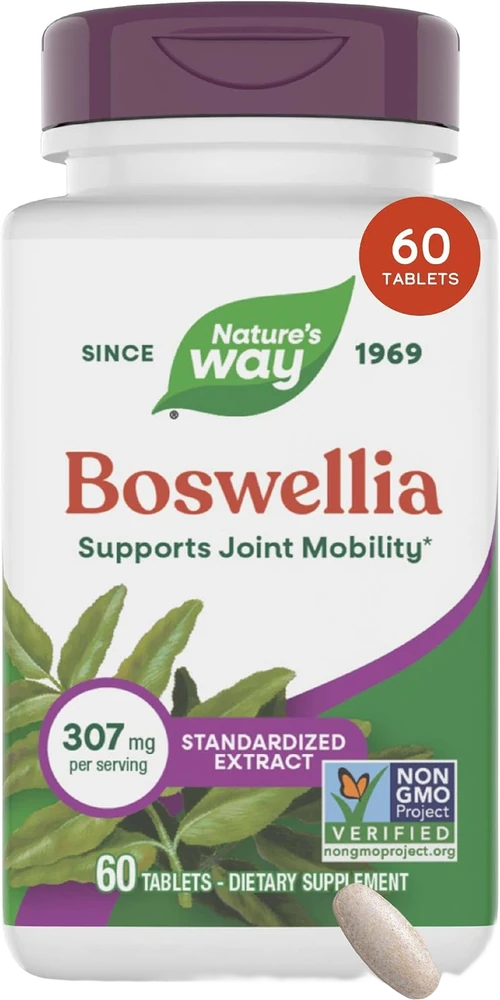
Nature's Way Boswellia
Nature's Way Boswellia is the pick when you want a standardised extract from a brand you already recognise and can buy anywhere — with the added reassurance of TRU-ID, which DNA-authenticates the botanical so you know you're getting real Boswellia serrata, not an adulterated substitute.
Quick Answers
What is Shallaki, and is it the same as boswellia?
Yes — Shallaki is boswellia's traditional Ayurvedic name. Boswellia serrata has been used in Ayurvedic medicine for inflammatory conditions for centuries, where it's known as Shallaki (or Salai Guggul). Himalaya, an Indian brand with deep roots in Ayurvedic botanicals, sells it under that traditional name. So when you buy Himalaya Shallaki, you're buying a standardised Boswellia serrata extract — the same botanical as every other pick on this list — from a company that has worked with it in its original traditional context far longer than most Western supplement brands have existed.
Is it standardised, or is it traditional whole-herb powder?
It's a standardised extract, not raw whole-herb powder — which is what earns it a place on this list. Himalaya standardises the Shallaki extract and applies botanical identity testing, so you're getting characterised material rather than unverified resin. The limitation is the same as the other mid-tier picks: it standardises to the extract generally rather than to a stated AKBA percentage or a named clinical fraction like 5-Loxin. So it's genuinely standardised and well-identified, just not AKBA-enriched to the precision the strongest trial used.
How many caplets a day, and how long does the bottle last?
Two caplets a day is typical, taken with food. At that dose the 60-caplet bottle is roughly a one-month supply — shorter runway than the 100-120 count capsule competitors, and the caplet format gives a bit less dosing flexibility than capsules you could, in principle, open. Start at the label serving for two to four weeks; adjust within the labelled range if your response is partial. The one-month bottle means more frequent reorders than Swanson or Double Wood.
Why choose Himalaya over a Western standardised extract?
Primarily for the traditional-medicine sourcing context and the brand's botanical heritage. Himalaya has worked with boswellia (Shallaki) in its Ayurvedic context for decades, with genuine expertise in the botanical and solid identity testing — if that provenance matters to you, it's a meaningful differentiator. On the pure numbers, though, it's comparable to the other mid-tier standardised whole extracts: same AKBA precision gap, similar dose alignment. So you'd choose it for the heritage story and the trusted name, not because it outperforms NOW or Pure Encapsulations on standardisation precision.
Is Himalaya's quality control reliable?
Yes — Himalaya manufactures under GMP certification and applies botanical identity testing, which is genuinely valuable for an Ayurvedic herb where correct species identification and sourcing matter. The company has deep expertise in botanicals and a long track record. For an adulteration-prone category, identity-tested, GMP-made standardised material from a brand with this botanical heritage is a reasonable quality floor. The testing is a real strength; it's the AKBA-precision tier where the bottle sits behind the enriched picks.
Who is Himalaya Shallaki the best pick for?
The buyer who values the traditional-medicine sourcing story and wants a trusted botanical-heritage name behind their boswellia. For someone drawn to the Ayurvedic context — or who already trusts Himalaya's botanicals — it's a competent, well-made, fairly-priced standardised extract with genuine provenance. It's NOT the best pick if you want a named AKBA-enriched extract at its trial dose (Life Extension Boswellia #1), the longest runway or lowest price (Swanson #5, Nutricost #6), or a boswellia-plus-curcumin combo (Terry Naturally Curamin #2). Buy it for the heritage and the trusted name.
Sources & Further Reading
2 peer-reviewed sources, each linked to PubMed
- [1] Kimmatkar 2003 PMID 12622457 — Efficacy and tolerability of Boswellia serrata extract in treatment of osteoarthritis of knee — a randomized double blind placebo controlled trial. Randomised, double-blind, placebo-controlled crossover trial in knee-osteoarthritis patients: a standardised Boswellia serrata extract significantly reduced knee pain, improved function, and increased walking distance versus placebo over 8 weeks. Modern evidence supporting the joint benefit of standardised Shallaki / boswellia extract.
- [2] Sengupta 2008 PMID 18667054 — A double blind, randomized, placebo controlled study of the efficacy and safety of 5-Loxin for treatment of osteoarthritis of the knee. Placebo-controlled trial of 5-Loxin (an AKBA-enriched Boswellia extract, ~30% AKBA) at 100 and 250 mg/day in knee osteoarthritis: significant, dose-related pain and function improvements, with relief within ~7 days at 250 mg. Defines the AKBA-enriched precision tier that Himalaya's standardised Shallaki extract sits below.
Affiliate disclosure: every Amazon link uses our Associates tag (superachieverclub-20). We earn a small commission at no cost to you; it funds independent reviews. We never accept payment to change a ranking.