
Double Wood TUDCA Bile Salts, 60 Capsules (500mg per 2-cap serving) Review
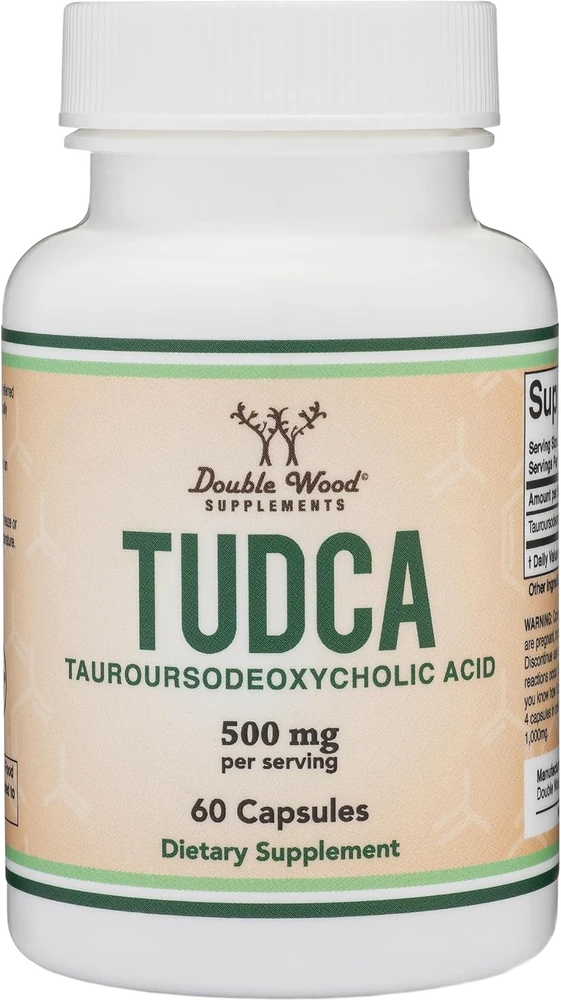 #1 of 11 · Best Overall✓ Label verified · Supplement Facts read Sep 7, 2026
Real retailer photo, cut out. Label unedited.
Buy it. The verification-first TUDCA at a fair price. If you've decided to run TUDCA for bile-flow or liver support, Double Wood is the pick: HPLC-tested against USP standards, 250mg caps that scale cleanly to a 500mg/day research-range serving, and a price around $0.50/cap.
~$29.95~$1.00 per 500mg serving (~$0.50/cap)
Why It Scores 8.3 — And The Label Line Behind Each Number
Third-Party Testing & Purity
30% of scoreThird-party HPLC potency plus heavy-metals and microbial screening, with identity and potency verified against a USP reference standard — the single most important thing you can check on a bile-acid supplement, and most brands don't publish it. Not the absolute most exhaustive program in the field (BodyBio edges it), but the identity verification against USP is exactly the right test for TUDCA.
- Testing
- Third-party: potency, heavy metals, microbial
Form & Bioavailability
20% of scoreSynthesized (not bear-bile) TUDCA in a single-ingredient capsule; 250mg caps scale cleanly to a 500mg/day research-range serving.
- Form
- Capsule (synthesized TUDCA)
Dose vs Functional Range
20% of score250mg/cap scales to a 500mg/day serving — the upper end of the 250-500mg range seen in cholestasis pilot work. You can also run 250mg/day for a gentler, cheaper trial.
- Dose
- 250mg/cap; 500mg per 2-cap serving
Tolerability & Safety
15% of scoreTUDCA is generally well tolerated at these doses; the main complaint is bitter aftertaste and occasional loose stools as bile flow shifts. No serious OTC safety signals at 250-500mg.
Value
15% of score~$0.50/cap, ~$1.00 per 500mg serving. Not the cheapest, but the cheapest that also gives you HPLC verification — the value case is testing-per-dollar, not raw price.
- Count
- 60 capsules (30 servings)
- Cost per dose
- ~$0.50/cap · ~$1.00 per 500mg serving
- More Specs
- Standardization
- HPLC-verified vs USP standard
Label verified. Every figure read from the Supplement Facts photo, Sep 7, 2026.
Marketing Claims Vs. Reality
Active TUDCA content is HPLC-verified against USP standards for potency and identity.
Listed certifications confirm third-party HPLC testing versus a USP reference standard, which is the appropriate identity/potency method for a bile acid.
500mg/day supports liver and bile-flow health.
500mg sits at the top of the 250-500mg range used in cholestasis literature, and UDCA/TUDCA are established in pharma cholestasis care (PMID 16741551), but rigorous human outcome trials for OTC TUDCA supplementation in healthy livers are lacking.
The strong bitter taste indicates a genuine, unadulterated bile acid.
Bile acids are intensely bitter, so bitterness is consistent with real TUDCA, but taste is a heuristic — the HPLC assay, not the flavor, is the actual proof of identity.
What Our Test Actually Found
Verification is the whole value proposition
TUDCA's OTC market is full of unverified powder. Double Wood publishing HPLC identity/potency against USP is the differentiator — you're paying for the certainty that the capsule contains what the label says, at the dose it says.
Dose scales to the research ceiling
Two caps = 500mg, the upper bound of the 250-500mg range in the cholestasis pilot literature (e.g., PMID 9146781). One cap gives a 250mg entry dose. That flexibility from a single SKU is unusual and useful.
Full analysis: all pros & cons (6), buy if / skip if
- HPLC-verified identity and potency against a USP reference standard
- 250mg caps scale cleanly to a 500mg/day research-range serving
- Third-party heavy-metals and microbial screening, not just potency
- Fair price for the level of verification (~$0.50/cap)
- Notably bitter — some users struggle with aftertaste or reflux
- Like all OTC TUDCA, no clinical outcome data behind the supplement itself
- HPLC-verified identity and potency against a USP reference standard
- 250mg caps scale cleanly to a 500mg/day research-range serving
- Third-party heavy-metals and microbial screening, not just potency
- Notably bitter — some users struggle with aftertaste or reflux
- Like all OTC TUDCA, no clinical outcome data behind the supplement itself
If you've decided to run TUDCA for bile-flow or liver support, Double Wood is the pick: HPLC-tested against USP standards, 250mg caps that scale cleanly to a 500mg/day research-range serving, and a price around $0.50/cap. Just go in knowing the human outcome data for OTC TUDCA is thin — the strength here is that the powder is real and correctly dosed, not that benefits are guaranteed.
Double Wood wins this category not because TUDCA is a proven liver miracle — it isn't, at least not as an over-the-counter supplement — but because if you're going to take TUDCA anyway, this is the version whose identity and potency are actually checked against a USP standard by HPLC. Each capsule is 250mg, and the labeled 2-capsule serving delivers 500mg, the top of the 250-500mg range used in the pharma and pilot literature. The bitterness people complain about is, ironically, a feature: genuine bile acid tastes foul, which is a rough tell against adulteration. What you're buying is verification and dose flexibility, not a clinical outcome.
The honest category winner

Double Wood earns #1 by doing the one thing that matters for a bile-acid supplement: proving, by HPLC against a USP standard, that the powder is real and correctly dosed. Pair that with a clean scale to 500mg/day and a fair price, and it's the pick for anyone who's decided to run TUDCA. Keep expectations calibrated — the evidence supports the mechanism and pharma use, not a guaranteed OTC benefit.
If This Doesn’t Fit — Try These
 02
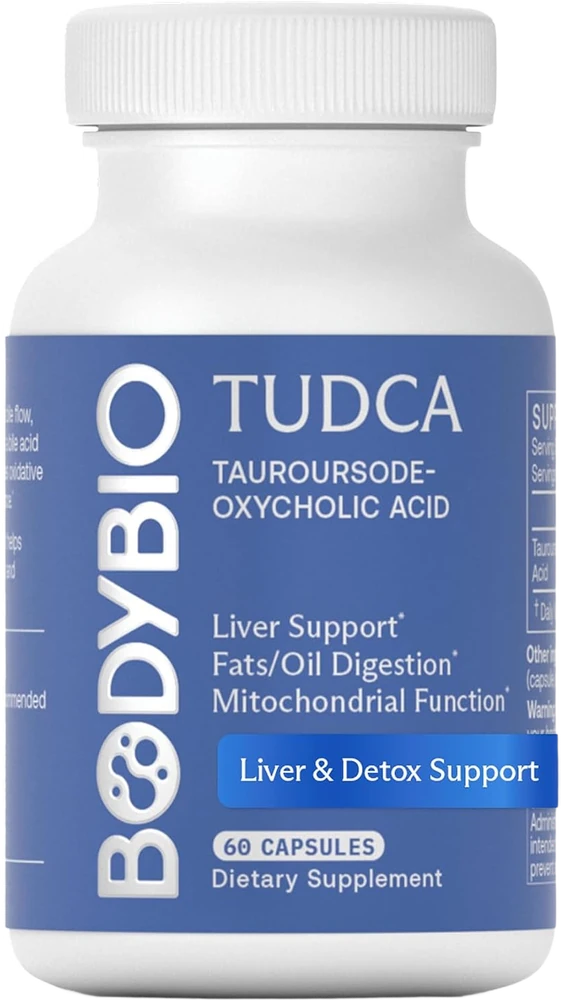
02BodyBio
BodyBio matches Double Wood on testing philosophy but loses the top spot purely on value — you pay roughly double per milligram for comparable purity proof.
 03
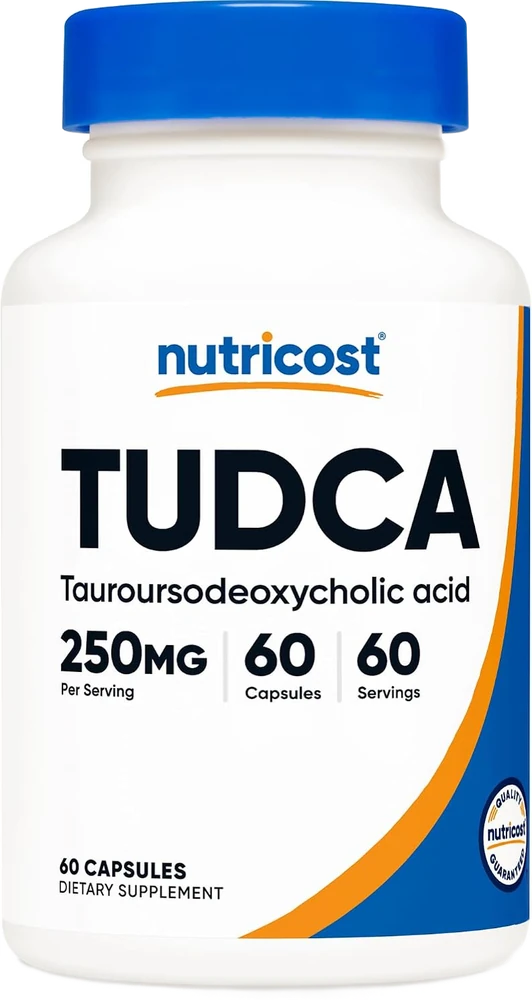
03Nutricost 250 mg
Nutricost is the safe, sane default for a first TUDCA bottle — trusted brand, real third-party testing, honest single-ingredient label, and a price that does not sting.
Quick Answers
Is 500mg a day the right dose?
500mg/day (two capsules) is the upper end of the 250-500mg range used in cholestasis pilot studies. Many people start at 250mg/day. There's no established OTC dose for healthy-liver 'support' — the range is extrapolated from pharma use.
Why does it taste so bad?
Bile acids are intensely bitter by nature, so the foul taste is consistent with genuine TUDCA. Swallow capsules quickly with water; don't chew. The taste is a rough authenticity cue, but the HPLC assay is the real proof.
Sources & Further Reading
2 peer-reviewed sources, each linked to PubMed
- [1] Beuers U. Drug insight: mechanisms and sites of action of ursodeoxycholic acid in cholestasis. Nat Clin Pract Gastroenterol Hepatol. 2006;3(6):318-328. PMID 16741551 — Drug insight: mechanisms and sites of action of ursodeoxycholic acid in cholestasis. Establishes the anticholestatic, cytoprotective and anti-apoptotic mechanisms of UDCA/TUDCA that underpin their pharma use in cholestatic liver disease.
- [2] Larghi A, et al. Ursodeoxycholic and tauro-ursodeoxycholic acids for the treatment of primary biliary cirrhosis: a pilot crossover study. Aliment Pharmacol Ther. 1997;11(2):409-414. PMID 9146783 — Ursodeoxycholic and tauro-ursodeoxycholic acids for the treatment of primary biliary cirrhosis: a pilot crossover study. Pilot crossover showing TUDCA and UDCA both improve liver biochemistry in PBC, supporting the 500mg-range dosing used here.
Affiliate disclosure: every Amazon link uses our Associates tag (superachieverclub-20). We earn a small commission at no cost to you; it funds independent reviews. We never accept payment to change a ranking.