
Crest 3D Whitestrips Professional Effects Review
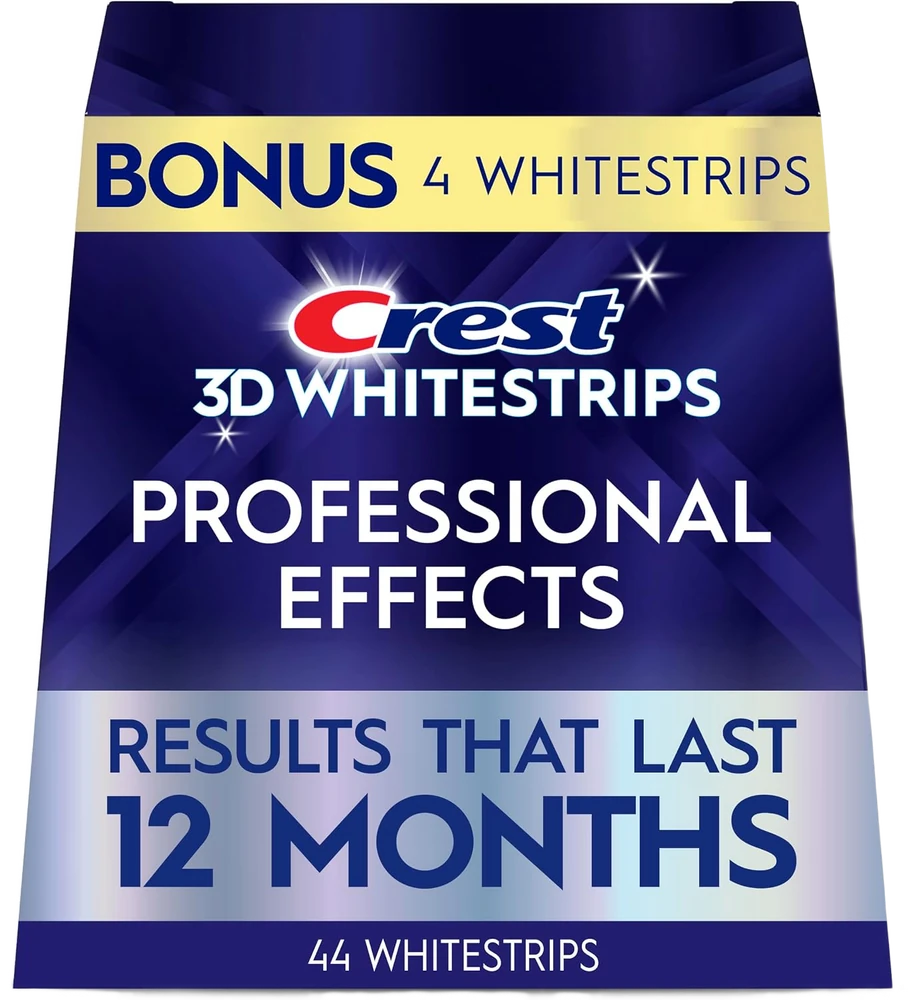 #1 of 8 · Best overall✓ Product photos checked Sep 7, 2026
Real retailer photo, cut out. Label unedited.
Buy it. The most proven at-home whitening on the shelf — hydrogen peroxide, ADA-accepted, benchmark results. Hydrogen-peroxide strips with the ADA Seal of Acceptance, an Advanced-Seal grip that keeps the gel on the tooth, and a full 22-treatment (44-strip) course that delivers a genuine multi-shade change in ~20 days.
$46 / 22-treatment box (often ~$30 on deal)~$2.09 / treatment
Why It Scores 9.4 — And The Label Line Behind Each Number
Whitening efficacy
35% of scoreHydrogen peroxide is the proven bleaching oxidizer, and this is the most-studied strip on the market with an ADA Seal of Acceptance. Advanced-Seal strips hold the gel in contact for the full ~30 minutes, and a ~20-day course delivers a genuine multi-shade change. Near-top marks; it loses only a fraction because flat strips can't reach interproximal edges the way a molded tray gel can.
Sensitivity management
25% of scorePeroxide strips are the potent lever, so transient tooth and gum sensitivity is the expected trade-off — dose-dependent and reversible, but real. Crest's formula and the short daily wear keep it manageable for most, and it's far gentler than a 35% carbamide tray. It scores well but below the leave-on gels and the peroxide-free PAP pick, which are engineered for comfort first.
Ease of use + fit
20% of scoreThe Advanced-Seal grip is the category's best strip adhesion — the strips stay put, don't slide, and peel off cleanly after 30 minutes. Easy to apply, no tray to fit, no rinse beyond removing the strip. Minor knock: the very edges and between-teeth gaps get slightly less coverage than a molded tray.
Value per full course
15% of scoreAt ~$2.09/treatment (often ~$30 on deal) for a complete, results-delivering 22-treatment course, this is the best proven results-per-dollar here. A cheaper pen can beat it on raw sticker price, but nothing matches the certainty of a real, visible shade change for the money.
- Course
- 22 treatments (44 upper + lower strips), ~20 days
- Price
- ~$46 / box (often ~$30 on deal)
- Cost per treatment
- ~$2.09
Honesty of claims
5% of scoreThe marketing rests on a genuine oxidizer with third-party (ADA) validation — no charcoal, no decorative LED lamp, no 'natural' hand-waving. Claims of enamel-safe, ADA-accepted whitening are backed by the literature and the Seal. Nearly full marks for honest chemistry.
- More Specs
- Oxidizer
- Hydrogen peroxide (enamel-safe strip; exact % not printed on pack)
- Contact time
- ~30 min/day
- Backing
- ADA Seal of Acceptance
- Format
- Advanced-Seal grip strips — no tray, no rinse
- Best for
- Proven, no-guesswork whitening for peroxide-tolerant teeth
Photos checked.This product has no Supplement Facts panel; the retailer's listing photos were reviewed Sep 7, 2026.
Marketing Claims Vs. Reality
Carries the ADA Seal of Acceptance.
The ADA Seal of Acceptance program evaluates whitening products for safety and efficacy, and Crest 3D White Whitestrips are among the accepted at-home whitening products. This is genuine third-party validation, not self-certification — the strongest honesty signal on the list.
Enamel-safe when used as directed.
Peer-reviewed reviews of peroxide whitening find no clinically significant structural enamel damage at consumer-strip concentrations used as directed (Carey 2014; Epple 2019). 'Enamel-safe as directed' is accurate; overuse still risks reversible sensitivity.
Professional-level whitening results.
The chemistry is genuine hydrogen peroxide and delivers a real multi-shade change, but in-office professional treatments use far higher concentrations under gum isolation. 'Professional-level' is a fair shorthand for the strongest at-home strip, not literal parity with a dentist-chair session.
Advanced-Seal strips stay put and don't slip.
The no-slip grip is a genuine, widely-reported design advantage that keeps the gel in tooth contact for the full wear — a real adherence benefit, not a cosmetic claim.
Removes years of set-in stains.
Hydrogen peroxide does oxidize intrinsic chromogens, so deep stain lifts over a full course. The specific 'years of stains' figure is unquantified marketing, but the underlying whitening is real and directionally supported.
What Our Test Actually Found
The proven benchmark — and the reason it's #1
Every clinical comparison and dentist recommendation in the category orbits this strip. It's hydrogen peroxide, it carries the ADA Seal, and it's been studied and used for decades. If your only criterion is 'give me the whitening most likely to actually work,' the answer is here, full stop.
Sensitivity is the price of potency — and it's reversible
Peroxide that whitens is peroxide that can sting; some transient tooth or gum sensitivity is normal and expected. It's dose-dependent and reversible — run the ~20-day course, don't double up, and it fades. If you're prone to severe sensitivity, that's the signal to move to the PAP strips (#6), not to push through.
Advanced-Seal grip is what makes it actually work
A strip only whitens while its gel is pressed against the tooth. Crest's no-slip Advanced-Seal keeps the strip in place for the full 30 minutes so the peroxide stays in contact — the single biggest reason it out-results cheaper strips that slide off.
Run the course, then maintain — don't strip daily forever
Whitening sensitivity is dose-dependent, so the right pattern is a one-to-two-week course followed by occasional touch-ups, not daily indefinite use. See a dentist first if you have untreated decay, gum disease, or lots of exposed dentin — bleach on a bad tooth hurts.
Not the cheapest sticker price, but the best proven value
At ~$2.09/treatment it costs more per use than a $20 pen, but you're paying for certainty: a full course that reliably changes your shade. On deal (~$30) that value gap all but closes.
Full analysis: all pros & cons (8), buy if / skip if
- Hydrogen-peroxide chemistry with an ADA Seal of Acceptance — the proven at-home lever
- Advanced-Seal strips grip the tooth so the gel stays in contact and actually works
- Visible multi-shade whitening over a ~20-day course; the category reference product
- Enamel-safe as directed — the most-studied strip on the market
- No tray to fit and no rinse — apply, wait 30 minutes, peel off
- Peroxide strips can cause transient tooth/gum sensitivity — the trade-off for potency
- Flat strips reach between-teeth edges less well than a molded tray
- Premium per-treatment price versus a bargain pen (though deals close the gap)
- You want the most proven, lowest-risk at-home whitening with no guesswork
- Your teeth tolerate peroxide and you have no severe pre-existing sensitivity
- You want a fixed-length course that visibly changes your shade, not just maintains it
- You value an ADA Seal and decades of clinical use over a lower sticker price
- Your teeth or gums sting badly from peroxide — buy the peroxide-free PAP strips (#6) instead
- You want the absolute cheapest per-treatment option — the Colgate Overnight Pen (#5) is a third the cost
Hydrogen-peroxide strips with the ADA Seal of Acceptance, an Advanced-Seal grip that keeps the gel on the tooth, and a full 22-treatment (44-strip) course that delivers a genuine multi-shade change in ~20 days. The category reference product dentists name-drop. Expect some transient sensitivity — that's the peroxide working — so run the 1-2 week course, then maintain occasionally. Not the cheapest per treatment, but the best proven results-per-dollar here.
Crest 3D Whitestrips Professional Effects is the default answer to 'what actually whitens teeth at home.' It runs on hydrogen peroxide — the one oxidizer with decades of clinical backing — held to the tooth by an Advanced-Seal strip that grips and stays put for the full ~30-minute wear. A 22-treatment box (44 upper/lower strips) delivers a visible, multi-shade change over a roughly 20-day course, and it carries the ADA Seal of Acceptance, which is why it's the strip clinical comparisons and dentists actually reference. The honest cost is transient tooth or gum sensitivity — that's peroxide doing its job, and it's dose-dependent and reversible. At about $46 a box (often ~$30 on deal, ~$2.09/treatment) it isn't the cheapest per treatment, but it's the most reliable results-per-dollar on this list. If you want proven whitening and don't want to gamble, this is #1.
The default choice — the most reliably effective at-home whitening, with no gamble.

If you want proven results and you don't want to think about it, Crest 3D Whitestrips Professional Effects is the pick. It runs on hydrogen peroxide, it carries the ADA Seal, and it's the strip clinical comparisons and dentists actually reference. The Advanced-Seal grip keeps the gel on the tooth long enough to work, and a full ~20-day course delivers a genuine, visible multi-shade change. Expect some transient sensitivity — that's peroxide doing its job — so run the course and then maintain occasionally rather than stripping daily forever. It isn't the cheapest per treatment, but nothing on this list matches its certainty. If peroxide makes you wince, that's the one reason to look elsewhere (to the PAP strips at #6); otherwise, start here.
If This Doesn’t Fit — Try These
 04
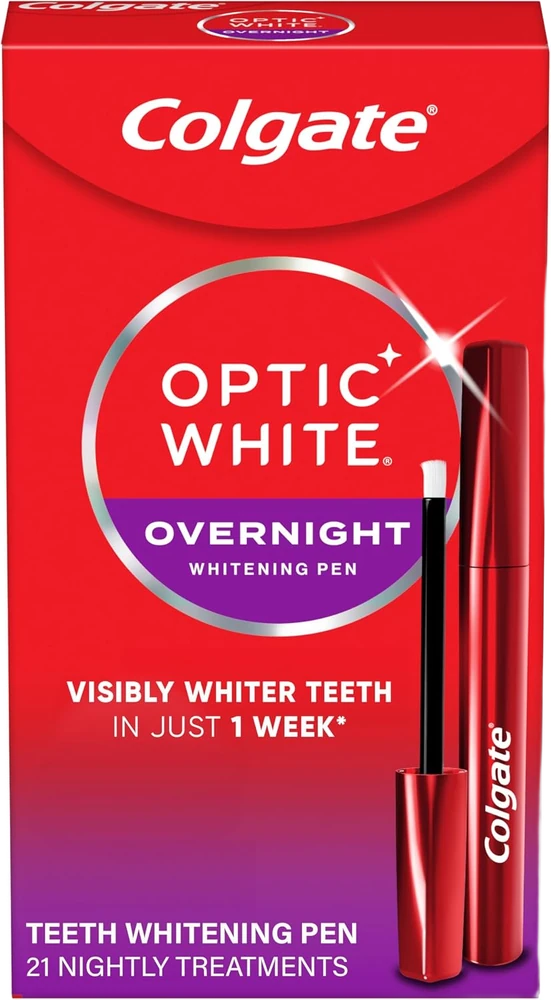
04Colgate Optic White Overnight Pen
The Colgate Optic White Overnight Pen is the value champion: real hydrogen-peroxide whitening for around twenty dollars.
 02
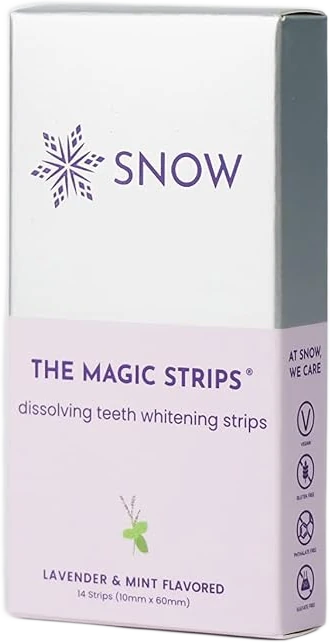
02SNOW Magic Whitening Strips
SNOW's Magic Strips are what you buy when you want whitening to feel premium and frictionless.
 06
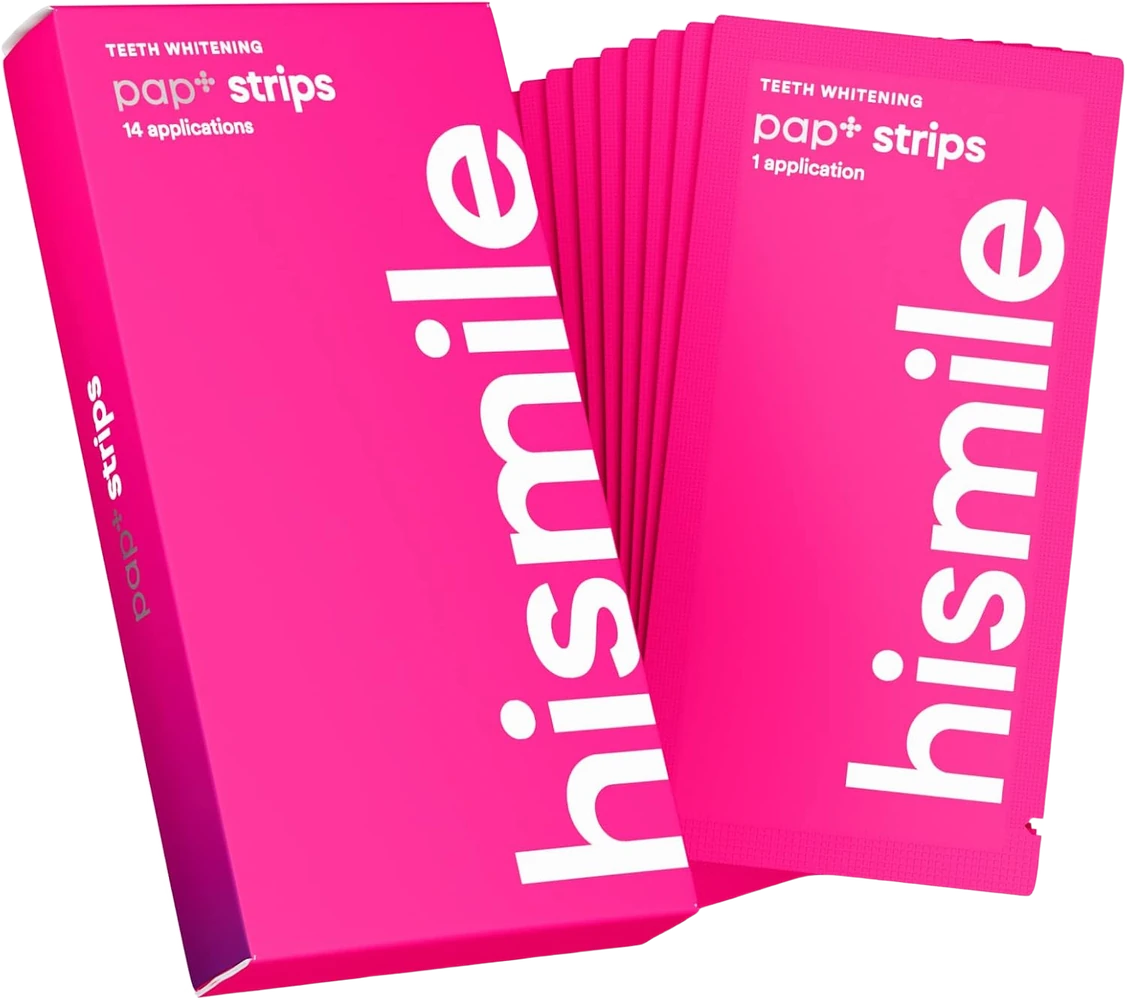
06Hismile PAP+ Whitening Strips
This is the pick that matters most if whitening hurts you.
Quick Answers
Will Crest Professional Effects make my teeth sensitive?
Possibly, temporarily. Peroxide whitening causes dose-dependent, reversible tooth or gum sensitivity in a meaningful share of users — it's the trade-off for the potency that makes strips work. Keep to the ~30-minute daily wear, don't extend or double up, and it typically fades between sessions. If you already have sensitive teeth or the sting is significant, don't push a stronger product; switch to the peroxide-free PAP strips at #6.
How long until I see results?
Most people see a visible change within the first several days and the full multi-shade result by the end of the ~20-day, 22-treatment course. Deeper, set-in stains lift more gradually. Run the whole course rather than stopping early, then maintain with occasional touch-ups.
Is it actually safe for my enamel?
Yes, used as directed. Peer-reviewed reviews of peroxide whitening find no clinically significant structural enamel damage at consumer-strip concentrations (Carey 2014; Epple 2019), and the product carries the ADA Seal of Acceptance. The realistic risk is reversible sensitivity from overuse, not permanent enamel harm — which is why you run a course and then maintain.
How is this different from a dentist whitening treatment?
Same chemistry, lower concentration. In-office treatments use much higher peroxide levels under gum isolation for a faster, more dramatic result, while these strips deliver a genuine at-home shade change over a couple of weeks. 'Professional-level' is fair shorthand for the strongest shelf strip, not literal parity with a chair session.
Sources & Further Reading
4 sources — studies link to PubMed, product specs to the manufacturer
- [1] ADA — Tooth Whitening — Whitening — Oral Health Topics and the ADA Seal of Acceptance program. The ADA states tooth whitening works via peroxide-based bleaching agents (hydrogen peroxide or carbamide peroxide, which breaks down into hydrogen peroxide), and that tooth sensitivity and gum irritation are the most common, generally transient side effects. The ADA Seal of Acceptance is awarded to whitening products, including Crest 3D White Whitestrips, that demonstrate safety and efficacy.
- [2] Carey 2014 PMID 24929591 — Tooth whitening: what we now know. A review establishing that hydrogen and carbamide peroxide whiten by diffusing through enamel and dentin to oxidize chromogens, are effective and safe for enamel at consumer concentrations used as directed, and that reversible tooth sensitivity is the most common side effect — the evidence base behind ranking proven peroxide strips at the top.
- [3] Luque-Martinez 2016 PMID 27290611 — Comparison of efficacy of tray-delivered carbamide and hydrogen peroxide for at-home bleaching: a systematic review and meta-analysis. A systematic review and meta-analysis of at-home bleaching found carbamide and hydrogen peroxide comparably effective at whitening, with tooth sensitivity a common dose-related side effect — supporting the efficacy of peroxide systems and the emphasis on sensitivity management.
- [4] Epple 2019 PMID 31374877 — A Critical Review of Modern Concepts for Teeth Whitening. A critical review concluding that hydrogen/carbamide peroxide are the effective bleaching agents that change intrinsic tooth color, that abrasive approaches only remove surface stain (and can harm enamel), and that light activation adds little beyond the peroxide itself.
Affiliate disclosure: every Amazon link uses our Associates tag (superachieverclub-20). We earn a small commission at no cost to you; it funds independent reviews. We never accept payment to change a ranking.