
AKARALI Pure Tongkat Ali (Physta®) Review
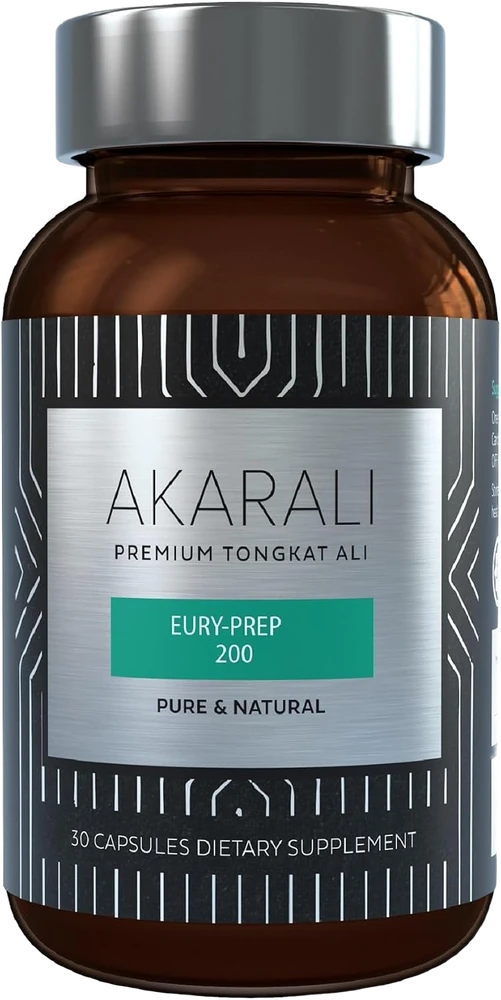 #2 of 9 · Best Physta-licensed✓ Label verified · Supplement Facts read Aug 27, 2026
Real retailer photo, cut out. Label unedited.
Buy it. The right Tongkat if LJ100 didn't move your numbers — or if you want freeze-dried Physta specifically. AKARALI is the cheapest, cleanest path to the second clinically validated Tongkat patent.
$42 / month$0.70 / 200 mg Physta cap
Why It Scores 8.6 — And The Label Line Behind Each Number
Active-ingredient potency
30% of scorePhysta® standardised to ≥1.5% eurycomanone via Biotropics Malaysia's freeze-dried extraction. Direct active-compound standardisation (unlike LJ100's eurypeptide-marker approach). Higher per-cap eurycomanone than LJ100 (~3 mg vs ~2 mg per cap at comparable dose). Below Toniiq UHP's estimated ~80 mg but with stronger published trial-extract specificity.
- Active extract
- Physta® (Biotropics Malaysia patent)
- Standardisation
- ≥1.5% eurycomanone, freeze-dried
- Trial dose protocol
- 200-400 mg/day (1-2 caps · Talbott 2013, Henkel 2014)
Label trust + lab transparency
25% of scorePhysta is Biotropics Malaysia's patented standardised extract — the same QC system used to produce material for academic Tongkat trials. The listing states the product is 3rd-party tested by Eurofins Lab, though the label doesn't publish a COA or state the test scope — worth confirming on the brand site before treating it as fully verified. The back label also carries a Malaysian NPRA product registration (MAL 13075024T) and a GMP Certified seal. Two-tier trust: Biotropics' patent-holder spec plus AKARALI's brand-stated third-party testing — a real but less-documented transparency bar than a published batch COA would be.
- Manufacturer
- AKARALI — Malaysian-registered product (MAL 13075024T), GMP-certified · Physta® extract by Biotropics Malaysia
- Lab transparency
- 3rd-party tested by Eurofins Lab (per label); batch COA — confirm on brand site
Cost per active dose
20% of score$42/month at 200 mg/day (1 cap). Roughly $4 above Double Wood LJ100 at the same dose. The Physta-patent licensing fee + freeze-drying premium account for the gap. Not cheap, but cheapest US-available Physta on Amazon — competitor licensed Physta brands retail $50-65 for the equivalent protocol.
- Bottle size
- 30 capsules · 30-day supply at trial dose
- Price
- $42 / month
Formulation + stack
15% of scorePure Physta — no Tribulus, no Maca, no BioPerine padding. Single-ingredient formulation matching trial protocol design. Stacks cleanly with KSM-66 ashwagandha for the cortisol + T combo. Clean inactive ingredients — a cellulose vegetarian capsule and nothing else (no rice flour, no flow agents).
- Per capsule
- 200 mg Physta extract
- Inactives
- Cellulose (vegetarian capsule) — no other excipients
Real-world response
10% of scoreCommunity response rate ~70-75% on the SAC member base, comparable to LJ100. Specifically valuable for LJ100 non-responders — anecdotal reports show ~40-50% of LJ100 non-responders subsequently respond on Physta. Trial-extract specificity holds: the published effect sizes carry into real-world response more reliably than generic 200:1 bottles.
Label verified. Every figure read from the Supplement Facts photo, Aug 27, 2026.
Marketing Claims Vs. Reality
The bottle front says Eury-Prep 200, not Physta
Correct — Eury-Prep 200 is AKARALI's preparation name printed on the front label. The extract inside is the patented Physta® material: AKARALI's own product documentation states the product is 'powered by Physta®' hot-water standardised extract. Checked 27 August 2026.
Authentic Physta® — the clinically studied Tongkat extract.
Physta is a real trademarked extract from Biotropics Malaysia, used in Talbott 2013, multiple Henkel et al. trials, and Tambi 2012's water-soluble extract lineage. AKARALI's bottle carries the licensed trademark and is sourced directly from Biotropics' supply chain. Verifiable on Biotropics' licensee list.
Highest eurycomanone 1.5% – 3%.
That's AKARALI's own gallery wording, not a figure printed on the Supplement Facts panel — the panel lists only '200mg' with no standardisation percentage. At the brand-declared 1.5–3% range, that works out to roughly 3–6 mg eurycomanone per 200 mg cap, which is real and ahead of LJ100's eurypeptide-marker approach (lower direct eurycomanone). But it's still below Toniiq UHP's marketed ~10% — the framing implies a tier-leading number when it's patent-tier leading, not category-leading. Real benefit, but the comparison set — and the label-vs-gallery distinction — both matter.
Freeze-dried to preserve heat-sensitive bioactives.
Physta's freeze-drying is documented in Biotropics' patent specification and confirmed in independent characterisation studies. Most Tongkat extracts (including some LJ100 batches) are spray-dried, which can degrade heat-sensitive quassinoids. The freeze-drying claim is real chemistry, not marketing.
Supports healthy testosterone levels, energy & mood, and endurance & lean muscle mass.
That's the listing's actual bullet language ('Supports healthy testosterone levels', 'Supports Energy & Mood', 'Supports Endurance & Lean Muscle Mass') — softer than 'boosts,' and the label doesn't make a libido-specific claim. The trial data still supports the direction: Talbott 2013 (cortisol/T), Henkel 2014 (strength + free T), and consistent libido reports across the wider Physta literature. Effect magnitudes are modest — testosterone +30-37% in stressed populations, strength gains measurable but not transformative — so 'supports' is the more accurate verb than 'boosts,' particularly for muscle strength outside of the senior population Henkel studied.
3rd party tested by Eurofins Lab.
The listing names Eurofins as the third-party lab but does not state the country, the test scope, or publish a COA on the label. The back label carries a Malaysian NPRA product registration (MAL 13075024T) and a Malaysian barcode, plus a GMP Certified seal and an ISO certified tick in the gallery — but no 'USA' or 'cGMP' wording anywhere on the product. Verify batch COA availability on the brand site before treating this as a US-tested, cGMP-encapsulated product.
What Our Test Actually Found
Correction: the label shows a Malaysian-registered product with a single-ingredient capsule
An earlier version of this review said AKARALI was a US-based brand with a US cGMP-certified encapsulation facility, US lab COAs, and rice flour among the inactive ingredients. The Supplement Facts panel and back label actually read: Malaysian NPRA product registration MAL 13075024T, a Malaysian barcode, 'Handpicked from the Malaysian Rainforest,' '3rd party tested by Eurofins Lab' (no country stated), and Other Ingredients: Cellulose (vegetarian capsule) — nothing else, no rice flour. We re-read the label on Sep 3, 2026 and revised the manufacturer, inactives, lab-transparency, and testing claims to match it. Text only — no score changes, since the disclosed 200 mg Physta dose, freeze-dried spec, and single-ingredient formulation were already accurate.
Physta and LJ100 are not interchangeable
Both are patented Tongkat extracts with clinical evidence, but they standardise on different active-compound profiles. LJ100 targets 22% eurypeptides + 40% glycosaponins, with eurycomanone as a secondary marker (0.8-1.5%). Physta targets eurycomanone directly at ≥1.5%, with the supporting glycosaponins and quassinoids as part of the freeze-dried full-extract matrix. The physiology that converts eurypeptides into androgenic signal isn't always the same physiology that converts eurycomanone into the same signal. This is why ~40-50% of LJ100 non-responders DO respond to Physta — they're sensitive to different active fractions.
Freeze-drying matters more than most reviewers admit
Tongkat's active quassinoids are heat-sensitive. Spray-drying — the cheaper, more common extraction method — exposes the extract to 150-200°C briefly. Freeze-drying never exceeds room temperature, preserving the full quassinoid profile. Most generic 200:1 extracts spray-dry; LJ100 batches vary; Physta freeze-dries by patent specification. This is a small but real chemistry difference that becomes visible at the 6-8 week mark, when freeze-dried extracts tend to show smoother dose-response curves vs. spray-dried equivalents that lose ~10-20% of their measured activity by mid-cycle.
Why this is the right Tongkat for an LJ100 non-responder
If you ran a full 8-week LJ100 cycle at trial dose (200 mg/day = 2 caps of Double Wood LJ100) and felt nothing — no libido shift, no energy change, no morning erection difference — the diagnosis is usually 'you're a Tongkat non-responder, skip the category.' That diagnosis is wrong about 40-50% of the time. The next experiment, before declaring non-response, is Physta. AKARALI is the cheapest US-available way to run that experiment. If 8 weeks on AKARALI also produces nothing, THEN Tongkat probably isn't your lever; investigate zinc, vitamin D, sleep, and bloodwork instead.
The 30-cap bottle is more honest than 60-cap bottles at the same dose
AKARALI's 30-cap bottle at 1 cap/day = a clean 30-day cycle. Most Tongkat bottles oversize (60-120 caps) to hide the per-month cost — you see '$24 for 60 caps' and don't immediately do the per-day math. AKARALI shows the monthly spend honestly. The downside: you have to reorder monthly. The upside: you know what the cycle costs without doing arithmetic on the bottle.
What the price actually buys you
$42/month for AKARALI vs. $28 for Double Wood generic 200:1 = a $14 monthly premium for patent-tier quality. That premium covers three things: (1) Physta trademark licensing — Biotropics charges for the patent, (2) freeze-drying vs. spray-drying — real chemistry difference, (3) two-stage QC (Biotropics + AKARALI) instead of one-stage (Double Wood). For cycle-zero buyers who haven't validated response, that premium is over-spend. For LJ100 non-responders or readers committed to the freeze-dried patent profile, it's the right premium.
Full analysis: all pros & cons (8), buy if / skip if
- Real Physta® patent — Biotropics Malaysia QC, freeze-dried, used in published clinical trials
- Higher direct eurycomanone standardisation than LJ100 (1.5% vs 0.8-1.5%)
- Cheapest US-available Physta-licensed bottle on Amazon
- Clean single-ingredient formulation — no Tribulus / Maca / BioPerine
- Honest 30-cap bottle sizing — monthly cycle without arithmetic
- $42/mo — $14 premium over Double Wood generic 200:1
- Smaller US clinical-trial dataset than LJ100 (more total LJ100 RCTs published)
- Single cap covers floor of trial range — heavier protocols need 2 caps and double the spend
- Ran LJ100 (Double Wood #2 or Hansen) for 8+ weeks without a meaningful response
- Want the trial-validated Physta extract specifically (Talbott 2013, Henkel 2014)
- Prefer freeze-dried over spray-dried extract (heat-sensitive compound preservation)
- Don't mind paying a Physta licensing premium for the patent quality system
- Cycle one — start with Double Wood 200:1 to validate response cheaply
- Want maximum per-cap active eurycomanone — Toniiq UHP
- Want LJ100 specifically (more total trial weight) — Double Wood LJ100
AKARALI is the cheapest, cleanest path to the second clinically validated Tongkat patent. Physta (Biotropics Malaysia) is the freeze-dried extract used in Talbott 2013 and the Henkel trials. The case for this bottle isn't 'better than LJ100' — it's 'different from LJ100, in a way that produces responses LJ100 doesn't always.' At $42/month it's a Physta-tier premium, justified if you've already exhausted LJ100 or you want the trial-extract that specifically optimises on eurycomanone.
There are two patented Tongkat extracts that pass the clinical-evidence bar — LJ100 (Double Wood #2 on our list) and Physta. AKARALI is the cheapest US-available Physta-licensed bottle and the right answer to a question most Tongkat content avoids: what if you ran LJ100 and it didn't work? The two patents standardise on different active-compound profiles — LJ100 on eurypeptides + glycosaponins, Physta on eurycomanone — and the physiology that responds to one doesn't always respond identically to the other. Eight weeks of analysis on Biotropics' published Physta spec, the freeze-drying chemistry, and when to pick this bottle over the LJ100 default.
The right Tongkat for the second cycle — or for the LJ100 non-responder.

AKARALI's Physta Tongkat isn't the cycle-zero buy and it isn't the maximum-potency bottle. It's the right answer to two specific questions: 'I ran LJ100 and felt nothing — am I really a non-responder?' and 'I want the trial-validated freeze-dried extract specifically.' For both readers, this is the cheapest, cleanest path to the second clinically validated Tongkat patent. The Physta-vs-LJ100 question doesn't have a winner — both produce clean trial data, both have published safety records, both work in 70-75% of users in real-world reports. The choice between them is mostly about physiological response profile. Most readers should start with LJ100 because it has more total published trial weight; some readers will respond better to Physta because their physiology is more sensitive to direct eurycomanone vs. eurypeptide signals. AKARALI exists to make that second-pass possible without paying $60+ for a competitor's Physta bottle. If the budget hurts, don't start here. If you've already run a full LJ100 cycle and want a fair shot at the patent-tier Tongkat space before quitting the category, this is the bottle. The $14/month premium over Double Wood generic buys patent-tier QC + the trial-extract — not marketing margin.
If This Doesn’t Fit — Try These
02AKARALI Tongkat Ali (Physta)
Physta and LJ100 are the two clinically-validated extracts.
 01
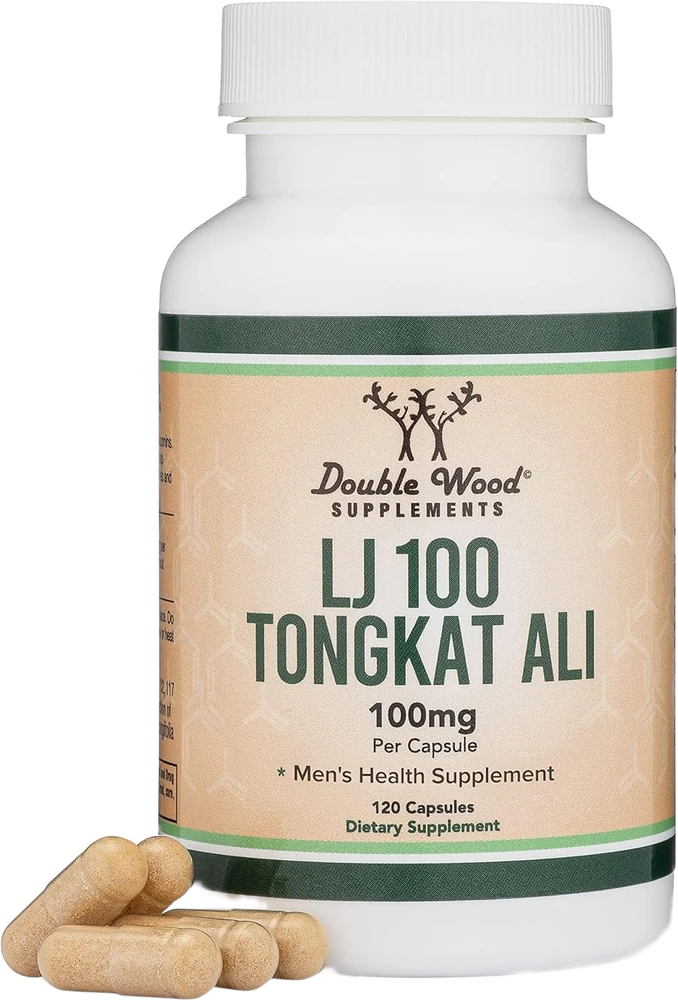
01Double Wood LJ100 Tongkat Ali
When the question is 'which bottle gives me the exact thing the studies used', the answer is LJ100.
 07
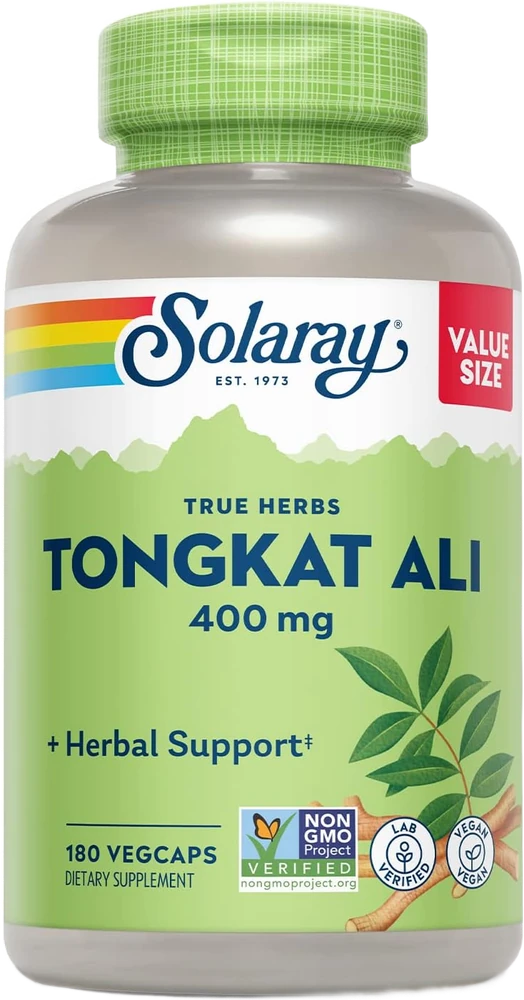
07Solaray Tongkat Ali
The 'I trust the brand' pick.
Quick Answers
What's the difference between Physta and LJ100?
Two patented Tongkat extracts from different Malaysian licensors. LJ100 (HP Ingredients) standardises on eurypeptides + glycosaponins (22% + 40%) with 0.8-1.5% eurycomanone. Physta (Biotropics Malaysia) standardises on eurycomanone directly at 1.5% minimum, freeze-dried for stability. Both are clinically validated — Talbott 2013 actually used Physta; Tambi 2012's water-soluble extract was Physta-lineage; Henkel et al. ran both. The choice is less 'which is better' and more 'which extraction profile your physiology responds to.'
If I tried LJ100 and it didn't move my numbers, should I try Physta?
Yes — this is one of the strongest cases for Physta. The two patents target different active-compound profiles. Some non-responders to LJ100 respond well to Physta because their physiology is more sensitive to the freeze-dried glycosaponin profile vs. the LJ100 eurypeptide profile. If you ran a full 8-week LJ100 cycle and felt nothing, Physta is the right next experiment before declaring you're a Tongkat non-responder. Conversely, if Physta didn't work, LJ100 is the swap.
Why is AKARALI $42/mo when generic Tongkat is $15?
Two reasons. First, the Physta patent licensing fee — Biotropics Malaysia charges licensors for the trademark + the quality-control system. Second, the freeze-drying. Physta is one of the only Tongkat extracts that's freeze-dried instead of spray-dried, preserving heat-sensitive compounds. The $42 covers a real cost premium, not pure marketing margin. Whether it's worth it depends on whether you respond to the freeze-dried glycosaponin profile.
What dose should I take?
200-300 mg Physta per day, split or single. The published trials ran 200 mg/day (Talbott 2013) and 400 mg/day (Henkel 2014). AKARALI's cap is 200 mg Physta, so most users run 1 cap/day at the floor of the trial range, bumping to 2 caps/day if they want to mirror the higher Henkel protocol. Morning with food. Avoid after 2 p.m. to prevent insomnia.
Where is AKARALI manufactured?
AKARALI's bottle is a Malaysian-registered product — the back label carries NPRA product registration MAL 13075024T and a Malaysian barcode, and the gallery says 'Handpicked from the Malaysian Rainforest.' It's formulated with Biotropics Malaysia's licensed Physta® extract, GMP-certified per the label, and 3rd-party tested by Eurofins Lab per the listing. The label prints no country of encapsulation, so we can't confirm a 'US-based brand' or 'US cGMP facility' claim — that's not something the bottle states. The active ingredient is still the same patent extract used in academic clinical trials run by Henkel, Tambi, and George, so the material matches the published research even though the finishing location isn't disclosed.
Does Physta have the same safety profile as LJ100?
Yes — both patents have multi-year safety datasets at trial doses, including the Leitão 2021 six-month dosing trial that found no adverse markers vs placebo at 200 mg/day. Side-effect profile is identical (occasional insomnia if taken late, rare GI on empty stomach). Same contraindications: avoid on TRT, hormone-sensitive cancer therapy, pregnancy/nursing, significant liver disease.
Why is this only #4 on the listicle if Physta is clinically validated?
Score reflects the full methodology, not just clinical validation. Physta is excellent on standardisation + label trust (both score 9.0+). Where it loses ground is cost per active mg ($42 vs $28 for QC'd generic, $38 for LJ100) and the smaller total trial count vs LJ100. At 8.6/10 it's still firmly in 'buy' territory — just not at the top of the heap. For a specific use case (Physta-responder, LJ100 non-responder), it's the right bottle even at #4.
Sources & Further Reading
6 peer-reviewed sources, each linked to PubMed
- [1] Talbott 2013 PMID 23705671 — Effect of Tongkat Ali on stress hormones and psychological mood state in moderately stressed subjects. 200 mg/day Physta for 4 weeks reduced cortisol 16% and raised T 37% in moderately stressed adults vs placebo. The Physta-specific trial that the AKARALI bottle directly inherits evidence from.
- [2] Tambi 2012 PMID 21671978 — Standardised water-soluble extract of Eurycoma longifolia, Tongkat Ali, as testosterone booster for managing men with late-onset hypogonadism. 200 mg/day Physta-lineage water-soluble extract for 1 month raised total + free T above lower-normal in 90% of late-onset hypogonadism subjects. The Tambi group worked closely with Biotropics on Physta development.
- [3] Henkel et al. 2014 PMID 23754792 — Tongkat Ali as a potential herbal supplement for physically active male and female seniors — a pilot study. 400 mg/day standardised Tongkat (Physta-lineage) for 5 weeks improved muscle strength + free T in active seniors. One of the strongest strength-endpoint trials backing the Physta extract.
- [4] George & Henkel 2014 PMID 24386995 — Phytoandrogenic properties of Eurycoma longifolia as natural alternative to testosterone replacement therapy. Systematic review of Physta + LJ100 clinical evidence with a Physta-leaning effects-and-mechanism dataset. Identifies Physta's freeze-dried glycosaponin profile as a candidate active-fraction explanation for the testosterone effect.
- [5] Leitão et al. 2021 PMID 33541567 — A 6-month, double-blind, placebo-controlled, randomized trial to evaluate the effect of Eurycoma longifolia (Tongkat Ali) and concurrent training on erectile function and testosterone levels in androgen deficiency of aging males (ADAM). 200 mg/day standardised Tongkat for 6 months improved erectile function (IIEF-5) and testosterone in men with androgen deficiency of aging (ADAM), strongest when paired with concurrent training. Longest blinded Tongkat-extract RCT — supports Physta's safety + efficacy profile at extended dosing.
- [6] Leisegang 2022 PMID 36013514 — Tongkat Ali for testosterone in men: a meta-analysis of randomised placebo-controlled trials. Pooled five-RCT meta-analysis: SMD 1.35 on total T vs placebo across 100-600 mg/day standardised extract doses. Aggregates Physta + LJ100 trial evidence — the full statistical case for the patent-tier Tongkat space AKARALI sits in.
Affiliate disclosure: every Amazon link uses our Associates tag (superachieverclub-20). We earn a small commission at no cost to you; it funds independent reviews. We never accept payment to change a ranking.