
Sleepmaxxing Is Mostly Placebo Theater — the One Fix With 20 Trials Behind It Is Free
Mouth tape, magnesium and $300 sleep rings are everywhere. But the only first-line fix with strong, lasting evidence is CBT-I: a 20-trial meta-analysis found people fell asleep ~19 minutes faster and kept the benefit for years. Magnesium's near-identical number rests on just 3 tiny, very-low-quality trials — and some of the hyped gear can backfire.
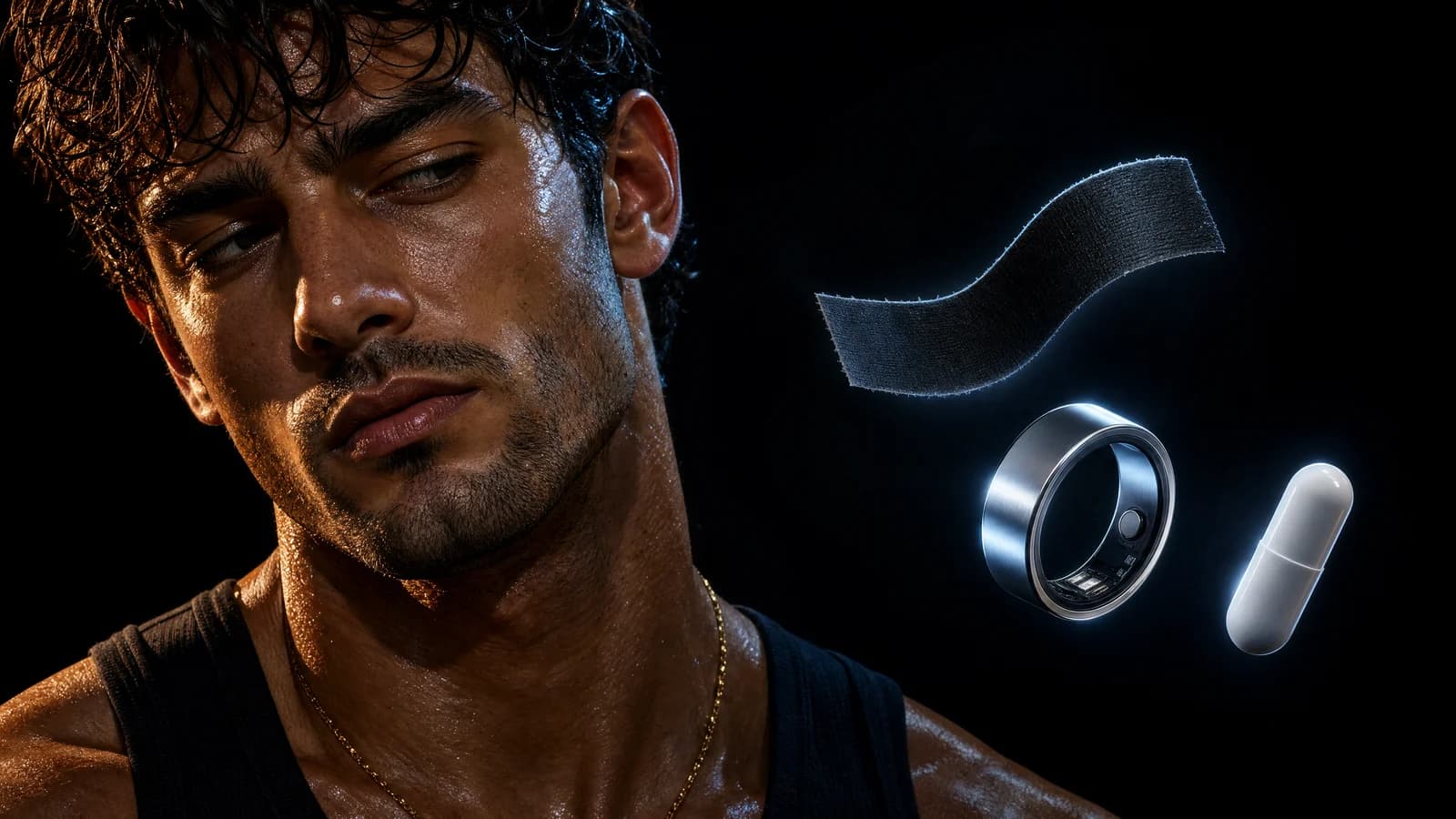
An exhausted Sterling side-eyes mouth tape, a sleep-tracker ring and a capsule
'Sleepmaxxing' has taken over feeds: mouth tape, magnesium stacks, sleepy-girl mocktails, and sleep rings that cost more than a mattress topper. Most of it is optimization theater — a lot of gear chasing a small, uncertain effect. The genuinely evidence-based fix is unglamorous, and mostly free.
What actually works: CBT-I
Cognitive behavioral therapy for insomnia (CBT-I) is the guideline-recommended first-line treatment for chronic insomnia. In a meta-analysis of 20 randomized trials (1,162 people), it improved the time to fall asleep by about 19 minutes and sleep efficiency by nearly 10% — and, unlike pills, the improvements were sustained at later follow-ups, without tolerance or side effects. It works by retraining the link between your bed and sleep: a consistent wake time, less time lying awake in bed, and a wind-down routine.
The bars look close — the evidence isn't
Magnesium's headline number (~17 minutes faster to sleep) looks almost identical to CBT-I's. But it comes from just three small trials the authors themselves rated very-low-quality, with a high risk of bias. Melatonin genuinely works, but the effect is tiny — about 7 minutes — and it's a clock-setter for jet lag, not a sedative. Same-looking bars, very different evidence behind them.
When the hype backfires
Two cautions the trend skips. Mouth taping can be dangerous if you have nasal congestion or undiagnosed sleep apnea — the review evidence is thin and the asphyxiation risk is real. And obsessing over your sleep-tracker score has its own name in the literature — 'orthosomnia' — where chasing a perfect number fuels anxiety that measurably makes sleep worse. Fix the habits first; treat the gadgets as optional.
The 25-second version — as seen on TikTok, Reels & Shorts.
SOURCES
- Trauer JM et al. — Ann Intern Med 2015: meta-analysis, 20 RCTs / 1,162 adults; CBT-I is first-line and improved sleep-onset latency by 19.03 min and sleep efficiency by 9.91%, sustained (PMID 26054060)
- Mah J, Pitre T — BMC Complement Med Ther 2021: magnesium cut sleep-onset latency ~17 min but from only 3 RCTs / 151 people, GRADE low-to-very-low (PMID 33865376)
- Ferracioli-Oda E et al. — PLoS One 2013: meta-analysis, melatonin reduced sleep-onset latency by ~7 minutes (PMID 23691095)
- Baron KG et al. — J Clin Sleep Med 2017: 'orthosomnia' — perfectionistic pursuit of ideal sleep-tracker data worsened insomnia (PMID 27855740)