
The Label Said 40 g of Protein. The Lab Found 19.4 — Inside the Amino-Spiking Lawsuits
Court-documented cases found protein powders delivering half the protein on the label, padded with cheap glycine to fool the nitrogen test. And the viral heavy-metal panic? It's measured against a limit ~20× stricter than the FDA's — spinach trips it too.
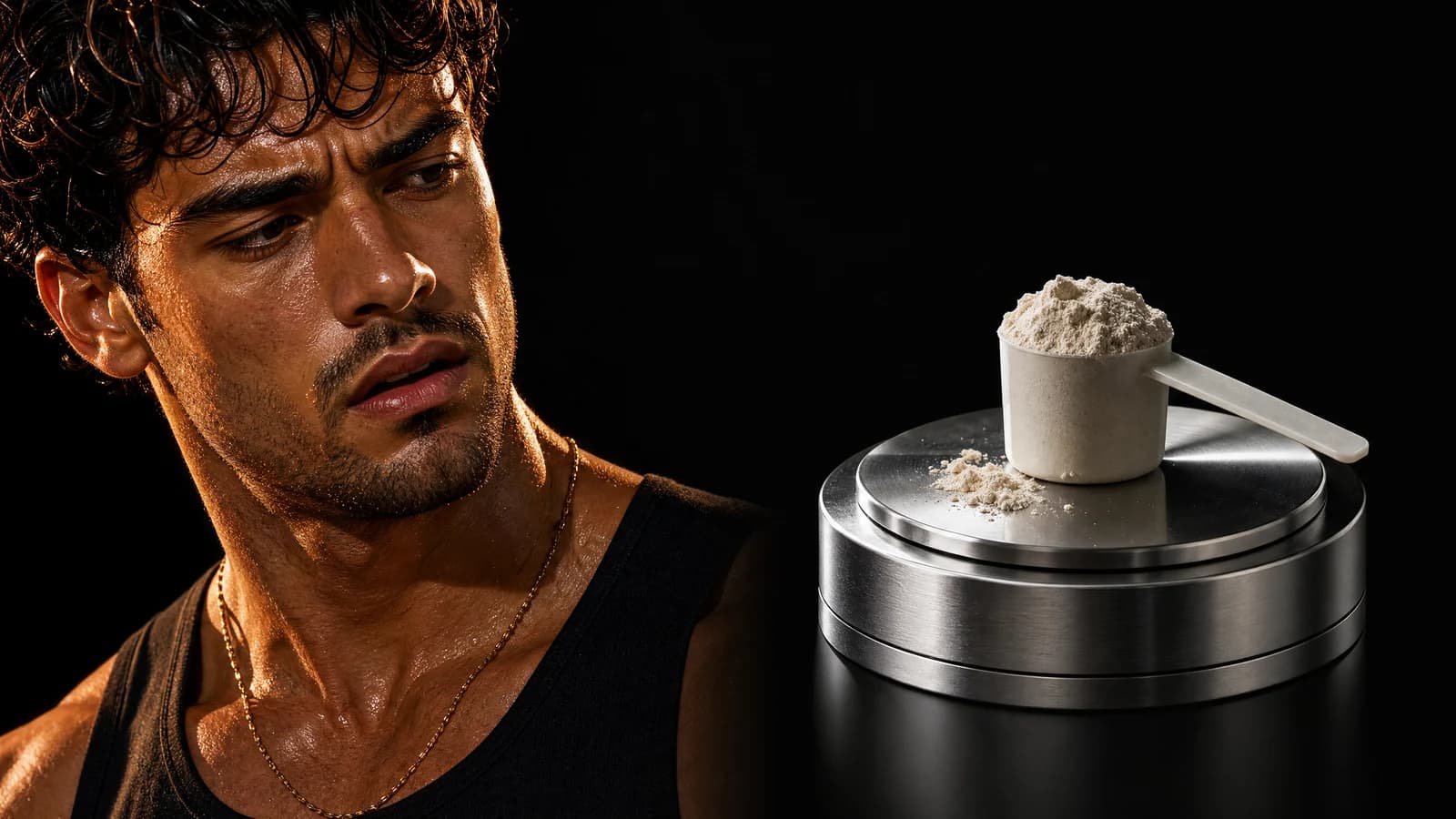
A stunned Sterling beside a protein scoop on a precise laboratory scale
A protein powder promised 40 grams per scoop. Independent lab testing, cited in a federal lawsuit, found 19.4 — roughly half. The mechanism has a name: amino-spiking. Protein content is estimated by nitrogen testing, and cheap free-form amino acids like glycine and taurine carry nitrogen too. Pad the tub with those, and the label number inflates while the actual whey shrinks. One 2014 class action documented nearly 4 grams of undeclared glycine per scoop — about 60% less whey than advertised.
To be precise about the law: no court ruled amino-spiking illegal — the MusclePharm spiking theory was federally preempted, and only the protein-source misrepresentation claim survived. What the lawsuits did leave behind is the lab math, and it's damning enough.
The heavy-metal panic needs the same honesty
A 2024 screening of 160 powders found 47% exceeded California's Prop 65 lead limit — a stat that went viral. The honest context: Prop 65's limit (0.5 mcg/day) is roughly 20× stricter than the FDA's reference level, and a serving of spinach can trip it. The useful signal inside the scare: whey and collagen powders ran far cleaner (28% and 26%) than plant-based (77%) and organic (79%) — and chocolate flavors carried ~110× the cadmium of vanilla. Treat it as a screening argument for third-party-tested whey, not a poisoning story.
What actually builds muscle
Total daily protein — about 1.6 g/kg/day, where a 49-study meta-analysis found gains plateau. The powder isn't magic; it's the cheapest, fastest way to close the gap. So the buying rule is simple: the cleanest label you'll actually drink, at the lowest real cost per gram of protein. That's exactly how we scored nine of them — label honesty 25%, third-party testing 20%, true cost per gram 15%.
The 25-second version — as seen on TikTok, Reels & Shorts.
SOURCES
- Durnford v. MusclePharm Corp., 907 F.3d 595 (9th Cir. 2018) — 40 g label vs 19.4 g tested
- Rodriguez v. Giant Sports Products (C.D. Cal. 2014) — 3.9 g undeclared glycine/scoop, ~60% less whey
- Clean Label Project 2024-25 Protein Category Report — 160 powders, heavy-metal screening
- OEHHA — Prop 65 lead MADL (0.5 mcg/day) vs FDA interim reference level
- Morton RW et al., Br J Sports Med 2018 — protein plateau ~1.6 g/kg/day (PMID 28698222)