
1 in 2 Fish Oils Are Oxidizing Before You Even Open Them
Two peer-reviewed studies on two continents found ~50% of fish-oil supplements exceed freshness limits — and a “1000 mg” cap holds only ~300 mg of the omega-3s that actually matter.

A disgusted Sterling beside a murky, spoiled-looking fish-oil capsule
Fish oil has a freshness problem the label never mentions. Omega-3 fats oxidize — they go stale like any oil — and two independent, peer-reviewed market surveys found the same thing on opposite sides of the world: roughly half of retail fish-oil products exceeded at least one recommended oxidation limit. In New Zealand, 50% of 36 products blew the total-oxidation (TOTOX) limit; in a North-American survey of 171 products, 50% failed at least one freshness threshold.
To be fair: the industry body GOED disputes parts of the New Zealand study, and there is limited human evidence that mildly oxidized oil directly harms outcomes. This is a quality-and-value problem more than a safety scare — you are paying for actives that may already be degraded.
The second problem: “1000 mg” isn’t 1000 mg of omega-3s
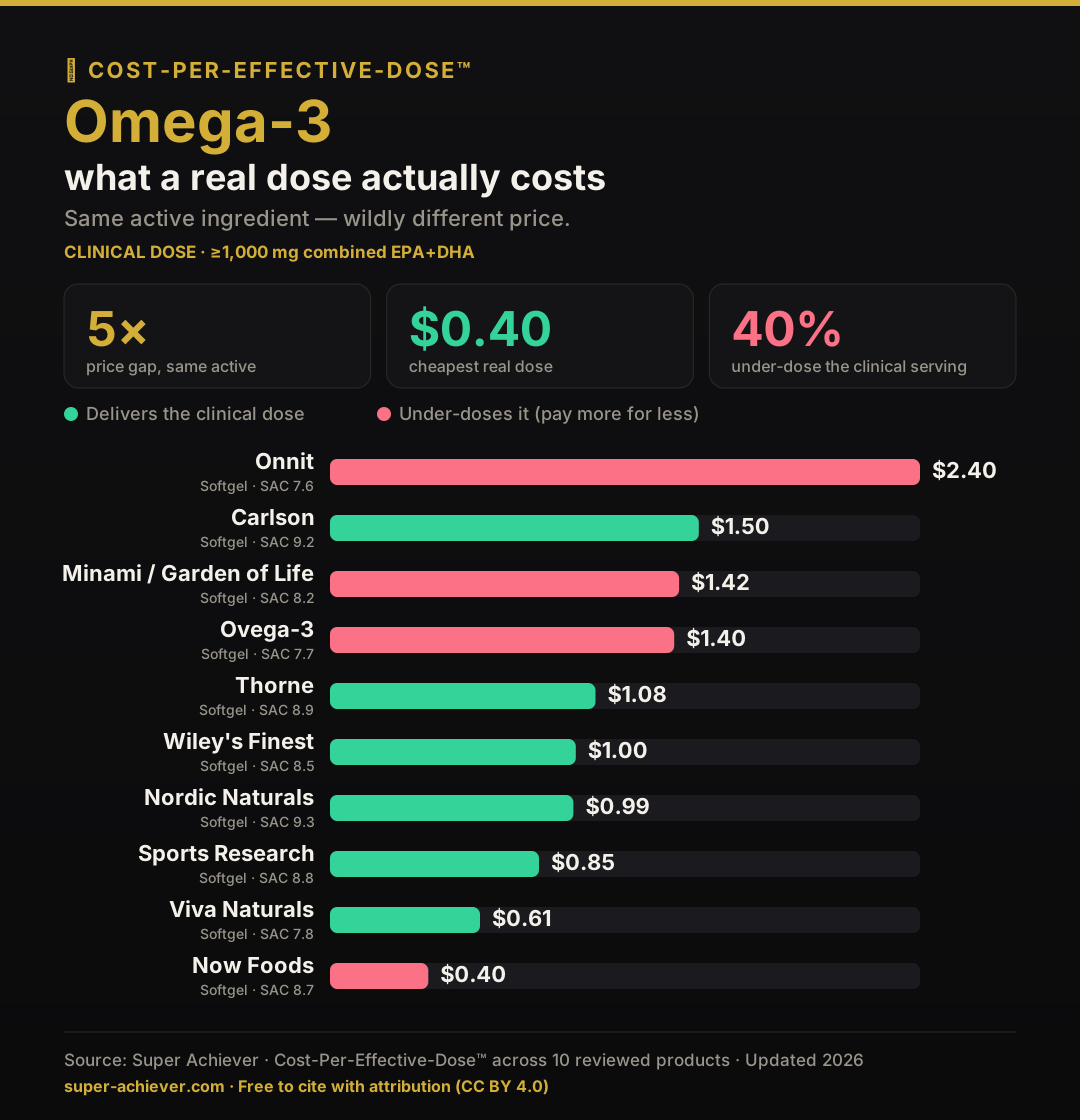
A standard “1000 mg fish oil” softgel is 1000 mg of oil — not of the omega-3s that do the work. The commodity 18/12 ratio delivers about 300 mg of combined EPA+DHA per cap. Evidence-backed intakes start around 1 g of EPA+DHA per day for general cardiovascular support and reach 2–4 g for triglyceride lowering. With cheap caps, that’s roughly seven softgels a day — the “cheap” bottle quietly becomes the expensive one.
How to buy it right
- Pick third-party tested oils (IFOS batch testing) so freshness is verified, not assumed.
- Prefer the triglyceride (TG/rTG) form — 30–50% better bioavailability than ethyl-ester.
- Dose by the EPA+DHA line on the actives panel, never by the front-label oil weight.
- Plant-based? Algae oil is the clean vegan route to the same actives.
We ranked the omega-3 market on exactly these criteria — freshness testing, form, real cost per gram of EPA+DHA — with one clear pick per buyer type.
The 25-second version — as seen on TikTok, Reels & Shorts.
SOURCES
- Albert BB et al., Scientific Reports 2015 (New Zealand, PMID 25604397)
- Jackowski SA et al., Journal of Nutritional Science 2015 (North America, 171 products, PMID 26688721)
- NIH / NCCIH — Omega-3 supplements: what you need to know
- Dyerberg J et al. 2010 — triglyceride vs ethyl-ester bioavailability (PMID 20638827)