
Top 8 Best Weighted Vests for Muscle Gain (2026)
Add progressive overload to push-ups, pull-ups, walks and rucks - ranked on weight range and adjustability, fit and bounce control, material and use-case fit. Thin trainers vs plate carriers vs budget shells, matched to what you actually do.
8 picks — ranked by our 50/50 methodology
Compare all 8 picks side by sidefull score breakdown · strength & weakness · price
| Product | Score | Weight range & adjustability30% | Fit, comfort & bounce control25% | Material & durability20% | Use-case fit15% | Value10% | Price & buy |
|---|---|---|---|---|---|---|---|
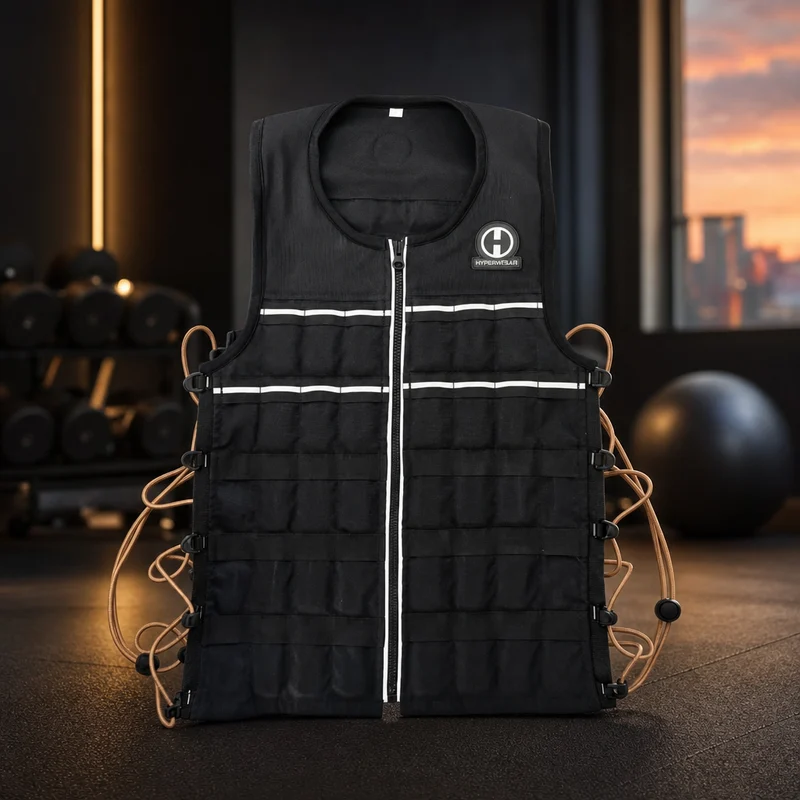 #1 Hyperwear Hyper Vest ELITE Adjustable Weighted Vest (10 lb)Best overall #1 Hyperwear Hyper Vest ELITE Adjustable Weighted Vest (10 lb)Best overall | 9.2 | 9.02 | 9.81 | 9.42 | 9.22 | 7.6 | ~$180On Amazon |
+The lowest-bounce fit here — stretch CORDURA and side lacing hug the torso so it barely moves when you run or jump−Tops out around 20-25 lb, so it's not for heavy weighted calisthenics — go plate-loaded for that | |||||||
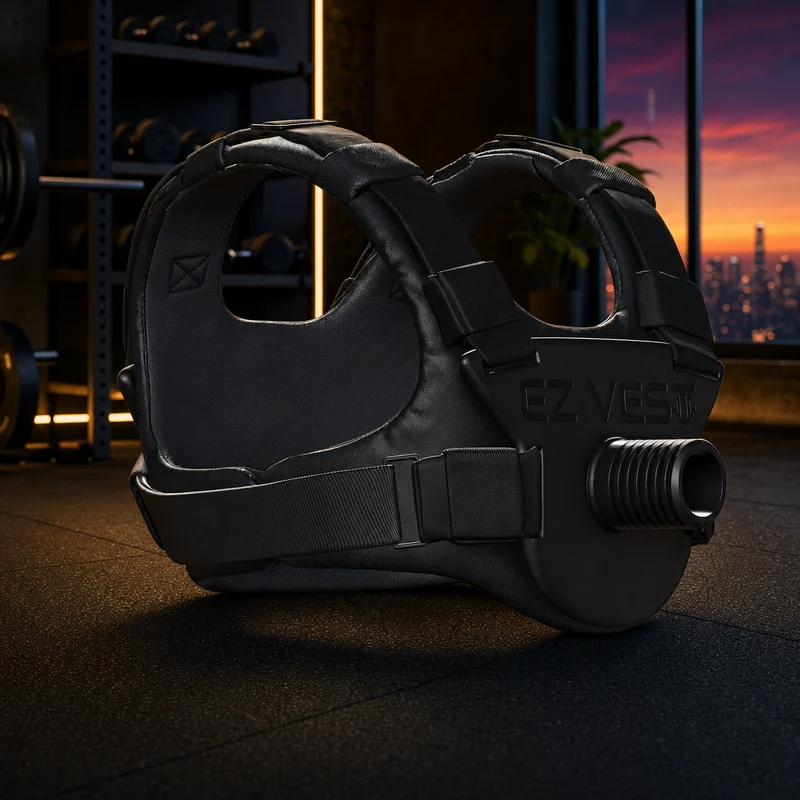 #2 Kensui EZ-VEST V2 PRO Plate-Loaded Weight Vest (150 lb)Best for calisthenics #2 Kensui EZ-VEST V2 PRO Plate-Loaded Weight Vest (150 lb)Best for calisthenics | 9.1 | 9.91 | 8.6 | 9.03 | 9.41 | 8.63 | ~$140On Amazon |
+Loads real barbell plates, so it scales to 150 lb — no block vest comes close for heavy work−Plates are not included — budget for them if you don't already own weight plates | |||||||
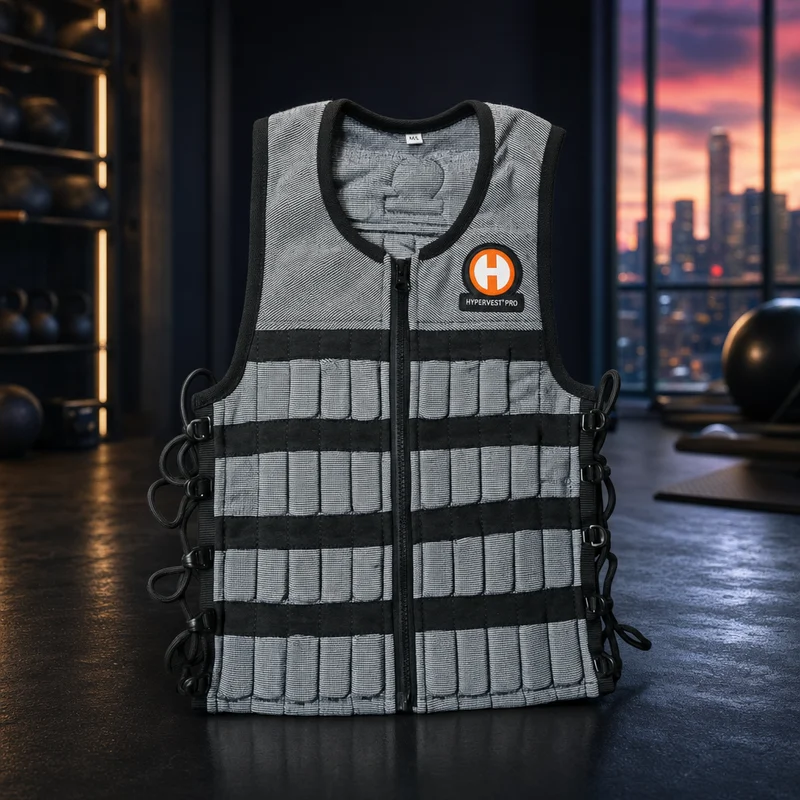 #3 Hyperwear Hyper Vest PRO Adjustable Weighted Vest (10 lb)Best value premium #3 Hyperwear Hyper Vest PRO Adjustable Weighted Vest (10 lb)Best value premium | 8.9 | 8.83 | 9.42 | 9.03 | 9.03 | 8.2 | ~$120On Amazon |
+Horizontal-stretch Xyflex + YKK zip and side lacing give a snug, low-bounce fit like the ELITE for less money−Slightly less refined and breathable than the CORDURA ELITE | |||||||
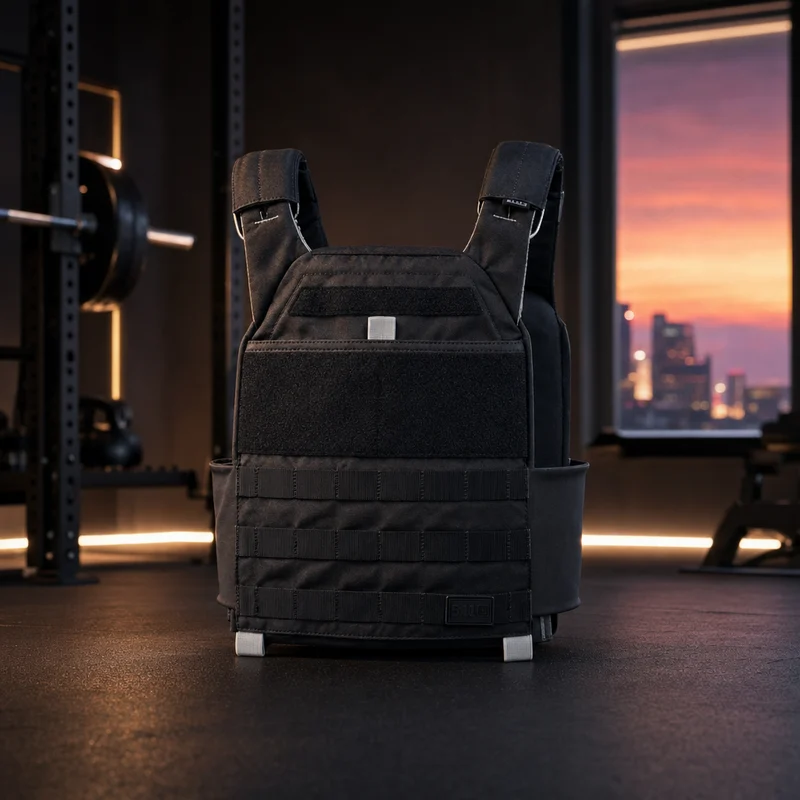 #4 5.11 TacTec Trainer Weight Vest (600D Nylon)Best plate carrier #4 5.11 TacTec Trainer Weight Vest (600D Nylon)Best plate carrier | 8.7 | 8.4 | 8.83 | 9.61 | 9.03 | 7.4 | ~$220On Amazon |
+Rugged 600D nylon with mesh body pads — the durability standard, built to be abused for years−Plates sold separately and it's the priciest pick — real cost is vest plus a plate kit | |||||||
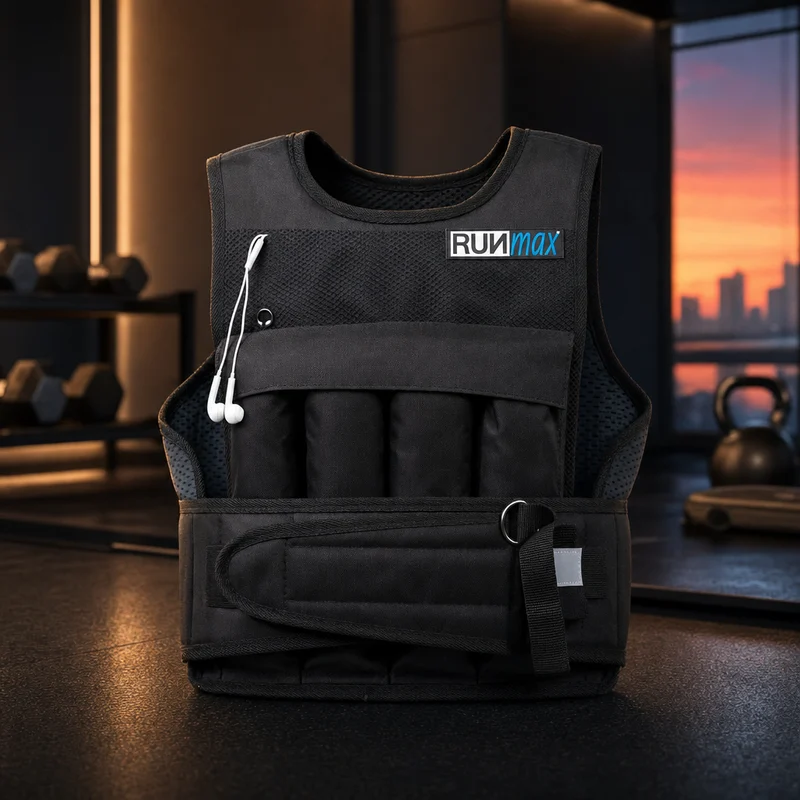 #5 RUNmax Weighted Vest (12-60 lb, Removable Shoulder Pads)Best big-load workhorse #5 RUNmax Weighted Vest (12-60 lb, Removable Shoulder Pads)Best big-load workhorse | 8.4 | 8.83 | 7.8 | 7.8 | 8.4 | 9.22 | ~$70On Amazon |
+Huge, affordable load range — 12 to 60 lb — that covers everything from jogs to heavy rucks−Bulkier and higher-bounce than the close-fitting Hyperwear vests | |||||||
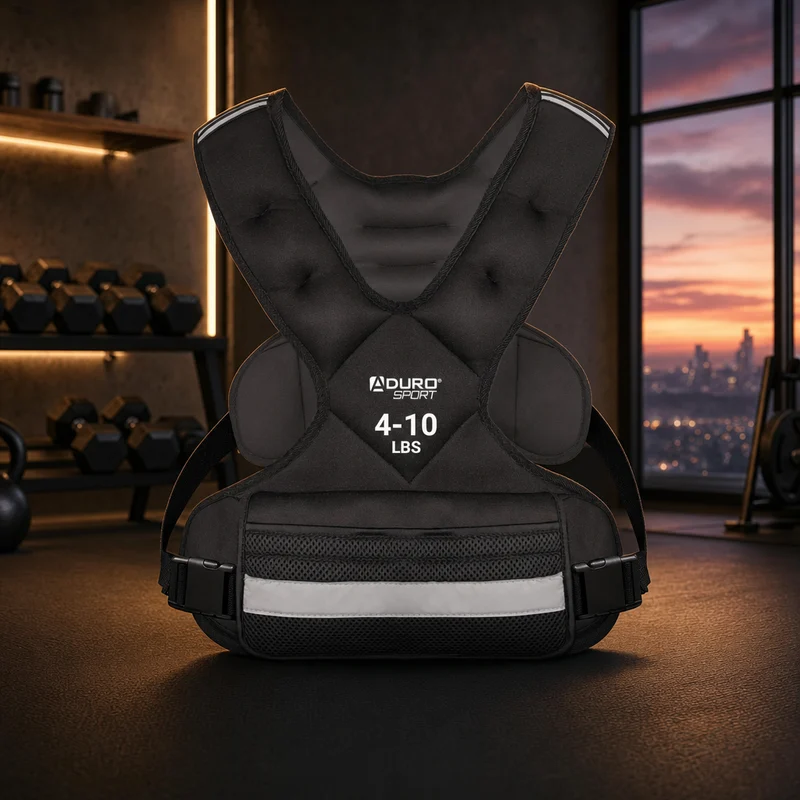 #6 Aduro Sport Adjustable Weighted VestBest budget adjustable #6 Aduro Sport Adjustable Weighted VestBest budget adjustable | 7.9 | 8.0 | 7.8 | 7.0 | 7.8 | 9.41 | ~$40On Amazon |
+Six weight options (4-30 lb) let you match the load to your level at purchase−Neoprene-and-iron build is less durable and stable than CORDURA-plus-steel vests | |||||||
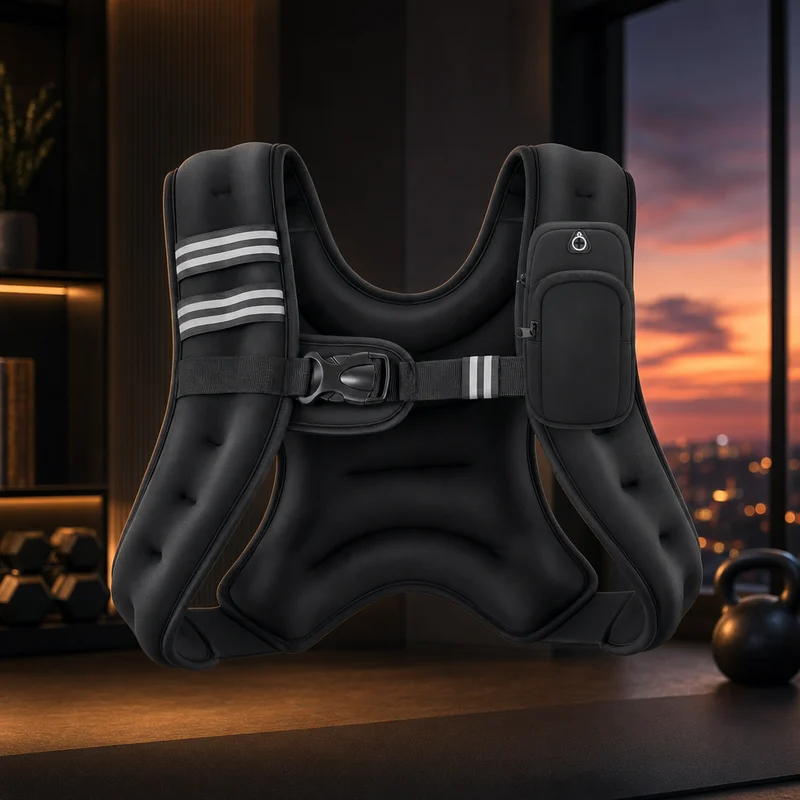 #7 ZELUS Weighted Vest (reflective, 6-30 lb)Best budget for walking #7 ZELUS Weighted Vest (reflective, 6-30 lb)Best budget for walking | 7.6 | 7.2 | 7.8 | 7.2 | 7.8 | 9.41 | ~$35On Amazon |
+Reflective safety stripe makes it a natural fit for walking or jogging outdoors at dusk−Fixed weight — you can't add or remove load, so it won't grow with you | |||||||
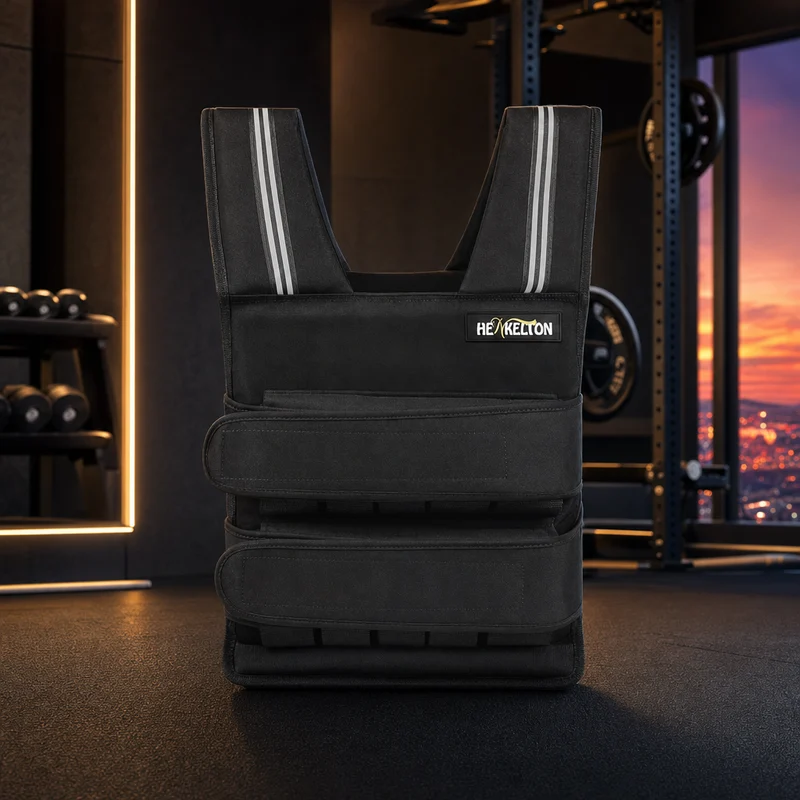 #8 Henkelion Weighted Vest (4-16 lb Options, Weights Included)Best light entry vest #8 Henkelion Weighted Vest (4-16 lb Options, Weights Included)Best light entry vest | 7.3 | 6.8 | 7.6 | 6.8 | 7.6 | 9.41 | ~$28On Amazon |
+Genuinely lightweight and mobile — an easy, unintimidating entry point at low load−Tops out at just 16 lb and is fixed-weight — you'll quickly outgrow it for strength work | |||||||
- #1Best overall
Hyperwear Hyper Vest ELITE Adjustable Weighted Vest (10 lb)
Hyperwear · stretch CORDURA, 10 lb base + 2.25 oz steel micro-weights, up to ~20-25 lb9.2/10SAC Product Score™SAC Product Score™ — how it breaks down- Weight range & adjustability30%9.0
- Fit, comfort & bounce control25%9.8
- Material & durability20%9.4
- Use-case fit15%9.2
- Value10%7.6
The do-most, wear-anywhere pick — a thin, no-bounce stretch-CORDURA vest with fine 2.25 oz load steps that shines for running and HIIT and handles everyday training.
- Load
- 10 lb included, up to ~20-25 lb (size-dependent)
- Adjustability
- 2.25 oz galvanized steel micro-weights
- Material
- Two-way-stretch CORDURA fabric
- Best for
- Running, walking, HIIT — no-bounce cardio
Pros- The lowest-bounce fit here — stretch CORDURA and side lacing hug the torso so it barely moves when you run or jump
- 2.25 oz steel micro-weights give the finest load adjustment on the list — dial a run exactly
- Slim enough to wear over or under clothes for discreet everyday load
- Durable, sweat-friendly CORDURA build that lasts — a genuine buy-it-for-life vest
Cons- Tops out around 20-25 lb, so it's not for heavy weighted calisthenics — go plate-loaded for that
- Premium price, and the extra steel weights cost more on top
Our take — This is the weighted vest to buy if you want one vest for most of what you'll do. Its stretch CORDURA shell and side lacing give the snuggest, lowest-bounce fit on the list — which is exactly why it's the standout for running and HIIT, where a bouncing vest is miserable — and the 2.25 oz steel micro-weights let you fine-tune load more precisely than anything else here. It's slim enough to wear under clothes and built to survive daily sweat. It sits at #1 despite a premium price and a modest ~25 lb ceiling because on the things that decide a vest — fit, bounce, build, and adjustment feel — it's the best executed. If your training is heavy weighted calisthenics specifically, go plate-loaded (#2); for everything else, this is the default.
- #2Best for calisthenics
Kensui EZ-VEST V2 PRO Plate-Loaded Weight Vest (150 lb)
Kensui · plate-loaded, up to 150 lb, takes standard 1" + Olympic 2" plates (collars included)9.1/10SAC Product Score™SAC Product Score™ — how it breaks down- Weight range & adjustability30%9.9
- Fit, comfort & bounce control25%8.6
- Material & durability20%9.0
- Use-case fit15%9.4
- Value10%8.6
The weighted-calisthenics specialist — a plate-loaded vest that takes the barbell plates you already own and scales to 150 lb, with the load sitting flat so it never swings.
- Load
- Up to 150 lb (plates sold separately)
- Plate types
- Standard 1" + Olympic 2" (collars included)
- Material
- Heavy-duty padded nylon, quick-release buckle
- Best for
- Weighted pull-ups, dips, squats — heavy calisthenics
Pros- Loads real barbell plates, so it scales to 150 lb — no block vest comes close for heavy work
- Plates sit flat against the body and don't swing between the legs — cleaner, safer heavy dips than a dip belt
- Add plates as you get stronger: near-unlimited progression for weighted calisthenics
- Padded with a quick-release buckle; a genuine lifetime piece for the strength-focused
Cons- Plates are not included — budget for them if you don't already own weight plates
- Built for calisthenics and strength, not high-speed running or long rucks
Our take — If your goal is building muscle through weighted calisthenics, this is the pick — and it tops our most heavily weighted criterion, adjustability, outright. Because it loads standard and Olympic barbell plates, it scales to 150 lb, so weighted pull-ups, dips, and squats keep getting heavier as you get stronger instead of hitting the ceiling a 20 lb block vest imposes. Reviewers repeatedly note that the flat, close-sitting plates don't swing between the legs, which makes heavy dips safer and cleaner than a dip belt. It lands at #2 only because it's a strength specialist — not the vest for high-speed running or long rucks — and the plates cost extra. For serious progressive overload without a rack, it's superb.
- #3Best value premium
Hyperwear Hyper Vest PRO Adjustable Weighted Vest (10 lb)
Hyperwear · Xyflex stretch fabric, 10 lb base, adjustable to 20-40 lb by size, YKK zip + side lacing8.9/10SAC Product Score™SAC Product Score™ — how it breaks down- Weight range & adjustability30%8.8
- Fit, comfort & bounce control25%9.4
- Material & durability20%9.0
- Use-case fit15%9.0
- Value10%8.2
The ELITE's no-bounce DNA for less — a slim Xyflex stretch vest, 10 lb loaded and adjustable up to 20-40 lb by size, with a YKK zip and side lacing for a locked-in cardio fit.
- Load
- 10 lb included; max ~20 lb (S) up to ~40 lb (XL)
- Adjustability
- 0.25"-thick zinc-plated steel micro-weights
- Material
- USA-made Xyflex horizontal-stretch fabric
- Best for
- Running, walking, HIIT, bone-density work
Pros- Horizontal-stretch Xyflex + YKK zip and side lacing give a snug, low-bounce fit like the ELITE for less money
- Higher size-dependent ceiling than the ELITE — up to ~40 lb on the XL
- Thin 0.25" steel weights load without bulk; machine-washable once weights are removed
- Slim enough to wear over or under clothes for everyday calorie burn and bone loading
Cons- Slightly less refined and breathable than the CORDURA ELITE
- Like the ELITE, not built for heavy weighted calisthenics — go plate-loaded for that
Our take — The Hyper Vest PRO delivers most of what makes the ELITE great — a snug, low-bounce fit from stretch fabric plus a YKK zip and side lacing, and fine steel micro-weight adjustment — at a noticeably lower price, which is why it's our best-value premium pick. It's loaded with 10 lb and, depending on size, adjusts up to roughly 20-40 lb, so it actually reaches heavier than the ELITE on larger sizes. It gives up a little breathability and polish to its CORDURA sibling, and like the ELITE it isn't meant for heavy weighted dips and pull-ups. But for running, walking, HIIT, and bone-density work at a friendlier price, it's an excellent, comfortable, well-made choice.
- #4Best plate carrier
5.11 TacTec Trainer Weight Vest (600D Nylon)
5.11 Tactical · tough 600D nylon plate carrier, ~2.2 lb empty, pairs with 14/20/30 lb plate kits8.7/10SAC Product Score™SAC Product Score™ — how it breaks down- Weight range & adjustability30%8.4
- Fit, comfort & bounce control25%8.8
- Material & durability20%9.6
- Use-case fit15%9.0
- Value10%7.4
The plate-carrier standard for CrossFit and rucking — rugged 600D nylon with a cinch-tight cummerbund that locks flat plates to your torso for Murph-style circuits and long carries.
- Load
- Plate-loaded via 14/20/30 lb plate kits (separate)
- Plate compat.
- 5.11, Rogue, and standard vest plates
- Material
- Tough 600D nylon, breathable mesh pads
- Best for
- CrossFit / Murph, circuits, rucking
Pros- Rugged 600D nylon with mesh body pads — the durability standard, built to be abused for years
- Adjustable stretch cummerbund cinches flat plates tight to the torso for secure runs and circuits
- Widely adopted as the CrossFit 'Murph' vest; takes 5.11, Rogue, and standard plates
- Rigid, plate-carrier feel that many prefer for rucking and metcon over block vests
Cons- Plates sold separately and it's the priciest pick — real cost is vest plus a plate kit
- Only holds two flat plates, so its top load is lower than the barbell-plate Kensui
Our take — The 5.11 TacTec Trainer is the pick if you want a true plate-carrier feel for CrossFit-style circuits, 'Murph' workouts, and rucking. Its tough 600D nylon and mesh pads are the most rugged build on the list, and the adjustable stretch cummerbund cinches flat plates hard against your torso so they stay put through runs and burpees. It's the de facto standard for weighted metcons for good reason. It ranks #3 rather than higher because it's a two-plate carrier — so its ceiling is lower than the barbell-plate Kensui for pure heavy calisthenics — and because it's the most expensive pick once you add a plate kit. But for durability and secure, plate-carrier-style loading, nothing here beats it.
- #5Best big-load workhorse
RUNmax Weighted Vest (12-60 lb, Removable Shoulder Pads)
RUNmax · durable nylon, removable front/back weight packs, 12-60 lb options + removable shoulder pads8.4/10SAC Product Score™SAC Product Score™ — how it breaks down- Weight range & adjustability30%8.8
- Fit, comfort & bounce control25%7.8
- Material & durability20%7.8
- Use-case fit15%8.4
- Value10%9.2
The affordable big-load workhorse — a nylon vest with removable front and back weight packs across a huge 12-60 lb range, plus optional shoulder pads, built for running and rucking.
- Load
- 12-60 lb options; add/remove packs to adjust
- Adjustability
- Removable front + back weight packs
- Material
- Durable nylon; removable padded shoulder pads
- Best for
- Running, rucking, general training on a budget
Pros- Huge, affordable load range — 12 to 60 lb — that covers everything from jogs to heavy rucks
- Removable weight packs let you scale load up and down as your training changes
- Optional removable shoulder pads add comfort under heavier loads
- Strong value: far more weight per dollar than the premium micro-weight vests
Cons- Bulkier and higher-bounce than the close-fitting Hyperwear vests
- Nylon-and-pack build is durable but less refined; heavy loads can shift more
Our take — The RUNmax is the value workhorse for anyone who wants a genuinely heavy, adjustable vest without paying premium prices. Its removable front and back weight packs span a big 12-60 lb range, so one vest carries you from a weighted jog to a serious ruck, and optional shoulder pads take the edge off heavier loads. It's the most weight-per-dollar here by a wide margin. It ranks mid-pack because it's bulkier and bouncier than the torso-hugging Hyperwear vests and the pack-based build is less refined — at heavy loads it can shift more. But for running, rucking, and general training on a budget where you still want real weight and room to progress, it's a lot of capable vest for the money.
- #6Best budget adjustable
Aduro Sport Adjustable Weighted Vest
Aduro Sport · neoprene, weight options 4-30 lb (linked listing: 4 lb), adjustable front buckle strap7.9/10SAC Product Score™SAC Product Score™ — how it breaks down- Weight range & adjustability30%8.0
- Fit, comfort & bounce control25%7.8
- Material & durability20%7.0
- Use-case fit15%7.8
- Value10%9.4
The comfortable, cheap adjustable pick for walking and light training — soft neoprene in weights from 4 to 30 lb with an adjustable front buckle strap that cinches in seconds.
- Load
- Weight options 4, 6, 12, 20, 25, 30 lb — the linked listing is the 4 lb variant
- Adjustability
- Choose your weight at purchase; adjustable front buckle strap
- Material
- Neoprene workout vest
- Best for
- Walking, hiking, HIIT, general workouts
Pros- Six weight options (4-30 lb) let you match the load to your level at purchase
- Neoprene vest with an adjustable front buckle strap is comfortable and fast to put on
- Non-slip fit stays reasonably stable for walking, hiking, and light training
- Excellent value and backed by a lifetime limited warranty
Cons- Neoprene-and-iron build is less durable and stable than CORDURA-plus-steel vests
- Single front buckle and bulkier profile mean more bounce for hard running
Our take — The Aduro Sport is our best-budget-adjustable pick: a soft neoprene vest sold in weights from 4 to 30 lb (the linked listing is the 4 lb variant), an adjustable front buckle strap that makes it fast to throw on, and a lifetime warranty — all at a fraction of premium prices. For walking, hiking, and general light training it's comfortable and does exactly what you need. It ranks here on our material principle: neoprene with iron packs is less durable and stable than a CORDURA-plus-steel vest, and the single front buckle and bulkier cut mean more bounce for hard running. We place it honestly, not punitively — for adjustable load on a budget, especially for walking, it's a genuinely good buy.
- #7Best budget for walking
ZELUS Weighted Vest (reflective, 6-30 lb)
ZELUS · neoprene with reflective stripe, fixed-weight options 6-30 lb, padded shoulder straps7.6/10SAC Product Score™SAC Product Score™ — how it breaks down- Weight range & adjustability30%7.2
- Fit, comfort & bounce control25%7.8
- Material & durability20%7.2
- Use-case fit15%7.8
- Value10%9.4
The tightest-budget walking pick — a comfortable neoprene vest with a reflective safety stripe and padded straps, in fixed weights from 6 to 30 lb for walks, stairs, and light training.
- Load
- Fixed-weight options: 6, 8, 12, 16, 20, 25, 30 lb — the linked listing is the 20 lb variant
- Adjustability
- Choose your weight at purchase; hook-and-loop fit
- Material
- Neoprene with high-visibility reflective stripe
- Best for
- Walking, stairs, cardio, light strength training
Pros- Reflective safety stripe makes it a natural fit for walking or jogging outdoors at dusk
- Padded shoulder straps and a hook-and-loop waistband spread the load comfortably
- Wide choice of fixed weights (6-30 lb) so you can match your level at purchase
- Very affordable — a lot of comfortable vest for the price
Cons- Fixed weight — you can't add or remove load, so it won't grow with you
- Neoprene build and pellet weight are less durable and stable than steel-plate vests
Our take — The ZELUS is the pick for someone who mainly wants to add load to walks, stairs, and light workouts without spending much. It's comfortable — padded straps, a hook-and-loop waistband — and its reflective stripe is a thoughtful touch for outdoor use at dusk, and you pick your weight (6-30 lb) at purchase. It ranks near the bottom on our two most important criteria for muscle-building: it's fixed-weight, so it can't scale as you get stronger, and the neoprene-and-pellet build trails the steel-plate vests on durability and stability. But we're not punishing it for being cheap — for budget walking and light training it does the real work comfortably, which is exactly why it earns the best-budget-for-walking badge.
- #8Best light entry vest
Henkelion Weighted Vest (4-16 lb Options, Weights Included)
Henkelion · soft neoprene, iron-pellet fill, light 4-16 lb options, weights included7.3/10SAC Product Score™SAC Product Score™ — how it breaks down- Weight range & adjustability30%6.8
- Fit, comfort & bounce control25%7.6
- Material & durability20%6.8
- Use-case fit15%7.6
- Value10%9.4
The lightest grab-and-go entry vest — a soft, low-cost neoprene vest in 4-16 lb options with weights included, ideal for beginners adding a little load to walks and jogs.
- Load
- Light fixed options: 4, 6, 8, 12, 16 lb
- Adjustability
- Choose weight at purchase; adjustable straps
- Material
- Soft neoprene, premium iron-pellet fill
- Best for
- Beginners: walking, jogging, light workouts
Pros- Genuinely lightweight and mobile — an easy, unintimidating entry point at low load
- Uses iron pellets and metal rather than cheap river sand for the fill
- Comfortable soft neoprene with adjustable straps; comes ready with weights included
- The cheapest way onto this list — a low-risk first weighted vest
Cons- Tops out at just 16 lb and is fixed-weight — you'll quickly outgrow it for strength work
- Least durable, least stable build here; strictly a light-duty vest
Our take — The Henkelion rounds out the list as the honest light-entry pick — and an honest one it is, not a flimsy vest we're punishing. It's genuinely lightweight and mobile, comes with weights included in easy 4-16 lb options, uses real iron-pellet fill rather than river sand, and costs the least, so it's a low-risk way to start adding load to walks and jogs. It ranks #8 squarely on our two most important criteria: at a 16 lb ceiling and fixed weight it can't scale for real strength work, and the soft neoprene build is the least durable and stable here. We deliberately did not rank it higher for being cheap — but if you just want a comfortable, inexpensive first vest for light everyday use, it does that job well and gets you moving.

▸ Affiliate disclosure: every Amazon link uses our Associates tag (superachieverclub-20). We earn a small commission at no cost to you; it funds independent reviews. We never accept payment to change a ranking.
Before You Buy a Weighted Vest: 3 Rules
- 01
Rule 1: Pick the vest for the job.
Heavy calisthenics wants plate-loading, running wants a snug no-bounce fit and walking wants comfort. Three jobs want three different vests.
- 02
Rule 2: Start at 10-15% of bodyweight.
That is enough to make movements hard without wrecking your form. Then progress the load like any other lift.
- 03
Rule 3: Check the adjustability.
Weight range and adjustability carry 30% of our score, because the vest only keeps working if the load can grow.
Manufacturer specs · full scoring logic in “How we ranked these” below.
How we ranked these eight
Each pick was scored 0–10 across the five criteria below, then weighted to a final composite — use-case fit and load range lead because the 'best' vest depends entirely on the job, and price is a subordinate tie-breaker. Every figure is the manufacturer's published spec; nothing here is dressed up as a study.
- Weight range & adjustability30%
The most important factor — the vest exists to let you add load and keep overloading. Plate-loaded vests (Kensui, to 150 lb, using plates you own) and micro-increment steel vests (Hyperwear, ~2.25 oz steps) score highest; fixed, sewn-in block vests that can't scale score lower. Room to progress is the point.
- Fit, comfort & bounce control25%
What determines whether you actually wear it. Bounce is the #1 reason vests get returned, so a snug, low-sitting fit via stretch fabric, side lacing, or a cummerbund (crucial for running) is rewarded, along with padding, breathability, and secure closures.
- Material & durability20%
Our quality principle applied: a CORDURA or 600D nylon shell with solid steel weights (Hyperwear, 5.11) that wipes down after sweat and survives being dropped ranks ahead of thin neoprene with iron-sand pellets (the budget trade-off). Buckle, lacing, and weight-retention quality live here.
- Use-case fit15%
Is it the right tool for its job? We reward honest specialists — a plate-loaded vest for heavy calisthenics, a no-bounce vest for running/rucking, a light comfortable vest for walking — and note plainly when a vest is wrong for a use-case rather than overselling it as an all-rounder.
- Value (price)10%
Price for the load, build, and comfort delivered. Tie-breaker — the first four criteria do the real ranking. PRICE IS SUBORDINATE: a better-built, more adjustable vest can rank higher even if it costs more, while affordability is recognized with a 'Best budget' badge rather than by crowning the cheapest neoprene vest.

The bottom line
- 01
Do-most vest: Hyperwear Hyper Vest ELITE (#1).
The snuggest, lowest-bounce fit here, fine 2.25 oz load steps and a durable CORDURA build — the standout for running and HIIT and a great all-rounder.
- 02
Heavy calisthenics? Kensui EZ-VEST (#2). CrossFit/Rucking? 5.11 TacTec (#4).
The plate-loaded Kensui takes your own barbell plates and scales to 150 lb; the TacTec is the rugged plate-carrier for WODs and rucks.
- 03
Match the vest to what you'll actually do in it.
A vest is only as effective as the load and movement you pair it with — that's why load range and use-case fit lead the ranking, with price as tie-breaker.
Every claim ranked above traces back to one of these
The clinical research and verified product specs behind the picks. Studies link to their abstract on PubMed; product specs link to the manufacturer's listing.
- [1]Manufacturer specifications
Weighted vest specifications — load range, materials, adjustability, and fit as published by each manufacturer
Every per-pick figure on this page — weight/load range, plate compatibility, materials, adjustability, and fit — is the manufacturer's own published specification, and each product's Amazon listing is linked as the source. Because a weighted vest is gear, not a supplement, we do not cite clinical studies about the device itself; the product links are the evidence for the specs.
- [2]ACSM 2009 — position stand
American College of Sports Medicine position stand. Progression models in resistance training for healthy adults
The rationale for owning a weighted vest is progressive overload — the well-established training principle that muscles adapt to gradually increasing resistance. A vest delivers this by adding external load to bodyweight movements. This is a general training principle stated as such, not a clinical result about any specific vest; effectiveness depends on the load and movement the user pairs it with.